Blog
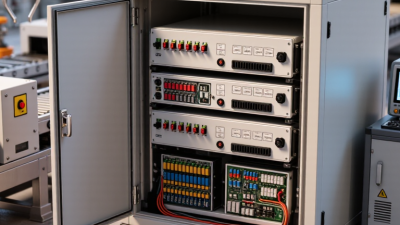
2026 How to Choose an Industrial Power Supply?
Choosing an Industrial Power Supply is not simply a matter of matching watts on a label. The unit must deliver stable voltage through startup surges, changing loads, and long operating hours. A control cabinet beside a hot production line presents different demands from a clean, temperature-controlled test bench. Small details matter.
Power-electronics professor Robert W. Erickson has shaped widely used engineering education through his work on converter design. A practical paraphrase of that engineering approach is: “Design around the real load, not the catalog headline.” Treat this as a selection principle, not a verbatim quotation. Check output voltage and current, inrush behavior, ripple limits, efficiency, and available protection features. Then review the installation environment, including heat, vibration, dust, and restricted airflow. A supply rated for the expected load may still need derating when cabinet temperatures rise.
This guide explains how to compare specifications, choose suitable mounting and cooling, and assess reliability and maintenance needs. It also highlights common trade-offs between compact size, efficiency, redundancy, and cost. Keep the application in view. A tidy datasheet cannot capture every startup cycle or future load change, and that uncertainty deserves honest review. Verify critical requirements against the manufacturer’s documentation and, where needed, test the supply under representative operating conditions. The right choice is the one that performs reliably in the actual system—not merely the one with the most impressive headline rating.
Read more »
 By:Ethan
- November 3, 2026

2026 Best DC Power Supply for Global Buyers
Choosing the best DC Power Supply in 2026 takes more than comparing wattage and price. Buyers must match output voltage, current, ripple, regulation, and protection features to the actual load. A bench supply powering a sensor prototype has different needs from a unit running an automated test line. Small details matter. Connector type, cooling noise, and clear front-panel controls can shape daily use.
The International Energy Agency’s Global Energy Review 2025 reported that worldwide electricity demand grew by 4.3% in 2024. That figure does not measure DC power supply sales, but it signals rising demand for dependable electrical systems across industry and technology. Power conversion is part of that picture. Power-electronics researcher Frede Blaabjerg has described power electronics as “the enabling technology for the conversion and control of electrical energy.” His work helps explain why supply quality matters: unstable output can undermine measurements, product testing, and equipment performance.
For global buyers, the strongest choice is not always the unit with the highest rating. Check whether its input range, documentation, calibration support, and service options fit your operating region. Verify specifications against the manufacturer’s datasheet, and ask how performance is measured. A feature list can look reassuring. It may still leave practical questions unanswered. This guide compares leading options by application, technical performance, usability, and buyer support, while noting where published specifications do not tell the whole story.
Read more »
 By:Olivia
- November 3, 2026

Top 10 Power Supply Manufacturers in the World?
A power supply is easy to overlook until a server goes dark, a production line pauses, or a device begins to overheat. Behind these moments is a demanding engineering field: converting electrical energy reliably while managing heat, efficiency, protection, and cost. Robert W. Erickson, co-author of Fundamentals of Power Electronics, describes the discipline as “the application of electronics to the control and conversion of electric power.” That definition is broad, but it captures why component choices matter.
This guide to the Top 10 Power Supply Manufacturers in the World examines companies shaping the market across industrial, computing, telecommunications, and consumer applications. It considers product range, technical capabilities, quality systems, global reach, and support—not just brand visibility. A supplier known for compact adapters may not be the right fit for a high-load industrial system. Nor does a famous name guarantee suitability.
Details matter. Check rated output, operating temperature, protection features, certifications, and service availability for the specific model. Manufacturer rankings also depend on methodology and market segment; there is no single list that fits every buyer. That deserves a closer look. Public information can be incomplete, and product portfolios change. So this article treats the ranking as a practical starting point, not a final purchasing verdict. The strongest choice is the one that meets the application’s real electrical and operational needs.
Read more »
By:Olivia
- November 3, 2026