Choosing the best DC Power Supply in 2026 takes more than comparing wattage and price. Buyers must match output voltage, current, ripple, regulation, and protection features to the actual load. A bench supply powering a sensor prototype has different needs from a unit running an automated test line. Small details matter. Connector type, cooling noise, and clear front-panel controls can shape daily use.
The International Energy Agency’s Global Energy Review 2025 reported that worldwide electricity demand grew by 4.3% in 2024. That figure does not measure DC power supply sales, but it signals rising demand for dependable electrical systems across industry and technology. Power conversion is part of that picture. Power-electronics researcher Frede Blaabjerg has described power electronics as “the enabling technology for the conversion and control of electrical energy.” His work helps explain why supply quality matters: unstable output can undermine measurements, product testing, and equipment performance.
For global buyers, the strongest choice is not always the unit with the highest rating. Check whether its input range, documentation, calibration support, and service options fit your operating region. Verify specifications against the manufacturer’s datasheet, and ask how performance is measured. A feature list can look reassuring. It may still leave practical questions unanswered. This guide compares leading options by application, technical performance, usability, and buyer support, while noting where published specifications do not tell the whole story.
Understanding DC Power Supplies and Their Main Applications
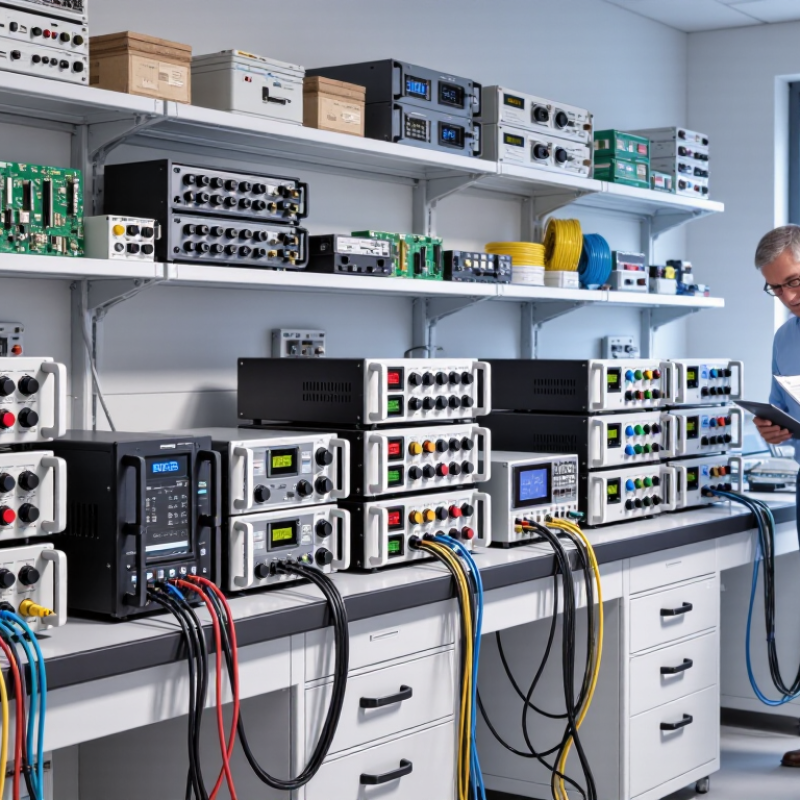
A DC power supply converts incoming electricity into controlled direct current for equipment that needs stable voltage and current. Bench units support electronics testing, battery evaluation, automation, and communications equipment. Some systems provide fixed output; programmable models let engineers adjust settings during testing. Small details matter.
Selection depends on voltage range, current capacity, ripple, regulation, isolation, and protection features. A unit powering a sensitive sensor may need low ripple, while a production test bench may need repeatable settings and remote control. Heat also matters. A crowded cabinet can shorten component life if airflow is poor. The distinction between a laboratory supply and industrial power-conversion equipment is easy to overlook.
The International Energy Agency’s Global EV Outlook 2024 reports nearly 14 million electric car sales in 2023, about 18% of global car sales. This growth increases demand for charging infrastructure and battery testing, where DC conversion equipment plays a role. It does not mean every charger uses a general-purpose bench supply.
Tips: Check continuous output ratings, not just peak figures. Match protection limits to the connected load, and leave room for cooling. Recheck the setup under real operating conditions.
2026 Best DC Power Supply for Global Buyers - Understanding DC Power Supplies and Their Main Applications
| Power Supply Type | Typical DC Output | Typical Power Class | Output Characteristics | Main Applications | Key Selection Considerations |
|---|---|---|---|---|---|
| Linear Bench Power Supply | Common configurations include 0–30 V and 0–5 A per channel | Approximately 150 W per channel for a 30 V, 5 A unit | Low output noise and ripple; adjustable voltage and current; often supports constant-voltage and constant-current operation | Electronics research, circuit prototyping, laboratory testing, and servicing sensitive analog circuits | Choose for low noise and precise control. Linear designs are generally heavier and less efficient than comparable switching designs. |
| Switching Bench Power Supply | Common ranges include 0–30 V or 0–60 V, with current ratings varying by model | Often tens to several hundred watts | Adjustable output with constant-voltage and constant-current modes; generally higher power density than linear units | General electronics development, production testing, education, and repair benches | Check ripple and noise specifications, output resolution, cooling requirements, and whether the supply supports remote sensing. |
| Programmable DC Power Supply | Model-dependent; laboratory units commonly cover low-voltage outputs, while specialized systems can provide higher voltages or currents | From compact instruments to multi-kilowatt systems | Digitally settable output; may include programmable sequences, measurement readback, and USB, LAN, or serial interfaces | Automated test systems, product validation, battery and component testing, and repeatable production tests | Confirm programming accuracy, interface compatibility, response time, channel count, and protection features against the test requirements. |
| Industrial DIN-Rail DC Supply | Common fixed outputs include 12 V, 24 V, and 48 V DC | Typically tens to several hundred watts; larger systems may use multiple units | Fixed or limited-trim output; many models accept a wide-range AC input, but the input range is model-specific | Control cabinets, factory automation, sensors, relays, and industrial communication equipment | Check AC input range, operating temperature, mounting, overload behavior, required certifications, and load-starting current. |
| DC-DC Converter or Supply | Output depends on the input and conversion ratio; common systems supply 3.3 V, 5 V, 12 V, or 24 V DC | From a few watts to kilowatts, depending on the design | Converts one DC voltage to another; available in isolated and non-isolated designs, with fixed or adjustable outputs | Vehicles, telecom equipment, embedded systems, renewable-energy installations, and battery-powered devices | Match the full input-voltage range, output current, isolation requirement, efficiency, thermal conditions, and electromagnetic compatibility needs. |
| Battery Charger with DC Output | Selected to match the battery system voltage and charging profile | Varies with battery capacity and required charging time | Uses a charging algorithm appropriate to the supported chemistry; may include current limiting, temperature monitoring, and charge-status indication | Lead-acid or lithium battery systems, backup power, mobility equipment, and industrial battery packs | Use a charger specifically designed for the battery chemistry and series-cell count. Verify voltage limits, charging current, and safety protections. |
| High-Voltage DC Supply | Specialized models may provide hundreds or thousands of volts at relatively low current | Highly application-dependent, often from tens of watts upward | Designed for elevated output voltage; may offer adjustable voltage, current limiting, and interlock or arc-protection features | Insulation testing, detector systems, scientific instruments, and specialized manufacturing processes | Prioritize rated voltage, insulation, stored-energy discharge, guarding, interlocks, and applicable electrical-safety requirements. |
Note: Output ranges and power classes shown are representative examples, not universal specifications. Actual ratings, input compatibility, safety approvals, and performance vary by model and operating conditions. Select equipment according to the application’s electrical requirements and the regulations applicable in the destination market.
FAQS
Start with your load’s voltage and current needs. Allow headroom for startup surges. Check continuous ratings, not just peak figures.
It offers low ripple and quiet output for sensitive analog measurements. It can run hot. Leave space around it.
They are often lighter and more efficient, making them useful on production lines or field kits. Check ripple under your actual load. Noise can affect sensitive measurements.
Check command resolution, readback accuracy, and protection behavior before automating tests. Stored settings can improve repeatability. Documentation still matters.
Confirm total chassis power, cooling needs, and channel isolation. A fully populated frame may need derating in warm conditions.
Check overvoltage, overcurrent, and overtemperature limits. They should protect the load without interrupting normal operation. Test the settings with your equipment.
Long leads can cause voltage drop. Keep cables short or use remote sensing where appropriate. It cannot fix poor connections.
Not always. Test it with a representative load and check its behavior under real conditions. Heat matters. I might still miss a small quirk.
Conclusion
Choosing the right DC Power Supply in 2026 starts with understanding how it will be used, from basic bench testing and education to automated production and equipment maintenance. Linear designs can suit applications that prioritize low electrical noise, while switching models often offer compact size and efficient operation. Programmable and modular options provide added control and flexibility when requirements change or systems need to expand.
Before selecting a unit, compare its output range, regulation accuracy, protection features, and available connectivity. Check that its safety certifications, input-voltage range, plug or connection requirements, and operating conditions are compatible with the intended region. A careful evaluation of these factors helps global buyers choose a dependable supply that fits both current tasks and future needs.