High-Efficiency DC Power Supplies for Surface Finishing Lines
Explore our field-tested switch-mode IGBT rectifiers specifically calibrated for electrodeposition, continuous strip galvanizing, aluminum hard anodizing, and industrial chemical process plants.
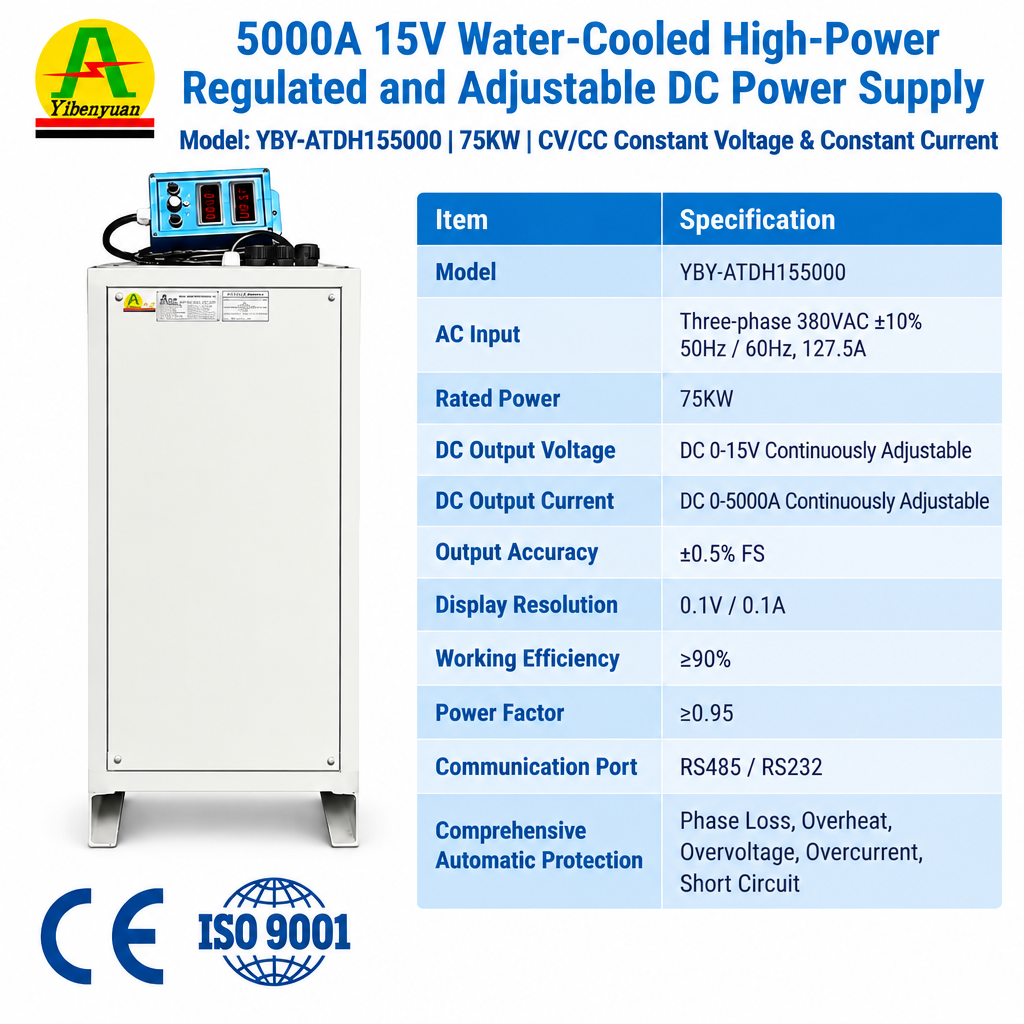
12V/15V 5000A–6000A 75KW Water-Cooled Plating Rectifier
- Output Range12–15V / 5000–6000A
- Cooling SystemDeionized Water Cooled
- Control ModeDigital CV / CC / Pulse
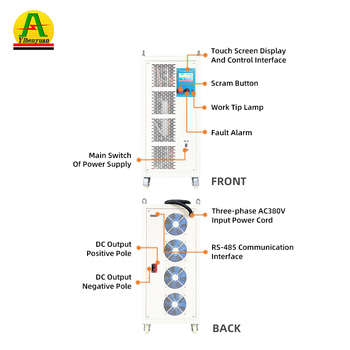
12V 4000A 48KW Switch-Mode Galvanizing Rectifier
- Output Range0–12V / 0–4000A
- Current Ripple≤ 1% Full Load
- Efficiency≥ 90% (DIN Compliant)
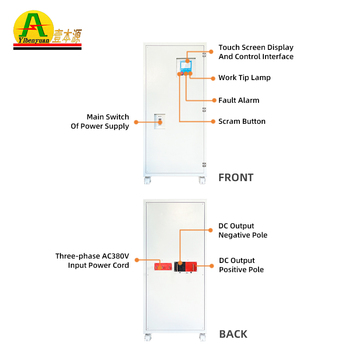
8000A 12V Water-Cooled Hard Chrome Rectifier
- Output Range12V / 8000A Heavy Duty
- ProtectionIP54 Enclosed Cabinet
- Busbar TypeT2 Solid Red Copper
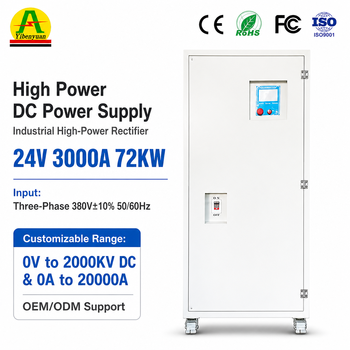
100A–3000A Precision Anodic Oxidation DC Supply
- Voltage Range12V / 18V / 24V Stepped
- Control ProfileAutomated Multi-Stage Ramp
- ApplicationsArchitectural / Hard Anodize
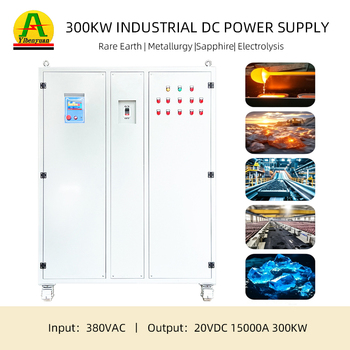
300kW 20V 15000A Heavy-Duty Electrolysis Rectifier
- Output Capacity20V / 15000A Continuous
- Cooling CircuitIntegrated Liquid Heat Exchanger
- ConnectivityProfibus / Modbus TCP/IP
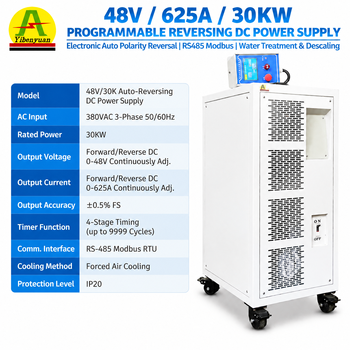
48V 625A 30kW Polarity-Reversing Descaling Supply
- Switching Speed< 50ms Soft Electronic
- Cycling Timer1s–9999h Programmable
- FieldWastewater & Etching Rinse
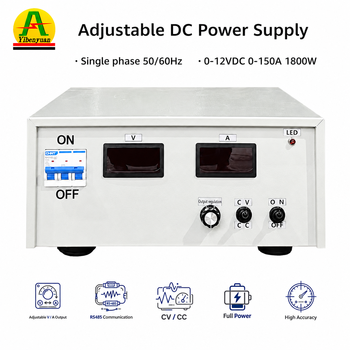
12V 150A High-Frequency Precious Metal Plating Supply
- Output Stability± 0.5% Load Regulation
- Ripple Factor≤ 0.5% Peak-to-Peak
- ApplicationGold, Silver & Fine PCB
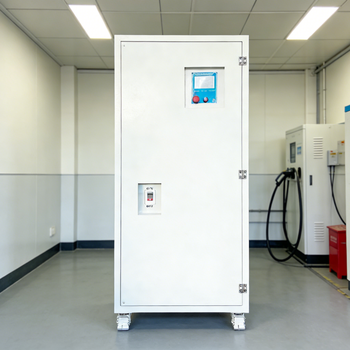
160kW 2500A High-Stability Smelting & Plating Rectifier
- Power ConfigurationParallel Modular N+1
- Mains Input380V/400V 50Hz 3-Phase
- InterfaceRS485 Modbus RTU / Analog
Strategic Engineering Guide: Electroplating Rectifier Sourcing in the Düsseldorf Market
As the economic epicenter of North Rhine-Westphalia (NRW) and the primary logistical gateway to the Rhine-Ruhr industrial belt, Düsseldorf stands at the forefront of European surface engineering, metal conversion, and specialized galvanotechnics. From the high-volume barrel zinc lines of the automotive supply corridor extending toward Neuss and Ratingen, to the world-renowned blade and cutlery surface finishing facilities of Solingen, and the heavy mechanical galvanizing plants across Duisburg and Krefeld, the demand for high-reliability, energy-efficient Direct Current (DC) power solutions is undergoing an unprecedented technological evolution.
For decades, legacy surface treatment facilities across Western Germany relied heavily on centralized, oil-immersed 6-pulse or 12-pulse silicon-controlled thyristor (SCR) rectifiers. While rugged, these outdated transformers burden modern electroplating operations with severe drawbacks: low electrical efficiency (often dropping below 75% under fractional loads), poor power factor (cos φ < 0.8) resulting in steep reactive power penalties from regional grid operators such as Stadtwerke Düsseldorf, and excessive current ripple (frequently exceeding 5% to 8% RMS). In modern high-specification galvanic chemistries—most notably trivalent chromium (Cr³⋅) plating, acid zinc-nickel alloys, and ultra-thin electroless nickel strike baths—excessive DC ripple directly induces micro-porosity, irregular crystal lattice formation, poor layer adhesion, and burning at high current density edges.
To retain global competitiveness amidst soaring industrial energy tariffs and stringent European Union environmental directives (including the Ecodesign Directive DIN EN 50598-2 and the complete phase-out of hexavalent chromium under EU REACH), plant directors and engineering procurement managers in Düsseldorf are rapidly modernizing their electrolytic lines with high-frequency switch-mode Insulated Gate Bipolar Transistor (IGBT) rectifiers. Fenvix delivers cutting-edge, ISO 9001 certified, TÜV Rheinland-inspected switch-mode DC power systems that combine energy efficiencies exceeding 90%, ultra-low residual ripple below 1%, and native Industry 4.0 process networking via Profibus and Modbus protocols directly to German engineering specifications.
The Technical Paradigm Shift: Why Switch-Mode IGBT Replaces SCR in Rhine-Ruhr Galvanic Facilities
In electrodeposition processes, electric current is not merely a utility; it is the fundamental chemical reactant governed by Faraday’s laws of electrolysis. The physical consistency, microhardness, corrosion resistance, and optical brightness of the deposited metallic coating depend fundamentally on the dynamic stability and waveform quality of the applied current. The technical advantages of modern high-frequency IGBT rectifiers over legacy thyristors represent a quantifiable quantum leap for Düsseldorf galvanic job shops and in-house OEM coaters.
| Performance Characteristic | Legacy 12-Pulse Thyristor (SCR) Rectifier | Fenvix High-Frequency Switch-Mode IGBT | Production Impact on Plating Lines |
|---|---|---|---|
| Operating Frequency | Mains Frequency: 50 Hz | High Frequency: 20 kHz – 40 kHz | Compact Size 70% weight and footprint reduction; saves expensive floor space. |
| Current Ripple Factor (RMS) | 5% – 12% (severe at low current settings) | ≤ 1% across 5% – 100% full operating window | Optimal Density Eliminates micro-cracks; essential for trivalent chrome (Cr³⋅). |
| Power Conversion Efficiency | 68% – 78% (worsens with lower output voltage) | 88% – 93% continuous across load curve | Energy Savings Typically cuts annual power consumption by 15% to 25%. |
| Dynamic Response Time | Slow: 100ms – 300ms | Ultra-Fast: ≤ 5ms (instantaneous feedback) | Precision Ramp Prevents burn marks during immersion and current-stepping anodizing. |
| Power Factor (cos φ) | 0.70 – 0.82 (declines drastically when throttled) | ≥ 0.94 without external compensation | No Grid Fines Avoids heavy reactive power surcharge from German utility grids. |
| Cabinet Environmental Isolation | Open ventilated, vulnerable to acid vapors | Fully Sealed Water-Cooled IP54 & Coated PCBs | Thyristor Fails IGBT sealed water-cooling withstands aggressive HCl/H&sub2;SO&sub4; atmospheres. |
The operational core of the Fenvix high-frequency rectifier centers on an advanced full-bridge inverter topology utilizing high-reliability German and Japanese IGBT power modules. Three-phase 400V AC 50Hz mains power is directly rectified to a high-voltage DC bus, chopped at frequencies between 20 kHz and 40 kHz by pulse-width modulation (PWM), stepped down through nano-crystalline high-frequency transformers, and rectified using low-loss Schottky or fast-recovery diodes. This produces an exceptionally stable, virtually flat DC output that drastically accelerates electrodeposition rates while maintaining strict adherence to German industrial quality standards (such as DIN EN ISO 1461, DIN EN 12329, and DIN 50979).
Localized Industrial Applications Across the Düsseldorf Manufacturing Region
The manufacturing fabric of the greater Düsseldorf and North Rhine-Westphalia metropolitan zone exhibits diverse, exacting surface treatment requirements. Our rectifier architectures are custom-configured to solve the specific chemical, thermal, and operational challenges inherent to each sector:
Automotive Fasteners & Brackets (Neuss & Ratingen)
Tier-1 automotive coating subcontractors execute high-volume rack and barrel zinc-nickel (ZnNi) alloy deposition requiring continuous 12V 5000A to 8000A supplies. Our water-cooled rectifiers provide precision Constant Current (CC) control, guaranteeing a strictly uniform 12%–15% nickel content across complex threaded profiles to satisfy OEM 1,000-hour neutral salt spray (DIN EN ISO 9227) anti-corrosion benchmarks.
Cutlery, Blades & Surgical Tools (Solingen Hub)
The iconic cutlery and surgical instrument manufacturing basin of nearby Solingen requires microscopic grain refinement during precious metal plating, decorative nickel-chrome deposition, and electropolishing of surgical stainless steels. Fenvix low-power precision rectifiers (12V–24V, 150A–500A) deliver peak-to-peak ripple below 0.5%, preventing pitting, haze, or orange-peel textures on mirror-polished cutting edges.
Heavy Engineering & Hydraulics (Duisburg & Krefeld)
Heavy machinery and hydraulic cylinder rebuilding facilities utilize our 15,000A 20V heavy-duty DC units for functional hard chromium plating. With integrated programmable reverse-etch polarity modules, technicians etch base steels in situ before seamlessly ramping forward to deposit crack-free, diamond-hard chromium layers exceeding 65 HRC without moving the heavy workpieces between tanks.
High-Density PCB & Electronics (Rhine-Ruhr Tech Hub)
Printed circuit board fabrication and connector pin plating lines utilize our high-frequency pulse-reverse rectifiers. Fast rise times (sub-microsecond response) allow uniform copper throwing power deep into through-holes and micro-vias, eliminating necking and uneven thermal expansion across multi-layer substrate boards.
Aerospace & Architectural Anodizing (Mönchengladbach / Düsseldorf)
Anodizing facilities handling architectural structural extrusions and aerospace aluminum components implement our 100A–3000A stepping power supplies. Configured with automated multi-stage voltage/current ramp-up profiles, the units avoid thermal shock to the dielectric barrier layer, yielding thick, abrasion-resistant, dyed oxide films according to MIL-A-8625 Type III.
Circular Economy & Galvanic Wastewater Recovery
With environmental compliance under intense scrutiny by the Bezirksregierung Düsseldorf, plating shops deploy our 48V auto-reversing DC power supplies for electrolytic metal recovery cells and electrocoagulation water purification, reclaiming valuable dissolved nickel, copper, and tin directly from spent rinse baths before final discharge.
Strategic Trends in the Düsseldorf & NRW Galvanotechnik Market (2025–2030)
Procurement directors and facility managers across Western Germany are navigating structural shifts in manufacturing technology, energy economics, and environmental governance. Investment in plating power supplies is heavily influenced by three dominant regional trends:
Trivalent Chrome (Cr³⋅) Substitution
Under tightening European REACH authorizations, hexavalent chromium (Cr⁶⁺) is being phased out in favor of sustainable Cr³⁺ bath chemistries. However, trivalent chromium electrolytes are acutely sensitive to cathode current density oscillations. A ripple rate exceeding 1.5% causes localized passivation, grey streaking, and catastrophic failure of throwing power. Fenvix IGBT rectifiers maintain ripple ≤ 1%, providing the rock-solid DC current required for flawless trivalent decorative and hard chrome finishes.
Decarbonization & Peak Energy Tariffs
With industrial energy pricing remaining a major cost driver across German manufacturing hubs, upgrading an electroplating bay from 72% efficient legacy thyristors to 92% efficient switch-mode rectifiers delivers immediate operating capital relief. For an average plating shop in Düsseldorf running 20,000A aggregate current across three shifts, this 20% efficiency delta eliminates over 140,000 kWh of wasted heat dissipation annually, slashing utility overhead and qualifying for regional energy efficiency subsidies under DIN EN ISO 50001 audits.
Digital Twin & Industry 4.0 Integration
Modern German production lines require seamless telemetry between DC power sources and Central SCADA / Manufacturing Execution Systems (MES). Fenvix rectifiers integrate native RS485 (Modbus RTU), Profibus DP, and industrial Ethernet (Modbus TCP/IP) fieldbus protocols. Critical operational variables—including ampere-hour accumulation, electrolyte temperature interlocks, voltage drops across bath busbars, and instantaneous fault alarms—are logged digitally to ensure 100% batch traceability for IATF 16949 automotive audits.
Guangdong Fenvix Technology Co., Ltd. – Engineering Authority
Headquartered in the high-tech manufacturing corridor of Guangdong since 2013, Fenvix represents an elite direct-factory manufacturer specializing in non-standard, high-power DC systems and specialized frequency conversion. Unlike trading intermediaries, we control every tier of the production cycle: internal metal shearing, CNC punching, milling, high-purity T2 copper busbar silver-plating, PCB surface-mounting, sub-assembly conformal coating, and full-load burn-in testing under real electrochemistry loads.
- Zero Minimum Order Quantity (MOQ): Single customized units for pilot lines and research labs or containerized batch production for plant expansions.
- Independent Factory Verification: Fully certified under ISO 9001 Quality Management Systems, with on-site factory audits verified by TÜV Rheinland.
- Full CE & EMC Compliance: Built to European safety directives, including Low Voltage Directive (LVD 2014/35/EU) and Electromagnetic Compatibility (EMC 2014/30/EU).
- Turnkey Customization: Tailored voltage outputs from 6V up to 3,200V DC, currents up to 15,000A, and selectable water-cooled or forced-air cooling enclosures.
Frequently Asked Questions: Sourcing Electroplating Rectifiers in Düsseldorf
To assist procurement engineers, electrical plant supervisors, and galvanic operators in making fully informed capital investment decisions, our application engineering team has compiled direct answers to the most common technical and commercial inquiries from the North Rhine-Westphalia industrial market:
How do Fenvix rectifiers adapt to local German grid voltage and power quality standards?
When should a Düsseldorf plating plant choose water cooling over forced-air cooling?
How does residual ripple factor affect modern plating chemistry like trivalent chrome?
What control interfaces are available for automated PLC lines and SCADA integration?
What international certifications and inspection documentation accompany each shipment?
What international delivery terms (Incoterms) and payment currencies are supported for German buyers?
How does Fenvix guarantee rapid technical support and spare parts availability across Western Europe?
Request a Custom Engineering Proposal for Your Plating Line
Whether you are designing a greenfield automated plating line in Düsseldorf, replacing aging thyristor units in Solingen, or upgrading to trivalent chrome compliance, our power engineers deliver custom configurations within 24 hours.
Send an Inquiry