High-Efficiency Power Supplies Engineered for Industrial Performance
Explore our export-grade electrophoretic coating, electroplating, and heavy-duty industrial DC rectifiers. Each unit features rigorous ripple suppression, high-frequency IGBT architecture, and smart automated controls for seamless production integration.
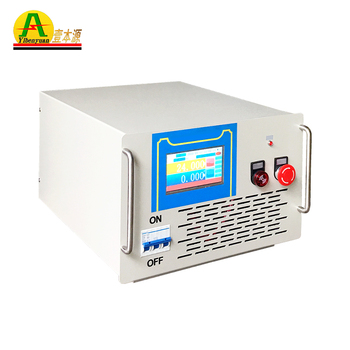
5000W High-Precision Electrophoresis DC Rectifier
- Input Voltage220V / 380V AC 3-Phase
- Output Range0–300V / 0–20A (Custom)
- Control ModesConstant Voltage / Current
- ComplianceCE Certified, LVD, EMC

75kW Water-Cooled High-Frequency Rectifier
- Rated Power75kW Continuous Heavy Duty
- Output Rating12V–15V / 5000A–6000A
- Cooling SystemZero-Air Exchange Liquid Chilled
- DisplayDigital Multi-Parameter LCD

8000A 12V Customized Water-Cooled DC Unit
- Output Rating12V / 8000A High Amperage
- TopologiesHigh-Frequency IGBT Inverter
- InterfaceRS485 Modbus / 0–10V Analog
- ProtectionOverheat, Short, Phase Loss
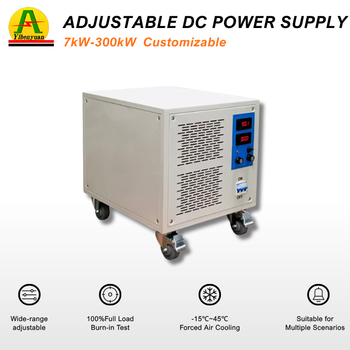
20kW 400V–800V Programmable DC Source
- Voltage Range0–400V / 0–800V Fully Variable
- Max Current50A Fast-Response Regulation
- Ripple Factor≤ 0.5% Peak-to-Peak
- StandardsCE, EMC, RoHS Compliant
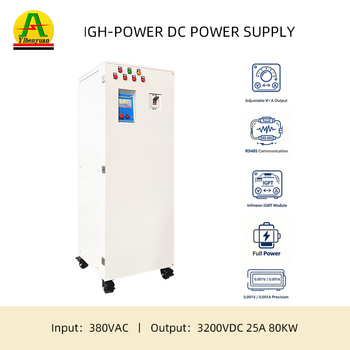
80kW 1000V–3200V Ultra-High Voltage Source
- Rated Power80kW Scalable Platform
- Output RangeUp to 3200V High Precision
- ApplicationsSpecialized E-Coat, Testing
- Safety SystemRapid Arc & Discharge Suppression
48kW 12V 4000A Switch-Mode Plating Supply
- EfficiencyTypical ≥ 90% Energy Savings
- Output Range0–12V / 0–4000A Digital CC/CV
- Cabinet DesignSealed Anti-Corrosion Chasis
- Soft Start0–99 Seconds Programmable

30kW Auto Polarity-Reversing DC System
- Voltage / Current48V / 625A Variable
- Inversion Control4-Segment Millisecond Switch
- ApplicationsWater Treatment & Pickling
- NetworkingPLC Remote Industrial Bus

300kW 20V 15,000A Mega-Current Rectifier
- Power Density300kW Ultra-High Capacity
- Output Specs20V / 15,000A Continuous
- Cooling ModeClosed-Loop Deionized Water
- Factory GradeISO 9001 Certified Quality
Optimizing Electrophoretic Deposition: The Role of DC Power Topologies
A comprehensive engineering analysis on achieving pinhole-free film build, extreme throwing power, and energy conservation across modern Cataphoretic (CED) and Anaphoretic (AED) industrial bath lines.
The Electrochemistry of E-Coat and Power Dynamics
Electrophoretic coating (electrocoating or E-coat) is an electrochemical immersion deposition process where charged polymeric paint macromolecules and colloidal pigments are migrated across an aqueous bath by an externally generated direct current (DC) field, depositing homogeneously onto conductive metallic substrates. Whether operating in Cathodic Electrodeposition (CED)—the global standard for structural automotive, heavy equipment, and corrosion-critical marine components—or Anodic Electrodeposition (AED), the quality, cross-link density, and thickness uniformity of the cured film are fundamentally dictated by the stability, waveform ripple, and soft-start ramp curve of the DC power supply.
During the primary immersion and charging stage, the electrical resistance of the bare substrate is virtually negligible, triggering an intense instantaneous inrush current known as the rupture phenomenon. If the power supply cannot throttle this dynamic transient with nanosecond-level closed-loop regulation, excessive gas evolution (electrolysis of water into hydrogen and oxygen bubbles) occurs at the substrate boundary layer. This entrapment causes microscopic pinholing, surface orange peel, craters, and premature film rupture. Fenvix precision switch-mode rectifiers integrate advanced Pulse-Width Modulated (PWM) IGBT architectures that deliver infinitely adjustable soft-start ramp voltages (0 to 120 seconds), eliminating inrush stress and ensuring a laminar electrophoretic deposition envelope.
Throwing Power Optimization and Ripple Factor Constraints
In high-throughput surface finishing facilities throughout Munster and greater Cork, complex geometries such as automotive chassis subframes, marine heat exchangers, and fabricated structural enclosures feature hidden interior cavities and recessed surfaces. The ability of an electrocoat line to coat these internal shielded zones is defined as its Throwing Power. Traditional silicon-controlled rectifiers (SCRs or thyristors) generate elevated low-frequency ripple (often between 5% and 8% at partial output loads), which distorts the potential gradient within recessed Faraday cage regions. This voltage droop leads to sub-threshold electrical fields inside internal cavities, leaving critical interior welds vulnerable to rapid salt-spray oxidation.
Fenvix switch-mode rectifiers operate at internal switching frequencies of 20 kHz to 50 kHz. By combining multi-stage LC filtering with synchronous digital voltage regulation, our power supplies suppress continuous peak-to-peak ripple to below 0.5% across the entire 10% to 100% operational window. This ultra-flat direct current profile guarantees that the potential gradient remains uniform into the deepest component recesses, maximizing the paint formulation's throwing efficiency and slashing unnecessary paint consumption by up to 14%.
| Engineering Metric | Legacy Thyristor / SCR Rectifier | Standard Commercial Switched Unit | Fenvix High-Frequency IGBT E-Coat System |
|---|---|---|---|
| Switching Frequency | 50 Hz – 300 Hz (Mains line dependent) | 10 kHz – 15 kHz | 20 kHz – 50 kHz Ultra-Fast Inversion |
| Output Current Ripple (RMS) | > 5.0% (Can exceed 8% at partial load) | 2.0% – 3.0% | ≤ 0.5% Smooth Flatline DC Profile |
| Overall Conversion Efficiency | 68% – 76% (High resistive transformer losses) | 82% – 85% | ≥ 90% – 93% High Energy Conversion |
| Throwing Power Uniformity | Sub-optimal in Faraday cage cavities | Moderate internal coverage | Maximum penetration in deep weldments |
| Ramp / Soft-Start Control | Coarse mechanical/analog pot adjust | Linear ramp only | Multi-stage programmable curve (0–99s) |
| Environmental Protection | Open air draft, high internal corrosion | Standard painted sheet steel | Hermetically sealed bay, water-chilled options |
Precision Coating Applications Across Cork’s Manufacturing Hubs
Cork stands as the maritime gateway and heavy manufacturing engine of southern Ireland. Our electrophoretic power units are specifically configured to overcome the unique ambient, chemical, and regulatory demands of local industrial zones.
Cork Harbour Marine & Offshore Infrastructure
Facilities operating in Cobh, Ringaskiddy, and the lower Cork Harbour encounter intense maritime atmospheric salinity. Subsea valve housings, offshore wind brackets, and vessel deck equipment require impenetrable cathodic epoxy electrocoat layers capable of enduring 1,500+ hours of ASTM B117 neutral salt spray testing. Fenvix supplies stable, heavy-amperage continuous DC systems that prevent micro-voids, ensuring marine-grade substrate passivation.
Automotive Subassembly & EV Component Enclosures
Precision tier suppliers and custom vehicle outfitters distributed across Little Island and Ballycurreen industrial parks produce chassis brackets, battery pack containment trays, and suspension stampings. Our programmable 400V–800V DC power systems deliver precise voltage graduation during part immersion, maintaining exact 15–25 μm dry film thicknesses across both stampings and razor-sharp sheet edges without bead buildup.
Life Science & Cleanroom Architectural Metalwork
As Europe’s premier pharmaceutical and biotechnology corridor, Cork’s production facilities demand contamination-free environments. Architectural stainless steel fixtures, cleanroom filter framing, and conveyor tracks coated via anodic electrophoresis require ultra-smooth, particulate-resistant acrylic finishes. Fenvix high-frequency rectifiers deliver zero-defect aesthetic clarity with tight voltage regulation down to ±0.2V.
Emerging Manufacturing Trends in County Cork: 2025–2030
Strategic analysis of macroeconomic, decarbonization, and automation shifts reshaping industrial coating operations across Ireland's Southwest region.
The Decarbonization Mandate and Irish Carbon Tax Trajectory
Under Ireland's Climate Action Plan and corporate ESG standards aligned with European Green Deal directives, industrial manufacturers in Cork face progressive escalations in national carbon taxes—projected to reach €100 per tonne of CO2 emissions by 2030. Surface treatment facilities running outdated 1990s thyristor rectifiers consume colossal quantities of reactive electrical power, operating at power factors (PF) as poor as 0.70 while dissipating hundreds of gigajoules annually as wasted ambient heat.
Transitioning to Fenvix switch-mode rectifiers delivers immediate compliance benefits. With an intrinsic Active Power Factor Correction ≥ 0.95 and thermodynamic electrical conversion exceeding 90%, facilities directly reduce line kVA draw. Furthermore, when deploying our closed-circuit water-cooled configurations, excess heat generated by power modules is harvested directly into process water preheating loops, slashing facility HVAC refrigeration loads and drastically lowering the carbon footprint per square meter of coated metallic substrate.
Automation, Industry 4.0, and SCADA Interoperability in Munster Plants
Modern automated coating operations in Cork’s export clusters cannot tolerate manual potentiometer dials and unrecorded batch variations. Modern ISO 9001 and IATF 16949 audit protocols require continuous, auditable trace telemetry for every submerged hanger bar. Fenvix power supplies are engineered from the ground up for seamless smart factory integration. Standardized communication interfaces—including galvanically isolated RS485 Modbus-RTU, Profibus, CANopen, and industrial Ethernet protocols—allow central programmable logic controllers (PLCs) to dictate real-time voltage profiling, track instantaneous milliamp consumption, and capture tank leakage fault signatures.
Direct Factory Engineering: Why Global Exporters Trust Fenvix
Headquartered in Guangdong’s high-tech manufacturing center since 2013, Guangdong Fenvix Technology Co., Ltd. operates an integrated 3,000 m² production complex, rejecting trading intermediary markup to deliver custom heavy-power engineering directly to industrial buyers.
In-House Mechanical Fabrication
We do not outsource chassis construction. Our factory houses plate shearing, CNC punching, milling, tapping, and heavy-gauge copper busbar bending equipment to maintain strict dimensional tolerance and optimal internal thermal paths.
Full Load Burn-In Validation
Every single power unit is placed on dedicated load banks under continuous 100% duty cycle testing for a minimum of 24–48 hours. Digital oscilloscopes measure ripple voltage and thermal rise before release documentation is signed.
Zero Minimum Order Quantity (No MOQ)
Whether you require a single 5kW prototype power supply for an R&D pilot line in Ringaskiddy or an array of synchronized 15,000A water-cooled rectifiers for an automated production facility, we cater directly to your engineering volume.
TÜV Rheinland & ISO 9001 Certified
Our quality management systems meet rigorous ISO 9001 standards. Our production plant has undergone third-party on-site verification by TÜV Rheinland, and our products carry full CE conformity (LVD & EMC directives) and RoHS certification.
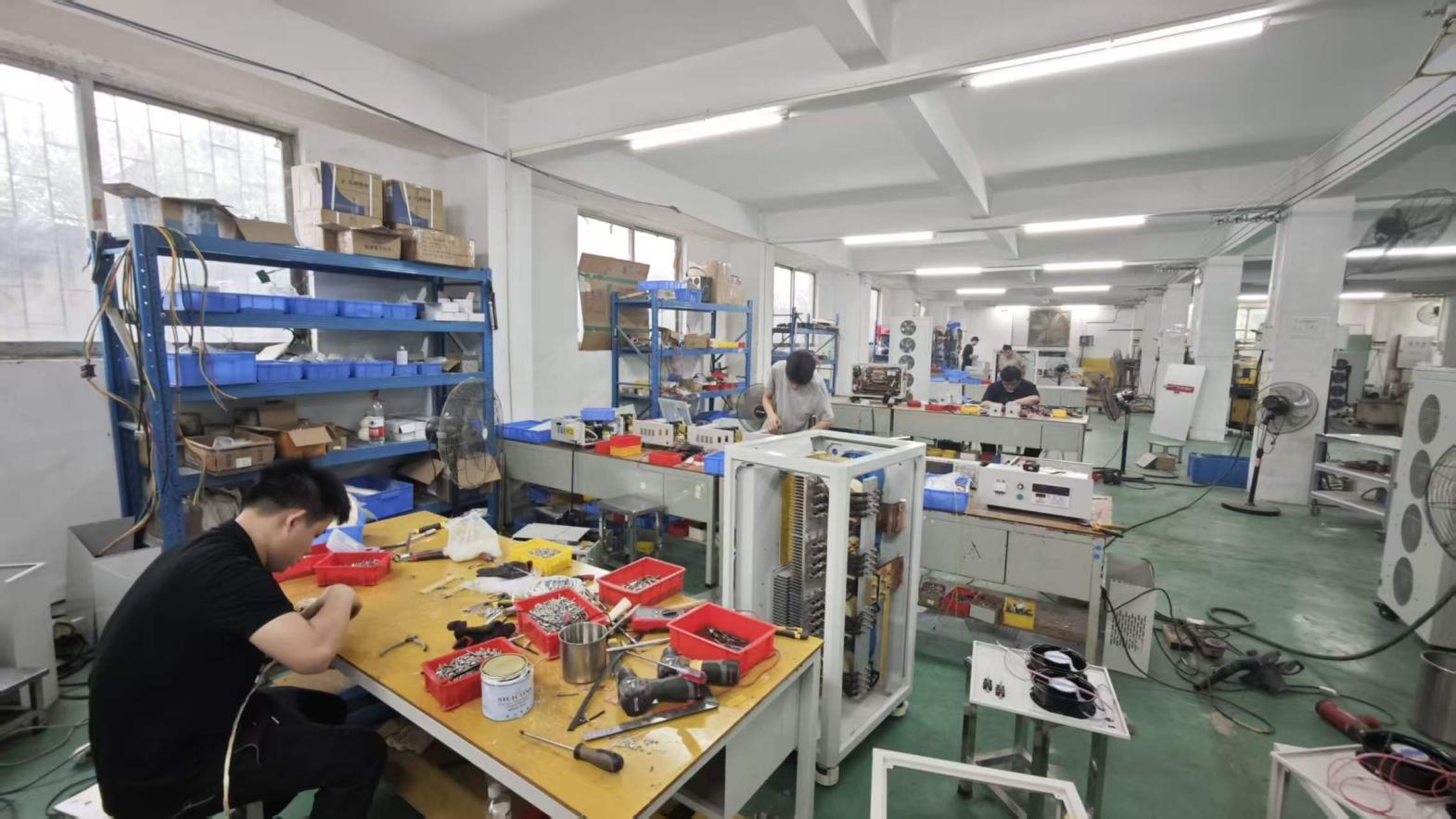 Main Workshop
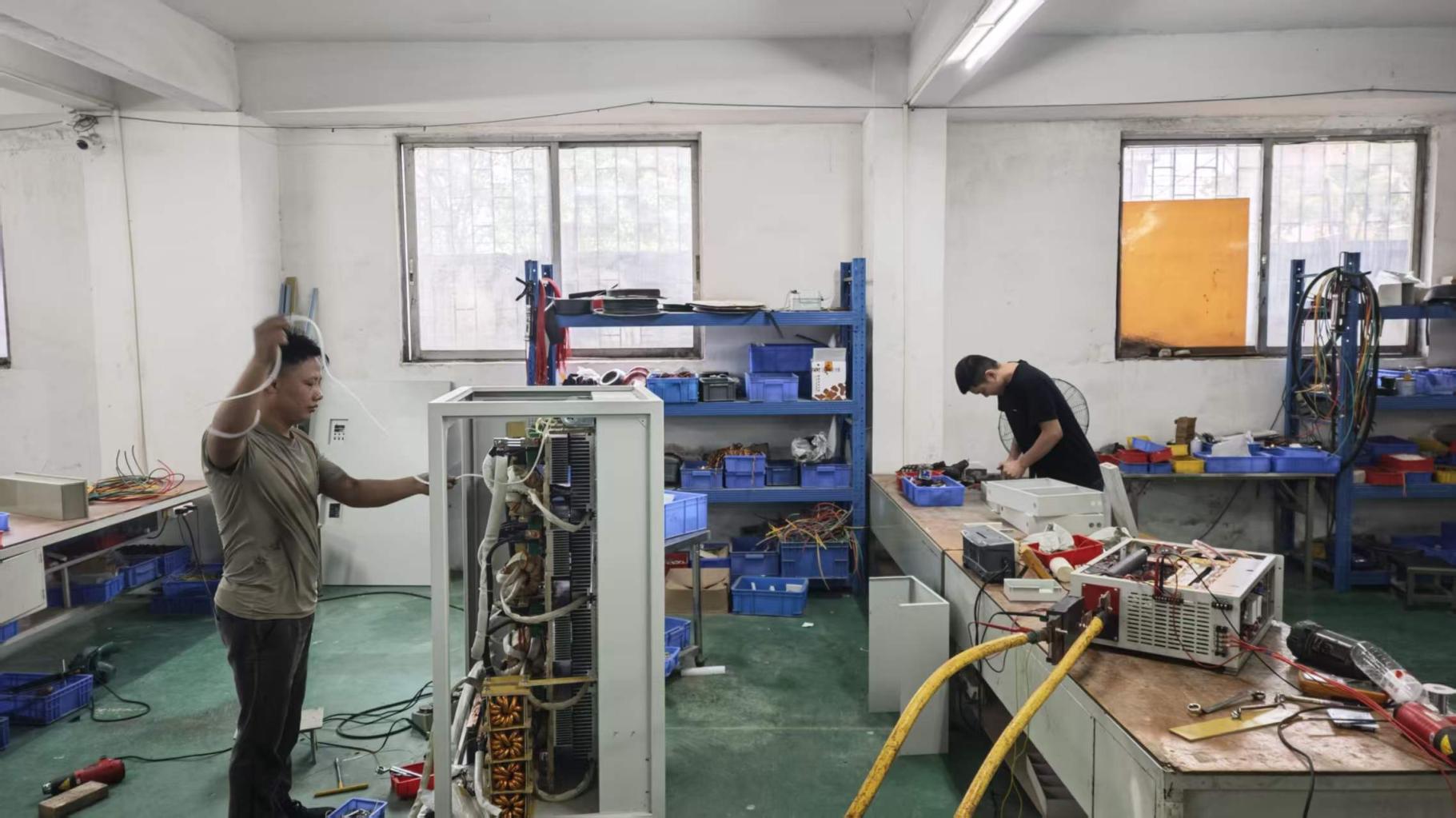 Cabinet Assembly
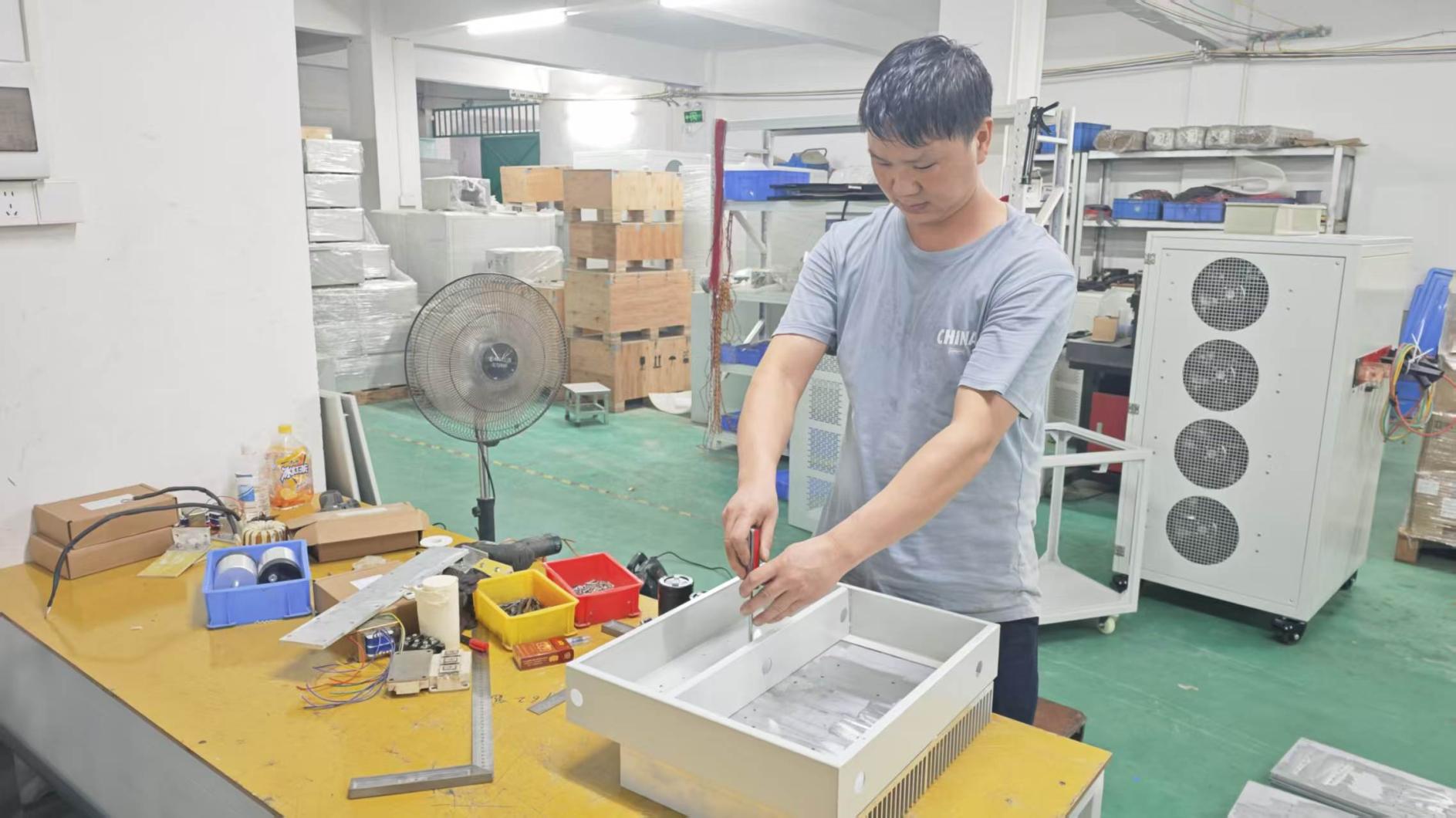 Electronics Wiring
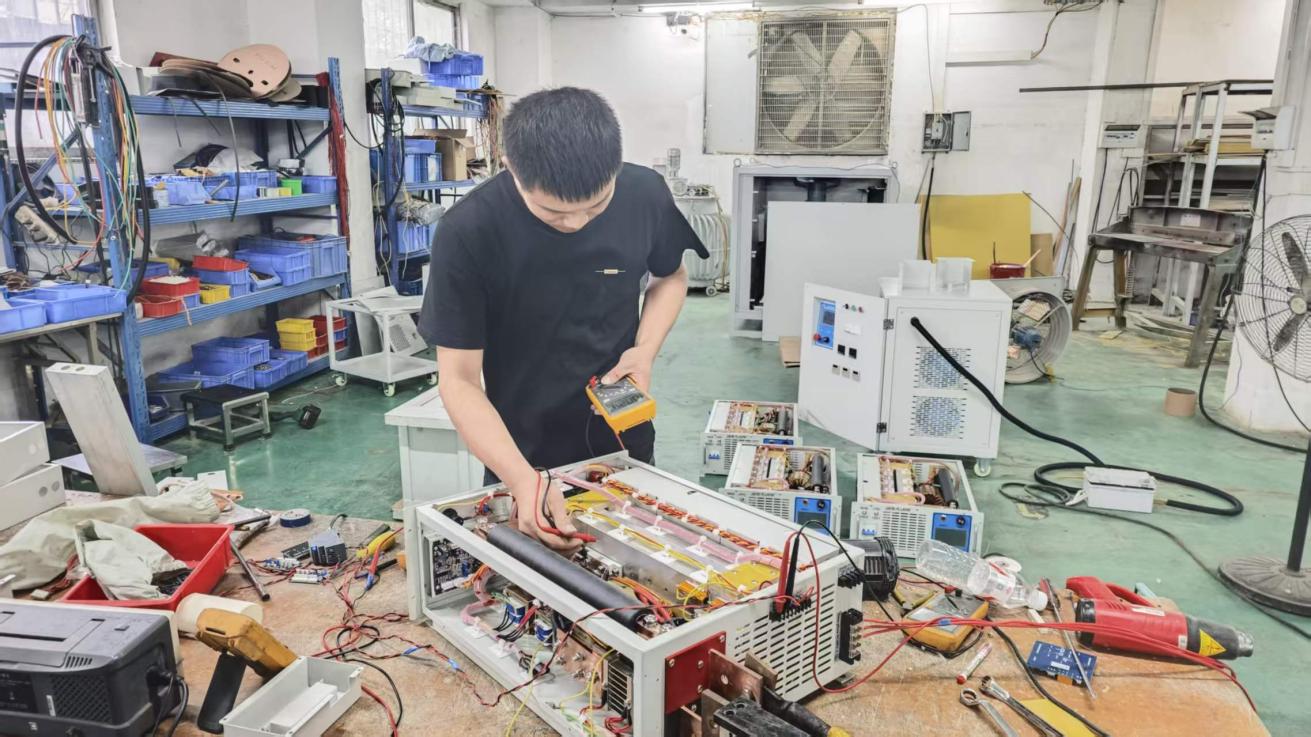 Commissioning Bay
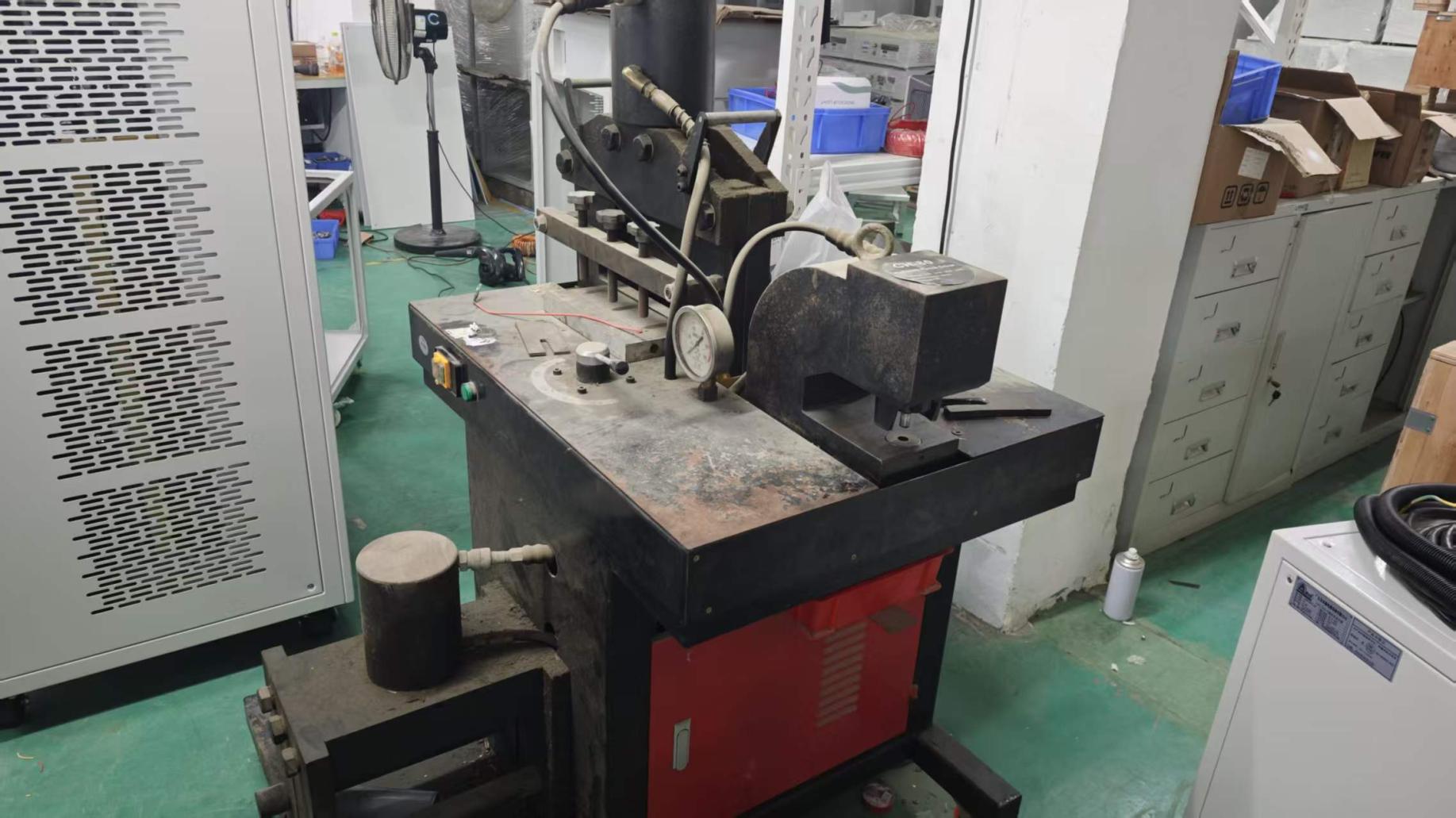 CNC Punching
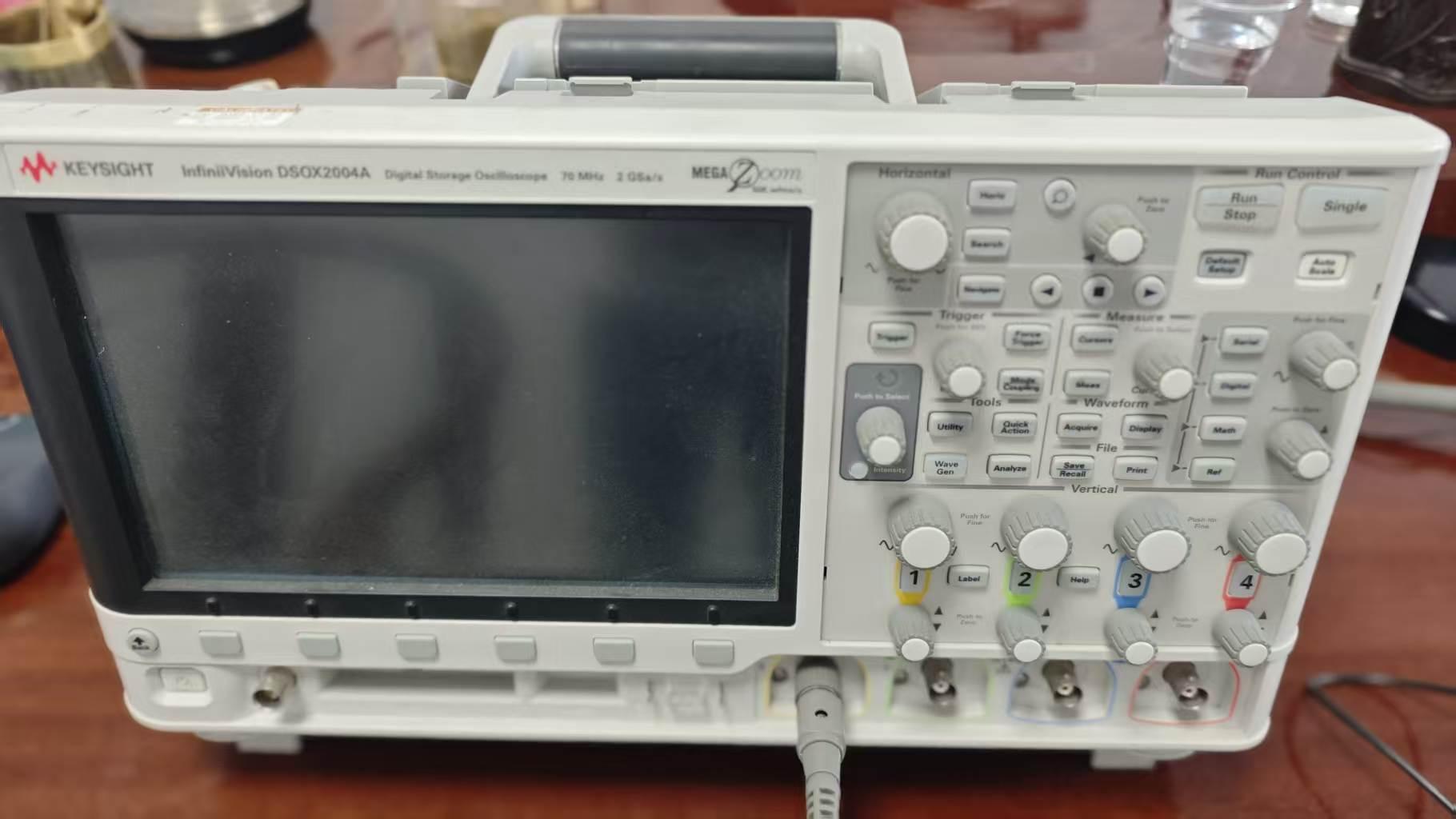 Waveform Testing
Frequently Asked Questions by Industrial Engineers in Cork
Clear, direct answers regarding electrical supply compliance, lead times to Ireland, cooling options, and after-sales support.