High-Current Polarity Reversing & DC Power Conversion Systems
Direct manufacturer supply for Suai’s maritime infrastructure, petrochemical supply bases, electrodialysis desalination, and cathodic protection arrays.
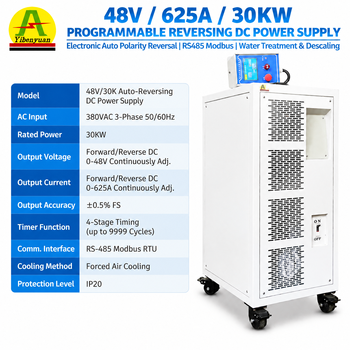
48V 625A 30kW Programmable Polarity Reversing Supply
- Reversal Mechanism: Solid-State H-Bridge / Contactors
- Output Control: 0-48V / 0-625A Continuous
- Field Application: Descaling, EDR Water Systems
- Digital Interface: RS485 Modbus-RTU
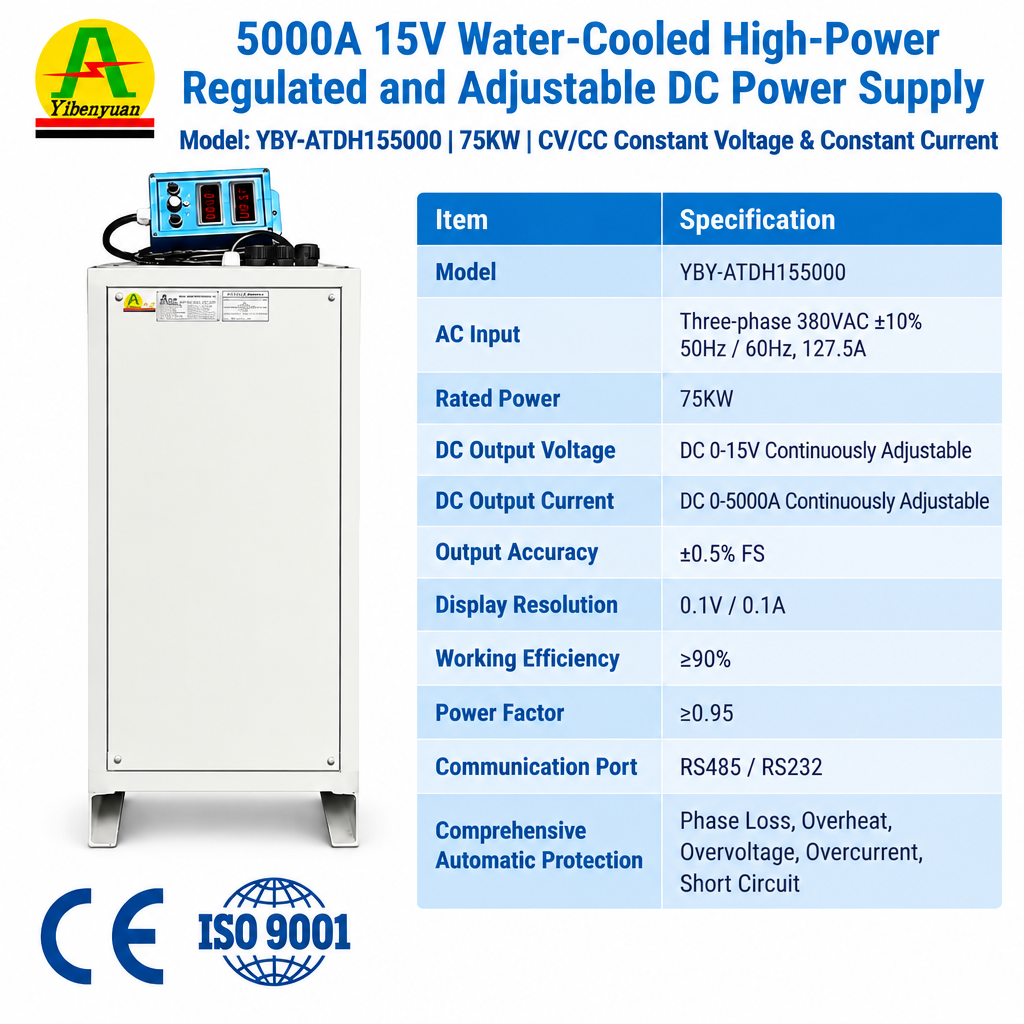
12V/15V 5000A-6000A 75kW Water-Cooled Plating Rectifier
- Current Range: 0-6,000A Digital CC/CV
- Enclosure: Sealed IP54 Anti-Corrosive
- Cooling Style: Closed-Loop Liquid Cooled
- Ripple Factor: ≤ 2% RMS Low Harmonic
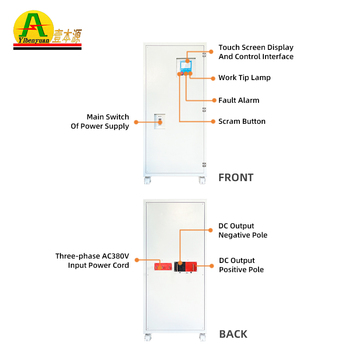
8000A 12V Water-Cooled Heavy Duty Galvanizing Rectifier
- Output Power: 96kW Heavy Continuous Duty
- Polarity Cycling: Configurable Periodic Pulse
- Primary Use: Steel Structure Anti-Corrosion
- Protection: Overheat, Short-Circuit, Phase
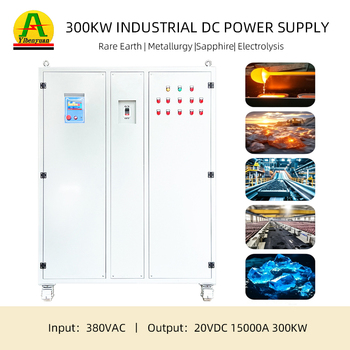
300kW 20V 15000A High Current Electrolysis Rectifier
- Input Voltage: 380V/415V/440V 3-Phase
- Output Current: Up to 15,000A Steady State
- Electrode Protection: Fast Polarity Commutation
- Thermal Structure: De-ionized Pure Copper Cooling
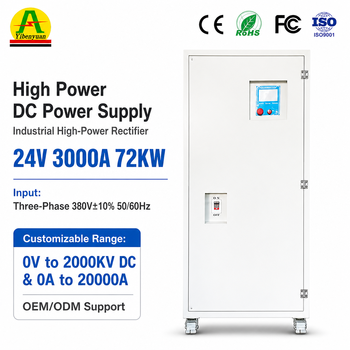
100A-3000A Hard Anodic Oxidation DC Power Supply
- Voltage Sizing: 12V, 24V, 60V, 100V Selectable
- Current Step: Multi-Stage Ramp Programming
- Target Alloy: Marine Aluminum & Titanium
- Control Box: Remote Touchscreen Pedestal
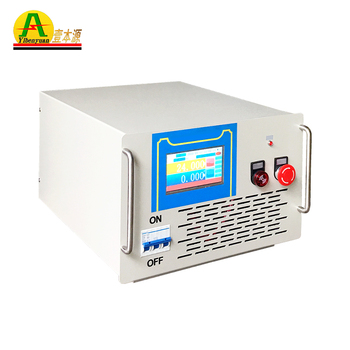
5000W Electrophoresis Paint & ICCP Power Supply
- Input Compatibility: 220V / 380V Auto Detect
- Output Adjustment: 0-250V / 0-20A Smooth DC
- Electrode Polarity: Positive / Negative Selectable
- Regulation Rate: ≤ 0.5% Voltage Stability
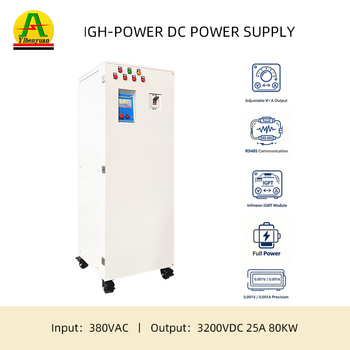
80kW 1000V-3200V High Voltage Testing & Charging Supply
- Voltage Limits: Up to 3,200V DC Regulated
- Switching Tech: High-Frequency Soft Switching
- Safety System: Active Interlock & Arc Quench
- Lab & Pilot Scale: Offshore Energy Equipment Test
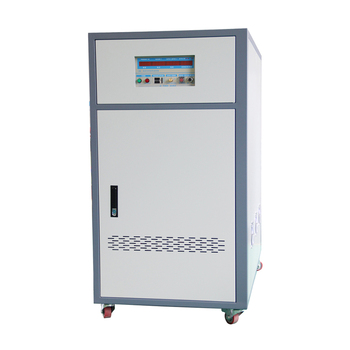
40kVA-500kVA Static Frequency Converter & GPU
- Conversion: 50Hz ↔ 60Hz / 400Hz Aviation
- Phase: Three Phase Pure Sine Output
- Shore & Port Use: Suai Maritime Berth Logistics
- Topology: Solid-State Microprocessor IGBT
Polarity Reversing DC Power Supplies: Engineering Architecture & The Suai Industrial Frontier
As the primary industrial and logistics corridor for Timor-Leste's southern coast, Suai (Cova Lima Municipality) stands at the crossroads of ambitious offshore hydrocarbon logistics, port expansion, coastal civil construction, and critical utility modernization under the strategic Tasi Mane project umbrella. The operational realities of this maritime-adjacent region—characterized by high ambient humidity, elevated saline air corrosion, hard mineralized groundwater, and variable electrical grid stability—place stringent performance requirements on industrial power conversion equipment.
Polarity reversing direct current (DC) power supplies (often categorized as automated periodic reverse or APR rectifiers) represent a specialized class of heavy-duty power conversion systems. Unlike standard unidirectional switched-mode power supplies (SMPS) or legacy silicon-controlled rectifiers (SCR), polarity reversing power supplies incorporate dynamic switching bridge architectures that enable bidirectional DC potential across connected electrodes without physical contact wear or downtime. Understanding how these systems function, how their solid-state commutations perform under tropical coastal stress, and how Chinese specialized manufacturers deliver cost-competitive, highly durable engineering configurations is vital for plant engineers, EPC procurement directors, and utility contractors operating in and around Suai.
1. Solid-State Commutation Topologies vs. Mechanical Reversing in Tropical Marine Climates
In high-salinity equatorial environments like Suai, mechanical contactor assemblies fail primarily due to salt-induced oxidation, galvanic arcing, and pitting of silver alloy contacts during high-current reversal cycles. When operating an electrochemical process requiring frequent polarity reversal—such as electrodialysis reversal (EDR) for brackish borehole water or electrochlorination for seawater biofouling control—switching cycles occur every 15 minutes to 4 hours. Under 24/7 continuous duty, mechanical contactors reach their cycle life within months, requiring expensive maintenance in a region where specialized spare parts face prolonged shipping transit times.
Chinese export-grade polarity reversing power supplies solve this failure mode through full solid-state IGBT H-bridge commutation. By integrating advanced digital signal processor (DSP) gating algorithms, the power supply executes zero-current and zero-voltage soft switching (ZVS/ZCS). During a reverse sequence, the output current is digitally ramped to true zero before the opposing IGBT pair fires, completely eliminating electrical arcing and voltage spikes. Furthermore, conformal coating of all control PCBs against IEC 60068-2-52 salt spray standards ensures that the sensitive firing circuits remain impervious to the tropical marine atmosphere of the Timor Sea coast.
Zero-Cross Arc Suppression
Microsecond DSP algorithms drive current down to baseline zero before internal bridge inversion, mitigating flyback voltage transients and preserving titanium MMO electrode substrate layers.
IP54 / Marine Tropicalization
Chassis designs incorporate polyurethane-dipped copper busbars, hermetically segregated air ducts, or fully sealed liquid-cooled heat exchangers suited for Suai's +38°C ambient conditions.
Autonomous SCADA Integration
Native RS485 Modbus-RTU and optional 4-20mA telemetry allow continuous monitoring of forward/reverse duty cycles, bath amp-hour accumulation, and fault logging from remote control centers.
Localized Industrial Applications Across Suai & The Southern Coast of Timor-Leste
Deploying specialized DC rectification systems in Suai requires mapping electrical specifications to local municipal and industrial realities. The Southern Coast development plan, including the Suai Supply Base (SSB), local maritime transport facilities, and airport rehabilitation, creates four primary application sectors where polarity reversing rectifiers deliver mission-critical value.
A. Groundwater Hardness Descaling & Electrodialysis Reversal (EDR)
Groundwater throughout the Cova Lima plain frequently exhibits high total dissolved solids (TDS), elevated calcium carbonate (CaCO3), and heavy magnesium scaling tendencies. Traditional chemical softening incurs exorbitant supply chain costs due to overseas reagent shipments into the port of Dili followed by overland transport via challenging mountain corridors to Suai. Electrochemical water descaling and EDR systems powered by programmable polarity reversing rectifiers provide a purely physical-chemical alternative. By periodically reversing the electric field across electrode chambers (e.g., alternating between 48V forward and 48V reverse every 30 to 60 minutes), the crystalline mineral scale deposited on the cathode is electrochemically broken down and flushed out during self-cleaning cycles, eliminating the need for periodic acid washing and hazardous chemical inventory.
B. Impressed Current Cathodic Protection (ICCP) & Port Infrastructure
The Suai Supply Base is engineered to handle offshore supply vessels, tugs, and logistics barges supporting offshore exploration in the Greater Sunrise and surrounding petroleum basins. Steel sheet pilings, tubular jetty supports, and submerged intake pipelines in these coastal facilities suffer severe galvanic corrosion accelerated by high tropical water temperatures and warm equatorial currents. Advanced DC supplies operating in constant voltage or constant current mode provide continuous impressed current to counteract corrosion cells. Units configured with periodic reverse test modes permit automated potential surveys and depolarized decay checks, verifying structural integrity against international NACE/ISO 15589 standards without interrupting main protection regimes.
C. Seawater Electrochlorination for Biofouling Control
Industrial facilities drawing seawater for plant cooling or marine sanitation face relentless biofouling from local tropical algae, barnacles, and mollusks. Direct electrolytic generation of active sodium hypochlorite (NaOCl) from ambient seawater is the global standard for antifouling disinfection. However, seawater electrolysis causes rapid precipitation of magnesium hydroxide [Mg(OH)2] onto cathode surfaces. Polarity reversing rectifiers—such as Fenvix's 12V-15V 5000A high-frequency models—periodically invert electrode roles. The resulting local pH drop at the newly anodic surface instantaneously dissolves alkaline earth scale, sustaining 98% chlorine generation efficiency without requiring plant shutdowns for acid bath flushes.
D. Coastal Structural Galvanizing & Specialized Surface Finishing
As structural steel frames, communications towers, and road bridges expand across the Suai corridor, hot-dip galvanizing and electro-galvanizing operations protect metalwork from premature salt attack. Polarity reversing power supplies used in electro-cleaning and pickling stages strip stubborn mill scale, surface greases, and oxides through rapid anodic/cathodic bubbling. This yields clean metal substrates with enhanced zinc adhesion, directly extending the service lifespan of outdoor infrastructure across the Suai highway grid and airport facilities.
Technical Benchmark: Polarity Reversing Rectifiers vs. Conventional Rectification
Plant designers evaluating capital expenditure (CAPEX) versus operational reliability (OPEX) in Suai can consult the comparative matrix below to assess performance differences between traditional silicon-controlled systems and modernized IGBT-based polarity reversing power modules.
| Performance Metric | Guangdong Fenvix IGBT Polarity Reversing | Legacy SCR / Thyristor Rectifier | Mechanical Motor-Generator Set |
|---|---|---|---|
| Power Conversion Efficiency | 89% - 93% Typical | 72% - 81% Under Load | 60% - 70% Max |
| Reversal Switching Speed | ≤ 5 milliseconds (Solid-State DSP) | 1.5 to 4.0 seconds (Contactor) | Manual / Heavy Disconnect |
| Current Ripple Factor (RMS) | ≤ 2.0% Smooth across 10-100% load | 5.0% - 10.0% (requires bulky choke) | High harmonic vibration noise |
| Cooling System Adaptability | Pure Copper Closed-Loop Liquid or Air | Forced Air (susceptible to salt fog) | External Air Fans (frequent brush wear) |
| Electrode Self-Cleaning Ability | Automated digital timing (1s to 999 hrs) | Requires external timer box & relays | Not supported natively |
| Chassis Footprint & Weight | Compact: ~35% of SCR volume | Very Heavy / Crane required | Bulky, high foundation stress |
| Grid Distortion (Power Factor) | ≥ 0.94 Active compensation | 0.70 - 0.82 (Presents grid harmonics) | Variable, low inductive power factor |
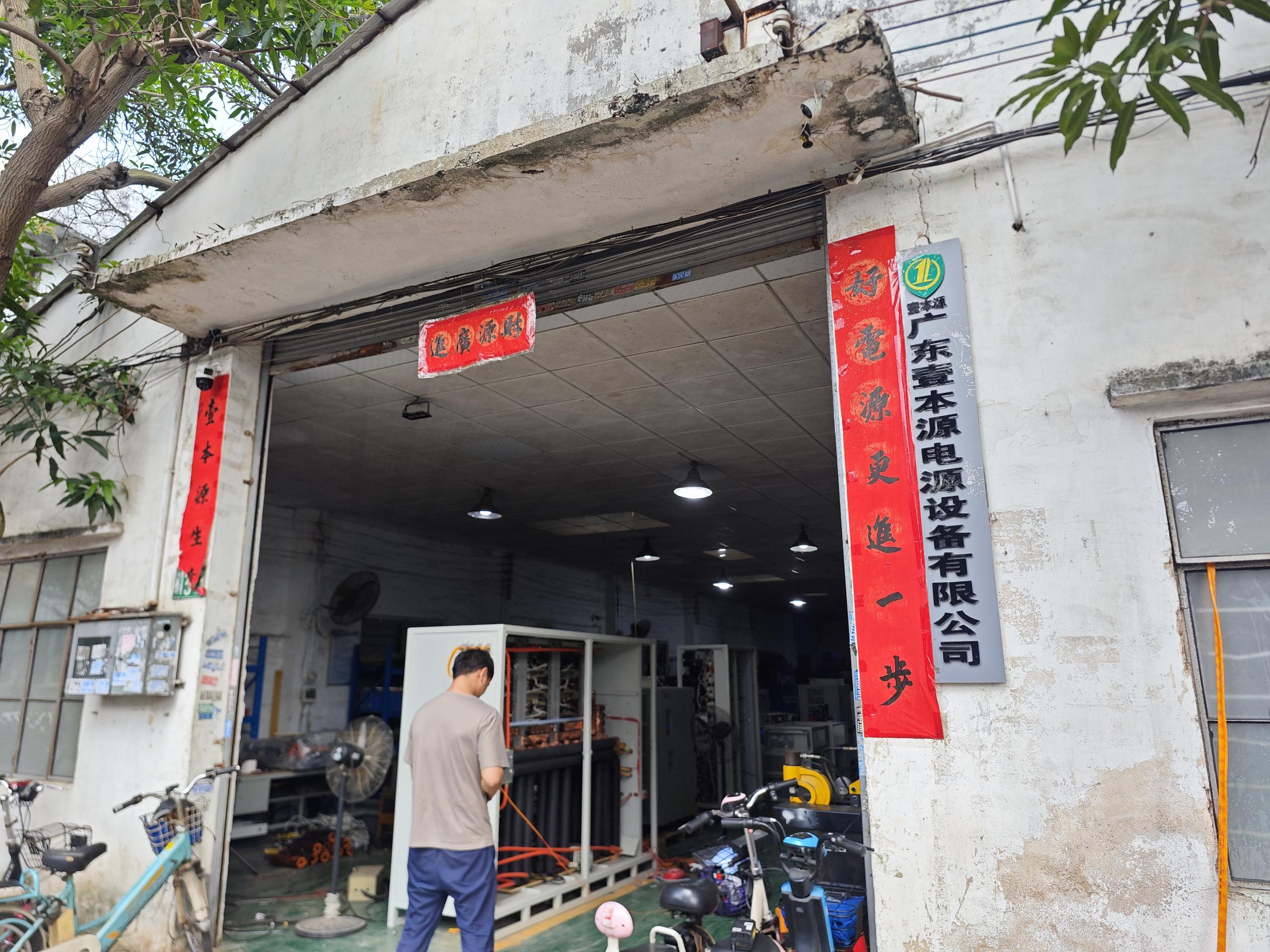
Why International Buyers Partner With Fenvix for Suai Projects
For engineering teams procuring from China for deployment in Timor-Leste, eliminating manufacturing deviations is paramount. Fenvix integrates comprehensive in-house sheet metal processing, precision copper busbar routing, and multi-day full-load burn-in protocols before export packing.
-
100% In-House Mechanical & Electrical Assembly
From plate shearing, laser cutting, and precision tapping to transformer winding, Fenvix controls the entire mechanical envelope to ensure robust marine-grade enclosure seals.
-
Rigorous Full-Load Oscilloscope & Burn-In Testing
Every unit undergoes continuous 24 to 72-hour burn-in under rated current and simulated thermal load, verifying current waveform stability, ripple suppression, and thermal dissipation.
-
TÜV Rheinland Verified Factory & Direct Export Terms
Operating under ISO 9001:2015 with CE, LVD, and EMC conformity, we support verified overseas procurement with FOB, CIF (Dili/Suai), CFR, and direct containerized seaworthy packing.
Emerging Procurement Trends for Power Electronics in Timor-Leste
As the Timorese national economy diversifies under long-term development targets, procurement authorities, regional EPCs, and industrial plant owners in Suai are moving away from legacy low-tier rectifiers in favor of advanced digital architectures. Key market trends include:
1. Resilience to Local Grid Fluctuation & Hybrid Generation Sets
In rural and industrial zones along the southern coast, heavy machinery is frequently powered by dedicated diesel gensets or connected to regional transmission lines prone to voltage sags and surges (±15% to 20%). Modern polarity reversing power supplies exported to Suai are now specified with ultra-wide input AC tolerance (typically 380V ± 15%, 50Hz/60Hz compatible) coupled with fast-recovery phase-lock loops (PLL). This prevents rectifier shutdowns during large motor start-ups across local crushing plants or dockyard cranes.
2. Transition to Liquid-Cooled Enclosures in Coastal Plants
The relentless humidity and salt-laden sea mist characteristic of Suai create chronic maintenance liabilities for conventional fan-blown air-cooled power cabinets. Airborne salt particles accumulate across circuit boards, absorbing moisture to create short-circuit paths. Progressive facilities are actively switching to closed-loop water-cooled or water-to-air heat-exchanger rectifiers. By circulating de-ionized water through internal nickel-plated copper cold plates, the electrical compartment can remain hermetically sealed to IP55 or IP65 ingress standards, fully isolating sensitive power semiconductors from hostile atmospheric contaminants.
3. Integration with Telemetry & Remote Supervisory Control (Industry 4.0)
Due to the geographic distance between engineering headquarters in Dili and production facilities in Suai, on-site personnel are often non-specialist operators. Industrial buyers increasingly mandate standard RS485 (Modbus-RTU) or Ethernet-based industrial communication modules. This architecture enables off-site technical teams to monitor real-time operating metrics, fine-tune forward/reverse timer parameters, log cumulative Ah usage for electrode life calculation, and conduct diagnostic health checks without dispatching engineers over rugged mountain roads.
Frequently Asked Questions: Sourcing from China for Suai
Essential guidance covering technical configuration, environmental suitability, shipping logistics, and warranty protocols for Timorese buyers.
What input electrical specifications are required for Suai installations?
Our standard export power supplies are built for three-phase 380V/400V/415V AC at 50Hz or 60Hz. Because industrial facilities in Suai frequently draw power from local diesel generator banks or fluctuating utility lines, we can custom-engineer wide-tolerance input stages (340V to 460V) with soft-start circuits that restrict inrush currents to less than 120% of rated full-load value.
How fast can the polarity reversal switch occur, and does it cause current spikes?
With our solid-state IGBT H-bridge architecture, the polarity transition occurs in less than 5 to 10 milliseconds. Fenvix DSP controllers enforce a zero-cross dead-band: output current drops to zero before polarity inversion, preventing inductive voltage kicks, line harmonics, or damage to delicate catalytic coatings on MMO titanium electrodes.
Can the reversing cycle timers be freely programmed by local operators?
Yes. Forward and reverse cycle durations can be independently configured from 1 second up to 999 hours via the front-panel digital touchscreen or external remote controller. In addition, multi-step ramping profiles (e.g., 5 min forward at 500A → 30 sec reverse at 100A → rest period) are natively supported for complex electro-cleaning regimes.
Should we specify forced-air cooling or liquid water cooling for coastal Suai?
For installations below 30kW located inside clean, air-conditioned electrical rooms, forced-air cooling with triple-coated conformal circuit protection is economical. For continuous 24/7 high-current duty (>1,000A) or units operating near seawater/corrosive chemical baths, closed-loop water cooling is strongly recommended to protect internal electronics from ambient salt mist.
What are the typical transit routes, shipping terms, and packing standards?
We export under FOB, CFR, CIF Dili or Suai port, or DDP terms. Equipment is packed in fumigated, moisture-sealed, vacuum-bagged seaworthy wooden crates lined with heavy desiccants. Cargo typically routes from our Guangzhou/Shenzhen port facilities to Dili via Singapore or Surabaya, followed by coastal feeder or reinforced overland transport to Suai.
How are warranty, spare parts, and commissioning handled remotely?
Fenvix provides a 12-month standard manufacturer warranty extendable to 24 or 36 months. We include plug-and-play spare driver boards and IGBT modules with export shipments. Commissioning is supported via live high-definition video diagnostics, detailed wiring schematics, and multilingual technical manuals; on-site engineer dispatch is also available under project service contracts.
Request an Engineered Sizing & Factory Price Quote
Contact Fenvix's senior power electronics engineering team today. Provide your process bath volume, target current density, or water descaling parameters, and receive a complete technical proposal and quotation within 24 hours.