Featured Industrial Rectifiers & Precision DC Systems
Purpose-engineered for continuous-duty surface treatment, chemical oxidation, and high-frequency pulse electropolishing lines across international assembly and finishing facilities.
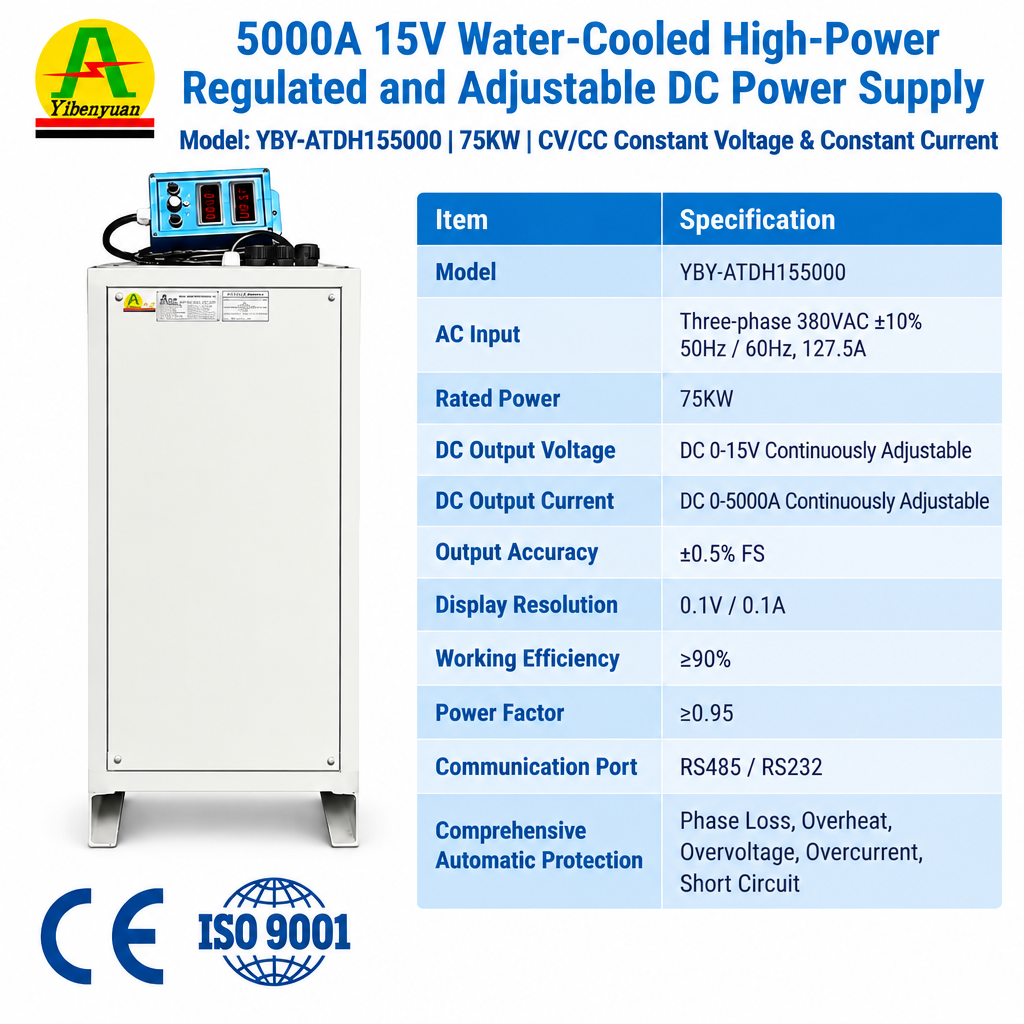
12V/15V 5000A–6000A 75kW Water-Cooled HF Rectifier
- Output Voltage:12V / 15V Variable
- Current Range:0 – 6,000A CC/CV
- Cooling Mode:Deionized/Chilled Water
- Ripple Factor:≤ 2% Full Load
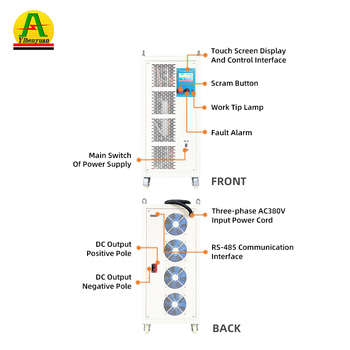
12V 4000A 48kW High-Frequency DC Power Supply
- Output Power:48kW Constant Rated
- Control Mode:CV / CC Digital Touch
- Efficiency:≥ 90% IGBT Inverter
- Protection:Phase-Loss, Thermal, OVP
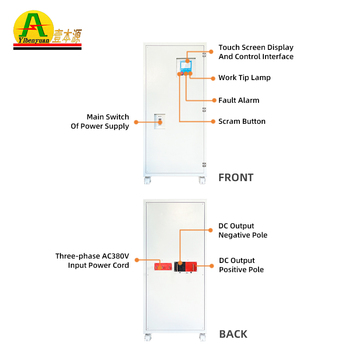
8000A 12V Industrial Water-Cooled Galvanizing Source
- Output Current:0 – 8000A Continuous
- Ingress Rating:Sealed Cabinet IP54
- Interface:RS485 Modbus / 4-20mA
- Process:Electropolish / Hard Chrome
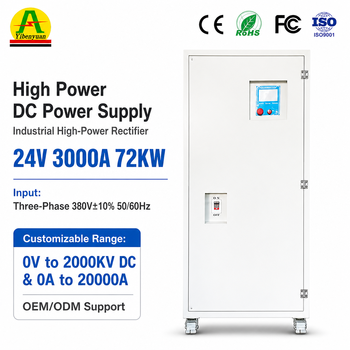
100A–3000A Step-Ramp Anodic Oxidation Rectifier
- Step Control:Multi-Stage Current Ramp
- Voltage Config:12V / 24V / 60V Output
- Interface:Siemens PLC Compatible
- Application:Architectural / Military Alloy
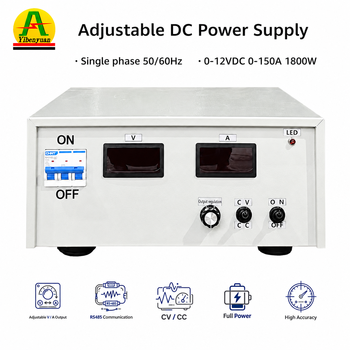
12V 150A Benchtop Precision Electropolishing Unit
- Input Rating:220V Single / 380V 3-Ph
- Ripple Rate:< 1% Ultra-Smooth
- Form Factor:Compact Rack / Desktop
- Usage:Surgical Tools, Gold, Silver
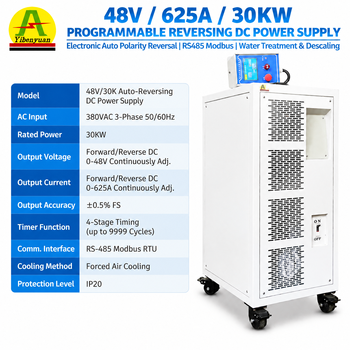
48V 625A Auto Polarity-Reversing Descaling Supply
- Rated Output:48V / 625A 30kW
- Reverse Period:1s – 9999s Micro-Adjustable
- Architecture:Solid-State H-Bridge
- Field:Water Descaling, Deburring
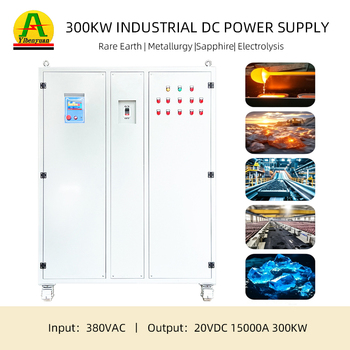
300kW 20V 15,000A Heavy Metallurgy Rectifier
- Total Power:300kW Megawatt Modularity
- Current Load:15,000A Steady State
- Design:Dual-Cabinet Water Manifold
- Application:Smelting, Strip Electropolish
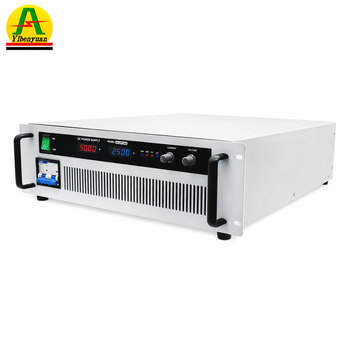
1.5kW–5kW Microprocessor Laboratory DC Supply
- Regulation:0.01% Voltage/Current Stability
- Transient Speed:≤ 200μs Recovery
- Standard:CE, EMC, RoHS Certified
- Interface:CANopen, RS232, Analog 0-10V
Electropolishing Applications Serving Villa Nueva's Expanding Manufacturing Base
Strategic engineering analysis addressing the specific metallurgical finishing requirements in the southern industrial corridors of the Guatemala Department.
As Villa Nueva continues to cement its role as a premier logistics and advanced manufacturing hub within the Metropolitan Area of Guatemala, the local demand for specialized surface treatments has surged. Driven by both domestic infrastructural expansion and nearshoring export demands directed toward North and Central American supply chains, local metalworking, fabrication, and chemical facilities require unprecedented consistency in their finishing operations. Electropolishing (EP) stands out as an indispensable electro-chemical process: unlike mechanical abrasive grinding, which introduces sub-surface microscopic stress and embedded debris, industrial electropolishing selectively strips atomic micro-peaks from metallic substrates. To execute this process with zero surface pitting and uniform sheen, the system demands an exceptionally steady direct current (DC) power source engineered to counter fluctuating mains voltages and harsh local ambient conditions.
Beverage & Food-Grade Stainless Equipment
Industrial processing zones in Villa Nueva supply substantial volumes of confectionery, commercial baking, dairy, and beverage machinery. Electropolishing stainless tanks (AISI 304/316L) passivates surfaces by enriching the chromium-to-iron oxide ratio, ensuring total resistance to bacterial clinging and aggressive clean-in-place (CIP) chemicals.
Medical-Grade Instruments & Cleanroom Hardware
With cleanroom production and medical device assembly migrating toward high-efficiency regional centers, local manufacturers require micro-deburring down to sub-micron roughness average (Ra) values. Our high-frequency rectifiers deliver steady, ripple-free currents that prevent micro-arcing on delicate surgical blades, orthopedics, and cannulas.
Structural Metallurgy & Marine-Exposed Hardware
Products routed from Villa Nueva through regional maritime conduits require superior passivation to handle high tropical humidity and coastal salts. Multi-pulse IGBT electropolishing seals microscopic crevices on welded assemblies, structural brackets, and commercial heat exchangers, drastically extending operational life cycles.
Emerging Metallurgical & Finishing Trends in Villa Nueva
Transforming traditional plating and polishing facilities into automated, energy-conscious, and data-driven installations.
The industrial landscape in the southern sector of Guatemala Department is transitioning from labor-intensive mechanical buffing to automated electrochemical production. Several key technological transitions govern procurement strategies for local engineering plants:
1. Shift from Legacy Silicon-Controlled Rectifiers (SCR) to High-Frequency Switch Mode: Traditional thyristor/SCR power supplies are known for generating heavy harmonic distortion, poor line efficiency (rarely exceeding 65–70%), and excessive thermal losses under tropical ambient conditions. Modern factories in Villa Nueva are aggressively phasing out these legacy units in favor of Fenvix high-frequency IGBT-based switch-mode rectifiers (SMPS). Operating at 20kHz to 50kHz switching speeds, our rectifiers achieve efficiency thresholds of 90% or higher, dramatically curbing operational electrical costs.
2. Tightening Environmental and Effluent Compliance: Sustainable manufacturing frameworks require precise dosing and minimal chemical waste. The chemical electrolyte baths used in electropolishing (typically blends of phosphoric and sulfuric acids) require exact current density boundaries to sustain the anodic viscous film. Excessive current or poor ripple control leads to rapid bath acidification, sludging, and accelerated anode dissolution. By employing low-ripple (≤2%), finely tuned CV/CC rectifiers, facilities minimize electrolyte deterioration and reduce effluent treatment burdens.
3. Industry 4.0 Telemetry and PLC Synchronization: Standalone manual potentiometers are rapidly becoming obsolete on modern finishing lines. Villa Nueva’s major producers require seamless integration with central supervisory systems (SCADA). Our electropolishing rectifiers feature integrated RS485 Modbus, Profibus, or isolated 4–20mA/0–10V analog communication channels, giving process engineers real-time visibility into instantaneous current density, voltage spikes, thermal trends, and accumulated amp-hour metrics.
| Technical Characteristic | Conventional SCR / Thyristor Rectifier | Fenvix High-Frequency IGBT Inverter | Benefit to Villa Nueva Operators |
|---|---|---|---|
| Electrical Efficiency | 68% – 75% at variable loads | ≥ 90% across 30%–100% duty | Significant reduction in peak kilowatt demand charges |
| Current Ripple Factor | 5% – 10% (Requires bulky filter banks) | ≤ 2% Full Rated Output | Eliminates orange-peel effects & microscopic etching |
| Thermal Management | Open-chassis air cooling prone to fumes | Fully sealed IP54 chassis with water heat-exchangers | Immunity to acidic fumes, humidity, and atmospheric dust |
| Response Time | Slow (100ms – 300ms line response) | Ultra-fast dynamic response (≤ 10ms) | Instantaneous suppression of tank short circuits and arcs |
| Footprint & Weight | Bulky, heavy structural footprints | 1/3 the volume and weight of SCR cabinets | Flexible placement on mezzanines or right alongside tanks |
Process Specification Guidelines for Electropolishing Rectifiers
Determine exact electrical parameters according to chemical tank size, target workpiece surface area, and anodic bath dynamics.
1. Surface Area & Density
Determine maximum batch load in square decimeters or square feet. Standard stainless steel electropolishing requires current densities between 15A/dm² and 35A/dm² (140–325 A/ft²). Undersizing the rectifier leads to etching instead of true electrochemical leveling.
2. Voltage Overhead & IR Drop
While electropolishing cell reactions require nominal potential, heavy busbar runs, cable resistance, and tank electrode spans generate ohmic drops (IR loss). Fenvix recommends 12V to 18V output ceilings to prevent current starvation on complex geometric racks.
3. Air vs. Water Cooling
For installations in warm climates with ambient air carrying acidic vapors, our closed-circuit water-cooled designs (copper heat-sink manifolding) isolate all internal switching electronics, IGBTs, and driver cards from hazardous corrosive exposure.
Why International Engineers Choose Fenvix as Their Direct Factory Partner
Direct manufacturing transparency, certified component pedigree, and rigorous testing protocols for mission-critical power systems.
Guangdong Fenvix Technology Co., Ltd. has delivered specialized industrial DC systems and power converters from our production facility in Guangdong, China since 2013. When procuring high-value electropolishing or electroplating power infrastructure, international buyers must navigate the critical gap between third-party exporters and genuine engineering manufacturers. Fenvix provides direct engineering oversight from sheet metal cutting and copper busbar punching through to multi-point oscilloscope testing and factory burn-in.
Our engineering workshop handles laser cutting, mechanical punching, milling, and busbar tapping in-house. This gives us tight control over cabinet build quality, magnetic transformer thermal balances, and wiring harnesses. Every rectifier shipped overseas undergoes complete oscilloscopic ripple analysis, dielectric insulation breakdown tests, and temperature rise monitoring under maximum continuous rating. Overseas buyers benefit from flexible Incoterms (FOB, CFR, CIF, DDP) and comprehensive technical support backed by verified engineering drawings, electrical schematics, and video commissioning walkthroughs.
Frequently Asked Questions: Electropolishing Power Supplies for Villa Nueva
Practical engineering, electrical compatibility, and freight answers for facility managers and technical buyers.