Featured Heavy-Duty Rectifiers & Anodizing Power Systems
Precision-engineered, ripple-controlled DC power units calibrated for continuous 24/7 duty cycles across anodizing, electroplating, and electrolysis baths in Eastern European industrial environments.

12V/15V 5000A-6000A 75kW Water-Cooled DC Rectifier
- Output Range: 0–15V / 0–6000A
- Cooling Topology: Deionized Water Cooled
- Regulation Mode: CV / CC Auto Switch
- Ripple Factor: ≤ 2% RMS Across Load
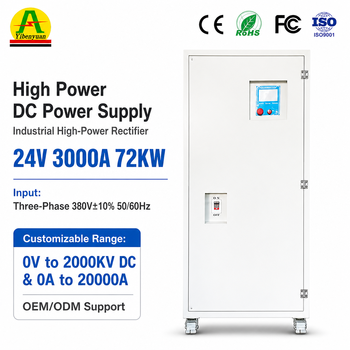
100A–3000A Anodic Oxidation Precision Rectifier
- Voltage Options: 12V / 24V / 48V / 60V
- Current Rating: 100A to 3,000A Custom
- Control Interface: RS485 Modbus / 4-20mA
- Target Application: Aluminum Hardcoat Anodizing
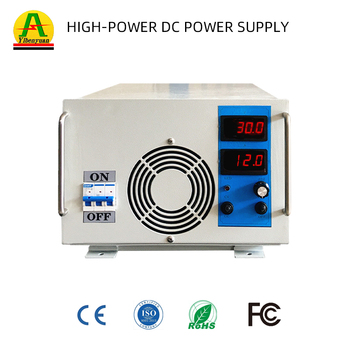
Titanium Alloy 150V 50A Specialized Anodizing Supply
- Output Specs: 0–150V / 0–50A Continuous
- Grid Input: 380V ±10% 3-Phase 50Hz
- Ramping Ability: Multi-Stage Soft Start
- Usage: Medical & Aerospace Titanium
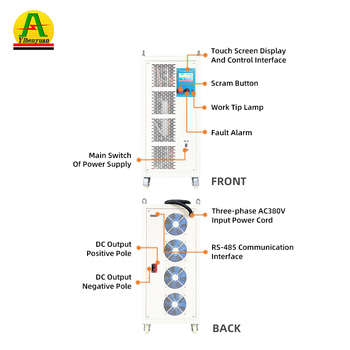
12V 4000A 48kW High-Frequency IGBT Plating Source
- Efficiency: ≥ 90% at Rated Load
- Cooling Design: Forced Air / Isolated Duct
- Protections: Over-temp, Short, Phase loss
- Applications: Zinc, Nickel & Barrel Lines

8000A 12V High-Amperage Water-Cooled Rectifier
- Output Current: 0–8000A Adjustable
- Cabinet Protection: IP54 Sealed Enclosure
- Heat Exchanger: Internal Pure Copper Tube
- Suitability: Continuous Hard Chrome / Hardcoat
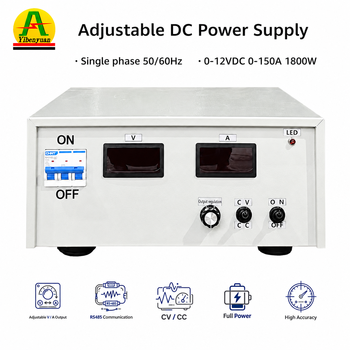
12V 150A Compact High-Frequency Laboratory Benchtop
- Footprint: Compact 19-inch Benchtop
- Display: Digital V/A Dual Meters
- Stability: ≤ 0.5% Voltage Drift
- Use Cases: PCB Precious Metal & R&D Baths

48V 625A 30kW Programmable Auto-Reversing DC Source
- Reversal Cycle: Programmable Millisecond-Level
- Power Factor: > 0.94 at Full Capacity
- Digital Interface: RS485 PLC / Modbus-RTU
- Specialty: Electropolishing & Water Descaling

300kW 20V 15,000A Ultra-High Current Rectifier
- Current Capacity: Up to 15,000A Busbar
- Cooling Structure: Dual Loop Liquid-to-Water
- Cabinet Build: Anti-Corrosive Epoxy Coated
- Target: Large-Scale Industrial Electrolysis
Executive Summary: Surface Engineering Economics in the Minsk Industrial Basin
The industrial ecosystem of Minsk and the wider Minsk Region (including industrial hubs such as Zhodino, Borisov, and the Great Stone China-Belarus Industrial Park) stands as an engineering epicenter in Eastern Europe. Renowned for heavy commercial vehicle fabrication (MAZ, BelAZ), agricultural machinery (MTZ - Minsk Tractor Works), precision optoelectronics (Peleng), and aerospace maintenance (Minsk Civil Aviation Plant No. 407), the region demands strict adherence to rigorous surface finishing standards. In particular, anodizing power supplies (anodic oxidation rectifiers) serve as the mission-critical heart of electrochemical surface treatment, directly dictating oxide layer hardness, dielectric breakdown resistance, micro-porosity uniformity, corrosion threshold in saline atmospheres, and aesthetic consistency.
Historically reliant on legacy Soviet-era thyristor-based (SCR) silicon rectifiers, industrial enterprises across Minsk are undertaking sweeping modernizations. The transition toward high-frequency switch-mode power supplies (SMPS) utilizing insulated-gate bipolar transistors (IGBTs) has become an urgent technological mandate. Unlike traditional line-frequency units that produce substantial ripple factors (>5% RMS) and consume excessive reactive power, modern IGBT switch-mode rectifiers deliver sub-1% ripple, superior power factor (≥0.93), and rapid dynamic response times (<5 ms). For Belarusian surface finishing plants facing strict Eurasian Economic Union (EAEU) technical regulations and energy efficiency targets, selecting the right rectifier factory is both a capital allocation priority and a determinant of production yield.
Technical Insight: In aluminum hard anodizing (MIL-A-8625 Type III or GOST 9.305-84), an increase in ripple factor above 2% leads directly to excessive Joule heating within the micro-pores of the barrier oxide layer. This triggers premature oxide redissolution in chilled sulfuric acid baths, burning structural corners and resulting in unacceptably soft layers (<350 HV). High-frequency pulse and DC rectifiers with low-ripple topologies are imperative for achieving 50+ micron hardcoat layers on difficult aerospace-grade alloys like AL-Cu (2024) and Al-Zn-Mg-Cu (7075).
Top 10 Anodizing Power Supply Factories & Suppliers Serving Minsk
Procuring industrial electrochemical power supplies in the Minsk territory requires a rigorous evaluation of engineering capacity, localized grid compatibility (380V/400V 50Hz, frequent line harmonic fluctuations), ambient temperature tolerances (sub-zero continental winter heating versus summer peak load), and compliance with EAC (Customs Union) technical standards. The following benchmark profiles the top 10 global and regional manufacturers possessing verifiable supply records to the Belarusian market.
| Manufacturer | HQ / Manufacturing Origin | Primary Power Topology | Max Current Capacity | Specialization & Minsk Market Focus |
|---|---|---|---|---|
| 1. Fenvix Technology | Guangdong, China | Modular High-Frequency IGBT (Water/Air) | 15,000A DC / Cabinet | Customized high-current rectifiers, zero MOQ, harsh-environment water cooling, full Russian/English technical support. |
| 2. Munk GmbH | Hamm, Germany | Switch-Mode & Thyristor Platforms | 20,000A DC | Premium European engineering; automotive Tier-1 supplier lines; long legacy in Continental Europe. |
| 3. Plating Electronic | Sexau, Germany | High-Precision Pulse-Reverse Switch-Mode | 10,000A DC | Specialist in micro-arc oxidation (MAO), printed circuit board copper plating, and precision pulse anodizing. |
| 4. KraftPowercon | Surte, Sweden | Modular Switch-Mode & SCR Hybrid | 24,000A DC | Heavy surface finishing lines, continuous strip anodizing, high reliability across Nordic/Eastern European grids. |
| 5. Dynapower Company | Vermont, USA | Heavy SCR & High-Power Inverter | 50,000A DC | Mega-scale metal finishing and heavy electrolysis; high capital investment equipment with global service footprints. |
| 6. Belenergomash Supply | Regional / CIS Network | Classic Thyristor Rectifier Cabinets | 6,000A DC | Traditional domestic engineering support; focused on heavy metallurgical electroplating and legacy factory retrofits. |
| 7. Spang Power Electronics | Pennsylvania, USA / Europe | SCR & Transformer Systems | 12,000A DC | High-reliability industrial process control, automated titanium anodizing lines, rugged glass/metal heating. |
| 8. American Plating Power | Florida, USA | Switch-Mode Modular DC Systems | 30,000A DC | Architectural aluminum profile anodizing lines, multi-color electrolytic coloring power installations. |
| 9. E-M-S Electro Metall | Ratingen, Germany | Custom Chemical Rectifiers | 8,000A DC | Bespoke automated surface finishing line integration, turnkey chemical process rectifiers across Central Europe. |
| 10. Sanrex (Sansha Electric) | Osaka, Japan | Compact IGBT Switch-Mode Units | 5,000A DC | Ultra-compact semiconductor and electronic components plating, high-precision constant voltage regulation. |
Fenvix Engineering Stance
As a specialized original equipment manufacturer, Guangdong Fenvix Technology Co., Ltd. bridges the critical gap between ultra-expensive Western European hardware and rigid mass-production lines. Operating out of Guangzhou with over 13 years of technical design history, Fenvix engineers provide fully tailored cabinets, programmable multi-step voltage/current slope ramps, and robust internal liquid-cooling loops specifically calibrated for Belarusian industrial temperatures.
Comprehensive Verification
Every Fenvix rectifier undergoes severe full-load burn-in testing on dedicated resistor/inductive banks prior to export packaging. Verified on-site by TÜV Rheinland and operating under an ISO 9001 certified quality framework, Fenvix delivers CE-, RoHS-, LVD-, and EMC-compliant DC systems capable of direct integration into automated SCADA architectures across the Minsk industrial corridor.
Zero MOQ & Agile Delivery
Unlike large conglomerate manufacturers enforcing multi-unit volume commitments and 6-month delivery queues, Fenvix maintains a strict Zero Minimum Order Quantity policy. Prototypes, laboratory R&D rectifiers, and bespoke 15,000A water-cooled industrial cabinets are fabricated within compressed manufacturing windows and dispatched under flexible Incoterms (CIF, CIP, DDP Minsk).
Localized Industrial Application Scenarios Across the Minsk Basin
Electrochemical anodizing requirements diverge significantly depending on the underlying alloy, bath composition, and final component operating environment. In Minsk, four core sectors drive heavy-duty rectifier demand:
1. Heavy Automotive & Tractor Hydraulics
At facilities like MTZ and MAZ, hydraulic spool valves, aluminum cylinder pistons, and high-pressure transmission casings undergo Type III Hardcoat Anodizing (MIL-A-8625 / GOST 9.305-84). These components require 40 to 60 micron dense oxide layers to withstand extreme friction and abrasive slurry. Rectifiers must maintain precise current density (typically 2.5 to 3.5 A/dm²) while operating inside chilled electrolyte tanks (-2°C to +4°C). Constant current control with automated voltage ceiling limiting prevents the destructive phenomenon known as "anodic punch-through."
2. Aerospace Components & MRO Lines
Serving aircraft restoration, avionics structures, and UAV chassis in the Minsk Civil Aviation cluster, sulfuric acid and boric-sulfuric acid (BSA) anodizing lines demand tight film porosity control. Because structural integrity is paramount, hydrogen embrittlement avoidance and strict RMS ripple limitation (<1.5%) are mandated to prevent micro-cracks in flight-critical forgings (2000 and 7000 series aluminum). Multi-stage programmable voltage ramp-up prevents thermal stress on delicate thin-walled aero profiles.
3. Architectural Aluminum & Great Stone Park
Continuous profile anodizing for structural building facades, window systems, and solar mounting brackets in the Minsk construction cluster utilizes high-amperage (5,000A to 12,000A) low-voltage (18V to 24V) DC systems. High electrical efficiency (≥90%) is paramount here: since electricity accounts for over 40% of the operational cost in electrolytic surface coating, using energy-efficient switch-mode rectifiers delivers rapid payback over legacy thyristor rectifiers.
Engineering Trends: Cold Climate Thermal Dynamics & Closed-Loop Cooling
Deploying high-power electrochemical rectifiers in Belarus presents distinct environmental and electrical challenges that standard commercial catalogue equipment fails to resolve. Engineers must address three vital operational considerations:
1. Closed-Loop Liquid-to-Water Heat Exchangers for Sub-Zero Winters
Direct air-cooling poses serious hazards in chemical surface treatment plants: sulfuric acid, chromic acid, and hydrochloric fumes degrade exposed cooling fan blades, printed circuit boards, and copper busbars. While air-cooled units suck corrosive workshop vapor through the cabinet, Fenvix water-cooled rectifiers operate inside fully sealed IP54 to IP65 enclosures. In Minsk facilities, where winter outdoor temperatures routinely drop below -15°C, external cooling towers require glycol anti-freeze solutions. Fenvix incorporates stainless steel plate heat exchangers that isolate the internal deionized cooling loops from dirty or glycol-treated factory process water, preventing electrolytic corrosion inside the power semiconductor heatsinks.
2. Digital Twin, SCADA, & Smart Busbar Monitoring
Belarusian manufacturing is undergoing widespread digital integration. Modern electroplating and anodizing lines at modernized facilities operate under central supervisory control systems (SCADA). Rectifiers can no longer exist as standalone analog cabinets. Fenvix integrates native RS485 Modbus-RTU, Profinet, and 4–20 mA analog interfaces directly on the control motherboard. Real-time feedback of actual bath voltage, current density, amp-hour accumulation (essential for chemical doser replenishment), and heatsink thermal profiles are streamed continuously to line operators.
3. Harmonic Attenuation on Industrial Grids
Heavy motor loads from adjacent metal-stamping presses and foundry cupolas frequently distort industrial distribution grids in Minsk's southeastern manufacturing zones. Classic 6-pulse thyristor rectifiers inject severe 5th and 7th harmonic currents back into the utility line (Total Harmonic Distortion - THD often exceeding 30%), triggering transformer overheating and power factor penalties. Modern high-frequency IGBT rectifiers utilize active three-phase diode bridge rectifiers followed by high-frequency DC link chokes, slashing input current distortion to manageable thresholds and sustaining an input power factor above 0.94 without bulky external capacitor banks.
Technical Showdown: High-Frequency IGBT vs. Legacy Silicon Controlled Rectifier (SCR)
To quantify the financial and metallurgical advantages for factory managers evaluating plant retrofits, the table below highlights the engineering metrics between conventional thyristor hardware and modern high-frequency switch-mode power systems.
| Performance Parameter | Legacy Thyristor (SCR) System | Fenvix High-Frequency IGBT Rectifier | Production Impact in Minsk Anodizing Plants |
|---|---|---|---|
| Operating Efficiency | 70% – 78% (Line frequency loss) | 90% – 94% | Lowers factory kilowatt-hour billing by up to 25–30% per metric ton of anodized aluminum. |
| Output Ripple (RMS) | 5% – 12% without massive chokes | ≤ 1% – 2% (Smooth DC) | Drastically reduces pore burning; ensures uniform micro-hardness across intricate machined geometries. |
| Physical Footprint & Weight | Massive oil-immersed or air tank; >2,500 kg | Compact modular cabinet; ~450 kg | Frees up valuable floor space adjacent to bath tanks, shortening expensive copper busbar runs. |
| Dynamic Response Time | Slow (100 – 200 milliseconds) | Ultra-Fast (< 2 milliseconds) | Prevents over-current pitting when racks contact bath cathodes; enables microsecond pulse profiles. |
| Power Factor (cos φ) | Poor at partial load (0.65 – 0.75) | Consistently High (> 0.93) | Eliminates utility reactive power penalty surcharges from regional power distribution boards. |
Factory Authority: Guangdong Fenvix Technology Manufacturing Excellence
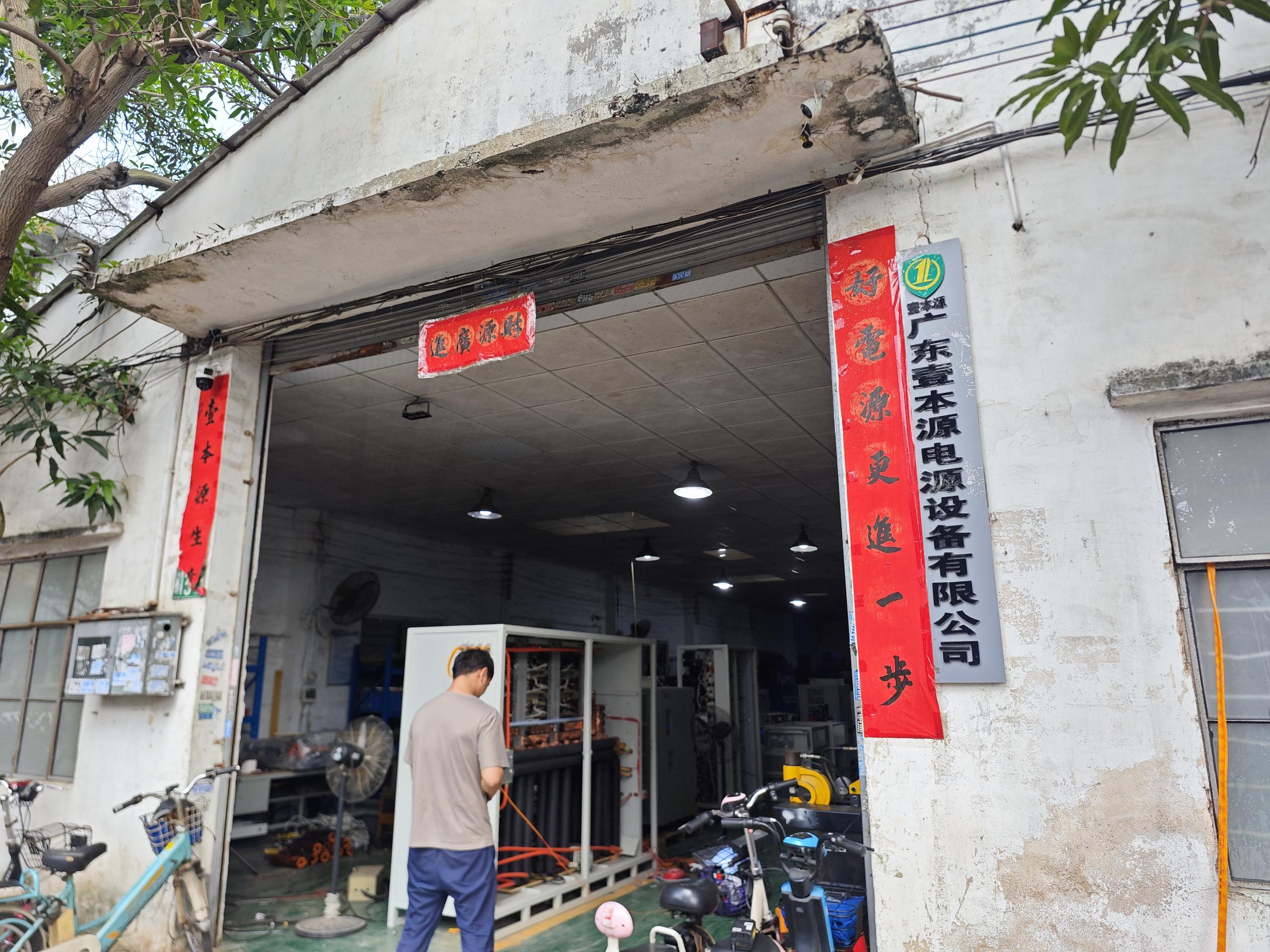
Unlike pure trading entities or engineering brokers, Guangdong Fenvix Technology Co., Ltd. controls the entire industrial manufacturing lifecycle from raw copper busbar fabrication to finished high-voltage test bay commissioning. Situated across 3,000 m² of modernized manufacturing floor in Guangdong, China, Fenvix unites mechanical, power electronic, and software engineering under one roof.
In-House Metalworking & Assembly
Corrosive acid mist environments destroy poorly prepared enclosures. Fenvix executes CNC plate shearing, automated turret punching, precision milling, and anti-corrosive electrostatic epoxy powder coating inside our own metalworking shop. Custom pure T2 electrolytic copper busbars are silver- or tin-plated in-house to minimize interface resistance and ensure zero voltage loss across 5,000A to 15,000A current paths.
- Production Facility: 3,000 m² Integrated Workshop
- Engineering Capability: 13+ Years Bespoke Power Design
- Verification: TÜV Rheinland On-Site Audited
- Quality Standard: ISO 9001 Certified System




Minsk Industrial Buyer FAQ: Procurement, Compliance & Engineering Sizing
Compiled by Fenvix application engineers addressing recurring technical and commercial inquiries from chief power engineers and procurement directors across Belarus.
How do we size rectifier current and voltage for an aluminum hard anodizing line in Minsk?
Can Fenvix rectifiers integrate into existing Russian or European PLC SCADA networks?
How are logistics, customs documentation, and delivery handled to Minsk?
Why is water cooling strongly recommended over air cooling for anodizing plants?
What is Fenvix's policy regarding Minimum Order Quantities (MOQ) and warranty support?
Modernize Your Anodizing & Surface Treatment Power Systems
Connect directly with Fenvix application engineers. Share your bath parameters, alloy specifications, and incoming factory voltage for a comprehensive technical recommendation and quotation within 24 hours.
Inquire Now