Industrial Power Systems Engineered for Surface Finishing
Precision-engineered high-frequency switch-mode power supplies, electrolytic rectifiers, and high-voltage DC equipment designed to excel in high-humidity, marine-saline industrial environments.
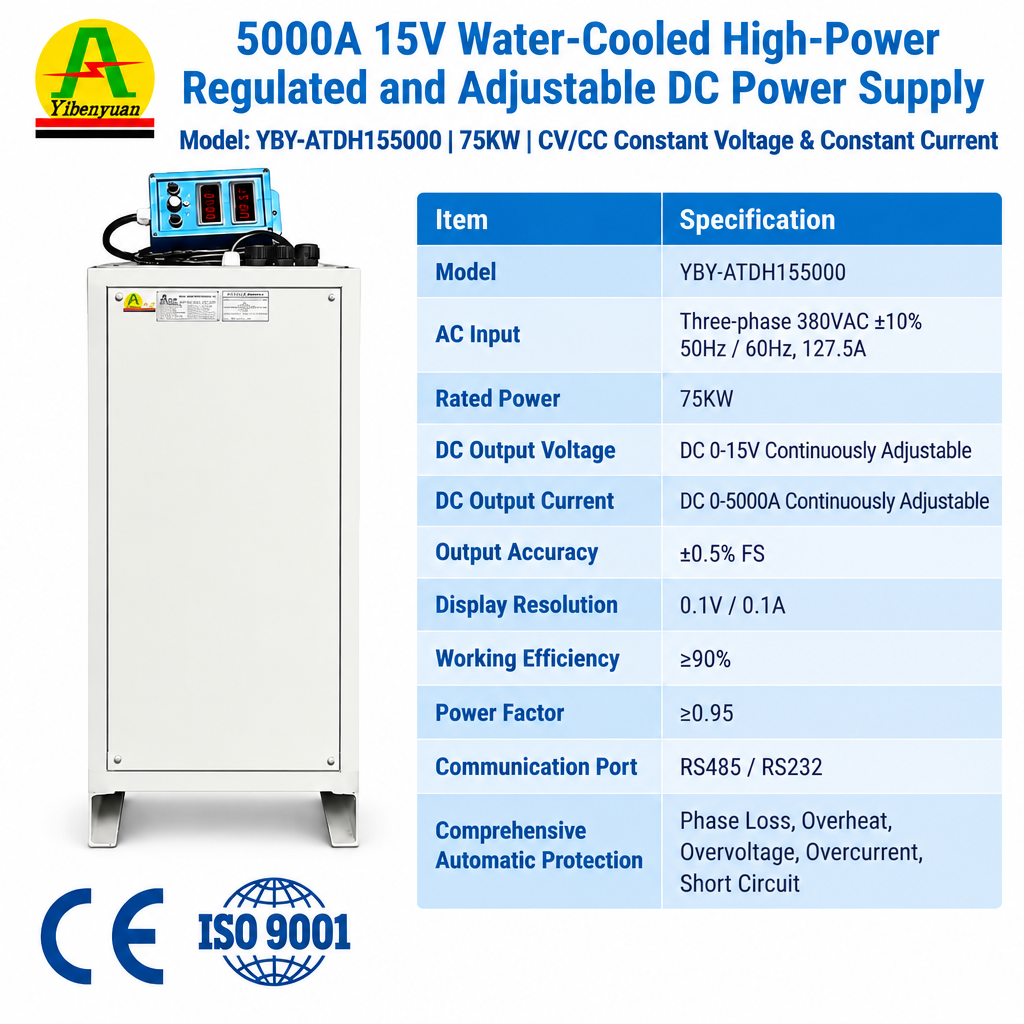
12V/15V 5000A-6000A 75kW Water-Cooled DC Rectifier
- Output Parameters: 12V–15V | Up to 6000A
- Cooling Mechanism: Deionized Water Cooled
- Efficiency: ≥ 90% (IGBT Technology)
- Control Mode: CV / CC Digital Auto-Switch
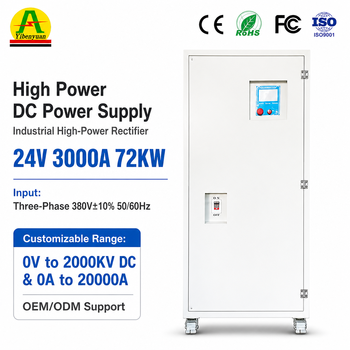
100A–3000A Modular Anodic Oxidation Rectifier
- Output Range: 12V / 24V / 60V (100–3000A)
- Anodizing Mode: Type II / Type III Hardcoat
- Digital Interface: RS485 Modbus RTU
- Voltage Ramp: Programmable Soft-Start
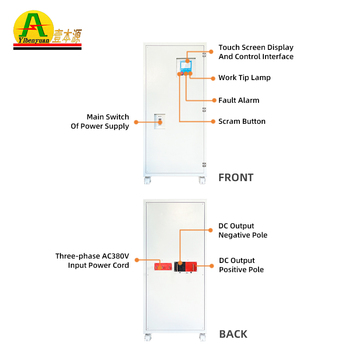
8000A 12V Heavy-Duty Water-Cooled Galvanizing Rectifier
- Rated Power: 96 kW Industrial Duty
- Cabinet Protection: Sealed IP54 Anti-Corrosion
- Ripple Factor: ≤ 2% Full Scale
- Overload Margin: 110% Continuous Buffer
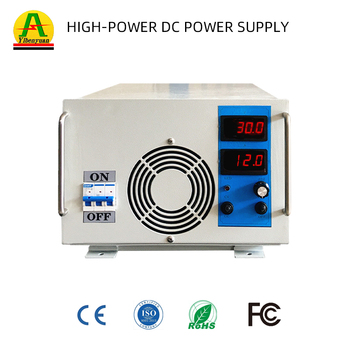
Titanium Alloy & Hard Anodizing Unit 150V 50A
- Output Capacity: 0–150V / 0–50A Continuous
- Primary Function: Aero-Grade Titanium Anodizing
- Input Rating: 380V / 440V 3-Phase 50/60Hz
- Protection: Phase-Loss & Thermal Cutoff
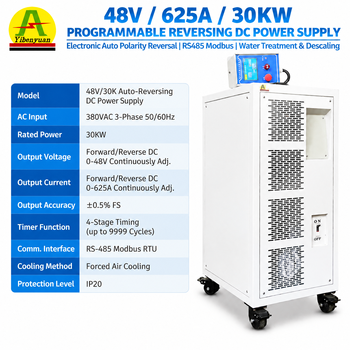
48V 625A 30kW Auto-Polarity Reversing Power Supply
- Reversal Mechanism: Solid-State H-Bridge Control
- Timer Range: 1s–9999s Forward/Reverse
- Industrial Use: Water Descaling & Anodic Stripping
- Communication: Isolated RS485 / CAN Option
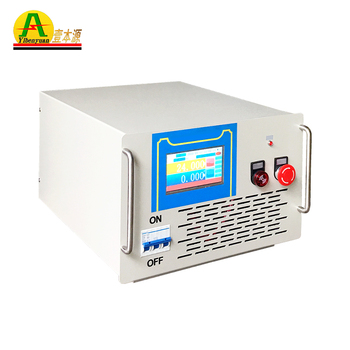
5000W Electrophoresis Paint & Anodizing Sealing Unit
- Voltage Span: 0–300V Adjustable DC
- Current Metric: 20A Stable Current Loop
- Application: Cathodic/Anodic Electrophoretic Paint
- Safety Standard: CE, LVD, EMC Compliant
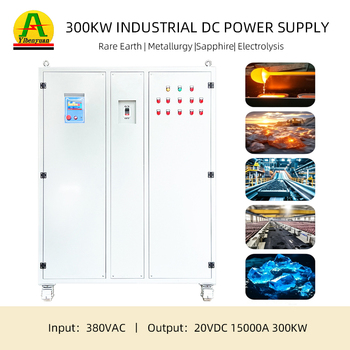
300kW 20V 15,000A Mega-Current Electrolytic Rectifier
- Current Rating: Up to 15,000A Sustained
- Busbar Structure: Pure Oxygen-Free Red Copper
- Architecture: Modular Parallel Synchronization
- Plant Target: Heavy Architectural Extrusions
20kW 400V–800V Programmable High-Voltage DC Source
- Dynamic Range: 0–800V / 50A High Precision
- Regulation Accuracy: ≤ 0.1% Voltage Stabilization
- Laboratory Rating: Barrier-Layer Breakdown Testing
- Automation: Analog 0–10V / Digital Modbus
Strategic Overview: Aluminum Anodizing & Surface Treatment Modernization in Santiago de Cuba
The industrial ecosystem of Santiago de Cuba—anchored by its deep-water port, metallurgical refabrication workshops, civil infrastructure redevelopment, and expanding naval-maritime maintenance yards—operates under aggressive environmental dynamics. Surrounded by the Caribbean Sea, industrial operations in Santiago de Cuba face severe challenges from airborne chloride ingress, sustained ambient temperatures exceeding 32°C, and relative humidity figures averaging above 80%. When handling surface transformation on aluminum extrusions, architectural fenestration, marine-grade boat structures, and industrial busbar systems, the choice of direct-current (DC) power conversion equipment is a primary determinant of industrial yield, corrosion resistance, and operational expenditure.
Aluminum anodizing is an electro-chemical conversion process wherein the metal is submerged in an acid electrolyte bath (predominantly sulfuric acid, H2SO4) while acting as the anode. The precision of the resulting aluminum oxide (Al2O3) layer—characterized by hexagonal microscopic pores—depends directly on maintaining an uninterrupted, low-ripple constant current density (typically 1.0 to 2.5 A/dm2 for Type II architectural finishes, and up to 3.5 to 5.0 A/dm2 for Type III hard anodizing). When rectifiers suffer from high ripple voltage or poor thermal regulation under local heat, localized burning, pore widening, and catastrophic “soft coating” defects quickly develop.
Electrochemical Demands: Constant Voltage vs. Constant Current Ramp Profiles
A frequent error in Caribbean procurement is purchasing generic, unregulated DC power supplies for anodizing baths. As the anodic oxide film forms on the aluminum surface, electrical resistance increases dramatically. A simple constant voltage (CV) supply causes current to drop precipitously, yielding non-uniform film thickness from top to bottom on long architectural extrusions. Modern manufacturing plants serving Santiago de Cuba require true micro-controlled Constant Current (CC) operation paired with programmable soft-start voltage ramping.
By ramping current in pre-calibrated increments (e.g., across 3 to 8 minutes), thermal shock at the aluminum-electrolyte interface is avoided. This controlled ramp allows the non-conductive barrier layer to deposit evenly before cellular pore formation initiates. For industrial marine components repaired at the Santiago dry docks, where saltwater immersion is constant, achieving 25 to 50 microns of hardcoat density demands an anodizing supply capable of sustaining 60V to 100V with current ripples strictly under 2% RMS.
IGBT High-Frequency Inversion
Operates at switching frequencies of 20kHz–50kHz, delivering instantaneous dynamic response, ultra-low ripple (<2%), and substantial physical weight reduction compared to legacy 50Hz iron-core units.
Tropicalized Sealing & Cooling
Engineered for high-saline Santiago coastal air. Features deionized water-cooling circuits, three-proofing conformal varnish on PCB assemblies, and isolated IP54 control compartments.
Adaptive Soft-Start Ramping
Programmable multi-stage current and voltage ramp cycles eliminate thermal shock, eliminate aluminum burning during bath insertion, and maximize hardcoat abrasion hardness.
Engineering Comparison: Anodizing Rectifier Topologies
Evaluating electrical conversion metrics under continuous duty in ambient conditions typical of the Santiago de Cuba industrial district.
| Evaluation Factor | Legacy SCR / Thyristor Rectifiers | Standard Commercial Switching Power | Heavy-Duty Industrial IGBT System (Fenvix) |
|---|---|---|---|
| Operating Efficiency | 68% – 76% (Substantial resistive loss) | 82% – 85% (Moderate thermal dissipation) | ≥ 90% – 93% (Maximum energy conversion) |
| Output DC Ripple Factor | High (5% to 12% without massive chokes) | Moderate (3% – 5%) | Ultra-Low (≤ 1% – 2% across full load) |
| Thermal Cooling Options | Oil-cooled or forced air with corrosion risks | Internal forced air fans (Salt-air prone) | Internal Closed Deionized Water or Direct Air |
| Response Time to Bath Resistance | Sluggish (100–300 ms control loop) | Moderate (20–50 ms) | Microsecond Scale (< 5 ms instantaneous loop) |
| Marine Air Longevity | Copper wind degradation, casing rust | Fan failure from dust and chloride accumulation | Conformal-coated PCBs & Sealed Enclosures |
| Process Compatibility | Basic Type I Chromic / Type II Sulfuric | Light decorative anodizing only | Type I, II, III Hardcoat, Micro-Arc & Titanium |
Localized Application Scenarios in the Santiago de Cuba Market
Santiago de Cuba’s geographic position as the primary economic hub of eastern Cuba drives distinct regional requirements for metal finishing and protective anodizing systems:
1. Maritime, Port Machinery & Vessel Maintenance
The port infrastructure and ship repair workshops along the Bahía de Santiago de Cuba deal with extreme marine corrosion. Aluminum-magnesium alloys (such as 5083 and 5086) utilized for ship superstructures, gangways, deck fixtures, and maritime radar housings require rigorous Type III hard anodizing (MIL-A-8625 Type III). Our rectifiers provide the high voltage ceilings (up to 100V) and stable amperage necessary to maintain growth kinetics in cold electrolyte baths without thermal runaway, building oxide coatings with microhardness exceeding 400 HV.
2. Civil Infrastructure, Construction & Fenestration Extrusions
Eastern Cuba’s infrastructure modernization drives consistent demand for architectural aluminum extrusions—window framing, structural curtain walls, and solar mounting substructures. Standard decorative anodizing (Type II, 10 to 18 microns) requires rectifiers running continuously in 1,000A to 6,000A configurations. The ultra-low ripple output of switch-mode systems ensures optical color uniformity when components undergo organic or electro-coloring processes, eliminating zebra-striping caused by thyristor ripple pulsation.
3. Commercial Sugar Processing & Agro-Industrial Components
Agro-industrial processing facilities across the Santiago de Cuba, Granma, and Holguín corridors rely heavily on pneumatic cylinders, conveyor slides, valves, and precision pump impellers made from aluminum alloys. Hard anodizing these components dramatically enhances surface wear resistance against fibrous biomass abrasives and high organic acid washdowns, directly extending equipment life in critical processing facilities.
Development Trends: Decarbonization and Solid-State Inverters
With electricity costs remaining a central operational concern for Caribbean manufacturers, local facilities are actively phasing out inefficient 12-pulse SCR transformers. Transitioning a continuous 3,000A / 18V anodizing line from an SCR system to a modern IGBT switch-mode unit saves tens of thousands of kilowatt-hours annually. Furthermore, integrating RS485 Modbus remote interfaces enables automated recipe monitoring, cycle data logging, and reduced direct operator exposure to acid tank fumes.
Top 10 Aluminum Anodizing Power Supply Suppliers Serving Santiago de Cuba
A rigorous comparative analysis of premier international exporters and manufacturers delivering power systems to eastern Cuba and the wider Caribbean basin.
Guangdong Fenvix Technology Co., Ltd.
Guangdong, China | Direct ManufacturerCore Specialization: Custom high-current switch-mode IGBT rectifiers (100A–15,000A), water-cooled marine enclosures, titanium anodizing power supplies, polarity-reversing units. Full ISO 9001, CE, TÜV Rheinland verified production. No MOQ barriers, bespoke engineering for tropical and coastal facilities.
Spang Power Electronics
United States | Tier-1 Global BrandCore Specialization: Heavy industrial thyristor controllers and high-power SCR systems. Engineered for large steel mill and massive aluminum finishing plants. Extremely reliable but features premium pricing structures and complex export licensing for select Caribbean zones.
Dynapower Company LLC
United States | Global Solution ProviderCore Specialization: High-specification custom rectifiers for precision aerospace anodizing and defense metal finishing. Features proprietary digital controls. Extended lead times and elevated acquisition costs for regional Latin American commercial operations.
Munk GmbH
Germany | European EngineeringCore Specialization: Premium electroplating and pulse-anodizing power supplies. Renowned for low ripple factors, exceptional build quality, and specialized modular rack setups. Premium capital cost profile and European spare parts distribution logistics.
KraftPowercon
Sweden / Global | Industrial RectifiersCore Specialization: Modular switch-mode rectifiers (FlexKraft series). Excellent system redundancy allowing continued operation if one power module is compromised. Highly favored in Western Europe, requiring trained technical maintenance teams.
American Plating Power
USA / International | Surface FinishingCore Specialization: Switch-mode and SCR rectifiers tailored specifically for hardcoat anodizing, coil anodizing, and electro-coloring lines. High quality with strong support operations across the North American continent.
plating electronic GmbH
Germany | Pulse Power SpecialistsCore Specialization: High-precision micro-pulse reverse power supplies for micro-arc oxidation (MAO) and specialized aerospace aluminum-lithium coatings. Focused on lab, pilot, and high-tech manufacturing segments.
CRS Industrial Power Equipment
Spain / Latin American FocusCore Specialization: Mid-range galvanic rectifiers and replacement power cabinets for Hispanic industrial markets. Native Spanish technical documentation and regional trade compliance advantages across Latin America.
SanRex (Sansha Electric Mfg. Co.)
Japan | Power ElectronicsCore Specialization: High-reliability IGBT and thyristor DC supplies for metal refining and hard finishing. Outstanding thermal engineering and semiconductor stability, with fixed catalogue configurations and longer shipping cycles.
Guangdong Sourced OEM Integrators
China | Value-Tier ExportCore Specialization: Standardized, commercial-grade benchtop and cabinet rectifiers for entry-level workshops. Cost-competitive initial purchase pricing, though custom cooling configurations and bespoke busbars must be verified.
13+
Years Engineering Excellence
3,000m²
In-House Factory Footprint
15,000A
Max Current Output Testing
100%
Pre-Shipment Full Load Tested
Manufacturing Superiority: How Guangdong Fenvix Delivers Exceptional Value
Operating since 2013 from our dedicated manufacturing hub in Guangdong, China, Guangdong Fenvix Technology Co., Ltd. bridge the gap between heavy industrial reliability and commercial affordability for international trade partners. Unlike typical trading intermediaries, Fenvix maintains 100% internal control over the mechanical, electrical, and thermal lifecycles of its power conversion systems:
- Vertical Cabinet Fabrication: Our in-house metalworking capabilities—including plate shearing, precision CNC punching, milling, drilling, and tapping—ensure all enclosures use thick-gauge, anti-corrosive steel with dual-layer powder coating. This mechanical integrity protects interior power stages from aggressive marine atmospheres.
- Oxygen-Free Solid Copper Busbars: Output busbars handling massive currents up to 15,000A are engineered exclusively from high-purity, oxygen-free T2 copper. This delivers optimal thermal dissipation and near-zero voltage drops between modules and external tank cabling.
- Comprehensive Load Bank Testing: Every unit slated for overseas shipment undergoes full-amperage burn-in testing under artificial load bank conditions for a minimum of 24–48 hours. Voltage ripple, harmonic feedback, and thermal hot spots are measured with calibrated oscilloscopes and thermal imaging cameras prior to seaworthy crating.
- Agile Minimum Order Quantity (No MOQ): We welcome single-unit orders (MOQ: 1 Set) for pilot lines, regional shipyard refits, and municipal research installations, while offering scalable manufacturing capabilities for comprehensive industrial expansion projects.
Frequently Asked Questions: Sourcing Rectifiers for Santiago de Cuba
Essential guidance on electrical grid variance, marine corrosion protection, international shipping, and operational compliance.
How do Fenvix anodizing rectifiers handle grid voltage fluctuations in Santiago de Cuba?
Why is water cooling strongly recommended over air cooling for coastal anodizing plants?
What international commercial terms (Incoterms) and transit routes apply for deliveries to Santiago de Cuba?
Can Fenvix rectifiers be integrated with legacy bath controls or external PLC automation?
What documentation and spare parts are provided to facilitate local maintenance?
Ready to Upgrade Your Anodizing & Surface Finishing Power Capacity?
Consult directly with Fenvix power system engineers. Whether you need an agile 100A benchtop unit or a heavy-duty 15,000A water-cooled industrial anodizing installation, we design and deliver tailored power solutions to support your production goals.
Contact Us