Engineered Electropolishing & Surface Treatment Power Supplies
Precision-controlled rectifiers engineered to deliver micro-smooth passivation, superior corrosion resistance, and surgical-grade finishes on 304, 316L, and exotic duplex stainless steel alloys.
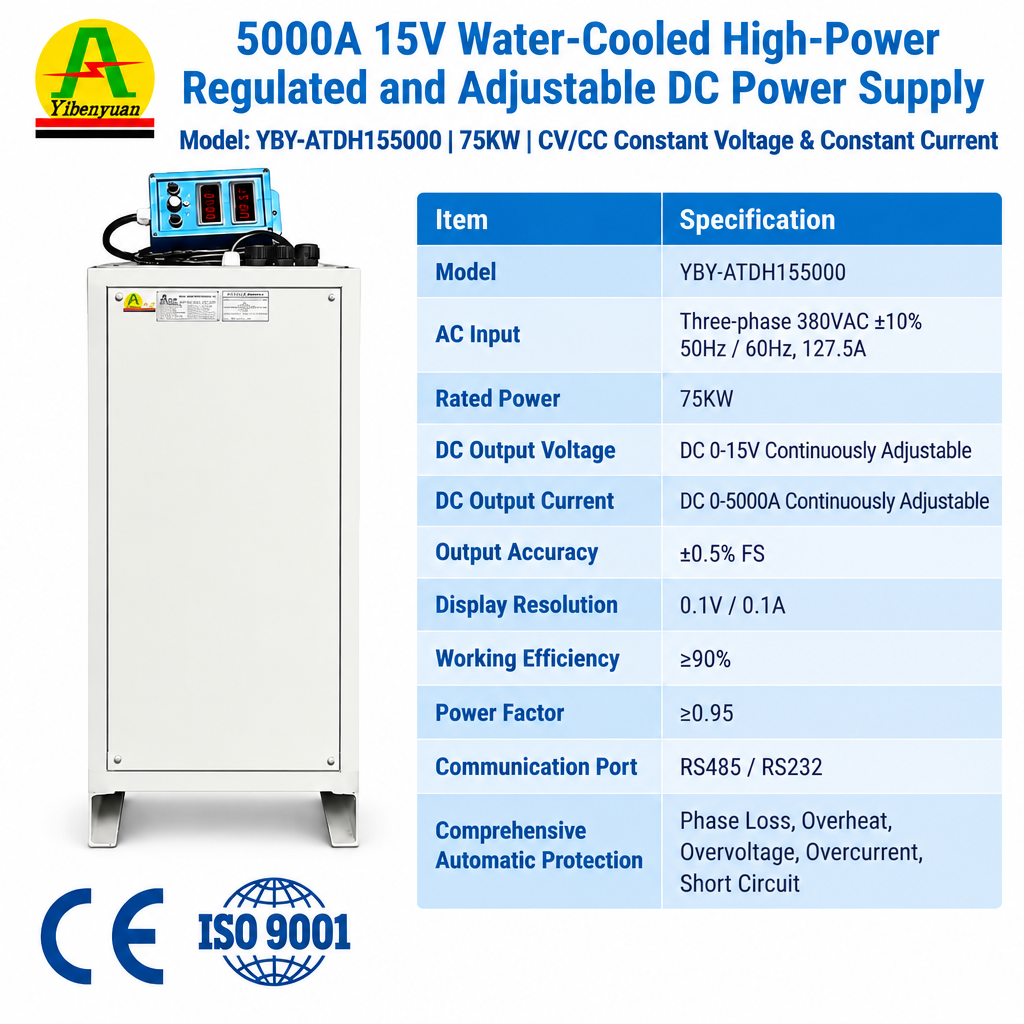
12V/15V 5000A–6000A 75kW Water-Cooled DC Rectifier
- Output Voltage: 12V / 15V DC
- Current Rating: 5000A – 6000A
- Cooling Design: Isolated Water Cooled
- Control Interface: Digital RS485 / Modbus
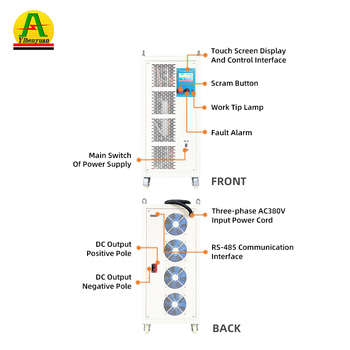
12V 4000A 48kW Precision Electropolishing Power Supply
- Regulation: CV / CC Automatic
- Ripple Rate: ≤ 2% Low Ripple
- Efficiency: ≥ 90% IGBT Switch
- Duty Profile: Continuous 24/7 Rating
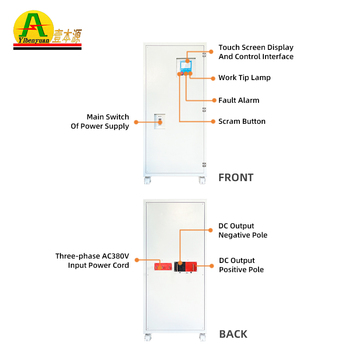
8000A 12V Heavy-Duty Water-Cooled Finishing Rectifier
- Enclosure: Corrosion-Sealed NEMA/IP
- Semiconductors: Imported Industrial IGBT
- Protection: Over-Current/Thermal Cut
- Application: Large Tank SS Polishing
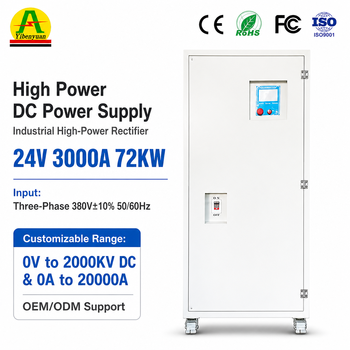
100A–3000A 12V/24V Modular Polishing Power Unit
- Configuration: Rackmount / Modular
- Current Range: 100A to 3000A Steps
- Digital Timer: Integrated Ramp Settings
- Use: Bench to Pilot Production
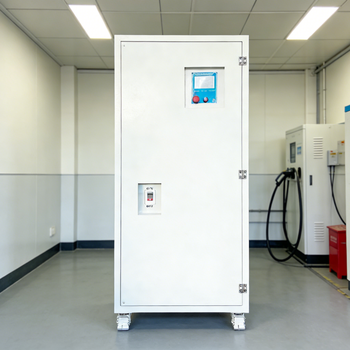
160kW 2500A High-Stability Electrolytic Power Source
- Total Power: 160kW Pure DC Output
- Stability Class: ±0.5% Dynamic Voltage
- Busbar Setup: Direct Copper Bus Ready
- Control: 0-10V / 4-20mA Analog & PLC
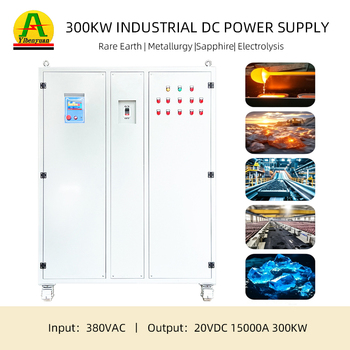
300kW 20V 15,000A High-Current Chemical Milling Unit
- Amperage: 15,000A Sustained Max
- Cooling Loop: Deionized Water Heat Exch
- Quality Standard: ISO 9001 Certified System
- Application: Large Vessel Passivation
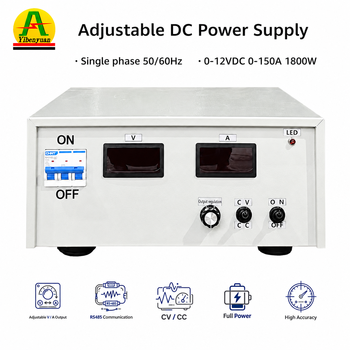
12V 150A Precision Lab-Scale Electropolisher
- Input Rating: 1-Phase / 3-Phase Multi-Tap
- Footprint: Compact Benchtop Profile
- Display: 4-Digit High Accuracy Meter
- Application: Medical Device Prototyping
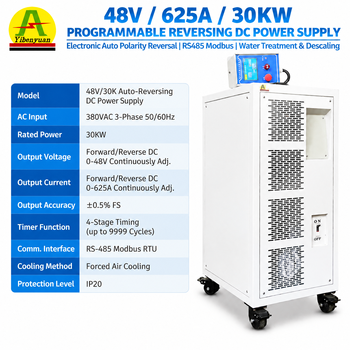
48V 625A 30kW Polarity-Reversing Finishing Source
- Reversal Speed: Millisecond Solid-State
- Duty Control: Programmable Micro-Cycles
- Interface: Industrial Ethernet / RS485
- Application: De-burring & Passivation
Electrochemical Precision in Stainless Steel Finishing: Technical Overview
Deciphering the critical power dynamics necessary to achieve ASTM B912 compliance and Ra < 0.1μm surface roughness.
Electropolishing of austenitic, martensitic, and precipitation-hardening stainless steels represents one of the most demanding processes in modern electrochemical surface engineering. Often termed "reverse electroplating," the workpiece acts as an anode in an acid electrolyte bath (typically phosphoric-sulfuric formulations). Metal dissolution occurs preferentially at microscopic peaks rather than valleys, systematically leveling the surface topography to an ultra-smooth, specular finish while simultaneously stripping iron atoms to leave a corrosion-resistant chromium-rich oxide film.
The success, uniformity, and metallurgical integrity of this reaction hinge almost entirely on the electrical current profile. In conventional polishing systems powered by outdated silicone-controlled rectifiers (SCR), voltage and current ripple can fluctuate significantly, inducing pitting, orange-peel textures, gas streaking, and thermal burn marks. Guangdong Fenvix Technology Co., Ltd. designs advanced switch-mode high-frequency DC rectifiers utilizing premium insulated-gate bipolar transistor (IGBT) architectures. These deliver clean, ripple-minimized current (ripple rates ≤ 2%) that sustain an uninterrupted anodic salt film, ensuring consistent metal dissolution kinetics across the entire surface envelope.
For custom manufacturing facilities and finishing lines servicing Baltimore's industrial base, transitioning to high-frequency switch-mode power conversion delivers double-digit energy savings, vastly superior current density distribution, and unprecedented process repeatability across complex geometric fabrications.
Targeted Industrial Applications Across the Greater Baltimore Corridor
Supporting Maryland's manufacturing revival across key maritime, biopharma, defense, and infrastructure supply chains.
Maritime & Naval Hardware
The Port of Baltimore and local shipyards require specialized 316 and super-austenitic stainless steel deck components, propeller fittings, and subsea assemblies. Fenvix water-cooled rectifiers provide continuous current stability for heavy electropolishing baths that passivate parts against harsh Atlantic saline corrosion.
Life Sciences & Biotech Cleanrooms
The I-270 technology corridor and Baltimore biotechnology facilities demand hygienic vessel fabrication, filtration manifolds, and chromatography columns polished to Ra < 0.2μm. Fenvix low-ripple programmable power sources eliminate microscopic bacteria-harboring crevices, meeting strict FDA and ASME BPE criteria.
Food, Beverage & Brewing
From local craft breweries to industrial food processing plants along the Chesapeake watershed, sanitary piping and mixing kettles depend on seamless passivation. Our auto-polarity reversing power supplies support both heavy descaling and finish-electropolishing in automated CIP lines.
Local Industry Trends & Technological Evolution in Maryland Manufacturing
Aligning power supply topologies with sustainable regional manufacturing demands.
The manufacturing landscape across Maryland, particularly surrounding the industrial districts of Sparrows Point and Baltimore County, is undergoing a substantial modernization phase. Heavy manufacturing is progressively transitioning toward clean, high-precision, low-carbon fabrication paradigms. These advancements are driven by three distinct engineering trends:
1. Strict Effluent & Energy Standards: Facilities operating within the Chesapeake Bay Watershed face rigorous environmental benchmarks. Older silicon rectifiers dissipate up to 25% of grid power as waste heat, increasing chillers' load and chemical replenishment cycles. Fenvix switch-mode rectifiers achieve thermal efficiencies exceeding 90%, significantly lowering localized heating of electrolyte tanks and reducing chemical decomposition rates.
2. Smart Industrial Automation & SCADA Integration: Baltimore's precision metal fabricators are rapidly deploying Industry 4.0 production environments. Digital interfaces are mandatory. Fenvix rectifiers feature native RS485 Modbus, Profibus, and 0–10V / 4–20mA analog interfaces, allowing operators to execute dynamic current profiling, timed pulse-reverse polishing routines, and automated safety shutdowns directly from remote programmable logic controllers (PLCs).
3. Demand for Complex Alloy Passivation: With defense contractors and medical manufacturers adopting proprietary titanium-stabilized alloys, surgical alloys, and 3D-printed selective laser melting (SLM) stainless steel parts, standard manual polishing is no longer feasible. High-frequency pulsing and accurate constant-current ramping allow micro-polishing of complex additive manufacturing cavities that abrasives cannot access.
Why Regional Processors Partner With Fenvix
Direct manufacturer capabilities tailored to custom US industrial parameters and rigorous quality expectations.
True Factory Direct Control
Guangdong Fenvix Technology operates complete sheet metal shearing, CNC machining, copper busbar fabrication, and circuit assembly in-house. We do not act as a broker; your equipment is built, load-tested, and burned-in under our direct engineering oversight.
US Grid & Load Adaptation
We tailor every unit to North American power grids (208V, 240V, 480V 3-phase 60Hz), configuring duty cycles, integrated interlocks, dry-contact safety loops, and emergency stopping circuits matching domestic electrical codes.
Zero MOQ & Turnkey Prototyping
Whether you require a single 150A pilot bench supply for validation or a centralized battery of four 8,000A water-cooled rectifiers for an automated dipping facility, we provide full CAD models, schematics, and engineering consultation without arbitrary minimums.
Frequently Asked Questions for Baltimore Procurement Teams
Clear, direct technical responses addressing common sourcing, engineering, and logistics questions.
What electrical parameters must be specified when commissioning an electropolishing rectifier?
Why choose a water-cooled rectifier over forced air cooling in a metal finishing facility?
How does low ripple impact the electropolishing quality of medical-grade stainless steel?
What international quality standards and testing protocols do Fenvix units comply with?
What trade terms, shipping methods, and freight timelines apply to Baltimore deliveries?
How does Fenvix provide ongoing after-sales and commissioning support for US buyers?
Upgrade Your Stainless Steel Finishing Line Today
Submit your bath dimensions, current requirements, and alloy specifications to collaborate directly with our electrical engineering team. Get a transparent quote and sizing schematic within 24 hours.