Export-Grade Power Systems
High-Efficiency Reverse Pulse & Heavy-Duty Rectifiers for Soufrière
Engineered for high current stability, ultra-fast polarity reversal, and continuous 24/7 duty. Directly calibrated for Caribbean geothermal power generation, marine anti-corrosion, luxury resort water descaling, and high-spec surface finishing lines.
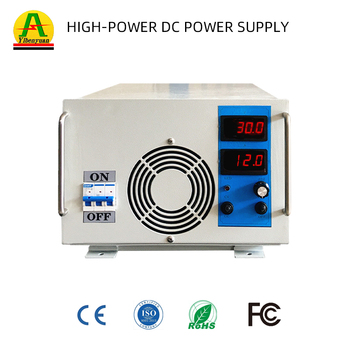
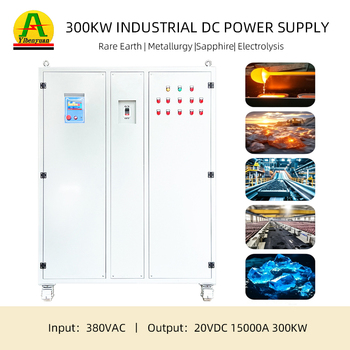
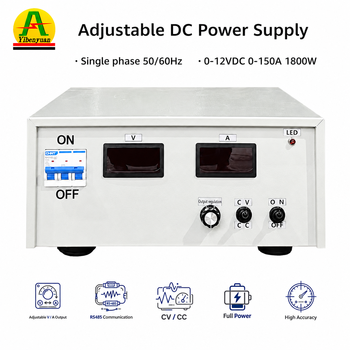
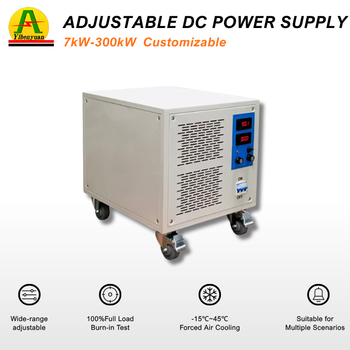
Technical Whitepaper & Architectural Overview
Periodic Pulse Reverse (PPR) Power Topologies in Aggressive Microclimates
In high-performance industrial electrochemistry, conventional Direct Current (DC) power sources frequently hit immutable physical barriers defined by diffusion-layer depletion, hydrogen embrittlement, and non-uniform current density distributions. In geographically distinct environments like Soufrière—characterized by heavy volcanic geothermal gas emissions ($H_2S$, $SO_2$), exceptional atmospheric salinity from the Caribbean Sea, and mineral-laden geothermal waters—standard rectification topologies suffer from rapid cathode degradation, severe scaling, and erratic deposition rates.
A Periodic Pulse Reverse (PPR) Power Supply operates by cyclically switching between a high-current forward pulse ($I_F$, $T_F$) and an instantaneous reverse stripping pulse ($I_R$, $T_R$). During the forward anodic/cathodic deposition phase, metallic ions migrate rapidly to the substrate surface. As the diffusion boundary layer becomes depleted of metallic cations, classical DC rectifiers induce hydrogen gas evolution, causing micro-voids, dendritic fractures, and brittle lattice structures. Under pulse reverse conditioning, the millisecond reverse pulse dynamically strips protruding high-energy asperities (electropolishing effect), replenishes cation concentration within the Nernst diffusion layer, and desorbs co-deposited hydrogen atoms.
Fundamental Electrochemical Advantage: By precisely adjusting the forward duty cycle (typically 80–95%), reverse duty cycle (5–20%), and pulse frequency (10 Hz up to 20 kHz), industrial operators in Saint Lucia achieve up to a 45% increase in deposition hardness, eliminate internal substrate tensile stresses, and attain 100% automated anti-scaling action in high-mineral electrolyte cooling loops.
Microsecond Switching Dynamics & Full-Bridge Inversion Architecture
Our reverse pulse systems utilize third-generation Insulated Gate Bipolar Transistors (IGBTs) arranged in an H-bridge or dual-active bridge switching configuration driven by 32-bit Digital Signal Processors (DSP). While historical thyristor-based (SCR) polarity-reversing units required mechanical contactors or sluggish LC tank discharge circuits—often limited to cycle times greater than 500 milliseconds—our high-frequency power supplies transition from full forward conduction to full negative inversion in under 5 microseconds.
This microsecond rise-time prevents capacitive double-layer discharge delays at the electrolyte-substrate interface, ensuring that the programmatic waveform delivers genuine pulsed electrochemical work rather than thermal ohmic losses. The resultant grain refinement yields nano-crystalline coatings exhibiting exceptional corrosion resistance against damp sulfur dioxide fumes, volcanic sulfur mists, and sodium chloride spray characteristic of the Soufrière coastal and caldera sectors.
< 5 μs
Polarity Inversion Transient Time
92.4%
Peak Electrical Conversion Efficiency
0–20 kHz
Fully Variable Pulse Range
IP54 / IP65
Hermetically Sealed Electronics Bay
Target Engineering Scenarios
Localized Applications Across the Soufrière Micro-Industrial Landscape
Soufrière’s unique combination of the Qualibou caldera geothermal belt, thriving eco-resort infrastructure, and marine shipping corridors necessitates specialized electrical power equipment tailored to extreme ambient parameters.
1. Geothermal Energy Extraction & Scale Mitigation
The high silica, calcium carbonate, and sulfate content in the thermal fluids surrounding the Sulphur Springs caldera rapidly fouls heat exchangers, turbine reinjection lines, and submersible pumps. Our auto-polarity reversing DC power supplies apply programmable asymmetric electric fields across electrode arrays. By periodically inverting the polarity every 30 to 300 seconds, carbonate and silicate scale build-ups on titanium and stainless steel plates are electrochemically dissolved without acid washes, keeping geothermal extraction plants operating at peak thermodynamic output.
2. Marine Infrastructure & ICCP Cathodic Protection
Soufrière Bay welcomes commercial tenders, catamarans, and coastal cargo vessels operating in warm, highly oxygenated Caribbean waters laden with volcanic run-off. Traditional sacrificial zinc anodes dissolve erratically under fluctuating water conductivity. Our reverse pulse power units integrate Impressed Current Cathodic Protection (ICCP) algorithms that modulate forward polarization while utilizing periodic microsecond reverse pulses to strip calcareous deposits from mixed metal oxide (MMO) titanium anodes, extending hull and steel jetty service life by over 300%.
3. Eco-Resort Water Reclamation & Desalination
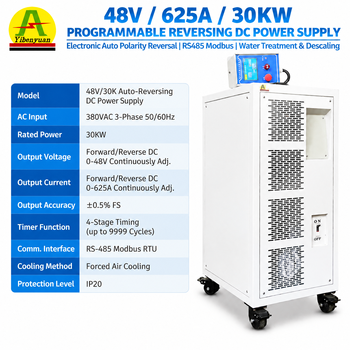
World-class hospitality estates throughout the Pitons corridor operate private brackish reverse osmosis (RO) desalination and wastewater treatment facilities. Mineral encrustation on electrodialysis reversal (EDR) stacks represents a major operating expenditure. Fenvix 48V/625A programmable reversing rectifiers dynamically cycle the polarity of the cell stacks, dissolving precipitates off ion-exchange membranes, slashing chemical biocides, and supporting sustainable eco-accreditation.
4. Volcanic Heavy Equipment Re-Manufacturing
Excavation, drilling, and earth-moving machinery deployed near the Saint Lucia sulfur belt experience extreme abrasive and corrosive wear. Conventional hard chrome plating frequently chips under mechanical shock due to hydrogen entrapment. Utilizing Fenvix high-frequency pulse reverse electroplating rectifiers, local overhaul shops deposit zero-porosity, high-microhardness (>1050 HV) hard chrome and nickel-tungsten alloys that endure aggressive acidic muds and geothermal steam contact.
5. Hard Anodizing of Marine & Architectural Hardware
Architectural aluminum fixtures installed within a 15-kilometer radius of Sulphur Springs darken and pit rapidly if treated via standard DC anodizing. By deploying our 150V titanium and aluminum anodizing rectifiers configured with periodic reverse pulses, metal processors produce an ultra-dense, non-craze anodic oxide layer capable of passing 3,000+ hours of ASTM B117 salt-spray and acidic gas chamber testing.
6. Distributed Geothermal Microgrid Energy Buffering
As Saint Lucia integrates renewable geothermal and solar baseload power into the Soufrière grid node, fast-responding programmable DC sources are vital for testing emergency battery storage systems, charging high-capacity capacitor banks, and providing stable synthetic DC excitation for synchronous machinery. Fenvix units offer precise voltage ramps and low THD (<3%) under volatile electrical line conditions.
Comparative Process Engineering
Standard DC Rectification vs. High-Frequency Periodic Pulse Reverse
A comprehensive electrochemical performance benchmark illustrating why global engineering teams are replacing obsolete SCR rectifiers with advanced high-frequency IGBT pulse reverse units.
| Electrochemical Parameter | Legacy SCR / Thyristor Rectifier | Standard Switching DC Supply | Fenvix High-Frequency PPR Rectifier |
|---|---|---|---|
| Throwing Power in Complex Geometries | Poor (High edge build-up, starved recesses) | Moderate (Requires external shield tooling) | Superior (>90% uniform coverage) |
| Hydrogen Embrittlement Mitigation | Nil (Requires secondary baking ovens) | Low (Static potential allows $H_2$ diffusion) | Active ($T_{rev}$ desorbs hydrogen gas) |
| Electrolytic Scale Removal Action | Requires manual line shutdown & wiring swap | Not supported without external contactors | Automatic (Microsecond/Timed Reverse) |
| Microstructure & Grain Boundary Density | Coarse, columnar dendrites with micro-voids | Standard crystalline matrix | Nano-crystalline, ultra-compact grain |
| Total Energy Consumption (kWh/kg metal) | Baseline benchmark (Highest ohmic losses) | 8% – 12% Reduction vs. SCR | 20% – 35% Lower (Targeted kinetic flux) |
| Cabinet Environmental Isolation | Open louver forced-air (Vulnerable to $H_2S$) | Standard conformal spray | Hermetic IP54 + Deionized Water Chilled |
Manufacturing Authority & Verified Heritage
Guangdong Fenvix Technology Co., Ltd.
Founded in 2013, Fenvix operates a 3,000 m² heavy power production facility in Guangzhou, China. Every unit exported to the Americas and the Caribbean is manufactured entirely in-house under an ISO 9001 certified quality regime, verified on site by TÜV Rheinland.
ISO 9001 Certified
End-to-end trace documentation from incoming copper busbars to completed full-load burn-in testing.
TÜV Rheinland Audited
Physical plant verification confirming our in-house shearing, CNC milling, assembly lines, and electrical test benches.
No Minimum Order (Zero MOQ)
We build custom 1-off specialized power prototypes for pilot plants as readily as full fleet consignments.
Tropical & Volcanic Hardening
Specialized potting, heavy nickel-plated copper tracks, and deionized water heat exchangers built to defy acidic Caribbean environments.
Local Sourcing FAQs
Frequently Asked Questions by Industrial Buyers in Soufrière & Saint Lucia
Direct answers addressing grid voltages, maritime transport, aggressive atmospheric resistance, and technical support for Caribbean engineering teams.
How do Fenvix reverse pulse power supplies withstand Soufrière’s airborne sulfur and coastal humidity?
Soufrière features one of the most chemically challenging environments in the West Indies due to sulfur dioxide ($SO_2$) and hydrogen sulfide ($H_2S$) outgassing from the caldera, combined with relative humidity regularly exceeding 85%. Standard air-cooled power supplies pull these corrosive gases directly across sensitive gate-driver circuits, causing rapid dendritic copper failure. Fenvix provides fully enclosed IP54/IP65 cabinets featuring closed-loop deionized liquid cooling. The heat is rejected through a heavy titanium or 316L stainless steel external heat exchanger. Internal printed circuit boards are coated with multiple layers of military-grade polyurethane anti-fungal, anti-sulfur conformal varnish, preventing atmospheric ingress entirely.
Can these power units operate seamlessly with the Saint Lucia electrical grid (LUCELEC) specifications?
Yes. Saint Lucia’s main electrical utility operates primarily on a 400V 3-phase, 50Hz transmission network (230V single-phase). Fenvix builds power supplies with broad input-tolerance transformers and high-frequency active power factor correction (PFC > 0.95). Our systems safely accommodate ±15% grid voltage surges and brownouts commonly encountered during Caribbean storm systems and heavy industrial load transitions, guaranteeing stable DC or pulse output with total ripple under 1%.
What is the advantage of using a water-cooled reverse pulse rectifier instead of air cooling in a plating or descaling shop?
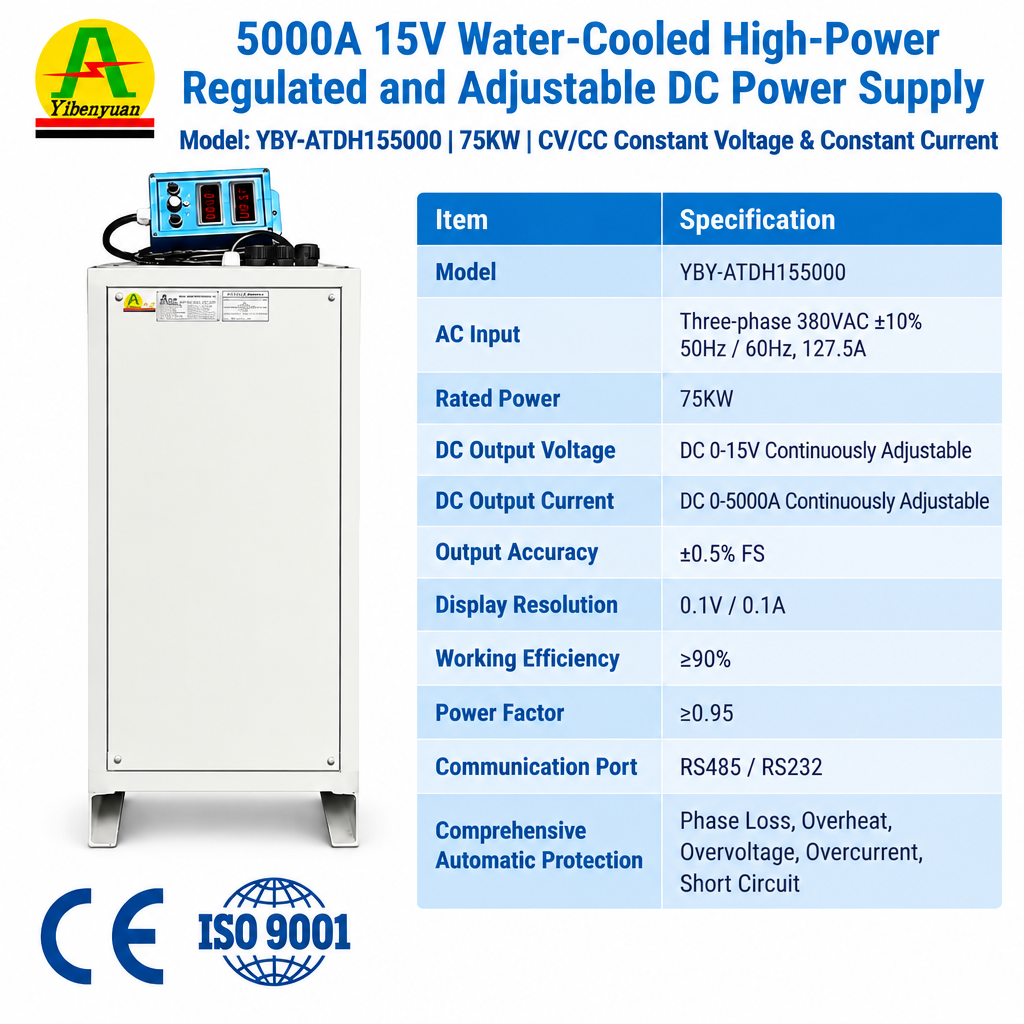
Water cooling allows the power cabinet to be completely sealed against external ambient air. In high-current applications (such as our 5,000A, 8,000A, or 15,000A models), forced-air fans circulate thousands of cubic meters of ambient acid fumes and salt-mist every hour across heat sinks, leading to fan motor breakdown, dust clogging, and thermal choking. Water cooling maintains the power semiconductors at a constant 45°C junction temperature regardless of whether the external ambient temperature hits 38°C in Soufrière, ensuring 24/7 continuous full-load uptime.
What parameters are required to configure a custom polarity-reversing or pulse power supply?
To configure your exact model, we need your: (1) AC input supply voltage and frequency; (2) Peak output DC voltage and continuous current rating; (3) Desired operating modes (Constant Voltage, Constant Current, or programmable multi-step ramps); (4) Forward and reverse cycle requirements (pulse frequencies from Hz to kHz, or timed inversion from seconds to hours); (5) Ambient operating environment (exposure to sulfur, sea-spray, or chemical tanks); and (6) Automation interface preference (e.g., Modbus RS485, Profinet, 4–20mA, 0–10V analog). Our engineering team turns around complete CAD dimensions and wiring schematics within 24 hours.
How are international freight, customs clearance, and delivery handled for Saint Lucia?
Fenvix ships globally under Incoterms including FOB, CIF (Port Castries), EXW, and door-to-door DDP. All units are bolted onto reinforced ISPM-15 heat-treated fumigated wooden pallets, sealed in multi-layer vacuum barrier foil with vapor-phase corrosion-inhibiting desiccant bags, and crated in heavy plywood to resist maritime transit conditions. We provide all commercial invoices, packing lists, CE certificates of origin, and bill of lading documentation required for smooth clearance through Saint Lucia Customs.
What warranty and after-sales support are provided to overseas buyers in the Caribbean?
Every Fenvix power supply carries a comprehensive 12-month factory warranty, extendable up to 36 months. We maintain an overseas technical support service with dedicated remote diagnostic engineers who can inspect log files via RS485/Ethernet interfaces. In the rare event of a component failure, our modular sub-rack architecture enables rapid field swaps using off-the-shelf driver cards and IGBT blocks dispatched by international air courier directly to Soufrière within days.