Featured 28.5V DC Ground Power Units & Aviation Frequency Converters
Engineered in our Guangdong manufacturing facility to withstand rigorous flight-line use, volatile AC utility swings, and high-ambient tropical humidity. Explore our field-tested line maintenance and hangar power systems.
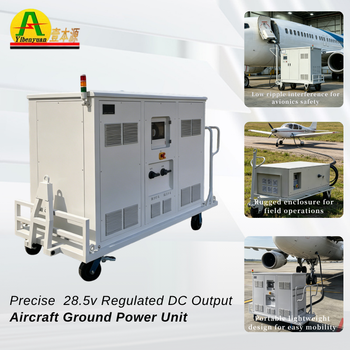
Portable 28.5V AC-DC Ground Power Unit (100A–500A)
- DC Output: 28.5V DC (0–500A)
- Instant Current: Up to 1500A Peak
- Cooling: Forced Air / Heavy Duty
- Mobility: Heavy-Duty Castor Chassis
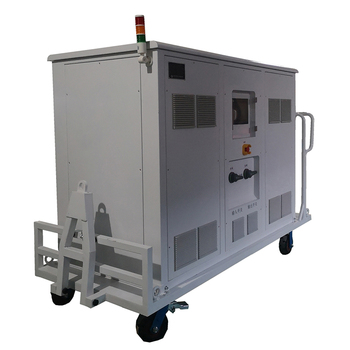
High-Efficiency Triple Output 28.5V 100–600A GPU
- Topology: Multi-Channel Independent
- Current Range: 100A – 600A Continuous
- Avionics Safe: Zero Line Inrush Spike
- Target Craft: ATR 72, Beechcraft, Helis
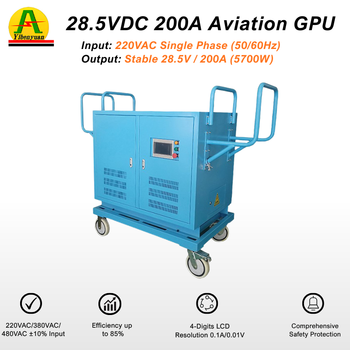
Single-Phase 220VAC to 28.5VDC 200A Maintenance GPU
- Nominal Power: 5.7 kW Continuous
- Input Utility: Single-Phase 220V ±15%
- Protection: Overvoltage, Short, Thermal
- Form Factor: Compact Bench / Mobile
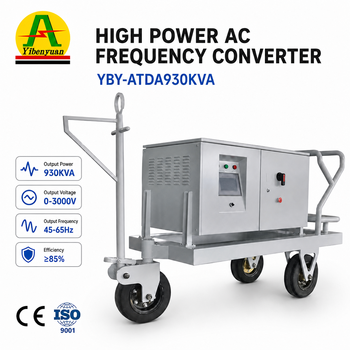
930kVA 3-Phase 400Hz Apron Central Power Supply
- Capacity: Up to 930 kVA
- AC Output: 115V / 200V 400Hz
- Central System: Multi-Gate Central GSE
- Compliance: ISO 6858, Mil-Std-704
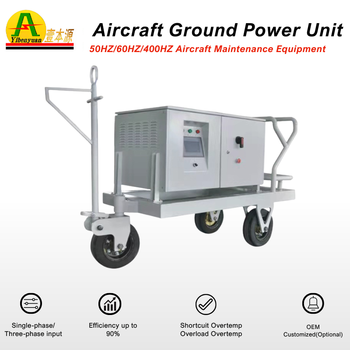
630kVA High-Power 400Hz Aviation Ground Power
- Power System: Modular IGBT Inverter
- Harmonic Reg.: THD < 2% Pure Sinusoidal
- Line Drop Comp: Automatic Cable Loss Comp.
- Application: Commercial Jet Hangars
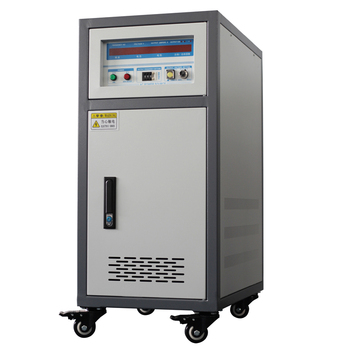
115V 400Hz Static Frequency Converter (15–150kVA)
- Output Voltage: 115V L-N / 200V L-L
- Frequency: 400Hz Crystal-Locked
- Efficiency: > 92% at Full Load
- Application: Radar & Navigation Testing
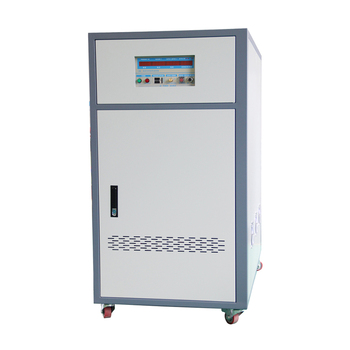
Solid-State Frequency Converter (40–500kVA)
- Grid Standard: 50Hz / 60Hz to 400Hz
- Overload Rating: 125% for 10 min, 150% 1 min
- Noise Signature: < 65 dB(A) Silent Operation
- Standard: CE, EMC, RoHS Compliant
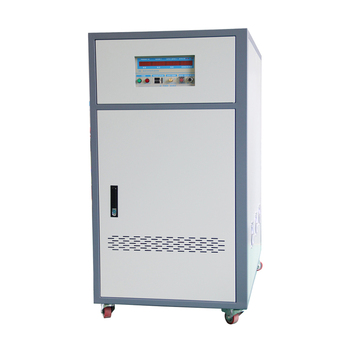
45kVA 400Hz Static Converter for Line Stations
- Input Power: 3-Phase 380V/400V 50Hz
- Output: Single / 3-Phase Selectable
- Cabinet Grade: IP54 Dust & Tropicalized
- Use Case: Turboprop Auxiliary Systems
Engineering 28.5V DC Ground Support for Myanmar’s Unique Operational Landscape
Operating aircraft ground electrical infrastructure in Myanmar presents distinct operational hurdles that mass-market commercial rectifiers fail to withstand. Below is an engineering overview of our localized system hardening.
Mitigating Grid Instability & Harmonic Sag
Airfields in peripheral locations (such as Sittwe, Myitkyina, and Dawei) often rely on high-impedance national grid segments or localized diesel-generator banks. These sources frequently exhibit line sags dropping below 340V AC and line transients surpassing 460V AC. Our 28.5V GPU series integrates ultra-wide voltage pre-stabilization window circuitry (380V ±20%), active power factor correction (PFC ≥ 0.95), and multi-stage metal-oxide varistor (MOV) surge suppression to safeguard sensitive onboard avionics from upstream dirty power.
Tropicalization: Monsoon & Saline Resistance
Coastal airfields like Kawthaung and Pathein experience relative humidity levels up to 98% combined with atmospheric salt particles and monsoonal condensation. Our export models utilize conformal coatings (MIL-I-46058C approved) across all printed circuit boards (PCBs). High-current copper busbars undergo nickel or tin electroplating to stop dendritic migration and galvanic oxidation. Cabinet designs incorporate IP54 compartmentalized cooling tunnels that isolate switching semiconductors from airborne dust and moisture.
Turbine Starting Dynamics & Instant Surge Control
Turboprop workhorses ubiquitous in Myanmar—such as ATR 72-600, Cessna Grand Caravan 208B, and Mil Mi-17 helicopters—demand massive current surges up to 1500A–2000A during the initial cranking phase. Conventional power supplies trigger current foldback or thermal shutdown under these loads. Fenvix solid-state GPUs utilize high-pulse IGBT architectures featuring a three-stage programmable current-limiting curve: allowing 400% inrush for 1.5 seconds, 250% for 15 seconds, and continuous rated power, ensuring clean, stall-free turbine spooling.
Fenvix Solid-State 28.5V GPU vs. Legacy Rotary & Diesel Equipment
A detailed engineering comparison highlighting operational efficiency, maintenance cycles, and life-cycle costs for airline ground crews and military aviation repair depots.
| Performance Metric | Fenvix Solid-State IGBT 28.5V GPU | Legacy Rotary (Motor-Generator) | Towed Diesel-Engine GPU |
|---|---|---|---|
| Operating Efficiency | 90% – 93% at rated continuous load | 65% – 72% (Significant frictional losses) | 25% – 35% (Internal combustion fuel burn) |
| Voltage Transients (0-100% Step) | < 50ms recovery time; ripple ≤ 100mVrms | > 450ms recovery; high inductive ripple | > 600ms recovery; frequency hunting |
| Acoustic Footprint | < 62 dB(A) at 1 meter (Whisper-quiet) | 78 – 85 dB(A) (Heavy mechanical whine) | > 95 dB(A) (Requires mandatory ear protection) |
| Preventive Maintenance | No moving parts; annual filter inspection | Bearing lubrication, brush replacement | Daily oil/coolant checks, filter rebuilds |
| Emissions & Green Hangar Compliance | Zero emissions; certified for indoor hangar usage | Zero direct emissions; ozone risk from brushes | High CO2, NOx, and particulate exhaust fumes |
| Response to Phase Imbalance | Automatic compensation up to 15% imbalance | Susceptible to phase hunting & rotor overheating | Independent (Requires dedicated engine upkeep) |
Myanmar Aviation GSE Evolution: 2025–2030 Trends
Insightful forecasting for procurement managers, civil aviation authorities, and charter fleet operators modernizing ground support fleets.
Shift Away from Towed Diesel Systems
Rising jet fuel and diesel logistics costs across regional Myanmar air hubs have accelerated the decommission of maintenance-intensive diesel GPUs. Ramp managers are prioritizing electric solid-state units that draw from line power or centralized air terminal banks, driving down hour-by-hour operational expenses by up to 74%.
Rigorous Flight Safety Standards
With domestic carriers pursuing code-shares and aligning maintenance with ICAO and FAA guidelines, avionics protection has become paramount. Modern glass-cockpit retrofits in regional fleets cannot tolerate voltage spikes during external power changeovers. Fenvix units offer ISO 6858-compliant interlock circuits to instantly decouple power upon any voltage anomaly.
Dual 28.5V DC & 400Hz Hangar Demands
MRO facilities at Yangon International Airport increasingly handle mixed-fleet schedules requiring both 28.5V DC for regional turboprops/helicopters and 115V 400Hz AC for larger narrowbody airliners (Airbus A320, Boeing 737). Procuring integrated or complementary GPU hardware from a single verified factory minimizes technician training overhead and standardizes spare parts pipelines.
Guangdong Fenvix Technology: Your Direct Factory Advantage
Founded in 2013, Fenvix eliminates trading broker margins by combining in-house sheet-metal fabrication, copper busbar machining, assembly, and automated burn-in testing under one roof.
In-House Sheet Metal & Busbar Production
Unlike assembly shops relying on outsourced enclosures, our 3,000m² factory features in-house plate shearing, CNC punching, milling, and tapping machines. This mechanical autonomy ensures robust, heavy-gauge steel GPU chassis designed to withstand tarmac impacts and rough handling by ramp personnel.
ISO 9001 & TÜV Rheinland Verified
Fenvix operations adhere strictly to an ISO 9001 certified Quality Management System. Our factory premises and production capacities have undergone rigorous on-site verification by TÜV Rheinland. Selected power models carry full CE, RoHS, LVD, and EMC conformity for global aviation compliance.
Direct Engineering Support & No MOQ
We believe in technical transparency. Burmese clients interface directly with experienced power electronics engineers rather than general salespeople. We support single-unit prototype requirements (No MOQ) and provide full schematics, PCB component documentation, and step-by-step video commissioning support.
Frequently Asked Questions by Myanmar Procurement Teams
Key logistical, technical, and commercial considerations addressed directly by our export compliance desk.
1. Can your 28.5V GPU handle grid fluctuations common in regional Myanmar airports?
Yes. Every GPU built for export to Southeast Asia incorporates an industrial-grade input stage configured for nominal 380V/400V AC 3-phase, but designed to operate seamlessly across an operational tolerance of 304V to 456V AC. Advanced micro-controller monitoring cuts output within 20 milliseconds if a lethal surge occurs, isolating the aircraft electrical bus completely.
2. What shipping routes and trade terms are supported for deliveries to Yangon or Mandalay?
We regularly export via FOB Guangzhou/Shenzhen, CIF Yangon Port (maritime sea-freight for heavy GPU enclosures), or DDP via established overland cross-border freight routes (Ruili-Muse or through Thailand border economic zones). We handle export packaging in reinforced seaworthy wooden crates conforming to ISPM-15 fumigation standards.
3. How do you service and support GPUs remotely in Myanmar?
All Fenvix units feature modular component topologies. Sub-assemblies (such as IGBT firing boards, drive modules, and display units) can be hot-swapped in the field without requiring full chassis teardowns. We maintain rapid-dispatch spare parts packs and provide bilingual technical schematics, wiring codes, and live engineer video guidance.
4. Which payment currencies and settlement channels do you facilitate?
We accommodate traditional Telegraphic Transfers (T/T), confirmed Letters of Credit (L/C at sight), and cross-border settlements in major international currencies including USD, EUR, and direct CNY clearing mechanisms to facilitate seamless financial execution for local buyers.
5. Can the 28.5V DC output be fine-tuned for specific helicopter or jet models?
Absolutely. While nominal output is set to 28.5V DC pursuant to MIL-STD-704 and NATO STANAG standards, our front-panel digital encoder and internal control cards permit continuous adjustment between 24.0V DC and 32.0V DC. This ensures exact compensation for voltage drops along extended 15-meter or 20-meter heavy-gauge aircraft output cables.
6. Is single-unit customization feasible without incurring high tooling fees?
Yes. As a genuine manufacturing plant with dedicated R&D engineering divisions, our Minimum Order Quantity (MOQ) is strictly 1 unit. We customize cable lengths, connector standards (such as NATO 3-pin phenolic or rubberized plugs), chassis paint codes, and auxiliary AC outlet receptacles without demanding batch volume premiums.
Connect Directly with Our Aircraft GPU Engineering Team
Request an itemized technical proposal, circuit topology diagrams, and an ex-factory quotation configured specifically for your fleet and airfield utility parameters. Rapid technical responses provided within 12 business hours.