Engineered Rectifier Solutions & Precision DC Systems
Explore our heavy-duty switching power supplies, programmable reverse pulse rectifiers, and high-frequency DC systems optimized for automated continuous duty lines in Warsaw and throughout Poland.
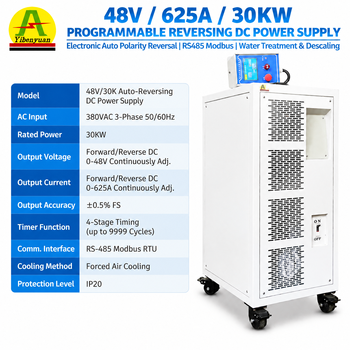
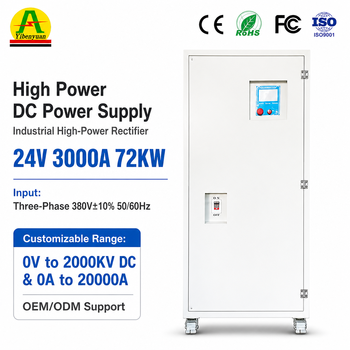
- Output48V DC / 625A (30kW)
- Reversal CycleAdjustable 1s–9999s via Timer
- TopologySolid-State IGBT H-Bridge
- ProtocolRS485 Modbus-RTU / PLC
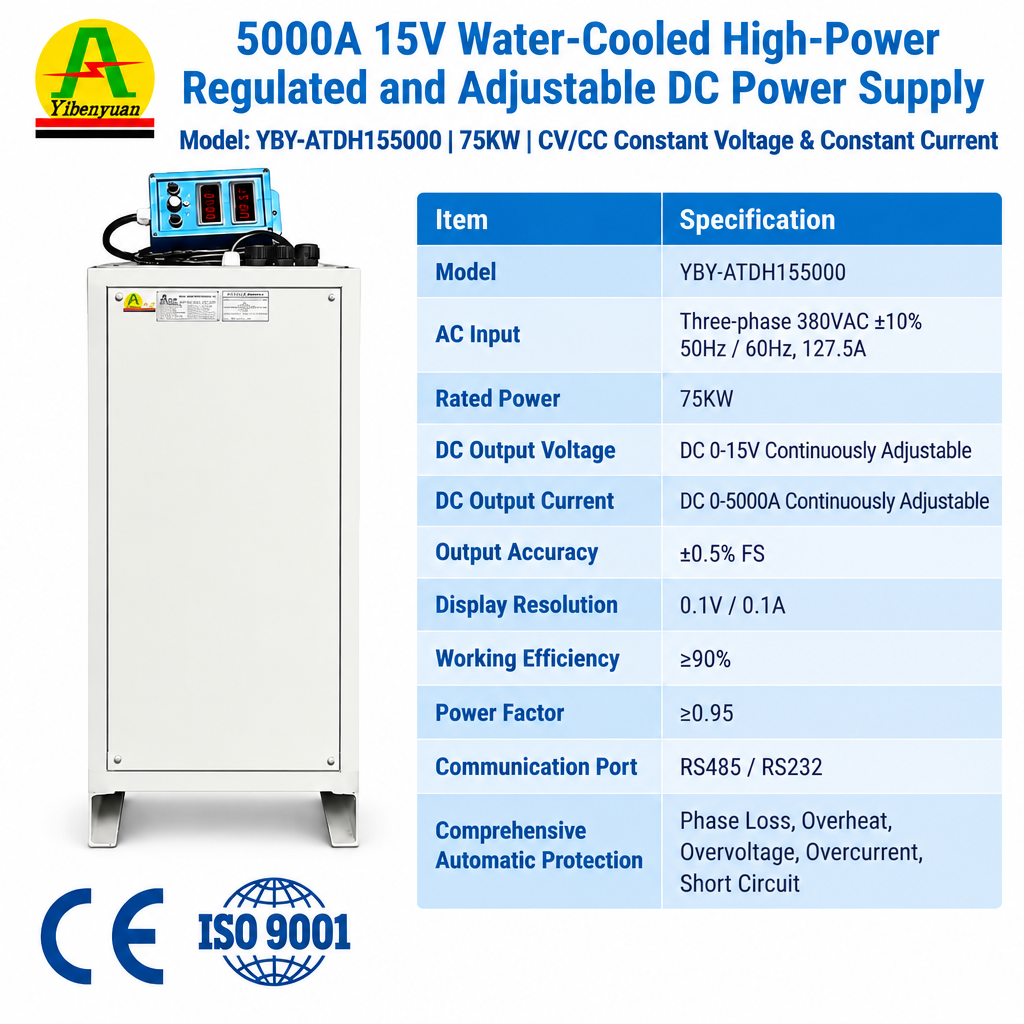
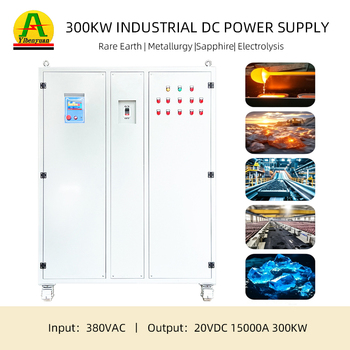
- Output12–15V DC / 5000–6000A
- CoolingDeionized / Tap Water Cooled
- DisplayDigital Touch HMI & Meter
- Efficiency≥ 90% at Rated Full Load
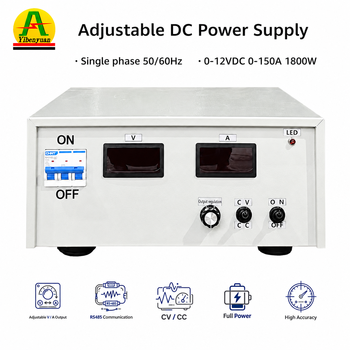
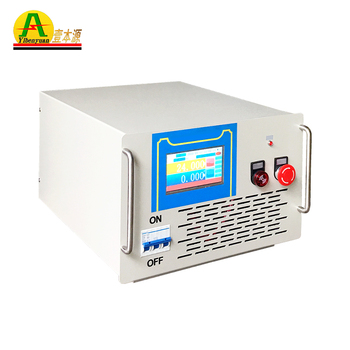
- Output0–12V DC / 0–150A Continuous
- Ripple Factor≤ 2% RMS Low Noise
- CertificationCE, EMC, LVD Compliant
- ApplicationPCB Vias, Au/Ag Deposition
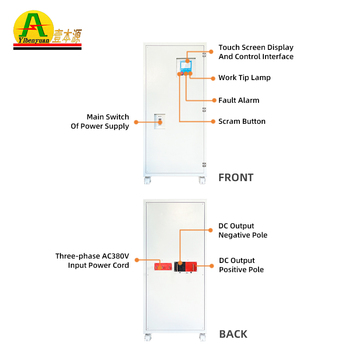
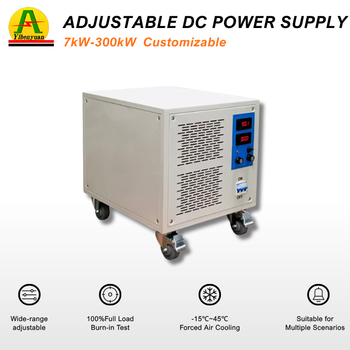
- Output12V DC / 8000A (96kW)
- ProtectionOver-temp, Short, Phase Loss
- Duty Rating100% 24/7 Continuous Duty
- Control ModeConstant Current (CC) & CV
- Voltage Range12V / 24V / 60V Scalable
- Ramp ControlMulti-Step Programmable Ramp
- IntegrationAnalog 0–10V / 4–20mA Isolated
- EnclosureCorrosion-Resistant Powder Coat
- Current Range0–15,000A Ultra-High Output
- TransformerNanocrystalline High-Freq Core
- Cabinet ClassIP54 Sealed Electronics Bay
- Cooling LoopTitanium Plate Heat Exchanger
- Input Power380VAC 3-Phase ±15% 50/60Hz
- Voltage Output0–300V / 0–400V DC Adjustable
- InterlocksEmergency Stop & Tank Interlocks
- Safety CertsCE, EN 61010 Industrial Directives
- Output Range0–800V DC / 0–50A Bi-Directional Ready
- Response Time≤ 5ms Step Load Transient
- ProgrammingSCPI Command Protocol via LAN/RS485
- Target TestingBattery Packs, EV Inverter Validation
Engineering Polarity-Reversing DC Power Architectures: Comprehensive Technical Overview
Modern industrial electrochemistry and advanced surface finishing installations across the European Union require stringent electrical parameters: minimal ripple factor, continuous thermal equilibrium, and microsecond-level transient response times. Unlike conventional silicon-controlled rectifiers (SCR) that operate at mains frequency (50 Hz) and rely on heavy magnetic transformers with mechanical contactors for commutation, modern High-Frequency Switching Power Supplies (SMPS) utilize Insulated Gate Bipolar Transistors (IGBT) operating at frequencies from 20 kHz up to 100 kHz. In Warsaw's specialized chemical plants, aerospace manufacturing workshops, and automotive parts coating operations, integrating polarity reversing DC power supplies has revolutionized production consistency, energy efficiency, and operational lifespan.
The core mechanism of automated polarity reversal resides in high-power H-bridge solid-state commutating circuitry. Mechanical contactor-based polarity reversal often causes contact arcing, high electrical noise spikes, significant contact pitting, and slow changeover periods extending between 300 ms to over 2 seconds. In contrast, solid-state IGBT H-bridge arrays combined with ultra-fast DSP (Digital Signal Processing) control permit switching transition times in sub-millisecond ranges without interrupting system safety loops or generating destructive counter-electromotive force (CEMF) spikes on high-inductance electrical busways.
Electrochemical Self-Cleaning
In electrolytic scale elimination and wastewater electro-coagulation, scale layers of CaCO3 and Mg(OH)2 precipitate directly onto cathode plates. Timed, automatic polarity inversion turns the cathode into an anode, releasing localized hydronium ions (H+) that dissolve and detach scale without manual acid rinsing.
Superior Edge Deposition
In high-aspect-ratio printed circuit boards (PCB) and precision chrome plating, continuous DC yields excessive dendritic buildup and edge burning. Periodic reverse pulse plating systematically strips excess metal ions from high-current-density peaks, assuring flat planarized surface finishes.
Dynamic Thermal Management
Fenvix architectures implement isolated deionized-water cooled channels or closed-loop titanium heat exchangers directly coupled to IGBT copper baseplates, completely isolating sensitive electronics from corrosive airborne acid fumes and corrosive chlorine mists common in tank houses.
Technical Comparison: Solid-State Reverse Pulse vs. Traditional SCR Rectifiers
When selecting capital machinery for automated electroplating lines or industrial water filtration facilities in Mazovia, process engineers evaluate equipment on capital expenditure, operational uptime, total power conversion efficiency, and harmonic distortion back into the electrical distribution system. Below is a comparative technical engineering summary:
| Performance Parameter | High-Frequency IGBT Reversing Supply | Traditional Thyristor (SCR) with Contactor | Operational Impact |
|---|---|---|---|
| Power Conversion Efficiency | 88% – 93% at rated loads | 65% – 74% across variable loads | Significantly lower annual utility costs under continuous operation. |
| DC Current Ripple (RMS) | ≤ 1% – 2% across full dynamic range | ≥ 5% – 12% (frequency dependent) | Tighter deposit crystal grain structure; reduced porosity. |
| Polarity Switching Mechanism | Solid-State H-Bridge / Dual Converter | Electromechanical Contactor Interlock | Zero contact wear, eliminates mechanical sparking, maintenance-free. |
| Switching Cycle Interval | Milliseconds to continuous hours (programmable) | Restricted to ≥ several seconds | Allows micro-pulse surface conditioning unavailable on older SCRs. |
| Input Power Factor (λ) | ≥ 0.94 (Active PFC Optional ≥ 0.98) | 0.70 – 0.82 (degrades as firing angle increases) | Avoids reactive power penalty fees from grid operators in Poland. |
| Footprint & Cabinet Mass | Compact modular (approx. 1/3 volume) | Heavy steel enclosure, large oil/air chokes | Frees up valuable cleanroom floor space; simplifies mezzanine rigging. |
Localized Industrial Applications Across Warsaw and the Mazowieckie Region
The Mazowieckie Voivodeship, with the Warsaw metropolitan cluster as its economic epicentre, houses diverse advanced manufacturing sectors requiring rigorous DC current delivery. From logistics hubs along the S8 corridor to electronics plants in Piaseczno, Ożarów Mazowiecki, and Pruszków, industrial setups impose exacting demands on power conversion apparatus.
Automotive Component Electrocoating & Descaling
Tier-1 automotive sub-suppliers around Warsaw rely on continuous cathodic electrophoresis (E-Coat) and metal pretreatment lines. Polarity-reversing power units maintain scaling-free titanium electrodes in cooling towers and automated phosphating rinse baths, eliminating unplanned downtime.
High-Density PCB & Semiconductor Manufacturing
Electronics contract manufacturers (EMS) located in Grodzisk Mazowiecki and Piaseczno deploy Fenvix programmable pulse-reverse rectifiers for microvia copper electrodeposition, achieving uniform throw rates on sub-micron geometries with ultra-low DC ripple (≤1%).
Aviation MRO & Surface Passivation
Maintenance facilities linked to Warsaw Chopin (WAW) and Warsaw Modlin (WMI) airports perform hard anodizing, cadmium replacement, and titanium passivation. Constant-current programmable ramp units guarantee crack-free barrier layers compliant with aerospace MIL-A-8625 specs.
Industrial Growth & Technology Trends in Poland's Manufacturing Sector
Poland's re-industrialization initiatives are heavily focused on sustainability, energy efficiency, and digital connectivity (Industry 4.0). Factory automation managers in Mazovia are systematically phasing out aging 6-pulse and 12-pulse SCR systems. The driver is two-fold: reducing overall kilowatt-hour consumption under EU energy mandates and integrating native fieldbus communications (Modbus-RTU, Profibus, Profinet, and Ethernet/IP) into Supervisory Control and Data Acquisition (SCADA) frameworks.
Furthermore, local environmental compliance enforces strict water reclamation limits on toxic metal effluents. The integration of Fenvix polarity-reversing DC power supplies in electro-coagulation and electrochemical descaling systems reduces chemical flocculant consumption by up to 35%, drastically lowering slurry disposal volumes while protecting expensive plate electrodes from irreversible passivation and scaling buildup.
Factory Engineering & Manufacturing Capability: The Fenvix Advantage
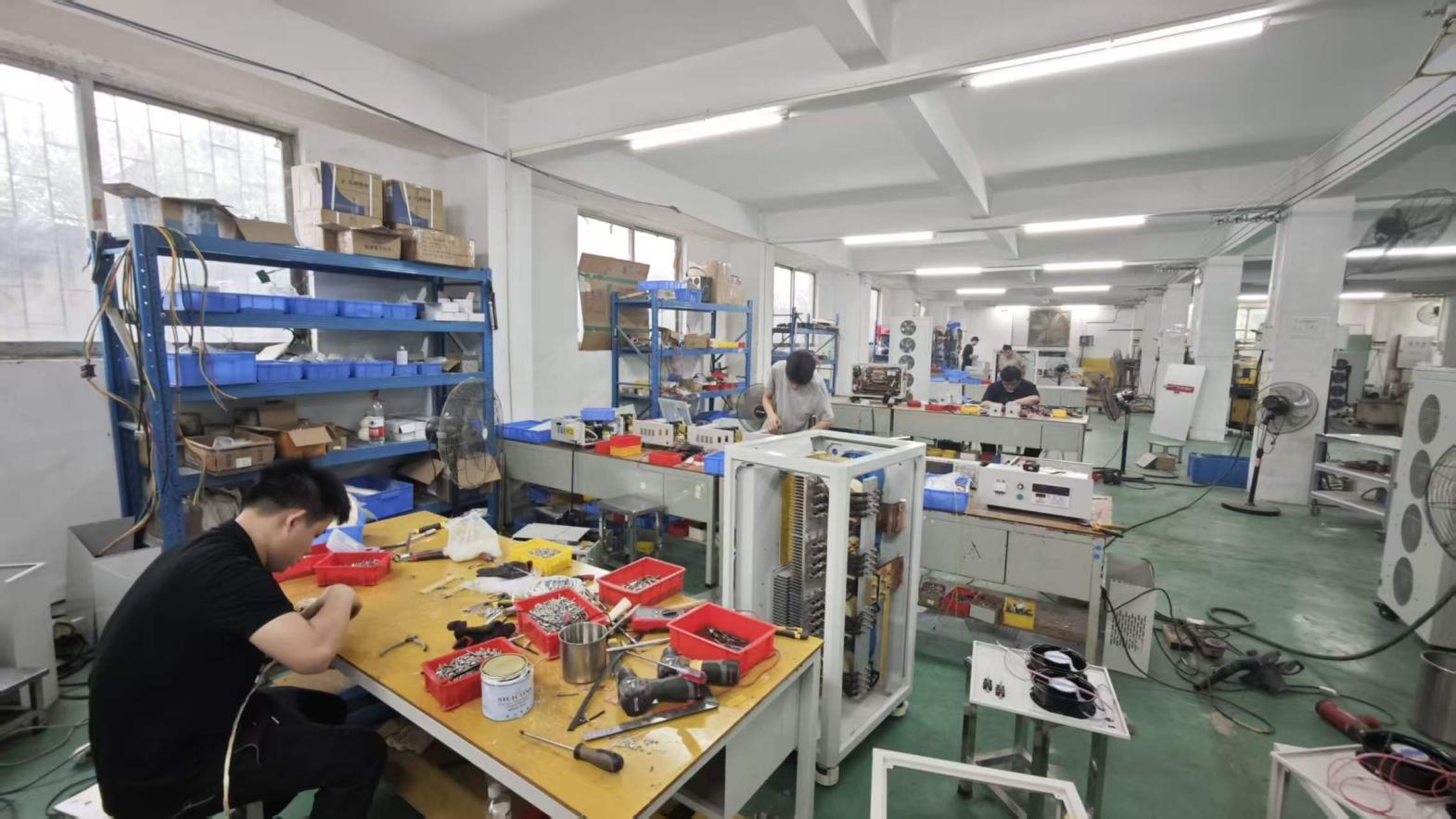
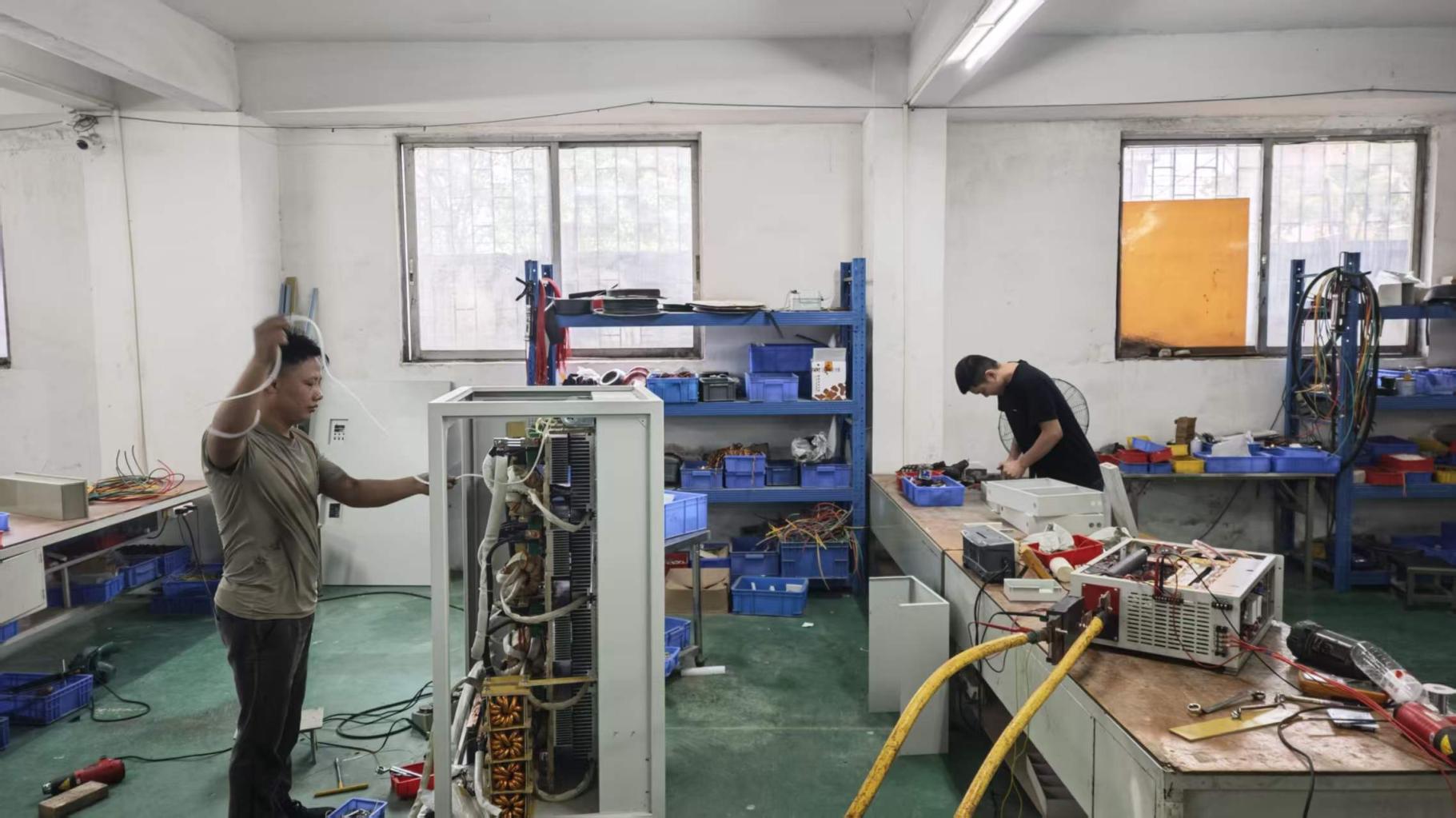
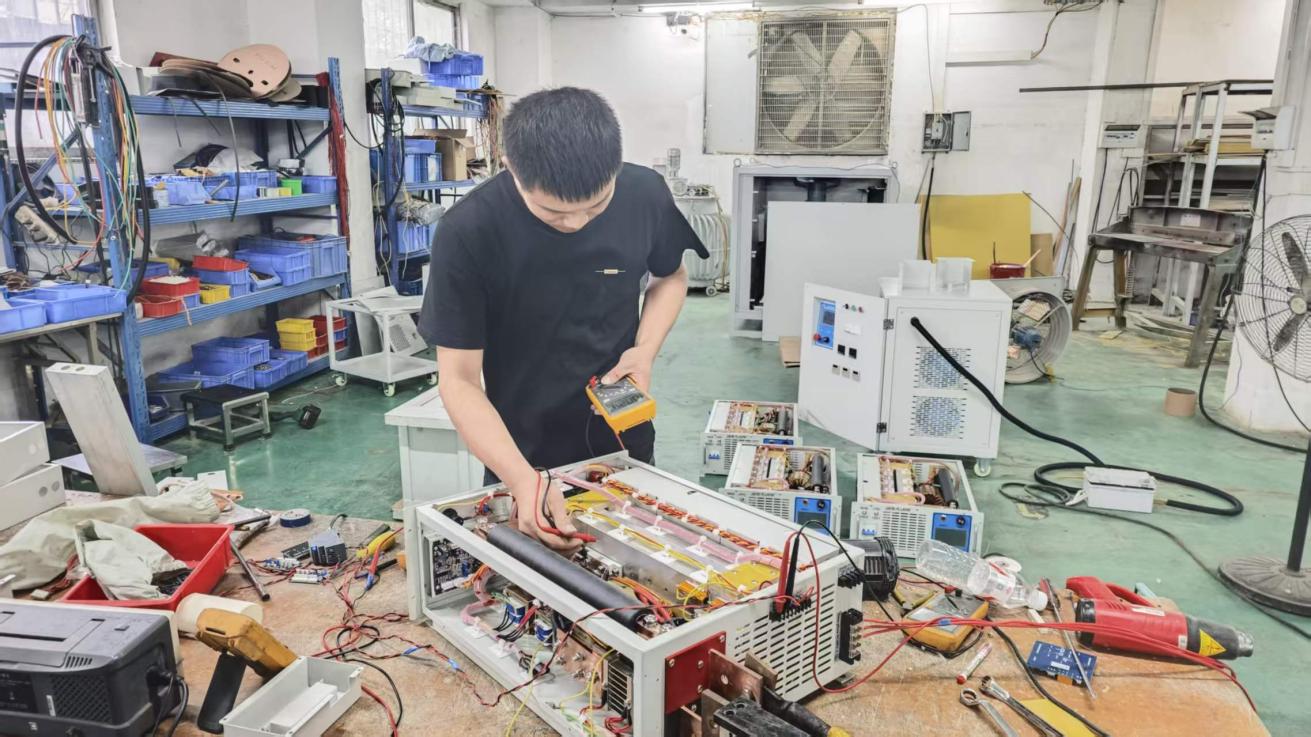
Established in 2013 in Guangzhou, Guangdong, Guangdong Fenvix Technology Co., Ltd. has grown into an international powerhouse in non-standard, custom industrial power supplies. Operating an ISO 9001 certified facility, our company handles every stage of manufacturing under one roof—from sheet metal CNC punching, shearing, and milling of structural enclosures, to automated winding of high-frequency nanocrystalline magnetic cores, precision busbar assembly, and multi-day 100% full-load burn-in testing.
Zero Middleman Direct Pricing
By purchasing straight from the OEM manufacturer, industrial clients in Poland eliminate European distributor markups, gain direct access to our core electrical engineering staff, and acquire custom modifications tailored to their unique factory mains and automation interfaces.
TÜV Rheinland Audited Quality
Our operational processes, mechanical tooling lines, burn-in protocols, and quality assurance workflows have been thoroughly verified on-site by TÜV Rheinland. Selected power models carry formal CE, RoHS, LVD, and EMC conformity certificates.
Complete In-House Machine Shop
Unlike integrators that outsource enclosure builds, our in-house plate shearing, drilling, tapping, and welding ensure our heavy-gauge IP21 to IP54 steel cabinets withstand aggressive acidic and alkaline plating shop environments.
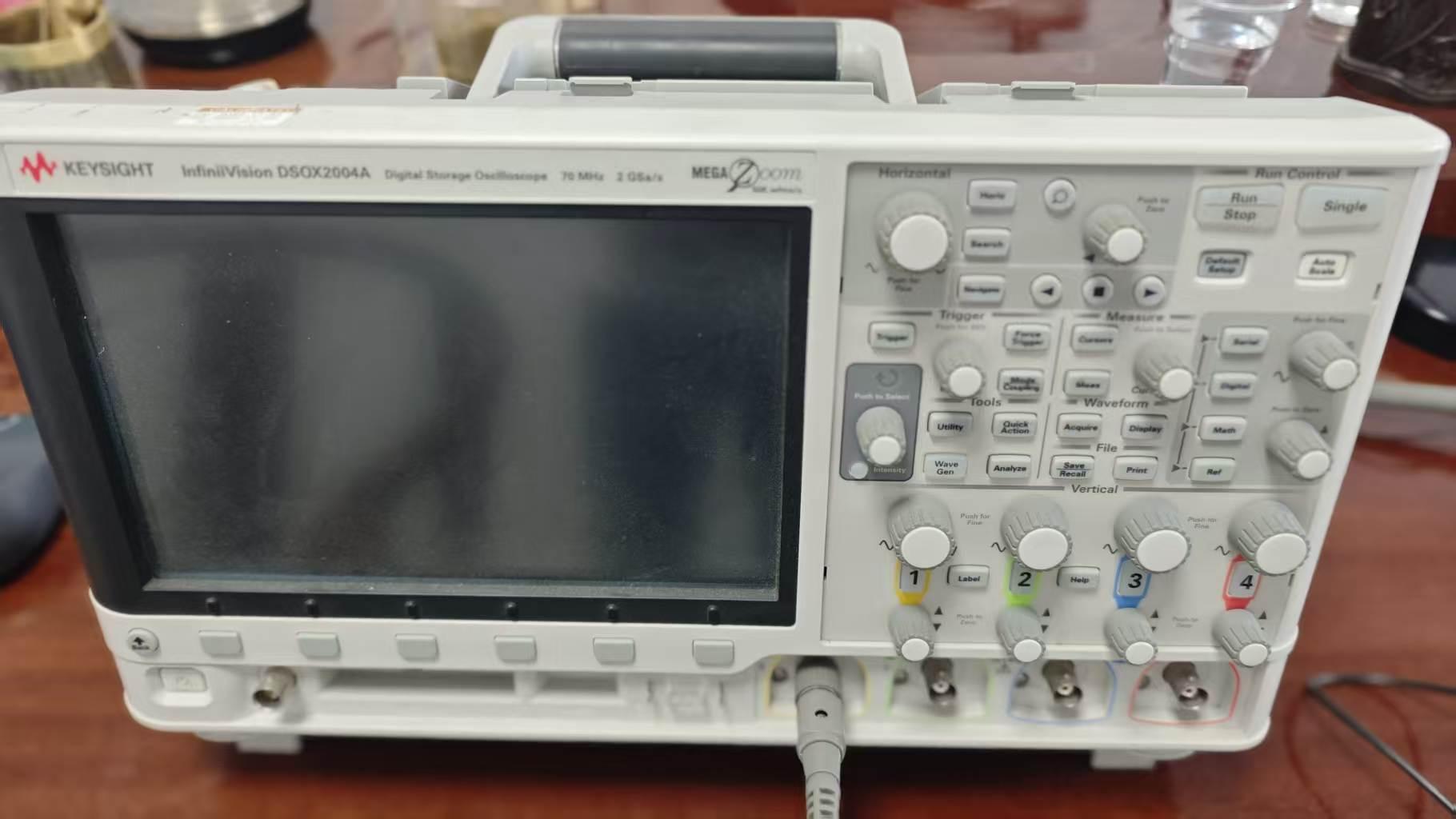
Production & Quality Inspection Facility
Take an inside view of our Guangzhou manufacturing workshops, production testing arrays, and precision fabrication equipment dedicated to building reliable high-power rectifiers:
Procurement FAQ: Sourcing Polarity Reversing Rectifiers for Warsaw & Poland
Key technical, commercial, and delivery questions frequently raised by procurement engineers and factory directors in Poland when purchasing from Fenvix.
How does the power supply handle Poland's 400V 50Hz grid standards?
All Fenvix industrial rectifiers exported to Poland and the broader European market are factory-calibrated for standard European 3-phase 400VAC ±15% at 50Hz (or single-phase 230VAC for compact laboratory units). Internal high-grade EMI filters and surge suppression modules ensure full adherence to European electromagnetic compatibility (EMC) regulations.
Can the polarity reversing timing sequence be altered on the fly?
Yes. Our programmable models allow plant operators to independently set the forward duration (T1: 1s to 9999s), pause/dead time (T0: 0.1s to 99s to allow inductive load discharge), and reverse cycle (T2: 1s to 9999s). Adjustments can be made locally via digital display/touchscreen or remotely via Modbus-RTU over RS485.
What is the typical shipping lead time and Incoterms for delivery to Warsaw?
Standard configured units typically build in 15 to 25 business days. We provide complete logistic flexibility: air freight (5–8 days) to Warsaw Chopin Airport (WAW) for urgent replacement projects, or sea freight container consolidation (30–35 days) via the Port of Gdańsk with door-to-door DDP (Delivered Duty Paid) clearance directly to your factory dock.
Is there a Minimum Order Quantity (MOQ) for custom units?
No. Fenvix maintains a strict 0 MOQ policy. Whether you need an individual prototype unit for a pilot water descaling test bench or a synchronized batch of ten 8,000A water-cooled rectifiers for an automated galvanizing line in Mazovia, our engineering and production teams treat each order with identical quality rigor.
When is water cooling recommended over forced air cooling?
For installations exceeding 30kW, continuous 24/7 high-amperage lines (≥3,000A), or facilities with high ambient temperatures and aggressive chemical vapors (such as hydrochloric or chromic acid tanks), water-cooled cabinets provide maximum protection. The sealed cabinet prevents internal PCB corrosion, drastically extending overall operational life.
How is after-sales technical support and warranty managed internationally?
Every Fenvix power supply includes a comprehensive warranty and lifetime engineering consultation. We provide complete electrical schematics, wire tagging, and modular plug-and-play replacement boards. In case of operational anomalies, our technical team connects with your engineers via video call or provides third-party certified on-site service support.