Engineered Rectification Systems for Precision Industry
Explore high-frequency, auto-polarity reversing, and high-power DC systems built strictly to ISO 9001 quality criteria.
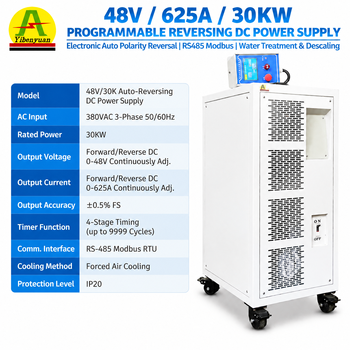
48V 625A 30kW Programmable Auto-Polarity Reversing Power Supply
- TopologyIGBT Switching Bridge
- Cycle ControlIndependent Forward/Reverse Timer
- CoolingForced Air Sealed Module
- Bus CommsRS485 Modbus-RTU
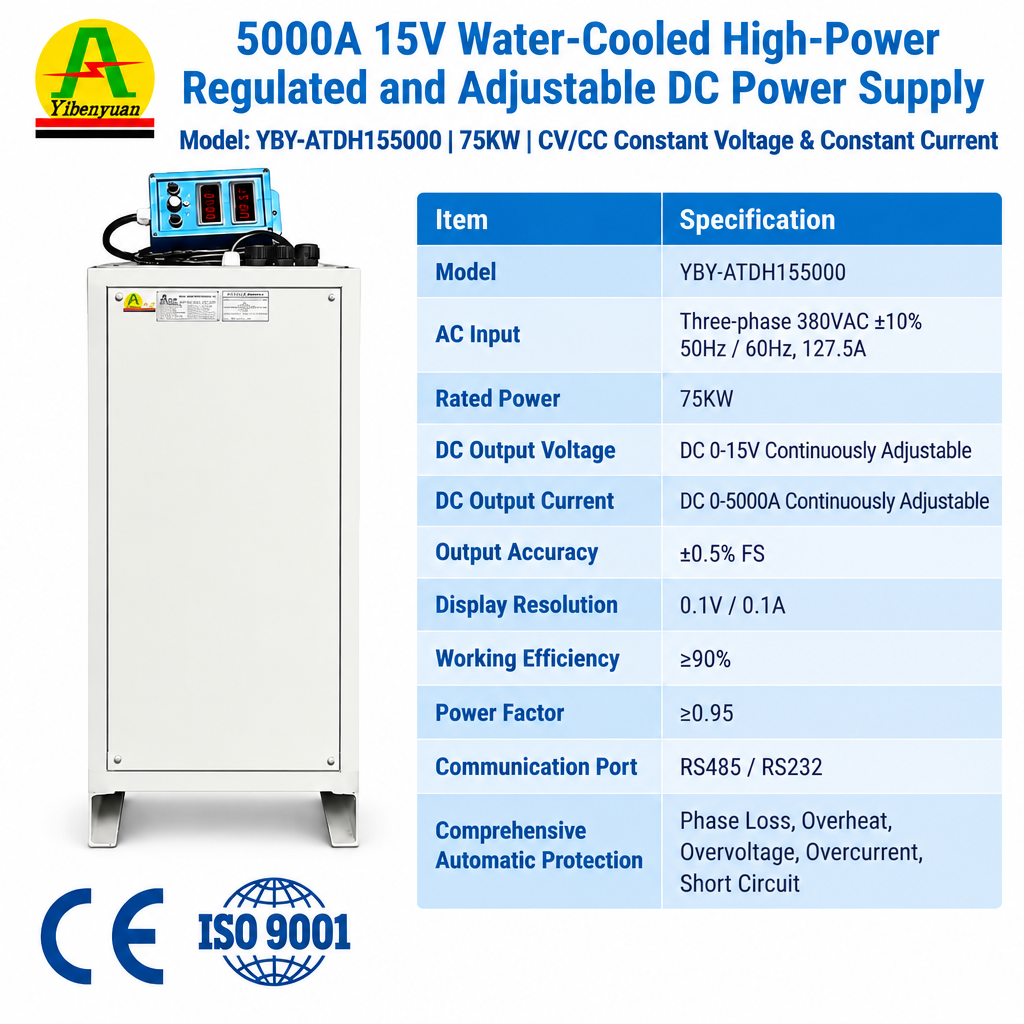
12V-15V 5000A/6000A 75kW Water-Cooled High-Frequency Rectifier
- Output Range0–15V / 0–6000A CC/CV
- Cooling TypeDeionized/Chilled Water Tube
- Ripple Rate< 2% Full Load RMS
- ProtectionOverheat, Phase Loss, Short
12V 4000A 48kW High Frequency Industrial Plating Rectifier
- Duty Rating100% 24/7 Constant Run
- Efficiency≥ 90% at Rated Load
- Precision±0.5% Output Current Stability
- DisplayMulti-Function Digital Meter
8000A 12V Heavy-Duty Water-Cooled Galvanizing Rectifier
- Heavy Currents8,000 Amperes Sustained
- Internal BusSolid T2 Electrolytic Copper
- CabinetIP54 Sealed Anti-Corrosion
- ControlAnalog 0-10V / PLC Interface
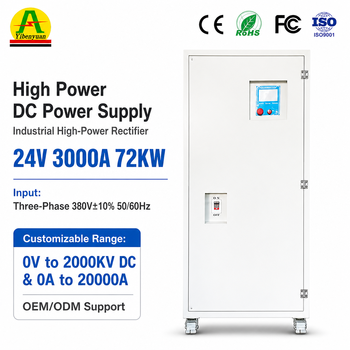
100A–3000A Modular Anodic Oxidation Rectifier Cabinet
- Voltage Output12V / 24V / Variable Custom
- Ramp ProfilesMulti-Segment Current Ramping
- Target MetalAluminum & Titanium Alloys
- Control UnitRemote Touch Panel / Pendant
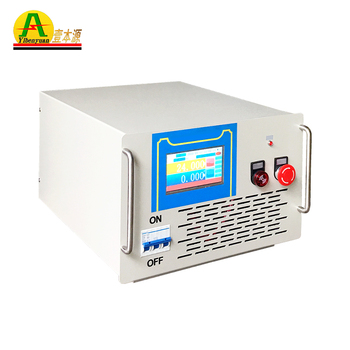
High-Precision Electrophoresis Cathodic/Anodic Paint Power Supply
- Voltage Output0–300V / 0–600V Regulated
- Current Range0–20A / Scalable Sub-racks
- Soft-StartProgrammable 0–999s Slope
- Quality StandardCE EMC / LVD Certified
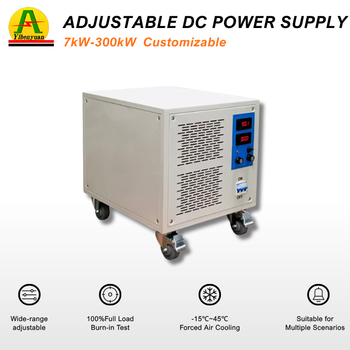
800V 50A 20kW Programmable HV DC Source for Battery & EV Testing
- DC Range400V–800V Stepless DC
- Response Time≤ 5ms Dynamic Transient
- ProgrammingLabVIEW, SCPI, CAN Bus
- Use ScenarioEV Drive Test, Capacitor Burn-in
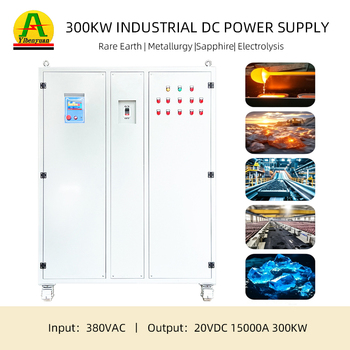
300kW 20V 15,000A Heavy-Duty Electrolysis DC Rectifier Cabinet
- Nominal Power300 Kilowatts Output
- Current Load15,000 Amperes Continuous
- Thermal SinksPure Copper Block Liquid Cool
- Grid Standard3-Phase 380V/440V/480V Mains
Polarity Reversing DC Power Architectures: Critical Engineering for Taguig Industrial Hubs
Taguig City occupies an exceptional position in the industrial and economic landscape of the Philippines. While Bonifacio Global City (BGC) represents the commercial frontier, Taguig’s extensive light manufacturing, electronics fabrication, precision tooling, and regional utility support zones anchor Metro Manila's high-tech supply chain. Operations situated around Veterans Center, FTI (Food Terminal Inc.) Special Economic Zone, and nearby Laguna Lake industrial corridors demand uncompromising electrochemical precision.
A polarity reversing DC power supply serves a role fundamentally distinct from conventional unidirectional rectifiers. In electrochemical processes, ionic migration across boundary layers creates concentration polarization and passive resistive films. In water descaling systems, electrolytic disinfection, and high-spec micro-etching, unipolar DC causes rapid cathode mineral scaling and uneven anode dissolution. By utilizing precision-controlled H-bridge IGBT switching topologies, polarity-reversing supplies switch voltage orientation on millisecond-to-hour intervals, forcing periodic self-cleaning of electrodes without toxic acid washes and ensuring atomic-level deposition uniformity.
Electrochemical Water Descaling
Taguig and Laguna de Bay industrial users frequently battle high mineral hardness in central cooling loops and industrial rinse tanks. Automated reverse polarity dynamically dissolves calcium and magnesium crusts off cathode plates, sustaining high heat exchange efficiency with zero downtime.
PCB & Semiconductor Plating
For high-density interconnect (HDI) printed circuitry, pulse periodic reverse (PPR) plating delivers exceptional throwing power inside blind micro-vias. Forward pulses deposit copper; brief reverse pulses etch back micro-nodules on surface knees, eliminating dog-boning defects.
Electro-Decontamination & Soil Remediation
Taguig's rigorous regional wastewater compliance under Laguna Lake Development Authority (LLDA) standards mandates advanced electrocoagulation. Polarity alternation limits passivating oxide formation on iron and aluminum sacrificial electrodes, lowering total chemical consumption.
Engineering Selection Framework: Conventional Rectifiers vs. Polarity Reversing Systems
Selecting the optimal power supply for Taguig plant managers requires balancing chemical kinetics against capital hardware parameters. The engineering matrix below contrasts standard DC rectification with solid-state polarity reversing systems across operational metrics.
| Evaluation Parameter | Standard Unipolar DC Rectifier | Auto Polarity Reversing DC System | Operational Impact in Local Plants |
|---|---|---|---|
| Electrode Passivation Rate | Rapid oxide & carbonate crust accumulation | Self-cleaning via electro-potential inversion | Eliminates bi-weekly manual hydrochloric acid pickling |
| Via Throwing Power (Micro-vias) | 60% – 75% depth-to-surface thickness ratio | > 95% ratio with reverse pulse deplating phase | Essential for Tier-1 electronic manufacturing standards |
| Switching Topology | Single-quadrant diode/SCR bridge | Full H-Bridge IGBT module with dual-gate drivers | Enables microsecond to multi-hour configurable cycles |
| Cooling Design Option | Air or Water cooled cabinets | Sealed IP54 Water or Ducted Forced-Air | Protects internal drivers against Metro Manila humid salinity |
| Harmonic Distortion (THDi) | Typical > 28% for 6-pulse SCR units | < 5% with Active Power Factor Correction (PFC) | Direct compliance with Meralco grid interconnection rules |
*Data compiled from Fenvix laboratory burn-in benches and field operational records spanning 2013–2025.
Industrial Trends Driving DC Power Supply Demand in Taguig & Greater Manila
The industrial landscape in southern Metro Manila is undergoing rapid structural evolution, fueled by the Philippines Development Plan, automated infrastructure investments, and international nearshoring:
1. Transition from SCR (Thyristor) to High-Frequency Solid-State IGBT
Traditional plating shops in Metro Manila historically relied on heavy, oil-immersed silicon-controlled rectifiers (SCR). These outdated machines produce large ripple currents (>5%), consume excessive floor space, and display poor energy efficiencies (~70%). Taguig operations are systematically replacing legacy systems with high-frequency IGBT switching units operating above 20 kHz. These converters maintain conversion efficiencies higher than 90%, shrinking physical cabinet footprints by 60% and trimming high electricity expenditures driven by local utility tariffs.
2. Stringent Effluent & Environmental Governance (LLDA Compliance)
Plants in proximity to Laguna de Bay are subjected to stringent monitoring regarding heavy metal discharges, biological oxygen demand (BOD), and total dissolved solids (TDS). Electrolytic recovery cells driven by automated polarity-reversing DC power supplies allow Taguig metal finishers to reclaim precious metals (gold, copper, nickel) directly from rinsewaters while continually stripping electrode surfaces, minimizing toxic sludge disposal volumes.
3. Integration with Smart Factory SCADA & Industrial IoT
Modern assembly plants around the Taguig corridor require complete operational traceability. Manual potentiometer-driven units are obsolete. Fenvix systems incorporate native RS485 Modbus-RTU, Profibus, and 0–10V/4–20mA analog interfaces, allowing operators to execute dynamic current profiling, record cycle data for quality audits, and detect load abnormalities from centralized control rooms.
Why Engineering Teams Choose Fenvix as Their Direct Manufacturer
Guangdong Fenvix Technology Co., Ltd. builds dependable, high-yield power systems backed by rigorous in-house manufacturing control.
ISO 9001 & TÜV Rheinland Verified
Founded in 2013, our production facility features third-party verified on-site audits by TÜV Rheinland. Selected power supplies conform to CE, RoHS, LVD, and EMC regulatory directives, ensuring compliant integration into mission-critical lines.
Complete In-House Sheet Metal & Busbar Works
Unlike assembly agents who outsource enclosures, our 3,000m² facility operates dedicated shearing, punching, milling, drilling, and tapping equipment. We machine heavy T2 electrolytic copper busbars internally to optimize heat dissipation and current density.
No MOQ & Agile Engineering Customization
From single-unit prototypes for academic or pilot testing to full-scale batch container production for major industrial contractors, we provide tailored engineering: bespoke input voltages (220V, 380V, 440V, 480V 3-Phase 60Hz) tailored precisely for the Philippine power grid.
Frequently Asked Questions for Taguig & Philippine Buyers
Direct answers addressing technical parameters, local electrical compatibility, logistics, and service arrangements.
Can Fenvix configure power supplies for the Philippine utility grid (220V / 440V 60Hz 3-Phase)?
What parameters are required to specify an auto-polarity reversing DC power supply?
When is water cooling superior to forced air cooling in Metro Manila installations?
What is the Minimum Order Quantity (MOQ) and sample lead time?
How are international shipments, customs clearance, and technical support handled?
Upgrade Your Taguig Plant With Heavy-Duty Industrial Rectification
Consult directly with our senior power electronics engineers to finalize technical specifications, calculate duty cycles, and receive an itemized factory quotation.