Featured Power Supply Systems for Baguio Precision Finishing
From high-current electrochemical rectifiers to high-voltage micro-arc oxidation pulse generators, our systems deliver high-efficiency conversion designed to withstand Benguet's highland environment.
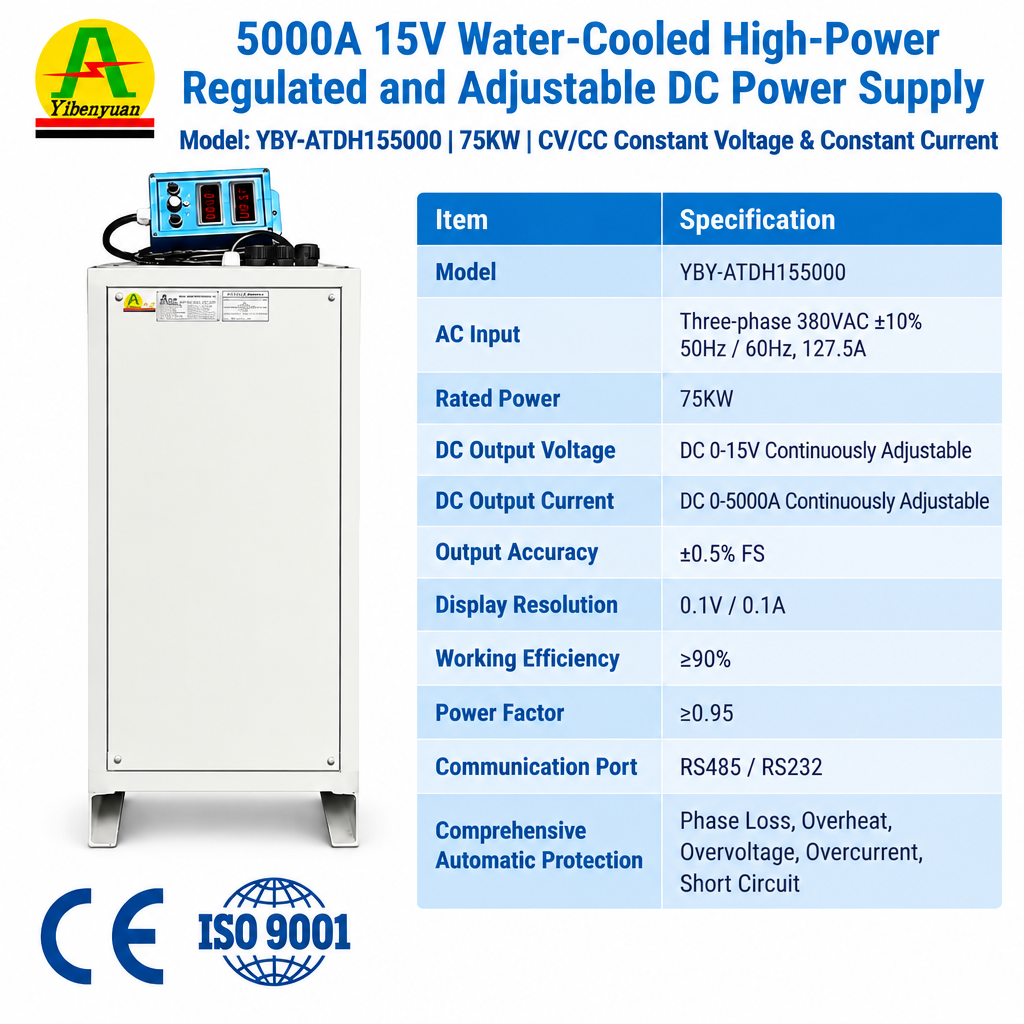
12V/15V 5000A–6000A 75kW Water-Cooled High-Frequency Rectifier
- Output Power: 75kW Continuous
- Voltage / Current: 12V–15V / 6000A Max
- Cooling Topology: Deionized Closed Loop
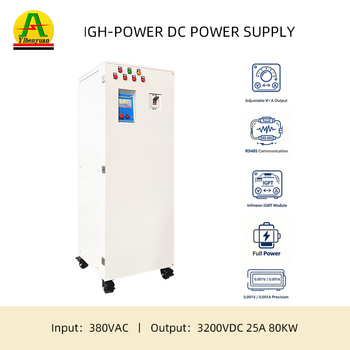
80kW 1000V–3200V High-Precision Bipolar Pulse PEO Power Supply
- Dielectric Range: 0–3200V Adjustable
- Modulation: Bipolar Micro-Arc Pulse
- Target Materials: Al, Mg, Ti Alloys
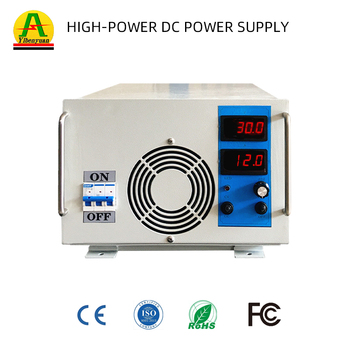
150V 50A Constant-Current Titanium Alloy Anodizing Power Supply
- Voltage / Current: 0–150V / 0–50A CC
- Input Rating: 380V/440V 60Hz 3-Phase
- Application: Medical Screws & Aerospace
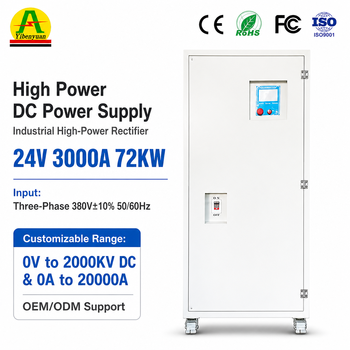
100A–3000A Digital Anodic Oxidation Rectifier Cabinet
- Operating Modes: CV / CC / Multi-step Ramp
- Control Interface: RS485 / Modbus RTU
- Efficiency: ≥92% (High-Frequency IGBT)
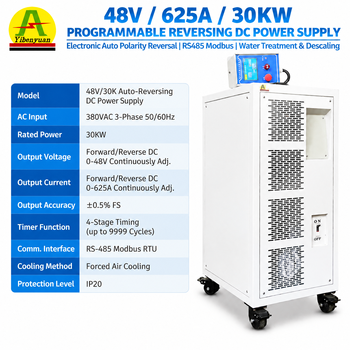
48V 625A 30kW Programmable Auto-Polarity Reversing Power Source
- Duty Cycling: 0.1s to 999.9h Reverse
- Protection: Over-temp, Short, Phase loss
- Industry: Wastewater Descaling & Etch
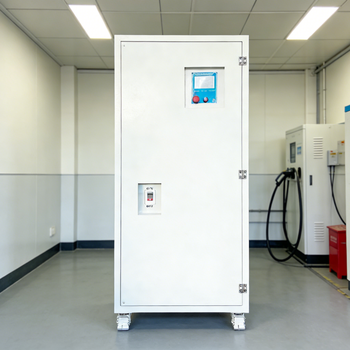
160kW 2500A High-Stability Electrolysis & Hard-Anodizing Rectifier
- Current Rating: 0–2500A Stepless
- Cooling: Forced Pure Water Cooled
- Operation: 24/7 Continuous Duty Plating
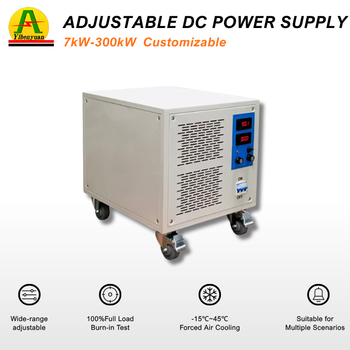
800V 50A 20kW High-Voltage Programmable DC Power Supply
- Voltage Accuracy: ≤0.2% Rated Scale
- Ripple / Noise: ≤0.5% RMS Full Output
- Remote Control: 0–10V Analog, RS485
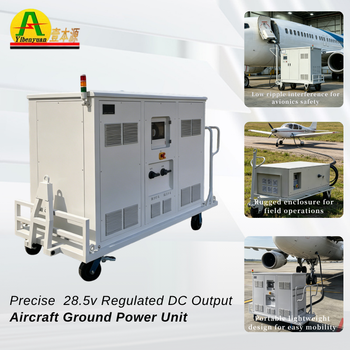
Portable 28.5V DC Aviation Ground Power Unit (100A–500A)
- Output Voltage: 28.5V DC Steady
- Peak Surge: Up to 1500A Engine Start
- Mobility: Heavy-Duty Casters / Enclosure
1. Technical Whitepaper: The Electrical Dynamics of Plasma Electrolytic Oxidation
Plasma Electrolytic Oxidation (PEO), also known internationally as Micro-Arc Oxidation (MAO), represents a quantum leap in surface engineering beyond conventional sulfuric or chromic acid hard anodizing. In conventional anodizing, operating voltages rarely exceed 20V to 100V DC, relying solely on Faraday's laws of electrochemical deposition to create an amorphous, porous aluminum oxide barrier. While functional for aesthetic coloring and light corrosion protection, traditional anodic layers fail in demanding environments requiring extreme mechanical wear resistance, high thermal barrier performance, and superior dielectric isolation.
PEO fundamentally alters this paradigm by driving bath voltages well beyond the dielectric breakdown threshold of the native oxide layer—typically between 350V and 850V, depending on substrate alloy stoichiometry and alkaline electrolyte concentration (typically silicate, phosphate, or aluminate-based). Once the breakdown potential is breached, thousands of discrete, localized micro-discharges (plasma micro-arcs) ignite over the substrate surface. These transient micro-arcs reach instantaneous local core temperatures of 5,000K to 10,000K and pressures exceeding 100 MPa. Under these extreme thermodynamic conditions, the metallic substrate melts, reacts with ionic oxygen species in the bath, and rapidly quenches against the bulk electrolyte, transforming soft metallic aluminum, magnesium, or titanium into crystalline ceramic phases—predominantly alpha-Al₂O₃ (corundum) and gamma-Al₂O₃, or ceramic rutile and anatase titania.
The critical factor dictating the morphology, crack density, and hardness of this ceramic matrix is not merely total energy input, but the exact wave-shape, pulse frequency, and bipolar voltage balance produced by the power supply. Modern PEO relies on asymmetric bipolar pulsed power topologies. During the positive (anodic) half-cycle, micro-arcs grow the ceramic layer; during the negative (cathodic) half-cycle, negative polarization breaks down electrical double-layer capacitive accumulation, suppresses violent, destructive arcing that causes thermal cracking, and discharges gaseous bubbles from micro-pores. A power supply incapable of nanosecond-range rise times, independent anodic/cathodic pulse width modulation (PWM), and precise current quenching will inevitably produce porous, coarse, and spalling coatings unsuitable for high-precision engineering standards.
2. Baguio Market Dynamics: High-Altitude Derating & BCEZ Applications
Sourcing industrial power systems for the Baguio market requires accounting for geographical, climatic, and industrial conditions distinct from lowland industrial hubs like Calamba, Batangas, or Metro Manila. Located in the Cordillera Central mountain range at an elevation of approximately 1,500 meters (4,920 feet) above sea level, Baguio City—and specifically the export enterprises operating within the Baguio City Economic Zone (BCEZ) operated under the Philippine Economic Zone Authority (PEZA)—presents two distinct operational hurdles: high-altitude atmospheric physics and rigorous export-grade manufacturing standards.
High-Altitude Creepage & Thermal Dissipation
At 1,500m elevation, barometric air pressure drops from 101.3 kPa to roughly 84.5 kPa. This lower air density drastically reduces the dielectric breakdown voltage of ambient air (Paschen’s Law), which increases the hazard of internal corona discharge and electrical flashover across high-voltage IGBT heatsinks and busbar terminations. Additionally, reduced mass flow of ambient air decreases convection cooling efficiency by approximately 12% to 15%. Guangdong Fenvix compensates by engineering oversized creepage clearances and deploying high-pressure, water-cooled heat exchangers, ensuring zero continuous-duty derating inside Baguio manufacturing plants.
BCEZ Semiconductor Tooling Passivation
Baguio is world-renowned as a semiconductor packaging powerhouse, anchored by tier-one assembly and test facilities such as Texas Instruments Philippines. The localized fabrication tooling, automated test equipment (ATE) fixtures, aluminum test sockets, and vacuum pick-and-place arms require exceptional surface dielectric breakdown voltages (>1000V DC isolation), micro-crack-free surfaces, and complete chemical inertness against cleanroom cleaning solvents. Our bipolar PEO units produce super-dense ceramic layers on aluminum 6061-T6 and 7075 alloys that eliminate particulate shedding and extend component life tenfold.
Cordillera Mining & Precision Aerospace Components
Northern Luzon's Benguet province is rich in mining engineering operations alongside regional aerospace precision component sub-contractors. Components such as slurry pump impellers, hydraulic valve blocks, airborne drone airframes, and down-hole drilling probes are constantly subjected to severe slurry erosion, sliding abrasion, and galvanic corrosion from high humidity. Bipolar PEO coatings deposited by our high-frequency switching rectifiers achieve Vickers micro-hardness ratings of 1,400 to 1,900 HV₀.₁, matching sapphire hardness directly on lightweight magnesium and aluminum substrates.
Furthermore, power infrastructure in the Cordillera region occasionally encounters voltage sags, transient surges, and harmonic fluctuations. Guangdong Fenvix power supplies exported to Baguio are factory-configured with three-phase industrial inputs (220V, 380V, 440V, or 480V at 60Hz), matching Philippine grid standards. Integrated heavy-duty active harmonic filtering (THDi < 5%) and robust surge arrestors isolate the high-voltage resonance loops of plasma electrolytic oxidation from polluting adjacent sensitive cleanroom instrumentation.
3. Process Parameter Matrix: Conventional Anodizing vs. Industrial PEO/MAO
Procurement teams and process engineers in Baguio must evaluate power supply specifications against target metallurgical outcomes. The following data highlights why legacy SCR rectifiers cannot execute plasma electrolytic oxidation and details the technical jump provided by our high-frequency IGBT bipolar technology:
| Process Parameter | Standard Sulfuric Anodizing | Mil-A-8625 Type III Hard Anodizing | Fenvix Bipolar Plasma Electrolytic Oxidation (PEO) |
|---|---|---|---|
| Operating Voltage Range | 12V – 24V DC | 40V – 90V DC | 350V – 1,000V Peak Pulsed AC/DC |
| Current Waveform Topology | Pure DC or Low-Hz Ripple | DC with Superimposed AC Ripple | Asymmetric Bipolar Pulse (100Hz – 5kHz) |
| Power Conversion Element | Legacy SCR / Thyristor | SCR or High-Current Switch-mode | High-Speed Solid-State IGBT / SiC Modules |
| Resulting Micro-Hardness | 200 – 350 HV | 400 – 500 HV | 1,200 – 1,900 HV (Corundum Ceramic α-Al₂O₃) |
| Environmental Chemistry | Hazardous Acid Baths (H₂SO₄, CrO₃) | Chilled Acid Baths + Additives | Eco-Friendly Alkaline Electrolytes (Silicates/Phosphates) |
| Thermal Barrier Insulation | Negligible (<100°C Breakdown) | Low (<200°C Thermal Limit) | Superior Continuous Resistance (Up to 1,200°C) |
| Altitude Derating Requirement | Standard Low Voltage | Moderate Insulation | Critical: High-Clearance Creepage + Sealed Liquid Cooling |
4. Technological & Regulatory Trends Driving PEO Adoption in Northern Luzon
The manufacturing base across the Cordillera Administrative Region (CAR) is navigating intense global supply chain transformations. Four overarching trends dictate capital equipment investments in surface finishing power electronics:
Elimination of Toxic Chromates & Heavy Metals
Baguio is an environmentally protected headwater basin for Northern Luzon. Conventional hard chrome plating and hexavalent chromium sealing are facing strict scrutiny under Philippine Department of Environment and Natural Resources (DENR) DAO 2016-08 standards. PEO power supplies utilize benign, food-grade alkaline electrolytes (potassium silicate, sodium hexametaphosphate). By adopting PEO, PEZA companies eliminate hazardous heavy-metal sludge management expenses while meeting strict EU RoHS and REACH mandates for exported finished goods.
Replacement of Heavy Steel with High-Strength Light Alloys
Whether for aerospace instrumentation brackets, electric mobility parts, or drone components, designers are substituting heavy tool steels with lightweight aluminum and magnesium alloys. However, raw light alloys suffer from poor tribological properties and low galvanic potential. Bipolar PEO power supplies convert the top 20 to 100 microns of these substrates into an ultra-dense, in-situ metallurgical ceramic that will never peel or delaminate, offering steel-grade wear resistance at one-third the component mass.
Integration with Industry 4.0 Cleanroom SCADA
Baguio's semiconductor tooling lines operate in highly automated, data-logged cleanroom environments. Modern PEO operations demand precise, real-time energy tracking per batch. Guangdong Fenvix integrates high-speed DSP processing cards providing Ethernet/IP, Profinet, and RS485 Modbus RTU communication. Every process variable—energy density (kJ/cm²), forward/reverse pulse frequency, duty cycle, and electrolyte temperature feedback loops—is logged directly into plant MES software for total batch traceability.
5. Guangdong Fenvix: Direct Factory Manufacturing & Global Export Credibility
Founded in 2013 in Guangzhou, Guangdong, China, Guangdong Fenvix Technology Co., Ltd. has established itself as an engineering-driven manufacturer of specialized DC power supplies, high-frequency electroplating rectifiers, programmable high-voltage test sources, and high-frequency static converters. We do not act as an export trading broker; we design and fabricate power solutions inside our own 3,000 square meter standardized industrial facility.
ISO 9001:2015 Certified
Documented Quality Assurance from raw copper busbars to final burn-in.
TÜV Rheinland Verified
On-site independent manufacturing audit confirming production capacity.
CE, RoHS, LVD & EMC
Certified electromagnetic compatibility and electrical operator safety.
Zero MOQ Flexibility
Prototype custom R&D units supported with identical priority as container batches.
Unlike assemblers who outsource sheet metal fabrication and transformer winding to third parties, Fenvix controls every core manufacturing link. Our production floor is outfitted with high-precision plate shearing, CNC punching, milling, tapping, and drilling machinery. Busbars are forged from 99.99% high-conductivity electrolytic oxygen-free copper, minimizing internal resistive voltage drop and keeping enclosure temperatures cool.
Every single power supply destined for export to the Philippines undergoes a multi-stage quality protocol: incoming component screening (verifying genuine Infineon/Fuji IGBT modules and EPCOS/Nichicon capacitors), continuous in-circuit testing, and a mandatory full-power resistive load bank burn-in test under elevated temperature conditions. Waveforms, harmonic distortion figures, ripple ratios, and dielectric safety isolation are certified with calibrated high-bandwidth digital oscilloscopes before crate sealing.
6. Frequently Asked Questions by Philippine Industrial Buyers & Importers
To assist engineering procurement directors, plant managers, and logistics teams in Baguio City and the greater Benguet province, we have consolidated our answers to the most common technical and commercial queries:
How does Baguio's 1,500-meter altitude impact power supply selection?
Can Fenvix power supplies interface with 60Hz Philippine electrical grid standards?
What parameters are needed to size a custom bipolar PEO power supply?
1. Substrate Material: Specific aluminum alloy (e.g., 6061, 7075), magnesium (AZ31, AZ91), or titanium (Grade 5).
2. Tank Batch Surface Area: Maximum total surface area (in dm² or square meters) processed simultaneously.
3. Target Current Density: Typically 5 to 30 A/dm² depending on coating density requirements.
4. Voltage Envelope: Maximum anticipated breakdown potential (typically 600V–900V for thick ceramic hardcoats).
5. Duty Cycle & Waveform Preference: Asymmetric bipolar pulse, unipolar pulsed DC, or variable frequency (100Hz–2kHz).
When should a water-cooled PEO rectifier be selected over forced air cooling?
What incoterms, shipping routes, and payment methods apply to shipments to Baguio?
How does Fenvix support overseas commissioning, maintenance, and warranty?
Upgrade Your Surface Finishing Capabilities in Baguio
Speak directly with our senior power systems engineering team in Guangdong. Get custom circuit schematics, elevation derating reports, and competitive factory-direct quotations tailored to your exact manufacturing requirements.