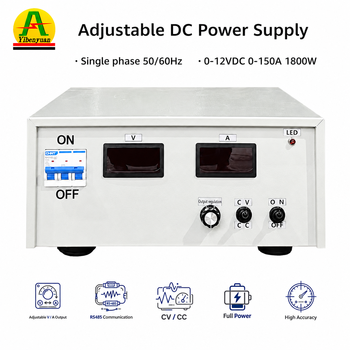
12V 15V 5000A 6000A 75KW Water Cooled Rectifier
- TopologyHigh-Frequency IGBT
- RegulationCV / CC Digital Setting
- CoolingClosed-Loop Liquid Cooled
- InterfaceRS485 Modbus / 0-10V
Direct-from-manufacturer high-power DC sources, high-frequency IGBT anodizing units, and polarity-reversing solutions configured for rigorous finishing facilities in Andorra la Vella.
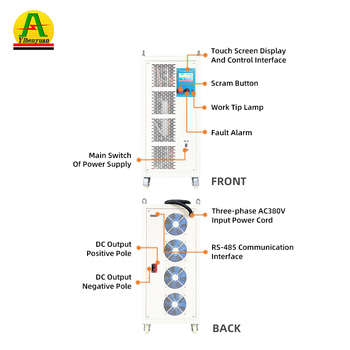

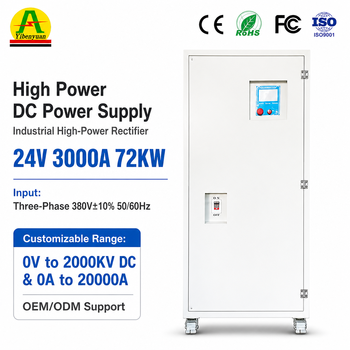
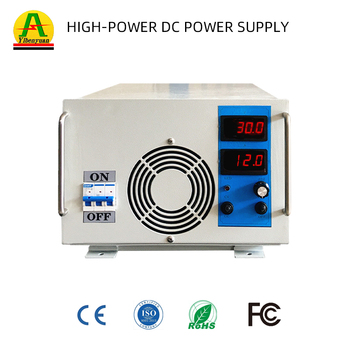


How high-frequency IGBT conversion topology eliminates the thermal penalties, uneven oxide deposition, and harmonic pollution associated with traditional SCR phase-controlled rectifiers.
In modern industrial aluminum surface engineering—encompassing decorative Type II sulphuric acid anodizing, specialized architectural exterior cladding, and MIL-A-8625 Type III hardcoat specifications—the electrochemical performance of the conversion layer depends directly on the dynamic stability of the applied electric field. Traditional thyristor (SCR) rectifiers regulate voltage by chopping AC sinusoids at line frequency (50/60Hz), introducing massive low-frequency ripple factors often exceeding 5% to 8% RMS unless dampening choke filters are installed. In an electrolyte bath, excessive ripple induces intense localized joule heating inside the nanopores of the expanding aluminum oxide (Al₂O₃) barrier layer, leading to chemical dissolution of the porous structure, burning, chalking, and catastrophic color shift during post-anodic organic or inorganic dyeing.
Guangdong Fenvix Technology Co., Ltd. resolves these electrochemical instabilities through advanced switch-mode power supplies (SMPS) utilizing high-frequency insulated-gate bipolar transistors (IGBT) operating at switching frequencies between 20 kHz and 40 kHz. Our proprietary pulse-width modulation (PWM) feedback algorithms maintain absolute constant current density (CCD) or constant voltage (CV) within a tolerance of ±0.5%. By reducing the output ripple coefficient to under 1% RMS, the thermal stress within the electrolyte boundary layer is curtailed, allowing precise control over pore diameter, barrier layer uniformity, and nanometer-scale wall thickness across complex extrusions and precision CNC parts.
Replaces 50Hz iron-core transformers with planar nanocrystalline magnetic cores and high-speed IGBT bridges, reducing overall rectifier mass by 65% and footprint by 50% while delivering millisecond dynamic recovery times under fluctuating tank resistance.
Integrated microprocessor controller provides up to 10-stage soft-start current ramping. Essential for magnesium-rich 5xxx and zinc-rich 7xxx aluminum alloys to prevent dielectric breakdown of the initial natural oxide barrier layer during voltage application.
Optional high-speed pulse and reverse pulse modulation delivers controlled discharge of accumulated surface heat, increasing hardcoat anodizing growth rates up to 40% while achieving microhardness figures exceeding 450–500 HV0.05 on critical aerospace alloys.
Engineered to accommodate high-altitude atmospheric cooling derating, sub-zero ambient winter startups, and the demanding aesthetic and functional finishing requirements of the Principality of Andorra.
Andorra la Vella's luxury residential chalets, commercial bank headquarters, and hospitality developments demand architectural anodized profiles capable of resisting high-altitude UV radiation, heavy snow loads, and freeze-thaw cycles. Our rectifiers maintain exacting constant-voltage control during deep-electrolytic coloring (interferential and integral), preventing batch-to-batch chromatic divergence across facade extrusions.
Serving specialized engineering workshops, prototyping facilities, and mountain bicycle / ski manufacturing components located throughout the parish of Andorra la Vella and neighboring valleys. Hardcoat Type III anodizing at 15–50 microns requires ultra-low ripple (<1%) to ensure dense structural cross-linking for ice axes, climbing carabiners, suspension dampers, and CNC-machined mountain bike linkages.
Located at an elevation of 1,023 meters with surrounding industrial sites up to 1,500 meters, Andorra la Vella's reduced barometric pressure impairs convective heat transfer by approximately 8–10%. Fenvix rectifiers supplied to Andorra feature thermal derating compensation, oversized heatsinks, or closed-loop deionized liquid cooling systems compliant with FEDA electrical distortion thresholds.
Standard forced-air cooling calculations degrade as air density decreases at alpine elevations. At 1,023 meters in Andorra la Vella, standard air density ($\rho \approx 1.09\text{ kg/m}^3$) is lower than sea-level conditions ($\rho \approx 1.225\text{ kg/m}^3$). For high-current installations (>3000A) operating 24/7, Fenvix engineers recommend water-cooled configurations or custom oversized heatsink arrays with variable-frequency fan controls that prevent component overheating during warm Pyrenean summers and eliminate internal chassis condensation during freezing alpine winters.
Objective comparative parameters highlighting energy consumption, ripple dynamics, footprint efficiency, and electrochemical consistency for anodizing operations.
| Performance Parameter | Fenvix High-Frequency IGBT (SMPS) | Conventional 12-Pulse SCR Rectifier | Electrochemical Impact on Anodizing Quality |
|---|---|---|---|
| Operating Ripple Factor | ≤ 1% to 2% RMS | 5% to 10% RMS | Minimal thermal dissolution in the bath; eliminates micro-cracks and burning in Type III hard anodizing. |
| Full-Load Energy Efficiency | 90% – 94% | 75% – 82% | Reduces active electrical consumption, substantially reducing utility overhead on the Andorran FEDA grid. |
| Power Factor (&cos;φ) | ≥ 0.95 (Active PFC) | 0.70 – 0.85 (Degrades at Low V) | Eliminates reactive power billing penalties; meets strict European and Andorran grid harmonic limits. |
| Dynamic Response Time | < 5 Milliseconds | 100 – 300 Milliseconds | Instantly compensates for changing tank load, rack insertions, and shifting electrical contact conductivity. |
| Physical Footprint & Weight | Compact (30%–40% of SCR size) | Bulky Iron-Core Footprint | Allows placement directly beside the anodizing line, drastically reducing expensive copper busbar lengths. |
| Process Control Modes | CC, CV, Pulse, Periodic Reverse, Ramp | Basic CC / CV Phase Angle | Enables sophisticated multistep profiles essential for aerospace-grade 2xxx, 7xxx, and cast alloys. |
| Digital Automation | RS485, Modbus, Profinet, Analog 0-10V | Manual Potentiometer / Basic 4-20mA | Seamlessly integrates with Industry 4.0 SCADA, automated hoist lines, and centralized bath dosing controllers. |
Over 13 years of non-standard high-power electrical engineering, certified under ISO 9001:2015 and verified on-site by TÜV Rheinland for direct global deployment.
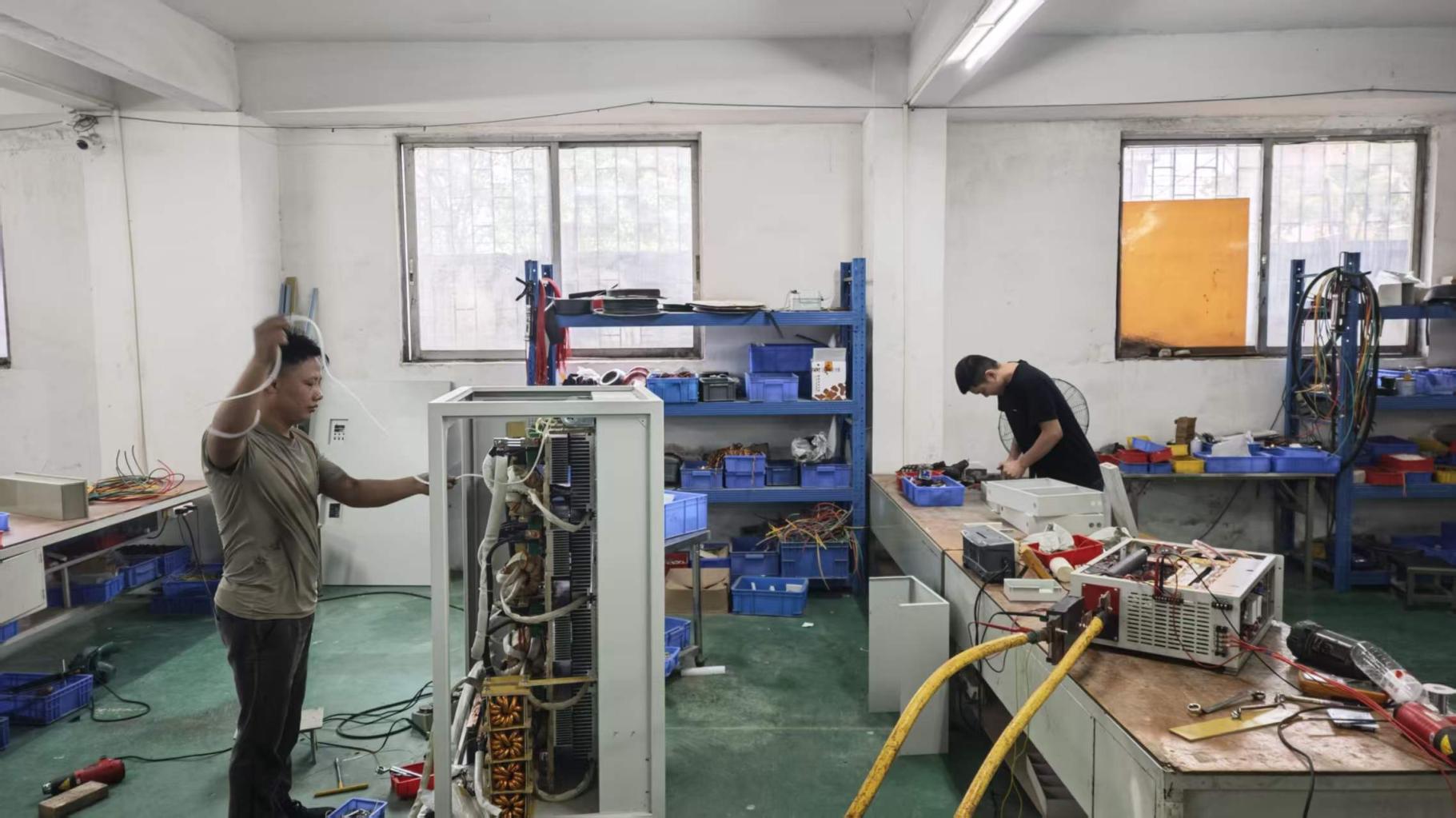
Founded in 2013 in Guangzhou, Guangdong Province, Guangdong Fenvix Technology Co., Ltd. operates a specialized 3,000 m² heavy-power conversion assembly plant. We do not act as an export trade agent; every anodizing rectifier, high-voltage test supply, and electrochemistry power module is engineered, machined, wired, burned-in, and tested against inductive and resistive load banks inside our own factory.
Our complete vertical integration includes computer-controlled shearing, mechanical punching, automated tapping, copper busbar bending, and robotic winding. By controlling cabinet mechanical fabrication and electrical control architecture under one roof, we offer comprehensive OEM and ODM support with no minimum order quantity (MOQ: 1 set), providing custom engineering drawings, wiring schematics, and thermodynamic validation before component assembly begins.
Engineers calculate current density, bath resistive ranges, altitude derating factors, and harmonic profiles to size the IGBT topology correctly.
Precision shearing, CNC punching, and anti-corrosive powder coating ensure cabinets withstand harsh acidic bath vapors.
Every rectifier undergoes continuous full-load heat run tests for 8 to 24 hours with digital oscilloscope ripple verification.
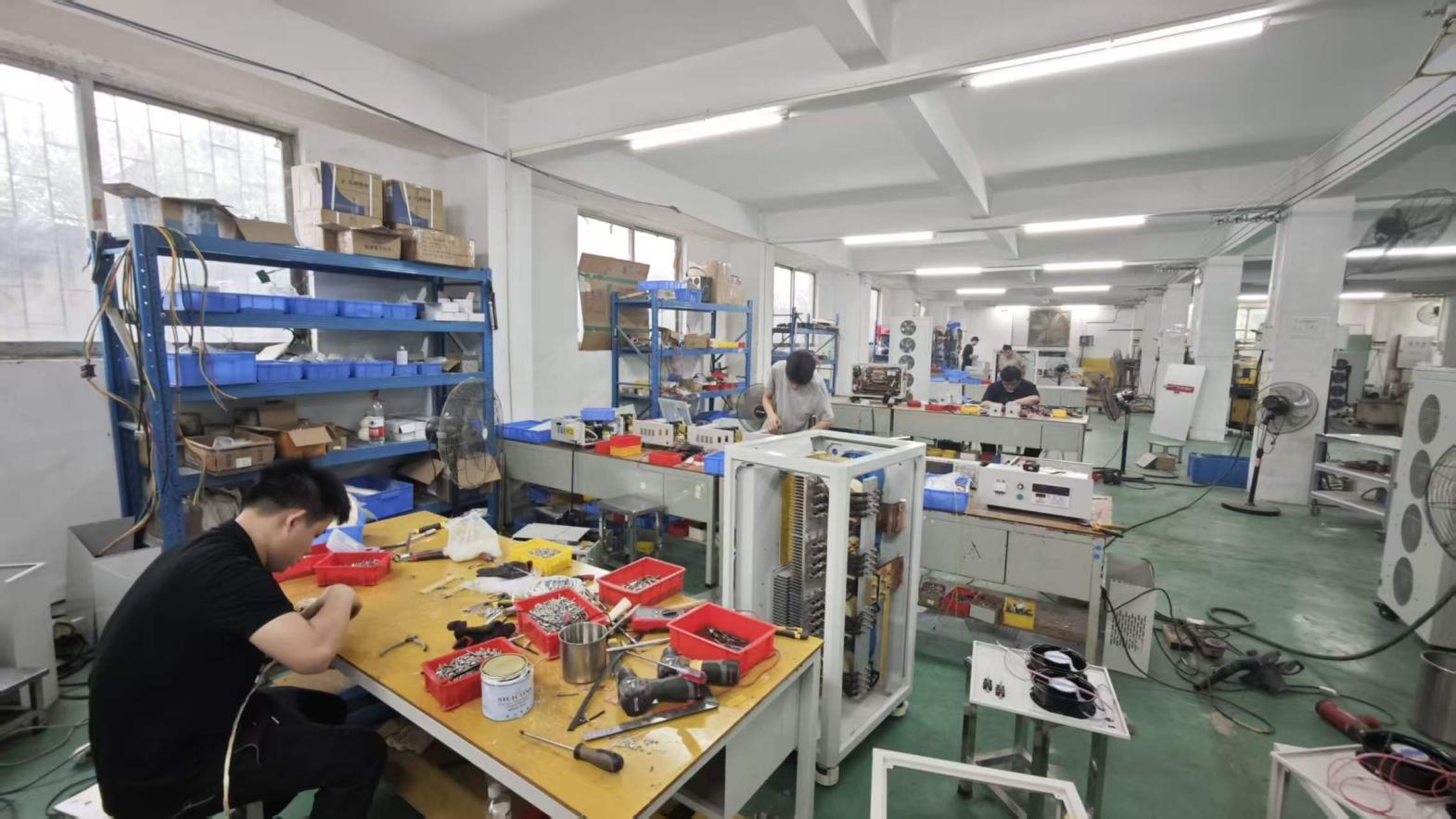 Assembly Floor
 QC Inspection
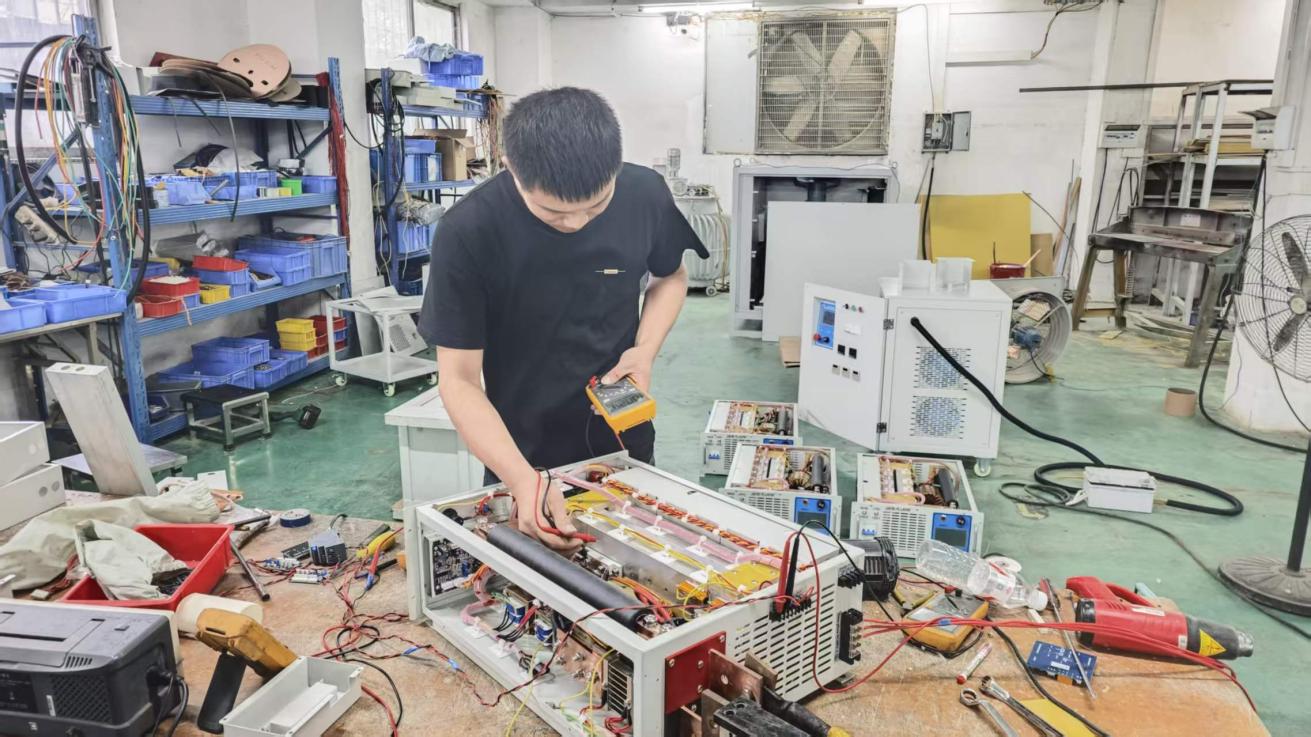 Load Testing
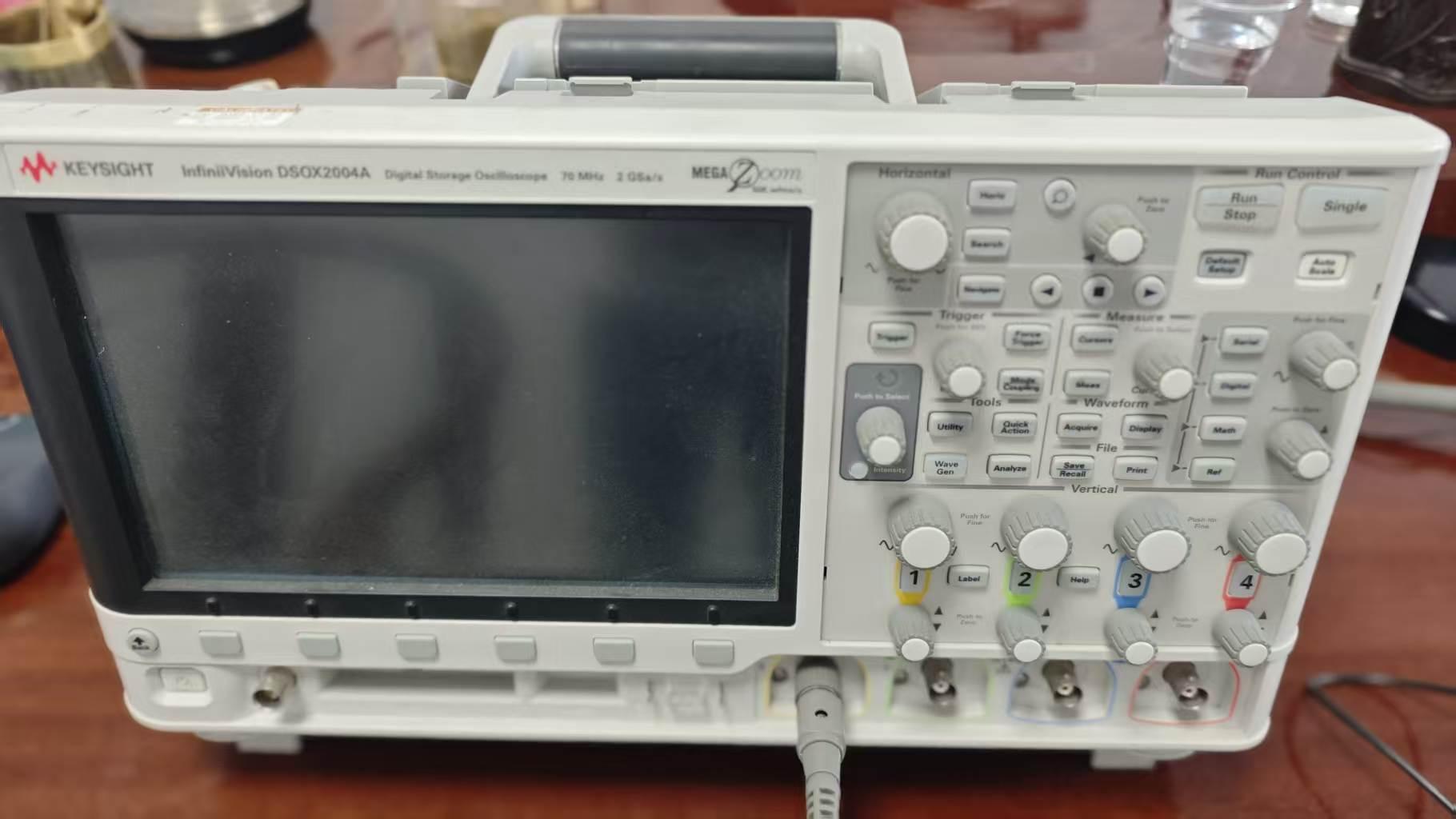 Waveform Audit
Direct manufacturer export protocols, rigorous third-party auditing, and CE electrical directives compliance for frictionless delivery to Andorra la Vella.
Standardized quality control across incoming materials, component wiring, and thermal testing.
On-site audited factory capacity, manufacturing assets, and export legitimacy.
Tested electromagnetic immunity, low-voltage safety directive conformity, and hazardous substance elimination.
Seamless customs clearance through Spanish (Barcelona) or French corridors directly to Andorra la Vella.





Comprehensive engineering, shipping, and technical guidance for factory managers and anodizing plant engineers in Andorra.
Provide your anodizing tank dimensions, target current density (A/dm²), alloy types, and preferred cooling configuration. Our senior electrical engineers will deliver a customized technical proposal and quotation within 24 hours.