Industrial DC Power Supplies & Dynamometer Test Solutions
Configured with low-ripple IGBT switching architectures, active dynamic braking absorption, and millisecond-level transient response for severe electric motor load-cycle analysis in Seville and the surrounding Iberian industrial belt.

12V 15V 5000A-6000A 75KW Water Cooled High Frequency Rectifier
- Output Range12V–15V / 6000A
- Cooling SystemDirect Deionized Liquid
- Control ModeDigital CV / CC Control
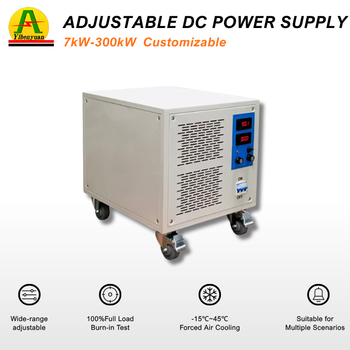
800V 50A 20kW EV Drive Inverter & Traction Motor Test Supply
- Voltage Range0–800V Continuously Adj.
- Response Time< 2ms Step Transient
- InterfaceIsolated RS485 / CANopen
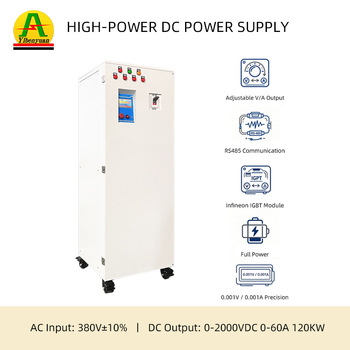
90kW–120kW 2000V High Voltage Rail & Stator Test Supply
- Max Output0–2000V DC / 0–60A
- ProtectionOVP, OCP, OTP, Phase Loss
- ApplicationLocomotive & Rail Drives

300kW 20V 15000A Ultra-High Current DC Test Bench Platform
- Output AmperageUp to 15,000A Continuous
- Ripple Factor≤ 1% RMS Full Range
- EnclosureSealed IP54 Anti-Corrosion
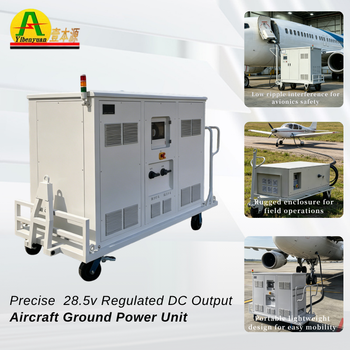
Portable 28.5V DC 100A–600A Aviation Actuator Test GPU
- Voltage Standard28.5V Mil-Std-704F Regulated
- Peak SurgeUp to 2000A Starting Current
- DeploymentHangar & Test Bay Portable
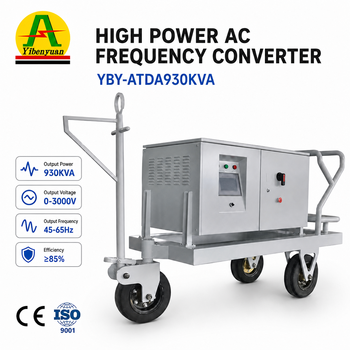
930kVA Solid State 400Hz Aircraft Motor Simulation Converter
- Output AC115V / 200V AC 400Hz Stable
- TopologyOnline Double Conversion IGBT
- Harmonic THD< 2% Pure Linear Waveform
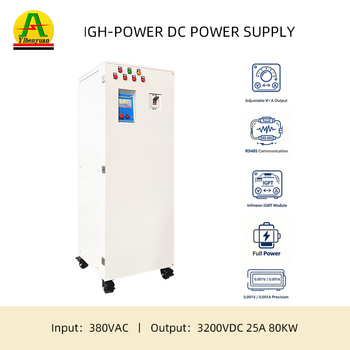
80kW 3200V Precision High-Voltage Winding Breakdown Tester
- High Potential1000V–3200V Step Regulated
- Resolution0.1V / 1mA Precise Display
- ProtectionFlashover Arc Suppression
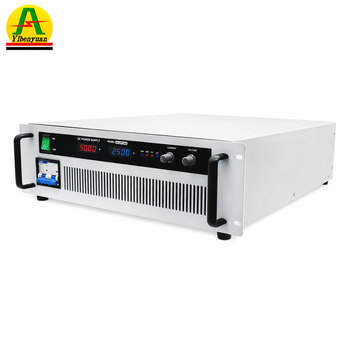
1500W–5000W Automated Laboratory Dynamometer DC Source
- Form Factor19-Inch Rackmount Standard
- ProgrammingSCPI, Modbus-RTU, Ethernet
- Stability≤ 0.05% Drift Over 24 Hours
Technical White Paper: High-Power DC Power Supplies in Modern Electric Motor Dynamometry
The transition toward high-voltage electromobility platforms, commercial aerospace electrification, and distributed automated manufacturing across Seville has driven unprecedented performance criteria for motor dynamometer testing equipment. Testing an electric traction machine, an aerospace flap actuator, or a high-speed locomotive propulsion motor demands far more than basic direct-current delivery. Dynamic regenerative feedback, rapid transient step-load recovery, precise current-limiting thresholds, and severe back-EMF mitigation define the engineering reality of modern Iberian powertrain validation.
1. Transient Response Dynamics & Torque-Step Compensation
During aggressive motor testing regimes—such as full-load stall torque assessment, sudden acceleration pulses, or high-speed field weakening—the DC power source experiences catastrophic load impedance changes within microseconds. Conventional phase-controlled SCR rectifiers cannot match these slew rates, resulting in dangerous intermediate DC-link sag that triggers inverter undervoltage faults.
Our switch-mode architectures incorporate multi-interleaved IGBT conversion blocks operating at carrier switching frequencies from 20 kHz to 60 kHz. Controlled via high-speed 32-bit floating-point Digital Signal Processors (DSP), these systems deliver voltage regulation slew rates exceeding 50V/ms and transient recovery times below 2 milliseconds for a 10% to 90% full-scale load step. This ensures that the motor inverter receives an ultra-stiff, uncompromised emulation of an automotive traction battery or an airborne generator system.
2. Back-EMF Dissipation & Four-Quadrant Regenerative Dynamics
When high-inertia electric motors de-energize or shift into regenerative braking regimes on the Seville test benches, the motor operates as a generator, pumping electromagnetic energy backward into the DC test rail. Standard unilateral power supplies risk overvoltage destruction unless outfitted with complex external resistor dump banks. Our motor testing systems integrate bidirectional electronic stages and internal programmable chopper-resistor dissipation loops that instantaneously absorb and clamp counter-electromotive force spikes, preventing expensive inverter destruction and ensuring uninterrupted continuous testing sequences.
3. Harmonic Attenuation and Ripple Criticality in Stator Thermal Profiling
Precision torque-ripple measurement and iron-loss calorific profiling require a DC supply that does not introduce parasitic harmonics into the motor stator windings. High current ripple causes supplementary eddy-current heating within the rotor lamination stacks, generating erroneous efficiency maps. By utilizing advanced multi-stage LC ripple filters along with synchronized digital pulse-width modulation, our high-power motor testing platforms limit ripple factor to ≤ 0.5% RMS across the entire operating boundary.
Localized Application Scenarios Across Seville & Andalusia
From Tier-1 aerospace final assembly lines at San Pablo to heavy naval propulsion trials in the Bay of Cadiz and Seville's emerging renewable EV technology corridors.
Aerospace Actuator & E-Flight Dynamometers
Seville stands as one of Europe’s primary aerospace hubs, anchored by the Airbus San Pablo and Tablada industrial complexes. Our specialized 28.5V DC and 400Hz static ground conversion systems serve local test cells verifying primary flight control actuators, hydraulic auxiliary motors, and electro-mechanical landing gear systems under strict RTCA DO-160 and MIL-STD-704 standards.
Traction Motor Validation for High-Speed Rail
With Andalusia serving as a central artery for the Spanish AVE high-speed network and regional rolling stock overhaul, our high-voltage 1000V–3200V DC power sources provide rigorous insulation endurance testing, continuous heat run assessments, and full-load rotational dynamometer power for rolling-stock traction machinery and magnetic levitation prototype coils.
High-Efficiency Industrial Pumping & Mining Drives
The Guadalquivir River basin agricultural infrastructure and the Riotinto mining zones across Western Andalusia require continuous testing of rugged, low-voltage, ultra-high-current motors. Our liquid-cooled switch-mode supplies deliver up to 15,000A continuous busbar capacity, allowing local test facilities to replicate locked-rotor and severe duty thermal profiles without equipment derating.
Andalusian Clean Tech & EV Battery-Motor Integrated Bench Testing
As Andalusia expands its Green Hydrogen Valley initiatives and automotive powertrain conversion programs, motor manufacturers are shifting to 800V silicon-carbide (SiC) based architectures. Our programmable DC sources allow engineers in Cartuja Science and Technology Park (PCT Cartuja) to execute automated driving cycles (WLTP, NEDC) via SCPI script commands, emulating real battery pack discharge impedances and ensuring inverter electromagnetic compatibility without risking chemistry-based fire hazards.
Technological Development Trends in the Seville Motor Testing Sector
How next-generation power electronics are reshaping industrial qualification and production standards in southern Spain.
Wide Bandgap Semiconductor Integration (SiC & GaN)
The adoption of Silicon Carbide (SiC) switches within Seville's testing infrastructure has dramatically decreased physical footprints. Higher switching frequencies facilitate smaller magnetic inductor cores, eliminating high-frequency acoustic noise on production floors while driving conversion efficiencies beyond 95%. This drastically slashes chiller and plant cooling loads during round-the-clock test campaigns.
Regenerative Microgrid Integration in Southern European Climates
Summer operating temperatures in Seville routinely surpass 42°C, meaning unmitigated resistive heat dissipation from high-power load testing can cause catastrophic ambient thermal buildup in dynamometer testing bays. Regional facilities are requiring full regenerative bidirectional systems that cycle electrical power back into the local industrial three-phase grid instead of exhausting heat through resistor banks, dropping electrical utility overhead by over 70%.
Hardware-in-the-Loop (HIL) and Digital Twin Protocol Integration
Contemporary dyno rigs deployed at aerospace R&D clusters demand millisecond-accurate remote integration. Analog control is completely yielding to deterministic fieldbus systems, including Ethernet/IP, CANopen, and Profinet. The ability to update voltage setpoints every 500 microseconds allows test engineers to simulate real-world flight turbulence or track rail slippage directly onto the spinning rotor.
Engineering Excellence: Why Global Test Facilities Partner with Fenvix
From raw copper busbar fabrication to full-load burn-in verification under certified ISO 9001 and TÜV Rheinland protocols.
In-House Sheet Metal & Busbar Milling
We do not operate as an assembly broker. From CNC plate shearing, automated punching, and precision copper busbar milling to final protective powder coating, all mechanical and structural cabinet modules are engineered directly in our 3,000m² facility, ensuring mechanical tolerances and unmatched thermal stability.
TÜV Verified & ISO 9001 Audited
Our production processes follow comprehensive ISO 9001 Quality Management System rules. Key DC power supply lines carry CE, RoHS, LVD, and EMC test certifications, and our production capacity has undergone rigorous on-site audit verification by TÜV Rheinland for direct cross-border trade reliability.
No MOQ & Agile Prototype Customization
We recognize that automotive, military, and academic dynamometer cells often require custom, non-standard outputs. We support 0 MOQ single-unit prototype manufacturing, modifying input line frequencies, voltage profiles, dynamic brake sizing, and software interfaces to match unique customer dynamometer controllers.
Full-Load Burn-In & Oscilloscope Verification
Prior to export packaging, every high-power motor test supply is subjected to full-load burn-in cycles using automated resistive-inductive load fixtures. Dynamic parameters, including line regulation, load step response, ripple voltage, and thermal rise maps, are rigorously verified on high-bandwidth oscilloscopes and certified on factory documentation before dispatch to Seville and worldwide clients.
Frequently Asked Questions by Sourcing Engineers in Seville
Answers to common logistical, technical, and integration questions for high-power DC test equipment imported into Spain.