High-Power DC Solutions for Demanding Motor Dynamometer & Load Testing
From low-voltage mega-amperage subsea actuators to high-voltage multi-megawatt maritime drivetrains, explore our factory-certified high-frequency switching DC sources.
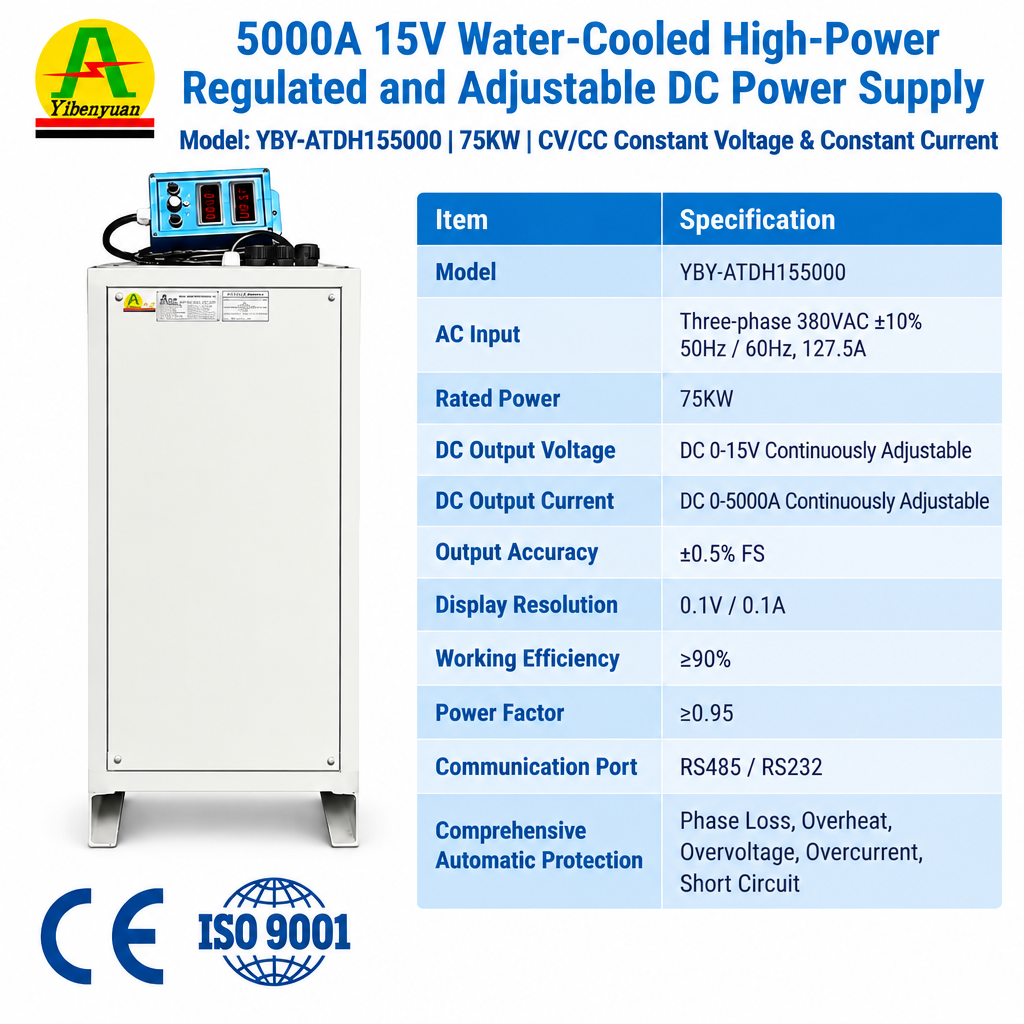
12V 15V 5000A 6000A 75KW Water Cooled High Frequency Electroplating Rectifier CV CC Digital Display Adjustable DC Power Supply
- Output Power: 75 kW Cont.
- Current Rating: Up to 6000A
- Cooling Type: Direct Deionized H2O
- Regulation: CV/CC Seamless Auto
800V 50A 20kW High Voltage Adjustable DC Power Supply for Inverter & Motor Stator Testing
- Voltage Range: 0-800V DC Continual
- Dynamic Step: < 2ms Transient
- Remote Bus: RS485 / Modbus-RTU
- Protection: OVP, OCP, OTP, Phase
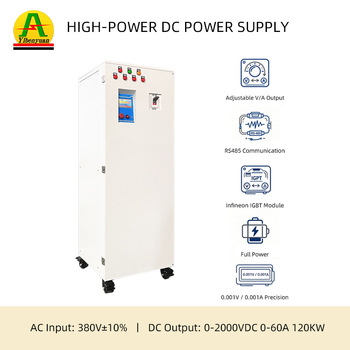
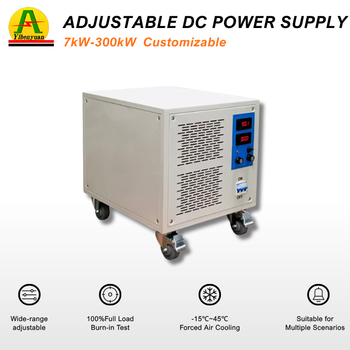
90kW–120kW 2000V High Voltage Programmable DC Bench for Subsea & Traction Motor Test
- Rated Power: 120 kW System
- Voltage Span: 0–2000V Inf. Var.
- Ripple Spec: ≤ 0.2% RMS Full Load
- Programming: SCPI LabVIEW Drivers
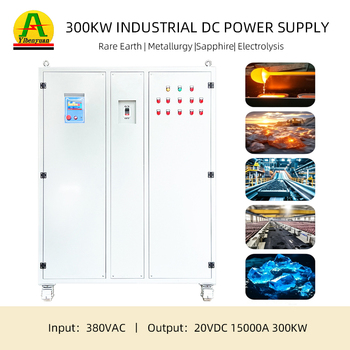
300kW 20V 15000A Water-Cooled High Current DC System for Rotor Bar & Coil Thermal Test
- Output Amperage: 15,000A Ultra-High
- Thermal Mgmt: Closed-Loop Liquid
- Grid Input: 380V / 440V / 690V AC
- Duty Cycle: 100% 24/7 Full Rating
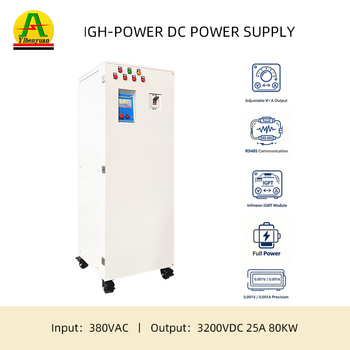
80kW 1000V–3200V High Precision DC Source for Motor Winding Dielectric Breakdown Tests
- Max Output: 3200V DC Adjustable
- Metering: 4.5-Digit Precision LCD
- Control Arch: IGBT Multi-Interleaved
- Efficiency: ≥ 92.5% at Nominal
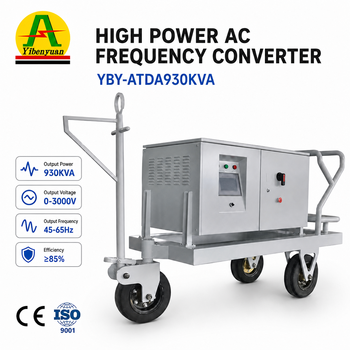
930kVA Static Frequency Converter & Specialized AC/DC Shore-to-Ship Motor Test Supply
- Capacity: 930 kVA True Rated
- Output Topology: Galvanically Isolated
- Frequency Range: 400Hz & 50/60Hz Pure
- Harmonic THD: < 2.0% Linear Load
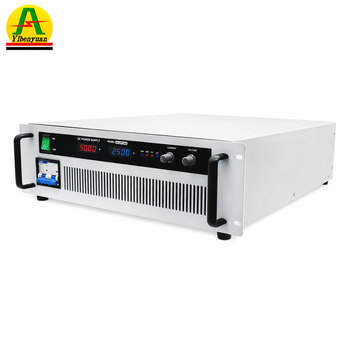
1.5kW–5kW Fast Response Programmable DC Switching Supply for Motor R&D Bench Top
- Power Envelope: 1500W – 5000W
- Response Speed: < 100µs Load Recovery
- Interfaces: USB, CANopen, RS485
- Design Standard: 19-inch 2U/3U Rack
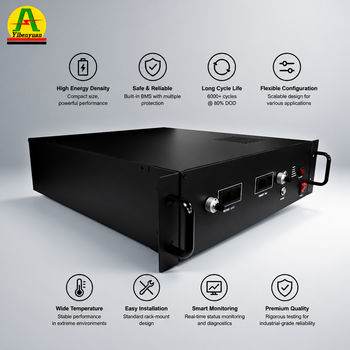
0–100kV Ultra-HV Specialized DC Source for Stator Dielectric Testing in Deepwater Systems
- Max Voltage: 100 kV DC Precision
- Charge Speed: Constant Current Linear
- Arc Suppression: Instant Fast Intercept
- Safety System: Auto Ground Discharge
High Power Motor Testing Scenarios Engineered for Vestland’s Marine Cluster
Bergen operates as the technological epicenter of the Norwegian subsea, offshore oil & gas, and green ferry electrification sectors. Our DC testing architectures address the rigorous marine engineering profiles required across the Byfjorden maritime corridor.
Subsea Pump & Compressor Validation (Ågotnes Corridor)
Subsea motors operating in North Sea wells must endure hydro-static backpressure exceeding 300 bar. Our programmable high-power DC test sources supply ultra-stable DC link power to marine variable-speed drives (VSD), performing high-amperage burn-in and extended locked-rotor torque runs without harmonics compromising offshore grid isolation transformers.
Zero-Emission Fjord Ferry Permanent Magnet Motors
Vestland's rapid decarbonization mandates electric propulsion across passenger ferries and service vessels navigating UNESCO heritage fjords. Testing multi-megawatt permanent magnet synchronous motors (PMSM) requires DC sources with ultra-fast slew rates (>50V/ms) to replicate sudden regenerative braking, battery-drop transients, and full-ahead emergency reverses.
Offshore Wind Pitch & Yaw Actuators (CCUS & Floating Turbines)
Floating wind pilot projects in Western Norway rely on high-torque electric yaw drives capable of enduring relentless wave actions. Our water-cooled and sealed IGBT power modules deliver sustained continuous current testing, logging microsecond thermal surges and verifying coil insulation resistance under simulated Arctic fog and saline condensation conditions.
Motor Testing Power Topology: High-Frequency IGBT vs. Traditional SCR
Engineers in Norwegian test facilities require uncompromising dynamic precision, minimal ripple factor, and harmonic mitigation to meet DNV and IEEE marine laboratory test standards.
| Performance Parameter | Fenvix High-Frequency IGBT PWM | Conventional Silicon Rectifier (SCR) | Impact on Motor Test Engineering |
|---|---|---|---|
| Ripple Factor (Peak-to-Peak) | ≤ 0.2% to 0.5% at nominal load | Typically > 3.0% to 5.0% | Eliminates harmonic heat build-up; delivers lab-grade measurement of motor core iron losses and torque ripples. |
| Dynamic Slew Rate & Response | < 2 ms step response from 10% to 90% | 100 ms to 300 ms slow ramp | Accurately captures dynamic torque dips, direct-on-line inrush currents, and converter switching anomalies. |
| Power Factor (λ) & Efficiency | ≥ 0.94 PF; Efficiency ≥ 92% | 0.70 to 0.82 PF (Load Dependent) | Dramatically reduces shop electricity expenditures and prevents upstream distortion penalties from Norwegian regional utilities (e.g., BKK Nett). |
| Cooling Technology | Closed-circuit deionized liquid or forced air | Heavy open convective airflow | Enables complete IP54 sealed cabinetry, preventing coastal salt-mist air from contacting internal high-voltage silicon busbars. |
| Automation Protocol Integration | Direct SCPI, Modbus-TCP, Profinet, CANopen | Basic 0–10V analog potentiometers | Seamlessly couples with automated dynamometers, LabVIEW rigs, and marine propulsion HIL (Hardware-in-the-Loop) testbenches. |
Market Shifts Driving DC Testing Infrastructure Across Western Norway
A closer look at how environmental mandates and naval engineering shifts are reshaping testbench requirements across Bergen, Stord, and Sunnhordland yards.
Migration Toward 1,000V+ Marine DC Distribution Buses
Modern maritime vessels built in Hordaland are transitioning away from bulky AC distribution toward DC microgrids to accommodate high-capacity energy storage systems (ESS) and hydrogen fuel cells. Motor dynamometers now require DC test benches running steadily at 800V–1500V DC to certify high-power electric rim-thrusters, azipods, and waterjets prior to shipboard installation.
DNV-GL Type Approval & FAT Stringency
Factory Acceptance Testing (FAT) performed within Bergen’s maritime engineering hubs must comply with uncompromising classification requirements (DNV GL-RU-SHIP). Test rigs require DC power sources with precision logging, deterministic current regulation, and programmable short-circuit simulation to document total harmonic distortion and thermal insulation limits under heavy mechanical loads.
De-risking Subsea 4.0 Subsurface Electrification
Equinor and continental operators are replacing legacy topside hydraulic umbilicals with all-electric subsea trees and subsea boost pumps. Testing these subsea electrical systems requires DC source manufacturers to deliver multi-stage voltage ramp sequences and custom current pulses to stress-test ultra-long umbilical voltage drops and winding insulation resilience under hydrostatic pressure.
Why Global Motor Manufacturers & Engineering Labs Source from Fenvix
Combining heavy-duty engineering pedigree since 2013 with an ISO 9001 certified, TÜV Rheinland-verified manufacturing floor in Guangdong, China.
In-House Metal Fabrication & Thermal Engineering
We do not outsource chassis construction. Our workshops execute dedicated plate shearing, CNC punching, milling, drilling, and copper busbar electro-machining, guaranteeing low contact resistance, heavy structural rigidity, and optimal airflow paths.
Full-Scale Load Burn-In & Oscilloscope Calibration
Every single motor test DC power supply undergoes rigorous burn-in with simulated reactive and resistive load banks, oscilloscope waveform analysis, step-load transient logging, and high-potential insulation stress tests prior to international dispatch.
Worldwide Shipping & Direct Engineer Support
Direct DDP/CIF/FOB ocean and air freight logistics into Norwegian ports (Bergen, Stavanger, Haugesund). Pre-sales configuration schematics, tailored remote commissioning, and direct dialogue with senior power electronics designers.





Frequently Asked Questions: Sourcing Motor Test DC Sources for Bergen Facilities
Direct answers covering input mains compatibility, customs entry, regenerative back-EMF absorption, and harsh environmental protections.
Can your DC sources be tailored for Norway's 230V IT grid alongside 400V/690V industrial mains?
Yes. While mainland Europe universally employs 400V TN networks, many industrial zones in Western Norway (including older shipbuilding facilities in Vestland) operate on 230V IT ungrounded mains, while offshore and marine drilling platforms use 690V. We configure the input autotransformers and internal filter banks specifically to match your facility's local grid voltage and earthing scheme, eliminating ground-fault tripping.
How does the power supply handle motor reverse EMF during sudden deceleration or shutoff?
Inductive back-EMF from decelerating large high-inertia marine rotors can cause destructive bus overvoltages. Fenvix integrates fast-acting semiconductor crowbar circuits, high-energy dynamic brake chopper modules, or reverse current blocking diodes directly on the output terminals. For bi-directional dyno setups, we offer four-quadrant energy recovery stages that safely regenerate power back into your three-phase shop supply.
What documentation and CE/EMC test records are supplied for Norwegian port customs clearance?
Every shipment bound for Bergen or Norwegian customs includes complete CE Declarations of Conformity against LVD (Low Voltage Directive 2014/35/EU) and EMC (Directive 2014/30/EU), comprehensive ISO 9001 factory test certificates, schematic electrical drawings, and detailed English technical operating manuals. Commercial invoices and certificates of origin (COO) are coordinated smoothly for import processing under EFTA arrangements.
Can these units be connected to existing automated dynamometer control systems (LabVIEW / PLC)?
Absolutely. Fenvix units offer isolated standard industrial interfaces: RS485 (Modbus-RTU), LAN/Ethernet (Modbus-TCP), CANopen, and isolated analog 0–5V / 0–10V / 4–20mA programming ports. We provide full command libraries (SCPI-compatible) and register mapping sheets, allowing test engineers in Bergen to execute automated endurance cycles, load steps, and automated trip logging.
What is the typical manufacturing and freight lead time from factory to Bergen?
Standard programmable high-power systems (20kW–120kW) carry an in-factory production time of 3 to 4 weeks, with complete burn-in verification. Ocean freight to Bergen Havn typically requires 28–35 days via direct continental transfer, while urgent test bench projects can be expedited by scheduled air cargo into Bergen Airport, Flesland (BGO) within 5 to 7 business days.
Do you support single-unit custom engineering or only volume orders?
We maintain a strict No Minimum Order Quantity (0 MOQ) policy. Because motor testing benches, university naval laboratories (such as Western Norway University of Applied Sciences / HVL test projects), and prototype development lines require unique voltage-current envelopes, we design, fabricate, and deliver bespoke one-off DC systems tailored to your specific dynamometer envelope.
Ready to Specify Your High Power Motor Test DC Source for Bergen Projects?
Whether you are configuring a 15,000A rotor heating bench, a 2,000V electric propulsion testbed, or a subsea actuator qualification laboratory in Western Norway, our senior electrical engineering team provides direct design calculations, schematics, and firm factory quotes within 24 hours.