High Frequency Electroplating Rectifier Supplier for Mexico
Precision Switched-Mode DC Power Infrastructure Engineered for Automotive Plating, Bajío Aerospace Finishing, and Nearshoring Surface Treatment Hubs
ISO 9001 Certified · Direct Guangdong Manufacturing · TÜV Rheinland Inspected
Engineered Rectifier Solutions for Heavy Industrial Electrolysis
Configured specifically to match 440V/480V 60Hz 3-phase Mexican power grids with high tropicalization endurance, low ripple (<1-2%), and zero-defect thickness controls.
Comprehensive Engineering Guide: High Frequency Rectification Architecture in Electroplating
In modern industrial galvanic chemistry, direct electrical current governs ionic transfer rates, crystal nucleation energy, and deposition boundary kinematics. Traditional Silicon-Controlled Rectifiers (SCR / Thyristors) typically switch at line frequencies (50Hz or 60Hz), creating prominent low-frequency harmonic ripples (often 5% to 15% without heavy choke filtering). For high-precision automotive specifications (such as CQI-11 plating system standards) and high-density electronic assemblies, these ripples cause rough grain boundaries, hydrogen embrittlement, non-uniform coating distribution, and excessive consumption of costly brighteners and chemical additives.
Fenvix switched-mode high frequency electroplating rectifiers utilize high-power insulated-gate bipolar transistor (IGBT) full-bridge topology operating at carrier frequencies between 20 kHz and 50 kHz. By transforming and rectifying power at ultra-high frequencies, physical transformer volume and magnetic core weight decrease by more than 65%, while dynamic step-response speed reduces from milliseconds down to microseconds (<100 µs response time). This switch-mode design delivers a uniform microcrystalline metal matrix, minimizing porous deposits and significantly elevating corrosion salt-spray survival hours.
Switch-Mode IGBT vs. Traditional SCR Thyristor Efficiency Profile
Operating a continuous barrel or rack plating line requires tremendous baseline electrical energy. Upgrading from legacy SCR infrastructure to modern High-Frequency IGBT rectifiers yields immediate economic gains in total energy efficiency, power factor correction, and process reliability.
Performance Parameter
Legacy SCR / Thyristor Rectifier
Fenvix High Frequency IGBT Rectifier
Operational Impact for Mexican Plants
Operating Frequency
Line frequency (50 Hz / 60 Hz)
20 kHz – 50 kHz high-frequency switching
Smoother current delivery; finer grain crystal boundaries
Current Ripple RMS
5% to >12% (Load Dependent)
≤ 1% to 2% (Across entire 10%–100% scale)
Meets automotive Tier-1 zinc-nickel & hard chrome specs
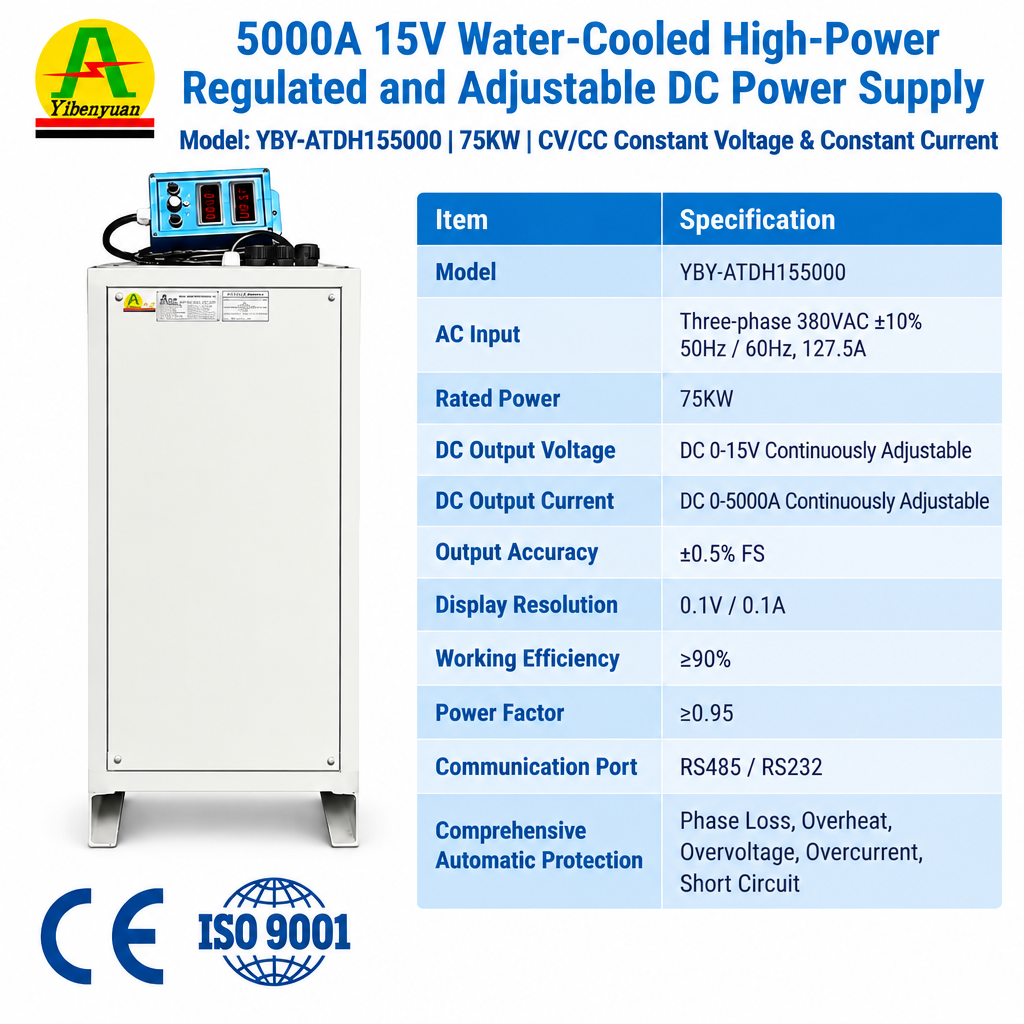
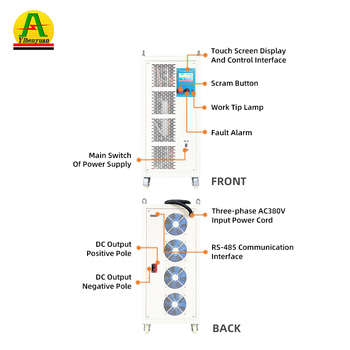
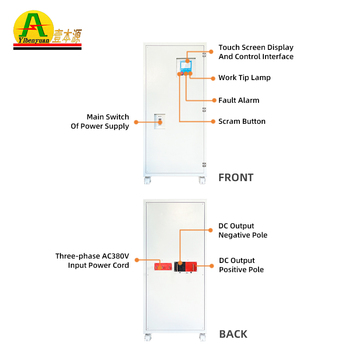
Electroplating environments present aggressive atmospheric challenges: airborne hydrochloric acid (HCl), sulfuric acid (H₂SO₄) vapors, caustic soda droplets, and ambient temperatures frequently exceeding 38°C in northern Mexico. Standard forced-air rectifiers draw these acid aerosols directly through electronics, leading to copper busbar oxidation and PCBA surface degradation. Fenvix provides totally enclosed water-cooled chassis (IP54 / IP55 equivalent electrical compartments) where the power semiconductors, primary magnetic cores, and high-frequency secondary transformers are mounted to oxygen-free copper chill plates. Internal heat is rejected via an external closed-loop cooling tower or chiller, ensuring internal electronics remain isolated from corrosive galvanic vapors.
Enterprise Manufacturing Scale
Direct Factory Strengths & Engineering Pedigree
Guangdong Fenvix Technology Co., Ltd. has delivered precision industrial power infrastructure since 2013, combining in-house metal fabrication, component qualification, and 100% full-load burn-in testing.
13+ Years
Specialized Power Engineering
3,000 m²
Integrated Factory Workshop
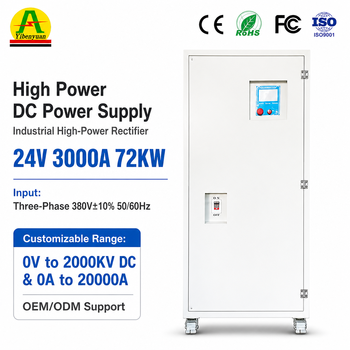
15,000 A
Maximum Single-Unit Output
0 MOQ
Full Custom Prototyping
Comprehensive Manufacturing Control: From Raw Copper to Load Bank
Unlike commercial assembling shops or third-party sourcing agents, Fenvix maintains an end-to-end production facility in Guangdong, China. We manufacture structural sheet-metal chassis in-house utilizing precision plate shearing, punching, milling, drilling, and tapping machines. Our busbar fabrication incorporates heavy-section, high-purity T2 red copper, CNC-punched and bright-nickel plated to prevent electrochemical oxidation at interface points.
Every industrial rectifier undergoes rigorous multi-stage quality verification:
Component Verification: Rigorous batch testing of high-voltage IGBT modules (Infineon/Fuji), ultrafast recovery diodes, and nanocrystalline magnetic transformer cores.
Conformal Coating: Triple-dipped robotic anti-corrosion coating across all micro-controller logic boards to withstand acidic chemical mist.
Thermal Stress Burn-In: Minimum 24 to 72 hours of uninterrupted full-capacity burn-in testing using resistive and inductive water-cooled load banks prior to containerization.
Mission-Critical Use Cases Across Mexican Manufacturing Hubs
Strategically designed to integrate seamlessly with the industrial demands of Bajío, Northern Border zones, and Central manufacturing corridors.
Automotive Tier-1 & Tier-2 Finishing (Bajío)
In Guanajuato, Querétaro, and Aguascalientes, Tier-1 automotive parts coaters rely on Fenvix 12V and 15V rectifiers for high-volume decorative and anti-corrosion zinc-nickel (Zn-Ni) and alkaline zinc plating on subframe brackets, brake calipers, and fasteners. Stable current density guarantees uniform passivate retention and prevents premature white-rust breakdown during salt-spray audits.
Aerospace Hardcoat Anodizing (Querétaro & Sonora)
Aviation structural components require precise MIL-A-8625 Type III hard anodizing. Our programmable anodic oxidation rectifiers provide multi-slope voltage ramping down to 0.1V/sec, preventing thermal shock cracking during thick oxide cell formation on aerospace aluminum-lithium and titanium airframe alloys.
Nuevo León’s extensive steel stamping, construction mesh, and appliance casing operations use our continuous-duty 8000A to 15000A water-cooled rectifiers. These units run 24 hours a day, 7 days a week, sustaining harsh shop-floor environments while minimizing energy bills via high-efficiency IGBT technology.
Electronics & PCB Nearshoring (Guadalajara)
Often termed the "Silicon Valley of Mexico", Jalisco's microelectronics plants utilize Fenvix 150A to 500A bench and rack rectifiers for gold (Au), palladium, and copper acid electro-deposition on multilayer printed circuit boards, ensuring ultra-flat solder pad deposition without voiding.
Hard Chrome Hydraulic Plating (Puebla & Saltillo)
Heavy machinery cylinders and suspension shafts require micro-crack-free hard chrome layers. Fenvix supplies 20V/5000A water-cooled installations capable of delivering constant current density despite changing solution bath temperatures and bath agitation currents.
Wastewater Electro-Flocculation & Descaling
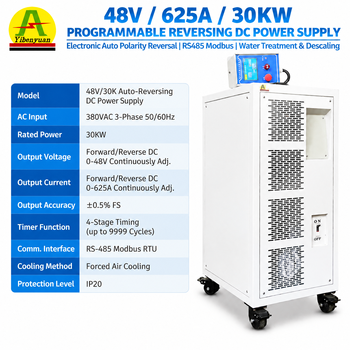
Strict SEMARNAT environmental effluent laws across Mexico mandate advanced water recovery. Our automatic polarity-reversing DC power supplies break down industrial contaminants, scale deposits, and heavy metal ions in electrochemical wastewater treatment cells without manual electrode acid cleaning.
The acceleration of North American manufacturing relocation under the USMCA (T-MEC) trade framework has positioned Mexico as a preeminent hub for advanced surface finishing. Multinational Tier-1 suppliers are increasingly transferring high-specification electroplating, e-coating, and electrolytic processes closer to consumer assembly centers in North America. This industrial migration introduces critical operational requirements:
1. Stringent Quality Compliance with Global Finishing Audits
Contract electroplaters in Mexico face rigid manufacturing audits, notably AIAG CQI-11 (Special Process: Plating System Assessment) and ISO/TS certifications. These standards mandate documented verification of current output stability, annual calibration of ampere-hour meters, and strict control over current ripple. Our rectifiers feature standard integrated digital calibration, accurate 4-digit metering, and programmable continuous logging through RS485 / Modbus networking.
2. Power Grid Irregularities and Input Flexibility (CFE Compatibility)
Electrical feeds from the Comisión Federal de Electricidad (CFE) across major industrial parks can exhibit substantial voltage fluctuations (±10% to ±15%), brownouts, and frequency deviations. Fenvix designs custom power supplies with wide input operational windows (e.g., 220V, 380V, 440V, and 480V 3-phase 60Hz), internal harmonic suppressing inductors, and rapid surge suppression stages (MOV + snubber networks), protecting critical semiconductors against industrial grid spikes.
3. Automation & SCADA Plating Line Integration
Modern nearshoring plating facilities in Ciudad Juárez, Tijuana, and Saltillo are replacing standalone manual operations with centralized PLC-controlled automated hoist lines. Fenvix units offer plug-and-play fieldbus connectivity including isolated RS485 Modbus RTU, 0–10V / 4–20mA analog interfaces, and optional Profinet/EtherNet-IP adapters, allowing operators to oversee current waveforms, bath ampere-hours, and safety alarms from a central control room.
Procurement FAQ
Frequently Asked Questions by Industrial Buyers in Mexico
Direct technical and commercial clarifications covering engineering specifications, importation, grid adaptation, and on-site support.
What parameters do we need to provide to size a custom electroplating rectifier?
To ensure accurate thermal and power stage sizing, our engineering team requires:
1. Input AC Parameters: Operating line voltage (typically 220V, 440V, or 480V in Mexico), 3-phase, 60Hz.
2. DC Output Ratings: Maximum voltage (6V, 12V, 15V, 24V, etc.) and maximum current (from 100A to 15,000A).
3. Operation Mode: Constant Current (CC), Constant Voltage (CV), or automatic switching.
4. Bath Chemistry: Acid copper, alkaline zinc, zinc-nickel alloy, hard chrome, precious metal, or anodizing.
5. Cooling Preference: Forced air cooling or closed-loop deionized water cooling (recommended for high current and corrosive lines).
6. Control Interface: Local digital touch display, remote control box with 5m-15m cable, or RS485 Modbus RTU interface for line PLC automation.
Can Fenvix rectifiers handle 440V/480V 60Hz inputs common in Mexican industrial zones?
Yes. While Asian standard supplies run on 380V/50Hz, our export power supplies are custom-wound and configured specifically for 440V or 480V 3-phase 60Hz inputs. We calculate high-frequency switching and busbar capacitance to accommodate 60Hz operational parameters without overheating or nuisance tripping.
When should our factory select water cooling over forced air cooling?
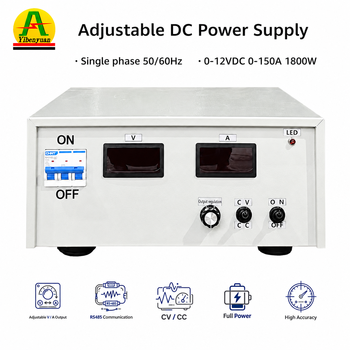
Forced air cooling is cost-effective and straightforward for laboratory use or clean shops under 2,000A. However, in heavy industrial plating plants where hydrochloric or sulfuric acids are present, air fans draw acid vapors directly across circuits, leading to corrosion. For outputs exceeding 3,000A or lines operating 24/7 in high-temperature regions (such as Mexicali or Monterrey), sealed water-cooled rectifiers are strongly recommended. They feature sealed NEMA 4/IP55 equivalent electrical cabinets, extending component lifespans beyond 10 years.
How does high-frequency switching current save chemical and metal plating costs?
High-frequency square-wave or low-ripple DC current provides uniform cathode current distribution, significantly reducing burning at edge points and improving throwing power in deep recesses. This results in tighter coating thickness tolerances, enabling plants to meet automotive plating specifications without over-plating valuable metals (such as nickel, tin, or gold). Furthermore, low ripple reduces the breakdown and consumption of organic brighteners.
What incoterms, documentation, and delivery pathways are available for Mexico?
We regularly handle sea freight shipments to major Mexican ports, primarily Manzanillo (Pacific) and Veracruz (Gulf), as well as direct air freight to Mexico City (MEX), Guadalajara (GDL), and Monterrey (MTY) for urgent installations. We provide complete documentation for Mexican customs clearance (Pedimento support), including commercial invoices, packing lists with tariff HS codes, Certificates of Origin, and CE conformity certificates. We support EXW, FOB, CIF, and DDP delivery terms.
What warranty and remote troubleshooting support is provided for international facilities?
All Fenvix industrial rectifiers are covered by a standard 12-month comprehensive factory warranty. Our modular internal design allows for rapid field maintenance; control boards, driver stages, and IGBT modules can be swapped out quickly using basic hand tools. We provide detailed electrical schematics, step-by-step video diagnostic guides, and live video support with lead electrical engineers to ensure minimal production line downtime.
Upgrade Your Electroplating Rectifier Infrastructure
Connect with Fenvix power engineers today. We will review your process requirements, tank surface area, line chemistry, and site electrical voltage to calculate and build an optimized rectifier configuration.