High-Efficiency Plating, Anodizing & Electrolysis Rectifiers
Advanced switch-mode IGBT power supplies engineered to minimize operational ripples, lower operating kilowatt-hours, and guarantee metallurgical adhesion in challenging Atlantic coastal operating regimes.
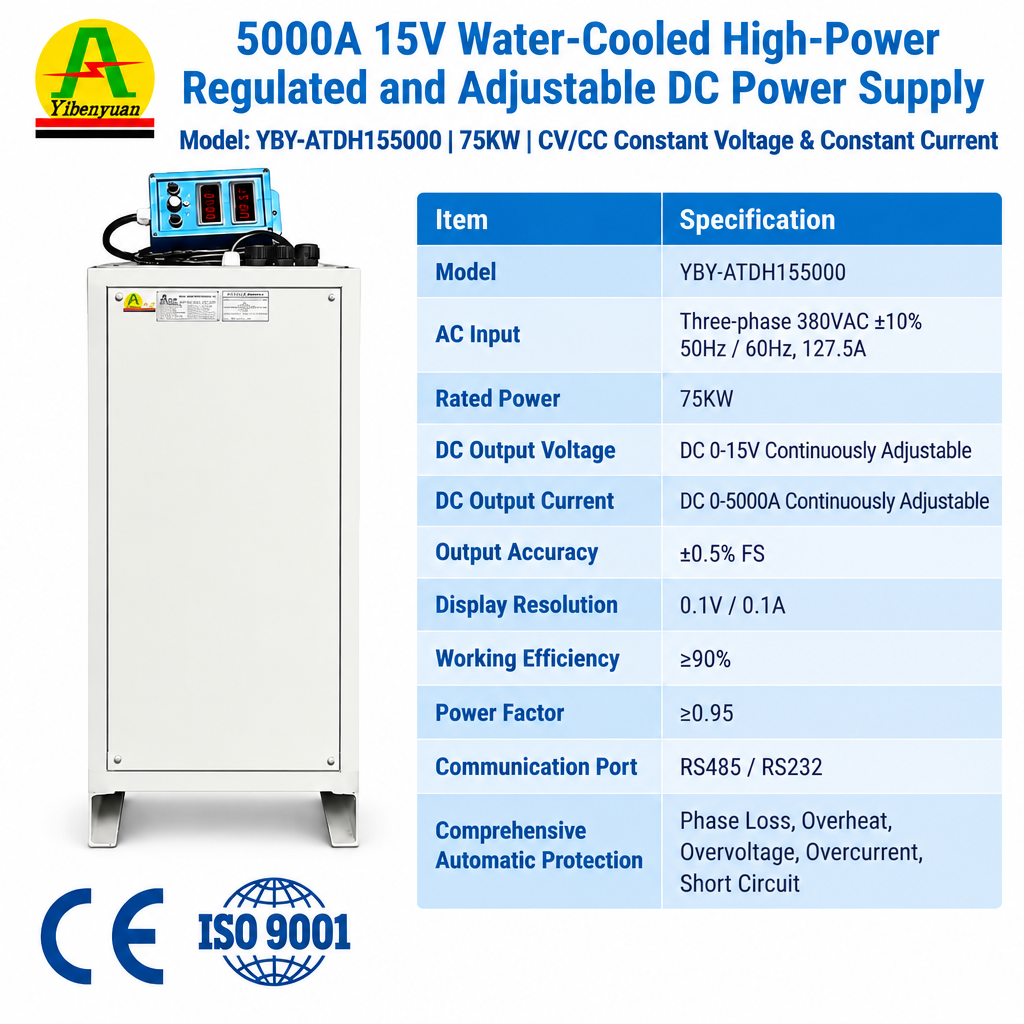
12V–15V 5000A/6000A 75kW Water-Cooled DC Rectifier
- Topology: Switch-Mode IGBT
- Output Range: 0–15V / 0–6000A
- Cooling: Closed-Loop Pure Water
- Ripple Factor: ≤ 1% RMS
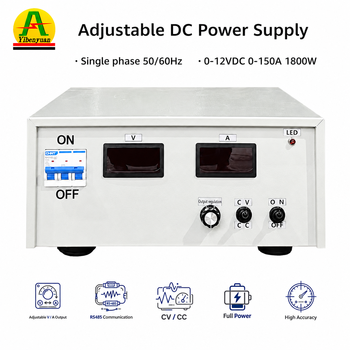
12V 150A Benchtop Plating Rectifier for Precious Metals
- Application: Gold, Silver & PCB Plating
- Mode: CV / CC Digital Auto-Switch
- Cooling: Forced Air (Low Noise)
- Certifications: CE, EMC, LVD
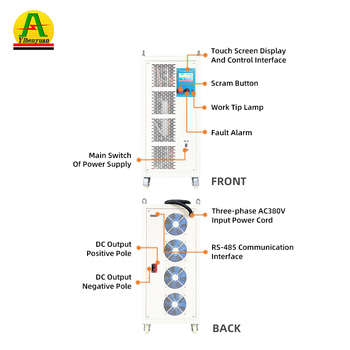
12V 4000A 48kW High-Frequency Zinc/Nickel Rectifier
- Efficiency: ≥ 90% at Rated Load
- Output Range: 0–12V / 0–4000A
- Control: RS485 Modbus-RTU
- Duty Cycle: 100% 24/7 Industrial
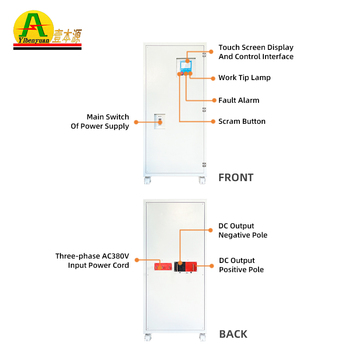
8000A 12V Water-Cooled Heavy Industrial Galvanizing Rectifier
- Enclosure: Sealed Anti-Corrosion Cabinet
- Output Range: 12V / 8000A DC Output
- Cooling: Deionized Liquid Circuit
- Target: Marine Fasteners & Structural
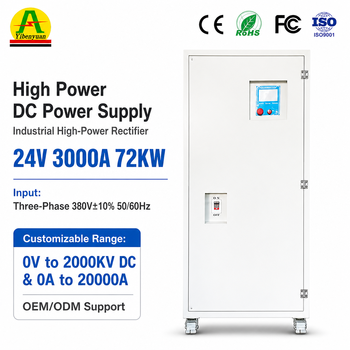
100A–3000A Hard Anodic Oxidation Power Supply
- Voltage Options: 12V / 24V / 60V / 100V
- Features: Multi-Stage Ramp Programming
- Application: Marine Al-Mg Alloys & Aero
- Protection: Thermal, Short, Over-Voltage
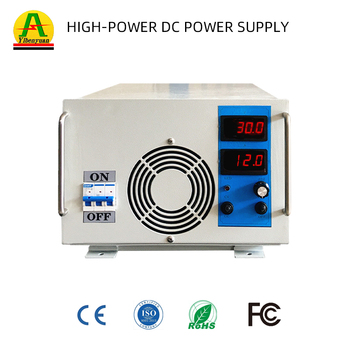
150V 50A Titanium & Exotic Alloy Anodizing Supply
- Input Compatibility: 380V/480V/600V 3-Phase
- Output Control: High Precision Constant Current
- Target: Subsea Sensor Enclosures & Bio
- Stability: ± 0.5% Setpoint Drift
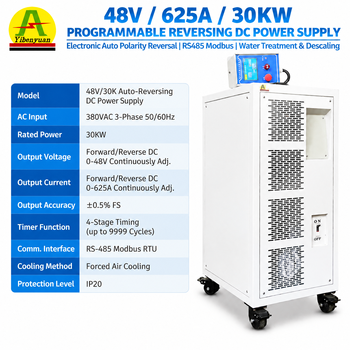
48V 625A 30kW Auto-Polarity Reversing Descaling Supply
- Cycle Control: Programmable Forward/Reverse
- Application: Ballast Water & Descaling
- Interface: 4-Segment Microcontroller PLC
- Housing: Corrosion Resistant Coated
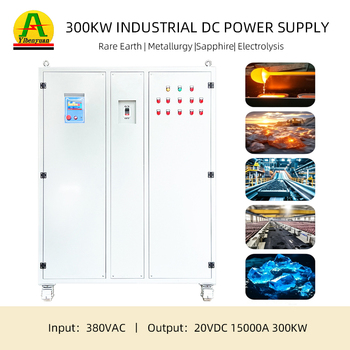
300kW 20V 15,000A Heavy-Duty Electrolysis DC Power Base
- Current Delivery: 0–15,000A Continuous
- Architecture: Multi-Module Parallel Balancing
- Application: Mining Electrowinning & Refining
- Cooling: Direct Heat-Exchanger Water
High-Frequency Switch-Mode Rectification: Replacing Legacy Silicon Controlled Rectifiers (SCR)
A rigorous examination of power topology performance under fluctuating Atlantic power grid profiles and severe marine corrosive atmospheric factors.
In electroplating facilities across Newfoundland and Labrador—from St. John’s harbor ship maintenance yards to subsea equipment precision machine shops in Mount Pearl—the efficiency and stability of direct current power conversion dictate both operating economics and component fatigue limits. Conventional 6-pulse and 12-pulse Silicon Controlled Rectifier (SCR) or thyristor systems operate by phase-angle firing at mains frequency (50Hz or 60Hz). While historically robust, this topology presents distinct mechanical and electrochemical deficiencies: high current ripple factor (≥ 5%), bulky line-frequency isolation transformers, sluggish dynamic step response (> 100ms), and a depressed power factor that incurs steep industrial utility penalties.
Guangdong Fenvix Technology Co., Ltd. architects industrial high-frequency rectifiers utilizing advanced insulated-gate bipolar transistor (IGBT) full-bridge converter topologies with planar nanofiber and high-frequency ferrite magnetic cores. The incoming three-phase alternating current (whether standard 480VAC 60Hz or Canadian regional 600VAC 60Hz) is directly rectified, filtered through low-ESR DC-link capacitor banks, inverted via pulse-width modulation (PWM) at ultra-sonic frequencies, stepped down through compact high-frequency transformers, and rectified via Schottky or fast-recovery diode arrays. The resulting DC waveform is pure, exceptionally smooth, and digitally modulated with zero phase-angle lag.
Ultra-Low Ripple Architecture
Delivers continuous RMS ripple below 1% across the entire 10%–100% load spectrum, optimizing metal crystallization, refining grain micro-structures, eliminating surface dendritic micro-cracking, and significantly accelerating plating bath speeds.
Severe Environment Isolation
Cabinets feature fully segregated power and control electronics chambers. Sealed IP54/NEMA 4X enclosures isolate sensitive gate-drive circuitry, microcontrollers, and feedback optocouplers from aggressive airborne maritime salt fog and acid mist.
Instantaneous Dynamic Regulation
Closed-loop DSP regulation samples voltage and current at microsecond intervals, compensating dynamically for bath concentration changes, anode passivity spikes, or cathode surface area shifts without dipping below the critical deposition window.
Mission-Critical Applications in St. John’s & Newfoundland and Labrador
Specialized DC current engineering tailored to the province's marine, offshore petroleum, deepwater subsea fabrication, and heavy mineral processing operations.
Offshore Oil & Subsea Equipment
For extraction operations across the Jeanne d'Arc Basin, Hibernia, Terra Nova, and Hebron fields, subsea blowout preventers (BOPs), riser tensioners, and marine hydraulic shafts demand dense hard chrome plating (200–300 μm) and electroless nickel-phosphorus baking. Fenvix high-current 12V 6000A to 12V 8000A rectifiers supply the precise current density required to eliminate microporosity, providing impenetrable barriers against subsea chloride stress cracking.
Shipbuilding, Refit & Shipyard Dockyards
The historic St. John’s Dockyard and surrounding repair basins support naval auxiliary vessels, icebreakers, coast guard ships, and commercial fishing fleets. Repairing drive shafts, rudder stocks, and sleeve bearings requires mobile, high-current electroplating rectifiers capable of automated selective brush plating and immersion zinc-nickel sacrificial coating capable of enduring over 1,500 hours of ASTM B117 salt spray testing.
Marine Aluminum Hard Anodizing (MIL-A-8625)
Fabricators supplying rugged subsea robotics (ROVs/AUVs), marine navigation buoys, and oceanographic radar casings in St. John's require Type III Hardcoat Anodizing on 5000 and 6000-series marine alloys. Fenvix programmable anodizing rectifiers feature programmable current-density ramping, bipolar pulse capabilities, and precise refrigeration bath synchronization to build 50μm+ dense dielectric oxide layers with zero edge burning.
Ballast Water Electrochlorination & Descaling
Maritime regulations governing the North Atlantic necessitate onboard electrochemical descaling and ballast water disinfection to stop invasive aquatic migration. Our 48V 625A auto-polarity reversing power supplies generate active hypochlorite agents from natural seawater while the programmatic polarity flip automatically sheds calcareous cathodic scale from titanium electrode surfaces without manual acid washing.
Mining Extraction & Nickel-Cobalt Refining
Connecting downstream processing operations with Labrador’s massive mineral reserves (such as Voisey’s Bay nickel and iron ore), electrowinning and electrochemical effluent reclamation call for continuous-duty low-voltage, mega-ampere power supplies. Fenvix delivers heavy-duty electrolysis rectifiers up to 15,000A, capable of continuous 365-day operation with built-in water-to-water heat exchangers to maintain thermal equilibrium.
Ocean Technology & Harsh Environment R&D
World-class marine engineering institutions, such as Memorial University of Newfoundland (MUN) and the Marine Institute, deploy our programmable laboratory DC power supplies and capacitor charging systems for research into underwater acoustics, electrochemical galvanic corrosion, cathodic protection testing, and subsea autonomous power tether simulations.
Comparative Analysis: Fenvix IGBT Switch-Mode vs. Traditional Thyristor (SCR)
A direct technical comparison highlighting lifecycle power savings, process control precision, and thermal footprint advantages for St. John's industrial operators.
| Performance Parameter | Legacy SCR / Thyristor Rectifier | Fenvix High-Frequency IGBT Rectifier | Engineering Impact for Local Buyers |
|---|---|---|---|
| Operating Efficiency | 70% – 78% (Depressed further at low loads) | ≥ 90% – 93% across operational range | Lowers kWh electrical consumption drastically under Newfoundland and Labrador commercial hydro rates. |
| RMS Voltage Ripple | ≥ 5% – 10% (Requires bulky LC filter chokes) | ≤ 1% to 2% RMS inherent ripple | Prevents laminar coating delamination, optimizes precious metal thickness uniformity, and eliminates burning. |
| Physical Footprint & Weight | Heavy (Line-frequency 60Hz transformer, large iron core) | Ultra-compact; 60% smaller, 70% lighter | Simplifies installation inside congested shipyard electrical mezzanines and containerized mobile workshops. |
| Dynamic Regulation Speed | Slow response (> 100ms phase regulation) | High-speed microsecond response (< 5ms) | Instantly balances current during rapid barrel rotation or jig immersion, preventing edge burning. |
| Power Factor (cos φ) | Poor (0.60 – 0.75, decreases during phase-back) | High (≥ 0.94 to 0.98 near unity) | Eliminates kVA peak demand surcharges and reduces harmonics back-fed into industrial plant transformers. |
| Cooling Options | Bulky forced air blowers with unsealed air paths | Sealed pure water cooling or isolated air tunnel | 100% protection against corrosive coastal Atlantic saline mists and electroplating acid fumes. |
Regional Technology Shifts in Newfoundland and Labrador
Analyzing the intersection of clean grid electrification, digital factory automation, and heavy industrial decarbonization across Atlantic Canada.
The industrial landscape of St. John's is undergoing a structural modernizing evolution driven by several regional initiatives:
1. Shift Toward Clean Hydro Electrification and Stringent Grid Efficiency: As Atlantic Canadian energy providers emphasize decarbonization and industrial energy audits become standard practice, legacy SCR rectifiers are being systematically decommissioned. Industrial plating shops and maintenance facilities running multi-thousand-ampere operations continuously 24/7 can reduce operational electricity dissipation by 15% to 22% simply by transitioning to switch-mode IGBT power conversion. This aligns directly with corporate net-zero commitments and lower emissions reporting standards across provincial supply chains.
2. Transition to Modular Redundant Architecture (N+1 Hot-Swap): In offshore supply hubs like St. John’s, unexpected downtime on an electroplating line or a critical titanium anodizing tank can stall multimillion-dollar subsea repair campaigns. Industrial operators are rapidly moving away from single-point-of-failure monolithic SCR units. Fenvix answers this demand through modular, parallel-coupled rack systems. If one 1,000A power slice requires scheduled servicing, the remaining modules dynamically share the load, keeping the plating line operational without stripping or burning parts.
3. Industry 4.0, Modbus-TCP, and Automated SCADA Integration: Local machine builders, surface finishers, and research laboratories are standardizing on integrated data logging to support traceability requirements for offshore oil certifications and defense contracts. Our plating rectifiers incorporate high-speed RS485 (Modbus-RTU), optional Profibus, and Ethernet-based communication interfaces. This enables full remote telemetry: continuous logging of ampere-hours, bath temperature, voltage stability, and alarm states directly to local plant DCS or cloud supervisory servers.
4. 600V Canadian Electrical Grid Compatibility: A critical engineering hurdle for equipment imported into Newfoundland and Labrador is the ubiquitous 600VAC, 3-phase, 60Hz utility distribution standard. Off-the-shelf Asian or European power supplies designed strictly for 380V or 400V require cumbersome, lossy step-down transformers. Guangdong Fenvix Technology Co., Ltd. custom-winds and tests our input conversion transformers specifically for 600V/60Hz, providing plug-and-play installation, optimized thermal performance, and cUL/CSA-ready electrical line clearances.
Verified Factory Direct: From Heavy Copper Fabrication to Full-Load Burn-In
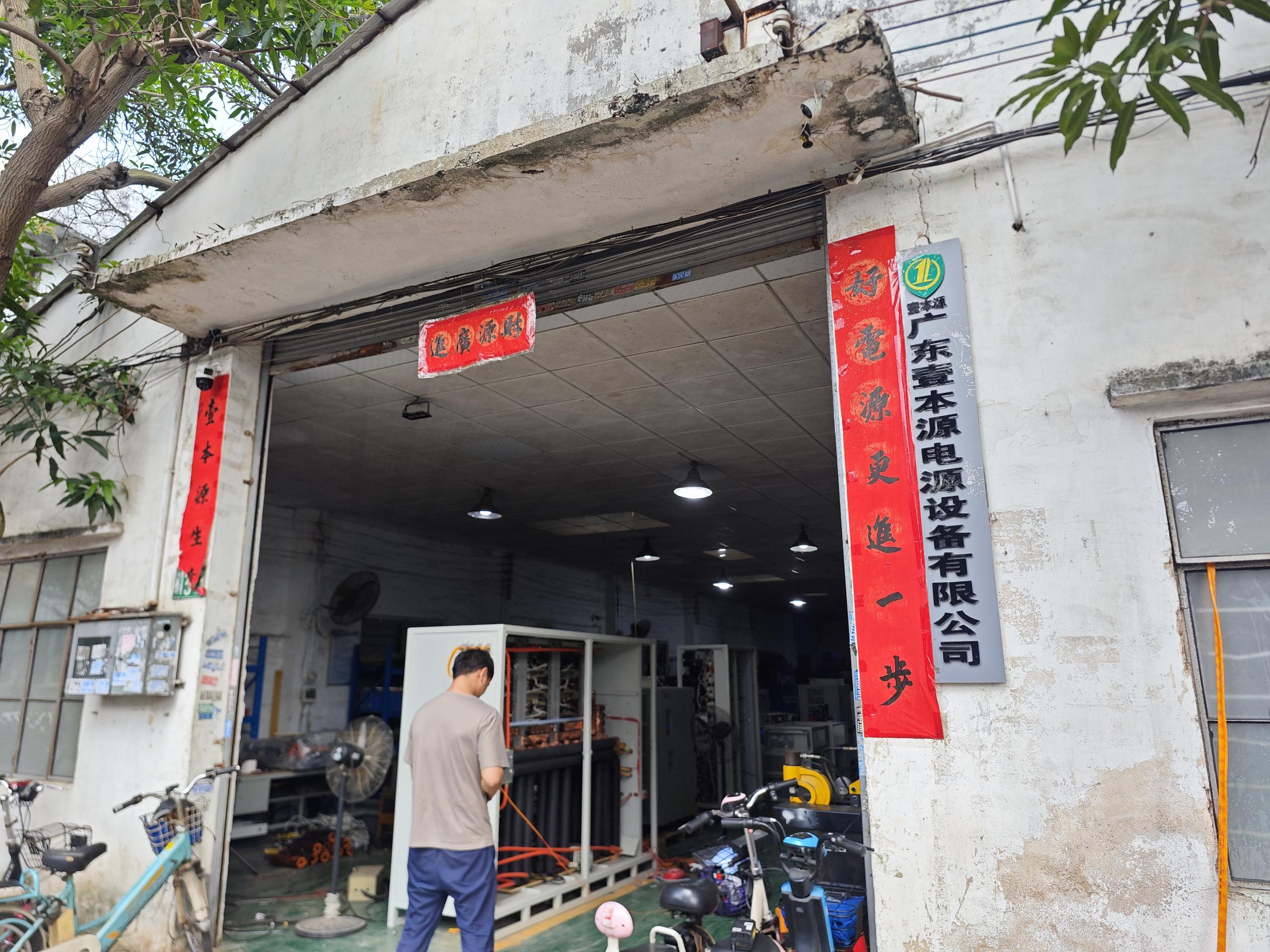
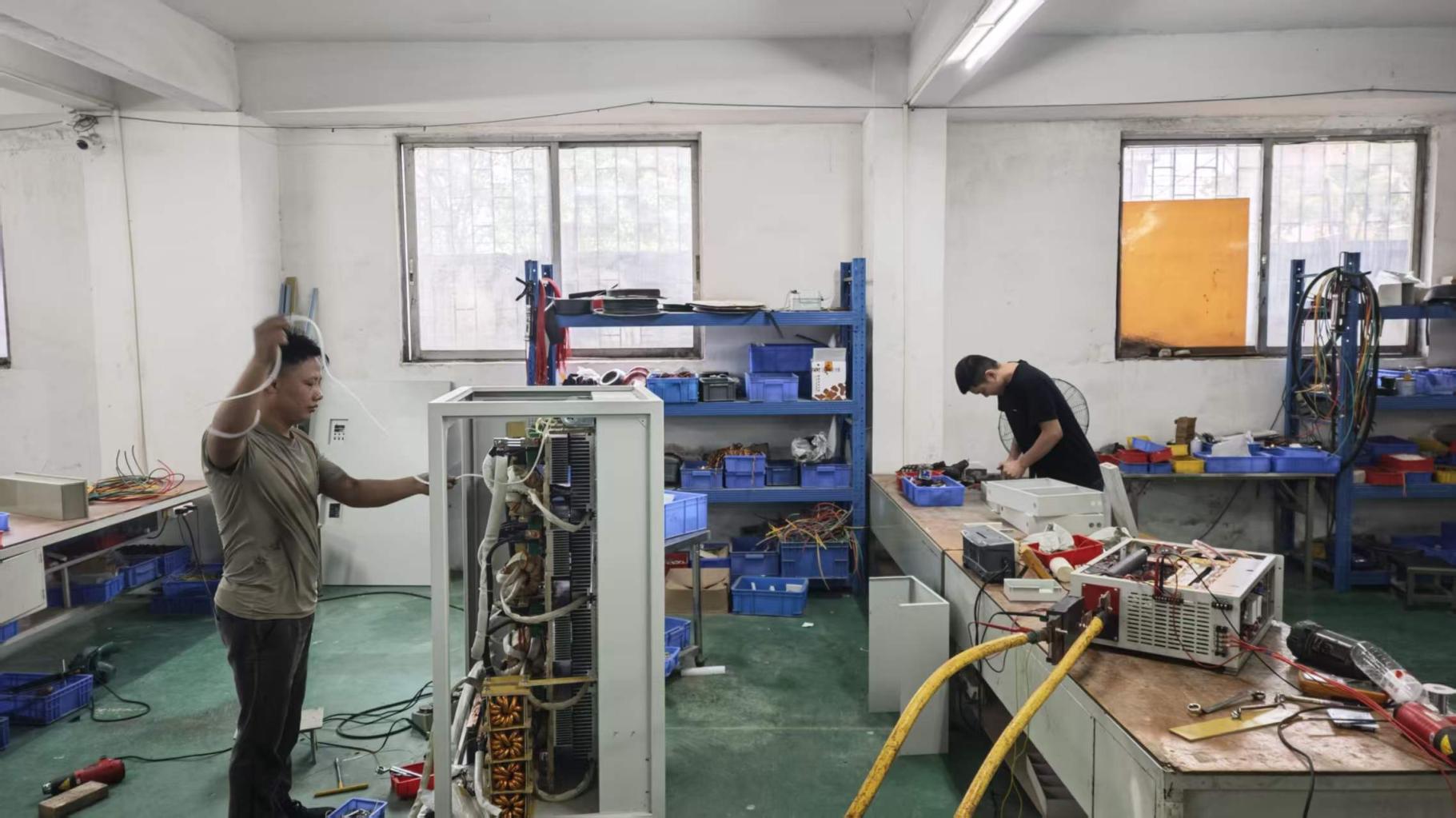
Guangdong Fenvix Technology Co., Ltd. operates a specialized 3,000m² manufacturing complex in Guangzhou, China. Certified to ISO 9001 and verified on-site by TÜV Rheinland.
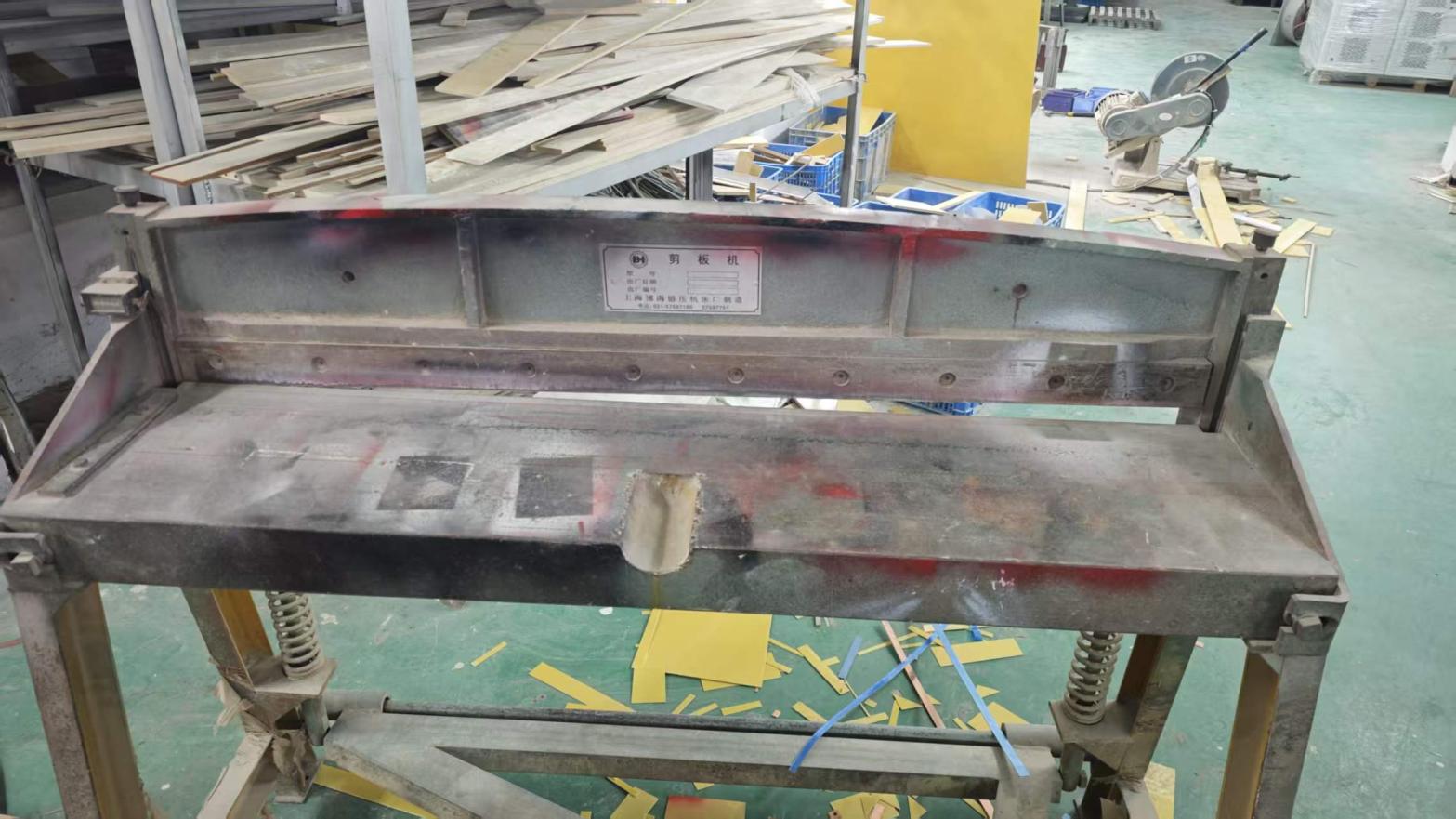
When purchasing electroplating rectifiers across international borders, engineering credibility, mechanical robustness, and transparent manufacturing verification are paramount. Unlike trading intermediaries who source disparate components, Fenvix maintains complete vertical control over every production tier: in-house CNC sheet metal shearing, precision copper busbar stamping, automated component SMD placement, transformer potting, and multi-day full-load thermal burn-in.
100% Full-Current Load Testing
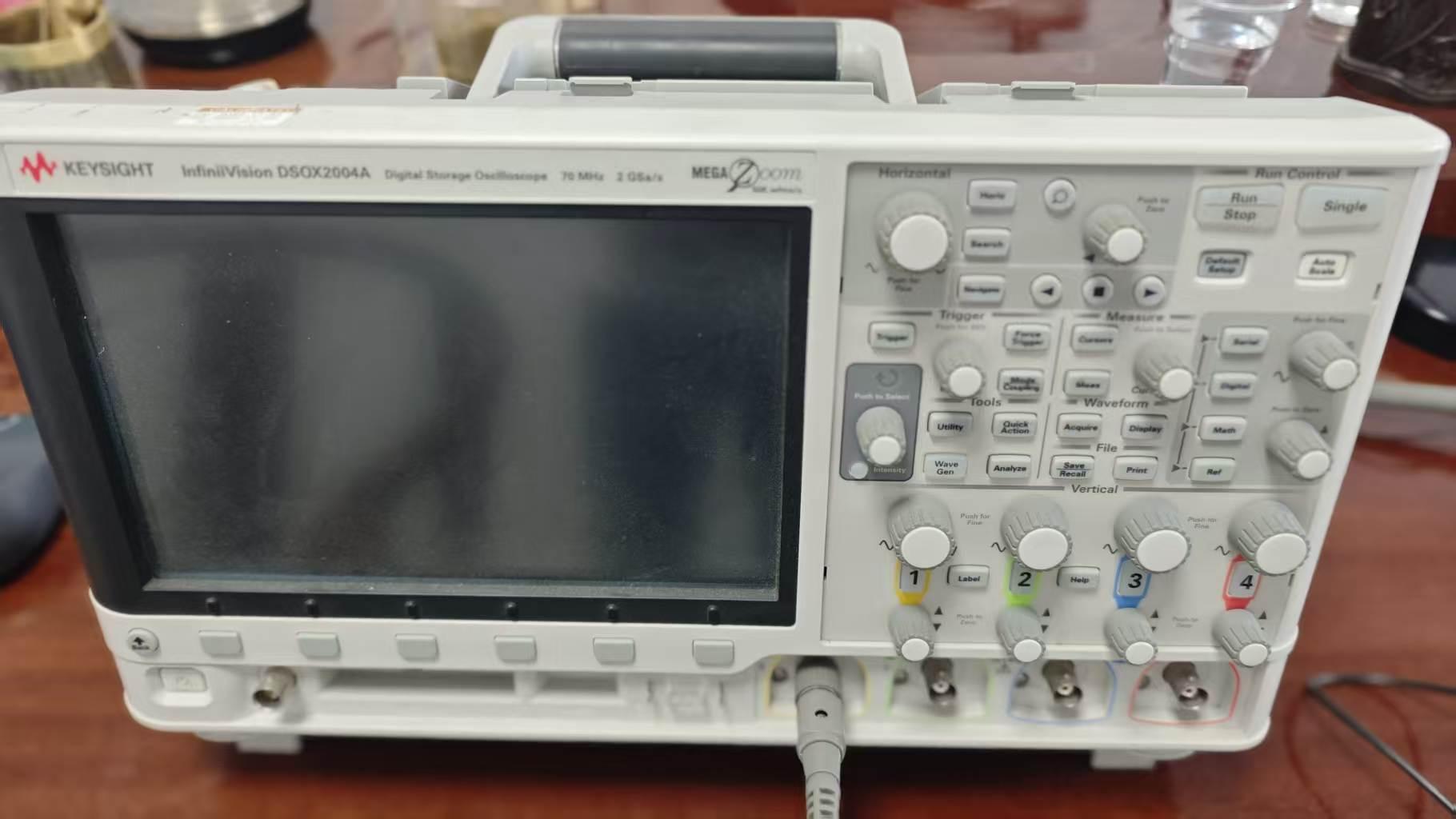
Every rectifier leaving our facility undergoes a minimum 24 to 48-hour continuous full-current resistive load test. Thermal imaging checks verify uniform current distribution across high-power copper busbars and zero IGBT hotspot clustering.
Zero Minimum Order Quantity (MOQ)
We actively support university research laboratories, specialized pilot plants, and bespoke refit programs across St. John's with flexible 1-unit custom fabrication, delivering tailored voltages, custom dimensions, and specialized controls without volume surcharges.
Direct Atlantic Logistics & DDP Delivery
Complete export management with heavy-duty sea-freight wooden crate packaging. We manage ocean-to-rail intermodal routes directly arriving into the Port of St. John's or regional industrial parks under DDP, CIF, or DAP Incoterms, handling customs clearance effortlessly.
Frequently Asked Questions: Sourcing Rectifiers for the St. John’s Market
Practical guidance addressing Canadian electrical grid compliance, thermal management, coastal corrosion protection, and logistics handling.