High Current Direct-Current Power Systems for Valencia Plants
From continuous automated anodizing in Paterna to heavy-duty electro-chlorination and metal galvanizing in Almussafes and Sagunto, our heavy-duty switch-mode rectifiers deliver sub-1% ripple, continuous full-load durability, and precise remote fieldbus integration.
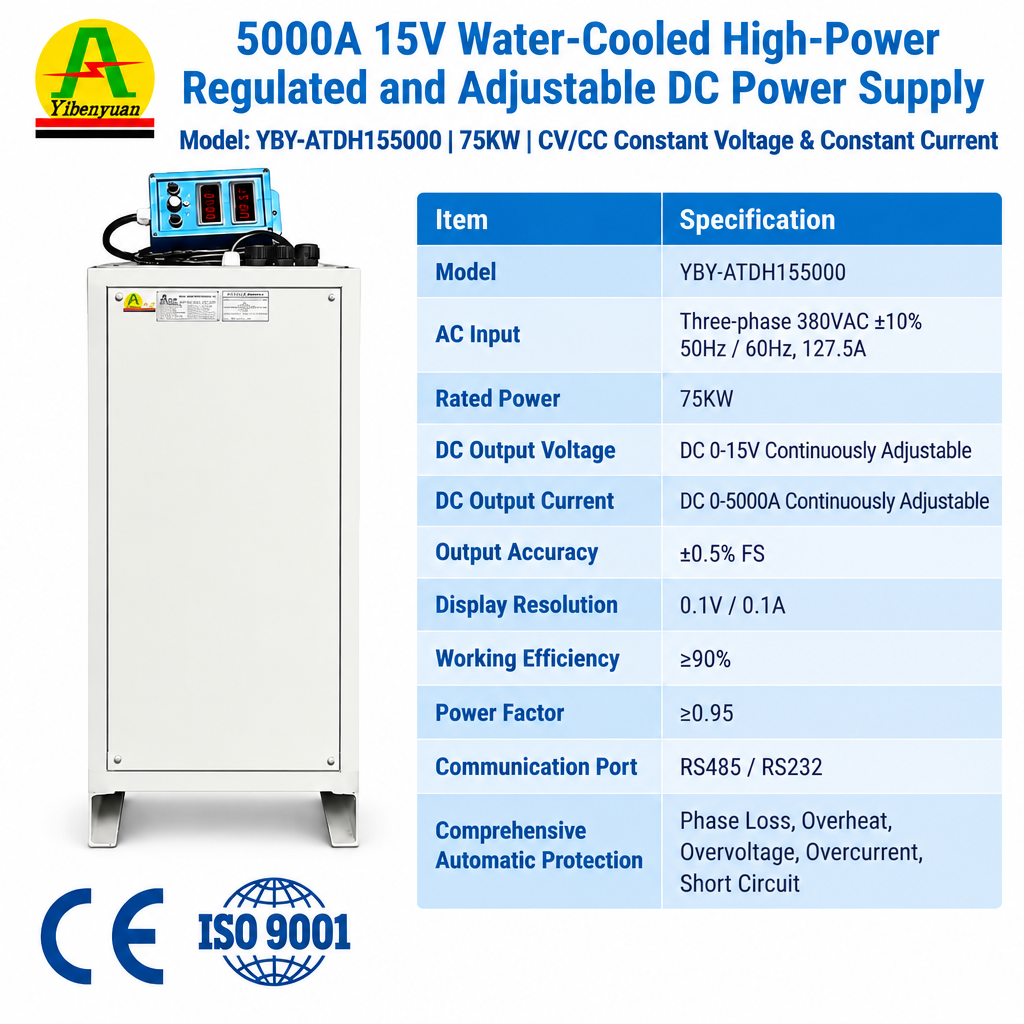
12V–15V 5000A–6000A 75kW Water-Cooled Rectifier
- Output Range: 12V–15V / 0–6000A DC
- Cooling Topology: Closed-loop deionized water
- Ripple Factor: < 2% RMS full scale
- Control Protocol: RS485 / Modbus-RTU / 4-20mA
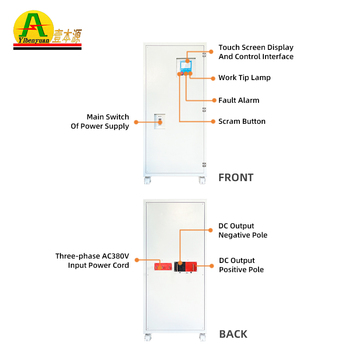
8000A / 12V High-Volume Zinc Galvanizing Rectifier
- Output Capacity: 0–12V DC / 8000A Continuous
- Thermal Protection: Integrated water flow & over-temp
- Power Switch: Infineon PrimePACK™ IGBT modules
- Duty Cycle: 100% 24/7 non-stop industrial
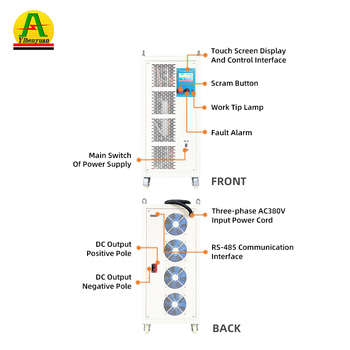
12V 4000A 48kW High-Frequency Plating Source
- Voltage / Current: 0–12V / 0–4000A Adjustable
- Regulation Mode: Constant Voltage (CV) / Constant Current (CC)
- Cabinet Build: Corrosion-proof sealed IP54
- Efficiency: ≥ 90% at full load
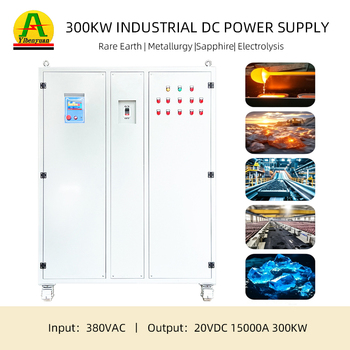
300kW 20V 15,000A Heavy Electrolysis Rectifier
- Nominal Output: 20V DC / 15,000A Steady Current
- AC Grid Input: 380V/400V/415V ±10% 50Hz
- Primary Use: Chlor-alkali, Hydrogen & Descaling
- Busbar Link: T2 solid electrolytic copper terminals
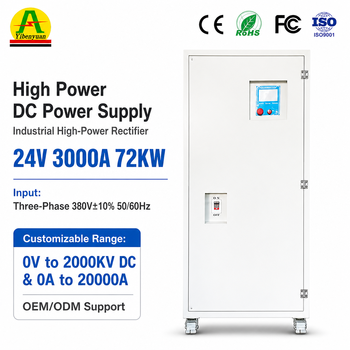
100A–3000A Anodic Oxidation Programmable Rectifier
- Voltage Rating: 12V / 15V / 24V / 60V Options
- Special Profile: Multi-step soft-start current ramping
- Process Capability: Mil-A-8625 Type II / Type III Hardcoat
- HMI Console: Digital color touch control panel
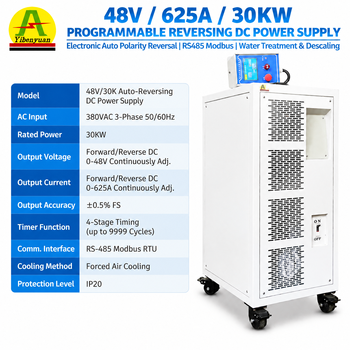
48V 625A Auto-Polarity Reversing Descaling Supply
- Total Power: 30kW Solid-State Inversion
- Switching Speed: Sub-millisecond H-Bridge transition
- Duty Automation: Independent forward/reverse timers
- Target Use: Electrolytic descaling, effluent detox
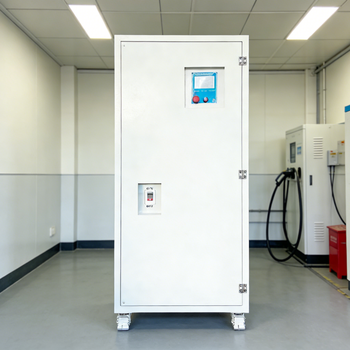
160kW 64V 2500A Heavy-Duty Electrolysis Rectifier
- DC Output: 0–64V / 0–2500A Ultra-smooth DC
- Power Factor: ≥ 0.95 at rated operating point
- Magnetic Isolation: Nanocrystalline HF power core
- Cooling System: Forced Air / Liquid Exchanger dual
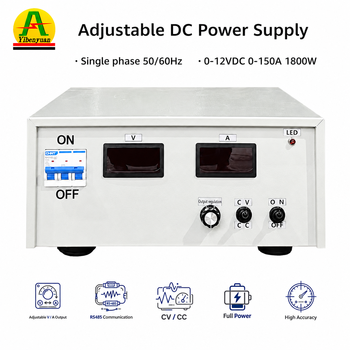
12V 150A Precision Electroplating DC Power Source
- Output Specs: 0–12V / 0–150A Fine resolution
- Target Process: Au/Ag connector plating, barrel plating
- Current Precision: ±0.5% full range digital readout
- Certifications: CE, LVD, EMC, RoHS Compliant
High-Current DC Rectification: Technical Infrastructure for the Valencian Industrial Basin
The autonomous community of Valencia represents one of Southern Europe’s most dynamic manufacturing landscapes. From the expansive automotive manufacturing ecosystem surrounding Almussafes to the structural ceramic hub spanning the Castellón-Valencia corridor, industrial operations demand severe electrical reliability. Industrial electro-chemistry, electro-winning, aluminum anodizing, and hard chrome plating require continuously regulated direct-current (DC) power supplies that can withstand elevated ambient temperatures, airborne saline humidity typical of the Mediterranean seaboard, and aggressive acid mist generated across surface treatment vats.
Legacy industrial installations across Valencia historically relied on bulky 6-pulse or 12-pulse Silicon Controlled Rectifier (SCR / Thyristor) systems. While robust, thyristor rectifiers exhibit poor power factors at reduced output voltage, high total harmonic distortion (THDi) reflected back into the Iberdrola distribution grid, and sluggish dynamic response times during process changes. Guangdong Fenvix Technology Co., Ltd. supplies high-efficiency, switch-mode high-current rectifiers utilizing high-frequency insulated gate bipolar transistors (IGBT), specifically configured for European 400V 50Hz networks and harsh industrial plant conditions.
Engineering Distinction for Spanish Plant Operators: High-frequency IGBT rectifiers replace massive line-frequency 50Hz iron-core transformers with nanocrystalline ferrite-core transformers operating at 20 kHz to 50 kHz. This yields up to a 65% reduction in cabinet footprint, eliminates destructive low-frequency AC ripples in electrodeposition baths, and directly curtails high reactive-power penalties assessed under Spanish industrial grid regulations.
IGBT Switch-Mode vs. Conventional Thyristor (SCR) Architectures
When engineering high-amperage lines exceeding 3,000 Amperes, selecting the correct rectifier topology dictates overall production yield, coating micro-porosity, and recurring kilowatt-hour electrical consumption. The comparative matrix below synthesizes real-world data verified under continuous 100% duty cycles:
| Performance Parameter | Legacy Thyristor (SCR) System | Fenvix High-Frequency IGBT System | Direct Impact on Valencian Plants |
|---|---|---|---|
| Operating Conversion Efficiency | 70% – 76% (Substantial thermal waste) | 89% – 93% High Efficiency | Reduces monthly industrial electricity bills under high Spanish tariff rates (Tarifa 6.1TD / 6.2TD). |
| Output DC Ripple (RMS) | 5% to 15% without heavy LC chokes | ≤ 1% to 2% Ultra-Smooth DC | Accelerates plating deposition speed, prevents pinholes, and enhances coating adhesion hardness. |
| Grid Power Factor (Φ) | 0.65 – 0.78 (Degrades when voltage drops) | ≥ 0.94 across operating range | Eliminates reactive energy surcharges on regional electricity invoices; reduces capacitor bank wear. |
| Dynamic Regulation Speed | 100 ms to 300 ms (Slow response) | < 1 ms High-Speed Loop | Instantly adjusts to load swings when immersion racks enter plating tanks; avoids edge burns. |
| Cooling Configuration | Natural air / Large oil-immersed tanks | Hermetic liquid or forced-chilled loop | Isolates sensitive electronics from coastal humidity, sulfuric/chromic fumes, and ambient dust. |
| Physical Footprint & Mass | Massive, requires reinforced floor loading | Compact modular design (−60% size) | Frees up valuable processing floor real estate; allows overhead mounting or mezzanine placement. |
Meeting Sector-Specific Power Challenges Across Valencia
Valencia's strategic manufacturing clusters require tailored electrical features—ranging from extreme low-ripple current control for automotive Tier-1 stampings to robust water-cooled enclosures resistant to saline marine environments.
Automotive Components (Almussafes Hub)
Valencian Tier-1 suppliers supplying high-volume zinc-nickel alloy plating and cathodic electrodeposition (E-Coat) for chassis brackets and fasteners require tight current density control (±0.5%). Fenvix 4000A–8000A rectifiers integrate automatic forward-reverse polarity, programmable multi-step current ramps, and integrated Modbus-RTU fieldbus connections to eliminate zinc dendritic burns.
Ceramic Machinery & Tool Hard Chroming
The ceramic tile machinery ecosystem between northern Valencia and Castellón requires hard chrome plating on heavy hydraulic rams, compaction dies, and sizing rolls. Operating at 5,000A to 12,000A, our liquid-cooled rectifiers withstand continuous 60°C bath environments while delivering micro-crack density control and 68–70 HRC surface hardness.
Sagunto Green Hydrogen & Electrolysis
Valencia's strategic pivot toward the Sagunto clean industrial hub necessitates high-amperage, heavy-duty DC sources for alkaline and PEM water electrolysis pilot plants. Fenvix supplies modular multi-cabinet rectifiers up to 15,000A capable of low-ripple, harmonic-filtered power feed designed to protect precious metal catalyst coatings from premature reverse-bias degradation.
Architectural Aluminum Anodizing
High-end architectural facades, solar frame profiles, and marine extrusions processed in industrial estates like Paterna and Ribarroja rely on constant current density ramping. Our rectifiers provide programmable 10-step slope control, eliminating sudden current inrushes and ensuring uniform anodic oxide layer thickness (20–25 μm) with low thermal bath dissipation.
Industrial Effluent Treatment & Descaling
Valencian textile finishing, chemical, and metal-processing wastewater facilities face strict EU environmental discharge limits. Our 48V 625A–2000A polarity-reversing DC power supplies facilitate electrolytic precipitation, electro-coagulation, and automated scale detachment from titanium electrodes without interrupting facility operations.
Port of Valencia Marine Infrastructure (ICCP)
Impressed Current Cathodic Protection (ICCP) for dock pilings, sheet piling walls, and sea vessel hulls operating inside the Port of Valencia requires non-stop, corrosion-hardened DC power. Fenvix supplies custom weatherproof outdoor IP55/IP65 cabinets featuring sacrificial anode control and precise reference electrode voltage feedback loops.
Valencian Industrial Modernization: Technological & Regulatory Drivers
The industrial fabric of the Valencian Community (Comunitat Valenciana) is currently undergoing an accelerated modernization cycle driven by decarbonization mandates, the European Green Deal, and Industry 4.0 automation initiatives. Plant engineers and procurement officers sourcing DC rectifiers must navigate three major converging macro trends:
1. Aggressive Energy Cost Mitigation & Power Factor Penalties
Industrial power tariffs in Spain penalize facilities with low inductive or capacitive power factors (&cos;Φ < 0.95). In plating facilities operating multiple 5,000A thyristor rectifiers at partial voltage, the reflected reactive load imposes thousands of Euros in monthly surcharge fees from grid distributors. Switch-mode IGBT rectifiers maintain an intrinsic power factor above 0.94 even under 30% load conditions, rendering expensive dynamic capacitor banks obsolete while trimming baseline kilowatt-hour electrical consumption by 15% to 22%.
2. Transition to Closed-Loop Deionized Liquid Cooling
During Valencian summers, ambient temperatures in non-air-conditioned industrial buildings frequently reach 38°C to 44°C. Conventional air-cooled rectifiers draw in humid, saline Mediterranean air laden with corrosive fumes from hydrochloric acid (HCl) and sulfuric acid (H2SO4) pickling tanks. This causes rapid copper busbar oxidation, PCB trace dendrite growth, and premature IGBT failure. The trend is clearly moving toward fully sealed IP54/IP55 cabinets with water-to-water heat exchangers, cooling high-power electronics with internal closed-loop distilled water connected to plant cooling towers or central chillers.
3. Integration with SCADA & Traceability Standards (VDA / AIAG)
Automotive supply agreements dictated by global OEMs demand complete traceability of current-time-voltage deposition curves for every processed flight bar. Manual analog dial controls are rapidly being phased out across Valencian plating shops. Modern rectifiers must natively communicate via industrial fieldbuses (RS485 Modbus-RTU, Profinet, or isolated 0–10V/4–20mA analog interfaces), providing continuous operational logging of bath ampere-hours, ripple health diagnostics, and automated shut-off sequences.
Engineering Authority: Inside Fenvix Power Electronics Manufacturing
Guangdong Fenvix Technology Co., Ltd. has specialized exclusively in high-power AC-DC conversion systems since 2013. Unlike international trading intermediaries, Fenvix engineers and fabricates core sub-assemblies inside our modern 3,000 m² production facilities in Guangdong, China—maintaining full ISO 9001:2015 quality control from raw sheet metal to high-load burn-in testing.
TÜV Rheinland Inspected
Our production facilities, testing bays, and quality management protocols have undergone independent on-site factory verification by TÜV Rheinland, providing complete auditing assurance for overseas procurement teams.
In-House Busbar & Metal Shop
We execute precision plate shearing, CNC punching, milling, drilling, and tapping for high-purity T2 copper busbars internally, guaranteeing mechanical structural integrity, thermal dissipation, and short lead times.
100% Full-Load Burn-In
Every single high-current rectifier is load-tested against resistive and reactive banks at full rated voltage and current for continuous hours prior to export, with oscilloscope ripple verification recorded in the inspection report.
Factory Workshop & Quality Inspection Gallery
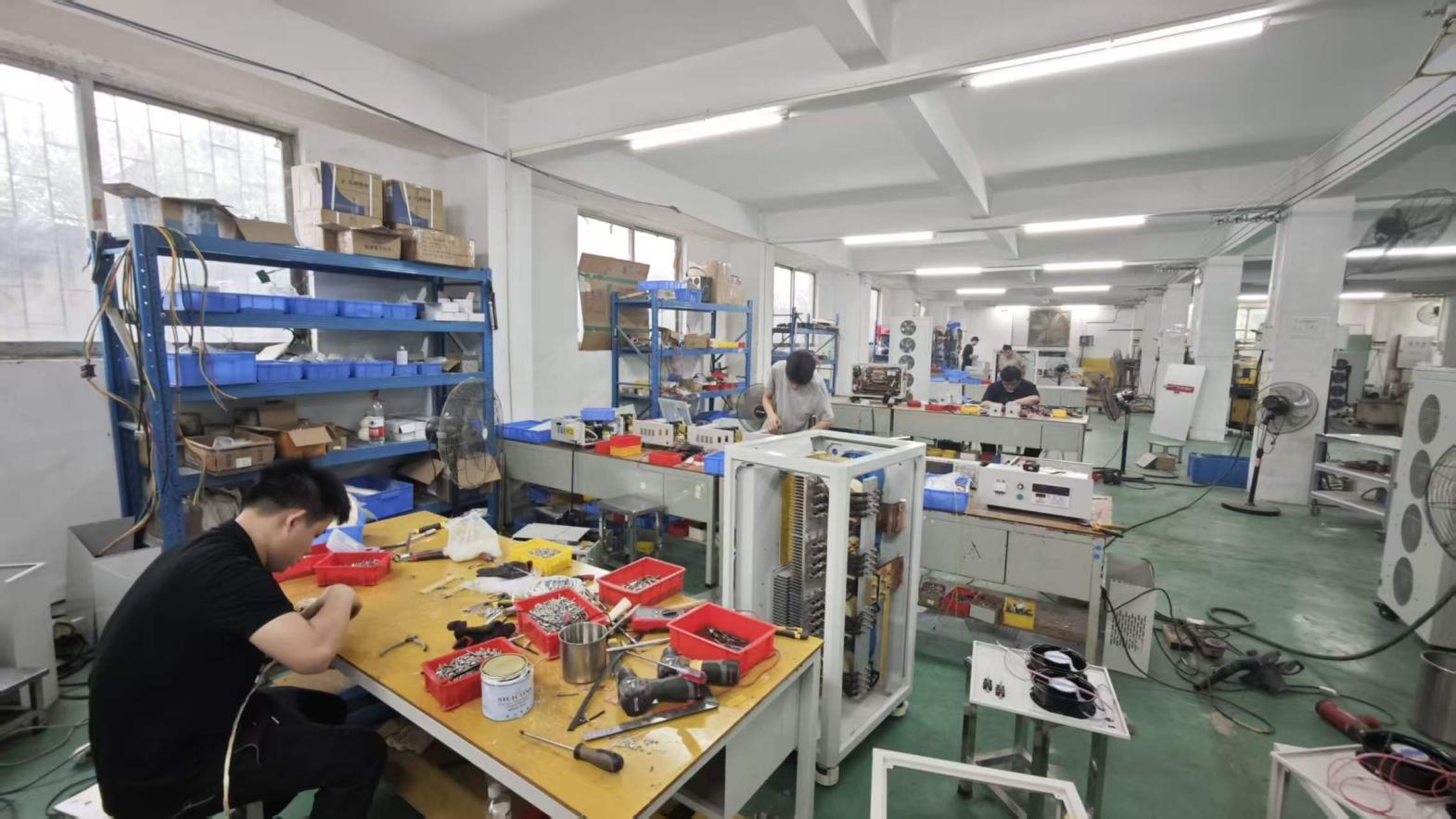 Main Production Workshop
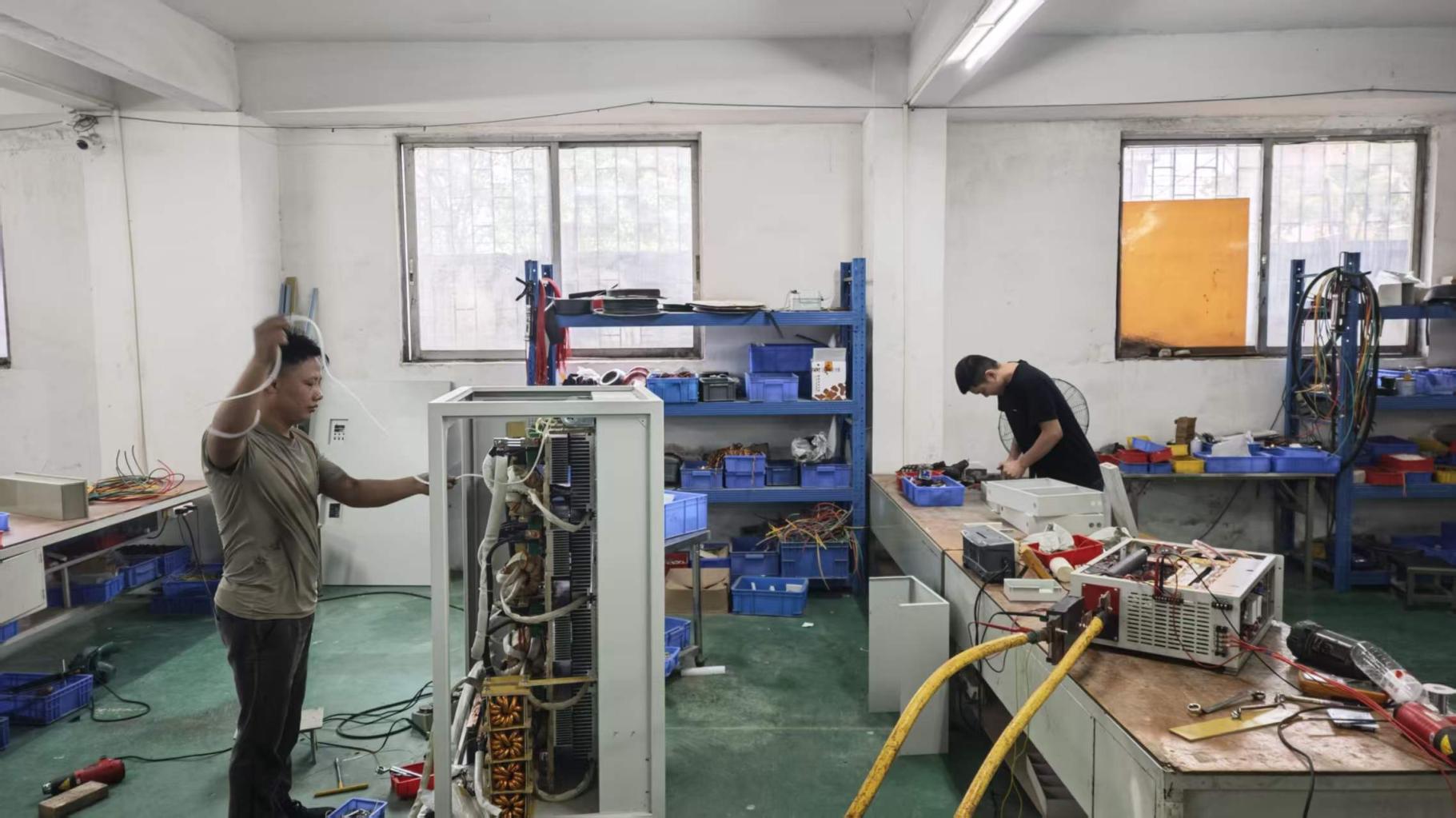 Finished Rectifier Cabinets
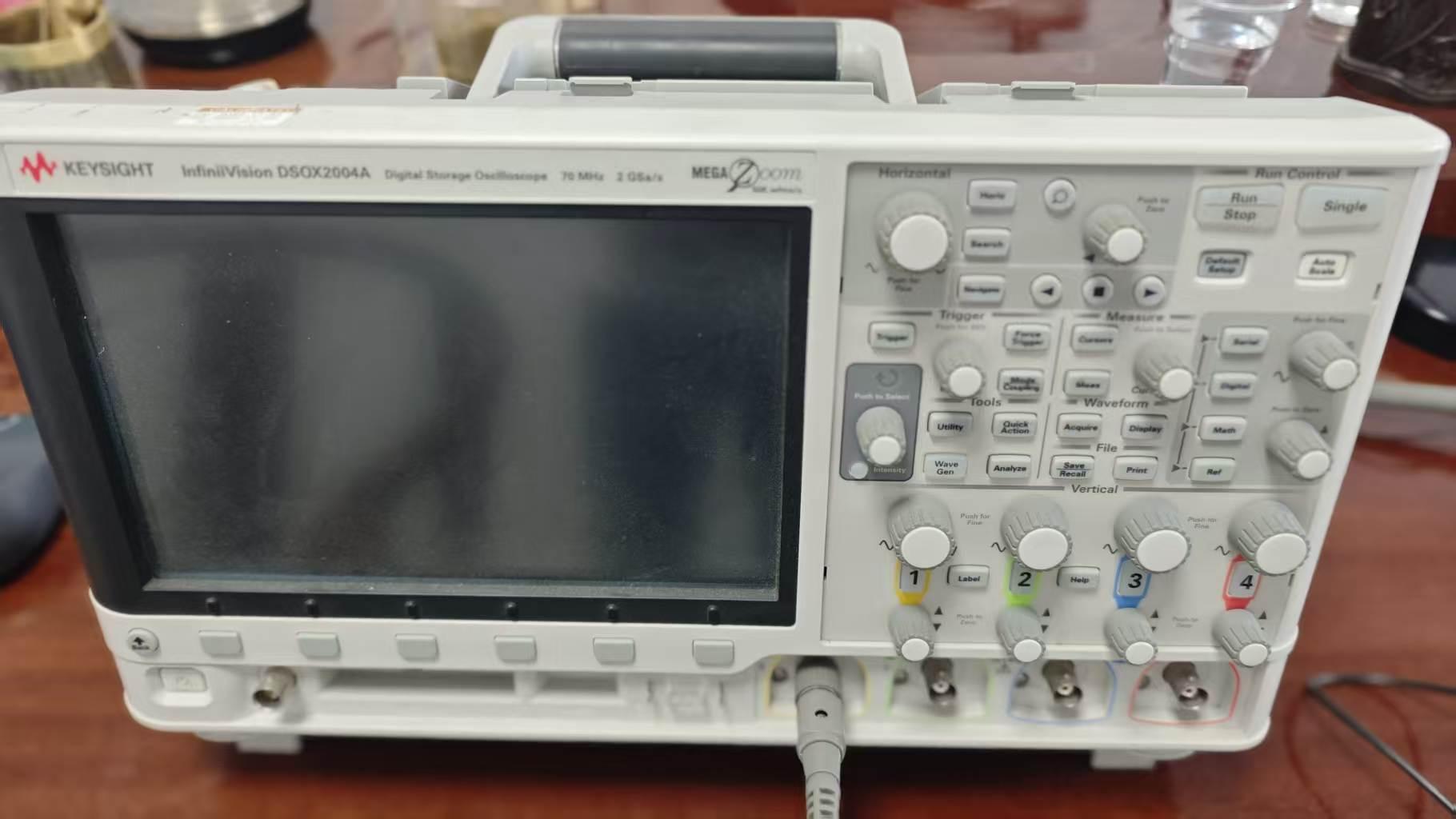 Oscilloscope Waveform Testing
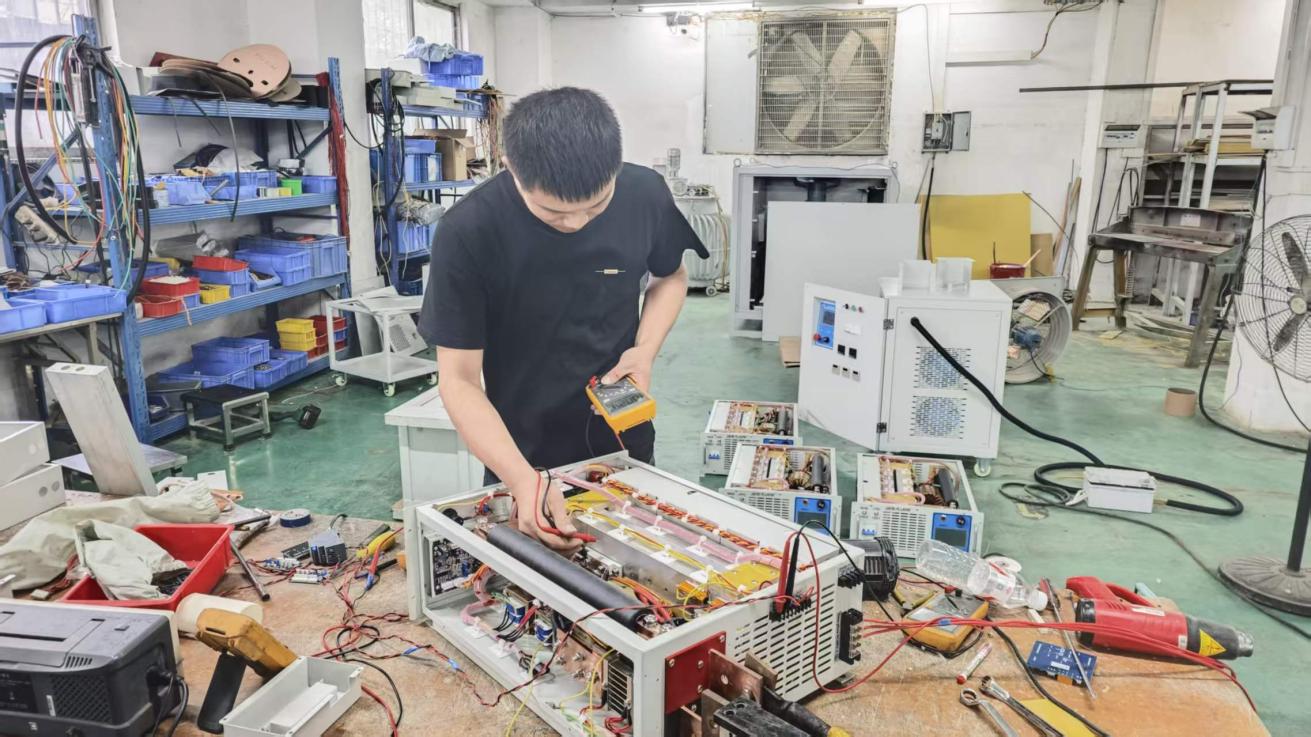 Full Load Commissioning
Frequently Asked Questions by Valencian Engineers & Sourcing Managers
Key technical, regulatory, logistical, and operational considerations when importing custom high-current rectifiers to the Valencian Community.
Are Fenvix high-current rectifiers fully compatible with the Spanish 400V 50Hz electrical grid? +
How do you protect rectifiers against the corrosive coastal atmosphere in Valencia and Castellón? +
What are the lead times and shipping methods to the Port of Valencia? +
Can Fenvix rectifiers be integrated into an existing Siemens or Omron PLC architecture? +
What is your Minimum Order Quantity (MOQ) and warranty policy? +
Which Incoterms and international payment options are supported? +
Ready to Modernize Your Industrial DC Power Infrastructure?
Provide your required output voltage, maximum current, input line rating, and cooling preference. Our senior power electronics engineers will calculate busbar sizing, thermal dissipation, and deliver an engineering proposal within 24 hours.