Engineered Electrolysis & Industrial DC Rectifier Systems
Explore our field-tested switchmode IGBT rectifiers specifically configured to withstand demanding metallurgical, electrolytic extraction, and continuous chemical duty in Bitola and Southeastern Europe.

12V 15V 5000A 6000A 75kW Water-Cooled Rectifier
- Output: 12V/15V • 0–6000A
- Cooling: Closed-Loop Water Cooled
- Control: CV / CC Digital Display RS485
- Topology: High-Frequency IGBT Switchmode

300kW 20V 15000A Heavy-Duty Electrolysis Rectifier
- Output: 0–20V • Up to 15,000A
- Input: 3-Phase 380V/400V 50Hz
- Protection: Overcurrent, Thermal, Water Loss
- Duty: 100% Continuous 24/7

8000A 12V Water-Cooled Electrowinning Rectifier
- Output: 0–12V • 0–8000A Continuous
- Cabinet: IP54 Anti-Corrosion Coated
- Efficiency: ≥ 90% at Rated Load
- Interface: MODBUS RTU / Analog 0-10V
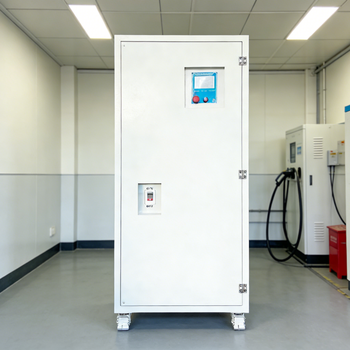
160kW 2500A Precision High-Current DC Source
- Output: 0–64V • 0–2500A Adjustable
- Ripple: ≤ 2% Low Current Ripple
- Application: Chemical Extraction, Smelting
- Certification: CE LVD EMC Conformity
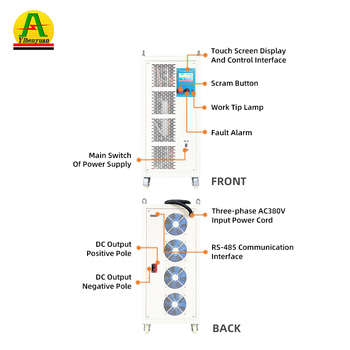
12V 4000A 48kW IGBT High Frequency Rectifier
- Output: 12V • 4000A Solid-State
- Regulation: ± 0.5% Constant Voltage / Current
- Cooling: Forced Air or Water Cooled
- Power Factor: ≥ 0.94 (Low Harmonic Injection)

48V 625A 30kW Polarity Reversing Electrolyzer Source
- Output: 48V • 625A Electronic Reversal
- Cycle: Programmable 4-Segment Timing
- Use Case: Descaling, Effluent Advanced Oxidation
- Protocol: RS485 MODBUS RTU Built-in
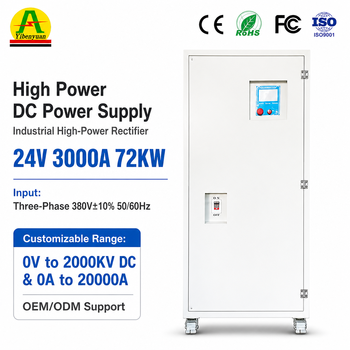
100–3000A Anodic Oxidation & Hard Coat Rectifier
- Output Range: 12V/24V/36V • 100A to 3000A
- Ramping: Soft-Start Multi-Stage Programming
- Enclosure: Industrial Polyurethane Coated
- Energy Saving: 15–25% vs Conventional SCR
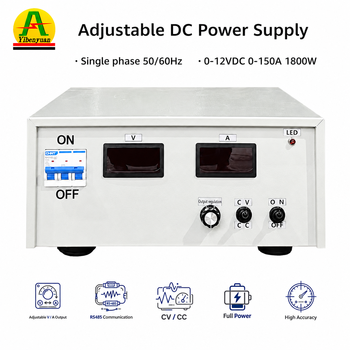
12V 150A Compact High-Frequency Electrolysis Bench
- Output: 0–12V • 0–150A Continuously Variable
- Applications: Pilot R&D, Precious Metal Extraction
- Display: Dual 4-Digit Digital LED Meter
- Safety: Short Circuit & Thermal Lockout
Decarbonization, Hydrometallurgy, and Power Conversion in the Bitola Industrial Basin
Bitola, occupying the strategic heart of the Pelagonia valley in southwestern North Macedonia, stands at the pivotal threshold of an historic energy and industrial transition. Historically centered on the mining-energy nexus of the REK Bitola thermal generation complex, the municipality and surrounding economic zones—including the Industrial Zone Zabeni (TIDZ Bitola)—are rapidly pivoting toward green energy deployment, advanced materials processing, automotive components, and metallurgical reclamation. This macro-industrial shift imposes acute electrical and operational requirements on downstream heavy-duty power supplies, specifically electrolysis DC rectifiers capable of continuous, high-current delivery under challenging electrical and thermal conditions.
In traditional electrochemical installations across the Balkans, legacy Silicon Controlled Rectifiers (SCR / Thyristor-based units) have burdened regional distribution infrastructure with significant low-order harmonic pollution (principally the 5th, 7th, and 11th harmonics), high reactive power penalties, sluggish step response times, and massive ripple factors exceeding 5% to 8%. As Bitola integrates large-scale utility solar photovoltaics and plans for decentralized green hydrogen production, industrial facilities can no longer afford the thermodynamic inefficiencies and grid distortions inherent to 50-year-old transformer-rectifier architectures.
The Engineering Shift: Why Switch-Mode IGBT Supersedes Legacy Thyristors in Pelagonia
When selecting a heavy-duty electrolysis DC rectifier for heavy industrial duty in Bitola, plant engineers must assess the Total Cost of Ownership (TCO) across three critical axes: electrical efficiency, thermal management amidst continental temperature swings (-20°C in winter up to +42°C during Pelagonia summer heat waves), and power quality compliance with EVN Macedonia / MEPSO grid interconnect rules. Switch-Mode High-Frequency IGBT (Insulated Gate Bipolar Transistor) power converters engineered by Guangdong Fenvix Technology Co., Ltd. offer game-changing operational advantages over bulky line-commutated thyristor rectifiers.
Technical Comparison: Dynamic Response and Ripple Mitigation in Electrolytic Extraction
Electrolytic processes—whether electrowinning non-ferrous metals, cracking water molecules for green hydrogen generation, or electro-flocculating industrial effluents—require precise, unfluctuating current density at the electrode boundary layer. Conventional thyristor rectifiers regulate current by modulating phase-angle firing along the 50Hz mains frequency. This results in heavy ripple voltage that causes localized hot spots on delicate catalytic coatings (such as IrO2, RuO2, or platinum-plated titanium meshes), accelerating anode spallation and degrading Faraday efficiency. Conversely, Fenvix IGBT rectifiers switch between 20kHz and 40kHz, yielding a practically pure DC output with standard ripple under 2%, which significantly extends electrode lifespan and lowers specific kilowatt-hour consumption per kilogram of recovered product.
Furthermore, the physical footprint of switchmode power architectures is approximately one-third that of legacy oil-immersed transformer units. By fabricating custom cabinets, high-purity oxygen-free copper busbars, and internal de-ionized water heat-sink plates in-house, Fenvix eliminates reliance on external component suppliers. Our ISO 9001-certified manufacturing protocols guarantee that every electrolysis DC rectifier exported to Bitola delivers exact voltage tracking (±0.5%), instantaneous short-circuit protection within microsecond thresholds, and native digital connectivity via MODBUS RTU or PROFIBUS for direct integration into plant Distributed Control Systems (DCS).
Direct Architectural Comparison: Heavy-Duty Rectifier Topologies
| Engineering Metric | Traditional 12-Pulse SCR Rectifier | Fenvix High-Frequency IGBT Switchmode | Operational Impact on Bitola Facilities |
|---|---|---|---|
| Electrical Conversion Efficiency | 76% – 82% across varying loads | 90% – 93% continuous efficiency | Reduces annual energy bills by up to 120,000+ kWh on 200kW loads |
| Output Current Ripple (RMS) | > 5% to 8% (unless heavy LC filters added) | ≤ 1% to 2% native ripple | Eliminates parasitic heating; prolongs mixed metal oxide (MMO) anodes |
| Input Power Factor (cos φ) | 0.70 – 0.82 (degrades when phase angle drops) | ≥ 0.94 to 0.96 across full 10-100% range | Averts reactive power fines from Macedonian grid operators (MEPSO) |
| Dynamic Response Speed | 100 ms – 300 ms (limited by 50Hz cycle) | < 5 ms transient correction | Instantaneous adaptation to fluctuating solar PV inputs & cell resistance |
| Cooling Configuration | Mineral oil-cooled or bulky forced ambient air | Direct deionized liquid cooling or dual ducted air | Fully sealed IP54 enclosures protect electronics from corrosive acid fumes |
| Modular Redundancy | Single point of failure; shutdown halts line | N+1 parallel hot-swap module architecture | Faulty module can be bypassed or replaced without halting production |
Strategic Electrolysis Rectifier Applications across the Bitola & Pelagonia Sector
Due to the specific geology, industrial heritage, and newly established free economic zones in Bitola, high-current direct-current conversion plays a mission-critical role in several vital sectors. Fenvix provides tailor-made power supplies designed to meet the rigorous demands of each specialized domain.
Non-Ferrous Electrowinning & Mining Metallurgy
Hydrometallurgical extraction of copper, zinc, and precious metals from regional tailings and secondary ore processing requires constant currents reaching 10,000A to 15,000A at low voltages (4V to 24V). Fenvix water-cooled rectifiers operate 24 hours a day, 365 days a year without derating, providing uninterrupted deposition onto cathode mother plates.
Metals & MiningGreen Hydrogen & Alkaline / AEM Water Electrolysis
As Pelagonia commissions utility-scale solar farms across abandoned open-cast lignite fields, excess renewable megawatt-hours are converted into green hydrogen. Fenvix programmable DC power units couple seamlessly with Alkaline (AEL) and Anion Exchange Membrane (AEM) electrolyzer stacks, modulating output current in real time matching solar irradiance.
Energy TransitionIndustrial Water Descaling & Advanced Oxidation
Circulating cooling towers and wastewater streams in Bitola's chemical and thermal utilities struggle with calcium scaling and biofouling. Our automatic polarity-reversing DC power supplies (e.g., 48V 625A) reverse electrode polarity via programmable timers, electrochemically stripping scale without harmful mineral acids.
Water TreatmentAutomotive Surface Finishing in TIDZ Bitola (Zabeni)
Suppliers of precision metal brackets, fasteners, and aluminum chassis parts in the Zabeni Industrial Zone utilize Fenvix constant-current electroplating and anodizing rectifiers. Our microsecond soft-start curves eliminate burning on thin-walled structural components during hard-coat anodizing and nickel-chrome electroplating.
Automotive & Tier-1Chlor-Alkali & On-Site Biocide Generation
Municipal water sanitation utilities and industrial food processing lines throughout the Pelagonia agricultural plain employ brine electrolysis to produce sodium hypochlorite on-demand. Fenvix units offer high corrosion-resistant IP54 enclosures to resist salt-fog and chlorine-vapor atmospheres safely.
Chemical DisinfectionElectrophoretic Coating (E-Coat / KTL Painting)
Heavy agricultural machinery, structural steel fabrications, and electrical transformer enclosures produced in Pelagonia require uniform cathodic electrodeposition. Fenvix supplies high-voltage adjustable DC sources up to 800V with sub-millisecond current stabilization to ensure pore-free corrosion barriers.
Industrial CoatingStrategic Trends Driving DC Rectifier Modernization in Bitola
Over the next decade, three macro drivers will accelerate the replacement and expansion of DC power infrastructure in Bitola:
1. EU Decarbonization Alignments and Carbon Border Adjustment Mechanism (CBAM): As North Macedonia deepens economic integration with the European Union Single Market, industrial exporters in Bitola face stringent scrutiny over embodied carbon in aluminum, steel, and chemical derivatives. Utilizing energy-efficient switchmode rectifiers with over 90% conversion efficiency reduces specific energy intensity per unit output, shielding Macedonian companies from punitive CBAM tariffs when exporting into neighboring Greece, Germany, and Italy.
2. Replacement of Lignite Flue-Gas Desulfurization with Electrified Treatment: As older coal units at REK Bitola decommission or undergo environmental retrofitting, modern electrochemical scrubbing and wet electrostatic precipitator systems require reliable, heavy-duty DC bias voltages. High-voltage and high-current power supplies engineered with robust spark-quench circuits are indispensable for sustaining operational compliance with Balkan environmental directives.
3. Grid Stabilization via High Power Factor Rectification: Macedonian transmission system operators are implementing strict harmonic distortion limits (aligned with EN 61000-3-12 and IEEE 519 standards). Fenvix IGBT rectifiers feature integrated active or multiphase passive harmonic conditioning, achieving total harmonic current distortion (THDi) levels under 5%, which saves factory owners from massive utility non-compliance fines.
13+ Years of Power Conversion Precision
We are a direct, ISO 9001-certified high-power rectifier engineering factory, not a trading middleman. Every cabinet, busbar assembly, and control firmware module is executed under rigorous QA oversight in our 3,000m² production facility.
ISO 9001 & TÜV Verified
On-site audited production lines with full batch traceability, incoming material qualification, and CE / LVD / EMC compliance certifications.
100% Full-Load Burn-In
Every heavy-duty rectifier undergoes an intensive 8-to-24 hour full-current burn-in and oscilloscope ripple characterization prior to export dispatch.
In-House Sheet Metal & Busbars
Equipped with our own CNC shearing, punching, milling, and copper plating lines, allowing complete customization with 0 MOQ.
Door-to-Door Balkan Logistics
Comprehensive export terms including CIF Thessaloniki/Durres, CIP Bitola, or full DDP delivered duty-paid with direct technical support.
Frequently Asked Questions for Bitola Buyers
Key electrical compatibility, thermal engineering, logistics, and integration questions frequently raised by plant electrical engineers and procurement directors in North Macedonia.
How do Fenvix heavy-duty rectifiers interface with the local 400V 50Hz grid in North Macedonia?
What cooling method should we select for Bitola's climate: Forced Air or Water-Cooled?
Can Fenvix rectifiers connect to existing SCADA / DCS networks in our plant?
What is your Minimum Order Quantity (MOQ) and production lead time for custom high-current units?
What logistics routing and trade terms (Incoterms) are recommended for deliveries into Bitola?
Are replacement parts, spare IGBT modules, and technical support readily accessible?
Request Custom Electrolysis Rectifier Sizing for Bitola Projects
Planning a metallurgical expansion, wastewater advanced oxidation cell, or green hydrogen pilot in North Macedonia? Submit your operational voltage, current requirement, control preferences, and cooling parameters. Our senior power systems engineers will configure a validated proposal with technical drawings within 24 hours.