High-Reliability EV Test & High-Power DC Power Supplies
Direct manufacturer export configurations optimized for Japanese 200V 50Hz/60Hz industrial grids, cold-chamber validation, and sub-zero duty cycles.
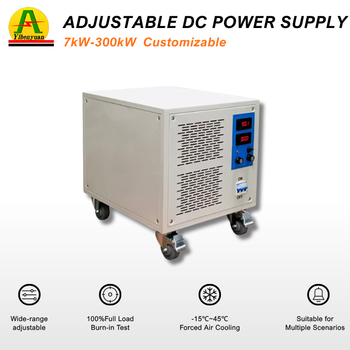
800V 50A 20kW High-Voltage EV Charging Test Supply
- Voltage Range0–800V Continuous
- Current Output0–50A Adjustable
- Ripple / Noise≤0.1% RMS
- ComplianceCE, EMC, LVD, RoHS
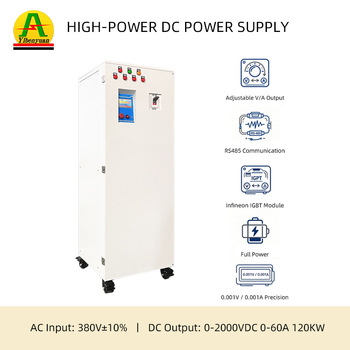
90–120kW 2000V Programmable HV Test Source
- Voltage Capability0–2,000V DC
- Max CurrentUp to 60A
- Control ModeCV / CC / CP Programmable
- InterfaceRS485, CAN, Analog
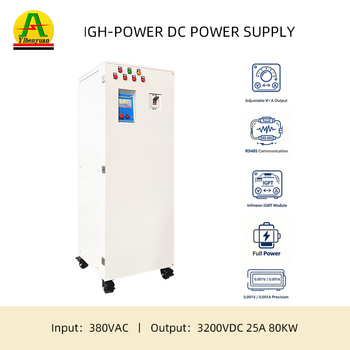
80kW 1000V–3200V Precision High-Voltage DC Supply
- Voltage Class1000V / 2000V / 3200V
- Slew Rate<2ms (10% to 90%)
- Duty Rating24/7 Continuous Load
- ProtectionOVP, OCP, OTP, Phase Lost
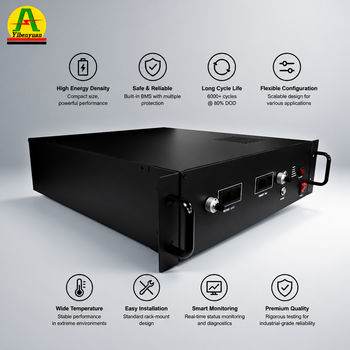
0–100kV Ultra-HV Capacitor Charging & Test Supply
- Output Voltage0–100kV Infinitely Variable
- Charging Power1000W / Custom Scales
- Repetition RateHigh-Frequency Pulsing
- Safety DesignAuto Fast Interlock Dump
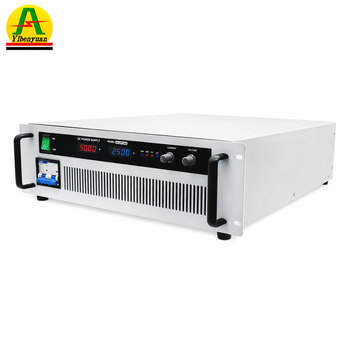
1.5kW–5kW Programmable DC Switching Power Supply
- EfficiencyTypical ≥90%
- Display MeterHigh-Accuracy 4-Digit V/A
- Chassis TypeStandard 19-inch Rack / Bench
- Remote CommsRS232 / RS485 / Modbus
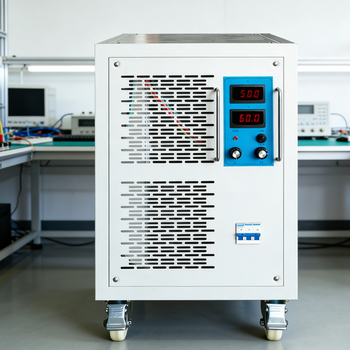
16kW 0–4000V Adjustable HV Laboratory Supply
- Output Current1A / 2A / 4A Options
- Input Power200V / 380V / 400V 3-Phase
- Stability Rate≤0.05% Line & Load
- ApplicationBreakdown & Cable Testing
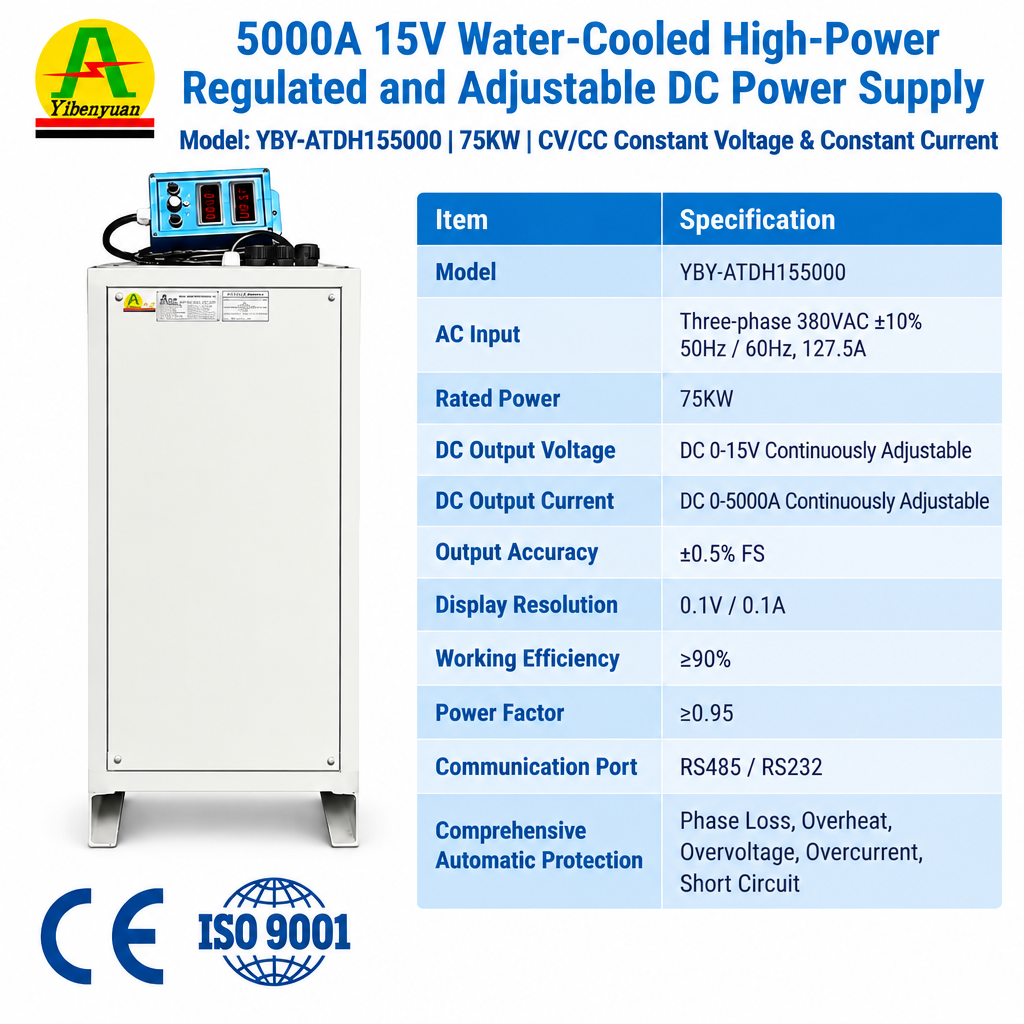
75kW 12V/15V 6000A Water-Cooled DC Rectifier
- Current Range0–6000A Continuous
- Cooling SystemDeionized / Tap Water Cooled
- EnclosureIP54 Sealed Anti-Corrosion
- IGBT Frequency20kHz High-Frequency Inversion
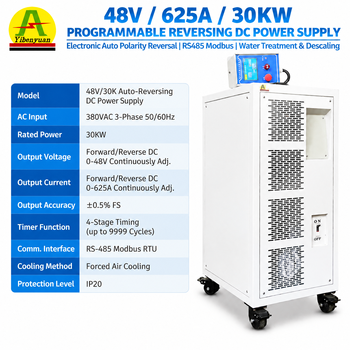
48V 625A 30kW Polarity-Reversing DC Power Supply
- Reversing SpeedProgrammable Microsecond Level
- Control Unit4-Segment Integrated Timer
- Cooling ModeHigh-Velocity Forced Air
- ApplicationDescaling, Battery Cyclers
Hokkaido's Sub-Zero Testing Demands: Why Conventional DC Sources Fail
Strategic engineering insights for cold-weather proving grounds, automotive Tier-1 suppliers, and CHAdeMO / ChaoJi validation in Northern Japan.
As the capital of Hokkaido, Sapporo occupies a globally unique nexus in the international electric vehicle (EV) engineering landscape. While metropolitan testing environments evaluate electric drivetrains under standard ambient conditions (+20°C to +25°C), Northern Japan serves as the definitive extreme cold-weather validation corridor for Japanese and international automakers. Proving grounds situated across Sapporo, Shibetsu, Memanbetsu, and surrounding Hokkaido technology clusters subject traction batteries, On-Board Chargers (OBC), and High-Power DC Fast Chargers (DCFC) to deep freezing regimes reaching down to -20°C and -30°C.
In these sub-zero environments, lithium-ion chemistry exhibits severe kinetic deceleration: electrolytic viscosity increases, charge-transfer resistance across the solid electrolyte interphase (SEI) escalates exponentially, and lithium plating risks surge during high-current charging acceptance. When validating modern 400V and 800V EV architectures under these harsh conditions, generic commercial DC supplies consistently fail to provide the dynamic stability, ultra-low ripple voltage, and thermal compensation required for authentic Hardware-in-the-Loop (HIL) battery emulation.
Guangdong Fenvix Technology Co., Ltd. manufactures and exports high-performance, programmable EV charging test DC power supplies explicitly configured to meet the rigorous standards demanded by Sapporo's research institutes, universities, and industrial testing grounds. Integrating advanced insulated-gate bipolar transistor (IGBT) high-frequency switching technology with fast digital signal processing (DSP) control loops, our power systems provide instantaneous transient response, programmable slew rates, and bidirectional thermal compensation. This guarantees that automotive engineers throughout Hokkaido achieve deterministic, laboratory-grade test repeatability without grid-induced or temperature-induced artifacts.
Tailored Application Scenarios Across Sapporo & Hokkaido
Precision DC power engineering aligned with the regional technological ecosystem of Northern Japan.
Cold-Chamber Fast-Charge Emulation
Integration with industrial climate walk-in chambers across Sapporo Technopark. Simulates dynamic CHAdeMO 2.0/3.0 (ChaoJi) and CCS Type-1 high-power charging curves at -30°C, allowing development engineers to map thermal pre-conditioning protocols without risk of thermal runaway.
800V SiC Inverter & Traction Dyno Bench
Providing high-voltage DC bus stiffness for next-generation silicon-carbide (SiC) traction motor dynamometers. The system's sub-millisecond dynamic step response suppresses back-EMF voltage spikes generated during rapid winter acceleration and ABS regenerative braking cycles on snowy terrain.
Municipal Electric Bus & Snow Fleet Test
Supporting Sapporo City's Green Decarbonization Initiative for municipal transit fleets. Benchmarking depot high-capacity fast chargers, battery aging profiles, and automated pantograph contacts subjected to freezing condensation and heavy snowfall operational cycles.
Engineering Specifications Matrix: Fenvix vs. Conventional Sources
Direct architectural comparison highlighting information gain for Hokkaido testing laboratories.
| Performance Characteristic | Fenvix EV Test Series (Export Grade) | Standard Commercial DC Source | Hokkaido Cold-Climate Impact |
|---|---|---|---|
| Output Voltage Range | 0–800V / 0–2,000V DC Fully Programmable | Fixed 0–400V or 0–600V | Future-Proof Covers 800V SiC and next-gen commercial architectures. |
| Ripple & Noise (RMS) | ≤0.1% of Full Scale | ≥0.5% – 1.0% | Eliminates harmonic noise that distorts BMS SOC/SOH algorithmic calculations. |
| Dynamic Load Slew Rate | <2.0 ms (10% to 90% load step) | 20 ms – 50 ms | High Precision Accurately tracks rapid power throttling during cold battery charge tapering. |
| Hokkaido Grid Compatibility | 3-Phase 200V AC (50Hz / 60Hz Switchable) | Fixed 380V/480V requires expensive external step-up transformers | Direct drop-in compatibility with Hokkaido Electric Power Company industrial mains. |
| Cold-Start Thermal Design | Pre-conditioned internal heating, conformal coated boards | Standard industrial components rated 0°C+ | Prevents condensation flashover and cold-start oscillator drift in sub-zero dyno rooms. |
| Communications & HIL | Isolated RS485, CAN, Modbus-RTU, 0-10V Analog | Basic RS232 only | Native integration with Vector CANoe, dSPACE, and LabVIEW automated benches. |
Technological Evolution & Trends in Sapporo's EV Industry
Bridging Chinese manufacturing velocity with Japanese technical rigor (JIS & CHAdeMO).
Japan's electric mobility transition is experiencing an accelerated pivot toward high-power megawatt-level standards, notably through the joint Sino-Japanese ChaoJi (CHAdeMO 3.0) protocol capable of delivering up to 900kW (1500V, 600A). For northern testing hubs like Sapporo, this technological migration presents distinct power delivery challenges. At these extreme power densities, cable losses, connector thermal dissipation, and cold-soak contact resistance must be rigorously evaluated.
Concurrently, the Hokkaido Prefectural Government has set ambitious targets to transition municipal transit, logistics delivery fleets, and public service utility vehicles to zero-emission battery electric platforms by 2035. Unlike central Honshu, where mild climates allow standard thermal operational buffers, Sapporo demands rigorous seasonal verification. Fleet operators require test power equipment that can replicate cold cranking power draws, evaluate pre-heating battery jacket performance, and stress-test bidirectional Vehicle-to-Grid (V2G) interfaces designed to provide emergency domestic power during Hokkaido's winter blizzard grid outages.
Guangdong Fenvix Technology Co., Ltd. continuously incorporates these shifting requirements into our hardware revisions. Our DC power systems support bidirectional sink-source energy flow, allowing test benches to discharge battery modules back into the industrial power grid with overall system efficiencies exceeding 92%, drastically lowering operational electricity costs during intensive multi-week endurance protocols.
Guangdong Fenvix: Direct Factory Engineering Advantage
Why Tier-1 automotive developers and university test centers partner directly with our Guangdong facility.
ISO 9001 & TÜV Verified
Established in 2013, our 3,000m² specialized manufacturing facility has undergone rigorous on-site audit verification by TÜV Rheinland. Every unit complies with strict CE, LVD, EMC, and RoHS safety directives prior to dispatch.
In-House Component Control
We execute internal CNC sheet metal punching, precision milling, and heavy-gauge oxygen-free copper busbar bending within our plant. This enables total control over thermal dissipation pathways and electromagnetic shielding.
Zero MOQ Customization
Whether you require a single 20kW benchtop unit for an exploratory university thesis in Sapporo or a multi-rack 500kW containerized testing substation for a commercial proving track, we offer custom-engineered non-standard voltage/current ratios.
Sapporo Procurement & Engineering FAQ
Clear answers to technical compliance, grid interfacing, and international delivery questions for Japanese engineers.
How does Fenvix configure three-phase AC input for Hokkaido's 200V 50Hz grid?
Can your DC power supply simulate cold-temperature battery internal resistance?
What cooling architectures are recommended for sub-zero dyno testing rooms?
What is the standard export delivery lead time to the Port of Tomakomai or Ishikari Bay New Port?
What payment methods and trade terms are supported for Japanese corporate procurement?
How is technical support, commissioning, and warranty handled for Hokkaido clients?
Accelerate Your EV Testing Program in Sapporo
Submit your technical specification (voltage, current, dynamic slew rate, and communication protocols) to consult directly with our chief power electronics engineers.
Inquire Now