Direct Factory Engineering · ISO 9001 & TÜV Verified
Electropolishing Power Supply Factory & Exporters in Sihanoukville
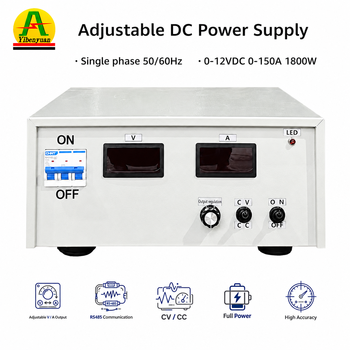
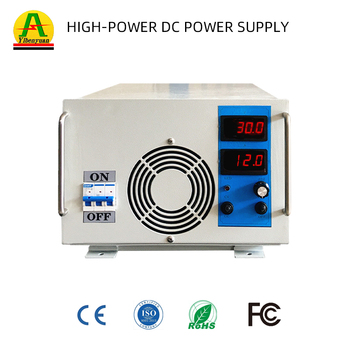
High-frequency IGBT switching rectifiers, ultra-low ripple DC power supplies, and automated polarity-reversing finishing systems engineered for Sihanoukville Special Economic Zone (SSEZ) and maritime export industries.
Precision Industrial Rectifiers
Recommended Electropolishing & Surface Finishing Power Supplies
Engineered specifically to withstand the tropical, high-salinity ambient conditions of Preah Sihanouk province while providing sub-2% ripple currents for aerospace, medical, and marine-grade stainless steel passivation.
Electrochemical Principles: Achieving Nanoscale Passivation with Low-Ripple DC
An authoritative engineering analysis of anodic viscous salt film resistance, mass transport dynamics, and why power supply topology governs surface roughness (Ra) on austenitic alloys.
Electropolishing is fundamentally an electrochemical dissolution process wherein metallic surface asperities are preferentially removed via anodic polarization within a specialized, concentrated acid electrolyte—typically a phosphoric-sulfuric formulation. Operating within the transpassive potential plateau described by Jacquet's classical curve, the work component acts as the positive anode, drawing direct current across the cell to cathode plates (often lead, copper, or titanium). A micro-viscous boundary layer, dense in metal salts and depleted of unbound water, spontaneously forms across the metal substrate. Because microscopic micro-peaks protrude deeper into the electric potential field, the diffusion path across these peaks is significantly shorter than across adjoining micro-valleys. Under steady, controlled current density, anodic metal dissolves exponentially faster at the peaks, producing rapid microscopic smoothing, specular gloss, and complete deburring.
Viscous Boundary Layer Physics
The stability of the dissolved metal-ion concentration gradient depends strictly on invariant boundary-layer resistance. Voltage sags destabilize this film, causing destructive gas pitting and micro-etching.
Critical Ripple Factor Impact (<2%)
Legacy SCR rectifiers exhibit ripple rates exceeding 5% to 8%, causing periodic excursions out of the polishing plateau into the oxygen evolution zone, resulting in "orange peel" hazy finishes.
Chromium Enrichment & Passivation
Controlled anodic dissolution preferentially extracts free iron (Fe) over chromium (Cr) and nickel (Ni), transforming standard 316L surfaces into a passive Cr2O3 oxide film with Cr/Fe ratios exceeding 1.5.
Why Sihanoukville Precision Lines Demand Modern Switch-Mode Power Supplies (SMPS)
In electropolishing operations processing high-spec 304, 316L, Hastelloy, or titanium parts, high-frequency IGBT rectifiers modulate current at frequencies from 20kHz to 50kHz. This rapid switching architecture compresses current ripple to under 2%, preventing phase-shift ripple burns and ensuring compliance with stringent standards such as ASTM B912 (Standard Specification for Passivation of Stainless Steels Using Electropolishing) and ASME BPE (Bio-Processing Equipment) surface designations demanding Ra ≤ 0.25 μm (10 μin).
Performance Characteristic
Legacy SCR / Thyristor Rectifier
Fenvix High-Frequency IGBT Rectifier
Impact on Electropolished Finish
Current Ripple (RMS at Full Load)
5.0% – 12.0% (Requires large external choke)
≤ 1.5% – 2.0% Pure Continuous DC
Eliminates micro-streaking, pitting, and uneven luster.
Dynamic Voltage Response Time
100 – 300 ms (Inductive lag)
≤ 5 – 10 ms (High-speed PWM)
Prevents high-current burn spikes during work rack immersion.
Electrical Conversion Efficiency
72% – 78% (Significant transformer losses)
90% – 93% (Resonant switching)
Reduces factory electricity overhead by 15–25% across 24/7 shifts.
Physical Volume & Weight
Massive footprint, 800–1500 kg
Compact modular cabinet, 120–350 kg
Maximizes factory floor density inside clean industrial bays.
Corrosive Environment Hardening
Open ventilated, copper air-coolers prone to acid fog
Protects control gate cards from acid fumes and coastal salt mist.
Local Industrial Integration
Specialized Deployment Across Sihanoukville's Growth Sectors
How our heavy-duty and precision DC power supplies empower advanced manufacturing inside the Sihanoukville Special Economic Zone (SSEZ) and maritime port facilities.
Marine & Port Infrastructure Hardware
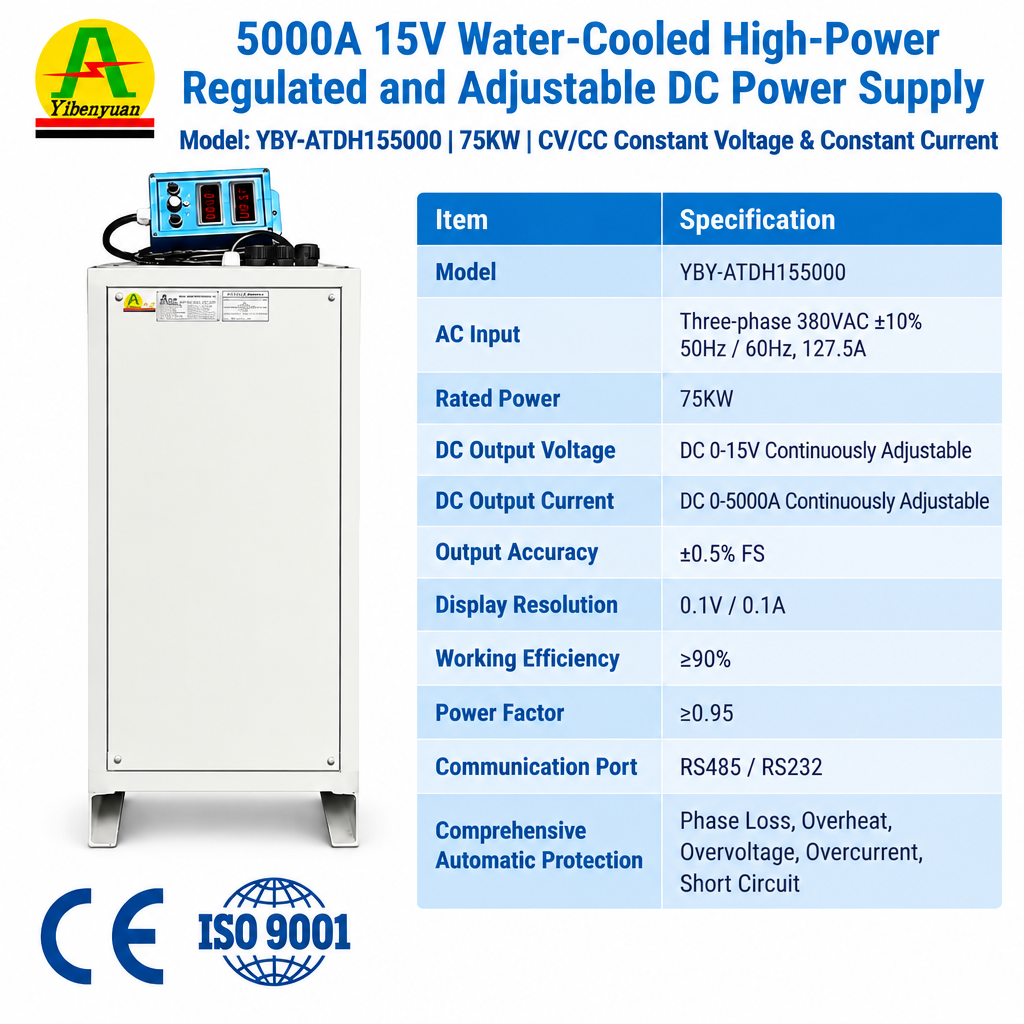
Preah Sihanouk's deep-water port and coastal installations require 316L and duplex stainless steel deck fittings, mooring hardware, and hydraulic manifolds capable of surviving severe marine exposure. Our high-amperage (4000A–8000A) water-cooled rectifiers provide steady constant-current density to chemically strip surface impurities, yielding salt-spray resistance exceeding 1,000 hours per ASTM B117 testing.
Medical Device & Cleanroom Tools in SSEZ
Precision export-oriented enterprises operating in the SSEZ manufacture surgical instruments, orthodontic brackets, and sanitary valves. Micro-electropolishing with our 150A–500A digital DC units eliminates microscopic burrs, reduces surface friction, and seals micropores against bacterial colonization, guaranteeing compliance with international medical device bio-compatibility criteria.
Clean Semiconductor & Solar Tubing
High-purity gas delivery lines and fluid pipes used in photovoltaic and semiconductor fabrication require ultra-smooth internal bores. Our automated constant-voltage rectifiers provide ramp-soak digital sequencing to electro-passivate long inner diameters of austenitic stainless tubes without heat-tint discoloration or micro-roughness anomalies.
Macro Industrial Trends & Environmental Transition in Cambodia
The industrial landscape of Sihanoukville is evolving rapidly from primary light assembly into high-precision, capital-intensive manufacturing. Under the multi-purpose Special Economic Zone master plan, export operations face higher scrutiny under Western environmental, social, and governance (ESG) standards, alongside strict product liability regulations from export destinations across the United States, European Union, and Japan. Consequently, manufacturers are systematically abandoning dangerous mechanical buffing compounds and uncontrolled manual acid pickling.
Manual polishing produces airborne silica and particulate dust, creates inconsistent surface finishes across complex part geometries, and embeds abrasive grains into the metal substrate. In contrast, closed-loop electropolishing lines driven by intelligent IGBT switching rectifiers eliminate mechanical stresses, drastically lower workplace chemical exposure, and achieve repeatable micro-inch smoothness. Furthermore, in an industrial hub where commercial electricity tariffs demand conservation, modern high-frequency SMPS power supplies reduce active energy consumption by up to 28% compared to traditional thyristor systems, providing clear competitive operational margins.
13+
Years Engineering Expertise
≤1.5%
Ultra-Low Output Ripple
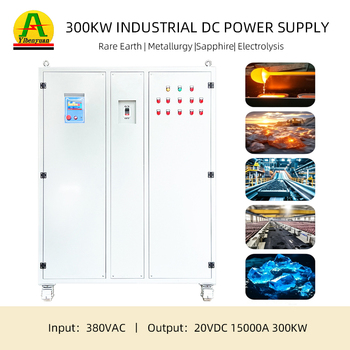
15,000A
Maximum Current Delivery
0 MOQ
Flexible Prototype & OEM
Enterprise Manufacturing Excellence
Why Global Exporters Rely on Guangdong Fenvix Technology
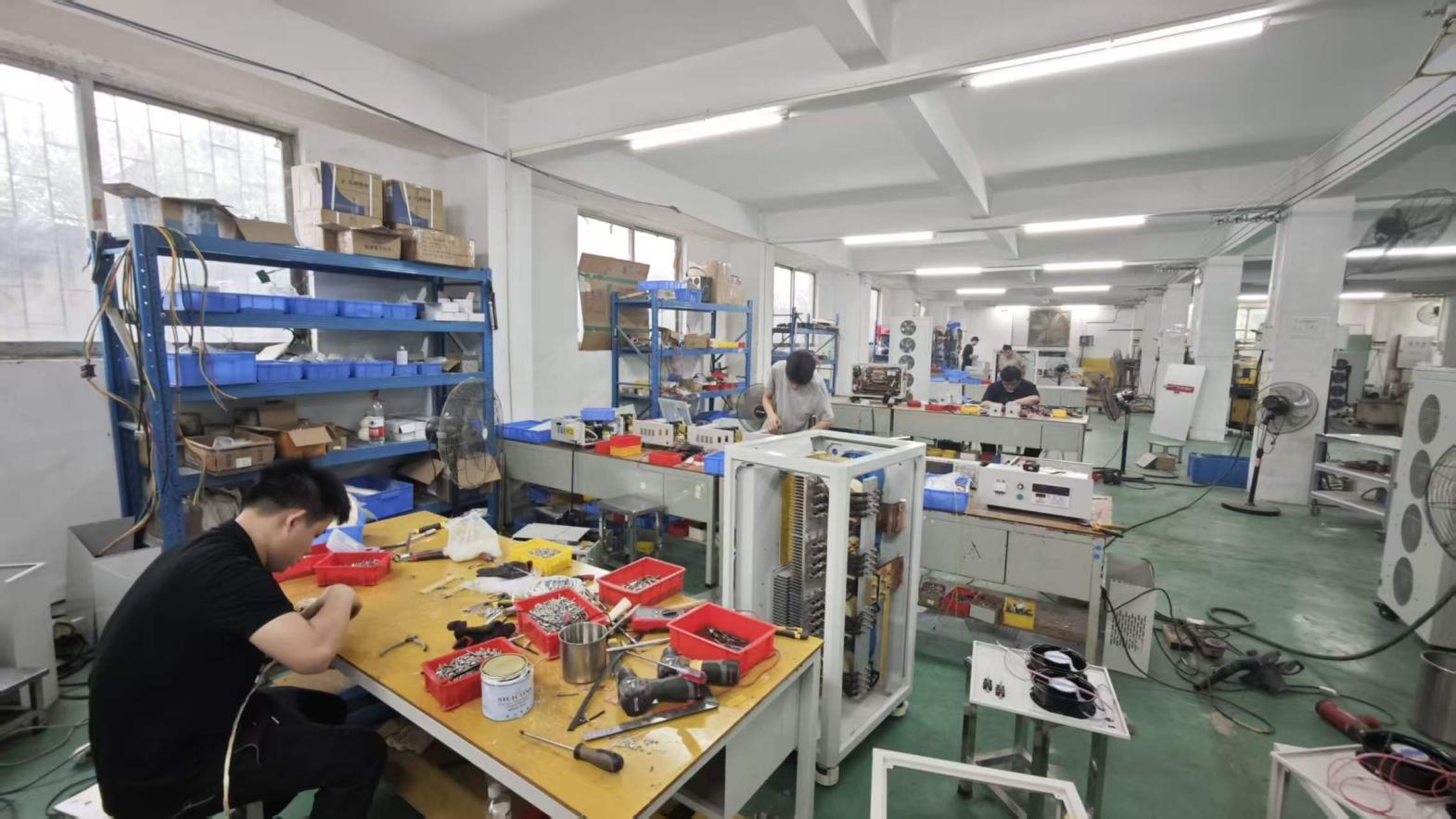
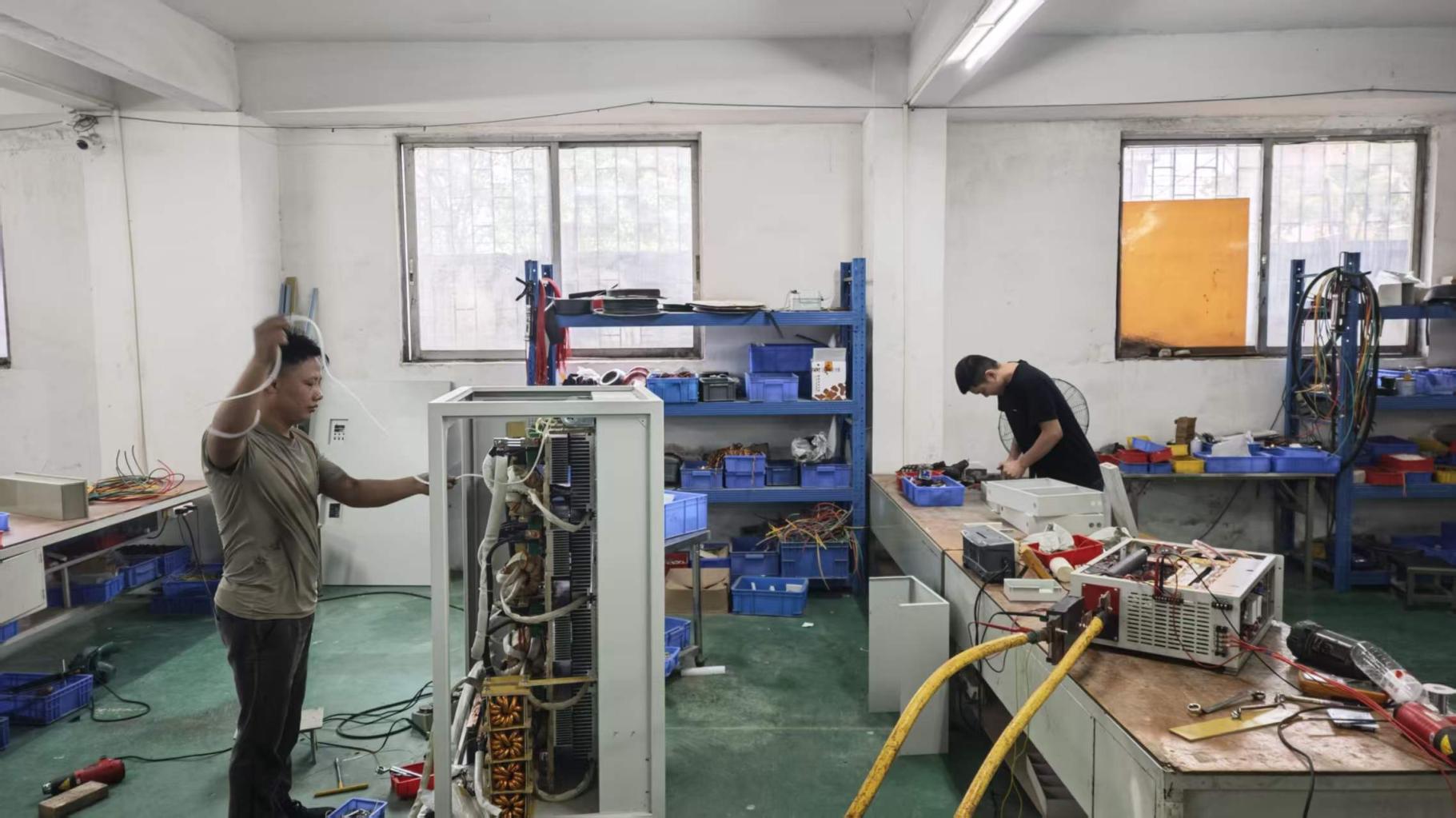
Operating from our 3,000m² production complex since 2013, Fenvix maintains complete control over metal fabrication, copper busbar engineering, control PCB assembly, and full-load burn-in validation.
ISO 9001 & TÜV Rheinland Audited
Every single power unit is constructed under an ISO 9001 quality management framework. Fenvix has passed exhaustive on-site audit verification by TÜV Rheinland, ensuring our documentation, safety metrics, and supply chains meet rigorous global standards.
End-to-End In-House Metal & Busbar Works
Unlike trading assemblers, our facility houses high-precision plate shearing, CNC punching, milling, drilling, and tapping equipment. We fabricate heavy-gauge 99.9% T2 electrolytic copper busbars and corrosion-resistant powder-coated enclosures under one roof.
100% Full-Load Thermal Burn-In Testing
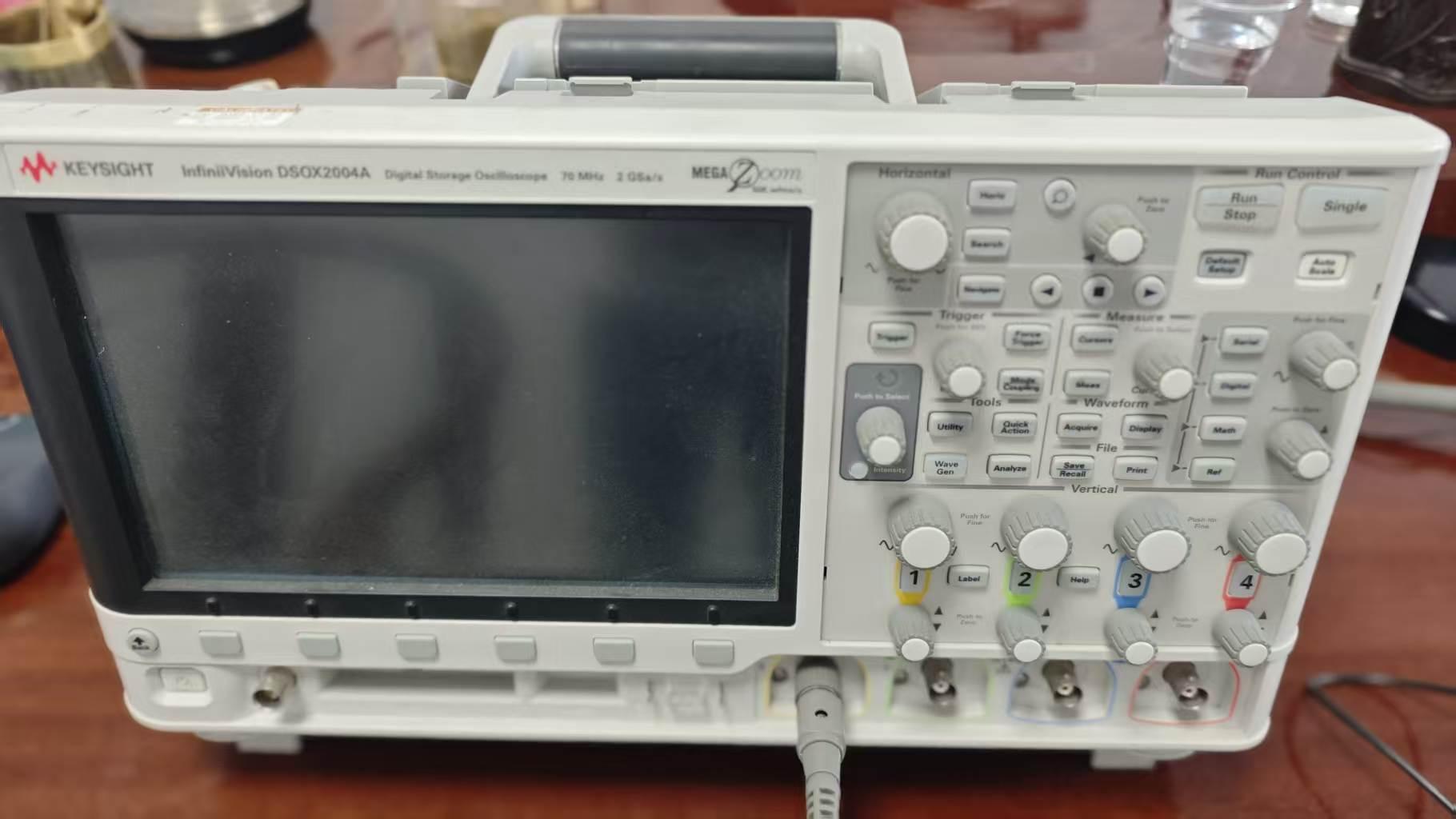
Prior to seaworthy crating, every rectifier undergoes full-load burn-in testing on dedicated resistive load banks. Using digital oscilloscopes and thermal imaging, our engineers verify sub-2% ripple and thermal stability under prolonged simulated tropical heat.
Main Assembly Floor
Completed Rectifier Line
Dynamic Waveform Testing
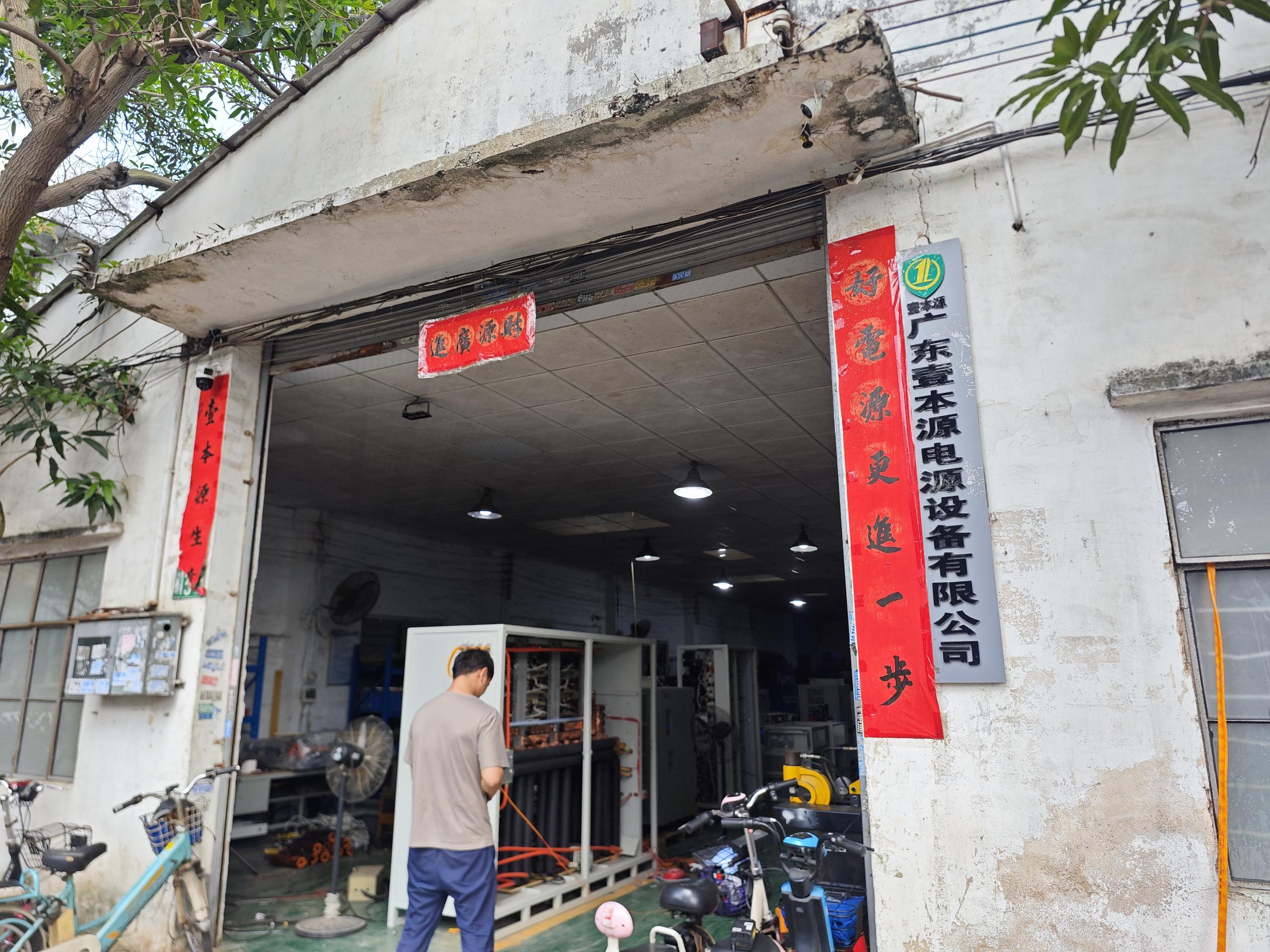
Guangdong Headquarters
Local Sourcing FAQ
Frequently Asked Questions by Industrial Buyers in Sihanoukville
Direct answers addressing tropical plant installation, electrical grid stability, customs entry via Sihanoukville Port, and warranty support.
How do Fenvix electropolishing power supplies handle Sihanoukville's hot, humid, and coastal salt-air conditions?
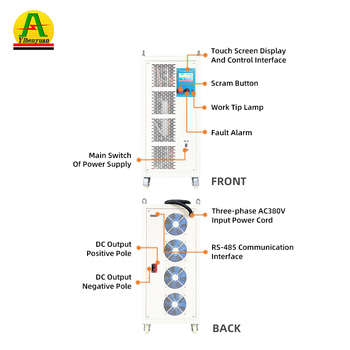
Coastal environments with relative humidity frequently exceeding 85% and ambient salt fog pose severe risks of galvanic corrosion and tracking shorts on power electronics. Fenvix counters this by offering IP54-sealed enclosures and isolated internal heat exchangers. Our printed circuit boards undergo multiple vacuum conformal coatings of anti-fungal, moisture-proof polyurethane. Furthermore, for high-capacity systems above 3000A, we strongly recommend our closed-loop water-cooling option: internal electronics remain completely sealed in an airtight cabinet with heat transferred directly into closed circulating deionized water, preventing any ingress of corrosive acid tank vapors or saline atmospheric air.
Are these power supplies compatible with Cambodia's industrial electrical grid inside the SSEZ?
Yes. Our standard units operate smoothly on 380V or 400V 3-phase AC input at 50Hz, with custom tolerances designed for input fluctuations of ±15% without derating DC performance. For plants with dedicated substations or varying incoming line voltages (e.g. 220V 3-phase, 415V, or 480V 60Hz), our in-house engineering team customizes the input magnetic stage and harmonic filters to guarantee total harmonic distortion (THD) under 5% and a power factor greater than 0.94.
What is the typical shipping transit time and customs route into Sihanoukville Autonomous Port (PAS)?
From our primary manufacturing facility in Guangzhou/Foshan, maritime freight departs regularly from Nansha or Shekou port directly to the Sihanoukville Autonomous Port (PAS), achieving typical ocean transit times of just 4 to 7 days. We provide comprehensive export documentation including Bill of Lading, Commercial Invoice, Packing List, Certificate of Origin (Form E under ASEAN-China FTA for preferential tariff relief), and verified factory calibration test certificates. We support Incoterms including CIF Sihanoukville, FOB Guangzhou, and turnkey DDP straight into your factory inside the SSEZ.
Can Fenvix rectifiers interface with our existing PLC lines and automated robotic dipping arms?
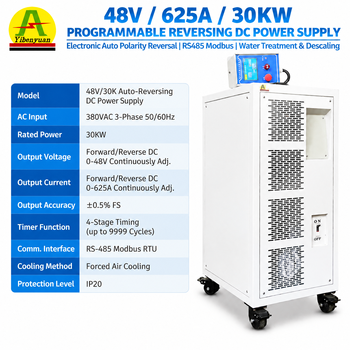
Absolutely. Every Fenvix electropolishing power supply comes standard with RS485 communication supporting open Modbus-RTU protocol. We also furnish analog 0-10V or 4-20mA control interfaces, digital run/stop dry contacts, error alarm relays, and optional Profinet/Ethernet IP gateways. You can remotely control output voltage ramp rates, current cutoffs, automatic reversing sequences, and log operational cycle data directly into your central SCADA or factory MES system.
Is there a Minimum Order Quantity (MOQ), and what is the spare parts policy for Southeast Asian customers?
We enforce a strict 0 MOQ policy—single-unit orders for pilot plants, prototype validation, or lab lines receive the same level of engineering dedication as multi-unit production orders. All rectifiers carry a 12-month standard manufacturer warranty. For overseas facilities in Sihanoukville, we supply modular plug-and-play driver boards, control cards, and replacement IGBT modules that can be swapped out within 20 minutes. Video commissioning support and comprehensive diagnostic guides are provided free of charge by our certified electrical engineers.
Require a Custom-Engineered Electropolishing Solution in Sihanoukville?
Send our senior power electronics engineering team your specific tank volume, target metal alloy, required current density (A/dm²), and input grid specifications. We will configure and quote an optimal high-frequency DC system within 24 business hours.