Industrial-Grade DC Rectifier Systems Available in Bruges
Continuous duty rating, low-harmonic distortion, and high thermal resilience tailored for European grid standards (400V/50Hz) and harsh maritime coastal atmospheres.
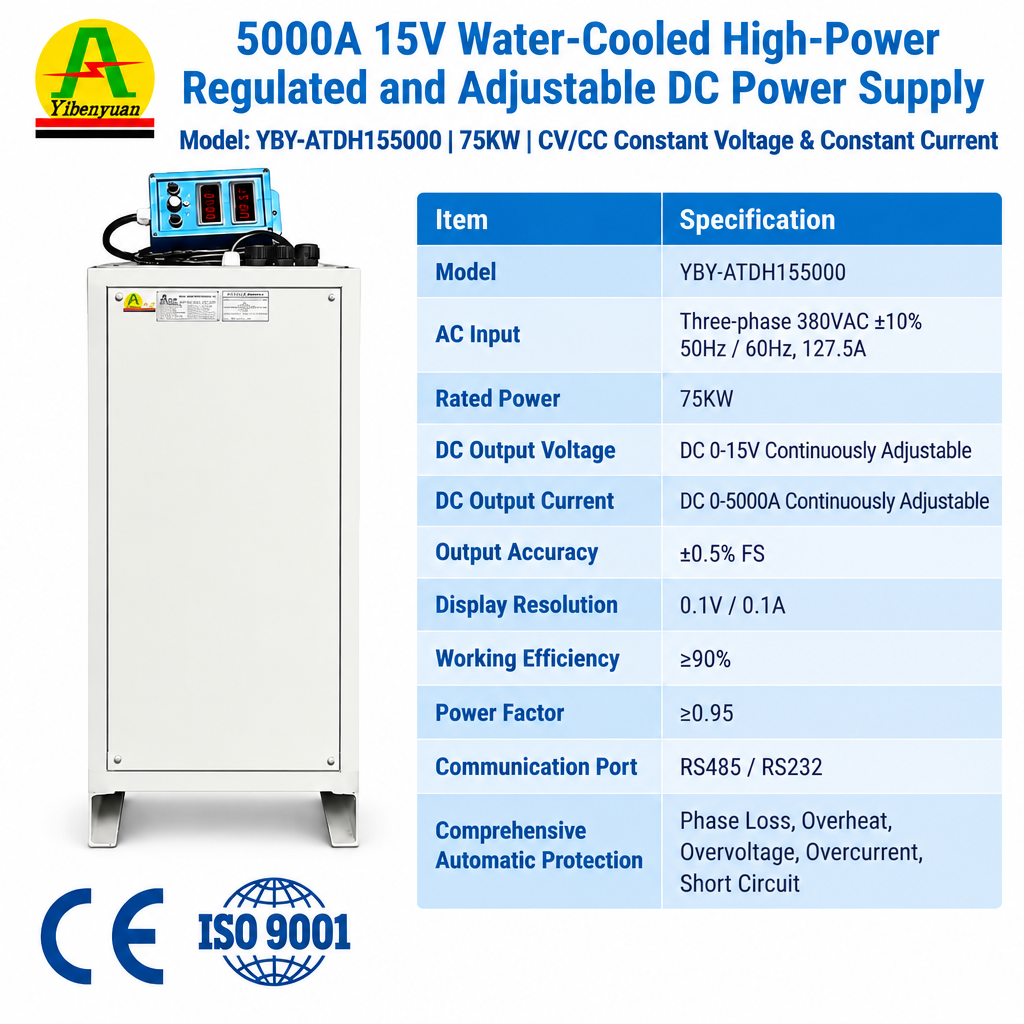
- Output: 12V/15V | 5000A/6000A
- Cooling: Closed-Loop Deionized Water
- Topology: IGBT Full Bridge PWM
- Regulation: CV / CC Digital Display
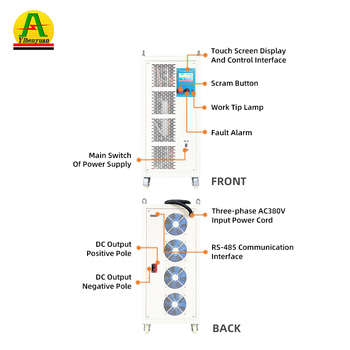
- Output: 0–12V DC | 0–4000A
- Cooling: Forced Air / Water Optional
- Interface: RS485 Modbus-RTU
- Efficiency: ≥ 90% at Rated Load
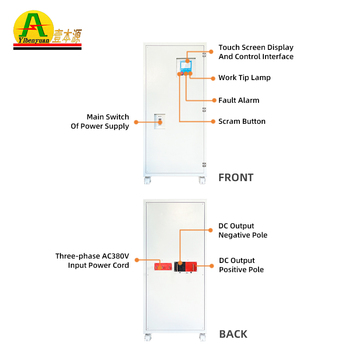
- Current: 8,000A Continuous
- Voltage: 12V DC Low-Ripple (<1%)
- Cooling: Water Cooled SS316 Piping
- Protection: Overheat, Phase-Loss, Short
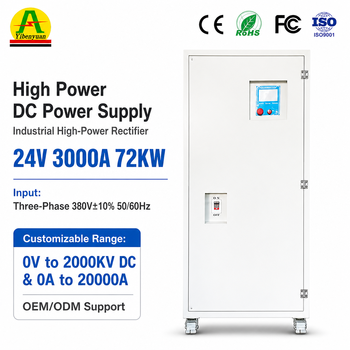
- Output: 12V / 24V / 60V Configurable
- Ramp Control: Multi-Stage Soft Start
- Function: Hard Anodizing / Titanium Type II
- Accuracy: ±0.5% Constant Current
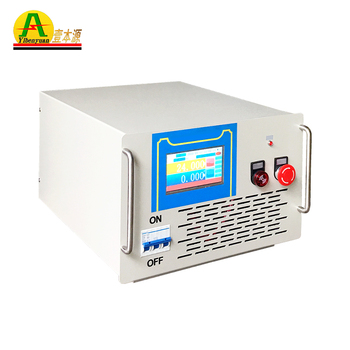
- Input: 380VAC 3-Phase / 220V 1-Phase
- Output: 0–300V Adjustable DC | 20A
- Control: Precision Voltage Ramp / Timer
- Standards: CE, EMC, LVD Compliant
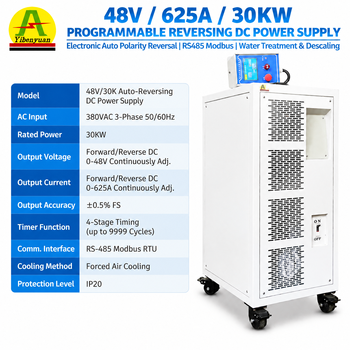
- Reversal: Electronic H-Bridge Switch
- Timing: Independent Forward/Reverse Duty
- Application: Electro-Chlorination & Descaling
- Remote: 0–10V / 4–20mA / Modbus RTU
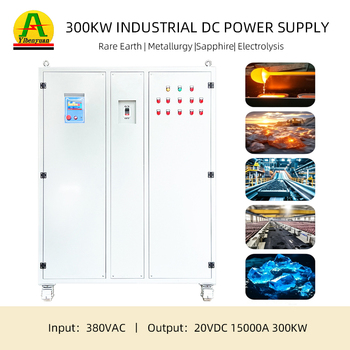
- Output: 20V DC | 15,000A Continuous
- Power: 300kW Heavy Duty Enclosure
- Thermal: Deionized Water Cooling Core
- Sector: Chlor-Alkali, Clean Hydrogen
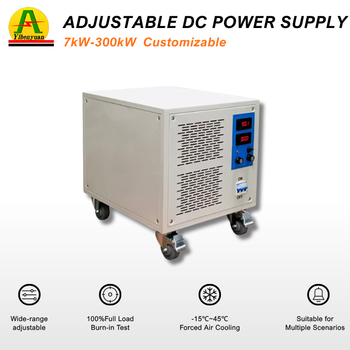
- Voltage Range: 0–400V / 0–800V Adjustable
- Current: Up to 50A | Dynamic Slew Rate
- Application: EV Powertrain & Hangar Testing
- Safety: Overvoltage, Crowbar Protection
White Paper: Engineering High-Power DC Rectification for Bruges’ Coastal Industrial Belt
As the economic epicenter of West Flanders and the host of the globally integrated Port of Antwerp-Bruges (Zeebrugge platform), the greater Bruges industrial ecosystem represents one of Europe's most demanding operating arenas for high-power DC electrical apparatus. From maritime subsea corrosion mitigation and naval vessel shore-to-ship architectures to offshore wind farm structural manufacturing, precision automotive electrophoresis, and megawatt-scale water electrolysis, continuous direct current conversion is the critical heartbeat of daily operations.
However, running power electronics along the North Sea coastline introduces rigorous physical and electrical challenges. Facilities operating in Bruges must combat high atmospheric salinity, relentless condensation, and stiff local grid harmonic regulations. This engineering guide examines the conversion physics, topological benefits of high-frequency Insulated Gate Bipolar Transistor (IGBT) switch-mode rectifiers over legacy thyristor systems, and precision sizing criteria for operations across Bruges, Zeebrugge, Oostkamp, and the wider Flemish industrial basin.
1. The Shift from Legacy SCR to High-Frequency Switch-Mode Rectification
Historically, industrial galvanizing, chlor-alkali production, and hard anodizing facilities throughout Flanders relied heavily on Silicon-Controlled Rectifiers (SCR) and variable tap-changer transformers. While robust, legacy 6-pulse or 12-pulse SCR transformers present major engineering drawbacks in modern automated manufacturing:
Low Power Factor & High Harmonic Pollution: SCR units operate with phase-angle firing control. When operated at partial load (e.g., 40%–70% of maximum voltage output), the operational power factor (λ) drops sharply to 0.65–0.72, generating significant reactive currents. Under Flemish grid codes monitored by transmission authorities (such as Elia and Fluvius), high Total Harmonic Distortion in Current (THDi exceeding 28%) invites severe grid non-compliance penalties and forces plants to invest in massive passive harmonic filter banks.
Superior Energy Economics with IGBT High Frequency: Our switch-mode rectifiers convert three-phase 400V/50Hz AC into a stable DC bus via uncontrolled diode rectification, followed by high-frequency PWM inversion utilizing high-speed IGBT power modules operating between 20 kHz and 50 kHz. The high frequency allows micro-second control loops, maintaining a power factor consistently above 0.94 across 20% to 100% load profiles while boosting conversion efficiency to 90%–93%. For continuous 24/7 electrochemical lines in Bruges, this efficiency gain translates into annual electrical reductions ranging from 45,000 kWh to 180,000 kWh per 100kW rectifier block.
| Engineering Parameter | Legacy 12-Pulse SCR Rectifier | Fenvix High-Frequency IGBT Rectifier | Benefit to Bruges Industrial Plants |
|---|---|---|---|
| Operating Efficiency | 72% – 82% (Load Dependent) | 90% – 94% Continuous | Saves 10%–18% baseline electricity; lowers operational expenditure. |
| Power Factor (cos φ) | 0.68 – 0.78 at partial firing | ≥ 0.93 across full operational range | Complies with Fluvius / Elia standards without reactive penalty charges. |
| Output Ripple (RMS) | 5% – 8% (Needs bulky choke) | ≤ 1% to 2% (Pure smooth DC) | Eliminates micro-cracking in chrome; accelerates electrodeposition rate. |
| Transformer Footprint | Heavy 50Hz oil/air iron-core | Compact nanocrystalline 20kHz core | 60%–75% space reduction; facilitates mezzanine & crane installations. |
| Dynamic Slew Rate | Slow (150ms – 300ms) | Sub-millisecond (< 5ms response) | Protects workpieces against burning during rapid line speed changes. |
| Corrosion Protection | Vented open-louver airflow | Sealed IP54 cabinet + Deionized Water | Prevents marine salt air deterioration along Zeebrugge coastal docks. |
2. Localized Industrial Application Scenarios in Bruges & Flanders
The manufacturing fabric surrounding Bruges is characterized by high specialized capital equipment, high automation, and harsh environmental factors. Below are key localized engineering deployments where our DC rectifiers solve critical application hurdles:
1. Offshore Wind & Port Infrastructure
Zeebrugge acts as the installation and maintenance hub for massive North Sea offshore wind assets. Secondary structural components, transition pieces, and subsea cable glands require thick protective zinc-nickel electro-galvanizing, electro-chlorination antifouling systems, and Impressed Current Cathodic Protection (ICCP) DC rectifiers capable of continuous, salt-mist resistant operation without diode breakdown.
2. Naval MRO & Shipyard Power
Dredging vessels, offshore support vessels (OSVs), and naval vessels dry-docked around the Bruges-Ostend canal network demand isolated 28.5V DC ground power units, marine-grade battery formation rectifiers, and high-capacity static frequency converters (50Hz to 60Hz/400Hz) to test auxiliary radar, navigational actuators, and winches without firing diesel generator sets.
3. Automotive & Mechatronics Coating
Within the Bruges-Roeselare-Kortrijk manufacturing corridor, suppliers of commercial transport trailers, agricultural machinery, and automotive chassis rely on our high-voltage 0–300V/600V electrophoretic deposition (CED) rectifiers. Smooth voltage ramp profiles prevent film rupture and ensure uniform micrometer-level protective paint adhesion.
4. Green Hydrogen & Desalination
As Zeebrugge develops into a premier European clean hydrogen import and production terminal, high-current electrolysis (AEL & PEM stacks) demands ultra-low ripple (<1%) multi-megawatt DC power blocks. Low DC ripple prevents parasitic membrane degradation and maximizes hydrogen generation efficiency per megawatt-hour consumed.
3. Addressing the North Sea Marine Atmosphere: Thermal & Anti-Corrosion Design
Standard commercial-grade power cabinets quickly fail in coastal Bruges due to airborne sodium chloride ions (NaCl) combining with relative ambient humidity levels that frequently exceed 85%. When cooling fans draw humid marine air directly across active PCB traces, high-voltage heat sinks, and copper busbars, hygroscopic dust accumulation causes catastrophic dielectric tracking and galvanic corrosion.
To eliminate this failure mode, our engineered Bruges configurations employ two specialized topologies:
Fully Enclosed Sealed Water Cooling (IP54 / IP55): The electrical enclosure is completely isolated from ambient air. Power modules (IGBTs, fast recovery diodes, and nanocrystalline transformers) are mounted directly on vacuum-brazed aluminum or oxygen-free copper chill plates. Internal heat is removed via closed-loop deionized liquid circulators that connect to external stainless steel heat exchangers. Corrosive marine air never contacts sensitive control boards.
Conformal Coating & Marine-Grade Hardware: In air-cooled installations, all electronic printed circuit boards undergo automated triple-layer polyurethane conformal coating conforming to IPC-CC-830 standards. All busbars utilize 99.9% pure electrolytic copper nickel-plated to a minimum thickness of 12 μm, assembled with A4-grade (AISI 316) stainless steel hardware to prevent localized galvanic cell decay.
4. Localized Trends Shaping Procurement in Bruges (2025–2030)
Procurement directors and facility electrical engineers in West Flanders are currently navigating three major structural shifts driving rectifier replacement cycles:
1. Strict Carbon Accounting & The Corporate Sustainability Due Diligence Directive (CSDDD): With European industrial emissions targets accelerating, metal finishing shops in Flanders can no longer afford the continuous 15%–20% thermal losses inherent in aged thyristor transformers. Upgrading to high-frequency IGBT conversion directly slashes Scope 2 indirect greenhouse gas emissions.
2. Industry 4.0 Integration & PLC Telemetry: Modern coating lines in Bruges require instantaneous voltage, current, and bath impedance data logged every 10 milliseconds. Our rectifier controllers provide native Modbus-RTU, Profinet, Profibus-DP, and Ethernet/IP protocols, allowing frictionless integration into Siemens S7-1500 and Beckhoff IPC industrial control topologies without awkward third-party signal converters.
3. Electrochemical Water Regeneration & Descaling: Due to stringent Flemish environmental regulations (VLAREM II) concerning wastewater discharge and cooling tower chemistry, industrial plants along the Zeebrugge sea-canal increasingly employ electrolytic descaling and advanced oxidation water treatment. Our automatic polarity-reversing rectifiers (up to 625A at 48V) dynamically clean scale off titanium electrode plates via automated cycle timers, eliminating toxic descaling acids.
Why European Engineers Partner with Fenvix Technology
From custom copper busbar machining to high-voltage dielectric load burn-in, our certified manufacturing facilities deliver transparent industrial reliability.
Direct Manufacturer, No Middlemen
Operating a modernized 3,000 m² factory in Guangdong since 2013, our 50+ staff and specialized power engineers oversee sheet metal fabrication, transformer winding, SMT pick-and-place, and final testing under strict ISO 9001 management.
Zero Minimum Order Quantity (No MOQ)
Whether you require a single 150A prototype unit for a pilot lab line in Ghent University Science Park or twenty 5,000A water-cooled units for a turnkey galvanizing line in Bruges, we accept single-unit bespoke configurations.
TÜV Rheinland Verified Production
Our operational capabilities, mechanical punching, milling, drilling machines, and finished electrical burn-in lines have been verified on-site by TÜV Rheinland, backed by authentic CE, EMC, and LVD certification dossiers.
Full Pre-Shipment Load Burn-In
Every rectifier destined for Flanders is subjected to a minimum 8-hour 100% full-load thermal burn-in on automated resistor banks, accompanied by oscilloscope ripple waveform traces and dielectric breakdown test reports.
Comprehensive Electrical Protections
Integrated self-diagnostics constantly monitor output short circuit, open circuit, input phase imbalance, overvoltage, undervoltage, IGBT thermal overload, and cooling water flow-loss with millisecond safety trip execution.
Seamless DDP Delivery to Bruges Port
We routinely manage ocean freight, inland transport, customs clearance, and terminal operations directly into the Port of Antwerp-Bruges or your facility floor, supported by comprehensive engineering documentation and English schematics.
Frequently Asked Questions: DC Rectifiers in Bruges
Detailed technical answers addressing local grid matching, installation environments, communication interfaces, and logistics.
Are your DC rectifiers engineered for Belgium's three-phase grid standards?
What cooling topology is recommended for a galvanizing line near Zeebrugge Port?
How do your IGBT rectifiers assist in complying with Belgian grid harmonic limits?
Can your rectifiers integrate directly with existing Siemens or Allen-Bradley PLCs?
What is the delivery timeline and Incoterms available for shipments to Bruges?
What documentation and certifications are provided for local electrical inspection?
Have a Non-Standard Power or Rectification Requirement in Bruges?
Whether you are designing a high-capacity electroplating facility, retrofitting an obsolete thyristor cabinet, or setting up a marine electrolysis test bed, our factory engineers deliver tailored CAD drawings, efficiency models, and firm quotations within 24 hours.
Get a Quote