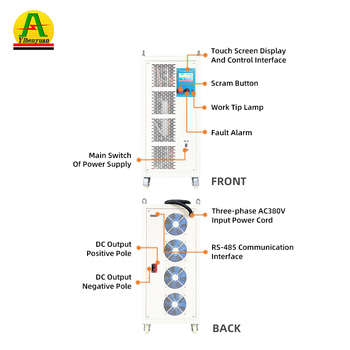
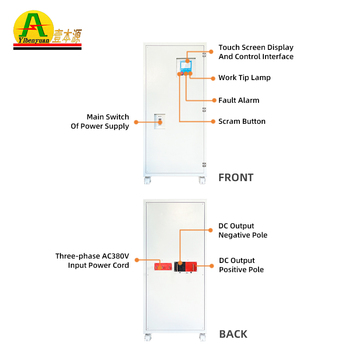
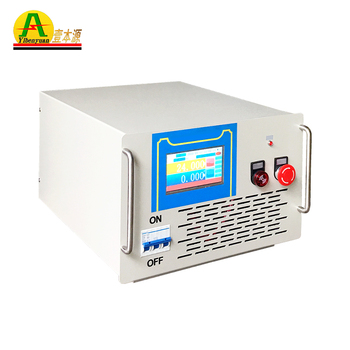
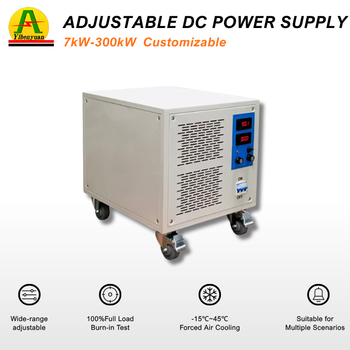
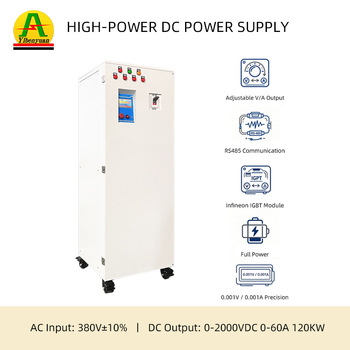
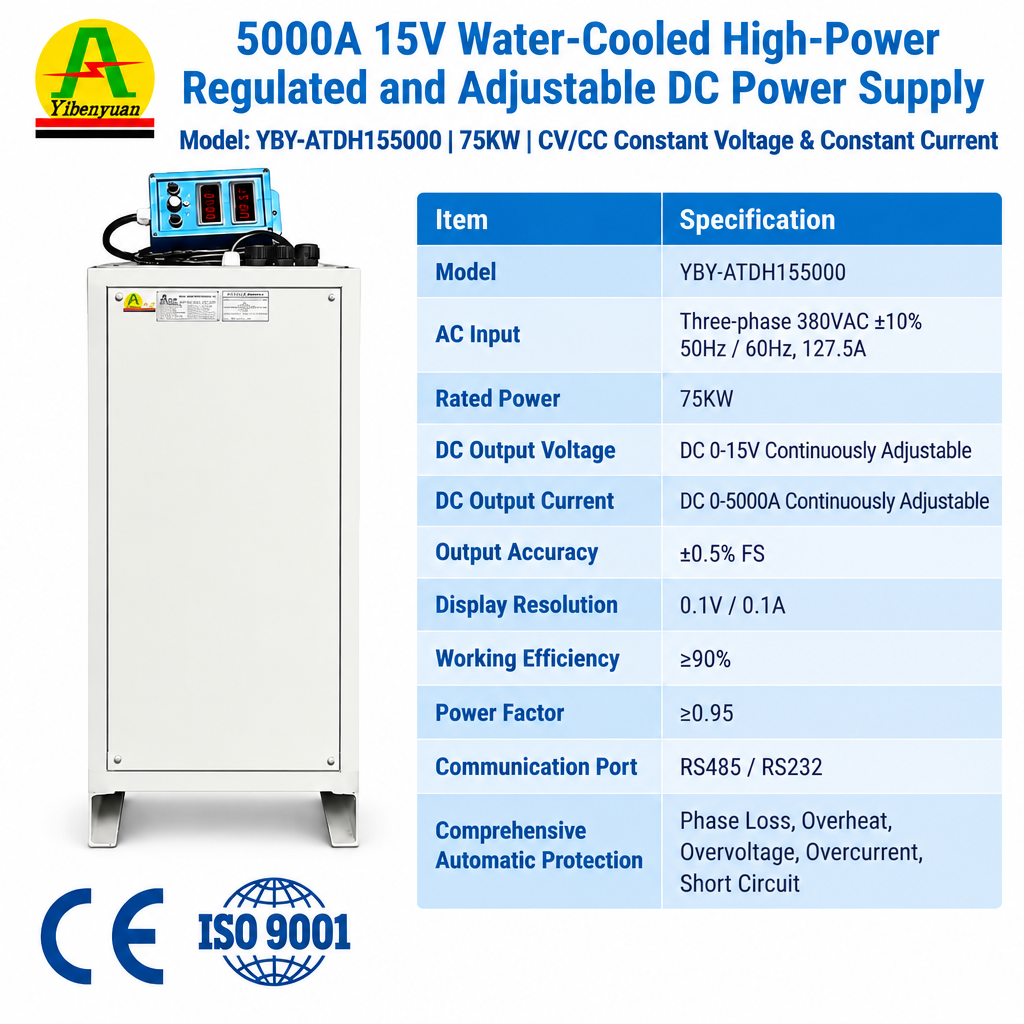
12V 15V 5000A-6000A 75KW Water-Cooled Plating Rectifier
- TopologyHigh-Frequency IGBT Switch-Mode
- Cooling ModeClosed-Loop Deionized Water
- RegulationCV / CC Dual Digital Mode
- Detroit SuitabilityZinc-Nickel, Hard Chrome, Stamping
Direct factory configurations designed for 480V/60Hz North American industrial grids. Zero middleman markup, custom busbar layout, and comprehensive burn-in validation before export packaging.
The manufacturing corridor of Metro Detroit—stretching across Wayne, Oakland, and Macomb counties—represents one of the most electrically demanding, high-throughput industrial zones in North America. Historically dominated by conventional silicon-controlled rectifier (SCR) systems used in automotive body electrocoating and chrome trim production, the region’s automotive and heavy-machinery facilities now confront a sweeping technological modernization. The shift toward high-voltage electric vehicle (EV) battery systems, dual-voltage traction architectures, high-precision lightweight aluminum anodizing, and strict factory decarbonization metrics has altered procurement criteria for direct current (DC) industrial power conversion.
Procurement directors and facility electrical engineers at manufacturing centers in Dearborn, Warren, Sterling Heights, Pontiac, and Romulus face strict power quality requirements. Power conversion systems must operate alongside 480V 3-phase, 60Hz delta/wye utility distribution lines, requiring total harmonic distortion (THDi) suppression, high power factor (PF > 0.95), and resistance against continuous thermal cycling in corrosive manufacturing atmospheres.
Core Architectural Shift: Legacy 12-pulse SCR phase-controlled rectifiers exhibit lagging power factors (0.70 to 0.82) and low-frequency ripple harmonics (300Hz to 720Hz) that generate substantial resistive losses in automotive electrophoretic dip tanks. Modern high-frequency IGBT switch-mode topologies operate between 20kHz and 50kHz, delivering sub-1% DC ripple, near-instantaneous load recovery (<5ms), and 20% to 35% smaller physical cabinet footprints.
Guangdong Fenvix Technology Co., Ltd. supplies custom OEM high-voltage and high-current power systems designed specifically to resolve these operational bottlenecks. With direct-factory manufacturing controls, customized sheet metal and internal copper busbar milling, and comprehensive burn-in procedures under realistic resistive and inductive loads, Fenvix equips Detroit systems integrators and tier-level manufacturers with turnkey power electronics built to international and regional manufacturing standards.
A comparative engineering evaluation for Tier-1 automotive and industrial metal processing plants.
| Performance Parameter | Legacy SCR / Thyristor Rectifier | Fenvix High-Frequency IGBT Rectifier | Detroit Factory Impact |
|---|---|---|---|
| Operating Switching Frequency | Line frequency (60Hz / 360Hz ripple) | 20,000Hz – 50,000Hz (IGBT PWM) | Eliminates audible hum; reduces filter magnetics size by 65%. |
| Output DC Ripple (RMS) | 3% – 8% without heavy capacitor bank | ≤ 0.5% – 1.0% ultra-low harmonic ripple | Produces mirror-finish E-coat, void-free anodizing, and uniform electroplating. |
| Overall Conversion Efficiency | 75% – 82% at partial load | 90% – 94.5% across wide operating window | Saves an estimated $14,000 to $32,000 annually per 100kW unit in electricity. |
| Power Factor (PF) | 0.70 – 0.85 (Phase delayed, load dependent) | ≥ 0.95 (Built-in active/passive PFC options) | Avoids DTE Energy utility penalties for low power factor in Southeast Michigan. |
| Transient Step Response | Slow (100ms – 300ms recovery) | Ultra-Fast (< 5ms dynamic step compensation) | Protects sensitive electronic loads during EV motor inverter surge testing. |
| Enclosure & Thermal Packaging | Large oil-filled or forced-air open bay | Compact air-cooled or closed-loop water-cooled | IP54/NEMA 12 isolation prevents acid mist corrosion inside automotive plating shops. |
Field-proven performance across automotive body production, advanced EV powertrain laboratories, defense assembly lines, and industrial environmental remediation.
Automated paint lines in Warren, Wayne, and Flint require ultra-stable high-voltage DC (up to 400V–800V, 50A–300A) to impart uniform paint thickness over hydroformed vehicle chassis and BIW subassemblies. High-frequency switch-mode rectification eliminates voltage sagging and current spikes when vehicle bodies enter immersion tanks, ensuring corrosion protection across critical interior cavities.
At R&D test laboratories and battery prototyping centers in Auburn Hills, Farmington Hills, and Novi, engineers require programmable DC sources capable of simulating real-world battery discharge curves up to 1000V. Fenvix supplies programmable high-voltage DC sources that support continuous burn-in, motor inverter dyno testing, and insulation breakdown verification.
Tool-and-die shops across metro Detroit utilize heavy-duty rectifiers (6000A to 15000A) to apply hard chrome and micro-crack zinc coatings to stamping presses, forging dies, and powertrain transmission gears. Our water-cooled IGBT power modules prevent overheating in corrosive, acid-laden environments, providing continuous 24/7 current regulation without thermal derating.
Michigan's defense supply base, supporting tactical ground vehicle and aerospace flight components in Macomb County, requires precision Type III Hardcoat anodizing. Fenvix units offer bipolar pulse profiles and constant-current ramp programs that regulate bath temperature rises, eliminate part burning, and meet MIL-A-8625 structural coating standards.
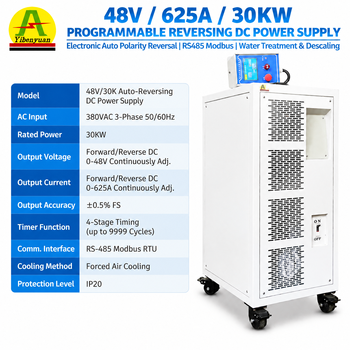
Automotive assembly plants generate substantial thermal loads managed by industrial cooling tower arrays. Electrolytic water treatment systems powered by our 48V/625A auto-polarity reversing rectifiers eliminate calcium, magnesium scale, and bio-fouling without chemical dosing. Periodic electrode polarity switching prevents scale buildup on titanium anodes.
The industrial power conversion market in the Great Lakes Basin is experiencing a major transition, driven by three primary industrial dynamics:
As electric vehicle platforms shift from 400V systems toward 800V architectures to enable faster DC charging and improve traction motor efficiency, testing standards have tightened. Testing laboratories in Auburn Hills, Plymouth, and Troy require direct current power sources with working ceilings of 1000V–1200V. These systems must support high slew rates, ultra-low peak-to-peak voltage noise, and bidirectional battery emulation to prevent nuisance tripping during high-frequency inverter switching cycles.
Legacy automotive assembly and stamping plants throughout Detroit face physical space limitations when expanding existing conveyor lines for modular EV battery trays. Air-cooled rectifiers require extensive cabinet spacing and continuous HVAC cooling to extract heat. Consequently, plant engineering teams specify closed-loop liquid-cooled or deionized water-cooled rectifiers. By transferring heat out of the cabinet using cooling water loops, factories reduce rectifier enclosure footprints by up to 50% while completely sealing internal electronics against airborne conductive metal dust and acidic vapors.
The Detroit manufacturing sector relies extensively on Rockwell Automation (Allen-Bradley) and Siemens automation networks. Modern OEM rectifier procurement policies mandate standard remote digital communication interfaces—such as RS485 Modbus-RTU, Profinet, and industrial Ethernet protocols. Standalone analogue dials have been replaced by precision closed-loop digital signal processors (DSP) that report real-time current, terminal voltage, heat sink temperatures, and fault codes to centralized plant SCADA control centers.
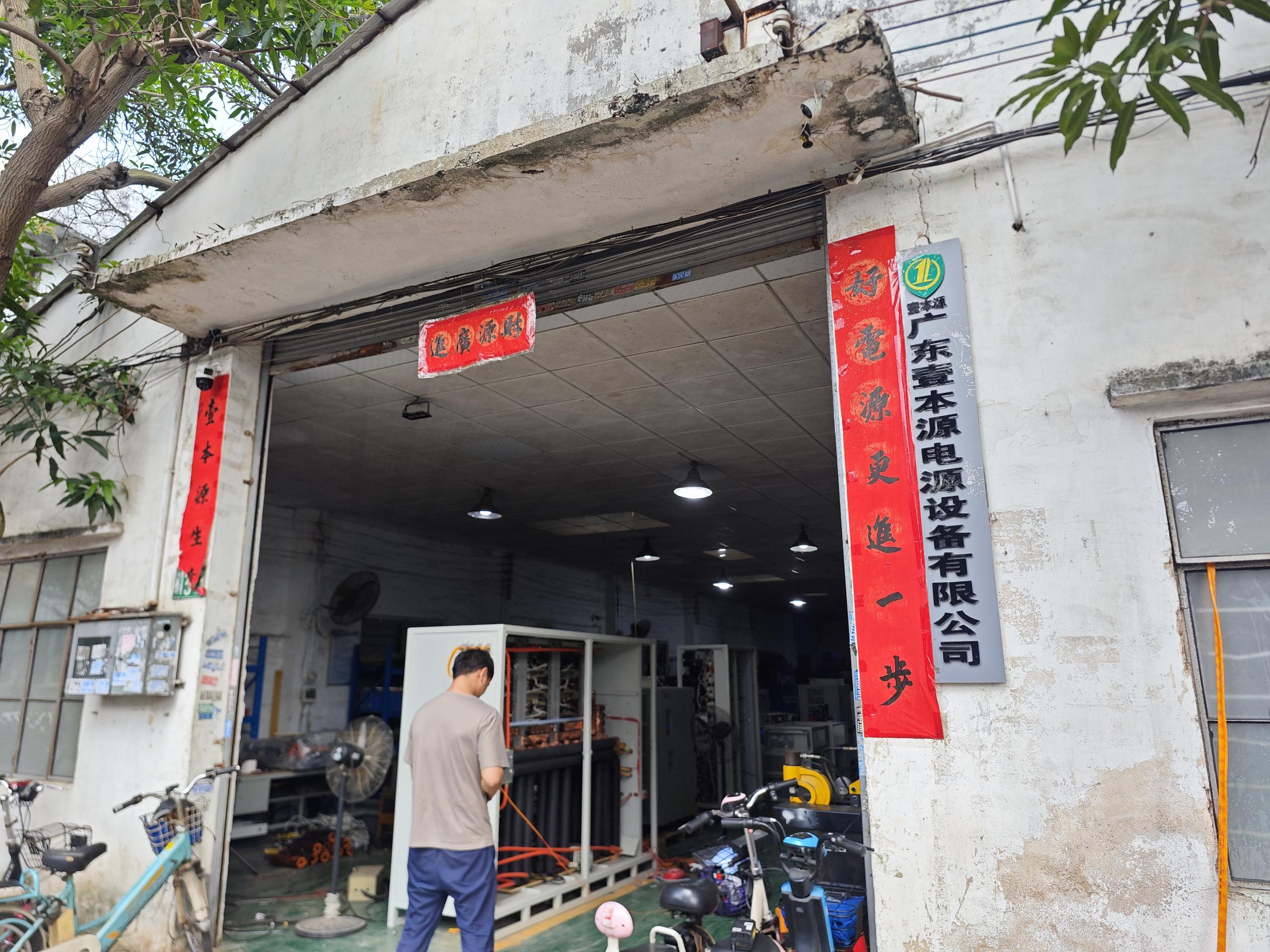
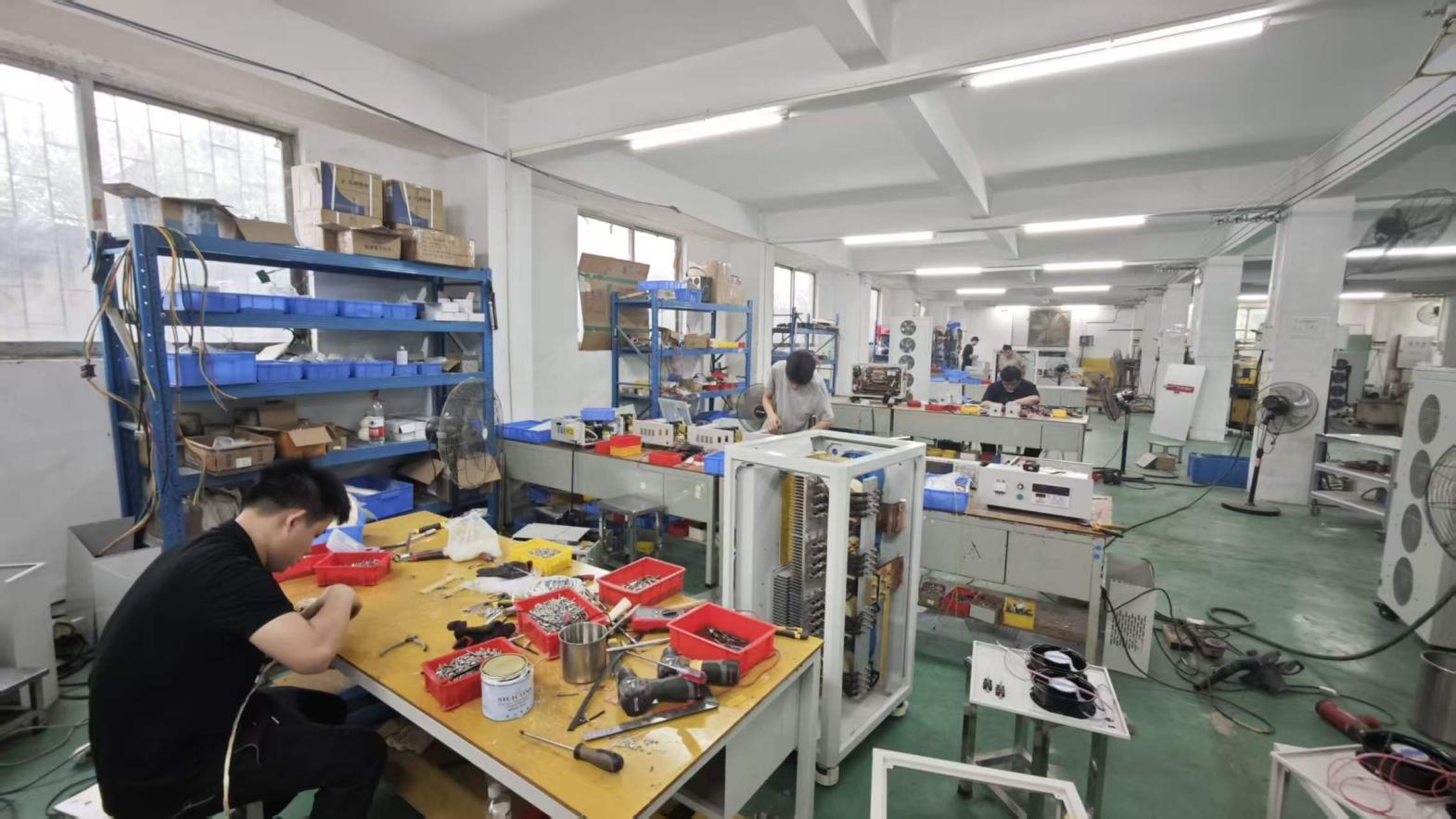
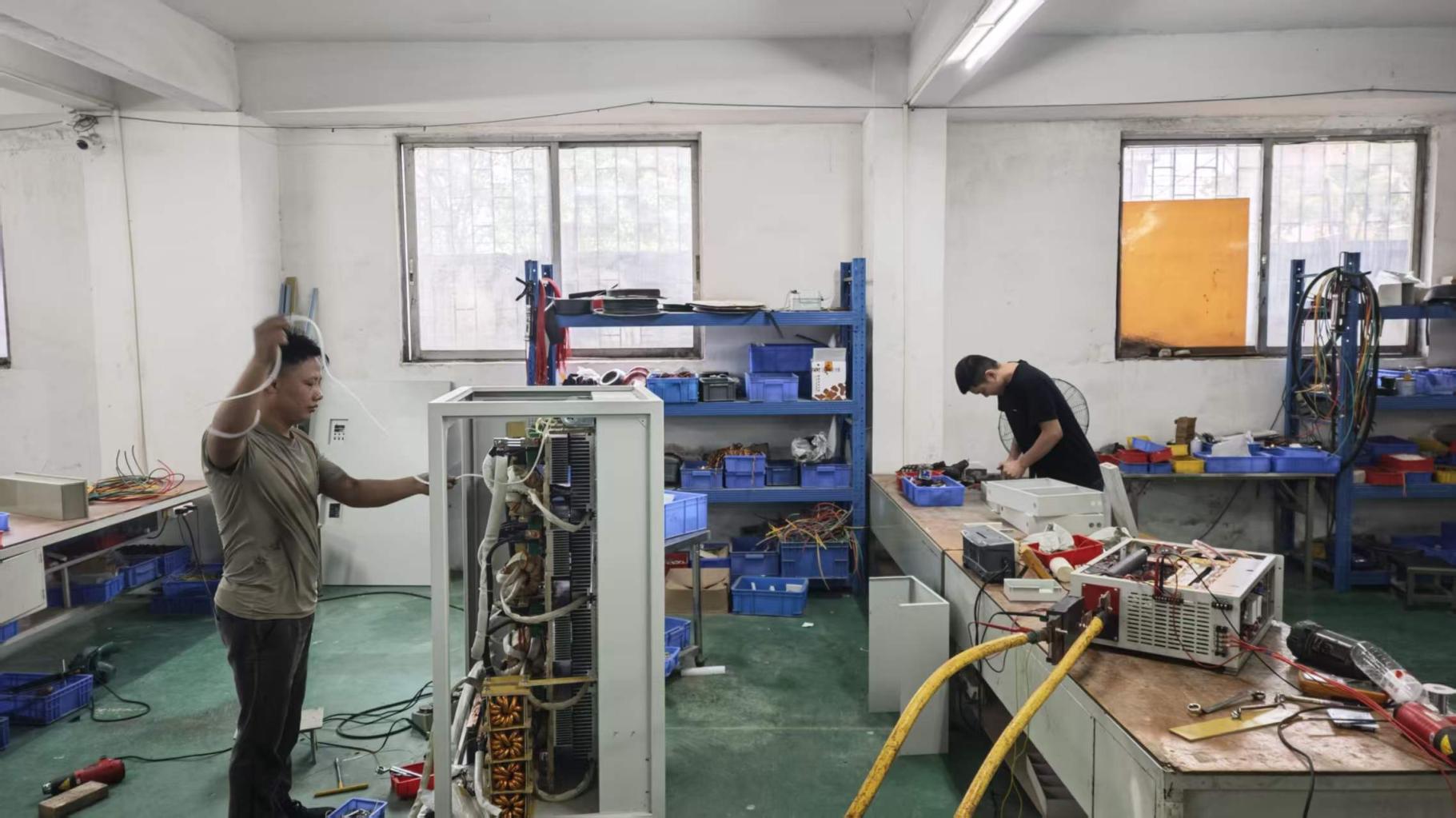
Founded in 2013, Fenvix operates an advanced 3,000 m² production facility in Guangdong, China. We specialize in custom-engineered industrial power supplies, high-frequency electroplating rectifiers, programmable high-voltage DC units, and aviation frequency converters.
Unlike trading intermediaries, Fenvix maintains in-house sheet metal processing, CNC milling, copper busbar fabrication, transformer winding, and SMD circuit board assembly. Our production process adheres to an ISO 9001 certified Quality Management System, and our facility has been audited and verified on-site by TÜV Rheinland.
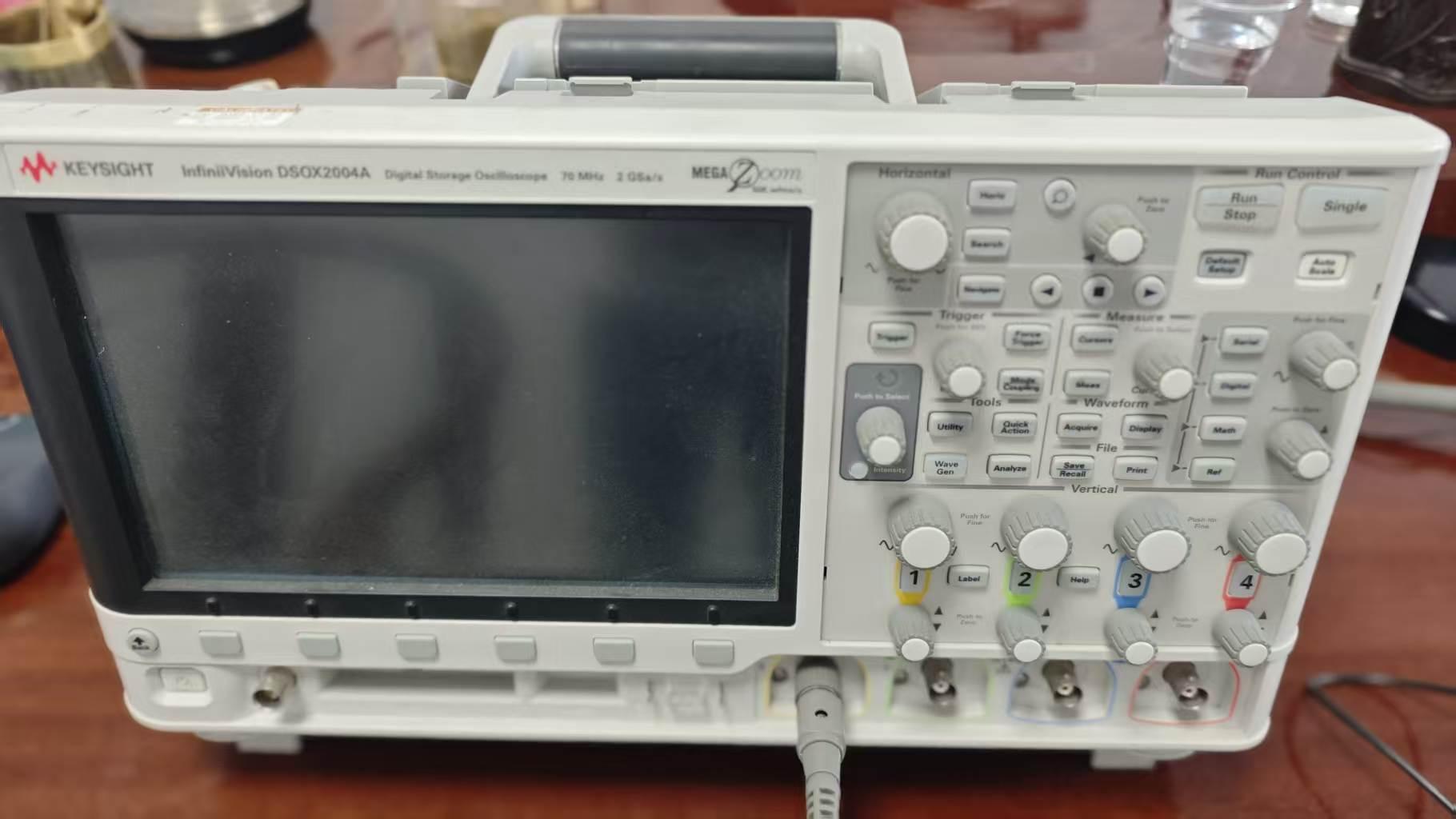
Every industrial rectifier destined for the Detroit market completes an intensive full-load burn-in run, thermal camera dissipation mapping, and oscilloscope waveform verification to ensure compliance with North American grid and duty cycle specifications.


Addressing real technical, logistical, and electrical integration considerations for Michigan operations.
| Phase | Technical Deliverables | Fenvix Engineering Actions | Client Milestone |
|---|---|---|---|
| 1. Technical Profiling | Input V/Hz, output DC curve, ripple limits, thermal budget | Load profile review, topology sizing (IGBT vs. Diode/SCR), cooling calculation | Design specification approval |
| 2. Mechanical / Electrical CAD | Enclosure dimensions, busbar drop locations, terminal schematics | Internal 3D arrangement, thermal airflow / water path simulation, control integration | Cabinet layout sign-off |
| 3. Precision Build | CNC busbars, copper winding, module mounting, harness assembly | In-house plate shearing, punching, milling, surface coating, and harness wiring | Quality inspection checkpoint |
| 4. Full-Load Burn-In | Load test logs, oscilloscope ripple traces, temperature rise data | Continuous 24–48 hour full-load burn-in; calibration to ±0.2% accuracy | Factory Test Report issued |
| 5. Export Pack & Shipping | Seaworthy fumigated crating, vacuum moisture-seal packaging | Customs clearance documentation, sea/air shipping logistics, DDP delivery | On-site delivery & commissioning |