High-Efficiency Power Supplies & Heavy-Duty Rectifiers
Engineered to handle harsh duty cycles in continuous heat treatment, specialized molten electrolysis, industrial plating, and precision aerospace aging lines throughout Glasgow and the Central Belt.

12V/15V 5000A–6000A 75kW Water-Cooled DC Rectifier
- Output Voltage: 0–15V DC Variable
- Current Range: Up to 6,000A Continuous
- Cooling Method: Direct Deionized Water
- Control Standard: RS485 Modbus / 4-20mA

300kW 20V 15,000A Industrial Electrolysis Power Source
- AC Grid Input: 400V/415V 50Hz 3-Phase
- Max Output: 20V DC / 15,000A
- Conversion Tech: Dual IGBT Inverter Stage
- Efficiency: ≥ 92.5% at Full Load
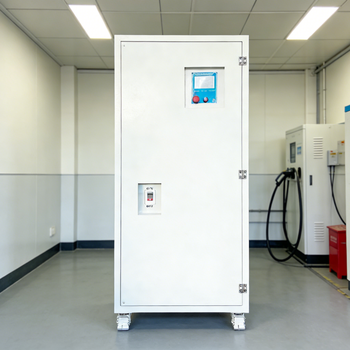
160kW 2,500A High-Stability Resistance Heating Source
- Regulation Mode: Constant Current / Voltage
- Voltage Output: 0–64V DC Stepless
- Protection: Thermal, Phase & Short
- Interface: Isolated PLC Analogue

8,000A 12V Water-Cooled Continuous Galvanizing Rectifier
- Operating Mode: Continuous 24/7 Rating
- Current Ripple: < 2% Full Span RMS
- Cabinet Build: IP54 Sealed Enclosure
- Heat Dissipation: Internal Water Heat Sink
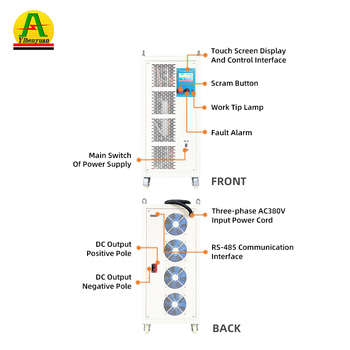
48kW 12V 4,000A High-Frequency Thermal Heating Supply
- Inverter Switch: 20kHz IGBT High Speed
- Output: 0–12V DC / 0–4000A
- Thermal Runaway: Automatic Derating
- Display: 7-Inch Color HMI Panel
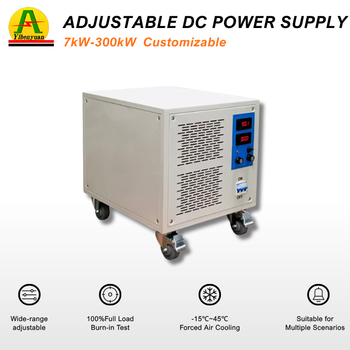
800V 50A 20kW Programmable High-Voltage Test Source
- Voltage Span: 0–800V DC Adjustable
- Fast Slew Rate: < 50ms (0 to Rated V)
- Dynamic Ripple: ≤ 0.1% Full Scale
- Bus Protocol: CANbus / Modbus / LAN
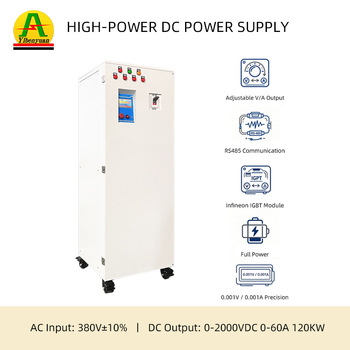
120kW 2,000V Programmable High-Voltage Heating Bench
- Rated Power: 90kW to 120kW Configurable
- Voltage Rating: 0–2,000V DC Precision
- Response Speed: Microsecond Arc Sensing
- Standards: CE, LVD, EMC Compliant

48V 625A 30kW Polarity-Reversing Descaling Source
- Polarity Switch: Solid-State H-Bridge
- Cycle Timer: 4-Segment Millisecond Set
- Application: Electrolytic Descaling
- Protection: Corrosion Protected PCB
High-Power DC Architectures for Thermal & Electrochemical Decarbonisation
A comprehensive examination of topology selection, switching resonance, thermal busbar thermodynamics, and power factor correction under 415V Scottish electrical infrastructure.
Industrial thermal processes represent one of the largest frontiers for process decarbonisation in the United Kingdom, particularly across the manufacturing belts of Glasgow, Lanarkshire, and the Clyde estuary. Transitioning heavy thermal loads from carbon-intensive natural gas burners to electrified direct-resistance, high-frequency induction, or vacuum arc elements requires an unprecedented degree of power density, thermal reliability, and rapid load management.
Traditional silicon-controlled rectifiers (SCR/thyristors) have dominated heavy manufacturing since the mid-20th century. However, SCR systems suffer from poor native power factor (frequently dropping below 0.70 under phase-angle firing), elevated total harmonic distortion (THD exceeding 30%), and enormous physical footprints. In contrast, modern solid-state OEM power supplies manufactured by Fenvix incorporate high-frequency Insulated Gate Bipolar Transistors (IGBT) operating in resonant full-bridge topologies.
"By moving switching frequencies from 50Hz to 20kHz–40kHz, transformer magnetic core volume is reduced by over 65%, while dynamic step-response times shrink from hundreds of milliseconds to under 500 microseconds. This microsecond agility prevents thermal shock, prolongs heating element life, and ensures tighter metallurgical grain boundaries."
For industrial operations across Glasgow, maintaining phase balance and limiting harmonic injection back into the SP Energy Networks distribution grid is essential. Fenvix integrates active power factor correction (PFC) and advanced passive LC harmonic traps that reliably deliver a power factor of ≥ 0.95 across 20% to 100% load variations, maintaining THD well below the mandatory limits enforced by UK Engineering Recommendation G5/4-1.
Precision Thermal Applications Across the Clyde & Central Belt
Addressing the exact mechanical and thermal engineering specifications required by Scottish shipbuilding, aerospace, chemical distillation, and heavy engineering facilities.
Clyde Marine Engineering & Naval Shipbuilding
Naval shipbuilders and commercial dry docks along the River Clyde require continuous low-voltage, ultra-high-current DC power for localized pre-weld stress relieving, structural post-weld induction heating, and anti-corrosive sacrificial anode testing. Fenvix custom cabinets provide sealed water-cooled circuits engineered to withstand saline maritime air.
Aerospace Thermal Metallurgy (Prestwick & Renfrew)
Advanced turbine blade processing and titanium heat-treating operations around Glasgow Airport and the Prestwick Aerospace Corridor demand strict Nadcap-compliant furnace control. Fenvix programmable DC units deliver ultra-low ripple (<1%) and continuous digital telemetry via RS485/Modbus to avoid microscopic thermal hot spots.
Electrified Distillation & Low-Carbon Distilling
As Scotch whisky distilleries transition away from steam boilers fired by fossil fuels, direct electric heating of pot stills and specialized wash preheaters represents a crucial decarbonisation vector. Our modular electric heating supplies enable stepped power ramping to prevent scorch fouling on internal wash heating arrays.
Green Hydrogen Electrolyser Power (Central Belt)
Scotland's substantial wind energy resources are driving massive green hydrogen deployments across the Firth of Forth and Clydeside industrial nodes. Fenvix high-current DC rectifiers (up to 15,000A per skid) supply both Proton Exchange Membrane (PEM) and alkaline electrolysers with high power factor and minimum harmonics.
Heavy Structural Steelwork & Lanarkshire Forging
Lanarkshire's metallurgical heritage continues in specialist steel tube manufacturing, heavy rail forgings, and offshore wind structural components. Fenvix high-frequency resistance and induction rectifiers enable rapid localized billet preheating, reducing cycle time while eliminating oxide scale formation through automated thermal ramps.
Precision Laboratory R&D & University Research
World-class research institutes across the University of Glasgow, Strathclyde, and the National Manufacturing Institute Scotland (NMIS) utilize Fenvix programmable DC sources for experimental plasma heating, superconductor quenching tests, and high-voltage capacitor bank discharges up to 100kV.
Scotland’s Industrial Net-Zero 2045: Electrification Drivers
How regulatory carbon taxes, energy cost volatility, and UK national grid codes are accelerating the shift from legacy fuel combustion to high-efficiency DC power systems.
Scottish Net Zero Targets & UK ETS Compliance
Scotland has committed to reaching Net Zero greenhouse gas emissions by 2045—five years ahead of the wider UK timeline. Manufacturers in heavy industrial regions like Clydebank, Motherwell, and Falkirk face escalating carbon allowances under the UK Emissions Trading Scheme (UK ETS). Fired heating installations are increasingly penalized through compliance surcharges.
By replacing fossil burners with high-density IGBT DC heating rectifiers operating on renewable wind energy from the Scottish national grid, facilities immediately reduce Scope 1 direct emissions to zero. Furthermore, Fenvix's standard thermal efficiency exceeding 92% guarantees that kilowatt-hour conversion directly translates into reduced utility operational expenditure.
Grid Stability & Stricter Harmonic Ingress Standards
With an increasing proportion of Scotland’s electricity sourced from offshore wind farms in the North Sea and Clyde estuary, regional distribution networks operated by SP Energy Networks are imposing rigorous standards regarding reactive power drawn by heavy consumers. Industrial facilities are penalised heavily for poor power factor and harmonic contamination.
Conventional thyristor supplies inject significant 5th, 7th, and 11th harmonic orders back into local substations, requiring expensive external harmonic filtration capacitor banks. Fenvix modern high-frequency SMPS technology utilizes active PWM power factor correction, ensuring power factor is pinned near unity (≥0.95), safeguarding client substations from network penalty charges.
| Performance Dimension | Legacy Thyristor / SCR Transformer Units | Fenvix Advanced IGBT Power Supply (OEM) | Operational Impact for Glasgow Plant |
|---|---|---|---|
| Conversion Efficiency | 72% – 82% at partial to mid load | 92.0% – 94.5% continuous | Saves 10%–15% electricity consumption per shift |
| Native Power Factor (λ) | 0.65 – 0.80 (varies drastically with output) | ≥ 0.95 across full operational spectrum | Eliminates reactive power surcharges from UK energy suppliers |
| Output DC Ripple | 5% to 10% RMS (low frequency 300Hz pulse) | ≤ 1.0% to 1.5% high frequency ripple | Prevents material pitting and thermal boundary breakdown |
| Cabinet Enclosure Volume | Heavy, large footprint (oil or forced air) | Compact modular chassis (water/air options) | Frees valuable shop-floor space in dense urban workshops |
| Dynamic Regulation Time | 200ms – 500ms phase response | < 500 microseconds digital loop | Ensures instantaneous response to cold-to-hot thermal impedance shifts |
Guangdong Direct Factory: ISO 9001 & TÜV Rheinland Verified
Combining 13+ years of dedicated power electronics craftsmanship with complete in-house metal fabrication, strict burn-in validation, and seamless UK export logistics.
Guangdong Fenvix Technology Co., Ltd. is not a trading intermediary. Since 2013, our dedicated 3,000m² manufacturing facility in Guangzhou has engineered and built extreme-specification power conversion units. From computer-controlled shearing, CNC busbar punching, and milling to transformer winding, surface-mount PCB assembly, and multi-day full-load heat stress testing—we maintain absolute control over the physical and electrical integrity of every component.
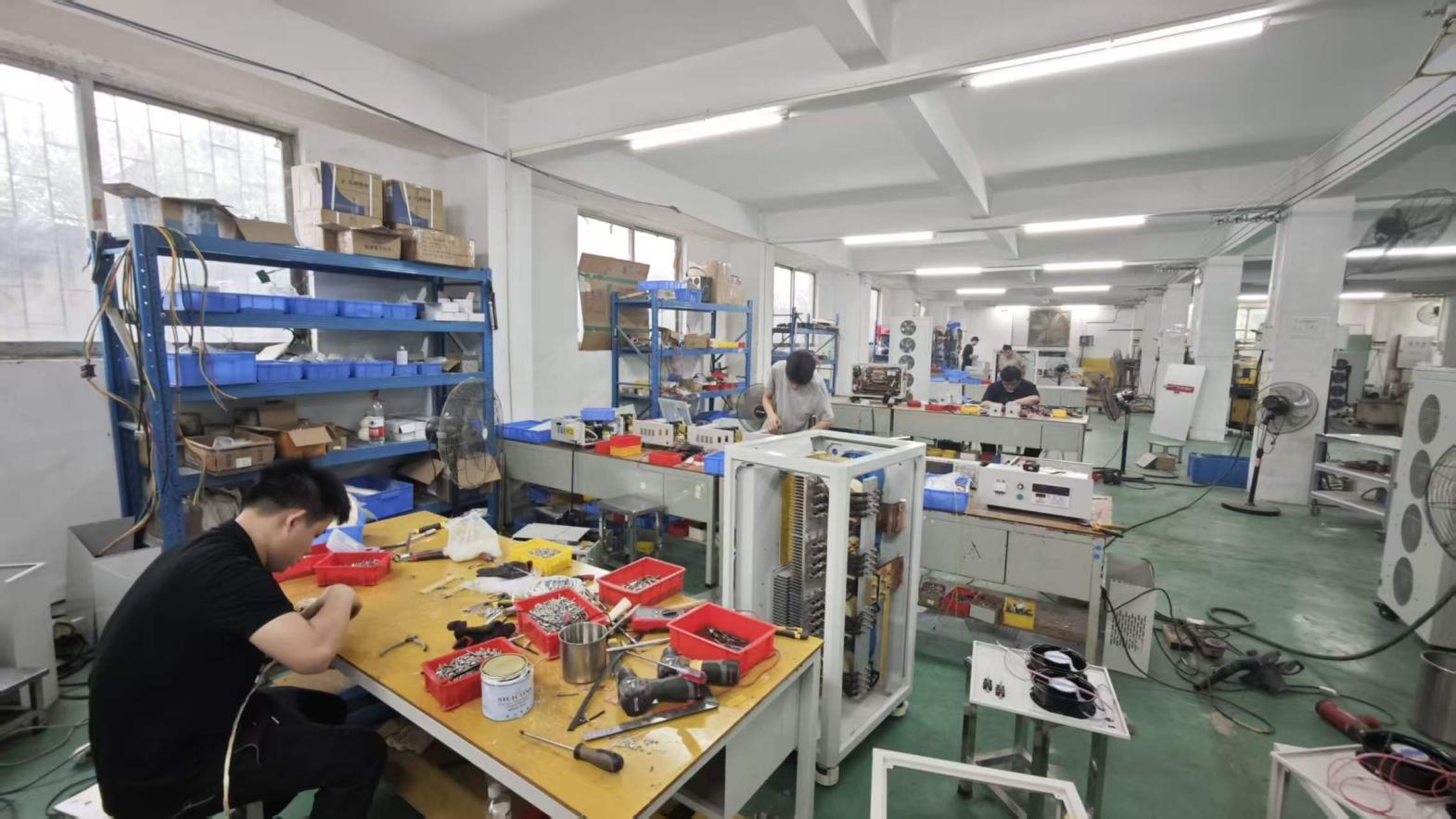
Modern Assembly Hall
Spacious, clean manufacturing lines dedicated to modular chassis assembly and precision wiring.
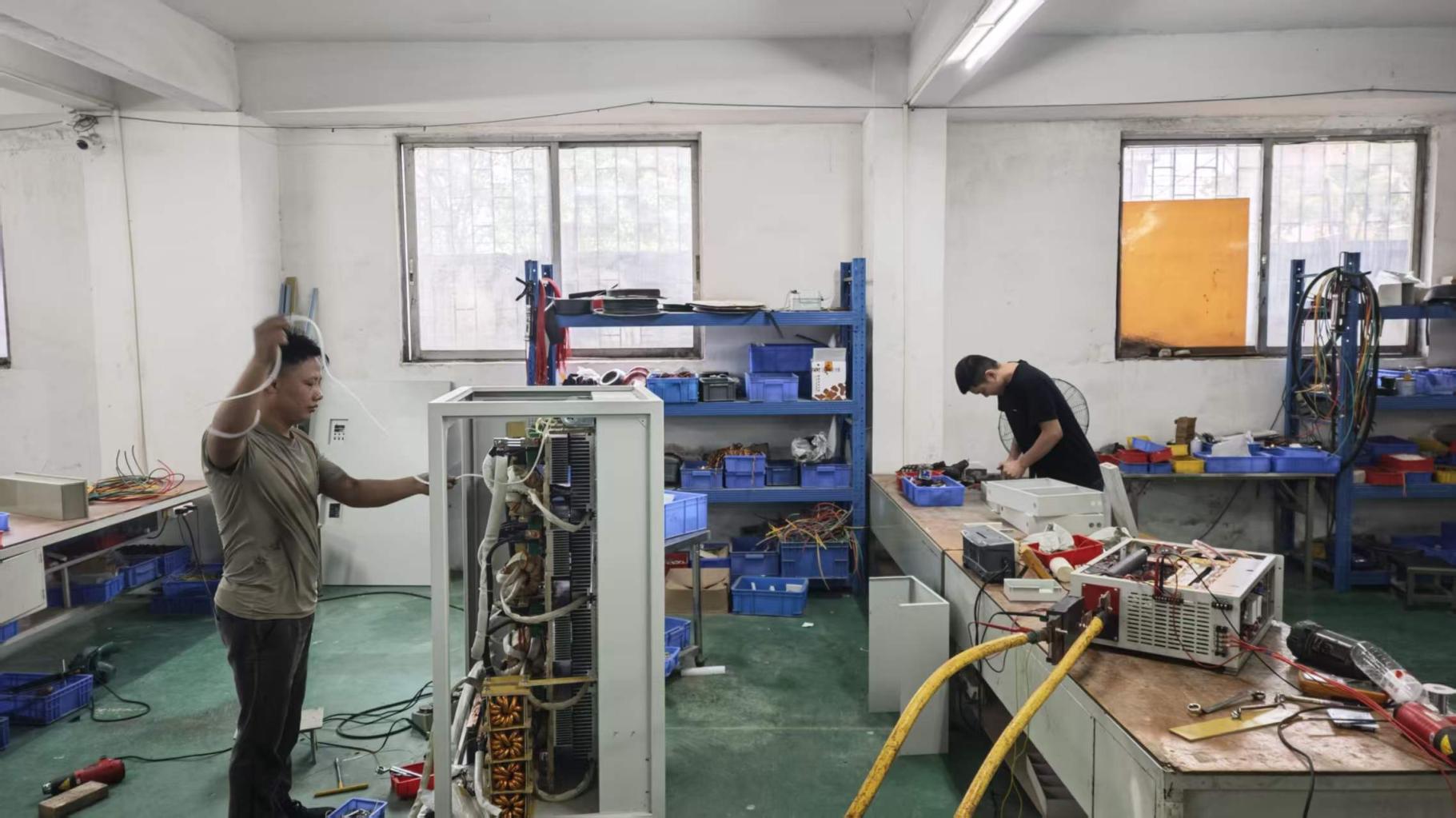
Enclosure & Cabinet Fabrication
In-house CNC shearing, bending, and powder-coating ensuring rugged IP20 to IP54 build ratings.
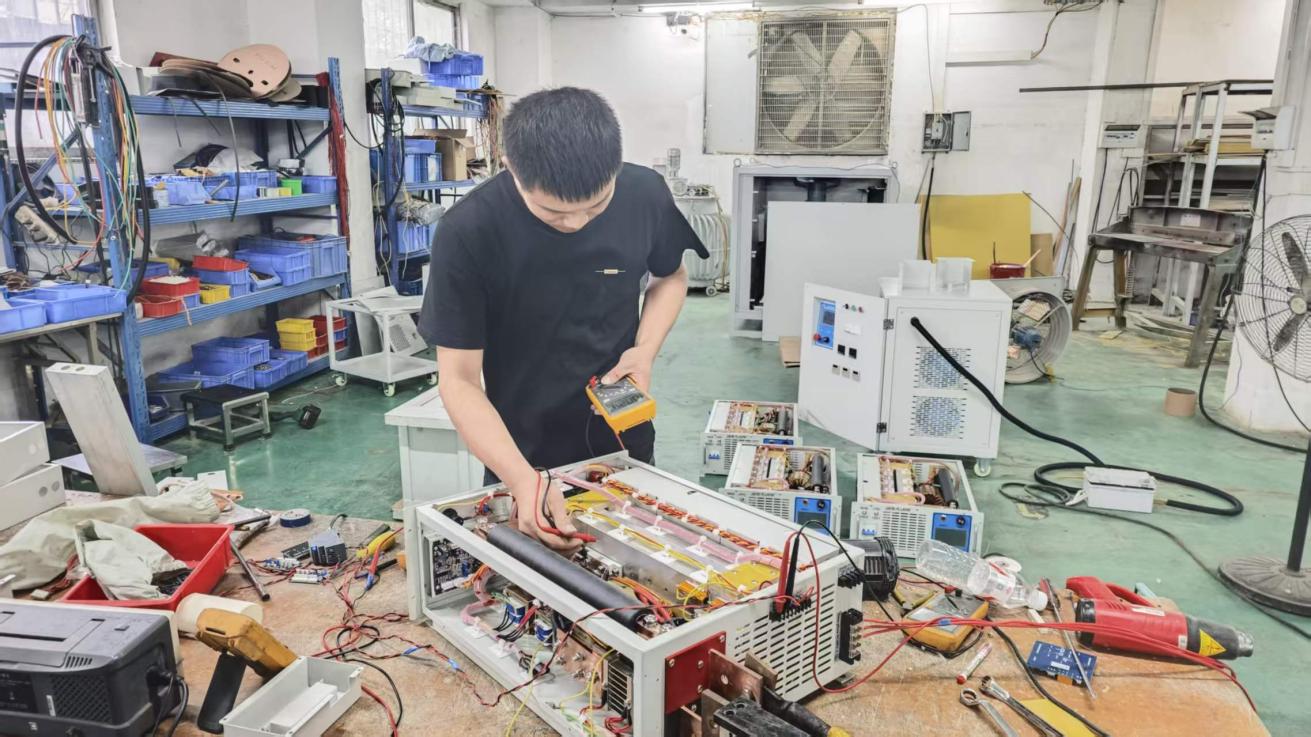
Full-Load Burn-In Racks
Every unit undergoes continuous 72-hour thermal stress testing on inductive/resistive banks.
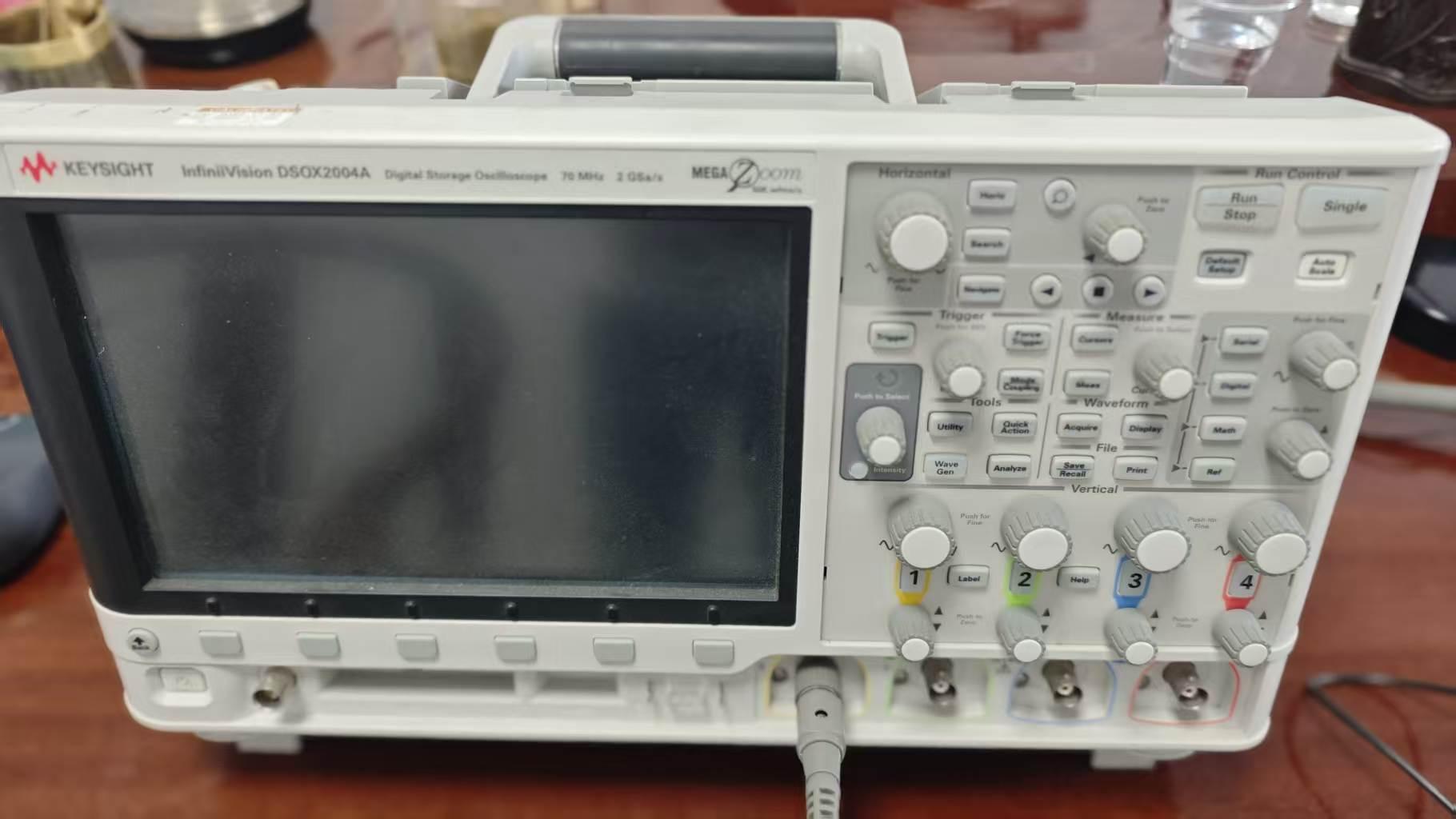
Precision Waveform Calibration
Digital storage oscilloscopes inspect ripple, harmonic spikes, and switching transients.
ISO 9001 Certified
Audited Quality Management System governing production from incoming materials to final signoff.
Zero Minimum Order (No MOQ)
Single-unit custom builds for prototypes, testing rigs, and pilot manufacturing lines welcome.
TÜV On-Site Verified
Independent factory verification of technical capabilities, tool sets, and engineering capacity.
Reliable UK Delivery
Comprehensive FOB, CIF, or DDP terms handling customs clearance right to your site door in Glasgow.
Frequently Asked Questions by Scottish Engineering Buyers
Essential technical, legal, and operational considerations when importing custom OEM electric heating and DC power systems into the United Kingdom.
Are Fenvix power supplies directly compatible with the UK 400V/415V 50Hz 3-phase mains grid?
+
What regulatory compliance standards (UKCA / CE / LVD / EMC) are supplied with shipments?
+
When should our plant choose water cooling over forced-air cooling for high-power thermal heating?
+
What incoterms, payment terms, and delivery timetables are standard for Glasgow consignments?
+
How does Fenvix support overseas commissioning, PLC integration, and warranty issues in Scotland?
+
Can Fenvix engineer custom heating recipes with automated multi-step ramping profiles?
+
Consult Our Power Electronics Engineering Team
Send us your process parameters—including required input voltage, continuous DC amperage, acceptable ripple thresholds, cooling preferences, and digital interface specs. Receive a comprehensive OEM manufacturing proposal and dimensional drawings within 24 hours.