Precision High-Frequency DC Rectification & Power Modules
Engineered for low-ripple cathode deposition, aggressive bath chemistries, and automated industrial networking in compliance with North American power infrastructures.

- Topology IGBT High Frequency
- Output Range 0–15V / 0–6000A
- Regulation CC / CV Digital Multi-loop
- Cooling Mode Deionized/Closed Water Loop
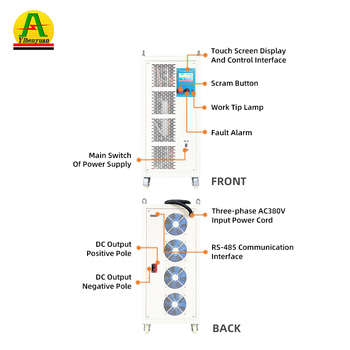
- Input Voltage 480V AC 3-Phase 60Hz
- Efficiency Rating ≥ 90% at Full Load
- Ripple Voltage ≤ 2% RMS Low-Noise
- Interface RS485 Modbus-RTU / 4-20mA

- Current Output 0–8000A Continuous
- Protection Rating IP54 Sealed Cabinet
- Thermal Transfer Direct Nickel-Plated Copper
- Duty Cycle 100% 24/7/365 Rating
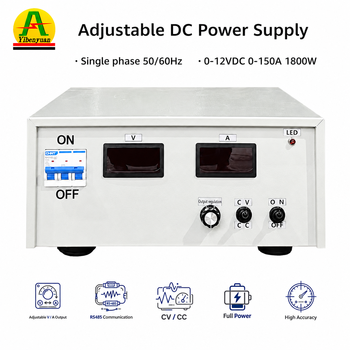
- Output Accuracy ≤ 0.5% Setpoint Range
- Dynamic Response ≤ 5ms (0-100% Step Load)
- Form Factor 19-inch Bench/Rack Cabinet
- Application Pattern Plating, Blind Vias

- Switching Mode H-Bridge Solid-State Reversal
- Reversal Timing 1ms to 9999s Fully Configurable
- Digital Display Dual Touchscreen Controller
- Secondary Uses Electrochemical Descaling
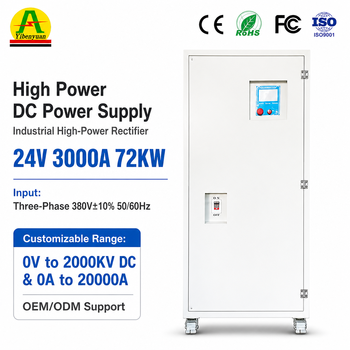
- Operating Modes CC, CV, Current Ramp-Up
- Soft Start Time Programmable 0–120 Seconds
- Cooling Standard Forced Air with Anti-Mist Filter
- Certifications CE, LVD, EMC, ISO 9001

- Input Connection Direct 3-Phase Busbar Terminal
- Transformer Tech Nanocrystalline Magnetic Core
- Monitoring Internal Temperature Transducers
- Fault Tolerances Over-Current, Phase Loss, Thermal
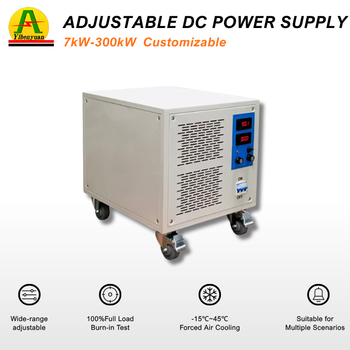
- Voltage Profile 0–800V Digital Step/Staircase
- Application Electropolishing, Pre-treat, Test
- Display High-Precision 4-Digit Multi-Meter
- Control Bus Isolated Analog / Ethernet Module
Engineering Superiority: Switch-Mode Rectification vs. Legacy SCR
A technical assessment of high-frequency IGBT conversion architecture and its quantifiable impact on cathode boundary layer formation, energy consumption, and thermal footprint in continuous plating lines.
Advanced Grain Refinement via Nano-Ripple DC Architecture
Traditional silicon-controlled rectifiers (SCR) operating at line frequency (50/60 Hz) generate an inherent low-frequency ripple of 5% to 12%. In heavy electrodeposition tanks, this waveform imperfection periodically destabilizes the Helmholtz double layer. The consequence is macro-crystalline copper clustering, surface nodulation, and micro-voids across blind vias.
Fenvix switch-mode rectifiers integrate advanced insulated-gate bipolar transistor (IGBT) bridges modulated at 20 kHz to 50 kHz. By combining pulse-width modulation (PWM) control algorithms with high-flux amorphous core transformers, our power stages throttle residual root-mean-square (RMS) current ripple below 1% across the full 0–100% current spectrum. This ultra-flat current vector maintains uniform ion transfer velocities across high-aspect-ratio hole walls, guaranteeing uniform copper layer density and maximum ductility.
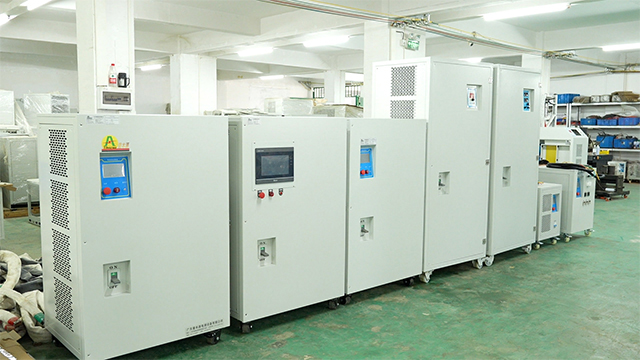
Sealed Closed-Loop Direct Deionized Water Cooling
Wet process facilities in the electroplating sector subject electrical hardware to aggressive atmospheric corrosives, notably aerosolized sulfuric acid, copper sulfate droplets, and elevated ambient humidity. Air-cooled rectifiers draw these acid aerosols across printed circuit assemblies and diode heat sinks, precipitating bridging failures and board oxidation within two to three years.
Fenvix manufactures heavy-current plating rectifiers in fully sealed enclosures up to IP54/NEMA 4X integrity. Internal thermal rejection relies on multi-channel, deoxidized high-conductivity (OFHC) copper cooling cold plates bolted directly beneath high-power planar IGBT bricks and ultrafast freewheeling recovery diodes. The cooling water circuits operate within completely isolated chambers, ensuring zero exchange between caustic ambient factory air and sensitive micro-electronics.
Localized Applications Across the Portland Metropolitan Area
From the high-tech Silicon Forest corridor in Washington County to the heavy manufacturing and transport yards along the Willamette and Columbia rivers, Fenvix DC systems power mission-critical operations.
Semiconductor Packaging & Advanced HDI Fabrication
Centering around Hillsboro, Beaverton, and Tigard, the Silicon Forest demands extreme precision pattern plating for ultra-dense multilayer boards, blind micro-vias, and leadframe copper-tin plating. Fenvix constant-current modules deliver fast microsecond response times to preserve critical sub-mil tolerances during acid-copper baths.
Aerospace Hydraulics & Precision Fastener Plating
Supporting tier-1 aerospace machine suppliers distributed along the I-5 industrial corridor between Portland and Vancouver, WA. Electrodeposition of thick copper underplates serves as a critical barrier coat against hydrogen embrittlement before cadmium-alternative zinc-nickel coatings are applied to high-strength titanium and steel alloys.
Heavy Marine Hardware & Intermodal Infrastructure
Clustered along Swan Island and the Columbia Slough industrial sector, heavy marine overhaul facilities and structural metal fabricators apply high-amperage copper and hard chrome coatings to rebuild high-wear crankshafts, marine propulsion bearings, and hydraulic cylinder rods operating in harsh brackish river waters.
Industrial Trends & Environmental Imperatives in Oregon
Navigating the transition toward decarbonized operations, automated chemical lines, and strict water quality regulations within the Pacific Northwest ecosystem.
Decarbonization & PGE / Pacific Power Tariffs
With industrial electricity rates escalating and rigorous corporate environmental mandates active throughout Multnomah and Washington counties, swapping outdated line-frequency thyristors for high-frequency IGBT equipment yields instant 15% to 25% energy savings, directly qualifying facilities for utility-backed equipment upgrade incentives.
Closed-Loop Waste Heat Integration
Modern Oregon finishing plants are increasingly integrating closed-circuit chilling loops with secondary thermal recovery exchangers. Heat extracted from our water-cooled rectifiers is routinely plumbed back to preheat alkaline cleaning stages and clean-water rinsing vats, drastically lowering line-wide fossil gas boiler consumption.
Automated SCADA & Industry 4.0 Traceability
Aerospace and medical device surface coaters are mandated to verify process stability down to every millivolt. Fenvix units offer direct Ethernet, Modbus-RTU, and isolated 0–10V analog connectivity, uploading real-time amp-hour tallies and fault diagnostics directly into local MES platforms without costly intermediate gateways.
Guangdong Fenvix Technology: Factory Direct Engineering
Founded in 2013, our 3,000 m² production facilities in Guangzhou deliver end-to-end mechanical, magnetic, and power-electronic design without intermediary trading markups.
ISO 9001 & TÜV Verified
Every manufacturing step follows ISO 9001 quality protocols. Our facility has undergone stringent on-site inspection and verification by TÜV Rheinland, validating our production capacity, load-testing rigs, and testing equipment.
In-House Metal Fabrication
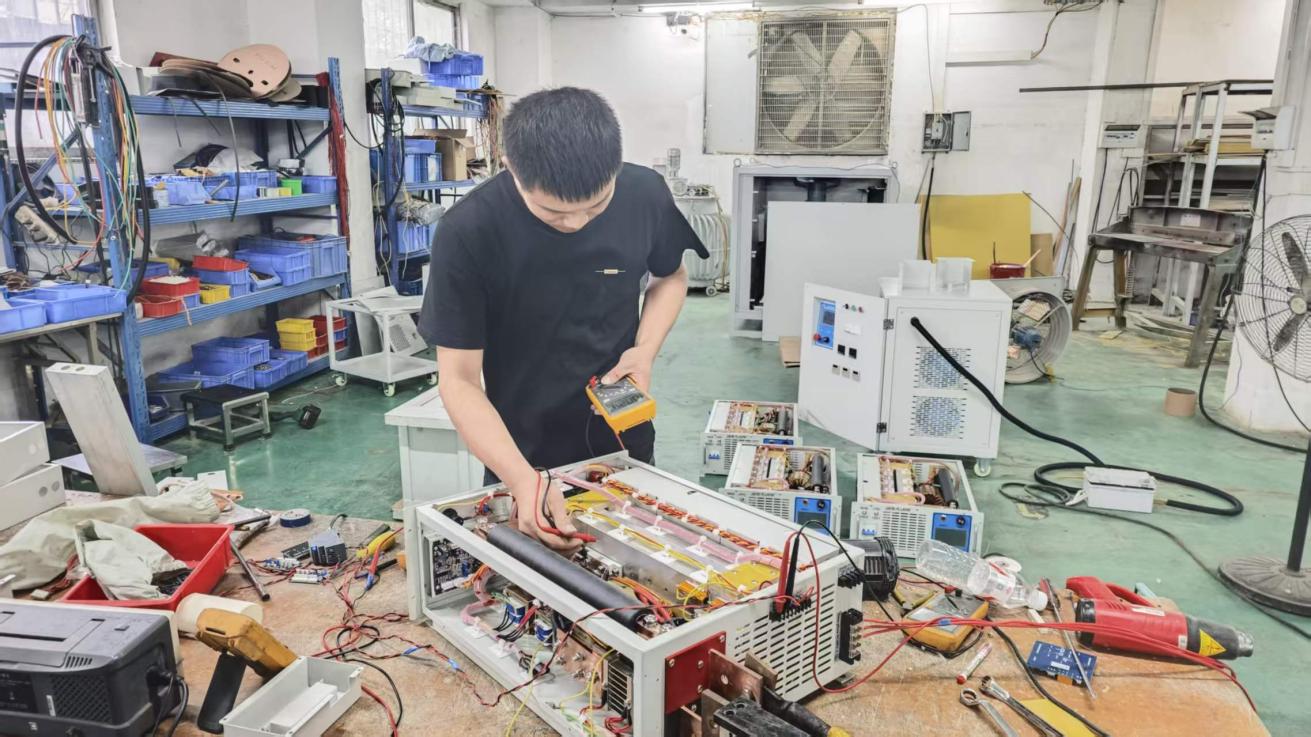
We do not outsource chassis construction. Using our own shearing, punching, milling, drilling, and tapping equipment, we fabricate internal busbars and heavy corrosion-resistant enclosures for rigid quality control and accelerated delivery.
Zero Minimum Order Quantity
Whether you require a single 150A prototype unit for a boutique microelectronics pilot line or an array of 15,000A water-cooled units for a multi-tank plating shop, Fenvix supports single-unit OEM/ODM builds without arbitrary MOQ constraints.
Global DDP & Port Logistics
Experienced in North American freight operations. We regularly fulfill orders under EXW, FOB, CIF, or seamless DDP (Delivered Duty Paid) terms directly to your factory doors across the Portland, Hillsboro, and Gresham industrial clusters.
Frequently Asked Questions: Portland Industrial Procurement
Technical and logistical queries addressed by our electrical engineering team for North American buyers and plant maintenance engineers.
Upgrade Your Facility With High-Efficiency Rectifiers
Consult with our technical engineers to determine proper amperage sizing, cooling capacity, and busbar schematics for your line.