Precision Constant Current Power Systems
Explore our heavy-duty switch-mode power rectifiers, pulsed sources, and programmable DC power supplies calibrated for demanding electrochemical, semiconductor, and cleanroom applications across Heredia.
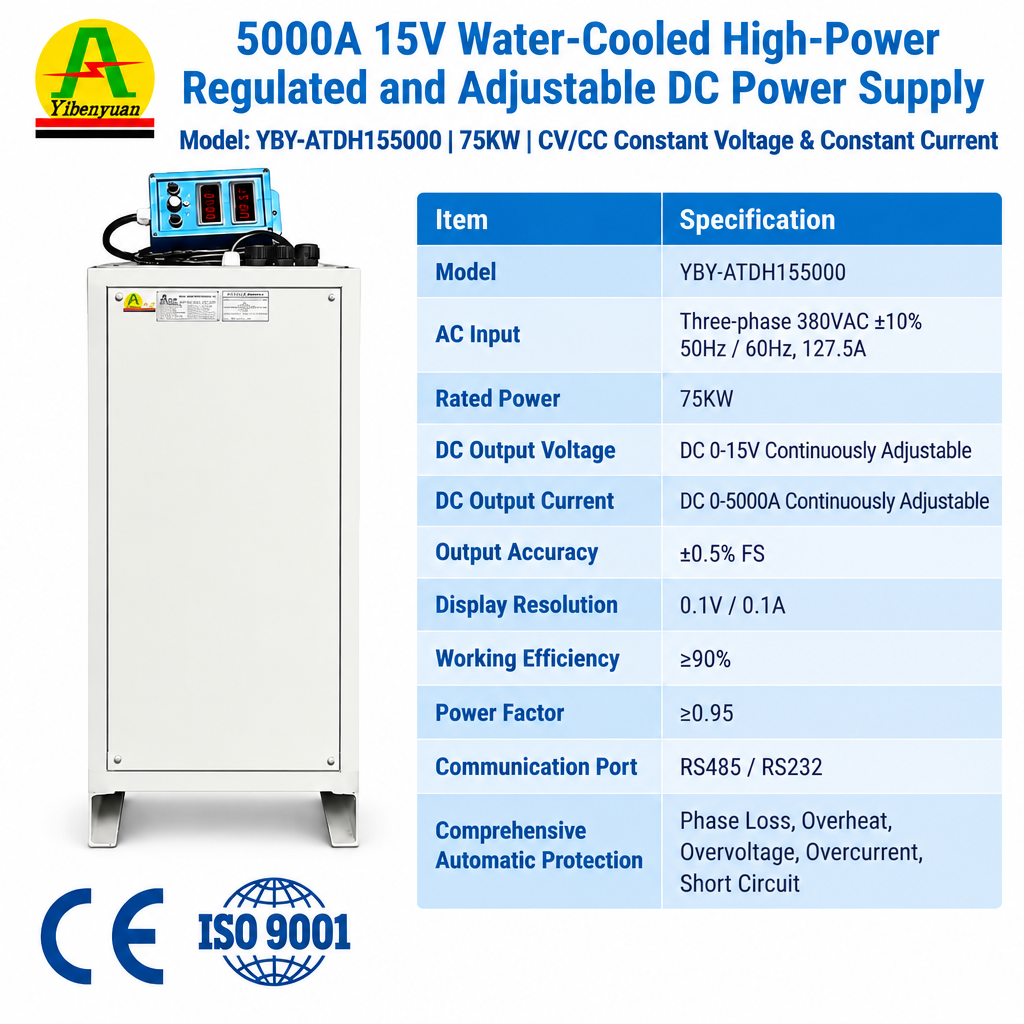
- Current Output: 0–6000A Adjustable
- Voltage Range: 0–15V DC Continuous
- Regulation: Constant Current (CC) ±0.5%
- Cooling Mode: Closed-Loop Deionized Water
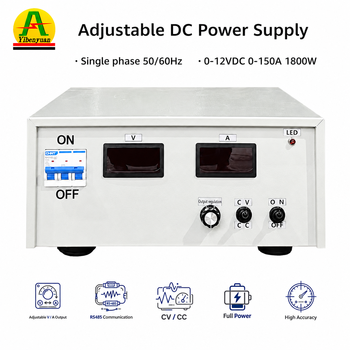
- Current Output: 0–150A Ultra-Low Ripple
- Topology: High-Frequency IGBT Switch
- Application: PCB Gold/Silver, Catheter Rings
- Control Bus: RS485 Modbus / 0-10V Analog
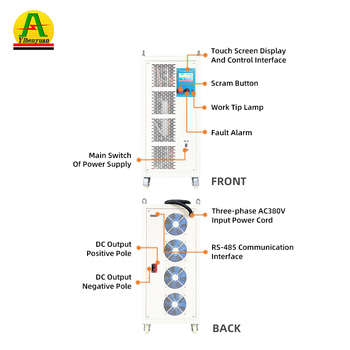
- Current Output: 0–4000A Stepless CC Mode
- Efficiency Rating: ≥90% at Rated Load
- Protection: Overcurrent, Thermal, Phase Loss
- Cabinet Rating: Heavy-Duty Anti-Corrosion
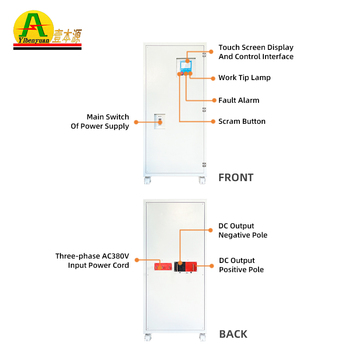
- Current Output: 0–8000A Heavy Ampere
- Cooling Standard: Direct Heat-Exchanger Water
- Duty Cycle: 100% 24/7 Full Production
- Process Suitability: Hard Chrome, Electrowinning
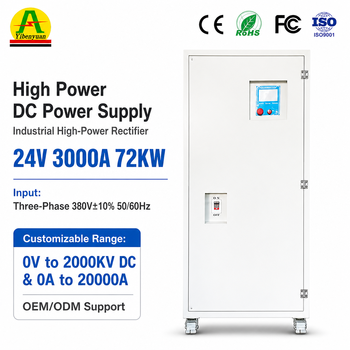
- Voltage / Current: 12V/24V/60V, up to 3000A
- Current Density: Automated Ramp Profile
- Display: Digital Touchscreen HMI + Logger
- Application: Type II/III Hard Anodizing
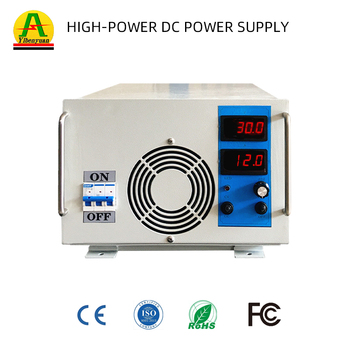
- Voltage Ceiling: 0–150V High-Compliance
- Current Precision: ±0.2% Reading Accuracy
- Medical Fit: Titanium Screws & Implants
- Protection: Micro-Arc Suppression Tech
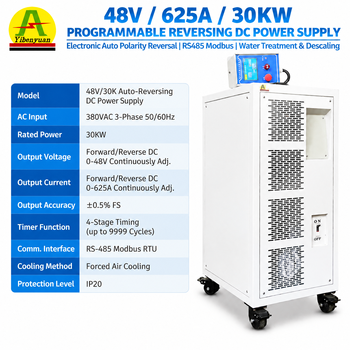
- Current / Power: 625A Constant Current / 30kW
- Switching Engine: Solid-State Microsecond Inversion
- Cycle Timing: Programmable 4-Stage Inversion
- Environmental: Industrial Wastewater & Descaling
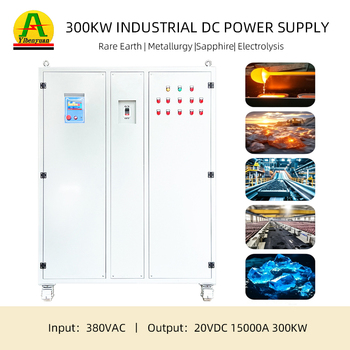
- Output Range: 0–20V DC / 0–15,000A Ultra-High
- Input Grid: 380V/480V 3-Phase 50/60Hz
- Busbars: Solid CNC-Machined OFHC Copper
- Control Loop: Dual DSP Vector Constant Current
High-Frequency Switch-Mode Constant Current Topologies
A rigorous review of switch-mode power conversion, closed-loop regulation algorithms, and thermal mitigation required for sensitive electrochemical and cleanroom operations.
IGBT Resonant Inversion vs. Legacy SCR/Thyristor
Traditional silicon-controlled rectifiers (SCR) rely on line-frequency phase-angle control operating at 50Hz or 60Hz. In precision electrochemistry, SCR-based architectures present fundamental operational handicaps: severe current ripple (often exceeding 5% to 8% RMS without enormous inductive filtering), sluggish step-load response times (typically 100 to 300 milliseconds), and a deteriorating displacement power factor when operating at de-rated output currents.
Fenvix constant current power supplies leverage modern high-frequency Insulated-Gate Bipolar Transistor (IGBT) full-bridge inverter stages operating between 20 kHz and 50 kHz. By synthesizing switched current pulses at tens of kilohertz, the physical magnetic footprint of isolating transformers and LC output filters drops by more than 70%, yielding conversion efficiencies routinely exceeding 90%. More importantly, high switching frequencies enable ultra-low peak-to-peak current ripple (≤ 1%), which is decisive when establishing deterministic grain boundary growth in gold, platinum, and nickel electroplating.
Closed-Loop DSP Regulation & Dielectric Barrier Overcoming
In processes such as titanium medical anodizing (ASTM F86 / AMS 2488) or aluminum hardcoat anodizing (MIL-A-8625 Type III), bath impedance is dynamic. As non-conductive dielectric titanium dioxide or aluminum oxide layers build on the substrate surface, electrical resistance increases exponentially according to:
V_compliance(t) = I_setpoint × [ R_electrolyte + R_dielectric_oxide(t) ]
If a power supply operates in simple constant voltage (CV), current decays precipitously, terminating oxide barrier growth prematurely. Fenvix systems utilize dual-channel Digital Signal Processing (DSP) and Hall-effect galvanic sensors that sample output current at 100 kS/s. Closed-loop Proportional-Integral-Derivative (PID) firmware modulates PWM duty cycles within sub-millisecond windows, ramping voltage upward to enforce absolute current density stability (±0.2% of full scale) across the entire deposition lifecycle.
Topological Benchmark: Advanced High-Frequency CC vs. Conventional Architectures
| Performance Characteristic | Fenvix High-Frequency IGBT CC | Conventional SCR / Thyristor Rectifier | Linear Laboratory DC Supply |
|---|---|---|---|
| Full-Load Conversion Efficiency | 89% – 93% (Minimized Cleanroom Thermal Load) | 70% – 78% (High Heat Dissipation) | 40% – 55% (Massive Thermal Rejection) |
| RMS Current Ripple (Full Scale) | ≤ 1% (Smooth, Non-Porous Crystal Lattice) | 5% – 12% (Porous Plating, Layer Stresses) | ≤ 0.2% (Excellent, but Non-Scalable) |
| Transient Response Time (0-100% Load Step) | < 2 milliseconds | 120 – 350 milliseconds | < 50 microseconds |
| Maximum Scalable Output Power | Up to 300 kW+ per standard cubicle | Up to 1,000 kW (Very bulky footprint) | Typically capped at ≤ 3 kW |
| Tropical Heat & Corrosion Resistance | Sealed electronics compartment, IP54, deionized water option | Open chassis air-cooled, vulnerable to corrosion | Unsealed benchtop units, dust-sensitive |
Localized Applications Across Heredia’s Advanced Manufacturing Ecosystem
Heredia has evolved into Central America’s epicenter for precision life sciences, advanced electronics packaging, and cleanroom manufacturing. Here is how Fenvix power architectures address local manufacturing demands.
MedTech Free Trade Zones (AFZ & Global Park)
Heredia hosts global giants in cardiology, endoscopy, and neurovascular devices. Fenvix constant current units drive automated electropolishing and chemical passivation (ASTM A967) for 316L stainless steel stents and cobalt-chromium hypotubes, stripping micro-burrs and yielding mirror finishes without pit corrosion.
Semiconductor Packaging & Test (San Antonio de Belén)
Belén is synonymous with microprocessor assembly and test operations. Micro-bumping, copper pillar electroplating, and lead-frame selective plating require sub-ampere precision ripple control and continuous digital current monitoring to eliminate void formation in high-density ball grid arrays (BGAs).
Orthopedic Implant Titanium Color Anodizing
Biomedical plants in UltraPark I & II utilize our high-voltage compliant (up to 150V) constant current sources for Type II and Type III color anodizing of titanium spinal pedicle screws and dental fixtures. Tightly managed current ramps guarantee repeatable optical interference oxide color grades.
Closed-Loop Industrial Water Descaling
In adherence to Costa Rica’s strict environmental MINAE regulations, industrial estates along the General Cañas highway employ electrolytic scale removal. Fenvix 48V auto-reversing polarity CC supplies electrochemically precipitate calcium carbonate without biocides or sulfuric acids.
Cleanroom Controlled Environments (ISO Class 7/8)
Cleanroom processing cannot tolerate particulate-shedding cooling blowers or oil mists. Our water-cooled constant current units completely isolate the internal electronics in IP54 enclosures, venting zero heat or air currents into sterile medical packaging suites.
High-Reliability Aerospace Surface Treatment
Precision machine shops supplying aerostructures require chromic and sulfuric acid anodizing compliant with Boeing and Airbus Nadcap standards. Constant current density tracking guarantees consistent film thickness across complex 5-axis milled structural components.
Heredia 2025–2030: Industrial Power Modernization Trends
Strategic nearshoring, decarbonization mandates, and strict cleanroom validation are driving procurement teams in Costa Rica to upgrade critical power conversion infrastructure.
1. Nearshoring Wave Under CAFTA-DR & CHIPS Act
Multinational OEMs are migrating high-tier production away from Asia directly into Costa Rica. With accelerated capital expenditure in Heredia, plant managers need power supplies that match North American 480V 60Hz or local 208V/240V 3-phase standards, eliminating custom transformer overhead.
2. Decarbonization & Green Energy Auditing
Costa Rica generates >98% of its electricity from renewable resources. However, high carbon efficiency targets in the Free Trade Zones penalize legacy thyristor rectifiers that waste 25% of grid power as ambient heat. Fenvix ≥90% efficient IGBT topologies substantially lower site carbon footprints and cleanroom HVAC cooling loads.
3. High Tropical Humidity Mitigation
Heredia sits in Costa Rica’s Central Valley, experiencing rainy season relative humidity above 85%. Standard air-cooled rectifiers draw moisture and airborne ionic salts across circuit traces. Modern installations favor deionized water-cooled closed-loop chassis and 3-coat conformal varnishing on all micro-electronics.
4. Industry 4.0 Digital SCADA Integration
Medical validation standards (FDA 21 CFR Part 11 and ISO 13485) mandate continuous recording of electrochemical bath current. Fenvix supplies feature isolated RS485 Modbus-RTU, Profibus, or optional Ethernet/IP interfaces, streaming voltage, current, and bath runtimes straight into site MES dataloggers.
Guangdong Fenvix Technology: Industrial Manufacturing Credentials
Direct factory partnership, certified ISO 9001 quality management, and complete in-house fabrication from sheet metal enclosures to final oscilloscope load calibration.
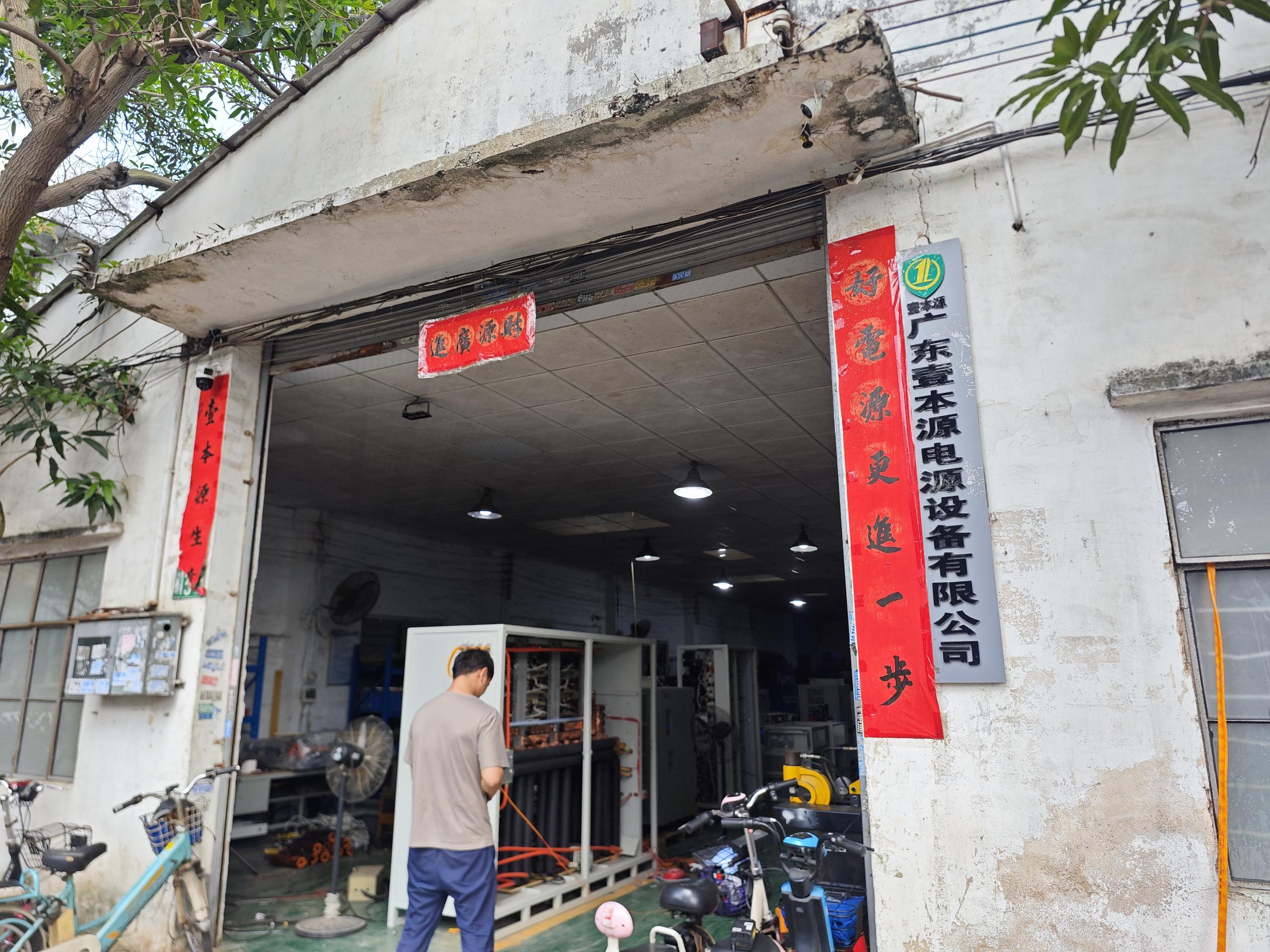
No Trading Middlemen. Pure Industrial Engineering.
Established in 2013 in Guangzhou, Guangdong, China, Guangdong Fenvix Technology Co., Ltd. has dedicated over 13 years to designing and manufacturing custom high-power DC systems, pulse rectifiers, and solid-state frequency converters. Unlike trading brokers, we operate our own 3,000 m² production floor, fully equipped with shearing, punching, CNC milling, and high-amperage copper busbar bending lines.
Every single power supply destined for Heredia undergoes full-load burn-in testing, oscilloscope waveform inspection, and insulation dielectric breakdown checks before seaworthy packaging. We fully accommodate custom 208V, 240V, 380V, 440V, and 480V 3-phase grid inputs commonly encountered in Central American industrial parks.
Frequently Asked Questions: Sourcing for Heredia Plants
Essential engineering, logistics, and power specification questions asked by plant managers and procurement engineers in Costa Rica.
What electrical input parameters can you build for Free Trade Zones in Costa Rica?
Why is Constant Current (CC) mandatory over Constant Voltage (CV) for medical titanium anodizing?
How does water cooling benefit cleanroom operations in Heredia?
Can Fenvix equipment interface with our automated SCADA and PLC control systems?
What are the typical shipping logistics, lead times, and Incoterms for Costa Rica?
Do you accept single-unit prototype or pilot line orders (No MOQ)?
Consult Directly With Our Power Conversion Engineers
Whether configuring a custom constant current titanium anodizer, closed-circuit plating rectifier, or automated polarity-reversing system for your Heredia plant, our technical team provides schematics and quotations within 24 hours.