Recommended Water Treatment & Electrochemical DC Power Supplies
Industrial-grade, high-frequency switching rectifiers with programmable auto-polarity reversal, constant-current precision, and anti-corrosion chassis optimized for Port-au-Prince processing conditions.
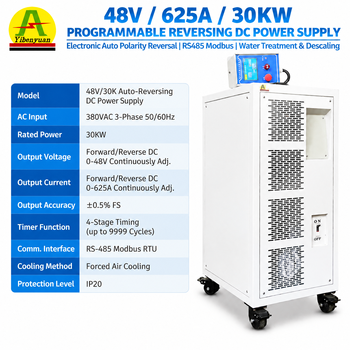
48V 625A 30kW Auto Polarity Reversing Supply
- Power / Volt30kW / 0–48V DC
- ReversalTimed Auto-Cycle (Sec/Hr)
- Control ModeRS485 Modbus / CC / CV
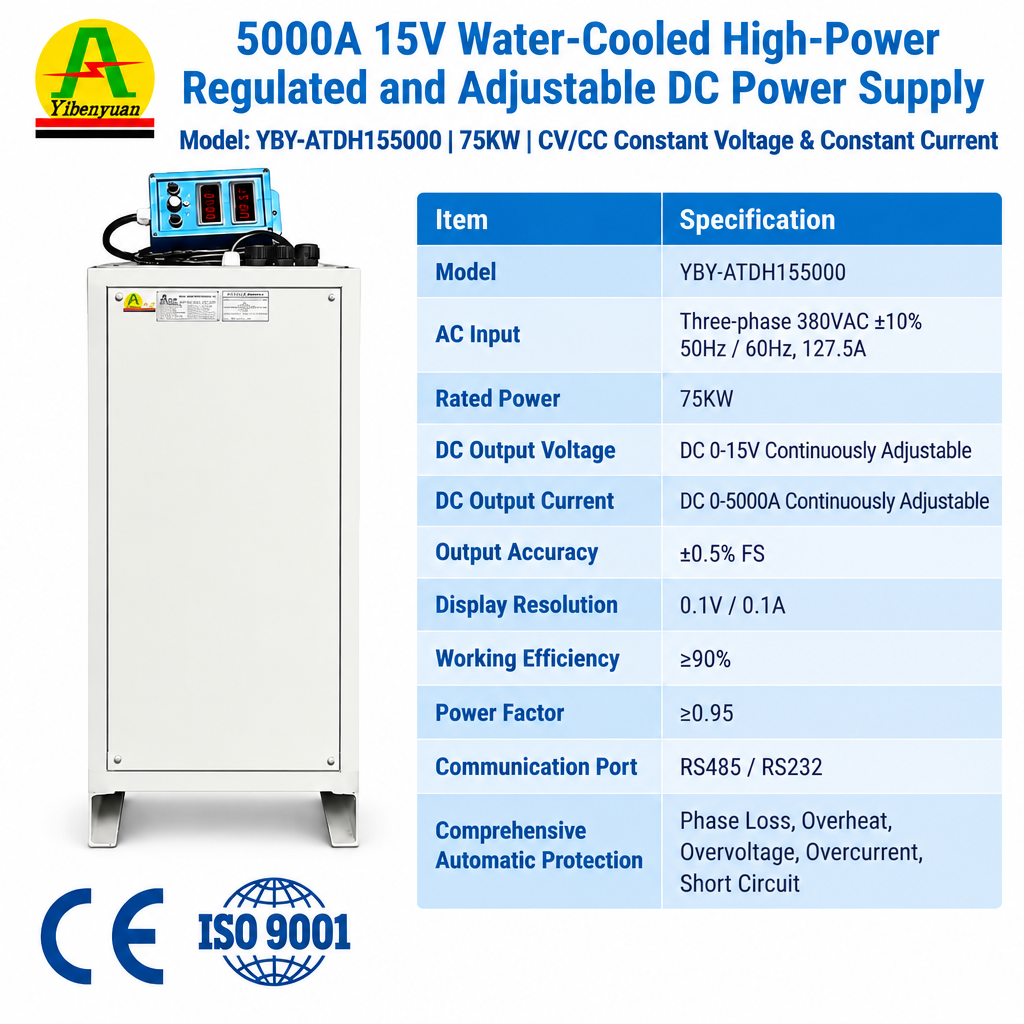
12V/15V 6000A 75kW Water-Cooled Descaling Rectifier
- Output Spec15V / 6,000A Constant
- Cooling TypeDeionized / Chilled Water
- Efficiency>90% at Rated Full Load
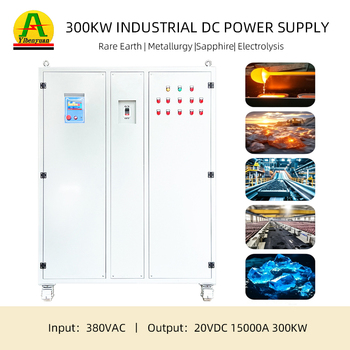
300kW 20V 15,000A Heavy Electrolysis Rectifier
- Power / Current300kW / 15,000A DC
- TopologyHigh-Frequency IGBT Bridge
- ProtectionPhase-Loss, Over-Temp, IP54
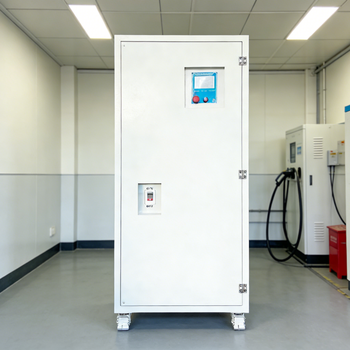
160kW 2500A Industrial Electrochemistry Source
- Current Stability≤ ±0.5% RMS
- Input Voltage380V / 440V 3-Phase AC
- DisplayTouch HMI + Analog Overrides
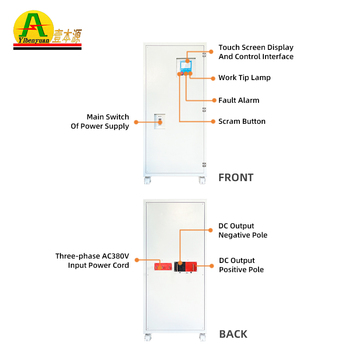
12V 8000A Water-Cooled Scale Precipitation Unit
- Output Power96kW Continuous Duty
- Duty Cycle100% 24/7 Heavy Load
- Corrosion ProofFully Sealed Internal Chassis
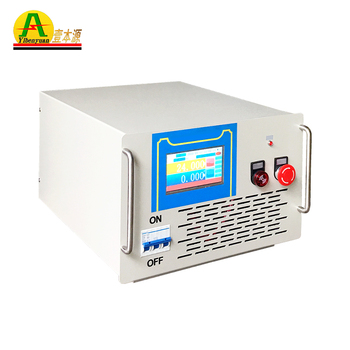
5000W High Voltage Electro-Deionization Source
- Voltage Range0–300V / 0–600V Variable
- Ripple Factor≤ 1% Low Ripple
- ApplicationEDI & Electro-Separation
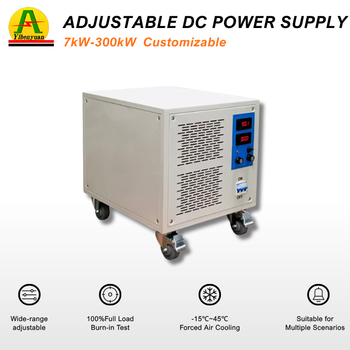
800V 50A 20kW Programmable Oxidation Source
- ControlDigital Microcontroller / Ramp
- Accuracy±0.2% Reading Precision
- Safety SystemArc Suppression & Interlocks
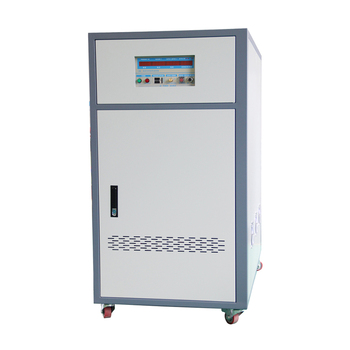
40kVA–500kVA Static Grid Frequency Converter
- Input/Output50Hz ↔ 60Hz Seamless Shift
- IsolationGalvanic Industrial Isolation
- Caribbean MatchAdapts Irregular Diesel Gen Output
Electrochemical Descaling Dynamics Under Caribbean Operating Realities
An authoritative engineering analysis on mitigating severe scaling in Port-au-Prince's groundwater and industrial cooling circuits using automated polarity-reversing DC power supplies.
1. Electrochemical Precipitation: The Physics of Hard Water Treatment
In modern industrial facilities, cooling towers, heat exchangers, and boiler makeup systems, the buildup of inorganic mineral scales—chiefly calcium carbonate (CaCO3), magnesium hydroxide (Mg(OH)2), and silica salts—presents an ongoing challenge to thermodynamic efficiency. In regions such as the Plaine du Cul-de-Sac aquifer basin surrounding Port-au-Prince, extracted groundwater frequently reveals total hardness concentrations exceeding 380 to 520 mg/L as CaCO3. When subjected to evaporative concentration cycles in industrial chillers, this rapid saturation leads to precipitation fouling across tube bundles.
Traditional chemical dosing via phosphonates, polyacrylic acids, or mineral acid treatments introduces prohibitive operational costs, logistical supply risks, and aggressive environmental discharges into surrounding coastal channels. Electrochemical descaling power supplies offer a robust, reagent-free physical-chemical alternative. By directing an accurately controlled DC electric field across an engineered catalytic anode (such as Ruthenium-Iridium coated MMO Titanium) and a stainless steel cathode cylinder, a controlled cathodic alkaline boundary layer is created:
Cathodic Reactions (Scale Precipitation Zone):
2H2O + 2e- → H2↑ + 2OH-
Ca2+ + HCO3- + OH- → CaCO3↓ + H2O
Mg2+ + 2OH- → Mg(OH)2↓
To ensure steady precipitation without rapid electrode passivation, modern rectifiers must sustain ultra-stable constant-current (CC) modes regardless of shifting water conductivity, which shifts dynamically with daily raw water drawdowns and intermittent rainwater dilution.
2. The Imperative of Microprocessor-Controlled Automatic Polarity Reversal
The operational bottleneck in non-reversing electrolysis descaling cells is cathodic encrustation. As the crystallized carbonate layer accumulates on the cathode, electrical resistance escalates, driving up terminal cell voltage, heating electrolyte streams, and decreasing current density. In older systems, this necessitated weekly mechanical maintenance shutdowns and acid dipping.
Fenvix delivers integrated high-speed polarity reversal architecture using solid-state IGBT H-bridge switching or integrated mechanical-contactor reversing stages. Under a customized 4-segment programmable schedule (e.g., 120 minutes direct polarity followed by 3 to 5 minutes reverse polarity), the previous cathode instantly becomes anodic. The momentary localized generation of oxygen and hydrogen gas bubbles at the metal-mineral interface, alongside localized hydronium ion (H+) production, chemically loosens and mechanically sloughs the scale off the electrode plates. The dislodged crystallization flakes drop harmlessly into a sediment collection cone for automatic flushing, restoring active surface area without chemical downtime.
3. Grid Instability and Harsh Environmental Conditions in Port-au-Prince
Deploying sensitive electronics within the Caribbean industrial corridor requires specialized hardening. Port-au-Prince and surrounding metropolitan hubs like Carrefour, Delmas, and Cité Soleil frequently encounter electrical disturbances: extreme line voltage sags (±20%), sudden brownouts, and frequency fluctuations produced by reliance on secondary diesel or heavy fuel oil (HFO) generators. Furthermore, coastal proximity yields high air salinity mixed with particulate humidity and elevated ambient temperatures averaging 32°C to 38°C inside unconditioned utility sheds.
To overcome these failure vectors, Fenvix DC rectifiers incorporate wide-tolerance three-phase inputs (380V/440V ± 15%, 50Hz/60Hz compatible), heavy-duty transient voltage surge suppression (TVSS), and potted copper magnetic cores. For extreme corrosive marine atmospheres, our closed-loop water-cooled configurations eliminate open-air intake fans, protecting the primary electronics inside a sealed, IP54/IP55 industrial cabinet.
Localized Application Scenarios in Port-au-Prince
From coastal beverage facilities to municipal treatment plants, discover how Fenvix descaling rectifiers resolve operational hurdles across Haiti’s key economic hubs.
Beverage, Rum & Food Processing
Installed across distillery cooling coils and brewery refrigeration condensers in Port-au-Prince, keeping plate heat exchangers clean of scale without biocides that risk product contamination.
Industrial RO Pre-Treatment
Mitigates severe calcium fouling ahead of Reverse Osmosis (RO) membranes in Cul-de-Sac manufacturing plants, multiplying membrane lifetime and lowering operational cartridge replacement costs.
Heavy Diesel & HFO Power Stations
Maintains high heat transfer rates in jacket-water and closed cooling loops for independent diesel generation plants powering industrial zones across Carrefour and Port-au-Prince harbor.
Commercial HVAC Chillers & Resorts
Delivers chemical-free maintenance for evaporative cooling towers in regional hospital centers, logistics hubs, and commercial complexes, reducing Legionella risks and water consumption.
Technological & Sustainability Trends in Haitian Water Infrastructure
Macro dynamics accelerating the adoption of electrochemical water treatment and smart industrial power supplies.
Decarbonization, Zero Liquid Discharge (ZLD), and Chemical-Free Mandates
Throughout the Caribbean Basin, maritime environmental policies and rising chemical import tariffs are prompting manufacturing facilities to reconsider chemical blowdown practices. Discharging high-phosphate, chromate, or chlorinated cooling water into the Gulf of La Gonâve meets increasing public and institutional resistance. Electrochemical descaling transforms dissolved minerals into dry, solid mineral pellets that are non-hazardous, enabling facilities to achieve elevated cycles of concentration (CoC) and cut makeup water intake by up to 35%.
Modernization from Antique SCR Rectifiers to High-Frequency Inverters
A widespread transition is occurring across industrial parks like Sonapi. Outdated Silicon Controlled Rectifiers (SCR / Thyristor) feature low electrical efficiency (often 68%–74%), high harmonic pollution (THD > 30%), and power factors below 0.8. When fed by diesel power plants, these outdated units waste substantial fuel in internal winding losses. Modern Fenvix IGBT-based high-frequency switching rectifiers achieve steady efficiencies exceeding 90% across the complete 20%–100% load spectrum, accompanied by a near-unity power factor (≥0.95), cutting generator load and lowering fuel costs.
Remote Automation and Telemetry Integration
With operational technical staff often managing multiple facility sites around Port-au-Prince, plant managers increasingly mandate smart communication ports. Fenvix units offer native RS485 interfaces speaking standard Modbus-RTU, dry-contact alarm outputs for SCADA links, and support for automated cloud-based telemetry. Operational teams can track amp-hours, schedule reversal intervals, and trigger fault resets from a centralized control room.
Guangdong Engineering Precision & Certified Sourcing Directness
Established in 2013, Guangdong Fenvix Technology Co., Ltd. builds heavy-duty power rectifiers with zero middleman overhead and full ISO 9001 quality compliance.
13+ Years Specialized Customization
Over a decade solving non-standard power conversion requirements from 12V 15,000A high-current electrochemical units to 100kV capacitor chargers, matching customer load specs directly.
3,000m² Integrated Manufacturing
Complete in-house mechanical fabrication: CNC punching, busbar bending, precision milling, automated transformer winding, and complete assembly under one monitored roof in Guangzhou.
Rigorous Full-Load Testing & Burn-In
Every exported unit undergoes incoming component screening, oscilloscope waveform ripple verification, thermal imaging inspection, and minimum 24-hour continuous resistive burn-in.
No MOQ Barrier & Fast Prototypes
Whether you require a single 30kW unit for a pilot descaling system or fleet-wide containerized substations, we supply single units (MOQ: 1 Set) with full engineering assistance.
TÜV Rheinland On-Site Audited
Our production facilities, commercial export records, and QA procedures are independently audited and verified on site by TÜV Rheinland, guaranteeing contractual transparency.
Caribbean Seaworthy Logistics (CIF/DDP)
Export crating featuring vacuum moisture barriers, anti-fungal wood packaging, desiccant charges, and flexible incoterms (FOB, CIF Port-au-Prince, CIP, DDP) supporting smooth import clearance.
 CE Certified
 RoHS Compliant
 LVD Safe
 EMC Shielded

Frequently Asked Questions by Haitian & Caribbean Buyers
Answers to common technical, electrical, environmental, and financial questions when procuring rectifiers from China.
What specific parameters are needed to size an electrochemical descaling power supply?
How do your rectifiers handle power surges and brownouts common in Port-au-Prince?
Should we select forced air cooling or water cooling for local Caribbean plant conditions?
Can the polarity reversal cycle be adjusted, and does current ramp down before reversing?
What are your warranty terms and how is overseas technical support executed?
Which international payment methods and shipping terms are available for Haiti?
Optimize Your Industrial Water Treatment Rectification
Provide your required voltage, amperage, water chemistry profile, or plant dimensions. Our senior electrochemical power engineers will supply an engineered proposal, electrical drawings, and a direct factory quotation within 24 hours.