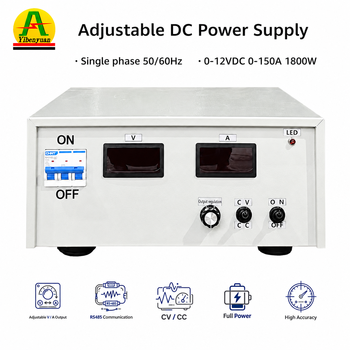
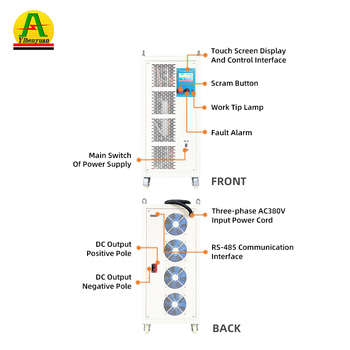
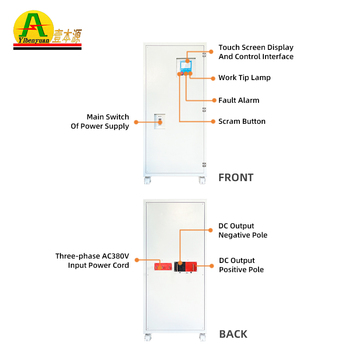
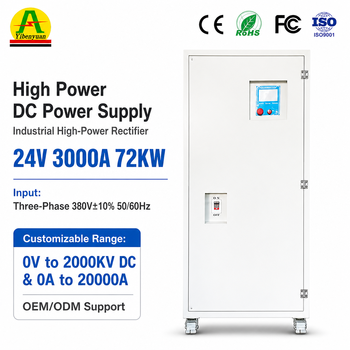
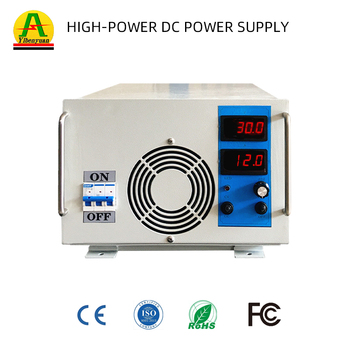
Explore our export-grade high-frequency DC switching power supplies and periodic pulse rectifiers. Built with high-purity copper busbars, anti-corrosive sealed cabinets, and Siemens PLC/RS485 smart monitoring.
In electroplating and precision surface engineering, electrodeposition performance is governed by Faraday's laws of electrolysis, diffusion layer dynamics, and nucleation energetics. Traditional Direct Current (DC) electroplating rectifiers generate a continuous, steady-state cathodic polarization. While adequate for basic decorative finishes, continuous DC deposition causes the rapid depletion of metal ions within the immediate hydrodynamic boundary layer ($Nernst$ diffusion layer, δ). This ion starvation effect promotes coarse crystal growth, dendritic nodule formations, uneven throwing power in recessed geometries, and micro-porosity across component edges.
Pulse Electroplating Power Supplies revolutionize this chemical kinetic state by introducing high-frequency current pulsing consisting of an on-time ($T_{\text{on}}$) and off-time ($T_{\text{off}}$), typically oscillating from 100 Hz to over 20 kHz. During $T_{\text{on}}$, a substantially elevated peak current density ($J_p$) is deployed, inducing an extremely high cathodic overpotential. Thermodynamically, high overpotentials drastically lower the critical nucleation energy, favoring the spontaneous generation of fine-grained, microcrystalline or even nanostructured metallic grains rather than the expansion of existing crystals.
During the subsequent $T_{\text{off}}$ relaxation period, the electrochemical mass transfer kinetics shift entirely: metal ions from the bulk electrolyte diffuse back into the depleted boundary layer, restoring ion concentrations near the cathode interface. Crucially, gas molecules such as codeposited hydrogen ($H_2$) desorb from the substrate surface, virtually eliminating hydrogen embrittlement—a critical defect vulnerability in high-tensile fasteners, aerospace hardware, and marine offshore components.
| Electrodeposition Parameter | Conventional Continuous DC Rectifier | IGBT High-Frequency Pulse Power Supply | Metallurgical Benefit |
|---|---|---|---|
| Nucleation Density | Low (dominated by crystal growth) | Extremely High (homogeneous nucleation) | Amorphous, dense grain structure without micro-voids |
| Diffusion Layer Thickness (δ) | Static, thick steady-state barrier | Pulsed, intermittent relaxation layer | Drastically reduced concentration polarization |
| Throwing Power & Uniformity | Poor thickness distribution on complex forms | Superior macro- and micro-throwing power | Consistent plating thickness on blind holes and threads |
| Precious Metal Consumption (Au/Ag) | Standard benchmark (baseline) | 20% – 38% reduction in layer requirement | Lower porosity allows thinner coatings to pass ISO salt spray |
| Hydrogen Embrittlement Risk | High (continuous entrapment of $H^+$) | Minimal (continuous desorption during $T_{\text{off}}$) | Maximized fatigue resistance in structural marine steels |
| Power Conversion Efficiency | 65% – 75% (traditional SCR/thyristor) | 90% – 93% (high-frequency IGBT switching) | Significantly reduced electrical utility consumption |
For advanced metallurgical applications, Periodic Pulse Reverse (PPR) power supplies extend these capabilities. By applying a short anodic (reverse) pulse at controlled intervals, the electroplating system electro-strips the micro-protrusions where electric field flux lines naturally converge. This microscopic electropolishing effect flattens topological peaks, producing mirror-smooth finishes and enabling pore-free hard chromium, nickel, and copper deposition at significantly accelerated deposition rates.
Addressing the specific engineering challenges of Liberta's humid, tropical marine climate, electrical grid variability, and expanding light manufacturing infrastructure.
Operating in proximity to Falmouth Harbour and English Harbour, marine mechanical workshops in and around Liberta demand resilient surface coatings. High-frequency pulse electroplating supplies apply dense, crack-free nickel, passivated zinc, and hard chrome onto stainless steel, bronze fittings, and deck hardware, resisting premature salt-fog corrosion and galvanic pitting.
Coastal construction across Antigua relies on extruded structural aluminum that must withstand extreme UV exposure and saline atmospheric moisture. Fenvix constant-current anodic oxidation rectifiers provide precise ramping profiles for architectural Type II and Type III hard anodizing, forming impervious aluminum oxide barrier films that prevent chalking and filiform degradation.
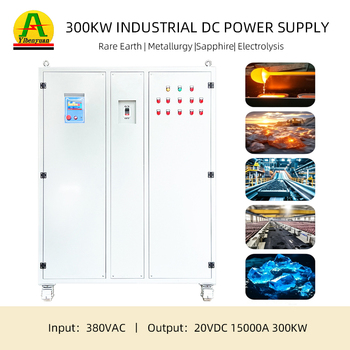
Re-manufacturing hydraulic cylinders, engine crankshafts, and heavy yellow-iron equipment in local repair bays requires thick, wear-resistant deposition. Our 48kW to 300kW industrial rectifiers supply high-amperage ripple-free current with automatic duty cycles, yielding rock-well hardness ratings upwards of 68 HRC on salvaged machinery shafts.
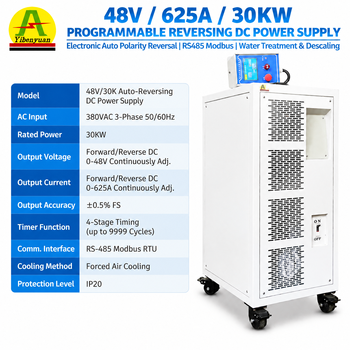
Industrial washbays, commercial chillers, and localized water processing plants in Liberta utilize Fenvix polarity-reversing DC power supplies. Engineered with programmable automatic 4-stage timers, these units break down limescale formation on titanium cathode tubes and degrade complex effluents without chemical additives.
With regional industrial users transitioning toward commercial rooftop solar PV to hedge against volatile electricity tariffs, our IGBT switching rectifiers feature ultra-low harmonic distortion (THD < 5%) and power factors > 0.95. This prevents nuisance tripping when running directly alongside solar grid-tie inverters and diesel gensets.
Supporting regional aviation support and specialist fabrication, our programmable DC sources provide precision power for testing avionics subsystems, electroforming precision stamping dies, and electro-stripping precious metals with exact ampere-hour measurement down to milliamp increments.
Strategic manufacturing modernization demands higher electrical efficiency, environmental compliance, and integrated smart telematics.
Legacy electroplating facilities across the Caribbean have historically relied on heavy Silicon Controlled Rectifiers (SCR) or oil-immersed transformers. These older technologies suffer from notoriously low efficiency (60–70%), significant harmonic contamination on local supply feeders, and heavy low-frequency 300Hz ripple that compromises metal grain cohesion.
Modern operations in Liberta are upgrading to 20kHz+ IGBT (Insulated Gate Bipolar Transistor) switching converters. The reduction in cabinet footprint (over 60% smaller) combined with a continuous 90%+ electrical efficiency dramatically cuts monthly electricity overhead—a critical operating consideration given local commercial power tariffs.
High ambient humidity combined with airborne oceanic salt aerosol represents an aggressive threat to power electronics. The technical trend in Liberta points toward modular, fully enclosed IP54 cabinets with separated airflow tunnels or 100% closed-loop deionized water cooling systems.
Concurrently, surface finishing plants are mandating digital telemetry. Fenvix integrates RS485 Modbus, Profibus, and optional cloud gateway modules into every power supply, allowing plant managers to monitor voltage profiles, ampere-hour accumulation, and fault status remotely via industrial SCADA or mobile browsers.
A direct, verified industrial power systems manufacturer—not a commercial trading company. Engineered in our specialized ISO 9001 facility in Guangzhou, China.
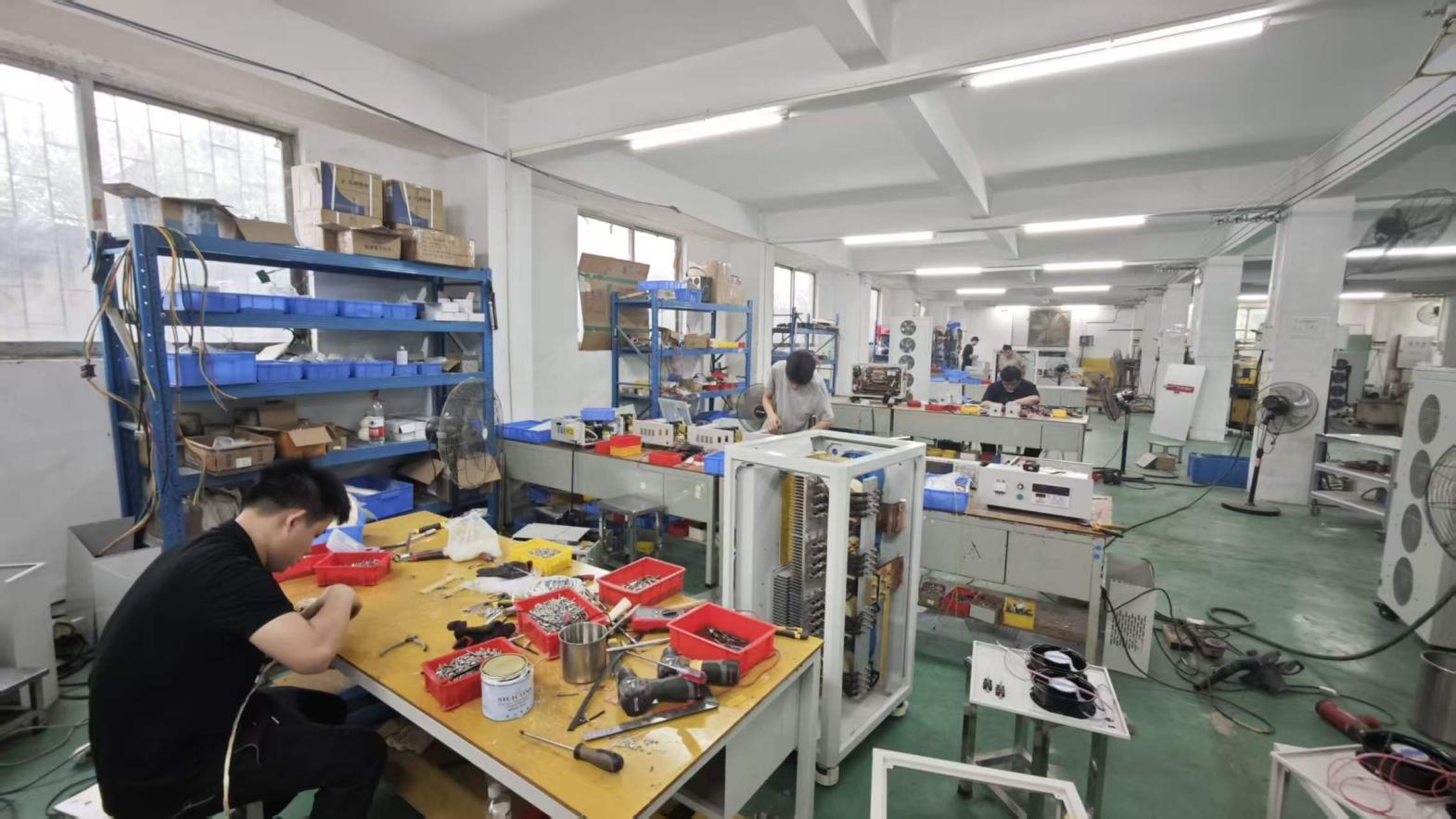
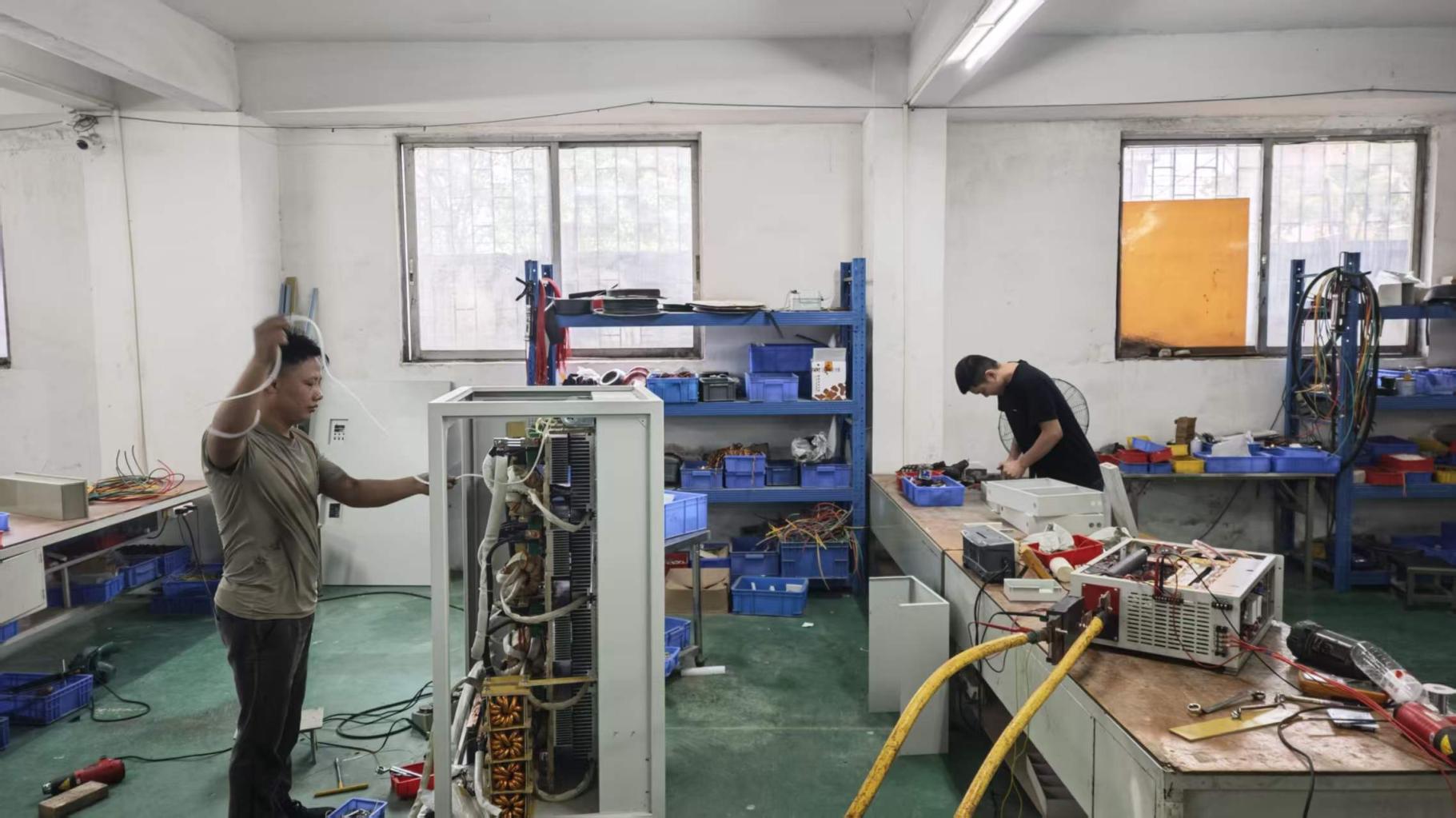
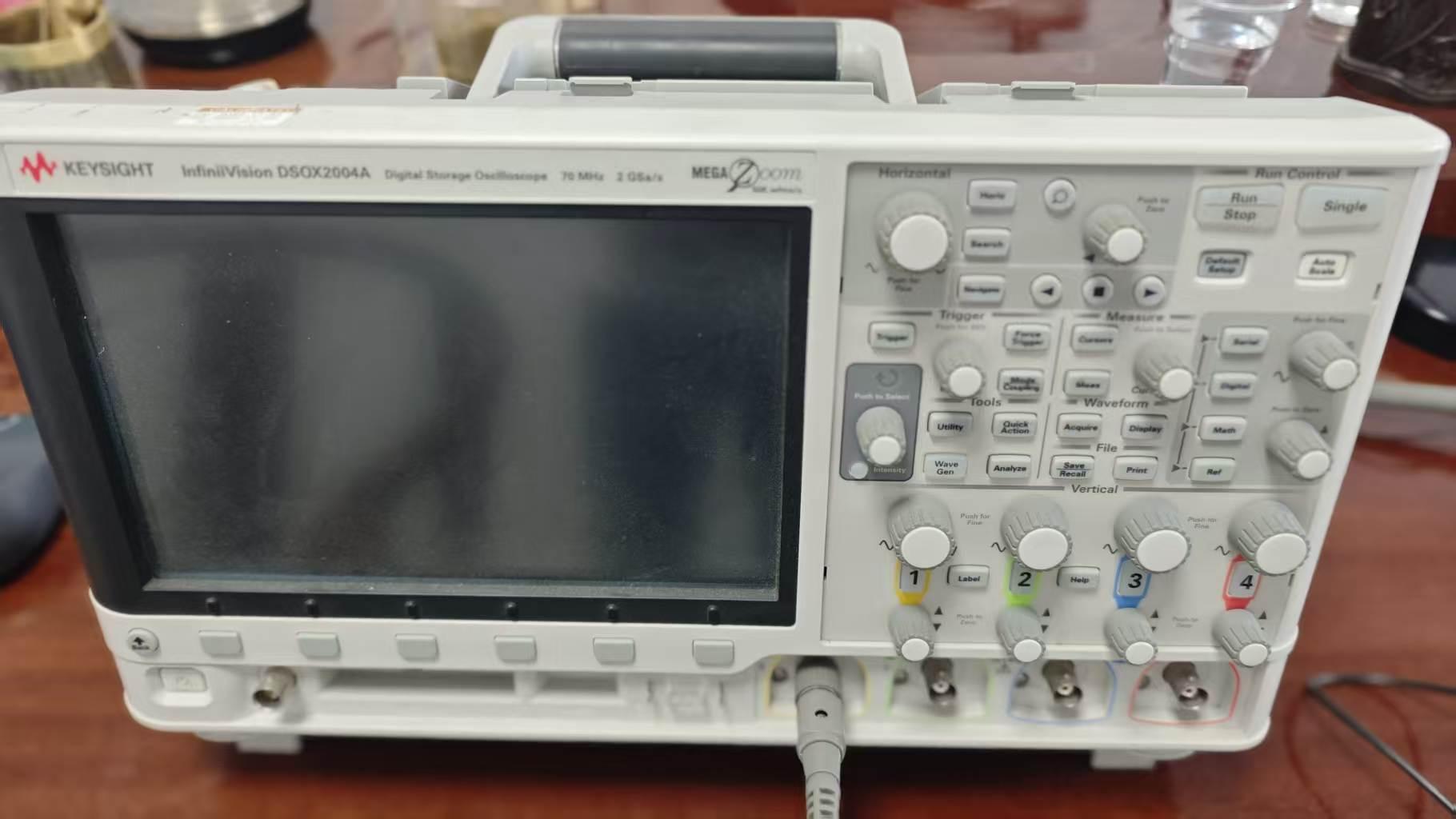
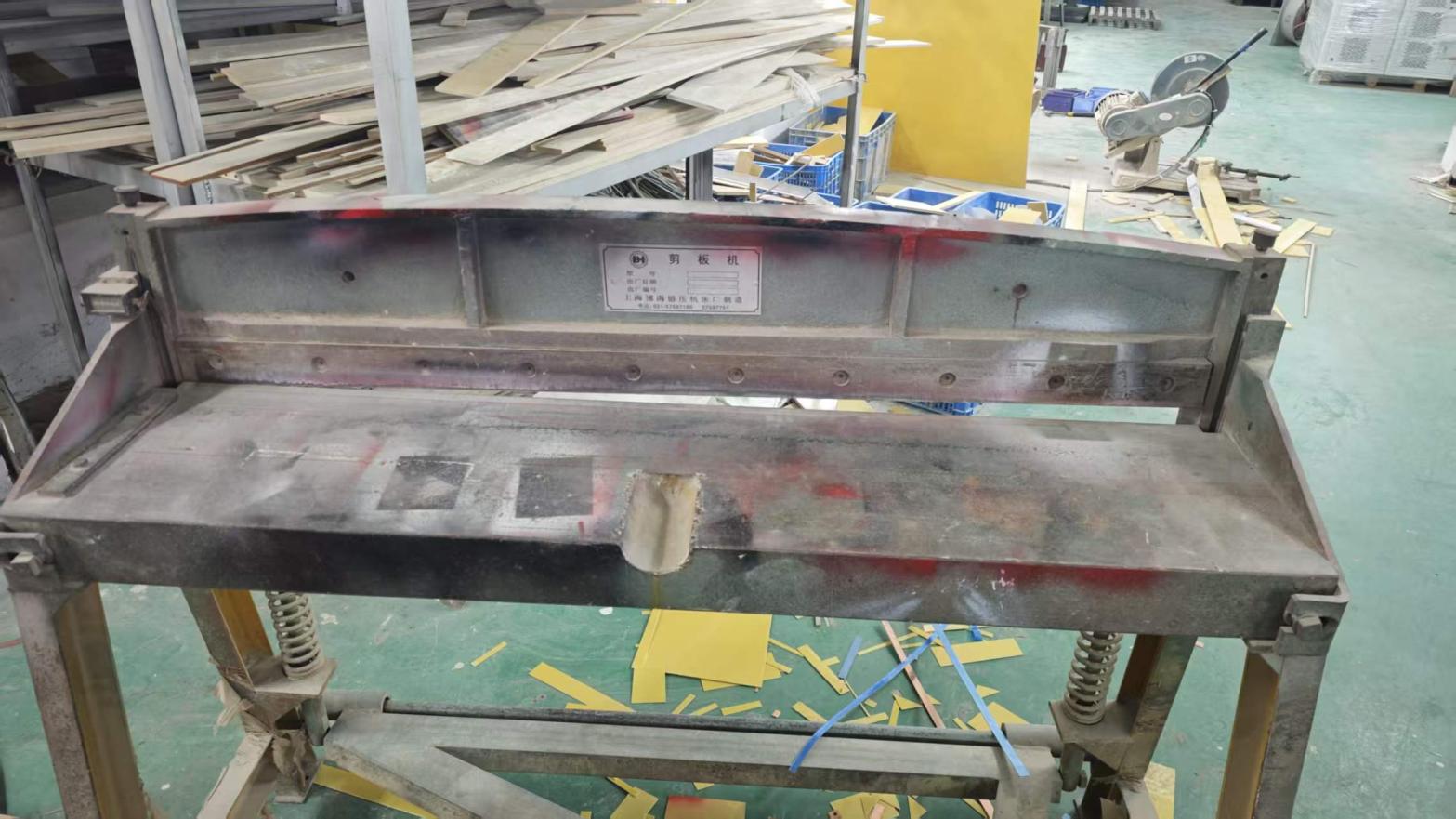
Established in 2013, Guangdong Fenvix Technology Co., Ltd. maintains a fully integrated 3,000 m² production ecosystem. Unlike assemblers who outsource sheet metal and magnetic subassemblies, Fenvix controls every metallurgical, thermal, and electrical tolerance in-house. Our precision equipment includes hydraulic plate shearing, CNC punching, automated milling, drilling, and busbar tapping machines, ensuring every heavy-copper conductor is calibrated for high-amperage current sharing without thermal hotspots.
Clear, direct answers regarding electrical compatibility, international freight, sea-freight packaging, and on-site operation.