Industrial-Grade Hydrogen & Electrochemistry Power Systems
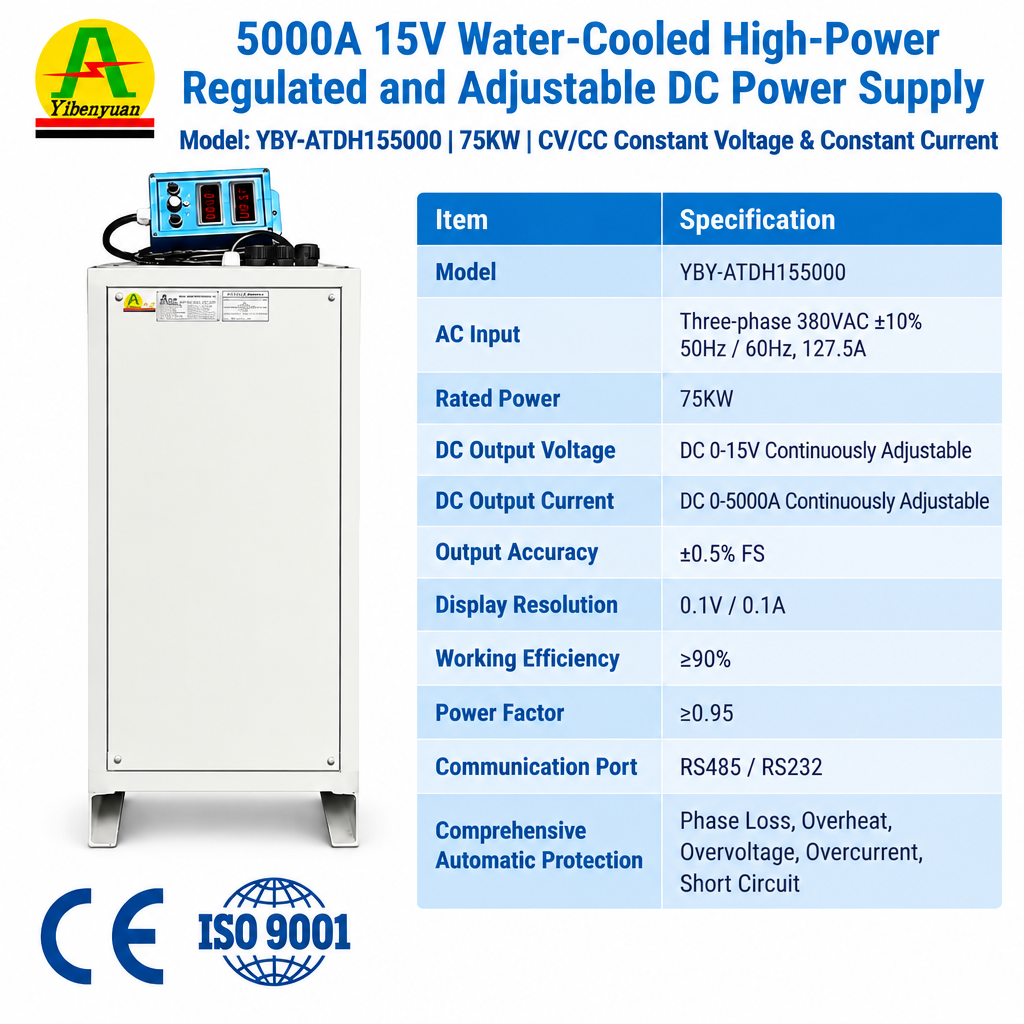
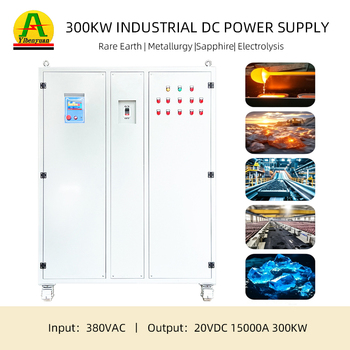
Proven high-efficiency DC power modules ranging from 100A laboratory units to 15,000A megawatt-scale water-cooled electrolysis rectifiers engineered with active thermal management and sub-1% ripple control.
China Top Hydrogen Electrolysis Power Supply Factories & Factory in St. George’s: Technical Architecture Whitepaper
The global transition toward green hydrogen requires an unprecedented convergence of electrochemistry and precision high-power electronics. At the center of any commercial water electrolysis plant—whether employing Alkaline Water Electrolysis (AEL), Proton Exchange Membrane (PEM), Anion Exchange Membrane (AEM), or Solid Oxide Electrolyzer Cells (SOEC)—lies the DC power conditioning unit (rectifier). As engineering teams and industrial operators in St. George’s, throughout the wider Caribbean basin, and across global maritime hubs accelerate clean energy mandates, securing power supplies designed explicitly for the delicate physics of electrolysis stacks has become the critical factor in determining Levelized Cost of Hydrogen (LCOH), stack lifetime, and electrical safety.
Modern hydrogen electrolyzers behave as dynamic, highly non-linear electrochemical loads. Unlike legacy electroplating or resistive heating setups, an electrolyzer stack presents an inherent overpotential barrier. The polarization curve exhibits an open-circuit voltage threshold below which no hydrogen production occurs, followed by an operating slope where millivolt deviations yield thousands of amperes of differential current. Supplying power into this non-linear window from intermittent power generation sources (such as solar photovoltaics and wind turbines native to island power grids) demands instantaneous closed-loop feedback, sub-millisecond dynamic response, and near-unity power factor conversion.
Guangdong Fenvix Technology Co., Ltd. has established itself as an engineering powerhouse among China's top hydrogen electrolysis power supply manufacturers. By integrating high-frequency Insulated Gate Bipolar Transistor (IGBT) switch-mode pulse-width modulation (PWM) topologies, Fenvix eliminates the severe current harmonic distortion and poor dynamic response historically associated with multi-pulse Thyristor (SCR) bridge rectifiers. For infrastructure developments and pilot production plants in St. George’s, where electrical grids have limited short-circuit capacity, the mitigation of grid harmonics and the suppression of low-frequency DC ripple are not merely efficiency metrics—they represent fundamental grid-code prerequisites.
| Performance Parameter | High-Frequency IGBT PWM (Fenvix) | Legacy 12-Pulse SCR (Thyristor) | Direct Impact on Electrolyzer Stacks |
|---|---|---|---|
| Current Ripple Factor (RMS) | < 1% to 2% | 5% to 12% (without massive LC chokes) | Prevents catalyst layer erosion & membrane hot spots |
| System Conversion Efficiency | 92% – 95.5% | 84% – 89% | Reduces parasitic parasitic energy, lowers $/kg H₂ cost |
| Input Power Factor (λ) | ≥ 0.95 across full dynamic load | 0.65 – 0.85 (degrades at partial loads) | Prevents utility reactive power penalties in microgrids |
| Dynamic Load Response Time | < 5 ms (PWM closed-loop control) | 100 ms – 300 ms | Smoothly tracks rapid solar/wind generation fluctuations |
| Physical Enclosure Footprint | Compact, high volumetric power density | Bulky, requires heavy low-frequency iron core | Optimized for modular skid-mounted and containerized plants |
A critical engineering nuance often overlooked during electrolyzer procurement is the destructive impact of residual AC ripple superimposed on the DC bus. In PEM and alkaline stacks, high ripple current causes parasitic capacitive micro-charging across the electrode-electrolyte interface. This cyclic stress accelerates the dissolution and agglomeration of expensive noble metal catalysts (platinum, iridium oxide, ruthenium) and causes localized thermal hotspots inside the proton exchange membranes. Fenvix addresses this failure mode by integrating high-order multi-stage LC ripple filters and multi-phase interleaved PWM switching, driving DC ripple down to sub-1% thresholds, thereby extending stack operating life beyond 60,000 to 80,000 operational hours.
Localized Application Scenarios in St. George’s & Island Microgrids
St. George’s, characterized by its deep-water coastal port, solar irradiance, isolated transmission infrastructure, and tropical maritime climate, serves as a prime deployment territory for decentralized green hydrogen and electrochemical processing. Applying industrial power electronics in this region demands targeted engineering for environmental durability and grid stability.
Renewable Microgrid Balancing & Long-Duration Storage
In St. George's and across Grenada, the rapid deployment of utility-scale solar PV creates steep generation peaks that traditional diesel-hybrid grids cannot absorb without curtailment. Water electrolysis acts as a controllable, high-capacity dynamic sink. Fenvix programmable DC power supplies feature RS485/Modbus-RTU and analog 0-10V interfaces that accept real-time curtailment setpoints from Energy Management Systems (EMS), ramping stack production within milliseconds to balance the local grid.
Maritime Port Decarbonization & Green Fuel Bunkering
The bustling maritime corridor of St. George’s Harbor supports commercial shipping, cruise lines, and coastal fishing fleets. The regional transition toward green methanol, hydrogen-assisted tugboats, and zero-emission auxiliary shore power requires on-site hydrogen generation. Fenvix high-current 5,000A to 15,000A rectifiers supply the megawatt-scale direct current required for dockside containerized electrolyzers, minimizing transport hazards by generating fuel at the point of bunkering.
Seawater Desalination & Electro-Chlorination Loops
Clean hydrogen production via electrolysis requires high-purity deionized feed water. In island ecosystems, electrolysis plants are coupled with seawater reverse osmosis (SWRO) facilities. Fenvix manufactures dual-purpose power architectures: polarity-reversing DC power supplies for electrochemical water disinfection and descaling, alongside precision electrolysis rectifiers operating off the purified water stream, creating a self-sustaining water-energy nexus.
Localized Trends: Designing for Tropical Marine Resilience
Deploying sensitive power electronics in coastal environments such as St. George’s introduces severe operational challenges: ambient temperatures exceeding 35°C, relative humidity hovering between 80% and 95%, and salt-laden airborne aerosols. In typical forced-air cooled power supplies, salt fog drawn through internal heat sinks causes galvanic corrosion of copper busbars, moisture bridging across surface-mount components, and premature dielectric breakdown in high-voltage IGBT drivers.
To overcome these harsh island parameters, Fenvix engineers deploy a dual-barrier protection methodology:
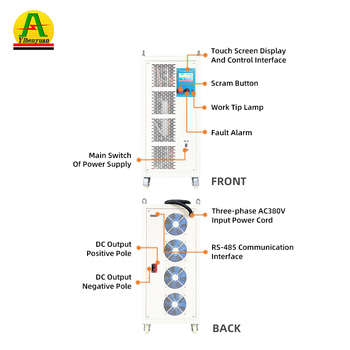
- Totally Enclosed Water-Cooled Cabinets (IP54 / NEMA 4X Equivalence): By routing deionized liquid coolant directly through vacuum-brazed copper or aluminum cold plates mounted to the IGBT collectors and high-frequency transformer windings, the internal electronic bay is hermetically sealed against corrosive outdoor air ingress.
- Three-Proof Conformal Coating (Nano-Polyurethane): All digital signal processing (DSP) control boards, gate drives, and auxiliary sensors undergo automated precision immersion coating, rated for continuous operation under severe industrial chemical and salt-fog conditions (IEC 60068-2-11 standards).
- Heavy-Gauge Nickel-Plated Copper Busbars: High-current terminal connections are manufactured in-house from oxygen-free electrolytic copper (purity >99.95%), finished with electrolytic nickel plating to prevent surface oxidation, galvanic pitting, and contact resistance rise in maritime ambient air.
Why Global EPCs Choose Guangdong Fenvix Technology
Combining 13+ years of power electronics innovation with direct factory ownership, rigorous ISO 9001 quality workflows, and third-party verified production capabilities.
TÜV On-Site Verified
Factory facilities, manufacturing capacities, and creditworthiness audited and confirmed on-site by TÜV Rheinland.
In-House Sheet Metal & Busbars
Full metal shearing, CNC punching, milling, drilling, and copper fabrication conducted internally for total dimensional control.
100% Full-Load Burn-In
Every single power unit undergoes full current and thermal load bank testing with calibrated digital oscilloscopes before packaging.
No MOQ & Agile Customization
We support prototype development (MOQ: 1 unit) through to multi-megawatt series manufacturing with bespoke voltage/current mapping.
Frequently Asked Questions by Industrial Buyers & Engineers
What technical parameters must be provided to size a custom electrolysis power supply?
Why is water cooling preferred over forced air cooling for megawatt electrolysis plants in tropical climates like St. George's?
How do Fenvix IGBT rectifiers protect the local grid from harmonic distortion (THD)?
Can Fenvix DC power supplies directly track rapid power fluctuations from solar and wind farms?
What international certifications and Factory Acceptance Testing (FAT) procedures are provided?
What are the available logistics, trade terms, and overseas technical support frameworks?
 CE Conformity
 RoHS Compliant
 LVD Safety
 EMC Verified

Ready to Engineer Your Clean Hydrogen Power Infrastructure?
Connect directly with our senior power systems engineering team in Guangdong. We design, manufacture, and test customized, low-ripple industrial DC rectifiers tailored to your exact stack specifications and site electrical codes.