Precision Electroplating Switching Power Supplies for Metal Bender Operations
Explore our field-tested switch-mode rectifiers (SMPS) designed to withstand corrosive acid-mist environments, eliminate edge burning on acute bends, and ensure grain refinement on formed alloys.

12V/15V 5000A–6000A 75kW Water-Cooled Plating Rectifier
- Output Rating:12V/15V | 0–6000A Adj.
- Cooling Topology:Deionized Water Cooling
- Control Circuit:DSP CC/CV Digital Reg.
- Bender Suitability:Heavy Formed Tube Lines
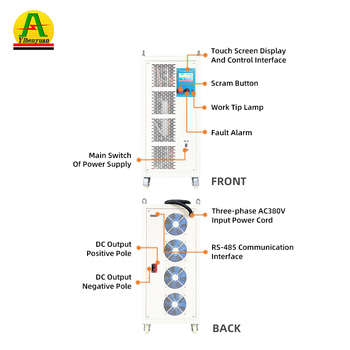
12V 4000A 48kW High-Frequency IGBT Plating Rectifier
- Output Range:0–12V DC / 4000A Continuous
- Efficiency:≥ 90% (Full Load)
- Interface:RS485 Modbus / PLC 4-20mA
- Bender Suitability:Wire Basket & Stamped Parts

8000A 12V High-Amperage Water-Cooled Galvanizing Source
- Max Output:12V DC | 8000A High Amp
- Enclosure Rating:Sealed IP54 Corrosion-Proof
- Protection:Over-Temp, Phase-Loss, Short
- Bender Suitability:Continuous Conduit Bending
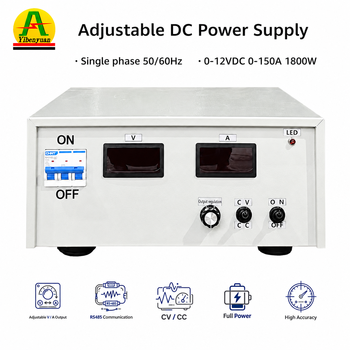
12V 150A Precision Electroplating Bench-Top Rectifier
- Current Output:0–150A Ultra-Stable DC
- Ripple Factor:< 1% Peak-to-Peak
- Compliance:CE, EMC, LVD, RoHS
- Bender Suitability:Springs, Micro-Bent Connectors
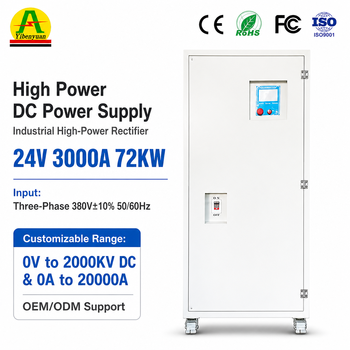
100A–3000A 12V/24V Anodic Oxidation Power Supply
- Ramp Control:Multi-Step Current Stepping
- Modes:Constant Voltage / Current
- Architecture:Modular Parallel Redundancy
- Bender Suitability:Formed Aluminum Profiles
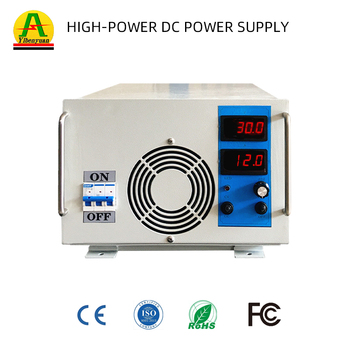
150V 50A Titanium & Hard-Alloy Anodizing Rectifier
- Voltage Rating:0–150V High-Voltage DC
- Regulation:High Precision 0.1V Step
- Cooling System:Forced Intelligent Air
- Bender Suitability:Titanium Hydro-Formed Bends
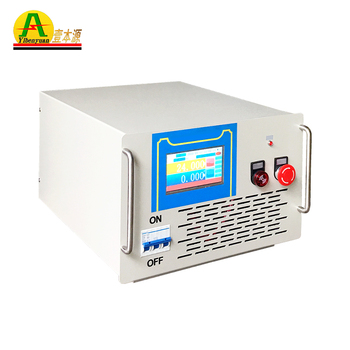
5000W E-Coat Electrophoresis DC Power Source
- Input Voltage:380VAC 3-Phase / 220V 1-Phase
- Voltage Stability:≤ 0.5% Load Regulation
- Soft-Start:0–999s Adjustable Ramp
- Bender Suitability:Bent Tubular Chassis E-Coating

300kW 20V 15,000A Massive Electrolytic Plating System
- Maximum Output:20V DC | 15,000A Continuous
- Architecture:N+1 Modular Interleaved IGBT
- Thermal Mgmt:Pure Copper Heat Exchanger
- Bender Suitability:Structural Heavy Bent Piles
Solving Complex Electrochemical Challenges in Post-Bending Surface Finishing
How high-frequency switch-mode power rectifiers overcome mechanical stress deformation, irregular current-density spikes, and grain boundary oxidation in bent metal components.
The Microstructural Impact of Cold-Bending on Electrodeposition
When metals undergo severe mechanical forming—such as mandrel bending in automotive exhaust tubing, rotary draw bending of copper busbars, or automatic CNC wire bending for structural springs—the crystal lattice undergoes non-uniform stress deformation. The outer radius undergoes tensile elongation, resulting in grain boundary thinning and micro-fissuring, while the inner radius experiences extreme compressive plastic flow.
When immersed into an electrolyte bath (such as bright zinc, hard chrome, copper-nickel, or acid cadmium), this differential mechanical strain creates localized electrochemical potential variances across the workpiece. Traditional legacy Silicon Controlled Rectifiers (SCR) operating at line frequencies (50Hz/60Hz) output high residual ripple (typically 5% to 12% without massive external choke filters). This waveform instability exacerbates uneven metal ion migration, causing localized hydrogen embrittlement at tensile zones and burning at tight bend apexes.
Switch-Mode IGBT Architecture: Active Current Density Uniformity
Modern high-frequency Switching Power Supplies (SMPS) manufactured by Guangdong Fenvix Technology Co., Ltd. tackle this failure mode through high-speed Pulse Width Modulation (PWM) switching at 20kHz to 50kHz. By employing high-grade insulated-gate bipolar transistors (IGBTs) combined with high-flux nanocrystalline toroidal transformers, the output DC ripple is dynamically attenuated to ≤ 2% across the entire 0–100% load spectrum.
This ultra-smooth direct current dramatically increases the throwing power of the electroplating chemistry. Metal ions deposit uniformly into low-current density recess areas without burning high-stress bend ridges. For manufacturing plants operating continuous wire or pipe bending stations, Fenvix custom-engineered rectifiers ensure consistent layer thickness, eliminating post-bend flaking, premature corrosion, and adhesion failure during tensile testing.
Tailored Surface Treatment Topologies Across Industrial Metal Bending Lines
Discover how custom electroplating power supplies interface directly with specialized CNC bending equipment, stamping machines, and automated barrel/rack galvanic lines.
Automotive Exhaust & Fuel Line Tube Bending
Multi-axis mandrel bent stainless steel and aluminized steel tubing require high-throwing-power zinc-nickel or cathodic electro-deposition. Fenvix programmable rectifiers maintain strict constant current profiles during deep rack immersion, ensuring uniform barrier layer coverage over sharp 1.5D and 2D elbow radii without pinholes.
CNC Wire Bending & Spring Forming
High-speed automated wire benders produce intricate 3D spring clips, wire baskets, and electrical contact springs. Operating in high-speed automated barrel lines, our rectifiers deliver high peak efficiency with soft-start current ramping that suppresses spark erosion and contact welding between rapidly tumbling small bent parts.
Press Brake Sheet Metal & Enclosure Fabrications
Heavy chassis, bent server racks, and folded electrical enclosures exhibit localized micro-tensile cracks along press brake bend lines. Our 4000A to 8000A galvanizing rectifiers feature multi-step programmable CC/CV profiles, depositing sacrificial zinc crystals deeply into micro-fractures for enhanced salt-spray endurance (>720 hours).
Copper & Aluminum Busbar Cold-Bending
Switchgear busbars bent at 90-degree angles experience intense skin-effect stress. High-purity tin or silver electrodeposition using Fenvix 12V 5000A water-cooled rectifiers eliminates void formation and oxide inclusions on the contact facets, lowering interface contact resistance and preventing thermal runaway under full busbar current load.
Architectural Extrusion Stretch-Form Bending
Curved architectural profiles and curtain wall frames require hard anodizing after stretch-bending. Our anodic oxidation rectifiers provide high voltage ceilings (up to 150V) and automated current density tracking to preserve oxide membrane clarity, surface hardness, and color uniformities across varied bending cross-sections.
Continuous Coil & Strip Bending-Plating Lines
Reel-to-reel and inline continuous strip bending equipment require zero downtime. With modular N+1 hot-swappable power stages and water-cooled thermal paths, Fenvix DC systems operate 24/7 without thermal throttling, guaranteeing continuous micron-accurate gold, palladium, or nickel barrier plating.
Technological Comparison: Legacy SCR Thyristor vs. Fenvix High-Frequency SMPS
Objective parameter evaluation highlighting operating efficiency, power factor correction, deposition speed, and operational footprint in plating facilities.
| Performance Metrics | Legacy SCR / Thyristor Rectifier | Fenvix High-Frequency IGBT SMPS | Engineering Benefit for Bender Plating |
|---|---|---|---|
| Operating Frequency | 50 Hz / 60 Hz Line Frequency | 20 kHz – 50 kHz Ultrasonic PWM | Instantaneous dynamic load response (<5ms) |
| Electrical Conversion Efficiency | 68% – 76% (High Core Losses) | 90% – 94% Typical Efficiency | Reduces factory electrical bill by 18% to 25% |
| Full-Range DC Ripple Factor | 5% to 15% (Requires Large Chokes) | ≤ 2% RMS (Pure Smooth DC) | Prevents burning on bend ridges; fine grain morphology |
| Total Harmonic Distortion (THDi) | High THDi (>30%), Pollutes Factory Grid | Low Harmonic Distortion (<5% optional) | Eliminates harmonic trips on nearby CNC benders/PLCs |
| Power Factor (PF) | 0.65 – 0.78 (Degrades at Low Load) | ≥ 0.93 – 0.96 Across Load Spectrum | Avoids power utility reactive power penalty surcharges |
| Physical Footprint & Weight | Massive Oil/Iron Core, Heavy Enclosure | 60% Smaller, 70% Lighter Cabinet | Easy mezzanine mounting directly adjacent to plating tanks |
| Process Deposition Speed | Baseline Deposition Rate | 15% – 25% Faster Deposition Rate | Shorter cycle time per batch; higher machine throughput |
Localized Development Trends in Modern Metal Finishing & Bending Systems
Key evolutionary directions shaping industrial procurement strategies across North American, European, and Asian advanced manufacturing hubs.
Digital Communication Convergence: Modbus, Profinet & EtherCAT
Standalone analog potentiometer dials are rapidly becoming obsolete in modern automated fabrication plants. Sourcing teams prioritize rectifiers equipped with isolated RS485 Modbus-RTU, Profinet, or CANopen protocols. This enables direct handshake integration with automated CNC bender loading cells, robotic arms, and SCADA monitoring suites, facilitating real-time amp-hour tracking, automatic recipe switching, and predictive fault alarms.
Transition from Air to Closed-Circuit Water-Cooled Systems
Air-cooled rectifiers ingest corrosive acid mist, chrome vapors, and airborne conductive particulates common to plating bays, leading to premature PCB degradation and short circuits. The market trend has decisively pivoted toward 100% sealed IP54/IP55 water-cooled rectifiers. Utilizing 304 or 316 stainless-steel internal water loops and pure copper heat spreaders, these systems operate reliably in hermetic isolation from hazardous vapors.
High-Frequency Forward & Reverse Pulse Plating
For complex bent geometry with extreme aspect ratios, standard continuous DC can struggle to reach interior shadows. Pulse reverse power supplies alternate between forward deposition and ultra-short millisecond anodic deplating bursts. This strips dendrite formations from sharp bends, accelerates metal deposition into recessed channels, and guarantees micron-level structural layer homogeneity.
Sustainability, Carbon-Tax Mitigations & Energy Efficiency
With escalating industrial electricity rates and stringent carbon emission regulations, upgrading legacy plating rectifiers has become an operational priority. Modern switch-mode power rectifiers yield an average 20% electrical power conservation. Over an 8,000-hour continuous operating cycle on an 80kW plating line, this saves dozens of megawatt-hours annually, amortizing capital equipment acquisition within 12–18 months.
Guangdong Fenvix Technology Co., Ltd. — Verified Manufacturing Excellence
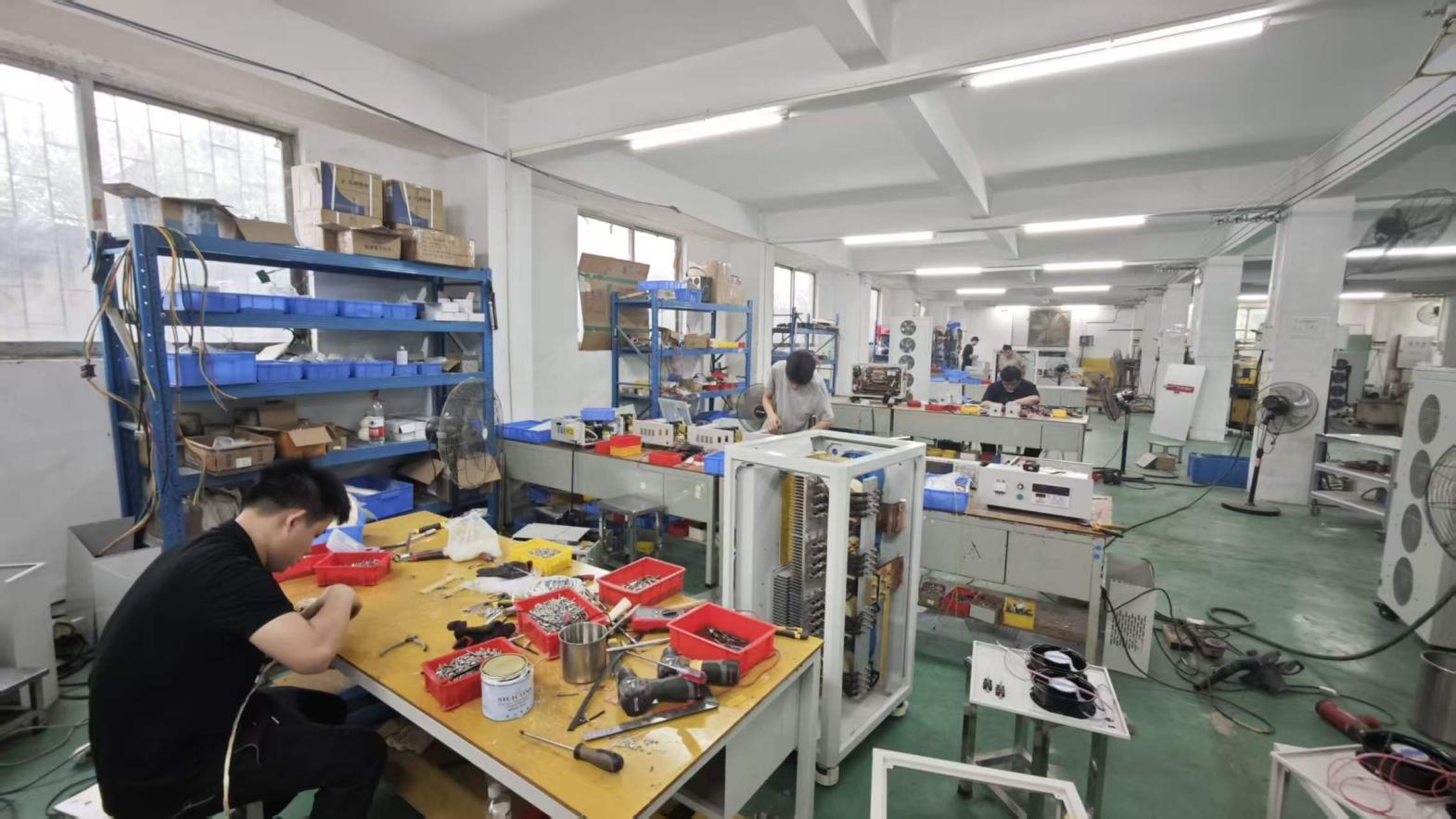
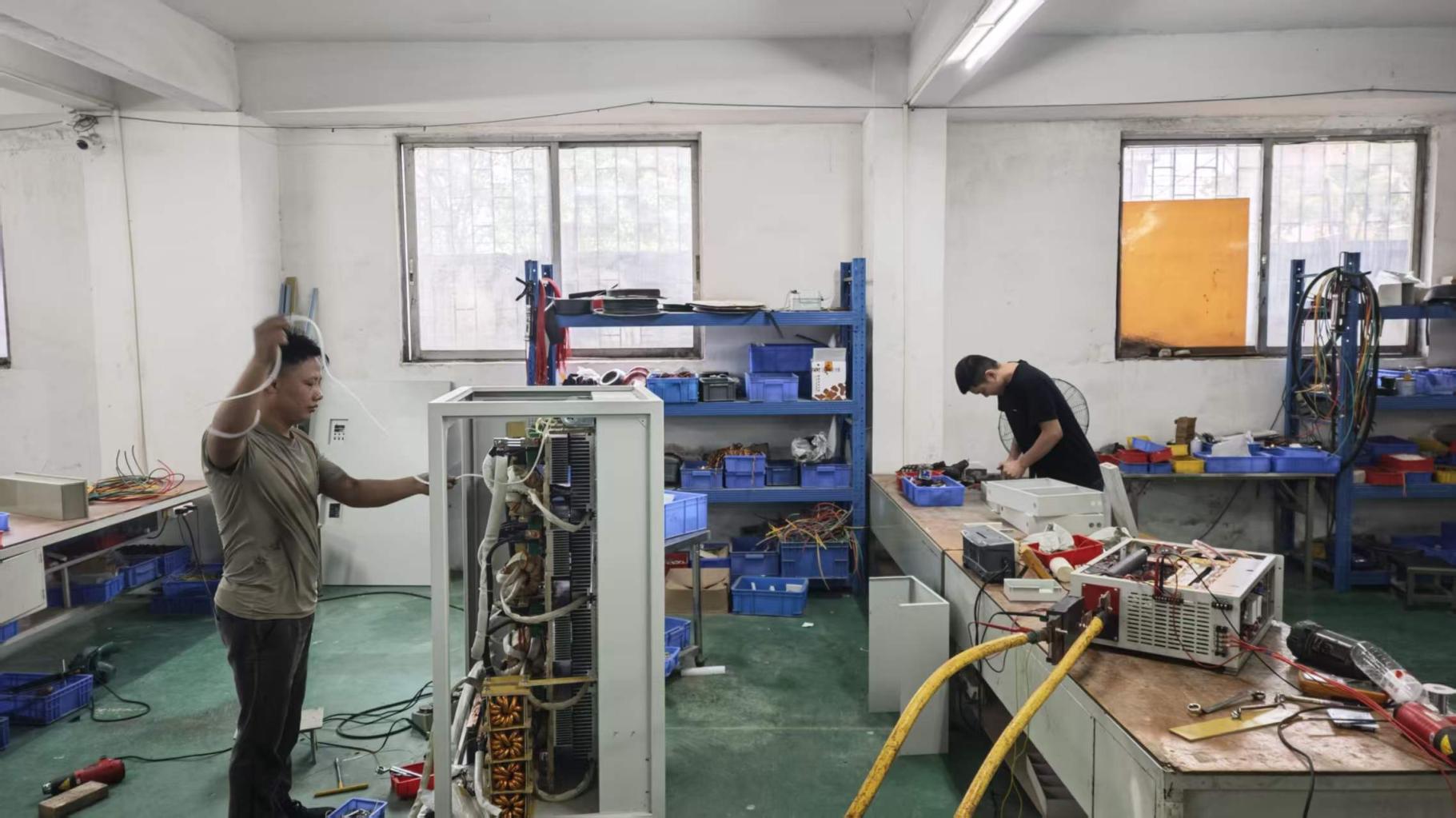
Since 2013, our dedicated 3,000m² manufacturing facility in Guangdong has engineered non-standard heavy-power solutions for aerospace, surface finishing, and electrochemical manufacturing worldwide.
Complete In-House Metalworking
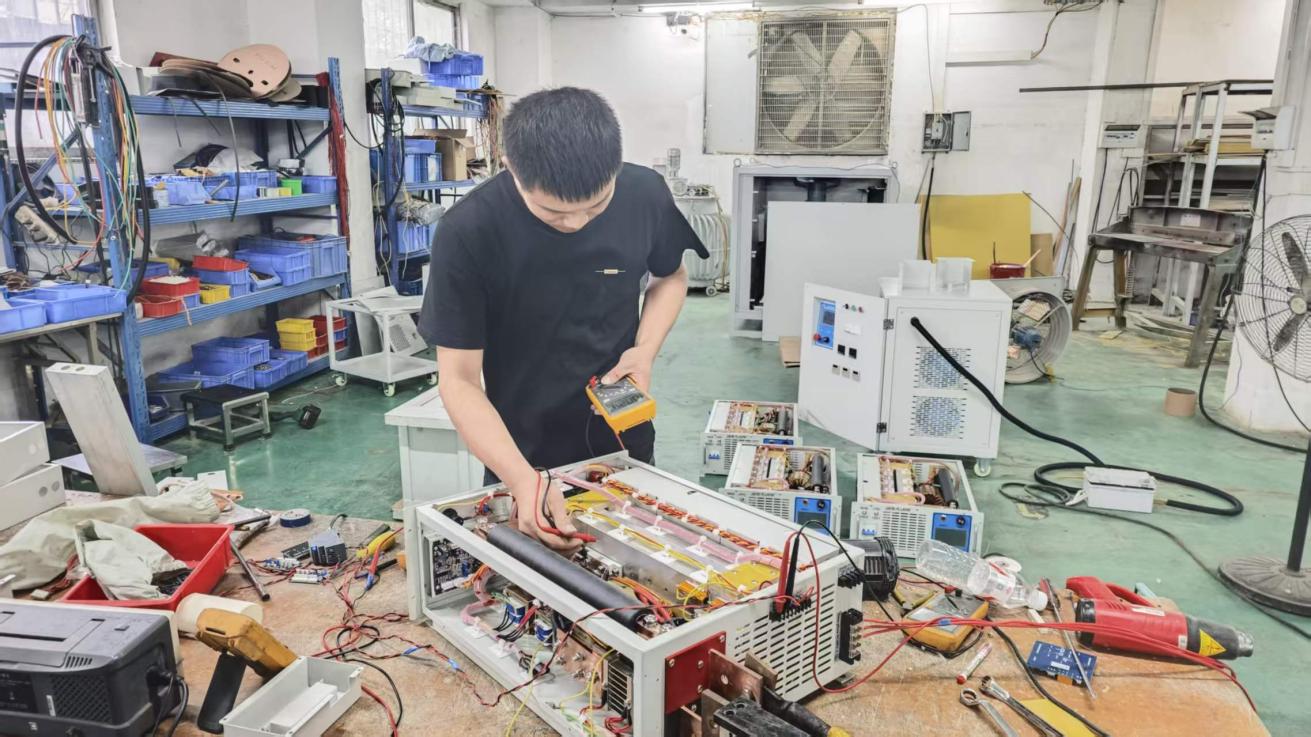
Unlike assembly assemblers who outsource chassis fabrication, Fenvix controls every phase in-house: plate shearing, CNC punching, milling, drilling, and busbar tapping. This guarantees strict mechanical tolerances, optimal airflow baffles, and robust anti-corrosive powder coatings.
100% Full-Load Burn-In & Load Testing
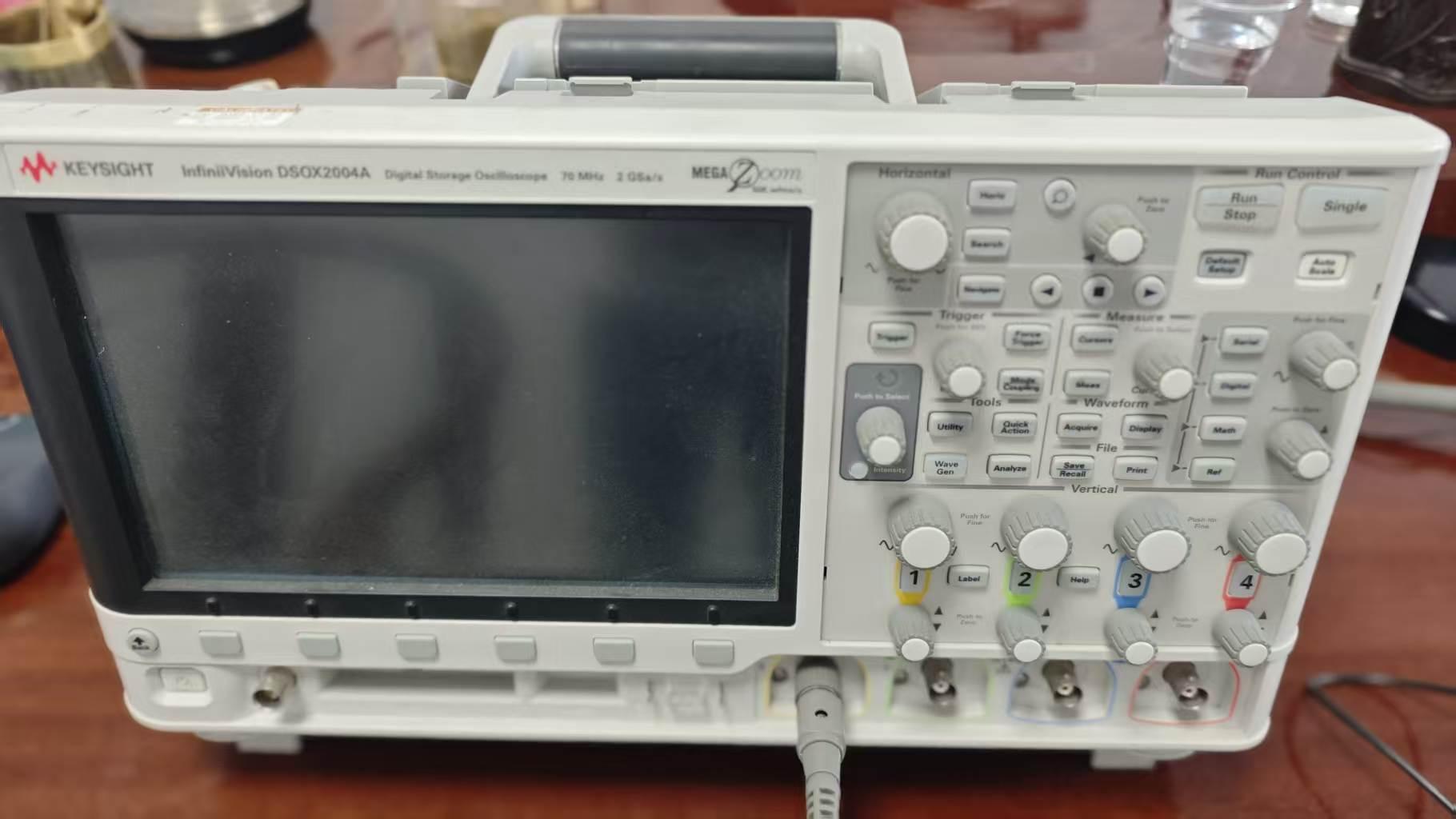
Every single power unit undergo rigorous full-load thermal burn-in, oscilloscope waveform calibration, high-voltage breakdown dielectric testing, and transient surge response validation before crating. We supply individual test reports and QA certificates with every shipment.
Zero MOQ & Deep Bespoke Engineering
We actively support single-unit custom prototyping for pilot lines, bespoke CNC wire-bending cells, and specialized laboratory rigs, all the way to containerized high-volume deliveries for multinational plating engineering conglomerates.
Global Supply Experience & Incoterms
Exporting to North America, Eastern and Southern Europe, Southeast Asia, and the Middle East. We support FOB, CFR, CIF, EXW, FCA, CPT, CIP, and door-to-door DDP terms with seaworthy vacuum moisture-barrier wooden crating.
Full Regulatory International Compliance
Our facility operates under an audited ISO 9001 quality management architecture. Our switching power systems comply with CE, RoHS, Low Voltage Directive (LVD 2014/35/EU), and Electromagnetic Compatibility (EMC 2014/30/EU) directives.
TÜV Rheinland Audited Facility
Overseas buyers gain complete sourcing peace-of-mind: Guangdong Fenvix Technology Co., Ltd. has undergone exhaustive on-site audit verification by TÜV Rheinland, validating our genuine production capability, test bench instruments, and staffing pedigree.





Frequently Asked Questions by Industrial Procurement Teams & Plating Engineers
Clear, authoritative technical answers addressing sizing, voltage ripple thresholds, environmental protection, cooling specifications, and integration.
Why is low voltage ripple (<2%) critical when electroplating metal parts after CNC bending? +
How do I decide between forced-air cooling and water cooling for an electroplating power supply? +
Choose Forced Air Cooling if: Operating current is below 2,000A, the rectifier cabinet can be housed in an isolated, positive-pressure electrical control room free from corrosive hydrochloric, sulfuric, or nitric acid fumes, and clean ambient air temperatures remain consistently below 35°C.
Choose Closed-Loop Water Cooling if: Operating output exceeds 3,000A (up to 15,000A), the unit sits directly beside plating tanks where airborne corrosive vapors would dissolve internal electronics, ambient bay temperature exceeds 40°C, or the production requires uninterrupted 24/7 duty cycles. Water cooling allows for an entirely sealed IP54/IP55 cabinet enclosure, maximizing service life beyond 10+ years.
Can Fenvix rectifiers interface directly with my automated bending cell and PLC line? +
What critical parameters are required to calculate the exact power supply size for a plating bath? +
- Total Cathode Workpiece Surface Area: The total square decimeters (dm²) or square feet (ft²) of bent metal immersed simultaneously.
- Process Current Density: Required amperes per unit area (e.g., 2–4 A/dm² for bright acid zinc; 15–30 A/dm² for hard chrome; 1–2 A/dm² for nickel).
- Bath Voltage Drop: Combined voltage drops across anode-cathode distance, bath chemistry resistance, busbars, and cable runs (typically 6V, 12V, 15V, or 24V).
- Input Grid Specification: AC voltage, phase count, and frequency (e.g., 380V/400V/480V ±10%, 3-phase, 50Hz or 60Hz).