High-Efficiency Rectification Solutions
Engineered Rectifier Solutions Recommended for Roseau Operators
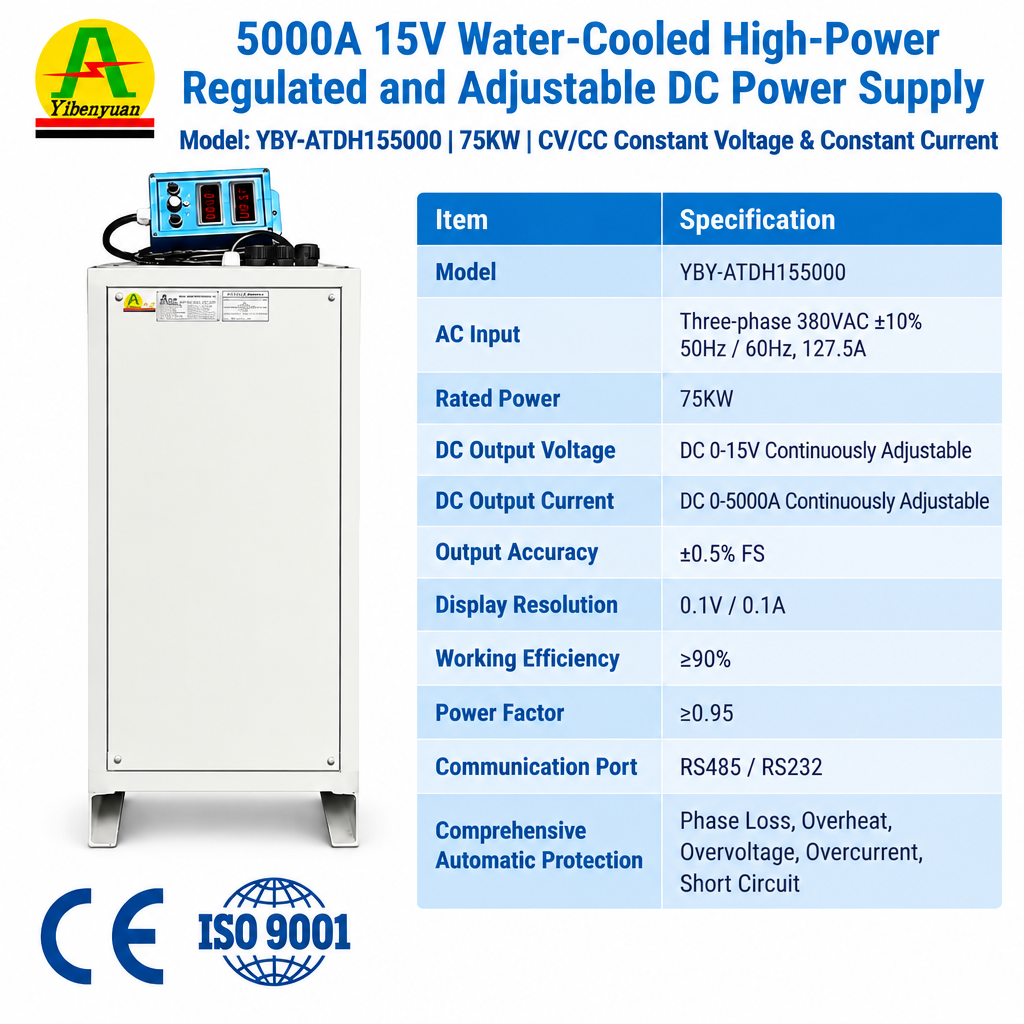
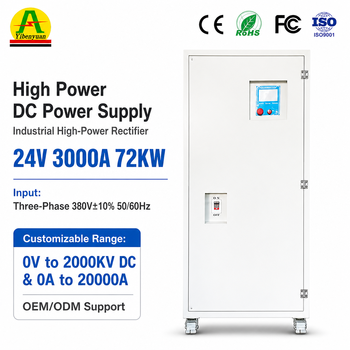
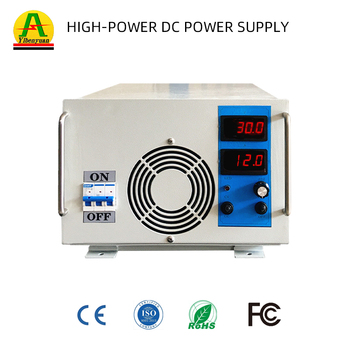
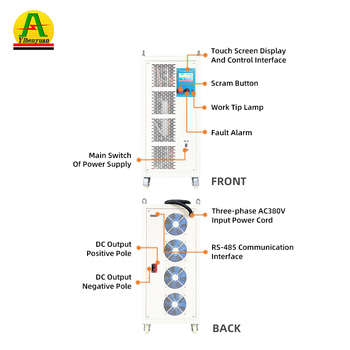
From architectural sulfuric acid anodizing to heavy hard-coat aviation and marine passivation, our CE-certified high-frequency power units deliver sub-2% ripple, steady CC/CV precision, and corrosion-sealed enclosures.
Engineering Authority & Whitepaper
Precision Current Rectification: The Foundation of Corrosion Resistance in the Caribbean
For surface finishing and metal treatment operations located in Roseau, Dominica, and across the Eastern Caribbean, anodic oxidation (anodizing) is not merely an aesthetic choice—it is a critical barrier defense against an aggressive, salt-laden marine environment classified under ISO 12944 as severe C5-M / CX. Building exterior fenestrations, aluminum craft retrofits at Woodbridge Bay Harbour, and structural marine components undergo relentless attack from high relative humidity, airborne saline aerosols, and tropical UV radiation.
Achieving a dense, mechanically sound, and uniform aluminum oxide layer (Al2O3) hinges on the electrical precision of the direct current (DC) power source. Traditional silicon-controlled rectifiers (SCR/thyristors) produce high low-frequency ripple factors (frequently exceeding 5% to 8% at regulated low voltage), causing microscopic burn defects, erratic barrier layer growth, uneven pore dimensions, and excessive bath heat buildup.
The High-Frequency IGBT Advantage for Caribbean Fabricators
By substituting legacy thyristor rectifiers with High-Frequency Insulated Gate Bipolar Transistor (IGBT) switch-mode technology operating between 20kHz and 40kHz, operators in Dominica reduce power consumption by up to 25–30%. Given the high industrial kilowatt-hour electricity rates in island utility environments, our rectifiers with high conversion efficiency (≥90%) and ultra-low ripple (≤2% RMS) accelerate return on investment while eliminating orange-peel effects and coating delamination.
≤ 2%
Ripple Voltage (RMS)
≥ 92%
Power Conversion Efficiency
IP54/65
Marine Enclosure Protection
Comparative Analysis
High-Frequency IGBT Switch-Mode vs. Conventional SCR Rectifiers
| Performance Parameter |
Legacy SCR / Thyristor Rectifier |
Fenvix High-Frequency IGBT Rectifier |
Impact on Roseau Metal Finishers |
| Operating Frequency |
50Hz / 60Hz (Mains line rate) |
20,000Hz – 40,000Hz (PWM switch-mode) |
Instantaneous dynamic response (<10ms) to bath load changes |
| DC Output Ripple |
5% – 12% (Dependent on conduction angle) |
≤ 1% – 2% (Smooth, filtered DC) |
Zero Burn Uniform pore depth, superior dye absorption |
| Electrical Efficiency |
65% – 75% at partial load |
90% – 94% across complete load curve |
Drastic operational savings on DOMLEC island utility grids |
| Power Factor (Cos Φ) |
0.60 – 0.75 (Requires external capacitor banks) |
≥ 0.94 – 0.98 |
Eliminates reactive power billing penalties from power providers |
| Physical Footprint & Weight |
Bulky, oil-cooled or massive transformer iron |
60% smaller, 70% lighter compact modularity |
Drastically lowers ocean freight shipping rates to Roseau Port |
| Corrosion Defense |
Standard sheet metal, unsealed circuits |
Tri-proof conformal PCB coat + isolated air/water duct |
Resists volcanic hydrogen sulfide & Caribbean marine salt air |
Field-Proven Deployment
Localized Application Scenarios Across Dominica's Growing Sectors
Adapting industrial electrochemical equipment to Dominica's unique geographical, microclimatic, and infrastructure demands.
Architectural Fenestrations & Resort Building
Dominica's expanding luxury eco-resorts (e.g., Picard, Portsmouth, and Roseau Bayfront renovations) demand Class I architectural anodizing (≥18μm thickness) to survive hurricane salt winds. Our rectifiers maintain micro-amp current density control throughout the sulfuric bath, preventing edge burns on extruded window mullions, balustrades, solar panel frames, and louvers.
Maritime Refit at Woodbridge Bay Harbour
Vessel outriggers, cleats, marine mast extrusions, diving gear fittings, and aluminum-hull speedboats require Type III Hardcoat Anodizing (MIL-A-8625 Type III) producing 50μm+ protective oxide layers. Our 0–150V specialized high-voltage units deliver the high breakdown potentials required for deep hard-anodizing baths without electrolyte overheating.
Geothermal & Agro-Processing Infrastructure
With the active development of the Roseau Valley Geothermal project and Dominica's essential oil extraction facilities (Bay oil, patchouli), equipment encounters corrosive airborne sulfur dioxide (SO2) and hydrogen sulfide (H2S). Our hermetically isolated water-cooled rectifiers protect vital internal IGBT switches from volcanic and chemical vapor corrosion.
Regional Market Evolution
Emerging Manufacturing & Surface Finishing Trends in the Eastern Caribbean
Dominica's ongoing drive toward becoming the world's first climate-resilient nation is reshaping regional procurement patterns. Metal fabrication and structural assembly workshops in the Roseau industrial perimeter are shifting rapidly from importing pre-finished profiles to localized value-added processing. Several distinct industrial trends define this trajectory:
-
Transition to Geothermal & Renewable Energy Grids: As the Commonwealth of Dominica integrates geothermal baseload energy from the Laudat reservoir into the national grid, local fabricators are modernizing plant machinery. High-frequency IGBT rectifiers provide harmonious operation with microgrid topologies, maintaining a power factor greater than 0.95 without injecting harmful harmonic distortion back into municipal distribution substations.
-
Demand for Non-Chromate & Environmentally Compliant Chemistry: Aligning with Dominica's strict "Nature Isle" environmental identity, modern metal treatment requires organic acid anodizing, trivalent chrome passivations, and closed-loop rinse cycles. Our pulse and polarity-reversing rectifiers accelerate pore-wall formation, decreasing the bath chemical dosage by 18% and simplifying effluent water treatment.
-
Decentralized Marine Maintenance Hubs: Rather than hauling workboats and luxury catamarans to Martinique or Puerto Rico for anodized component replacements, Roseau boatyards are creating on-island maintenance capabilities. Scalable 500A to 2000A DC rectifiers with digital remote operation offer the agile, low-maintenance footprint necessary for rapid turnaround jobs.
Buyer Knowledge Base
Frequently Asked Questions for Roseau & Caribbean Procurement
Key technical, electrical, and logistics considerations when importing industrial rectifiers to the Commonwealth of Dominica.
?
Are your rectifiers compatible with the electrical utility specifications in Roseau, Dominica?
Yes. Industrial electrical power distributed by Dominica Electricity Services Ltd. (DOMLEC) typically operates at 400V 3-phase, 50Hz (or 230V single-phase). We configure our transformers, filter stages, and rectifying bridges to tolerate island grid fluctuations (±10% to ±15% voltage tolerance). We can also configure dual 50Hz/60Hz input stages for operations relying on backup diesel or marine generator sets.
?
How do you protect the internal electronics from the tropical marine and volcanic sulfur environment of Dominica?
Dominica features both high ambient ocean salinity and localized geothermal sulfur emissions (H2S) in areas surrounding the Roseau Valley. To safeguard internal electronics, our rectifiers employ a multi-layer defense: all printed circuit boards receive a heavy robotic triple-proof conformal coating (anti-salt, anti-moisture, anti-fungus), air ducts are physically isolated from component chambers, and critical heavy-duty models use closed-loop water cooling with sealed IP54/IP65 cabinets.
?
What ocean shipping options are available for delivery to Roseau, and how are machines packed?
We provide full CIF or DDU terms directly to the Woodbridge Bay Deep Water Harbour in Roseau (Port Code: DMARO). Consolidated cargo (LCL) or full container loads (FCL) are dispatched from Shenzhen or Guangzhou ports with typical Caribbean transshipment hubs (such as Kingston, Jamaica or Port of Spain, Trinidad). All rectifiers are vacuum-sealed with silica gel desiccant packs and crated in fumigated, multi-ply export-grade plywood crates designed for rigorous sea transport.
?
When should a Roseau anodizing plant choose water cooling over forced air cooling?
For current outputs under 2000A in clean workshop environments, forced air cooling is economical and easy to maintain. However, for continuous 24/7 industrial production, currents exceeding 3000A, or facilities located in coastal zones with corrosive salt spray, water cooling is highly recommended. Water-cooled units circulate coolant through sealed copper heat sinks, eliminating the intake of corrosive ambient salt air into sensitive electronics.
?
What parameters must our engineers provide to receive a custom design quote?
To size the rectifier accurately, please send us: (1) Total anodizing tank surface area (m² or sq ft) and target current density (e.g., 1.2–2.0 A/dm² for Type II, or 2.5–4.0 A/dm² for Type III hardcoat); (2) Required maximum DC voltage (typically 18V–24V for standard anodizing; 60V–120V for hardcoat); (3) Mains power supply voltage, phase, and frequency (e.g., 400V 3-Phase 50Hz); (4) Preferred cooling method (air or water); and (5) Remote control preferences (Analog 0–10V/4–20mA, or Digital RS485 Modbus).
?
What after-sales technical support and spare parts availability do you provide to the Caribbean?
We support our international clients with plug-and-play modular sub-assemblies. In the unlikely event of component stress, control boards, IGBT firing cards, and auxiliary sensors can be swapped quickly with standardized plug-in connectors. Our technical engineering division provides real-time video commissioning, electrical wiring diagrams, and fast air courier dispatch (via DHL/FedEx) for consumable spares directly to Roseau.