Featured Water-Cooled
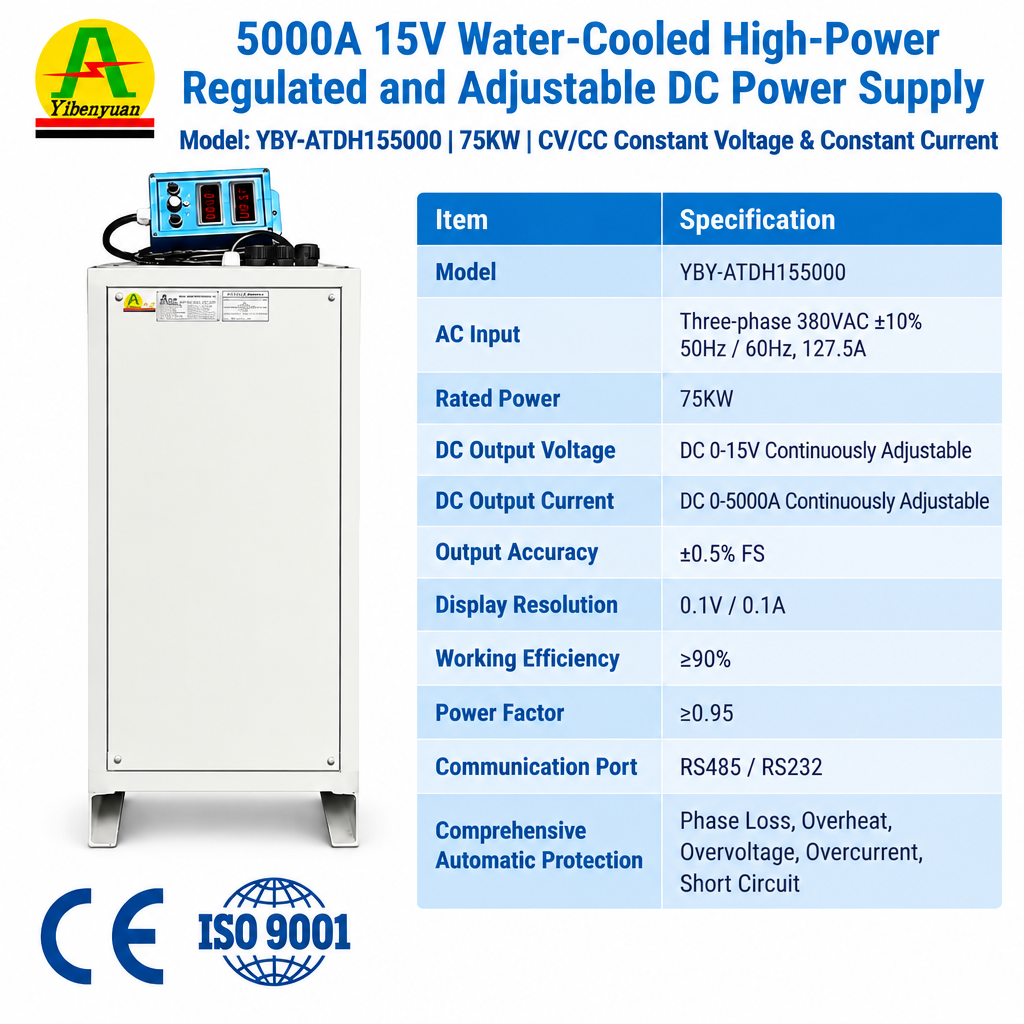
12V/15V 5000A-6000A 75KW Water-Cooled Rectifier
- Output Power: 75 kW
- Current Range: 5000A - 6000A
- Control Modes: CV / CC Digital Display
- Cooling System: Direct Deionized/Tap Water
Direct factory engineering from Guangdong Fenvix Technology Co., Ltd. Customized pulse duty cycles, forward-reverse switching, and industrial air or water-cooling options.
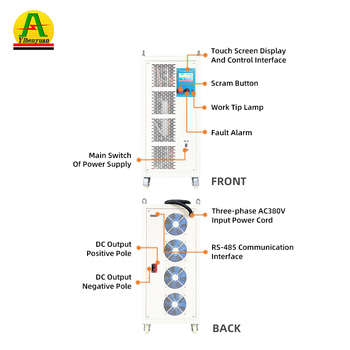
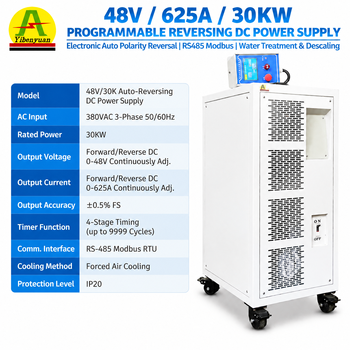
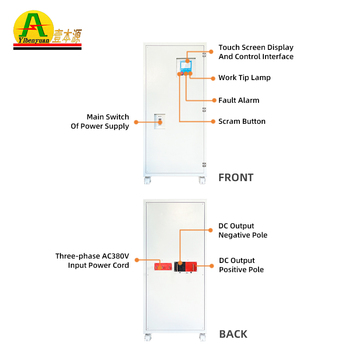
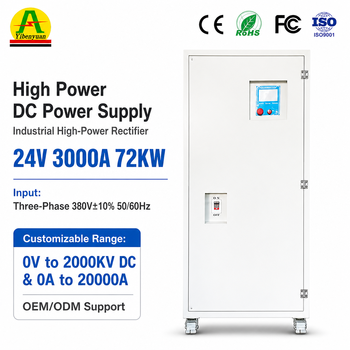
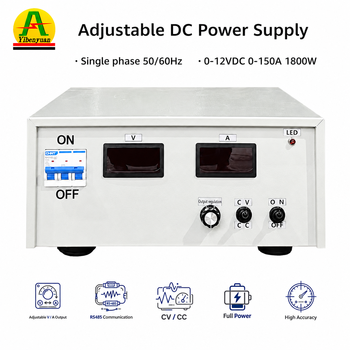
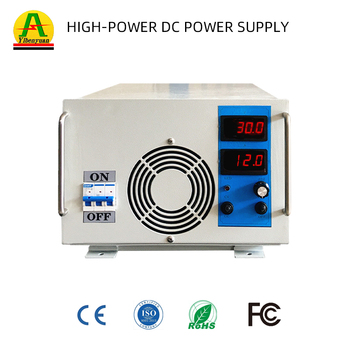
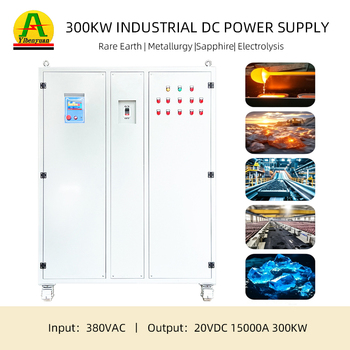
From Renton aerospace supply lines to Puget Sound naval infrastructure and Redmond clean-tech fabrication hubs.
Seattle's commercial and military aerospace machining ecosystems demand strict conformance to AMS 2469, MIL-A-8625 (Type III Hardcoat), and Nadcap quality controls. Traditional SCR rectifiers struggle with micro-crack initiation and inconsistent oxide cell development on complex aluminum-lithium (Al-Li 2050/2099) structures. Fenvix reverse pulse switching alternates positive microsecond deposition pulses with reverse dissolution pulses, purging gas voids and optimizing boundary layers to achieve superior corrosion resistance and breakdown dielectric strength without excessive thermal generation.
Marine grade shafting, propeller components, and submarine sub-assemblies maintained throughout Bremerton and coastal Washington are exposed to heavy hyper-saline splash environments. Conventional plating leaves macro-porosity that invites accelerated galvanic failure. Reverse pulse rectifiers allow localized current densities in deep recesses to be smoothed via instantaneous reverse polarity deplating, forming ultra-dense, low-stress electroplated nickel and chromium coatings that exceed standard 1,000-hour ASTM B117 salt spray metrics.
Washington State's aggressive decarbonization initiatives rely heavily on green hydrogen generation and high-capacity flow battery development. Fenvix high-amperage, water-cooled reverse pulse rectifiers provide millisecond-accurate CC/CV programmable current switching, optimizing electrocatalytic layer deposition on titanium bipolar plates and gas diffusion electrodes (GDEs) while completely mitigating cathode hydrogen embrittlement during long cycle campaigns.
In classical electrodeposition and high-current anodization, direct current gives rise to a persistent, highly depleted Nernst diffusion layer at the liquid-metal boundary. This layer generates macroscopic ion starvation, which forces dendritic growth, macro-roughness, hydrogen entrapment, and an uneven distribution of current between protruding geometries and recesses (poor throwing power).
Fenvix High-Frequency Reverse Pulse Power Supplies overcome these fundamental physical limits using asymmetric bidirectional waveforms comprising a forward pulse period (Ton, fwd), a reverse deplating pulse period (Ton, rev), and an optional off-time relaxation window (Toff).
| Electrochemical Metric | Standard Direct Current (DC) Rectifier | Fenvix Reverse Pulse Topology | Engineering Advantage in Production |
|---|---|---|---|
| Throwing Power (TP%) | 45% – 60% in high aspect-ratio blind vias | > 92% uniform throwing distribution | Eliminates the "dog-bone" effect across PCB edges and tubular parts. |
| Grain Boundary Morphology | Coarse, columnar crystal microstructures | Equiaxed, ultra-fine nanograin structure | Dramatically increases surface micro-hardness and wear durability. |
| Internal Mechanical Stress | High tensile or compressive residual stress | Near-zero net internal stress state | Prevents micro-cracking and post-machining dimensional warping. |
| Hydrogen Gas Embrittlement | Severe risk on high-strength steels (4340/300M) | Substantially suppressed via periodic anodic pulse | Drastically reduces bake-out furnace duration and fatigue failure. |
| Energy Efficiency (%) | 68% – 78% (Traditional SCR Phase Control) | 90% – 93% (High-Speed IGBT Switching) | Lowers facility kWh consumption and reduces cooling water demands. |
During the forward cycle (typically 5ms to 50ms at full peak current), metal cations are deposited onto the substrate cathode. Before the diffusion boundary layer completely starves the interface, an ultrafast reverse pulse (typically 0.2ms to 2ms at 1.5x to 3x forward peak voltage) is discharged. This reverse strike preferentially dissolves burrs, acute edge concentrations, and micro-dendrites that exhibit high electrical potential gradients, continuously regenerating a planar, defect-free deposition plane.
Founded in 2013, our integrated workshop handles sheet metal forming, heavy copper busbar machining, power module assembly, and complete load testing under an ISO 9001 certified quality management system.
Our Guangzhou manufacturing base has undergone rigorous on-site factory verification by TÜV Rheinland. Electrical systems carry direct CE, LVD, and EMC conformity reports to satisfy US UL508A inspection expectations.
We operate dedicated plate shearing, CNC punching, milling, drilling, and tapping machines. We fabricate heavy T2 copper busbars and structural enclosure frameworks in-house, ensuring mechanical integrity and short production lead times.
Every pulse rectifier undergoes full-power load bank burn-in, oscilloscope waveform calibration, high-voltage breakdown checks, and thermal imaging verification prior to seaworthy export packing.
We actively welcome single-piece prototype orders for specialized R&D labs and pilot lines. Power stages, custom cabinet footprints, and digital PLC integration protocols are customized by senior power electronics engineers.
Key drivers modernizing DC rectifiers across Washington State's manufacturing base.
Seattle area manufacturers are retiring legacy manual potentiometers in favor of automated Industrial Ethernet (Modbus/TCP, Profinet, EtherCAT). Fenvix rectifiers integrate isolated RS485 and direct PLC controllers, feeding real-time amp-hour tracking, fault logs, and pulse timing into manufacturing execution systems (MES).
With regional policies mandating carbon neutrality and commercial facilities penalized for low power factor, old thyristor rectifiers that draw heavy reactive power are being decommissioned. Fenvix IGBT-based high-frequency switching units maintain a power factor of ≥ 0.95 across their operating range, cutting utility demand charges.
Puget Sound plating shops face severe corrosion risks from acidic air containing hydrochloric and chromic acid mists. Air-cooled rectifiers draw these aerosols across sensitive circuit boards. Regional buyers are prioritizing closed-loop, water-cooled rectifiers with sealed IP54 to IP65 enclosures, substantially extending equipment operating life.
Straightforward answers regarding engineering configuration, supply logistics, and electrical conformity for the Seattle market.
Connect directly with our senior power electronics engineering team. Supply your target input voltage, desired current envelope, and pulse parameters to receive an engineered technical configuration and factory quote within one business day.