High-Performance Power Supplies for PEO, Anodizing & Precision Electrolysis
Verified industrial topologies engineered for sub-millisecond response, low harmonic distortion, and repeatable micro-arc plasma discharge regimes.
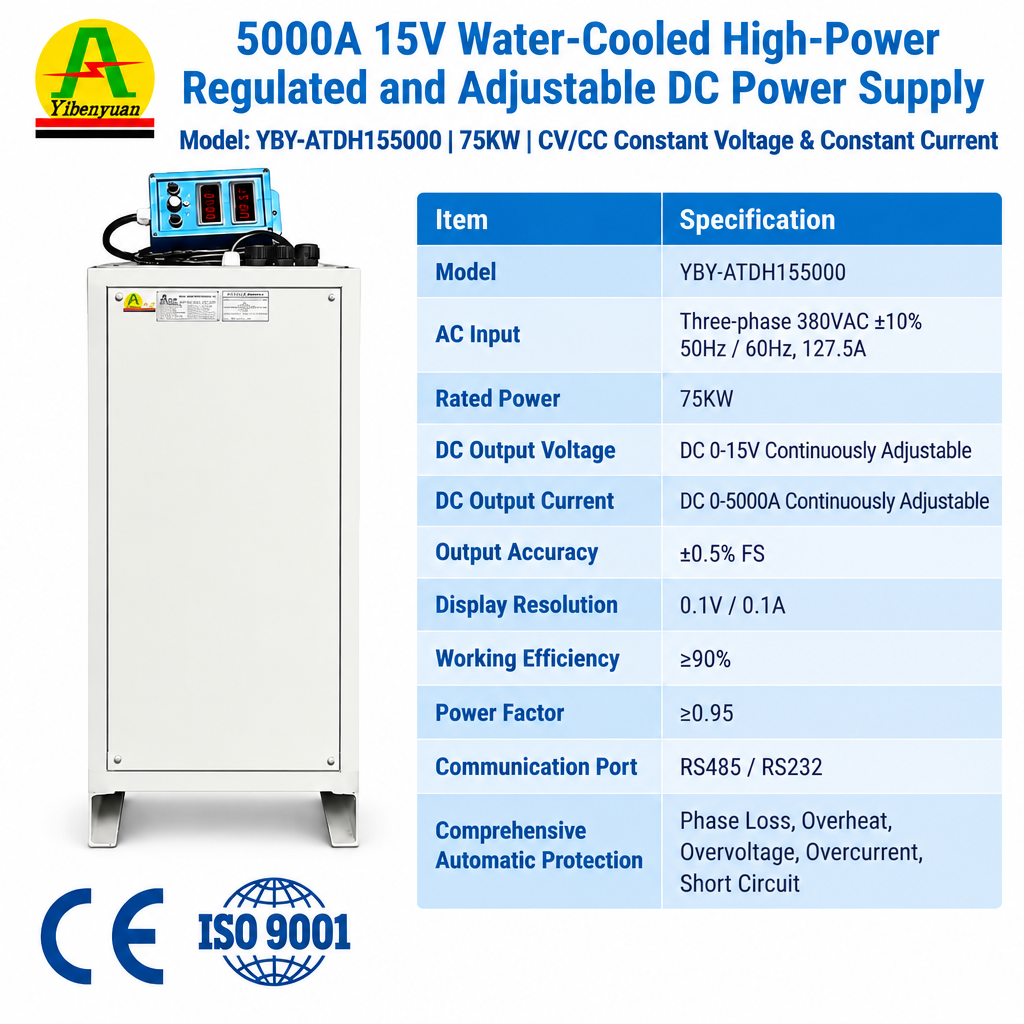
12V/15V 5000A–6000A 75kW Water-Cooled DC Rectifier
- Output Voltage: 0–15V DC Cont.
- Output Current: Up to 6000A
- Cooling Mode: Deionized Water
- Regulation: CV / CC Digital Setting
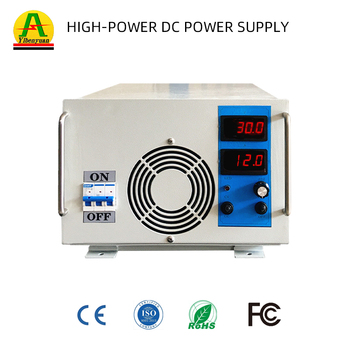
Titanium Alloy Anodizing & PEO Power Supply
- Voltage Dynamic: 0–150V / Expandable
- Control Mode: Constant Current Ramp
- Input Rating: 380VAC 3-Phase ±10%
- Protection: Thermal, OVP, OCP
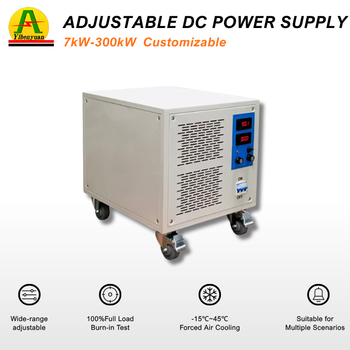
800V 50A 20kW Programmable High Voltage Supply
- Voltage Range: 0–800V Regulated
- Rated Power: 20kW High Density
- Interfaces: RS485 / Modbus-RTU
- Certification: CE, EMC, LVD, RoHS
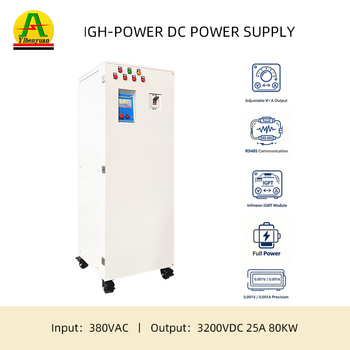
80kW 1000V–3200V Heavy Duty HV DC Modulator
- Voltage Output: 1000V–3200V Variable
- Power Capacity: 80kW Continuous Duty
- Switching Type: IGBT Bridge Topology
- Target Field: PEO Discharge & Cap Charge
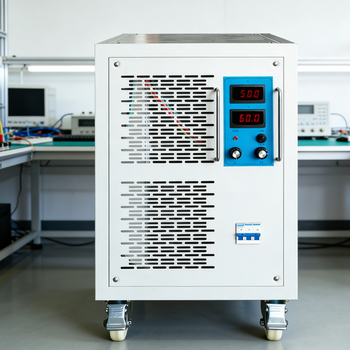
16kW 0–4000V Multi-Range Precision Source
- Adjustable Volts: 0–4000V Linear
- Current Range: 1A / 2A / 4A Options
- Ripple Factor: <0.5% RMS
- Application: Micro-Arc Sparking R&D
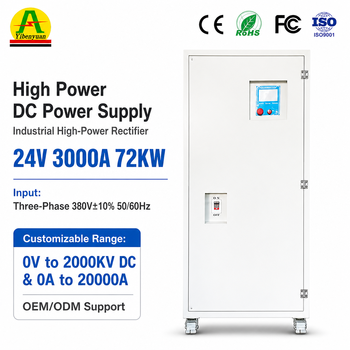
100A–3000A Anodic & Micro-Arc Oxidation Rectifier
- Output Current: 100A to 3000A Multi-Tap
- Voltage Level: 12V / 24V / 100V+
- Control Architecture:Multi-Stage Current Profile
- Display: High-Precision Digital LED
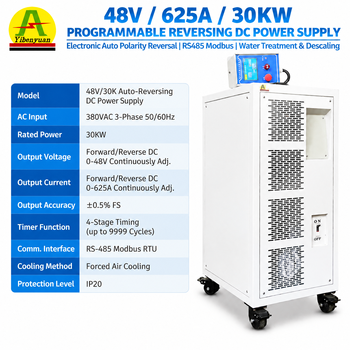
48V 625A 30kW Fast Auto-Polarity Reversing Supply
- Power Capacity: 30kW Industrial
- Polarity Switching: Sub-Millisecond H-Bridge
- Timer Control: 4-Segment User Cycle
- Interface: Isolated RS485 / 0-10V
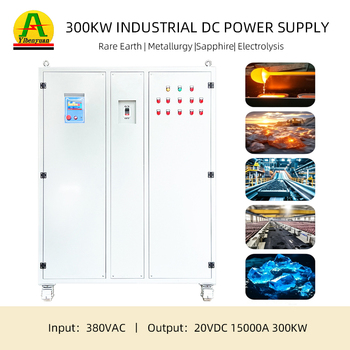
300kW 20V 15000A Heavy-Duty Electrolysis Rectifier
- Current Rating: Up to 15,000A Continuous
- Cooling Design: Closed-Loop Pure Copper Bus
- Power Factor: >0.93 at Full Capacity
- Enclosure: IP54 Sealed Cabinet
1. The Physics and Power Topologies of Plasma Electrolytic Oxidation (PEO)
Plasma Electrolytic Oxidation (PEO), often designated across European precision workshops as Micro-Arc Oxidation (MAO), is an advanced surface conversion technology fundamentally distinct from conventional low-voltage Type II or Type III hard anodizing. Operating far above the dielectric breakdown threshold of natural barrier oxide films (typically between 200V and 1,000V depending on the substrate composition and electrolytic bath), PEO triggers thousands of discrete, short-lived micro-discharges across the metallic substrate. In this localized thermal envelope—where localized instantaneous temperatures easily surpass 5,000K to 10,000K and micro-pressures exceed hundreds of megapascals—substrate elements such as Titanium, Aluminum, Magnesium, and Zirconium melt, oxidize, and rapidly quench upon direct contact with an environmentally neutral alkaline electrolyte.
This thermodynamic cascade synthesizes exceptionally dense, metallurgical-grade ceramic layers dominated by refractory crystalline phases: α-Al₂O₃ (corundum) and γ-Al₂O₃ on light alloys, rutile and anatase TiO₂ on titanium, or biocompatible porous oxide networks infused with phosphorus, silicon, or calcium ions. However, achieving micro-structural uniformity and preventing structural catastrophic thermal breakdown (runaway arcing) hinges almost exclusively on the instantaneous control dynamics, waveform symmetry, and quenching speed of the PEO power supply.
Technical Distinction: Unlike legacy Silicon Controlled Rectifiers (SCR / Thyristor topologies) that generate sluggish waveforms characterized by intense residual heating, modern PEO power systems engineered by Guangdong Fenvix Technology utilize high-frequency solid-state Insulated Gate Bipolar Transistors (IGBT) combined with digital Silicon Carbide (SiC) timing topologies. These deliver programmable asymmetric bipolar pulses with sub-5-microsecond arc extinction, preventing destructive localized substrate burning while maintaining phase crystallization.
In high-tier manufacturing corridors like the Basel-Stadt and Basel-Landschaft cantons in northwestern Switzerland, industrial surface engineers demand uncompromising process repeatability. Conventional Chinese export power supplies often fall short due to excessive voltage ripple, inability to precisely shape the negative cathodic pulse, and poor electromagnetic compatibility (EMC) within automated plant layouts. As an engineering-first manufacturer founded in 2013, Fenvix bridges this exact technological rift by supplying the Basel industrial market with custom, TÜV-verified, high-voltage pulsed PEO power platforms engineered to satisfy rigid Swiss Federal specifications, EN ISO 13485 medical device cleanroom requirements, and CE Machinery Directives.
2. Localized Industrial Applications in the Basel Ecosystem
Situated within the tri-national Upper Rhine area connecting Switzerland, Germany, and France, the greater Basel market functions as one of the world's most concentrated centers for biomedical engineering, precision micromechanics, and pharmaceutical processing machinery. Each domain presents unique metallurgical challenges that dictate the electrical specifications of PEO rectifiers:
Medtech & Surgical Implants
Basel is home to global leaders in dental implantology, spinal fixation hardware, and maxillofacial surgery. Medical titanium implants (Grade 4, Ti-6Al-4V ELI) require micro-porous, bioactive ceramic coatings that optimize osteoblast adhesion. Fenvix asymmetric bipolar PEO rectifiers deliver calibrated positive voltage pulses (350V–550V) coupled with negative cleaning pulses (50V–150V) to inject calcium phosphate compounds directly into the titania lattice without micro-cracking.
High-Precision Horology & Micro-Tools
Bordering the famous Swiss Watch Valley, precision machining subcontractors across the Basel region machine ultra-lightweight magnesium and aluminum movement plates and surgical robotics tools. PEO coatings provide Vickers micro-hardness exceeding 1,500 HV to 2,000 HV. Our programmable high-frequency units modulate pulse frequencies up to 10 kHz, ensuring sub-micron dimensional tolerance maintenance and zero mechanical distortion on ultra-thin walls.
Chemical & Cleanroom Fluidics
The Basel biopharma cluster operates continuous-flow reactors and chemical dispensing manifolds that require non-stick, corrosion-resistant surfaces capable of resisting aggressive halogenated acids and high-purity steam sterilization (SIP). PEO conversion coatings synthesized using high-current water-cooled Fenvix DC/pulse power units create chemically inert ceramic barriers that replace fragile fluoropolymer liners.
3. Technical Comparison: Fenvix High-Frequency IGBT PEO vs. Legacy SCR Systems
When Basel-based manufacturing engineers evaluate power infrastructure, the total cost of ownership (TCO) extends far beyond the initial procurement invoice. Power factor efficiency, localized heat dissipation within cleanrooms, cooling water demand, and coating reject rates determine long-term operating profitability. Below is a direct engineering comparison between legacy SCR systems and Fenvix modular IGBT-based PEO power systems:
| Performance Parameter | Legacy SCR / Thyristor Rectifier | Fenvix High-Frequency IGBT PEO Source | Impact on Basel Manufacturing |
|---|---|---|---|
| Waveform Morphology | Mains-frequency (50/60Hz) sine chopping | Square-wave bipolar pulse (100Hz – 20kHz) | Eliminates deep thermal cracking; ensures fine micro-porosity |
| Arc Extinction Speed | Sluggish (>500µs commutation) | Ultra-rapid (<5µs electronic cutoff) | Prevents destructive local substrate burning on complex edges |
| Power Conversion Efficiency | 65% – 75% at variable loads | 89% – 94% across complete load profile | Massive electrical savings; conforms to Swiss energy norms |
| Harmonic Distortion (THDi) | High (>30%), requires heavy external chokes | Low (<5%) with internal active PFC filtering | Protects adjacent Swiss cleanroom metrology instruments |
| Process Control Mode | Analog pot, stepped voltage regulation | Digital CC, CV, Constant Energy & Pulse Ratio | Batch-to-batch repeatability compliant with EN ISO 13485 |
| Cooling Architecture | Bulky open-loop oil or noisy forced air | Sealed IP54 stainless water-cooled modules | Zero cleanroom ambient heating, compact footprint |
4. Basel Market Trends: Environmental Compliance and Automation Mandates
The manufacturing sector in Switzerland is characterized by some of the most rigorous regulatory and efficiency mandates in the world. Three major operational trends dominate equipment purchasing decisions across Basel, directly influencing why local surface finishing specialists are transitioning to Chinese direct factory exporters like Fenvix:
Decarbonization and the Swiss Energy Efficiency Mandate
Under Switzerland's Federal Energy Act, industrial enterprises face escalating carbon taxes and energy efficiency benchmarks. Traditional micro-arc oxidation has historically been stigmatized as an energy-intensive process due to the massive heat losses incurred by low-efficiency transformer-rectifiers. Fenvix systems leverage synchronous rectification, silicon carbide fast-recovery diodes, and optimized high-frequency ferrite transformers to achieve power factors exceeding 0.95 under standard operating conditions. By reducing cooling chiller load requirements by up to 35%, Swiss processing plants achieve swift economic payback while meeting Basel-Stadt cantonal sustainability objectives.
Phase-out of Hazardous Hexavalent Chromium (REACH & Swiss ChemRRV)
With the European Chemicals Agency (ECHA) and Swiss Chemical Risk Reduction Ordinance (ChemRRV) progressively banning hexavalent chromium (CrVI) processes used in hard chrome plating, surface treatment facilities throughout the tri-national region require clean alternatives. PEO represents the premier green technology because it uses benign, dilute aqueous electrolytes based on silicates, phosphates, and aluminates. Fenvix power units provide dedicated recipe memory modules that allow automated ramp profiles tailored precisely to non-toxic green chemistry baths.
Integration with Industrial SCADA and Industry 4.0 Ecosystems
Swiss factories feature near-total automated production lines with minimal manual operator intervention. A stand-alone power supply with simple analog dials is completely obsolete in Basel. Fenvix designs every PEO and high-voltage DC system with fully isolated industrial communication buses, including Modbus-RTU, Profibus-DP, Ethernet/IP, and analog 0–10V/4–20mA interfaces. Every pulse train parameter—positive peak current, negative peak voltage, duty cycle, pulse delay, bath energy totalizer ($kJ/mm^2$)—is logged in real-time, providing complete traceability for medical device Device History Records (DHR).
Why Basel Engineers Choose Guangdong Fenvix Technology
Verified manufacturing capability, dedicated engineering teams, and strict quality gates provide complete peace of mind for international B2B buyers.
ISO 9001 & TÜV Verified
Operating an audited ISO 9001 quality management system with on-site factory verification by TÜV Rheinland. Selected power models carry full CE, EMC, and LVD test conformity.
In-House Mechanical Build
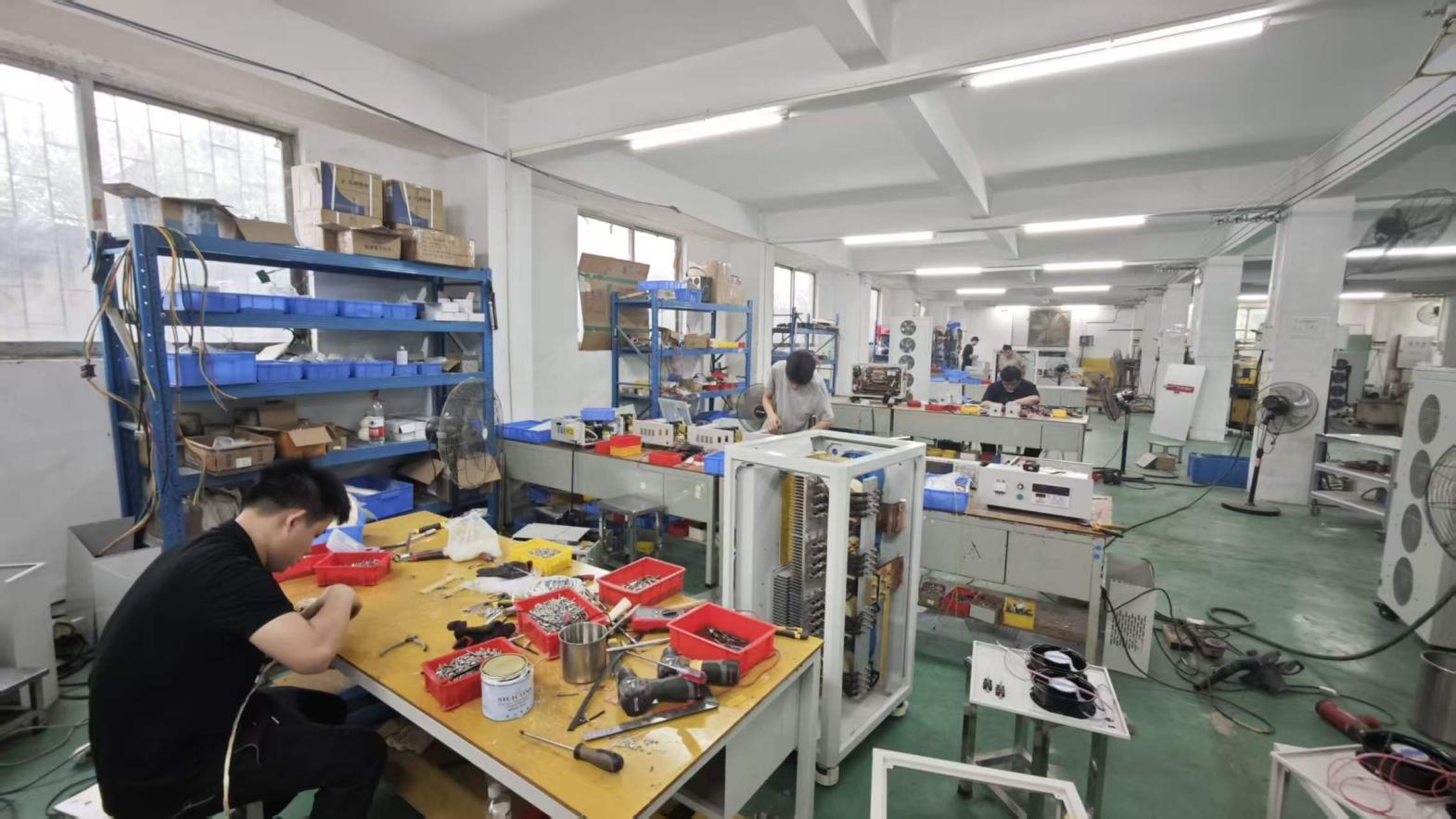
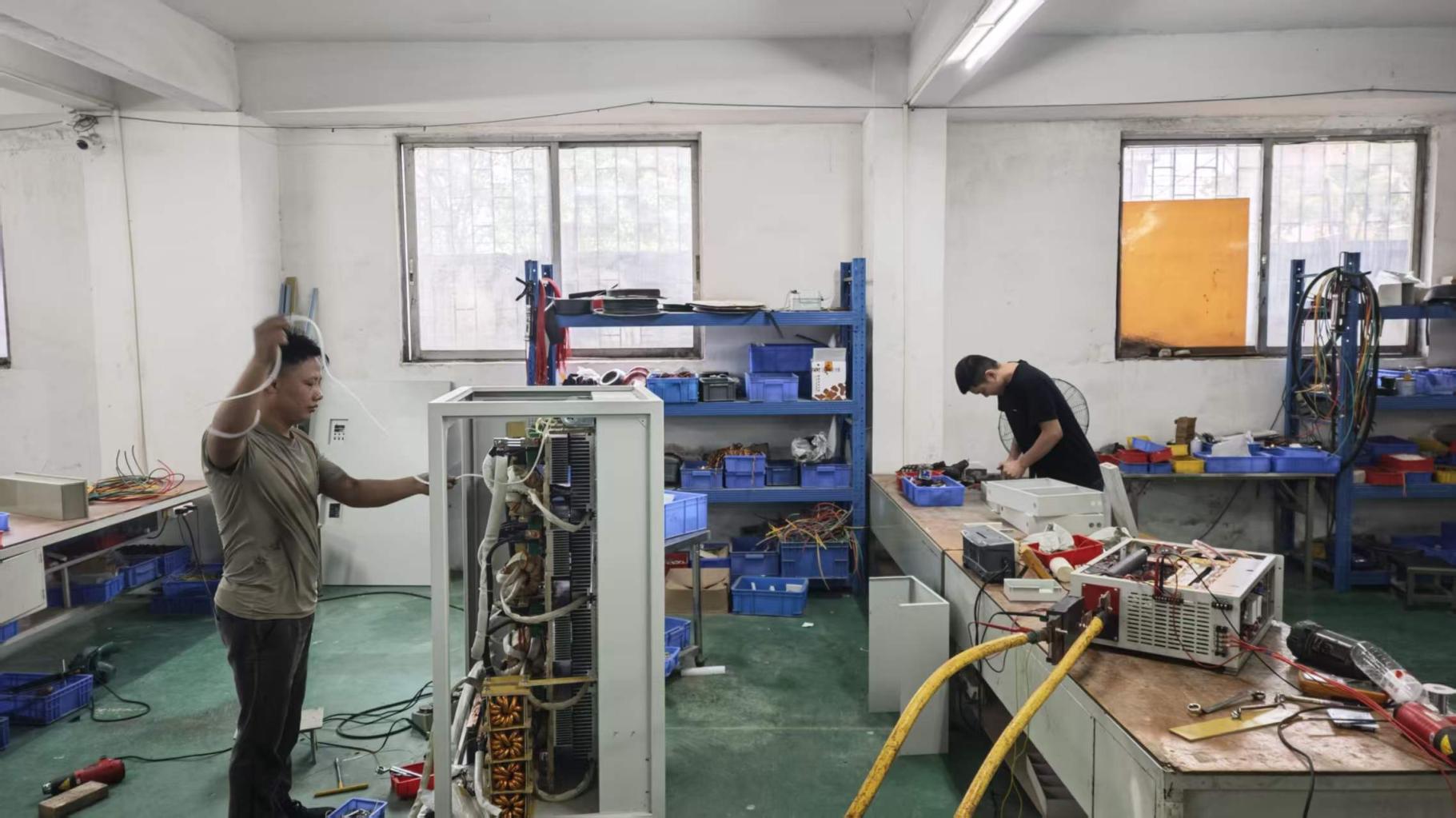
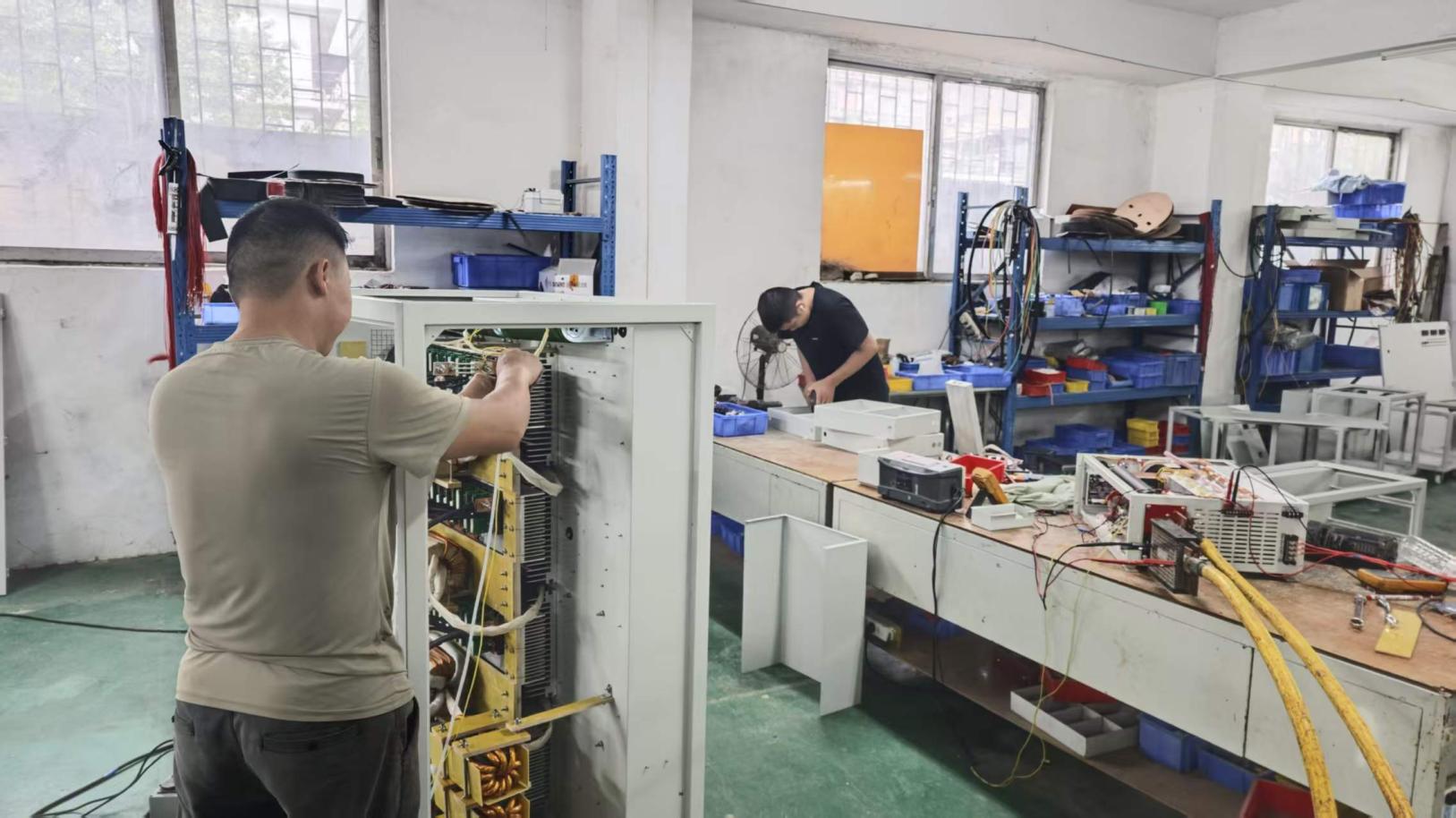
Complete plate shearing, CNC punching, milling, drilling, tapping, and copper busbar fabrication inside our 3,000m² facility ensures unmatched structural rigor and thermal fit.
Full Load Burn-in Testing
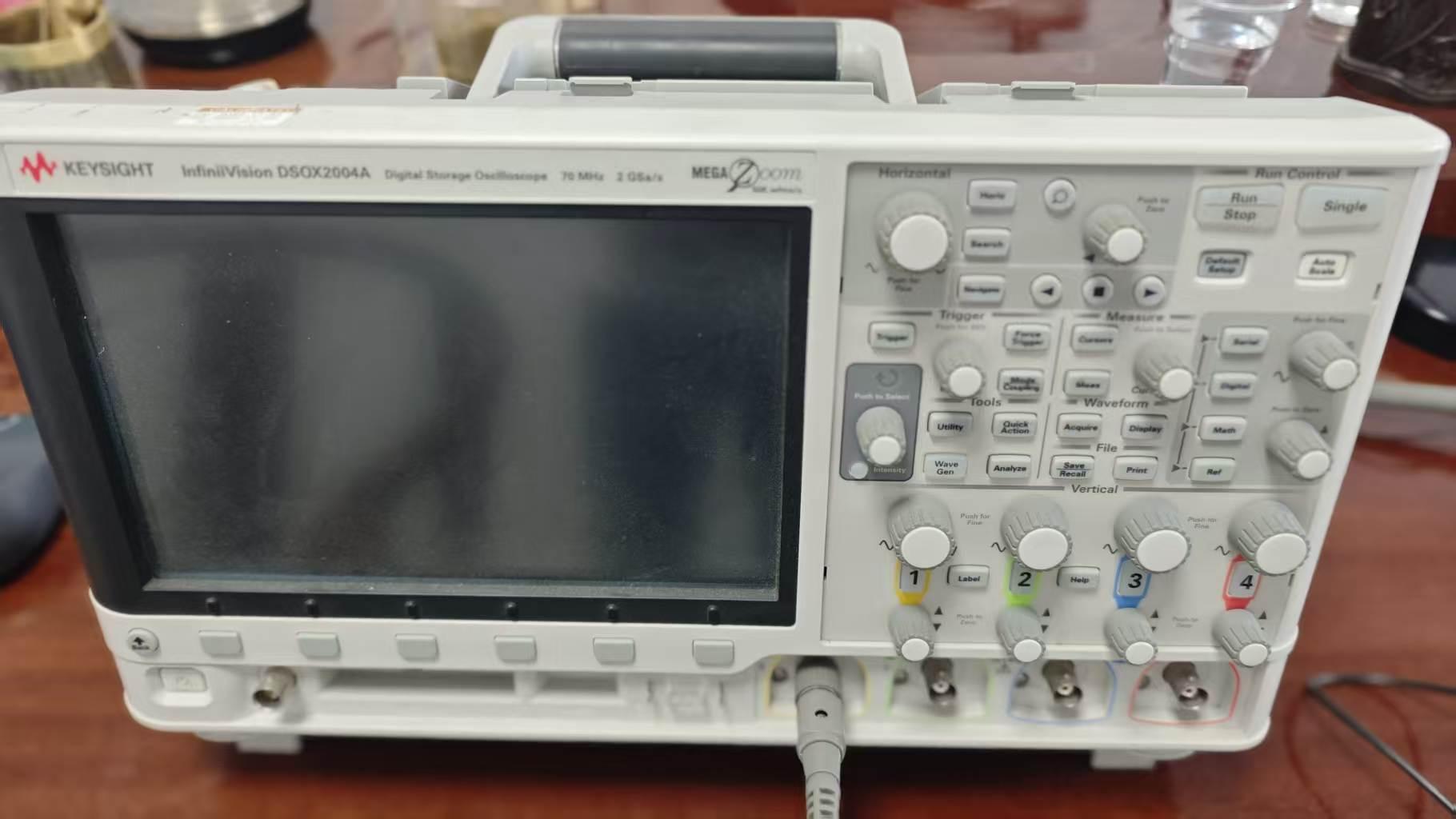
Every single rectifier unit undergoes rigorous full-load oscilloscope characterization, heat cycle burn-in, and insulation dielectric breakdown checks before seaworthy or air packaging.
Flexible Trade & Zero MOQ
We support single-unit R&D prototypes alongside high-volume OEM contracts. Seamless delivery terms including DAP/DDP Basel airport or rail terminals, accepting CHF, EUR, and USD.
Frequently Asked Questions by Swiss Technical Buyers
Transparent engineering insights addressing electrical matching, regulatory conformity, and shipping to Basel.
What specific electrical parameters must be defined when configuring a PEO power supply?
Can Fenvix power supplies be customized for 400V / 50Hz 3-phase Swiss grid compliance?
How does the asymmetric bipolar pulse prevent micro-arc transition into destructive thermal arcs?
What is your Minimum Order Quantity (MOQ) and delivery timeline to Basel?
What validation documentation is supplied for Swiss medical device compliance (MDR / ISO 13485)?
How is technical support, warranty, and field servicing managed for overseas European installations?
Initiate Your Custom PEO / DC Power Engineering Review
Connect directly with our senior power electronics team in Guangdong. We configure custom voltage, current, frequency, and communication parameters to fit your precise Swiss surface finishing specifications.