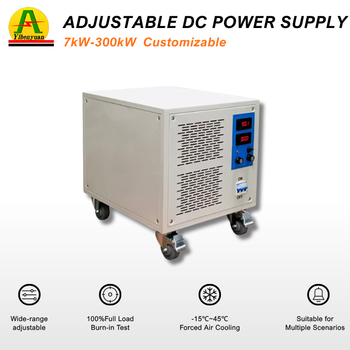
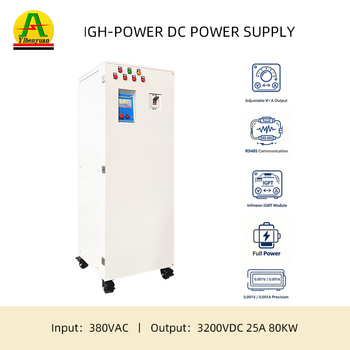
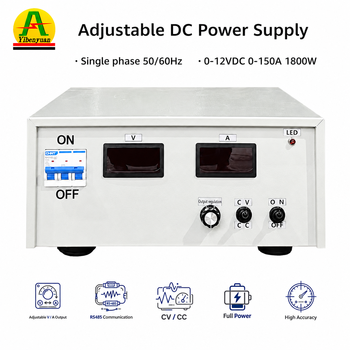
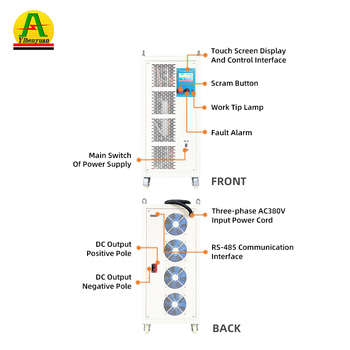
Water-Cooled 75kW High Frequency Rectifier
- Output Range: 12V–15V / 5000A–6000A
- Cooling Type: Closed-Loop Deionized Water
- Control Mode: CV / CC Digital Display
- Efficiency: ≥ 90% (Full Load)
Industrial power solutions optimized for 575V/600V Canadian utility inputs, precision electrolytic plasma polishing, and heavy-duty continuous electrochemistry.
An in-depth review of plasma electrolytic polishing (PeP) thermodynamics, power stage sizing, and grid compliance tailored for Canadian engineering standards.
Plasma Electrolytic Polishing (PeP) occurs at critical DC voltages ranging between 200V and 450V within an environmentally benign, low-concentration salt bath (typically 2–8% non-acidic aqueous solutions). When voltage reaches breakdown potential, a stable micrometer-thin vapor-gaseous envelope forms around the submerged metal workpiece.
Unlike standard European 400V or Asian 380V infrastructure, Canadian industrial manufacturing relies heavily on 600V (nominal 575V) 3-phase 60Hz or 480V networks. Standard offshore rectifiers fail prematurely due to component overstress and inadequate creepage distances under high line variations.
Canadian industrial plants located in Quebec, Alberta, and Northern Ontario face intense seasonal temperature shifts. Industrial water-cooled power units must endure fluctuating closed-circuit temperatures without risking internal condensation or dew-point condensation on sensitive electronic cards.
Real-world integration points where precision plasma electrolytic polishing replaces hazardous chemical acid etching and labor-intensive manual polishing.
Ontario's burgeoning EV battery supply chain and precision transmission machining corridors require micro-deburring of hardened planetary gears, battery copper busbars, and turbocharger compressor wheels. Our high-frequency power units achieve burr-free surfaces without altering base metal metallurgical temper.
Centering around Greater Montreal’s aerospace hub, titanium alloy turbine blades, fuel delivery nozzles, and additive-manufactured inconel airfoils necessitate non-contact surface leveling. Plasma polishing removes additive sinter-lines from complex internal cooling passages where mechanical abrasives cannot reach.
Surgical instruments, orthopedic titanium implants, and 316L cardiovascular stents fabricated in Canadian biomedical facilities demand ultra-clean passivated finishes. Plasma polishing accomplishes simultaneous micro-polishing, edge-rounding, and oxide passivation without using toxic fluorinated hydrofluoric acids.
Addressing national net-zero roadmaps, chemical effluent restrictions, and industrial automation mandates across Canadian provinces.
Environment and Climate Change Canada (ECCC) enforces rigorous caps on concentrated phosphoric and sulfuric acid effluents. Plasma polishing utilizes near-neutral pH ecological electrolytes, simplifying municipal wastewater clearance in Toronto, Montreal, and Vancouver.
Provincial grants (such as Ontario IESO and Hydro-Québec industrial initiatives) reward clean energy upgrades. Switching from legacy thyristor rectifiers (70% efficiency) to IGBT-driven supplies (>90% efficiency) cuts industrial kilowatt-hour draw drastically.
Metal 3D printing (DMLS/SLM) has expanded across Canadian R&D centers. As-printed surface roughness (Ra 8–15 μm) requires non-destructive, contour-following leveling. Plasma power supplies provide the necessary burst-current controls to refine rough surfaces.
Canadian automated production lines require deep sensor integration. Modern rectifiers must stream real-time operational telemetry—amperage, bath voltage, kilowatt-hours, ripple index—directly to centralized enterprise PLCs via Ethernet/IP and Modbus.
Engineering parameters contrasting High-Frequency Plasma Electrolytic Polishing against traditional Acid Electropolishing and Manual Mechanical Buffing.
| Critical Metric | Plasma Electrolytic Polishing (PeP) | Conventional Acid Electropolishing | Manual Mechanical Buffing |
|---|---|---|---|
| Electrolyte Solution | Eco-friendly, low-concentration salt baths (pH 4–7) | Hazardous concentrated sulfuric / phosphoric acids | None (airborne particulate dust and pastes) |
| Operating Voltage Range | 200V – 450V DC (Vapor envelope breakdown) | 6V – 24V DC (Diffusion limited) | N/A (Rotational pneumatic/electric tools) |
| Cycle Duration | Fast: 30 to 180 seconds per cycle | Moderate: 10 to 30 minutes | Slow: Hours per complex workpiece |
| Complex Geometry Reach | Outstanding (Uniform vapor envelope inside channels) | Limited (Requires custom-shaped internal cathodes) | Poor (Line-of-sight only; cannot access cavities) |
| Environmental Disposal | Inexpensive neutralization; simple filtration | High hazardous disposal and neutralisation costs | Ventilation, dust collection, PPE disposal |
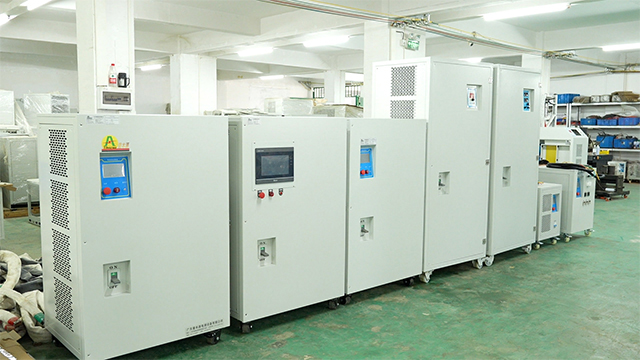
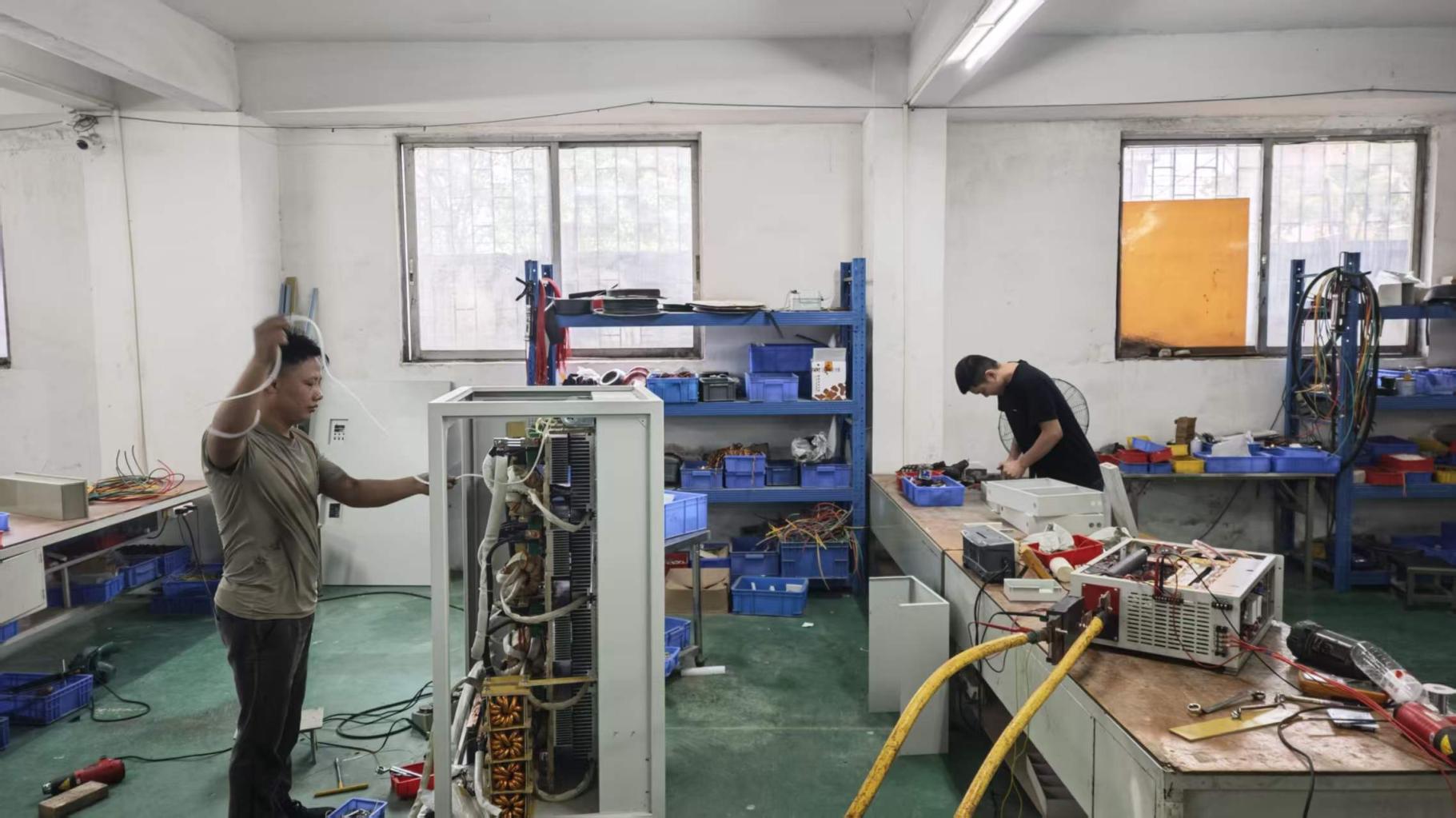
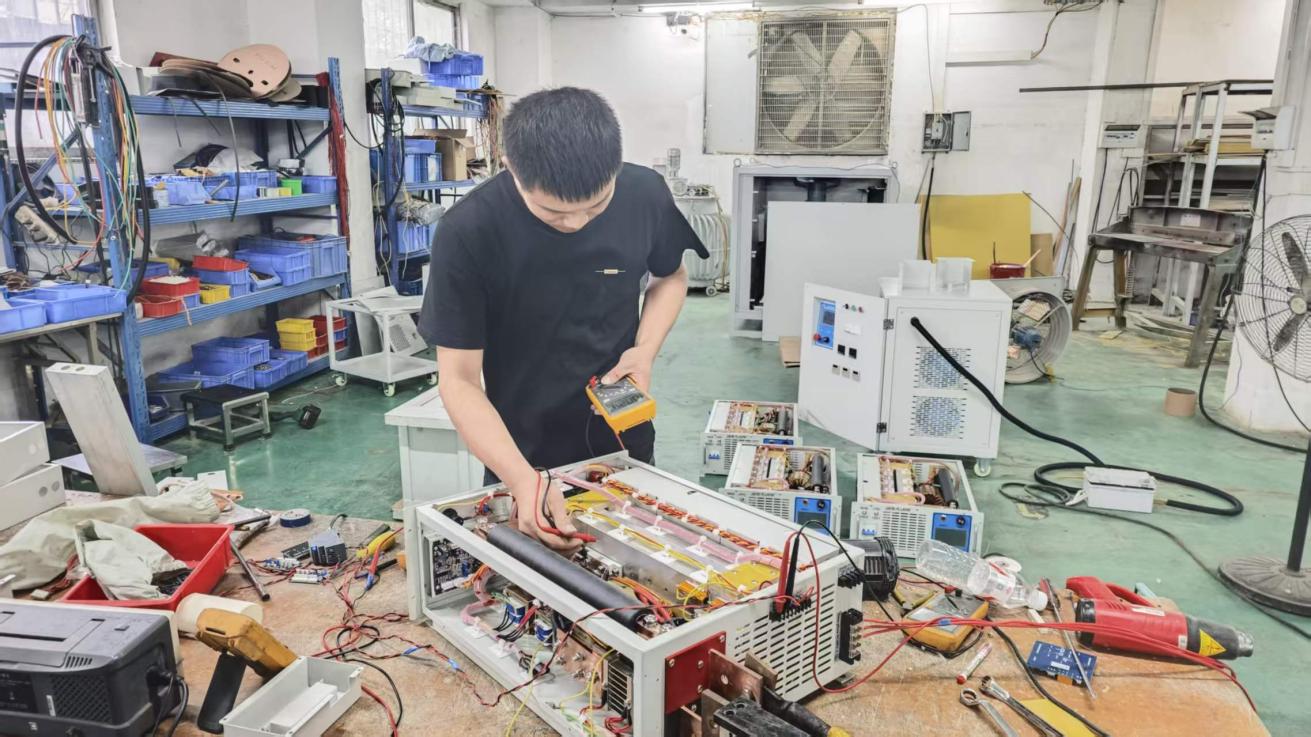
From precision sheet metal cutting to high-power load testing, our 3,000m² factory executes end-to-end quality control backed by ISO 9001 and independent TÜV verification.
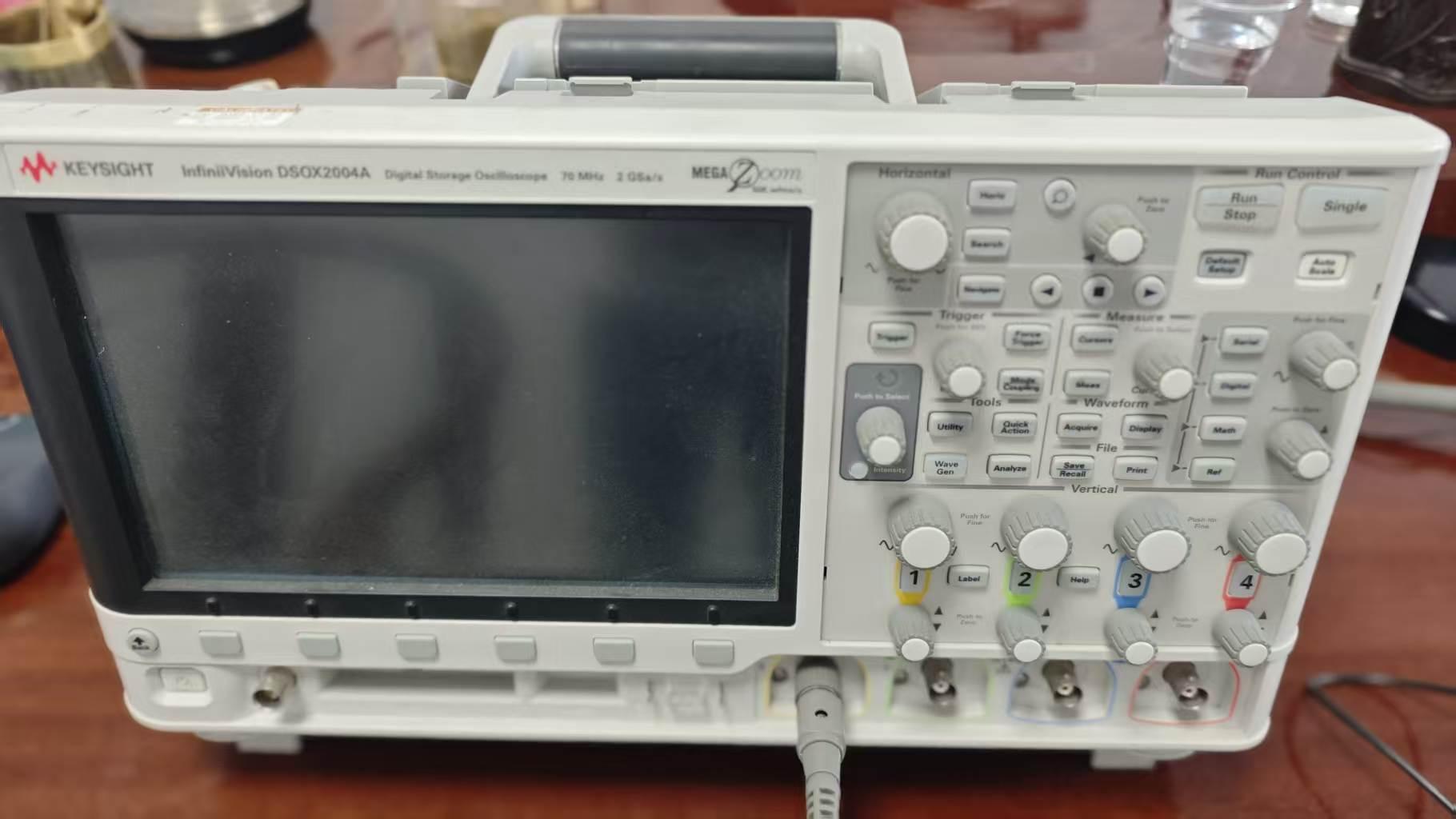
Factory operations, component traceabilities, and full-load burn-in stages verified on-site by TÜV Rheinland.
CNC shearing, busbar punching, precision milling, and specialized wire-harness looms completed entirely in-house.
Tailored engineering prototyping for Canadian academic laboratories, pilot test benches, or multi-megawatt volume orders.
Fass-track ocean & air forwarding offering Delivered Duty Paid (DDP) clearance right to your manufacturing plant floor.
Key technical, electrical compliance, duty rate, and integration inquiries addressed for Canadian industrial operators.
Connect with our technical design office. Our certified power supply engineers will review your plasma bath dimensions, workpiece geometry, and provincial electrical code requirements to provide a full schematic and formal quotation within 24 hours.