High-Efficiency DC Rectifiers Engineered for Danish Industry
Continuous-duty power modules featuring low ripple factor (<1% RMS), digital RS485/Modbus-RTU integration, high power factor (cos φ ≥ 0.95), and modular air- or water-cooling options.

12V/15V 5000A-6000A 75kW Water-Cooled Rectifier
- Topology: High-Frequency IGBT PWM
- Output Range: 0–15V / 0–6000A Adjustable
- Control Precision: ≤ 0.5% Constant Voltage / Current
- Cooling Mode: Closed-Loop Deionized Water
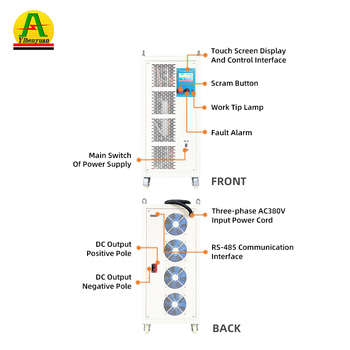
12V 4000A 48kW Plating Switch-Mode DC Source
- Input Voltage: 380V/400V 3-Phase 50/60Hz
- Operational Mode: Continuous CC / CV Auto-Switch
- Efficiency: ≥ 90% at Rated Current
- Application: Robotics Zinc, Nickel, Chrome

8000A 12V High-Amperage Water-Cooled Rectifier
- Output Capacity: 12V DC / 0–8000A Continuous
- Protection Level: IP54 Sealed Cabinet, Water Cooled
- Ripple Factor: ≤ 2% Full Load RMS
- Application: Offshore Marine & Wind Structures

300kW 20V 15,000A Power-to-X Electrolysis Unit
- DC Output: 0–20V / Up to 15,000A DC
- Control Bus: Profinet / Modbus-TCP / RS485
- Harmonics: Low THDi compliant with EN 61000-3
- Target Sector: Hydrogen AWE / PEM Stacks
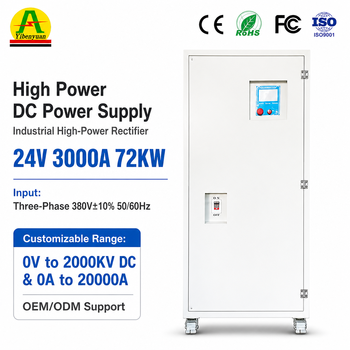
100A–3000A Anodic Oxidation Pulse Rectifier
- Voltage / Current: 0–24V/60V/100V, 100–3000A
- Ramping Modes: Multi-Step Programmable Current Ramp
- Polarity: Unipolar or Forward/Reverse Pulse
- Application: Robotic Aluminium Arm Hard Coating

48V 625A 30kW Auto-Reversing Descaling Supply
- Output Rating: 48V / 625A High-Frequency DC
- Cycle Control: Microprocessor 4-Segment Periodic Timer
- Reversal Time: < 50ms Seamless Electronic Inversion
- Application: Cooling Tower & Effluent Descaling
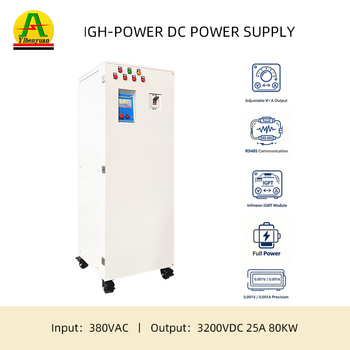
80kW 1000V–3200V Programmable High-Voltage DC
- Voltage Profile: 1000V / 2000V / 3200V DC Adjustable
- Regulation: 0.1% Line & Load High Precision
- Safety Interlocks: Over-Voltage, Arc Detection, Crowbar
- Application: Offshore Converter & Cable Testing
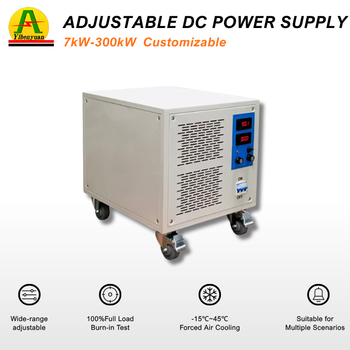
800V 50A 20kW Precision Programmable DC Bench
- Voltage / Current: 0–800V / 0–50A Wide Operating Envelope
- Programming: Analog 0–10V / RS485 / LabVIEW Drivers
- Response Time: < 5ms Dynamic Load Transient Slew
- Application: Subsea Robotics Drive & Inverter QA
Engineering High-Current DC Conversion for the Greater Odense Industrial Ecosystem
The industrial landscape of Odense and the broader Region of Southern Denmark (Syddanmark) represents one of Northern Europe’s most technologically specialized manufacturing clusters. Historically anchored by heavy maritime fabrication at the former Odense Steel Shipyard (Odense Staalskibsværft), the region has transformed into two world-class hubs: Odense Robotics, the premier European center for collaborative and mobile industrial robotics, and Port of Odense (Lindø Industrial Park), a global epicenter for offshore wind turbine manufacturing, giant foundation fabrication, and maritime electrification.
Operating in this stringent Scandinavian engineering ecosystem requires power conversion systems that go far beyond standard commercial rectifiers. In electrochemical surface treatment, hard anodizing of robotic articulation arms, heavy subsea hot-dip and electro-galvanizing, and pilot-scale Power-to-X (PtX) water electrolysis, engineers require CE certified high-current DC switch-mode rectifiers designed to meet rigorous standards for harmonic disturbance, electrical efficiency, and long-term thermal endurance under harsh coastal conditions.
1. The Switch-Mode IGBT vs. Legacy SCR Paradigm in Danish Manufacturing
Traditional industrial electrochemical facilities throughout Scandinavia historically relied on bulky Silicon Controlled Rectifiers (SCR / Thyristor systems) or oil-immersed saturable reactor systems. In modern Odense production facilities, where factory floor space carries a high premium and energy costs are heavily scrutinized under Denmark’s aggressive green transition legislation, high-frequency switch-mode power supplies (SMPS) utilizing insulated-gate bipolar transistors (IGBTs) have superseded older technologies.
Fenvix rectifiers convert three-phase 400V AC input into a high-frequency alternating wave (10kHz to 40kHz) using an advanced full-bridge PWM inverter stage before driving high-flux nanocrystalline transformers and Schottky or fast-recovery diode arrays. This architecture delivers fundamental engineering benefits:
Volumetric and Gravimetric Reductions: Operating at frequencies 200 to 800 times higher than 50Hz mains transformers reduces internal magnetics and copper volume by over 65%, allowing an 8000A / 12V rectifier cabinet to occupy less than 1.2 square meters of floor space adjacent to process tanks.
Superior Current Density and Microstructure Deposition: Legacy SCR units exhibit high low-frequency 300Hz ripple (often 5% to 12%), causing localized micro-current surges during electrodeposition. This produces granular porosity, uneven coating hardness, and burnt edges on intricate components. In contrast, Fenvix high-frequency rectifiers deliver a continuous, smooth DC wave with an RMS ripple factor of under 1%. In automated robotic anodizing and gold/nickel plating lines, this guarantees a fine crystalline grain structure, superior adhesion, and zero micro-voiding across complex geometries.
2. Electrical Grid Compliance and Harmonics Under Danish Regulations
Under regulations enforced by the Danish utility network and distribution system operators (such as Energi Fyn), industrial consumers are penalised for injecting harmonic distortion into the distribution grid. Fenvix CE-certified rectifiers incorporate dedicated EMC filtering adhering to EN 61000-6-2 (Immunity for industrial environments) and EN 61000-6-4 (Emission standard for industrial environments).
By pairing optimized 12-pulse or 24-pulse diode bridge inputs with optional active harmonic filter (AHF) stages, Total Harmonic Current Distortion (THDi) is maintained at ≤ 5% across full load bands, guaranteeing compliance with EN 61000-3-12 without triggering distortion in sensitive neighboring PLC controllers, collaborative robot teach pendants, or precision inspection coordinate measuring machines (CMMs).
Mission-Critical Applications Across Greater Odense & Port Lindø
How Fenvix high-current DC rectifiers deliver stable, high-yield electrochemical and test power to the region's specialized industrial sectors.
Collaborative Robot Precision Hard Anodizing (Odense Robotics Cluster)
Collaborative robotics manufacturers in Odense require tight tolerance coatings on lightweight aircraft-grade aluminum (e.g., 6061-T6, 7075) and titanium joint housings. Mil-A-8625 Type III hard coat anodizing demands linear current ramp rates, soft-start capabilities, and tight ripple control to avoid micro-arcing and overheating within deep blind holes. Fenvix constant current (CC) programmable rectifiers with multi-step recipe management ensure hard anodic oxide layers between 25µm and 50µm with flawless structural uniformity and extreme wear resistance.
Heavy Offshore Wind Foundation Galvanizing & Subsea Protection (Port of Odense / Lindø)
The fabrication of transition pieces (TPs), offshore wind turbine nacelle brackets, and heavy marine mooring chains at Lindø Industrial Park demands heavy-duty anti-corrosion barrier coatings capable of withstanding the North Sea's corrosive marine environment (ISO 12944 CX corrosivity category). Fenvix water-cooled rectifiers up to 15,000A deliver the high current densities required for continuous electro-galvanizing and heavy zinc-nickel plating, maintaining 24/7 reliability in aggressive coastal chloride environments without risking thermal degradation of IGBT modules.
Electrolytic Water Treatment & Scale Inversion for Regional District Heating
The Region of Southern Denmark is a frontrunner in integrating industrial waste heat with municipal district heating (Fjernvarme). Operating large-scale cooling towers and thermal energy networks requires chemical-free electrolytic descaling and water disinfection. Fenvix 48V / 625A high-frequency rectifiers feature automatic 4-segment periodic polarity reversal (<50ms changeover) that continuously cleans scale build-up from titanium-coated anodes, slashing servicing down-time and eliminating chemical scaling inhibitors.
Green Hydrogen & Power-to-X (PtX) Megawatt Electrolyzer Pilot Facilities
Syddanmark’s rapid expansion of Power-to-X infrastructure relies on robust, low-voltage, megawatt-scale DC rectifiers to feed Alkaline (AWE) and Proton Exchange Membrane (PEM) electrolyzer cell stacks. Fenvix provides parallelable, multi-module 300kW power blocks operating at up to 15,000A DC with rapid slew-rate response, perfectly matching the erratic dynamic power fluctuations associated with direct off-grid coupling to nearby North Sea offshore wind farms.
Macro Trends Reshaping Power Electronics Procurement in Odense
Three core industrial shifts dictate equipment selection criteria for Scandinavian technical directors and facility managers.
Denmark’s 70% Decarbonization Mandate (Klimaloven)
Denmark's legally binding Climate Act mandates a 70% greenhouse gas reduction by 2030 compared to 1990 levels. Surface finishing and manufacturing operations in Odense are systematically replacing old, inefficient SCR rectifiers (which exhibit 68%–78% conversion efficiencies) with Fenvix IGBT switch-mode systems delivering ≥90% certified efficiency across broad loading ranges. This lowers annual electricity consumption by tens of thousands of kilowatt-hours per plating line, directly assisting plants in meeting ISO 50001 energy audits.
Full SCADA Integration & Industry 4.0 Traceability
Driven by the presence of robotics innovators like Universal Robots and MiR, automation engineers in Odense expect power supplies to behave as smart, transparent IoT nodes. Fenvix units offer comprehensive digital protocol integration—including Profinet, Modbus-TCP, Ethernet/IP, and RS485—enabling real-time recording of voltage curves, current densities, bath temperatures, and error diagnostics directly to overarching plant SCADA platforms, delivering lot-by-lot electrochemical traceability.
Heat Recovery Pairing with Fjernvarme Infrastructure
Thermal energy recovery is a hallmark of Fyn’s environmental leadership. Fenvix water-cooled rectifiers operate with an isolated liquid loop capable of operating with return temperatures up to 35°C–45°C. This allows electroplating and heavy test bays to connect the rectifier heat-exchange exhaust directly to regional hydronic factory space-heating loops or thermal recovery circuits, converting power electronic cooling losses into usable facility thermal energy.
| Performance Parameter | Legacy Thyristor (SCR) Rectifier | Fenvix High-Frequency IGBT SMPS | Engineering Impact for Odense Facilities |
|---|---|---|---|
| Conversion Efficiency | 68% – 78% (load dependent) | 90% – 93% continuous | Up to 15% lower power consumption; satisfies Danish Klimaloven benchmarks. |
| Ripple Factor (RMS) | 5% to 15% (300Hz fundamental) | ≤ 1% across 10%–100% current | Denser grain boundaries; eliminates nodule formation on precision robot joints. |
| Power Factor (cos φ) | 0.65 – 0.80 at reduced firing angles | ≥ 0.95 across entire output range | Zero reactive power penalties from regional electricity distributor Energi Fyn. |
| Physical Footprint | Heavy, large footprint; bulky copper chokes | 65% reduction in size and weight | Easy placement beside chemical plating tanks or inside integrated skids. |
| Current Regulation Accuracy | ± 2.0% full-scale | ± 0.5% high-speed digital feedback | Repeatable micron-level thickness control for hard chrome, gold, and anodizing. |
End-to-End In-House Manufacturing & Quality Management
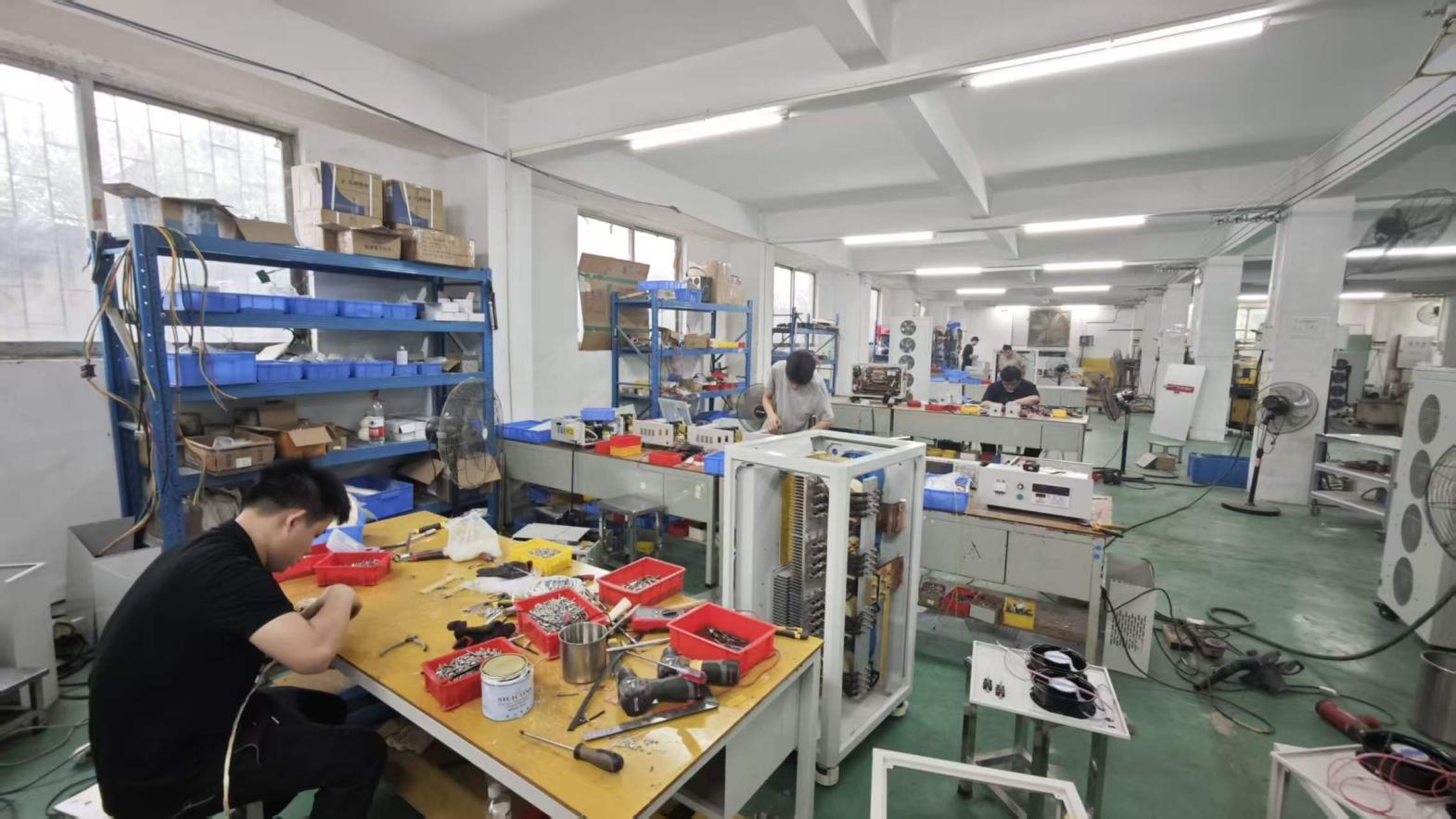
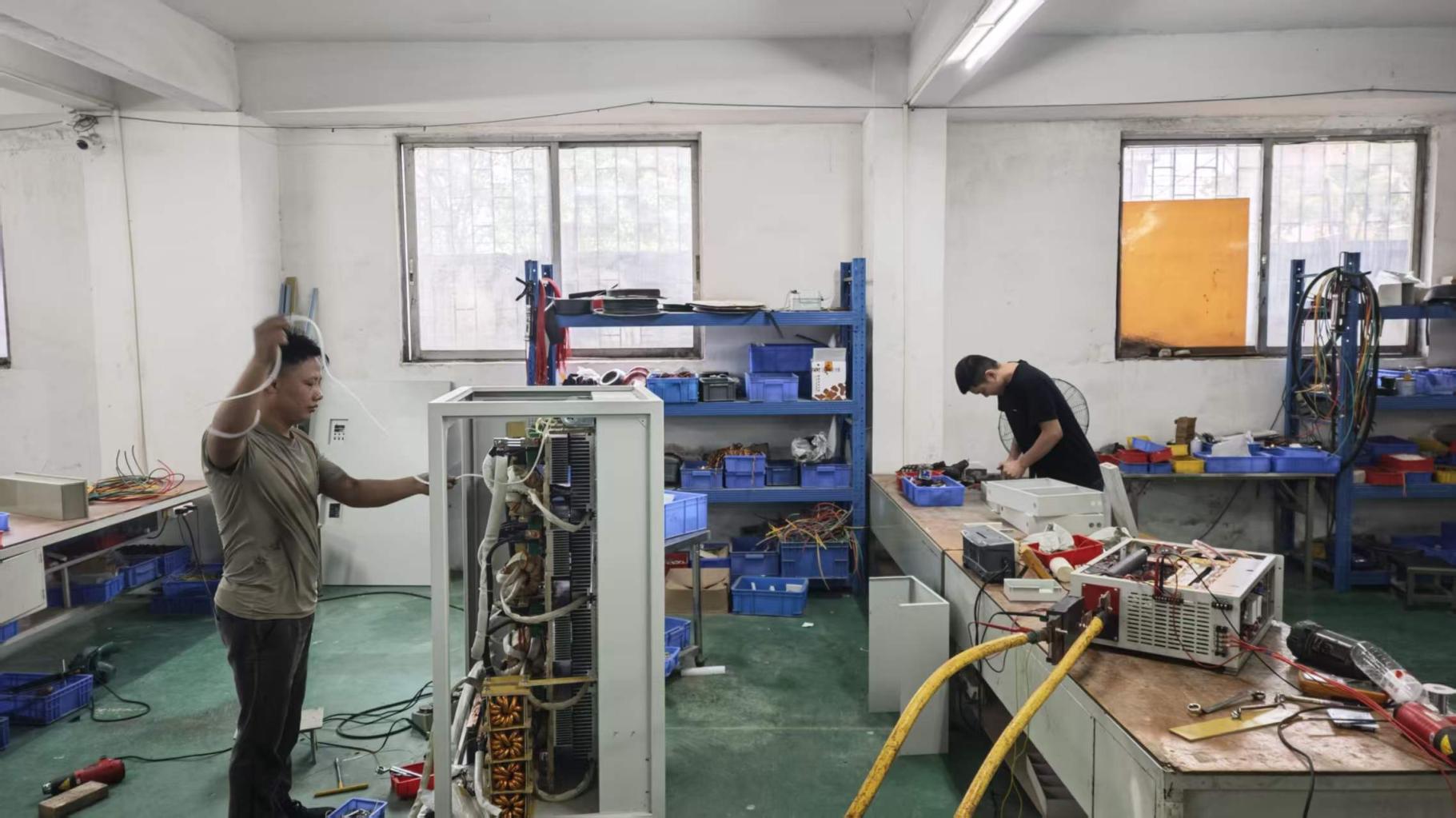
Operating since 2013 from our 3,000 m² ISO 9001-certified production facility in Guangdong, Fenvix eliminates trading middlemen by controlling sheet metal, busbars, power assemblies, and full-load burn-in testing under one roof.
TÜV Rheinland Verified Factory
On-site audited production facilities confirming documented QC procedures, incoming material verification, and full electrical calibration benches.
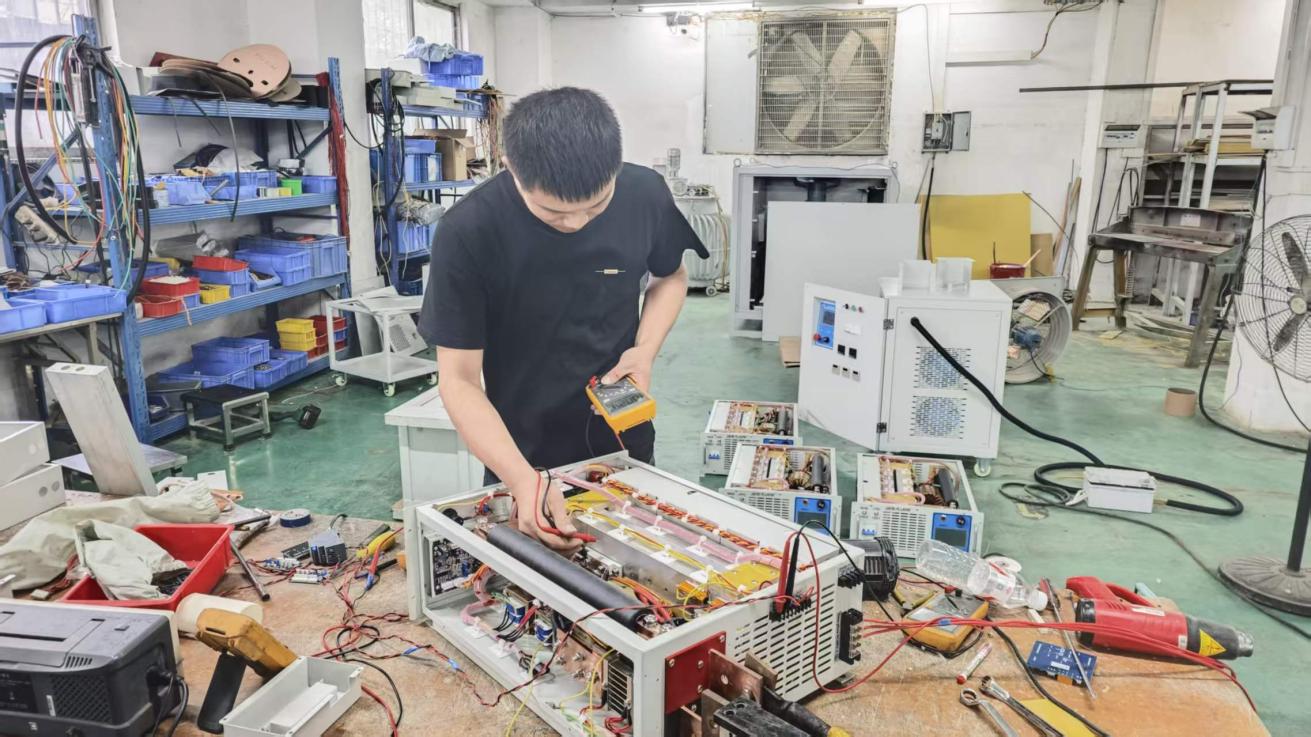
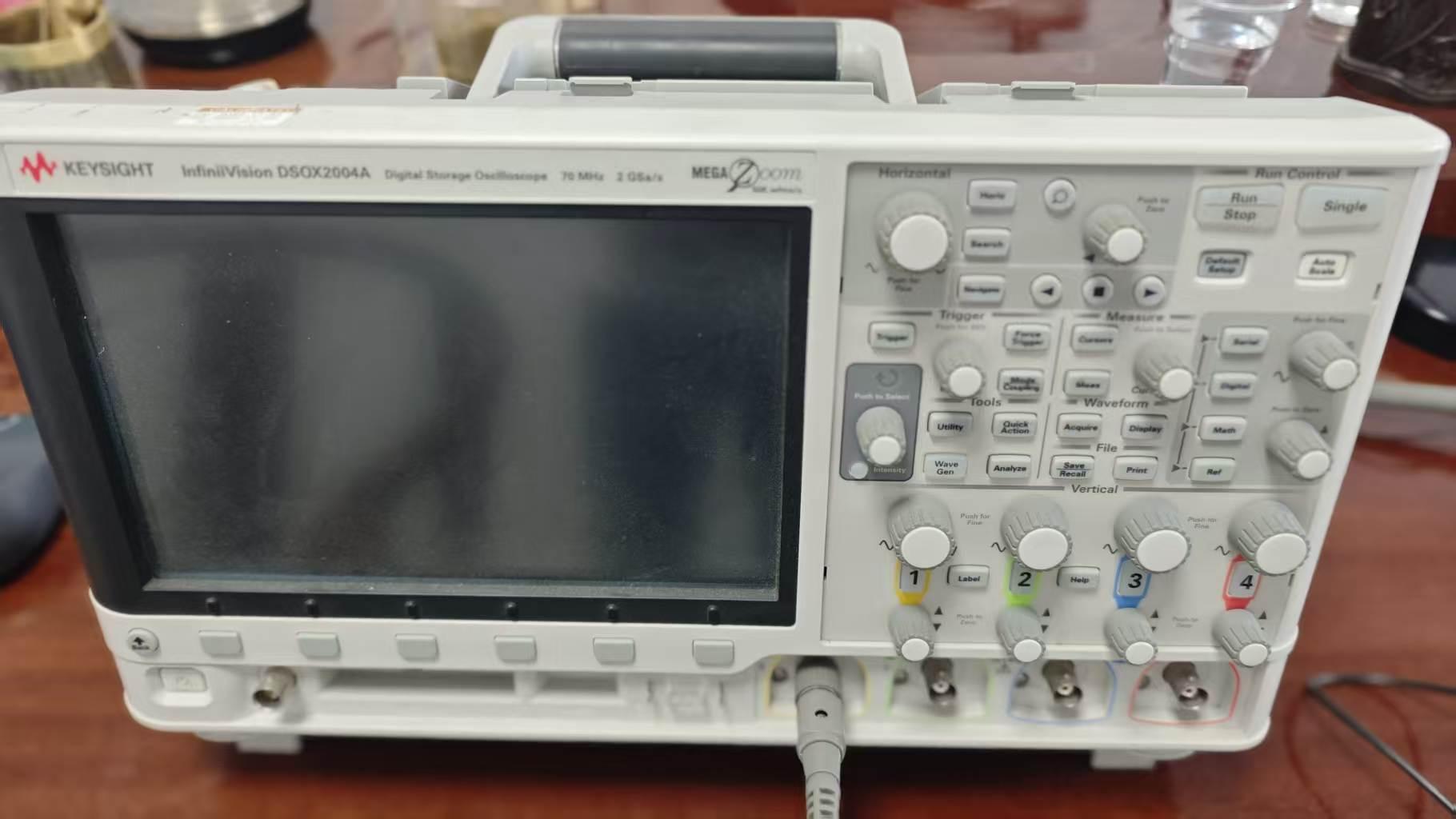
100% Load & Oscilloscope Burn-In
Every single high-current unit undergoes continuous dynamic burn-in testing under full rated amperage using precision digital oscilloscopes and resistive loads.
In-House Heavy Copper Busbar Machining
Equipped with internal shearing, CNC punching, milling, drilling, and tapping machines for heavy pure oxygen-free copper busbars, avoiding external sub-tier bottlenecks.
Strict CE, LVD & EMC Directives
Designed and built to comply with the European Low Voltage Directive (2014/35/EU) and Electromagnetic Compatibility Directive (2014/30/EU), supplied with complete CE Declarations of Conformity.
OEM / ODM Flexibility (Zero MOQ)
We welcome non-standard voltage/current ratios, unique cabinet dimensions, and custom PLC protocols from a single prototype set for R&D up to batch series deliveries.
Reliable European Delivery & Support
Comprehensive export options including DDP (Delivered Duty Paid), CIF Port of Aarhus/Copenhagen, or express airfreight to Billund/Copenhagen Airport with dedicated remote engineering support.
Frequently Asked Questions by Danish Buyers & Electrical Engineers
Direct technical answers regarding grid connection, regional compliance, thermal management, and logistics for the Odense market.
Do Fenvix rectifiers conform to Danish grid codes and CE requirements?
Yes. All Fenvix rectifiers supplied to Odense and the European market are engineered to strictly conform to the Low Voltage Directive (LVD) 2014/35/EU and the Electromagnetic Compatibility (EMC) Directive 2014/30/EU, backed by comprehensive CE Declarations of Conformity and factory test documentation.
Furthermore, our units are tuned to standard Danish industrial input voltage (400V AC 3-phase, 50Hz) and incorporate multi-stage passive or active filtering to maintain Total Harmonic Current Distortion (THDi) within the limits stipulated by regional distribution system operators (DSOs) like Energi Fyn.
When should an Odense facility specify water cooling over forced air cooling?
In the Odense region, water cooling is strongly recommended under three primary conditions:
1. Corrosive chemical environments: In electroplating, hard chrome, or pickling plants, airborne acid and alkali aerosols degrade internal electronic components when air-cooled fans pull factory air through the chassis. Water-cooled units have completely sealed enclosures (IP54), shielding the power electronics.
2. High continuous amperages (≥ 4000A): High-amperage units generate substantial heat. Closed-loop liquid cooling using deionized water transfers heat away with maximum efficiency without blowing large volumes of hot air into the work environment.
3. District heating / waste-heat integration: Liquid cooling lines can be plumbed through titanium plate heat exchangers into the factory’s secondary hydronic loops, allowing valuable process heat to be recovered.
Can these power supplies be integrated with local Siemens or Beckhoff PLC systems?
Absolutely. Fenvix supplies standard digital interfaces including RS485 (Modbus-RTU), as well as optional industrial Ethernet protocols such as Profinet, Modbus-TCP, and EtherCAT. These protocols allow plug-and-play integration with Siemens S7, Beckhoff TwinCAT, and Allen-Bradley automation systems common in Danish robotic lines.
For legacy lines, isolated analog control (0–5V, 0–10V, or 4–20mA) is available for remote setpoint adjustment and actual voltage/current feedback.
What is the minimum order quantity (MOQ) and customization lead time?
We maintain a strict MOQ of 1 set. We routinely design and manufacture single prototype rectifiers for university testing laboratories, engineering pilot lines, and customized machinery builders across Denmark.
Standard configurations generally ship within 2 to 3 weeks following drawing sign-off. High-power multi-megawatt systems or custom busbar arrangements typically require 4 to 6 weeks for manufacturing, dynamic testing, and seaworthy packing.
What documentation is provided to satisfy Danish workplace safety authorities (Arbejdstilsynet)?
Every shipment to Denmark includes complete technical documentation written in clear English: the CE Declaration of Conformity, full schematics, terminal connection wiring diagrams, individual factory load-test and ripple-verification reports, component safety data sheets, and comprehensive maintenance/operating manuals.
What international trade terms (Incoterms) and transport options serve Odense?
We support all standard Incoterms 2020 including FOB, CIF, EXW, and DDP (Delivered Duty Paid). For sea shipments, cargo arrives through the Port of Aarhus or Port of Copenhagen, followed by direct container transport over the Great Belt Bridge to your Odense doorstep.
For urgent spare units or critical maintenance requirements, express air freight to Billund Airport (BLL) or Copenhagen Airport (CPH) is available, with door-to-door delivery arranged within 5 to 7 business days.
Request a Technical Proposal for Your Odense Facility
Provide your input mains voltage, rated DC output parameters, preferred cooling method, and communication bus. Our factory power application engineers will supply a complete technical quotation and dimensioned drawing within 24 hours.