Flagship CC/CV
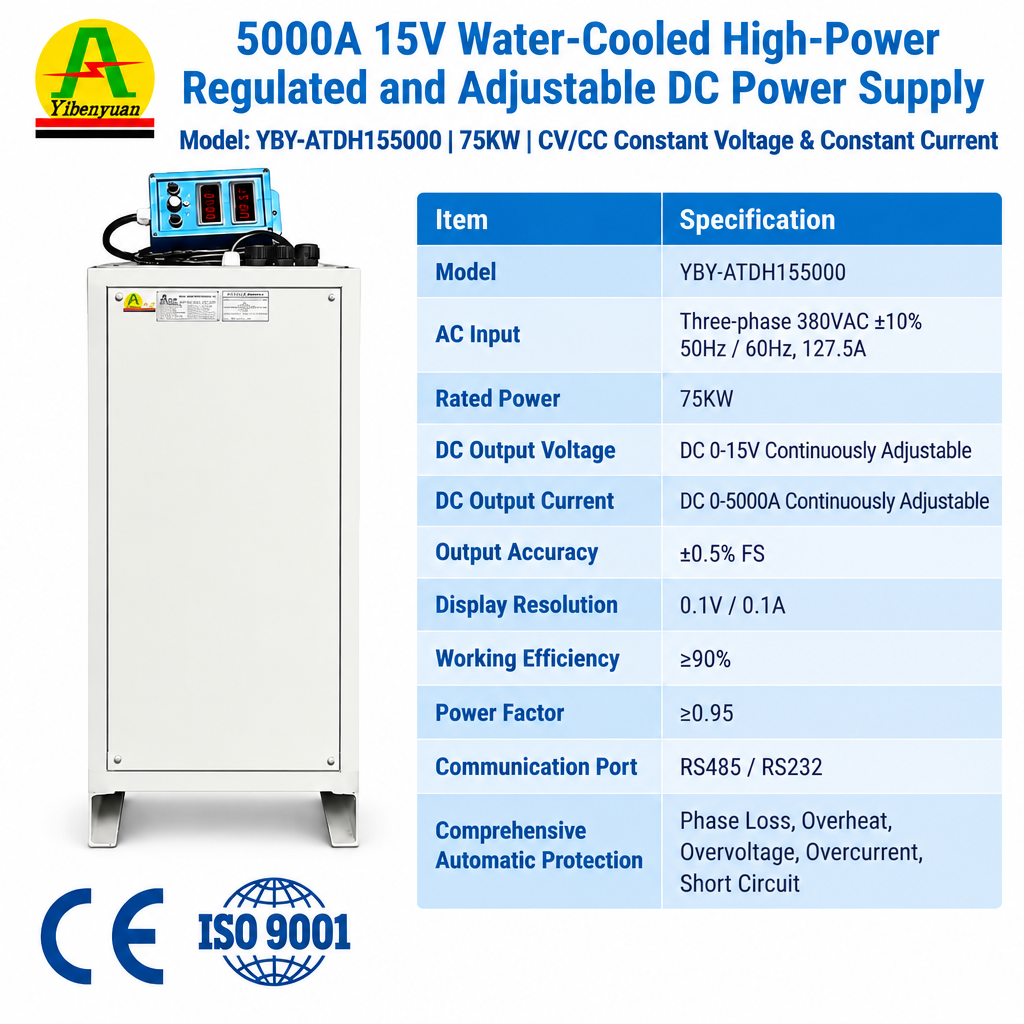
As Japanese industrial manufacturing transitions through Industry 4.0, the demands on power conversion electronics have shifted toward sub-millivolt ripple, high-power-density switch-mode topologies, and robust galvanic isolation. From precision surface treatment lines in Kanagawa to EV powertrain research centers in Aichi, Guangdong Fenvix Technology Co., Ltd. delivers bespoke Constant Current (CC) and Constant Voltage (CV) power infrastructure engineered to meet Japan’s rigorous METI and JIS environmental standards.
Configured for single and three-phase Japanese grid environments (200V / 400V at 50Hz/60Hz).
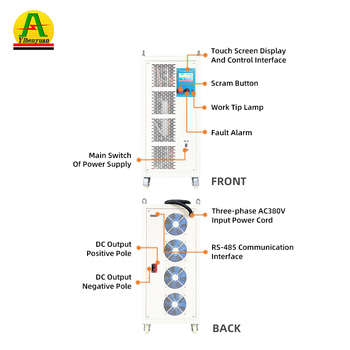
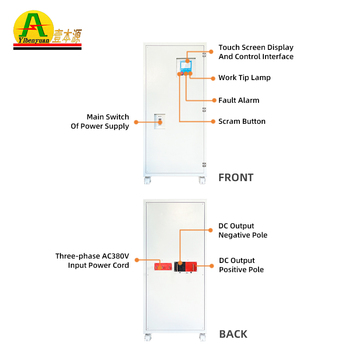
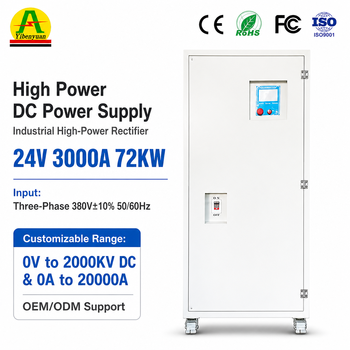
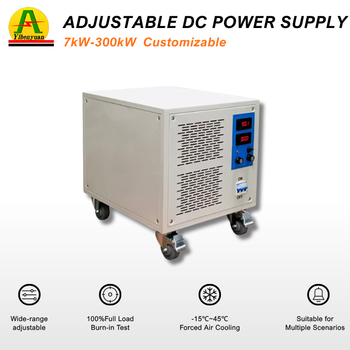
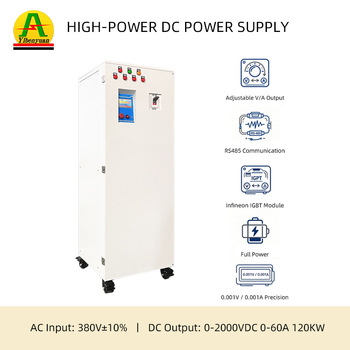
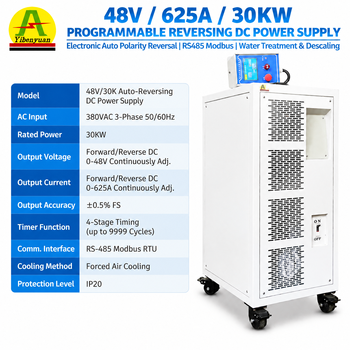
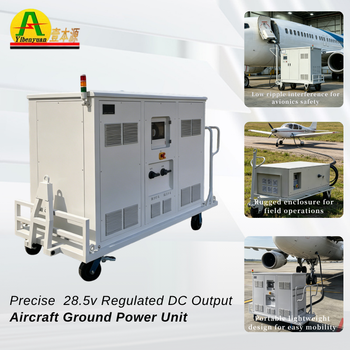
Understanding the unique operational environments of Japanese factories: from low-noise semiconductor cleanrooms to humid seaside galvanizing plants.
Concentrated in regions like Kyushu ("Silicon Island") and Tohoku, high-density wafer packaging and lead frame gold/silver plating demand current ripple below 1% to prevent non-uniform layer deposition. Fenvix CC switch-mode supplies leverage multi-phase interleaved high-frequency chopping, eliminating micro-voiding on ultra-fine circuit traces.
Centered within Aichi, Shizuoka, and Hiroshima prefectures, the electrification push demands constant-voltage charging profiles transitioning instantaneously to constant-current limits. Our programmable supplies simulate complex drive-cycle battery loads, endurance testing Japanese inverters up to 1200V with low thermal drift.
Applied heavily in Osaka and Kanagawa for precision robotics, aerospace frames, and optics. Hard-coat anodizing requires strict current density maintenance as oxide barriers thicken. Fenvix digital CC rectifiers implement programmable voltage stepping to preserve stoichiometric pore structures while reducing energy waste by up to 25% over old thyristor equipment.
A technical perspective on power stability, harmonic elimination, and energy conversion standards.
Eastern Japan (Tokyo, Sendai - TEPCO) operates at 50Hz, while Western Japan (Osaka, Nagoya - KEPCO/Chubu) runs at 60Hz. Traditional line-frequency transformers suffer core saturation or thermal runaway when relocated. Fenvix primary switch-mode topologies decouple input mains through active rectification, guaranteeing seamless deployment anywhere across the archipelago without efficiency derating.
Under Japan’s revised Energy Conservation Act, heavy industrial users face strict penalization for poor power factor and harmonics that disrupt substation transformers. Our switch-mode rectifiers utilize advanced Active Power Factor Correction (PFC), maintaining power factor >0.96 and eliminating the bulky harmonic filtering traps commonly required by obsolete SCR rectifiers.
Floor space costs in Japanese metropolitan industrial estates necessitate compact equipment envelopes. Water-cooled Fenvix rectifiers reduce mechanical footprints by up to 60% compared to forced-air equivalents, entirely eliminating dust circulation and cooling fan noise in sensitive cleanroom zones.
| Architecture Feature | Legacy Japanese Thyristor (SCR) Units | Fenvix High-Frequency IGBT CC/CV Topologies | Impact on Japanese Operations |
|---|---|---|---|
| Conversion Efficiency | 70% – 78% (Significant heat rejection) | 90% – 94% Nominal | Substantially cuts electrical utility costs under high Japanese industrial tariffs. |
| Output Ripple Factor | Typically > 5% at low-voltage regimes | ≤ 1% RMS Full Range | Prevents microscopic surface defects in micro-plating and anodizing. |
| Dynamic Regulation Speed | Slow (100ms – 300ms line response) | Ultra-Fast (< 5ms step transient) | Protects delicate EV electronic loads during sudden current transitions. |
| Cabinet Footprint | Heavy, oil-immersed or massive air cabinets | Compact Modular Busbar Structure | Optimizes tight factory square footage across Tokyo and Osaka industrial parks. |
Independent manufacturing capabilities delivering transparent build-quality, verified testing, and no minimum order barriers.
We process copper busbars, chassis punching, tapping, and structural milling directly on our 3,000m² factory floor in Guangdong, eliminating supplier latency and ensuring high-conductivity electrical joins.
Our quality management operations are independently verified on-site. Every unit undergoes multi-hour continuous burn-in load testing with calibrated digital oscilloscopes before crate dispatch.
Whether you require a single bespoke 100kV laboratory charging unit for a university project in Kyoto or a 15,000A containerized system for industrial electrolysis, single-set customization is fully backed.
Addressing essential engineering protocols, electrical compatibility, commercial terms, and technical commissioning.
Consult directly with our engineering team for detailed technical sizing, thermal calculations, and direct factory pricing tailored to your Japanese project timeline.
Contact Us