Specialized Rectifiers & Pulse Power Units
High-efficiency conversion platforms engineered for vacuum plasma coating, electrodeposition, anodization, and extreme industrial cycling.
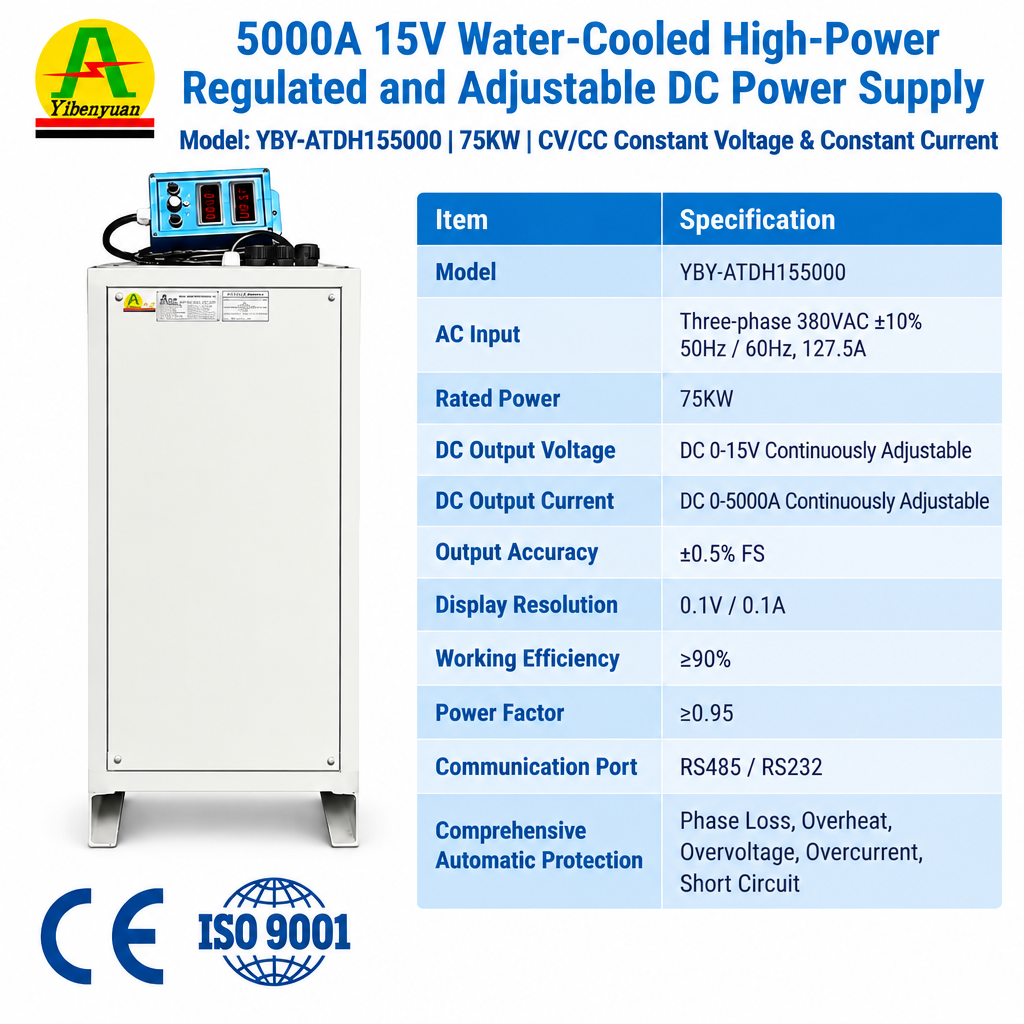
12V–15V 5000A–6000A 75KW Water Cooled High Frequency Rectifier
- Regulation ModeCV / CC Digital Display
- Cooling MethodDeionized Water Cooled
- Duty RatingContinuous 24/7 Full Load
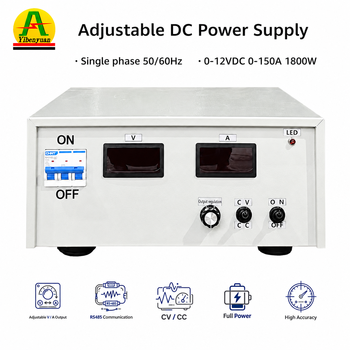
12V 150A High Frequency Plating & Thin Film Bias Unit
- Control Precision±0.5% Setpoint Accuracy
- Digital InterfaceRS485 / Modbus RTU
- CertificationCE, EMC, LVD Compliant
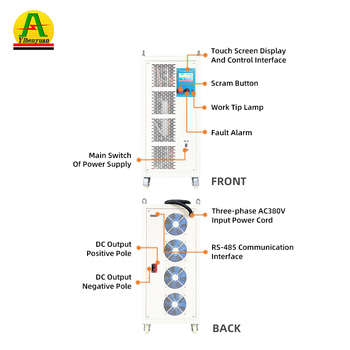
12V 4000A 48kW High Frequency Plating Rectifier
- Switching Frequency20kHz – 40kHz IGBT
- EfficiencyTypical ≥ 90% at Rated Output
- ProtectionOver-Current, Phase Loss, Thermal
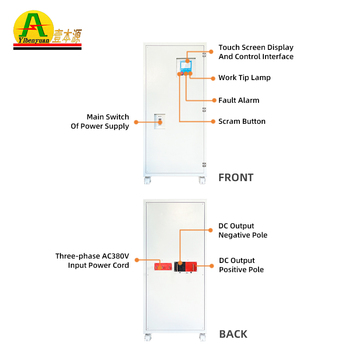
8000A 12V Water-Cooled Heavy Duty Galvanizing Rectifier
- Cooling CircuitAnti-Corrosion Sealed Manifold
- Control ModeConstant Voltage / Constant Current
- ApplicationHard Chrome, Continuous Strip
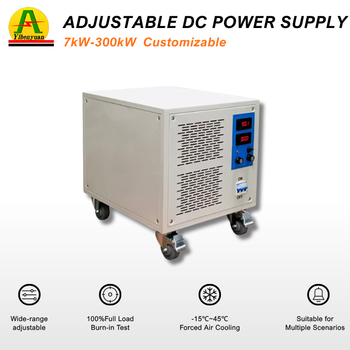
800V 50A 20kW High Voltage Programmable DC Source
- Voltage Range0–800V Continuous Setting
- Slew RateProgrammable Voltage/Current Ramp
- Target ProcessEV Plasma Discharge, Testing
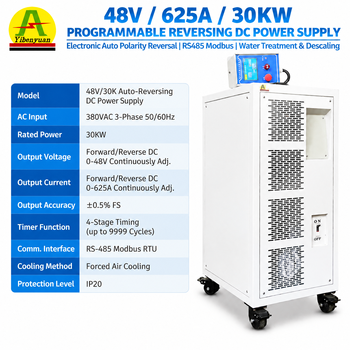
48V 625A 30kW Auto-Polarity Reversing Pulse DC System
- Reversal CycleMulti-Segment Programmable Timer
- Response TimeRapid Polarity Transition H-Bridge
- ApplicationDescaling, Electrochemical Polish
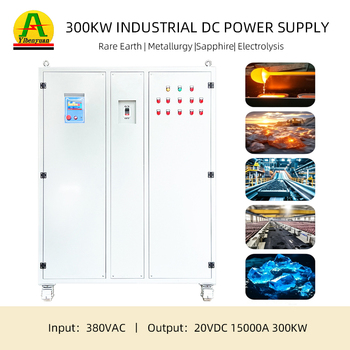
300kW 20V 15,000A High Current Electrolysis Rectifier
- Input Power380V / 400V / 480V 3-Phase
- Cabinet DesignIP54 Sealed Electronics Enclosure
- Thermal LoadDirect Busbar Water Heat Exchange
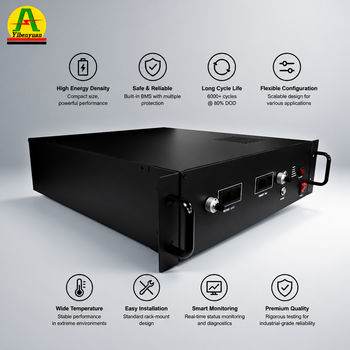
0–100kV High Voltage Pulsed Capacitor Charging Unit
- Charging Energy1000W / Custom Constant Power
- Peak Arc QuenchSub-Microsecond Spark Protection
- Target SystemPulsed Laser, Glow Plasma Bias
Physical Principles of Asymmetric Bipolar Pulsing in Vacuum Deposition
Overcoming the "Disappearing Anode" effect and target poisoning in reactive sputtering operations serving the Balzers vacuum technology ecosystem.
In modern vacuum thin-film engineering—particularly within precision manufacturing clusters surrounding the Liechtenstein and Rhine Valley vacuum technology hub commonly identified with the Balzers market—the transition from direct current (DC) sputtering to asymmetric bipolar pulsed DC power has become a prerequisite for deposition reliability. Reactive magnetron sputtering of dielectric and insulating films, including aluminum oxide (Al₂O₃), silicon dioxide (SiO₂), titanium nitride (TiN), and diamond-like carbon (DLC), frequently confronts the critical physical phenomenon termed the "disappearing anode" effect. As non-conductive insulating layers condense across non-eroded target zones and surrounding chamber anodes, charge build-up precipitates violent electric field breakdowns, or micro-arcing. These arcs eject molten droplets into the plasma stream, irreparably degrading surface morphology and inducing catastrophic pinhole defects in precision optics and tribological tool coatings.
A genuine industrial-grade Bipolar Pulse Power Supply resolves this fundamental constraint by systematically cycling between a prolonged negative sputtering potential (pulse-on time, where target sputtering occurs) and a calibrated positive reversal phase (reverse time, typically 10% to 20% of negative voltage amplitude). During this reverse bias phase, low-energy electrons are accelerated toward the poisoned target surface, rapidly neutralizing accumulated dielectric positive ions before localized avalanche breakdown thresholds are breached. The result is a stable, self-clearing glow discharge operating at switching frequencies up to 100 kHz or higher, providing consistent deposition rates, uniform stoichiometry, and ultra-dense thin-film cross-sections.
Furthermore, our engineering architecture utilizes high-speed insulated gate bipolar transistors (IGBTs) linked to real-time digital signal processors (DSP). This delivers sub-microsecond arc suppression (< 1 µs energy shut-off), restricting the destructive arc energy transferred to the substrate to less than 1.5 mJ per kilowatt of nominal power. When serving high-throughput chamber platforms across Europe, including legacy and modernized batch coaters, this precise energy management ensures maximal target lifetime, zero macro-particle inclusion, and repeatable film hardness up to 35 GPa.
Localized Application Scenarios in the Balzers Ecosystem
Engineered to meet the stringent technical tolerances demanded by vacuum coaters, precision optical shops, and high-performance metal tooling facilities.
Tribological Hard Coatings for Cutting Tools
Deposition of nanocomposite TiAlN, AlCrN, and CrN coatings on carbide end mills, hobs, and indexable inserts requiring extreme wear resistance and thermal hot hardness above 900°C.
Precision Optical Thin Films & Filters
Low-temperature reactive sputtering of high-transmittance optical anti-reflective (AR) coatings, dielectric bandpass filters, and laser optics on delicate glass and polymer substrates.
Automotive Powertrain DLC Friction Reduction
Bipolar pulsed bias application for dense, hydrogenated or hydrogen-free diamond-like carbon (DLC/a-C:H) coating on diesel fuel injector needles, piston rings, and valvetrain tappets.
Semiconductor & MEMS Barrier Metallization
Substrate bias and magnetron target excitation for conformal barrier layer deposition (Ta/TaN, TiW, Cu seed layers) within sub-micron aspect ratio silicon trenches and through-silicon vias (TSVs).
Medical Implants & Surgical Instrumentation
Biocompatible, dense titanium nitride and zirconium nitride barrier deposition on orthopedic joint replacements, dental screws, and endoscopic instruments without localized plasma defects.
Bipolar Pulsed vs. Traditional DC Sputtering Topologies
Quantitative assessment of plasma stability, film density, and arc handling across reactive process runs.
| Technical Characteristic | Conventional Continuous DC | Mid-Frequency AC (Dual Magnetron) | Fenvix Asymmetric Bipolar Pulse DC |
|---|---|---|---|
| Arc Management Speed | Slow (> 50 µs via passive snubbers) | Moderate (5–10 µs cycle reset) | Ultra-Fast (< 1 µs DSP Active Arc Quench) |
| Target Poisoning Sensitivity | Severe in O₂/N₂ atmospheres (Requires PM) | Mitigated, but requires dual targets | Zero Accumulation (Periodic Positive Charge Cleared) |
| Substrate Thermal Stress | High continuous electron bombardment | Moderate alternating load | Tunable via Asymmetric Duty Cycle (Low Thermal Load) |
| Deposition Rate (Oxides/Nitrides) | Drops drastically (up to 80% loss) | Stable (~70% of pure metal rate) | Optimized (Maintains 85–92% of Pure Metal Rate) |
| Chamber Compatibility | Basic direct wiring | Requires dual matched cathodes | Single or Dual Cathode Drop-In Retrofit Ready |
PVD Industrial Trends in the Central European Coater Belt
Analysis of manufacturing evolutions across Liechtenstein, Switzerland, Southern Germany, and Vorarlberg driving power supply replacement cycles.
Energy Transition & High-Density IGBTs
Central European operators face stringent ISO 50001 energy audits. Replacing legacy thyristor/SCR power units with high-frequency IGBT converters increases plant energy efficiency from ~72% to over 91%, eliminating massive electrical line losses.
Retrofitting Legacy Vacuum Chambers
Rather than investing multi-millions in entirely new vacuum vessels, regional coating houses favor turnkey power upgrades. Modernizing power generators allows older batch chambers to run high-purity reactive processes with modern fieldbus telemetry.
Automated Recipe Deployment via Industry 4.0
Manual potentiometer calibration has been completely replaced by deterministic industrial Ethernet (Profinet, EtherCAT, Modbus TCP). Central European automation engineers require remote parameter injection, live oscilloscope streaming, and predictive thermal logging.
Hydrogen & Fuel Cell Bipolar Plate Coatings
Rapid investments in green hydrogen across the Alpine DACH territory mandate pinhole-free conductive coatings on thin stainless steel and titanium PEM fuel cell bipolar plates, where sub-microsecond arc elimination is imperative to prevent substrate puncturing.
Why International Sourcing Teams Rely on Fenvix
Direct manufacturer integrity, complete in-house fabrication, and third-party certified production reliability.
ISO 9001 & TÜV Rheinland Verified Factory
Operating since 2013 with 3,000 m² of specialized workshops in Guangdong. Audited on-site by TÜV Rheinland, ensuring incoming materials, copper winding, and PCB assembly adhere strictly to international quality baselines.
Complete In-House Metal & Busbar Fabrication
We do not outsource enclosure metalwork. Shearing, CNC punching, milling, drilling, and busbar bending are performed internally, ensuring rigorous shielding against electromagnetic interference (EMI) and precision cabinet fitment.
No Minimum Order Quantity (Zero MOQ)
Whether you require a single 150A prototype unit for pilot PVD deposition research or a fleet of 15,000A water-cooled rectifiers for an industrial anodizing plant, we support direct-from-factory single-unit customization.
100% Full-Load Burn-In & Oscilloscope Testing
Every industrial power unit undergoes multi-hour continuous burn-in under real resistive-inductive loads, with waveform jitter, ripple coefficient, and thermal profiling verified prior to ocean or air-freight packaging.
Comprehensive International Trade Term Flexibility
Supporting EXW, FOB, CIF, CIP, and door-to-door DDP shipments with multi-currency settlements (EUR, USD, CHF, GBP). Full engineering dossiers, wiring schematics, and multilingual remote commissioning assistance included.
Frequently Asked Questions by Central European Buyers
Direct answers addressing technical integration, grid compliance, cooling parameters, and commercial terms.