Featured High-Current & Precision Power Systems
Direct-from-factory high-frequency rectifiers and heavy-duty DC power sources configured with digital ramping, ultra-low current ripple, and robust environmental protection.
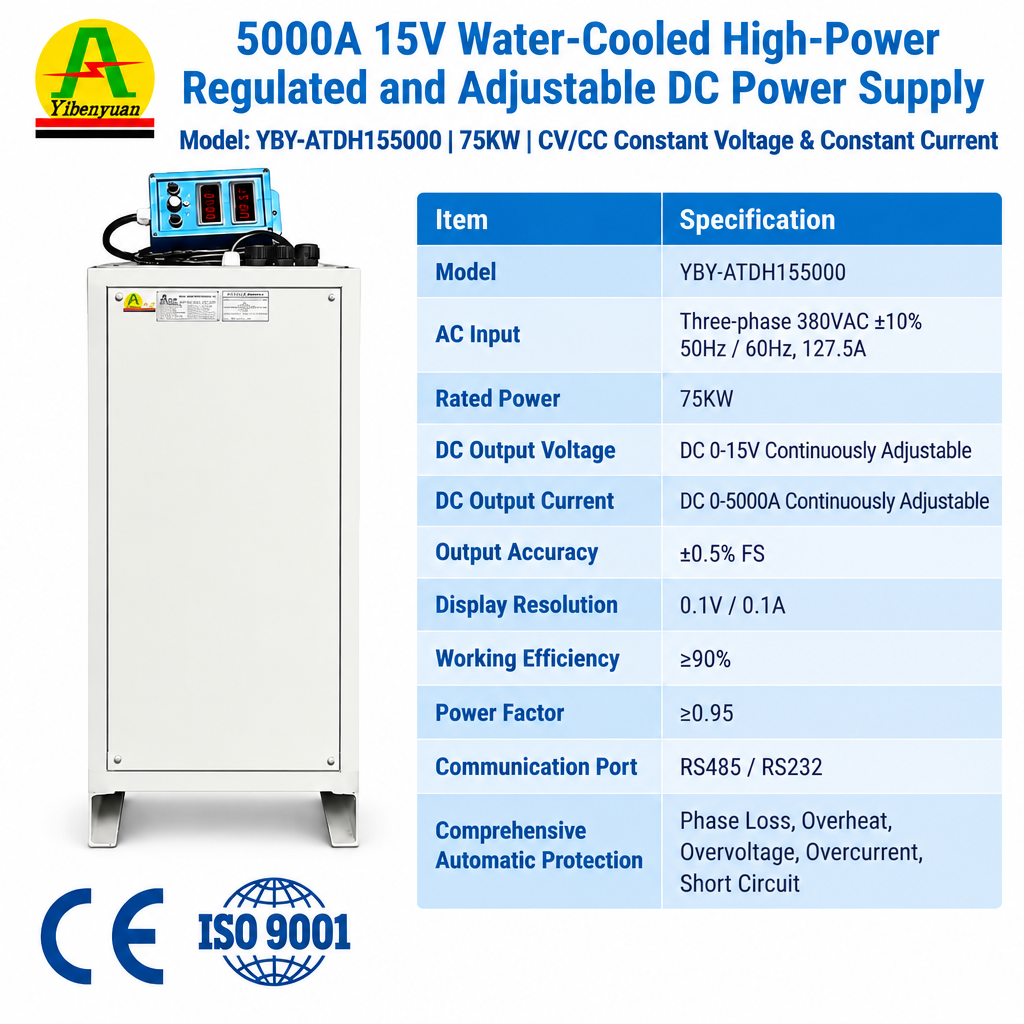
12V/15V 5000A–6000A 75kW Water-Cooled DC Rectifier
- Cooling Method:Closed-Loop Water
- Control Mode:Constant Current / CV
- Display:Precision Digital Meter
- Ripple Factor:≤ 2% Full Scale
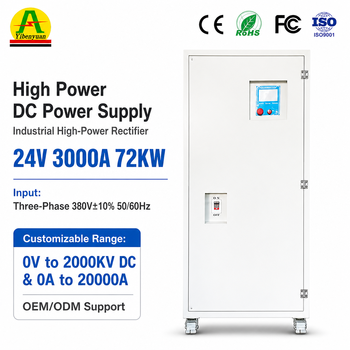
100A–3000A 12V/24V Anodic Oxidation Power Supply
- Output Range:12V/24V, up to 3000A
- Ramp Control:Multi-Stage Soft Start
- Interface:RS485 / Modbus-RTU
- Target Process:Architectural & Hard Anodising
150V 50A Titanium & High-Voltage Anodizing Supply
- Input Voltage:400V 3-Phase (UK Standard)
- Topology:IGBT High-Frequency Inverter
- Application:Medical & Aerospace Titanium
- Protection:OVP, OCP, Thermal Trip
12V 4000A 48kW Heavy-Duty Plating & Anodizing Source
- Current Density:Continuous 4000A Rating
- Regulation:< 0.5% Precision
- Cooling:Forced Air / Water Ready
- Compliance:CE, LVD, EMC Compliant
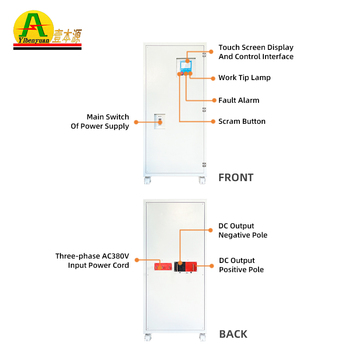
8000A 12V Water-Cooled Heavy Anodizing Rectifier
- Enclosure:IP54 Sealed Cabinet
- Electrode Support:Direct Copper Busbar Tie
- Efficiency:≥ 90% at Rated Load
- Duty Cycle:100% 24/7 Production
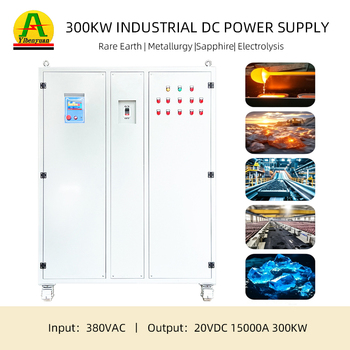
300kW 20V 15000A Ultra-High Current Rectifier
- Total Power:300kW High Output
- Thermal Mgmt:Demineralized Water Circuit
- Current Track:Digital Hall Sensors
- Standard:ISO 9001 Factory Quality
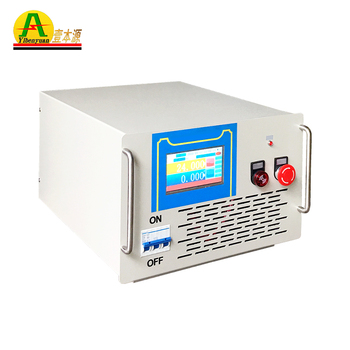
5000W Precision Electrophoretic Coating Power Supply
- Output Regulation:Continuous Voltage Sweep
- Paint Type:Cathodic & Anodic E-Coat
- Stability:±0.2% Load Variation
- Certification:CE / RoHS Compliance
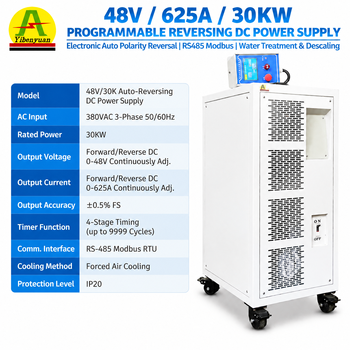
48V 625A 30kW Polarity-Reversing DC Power Supply
- Polarity Switch:Integrated Electronic Reversal
- Timer Function:Multi-Stage Cycle Scheduler
- Electrolyte Focus:Anodic Descaling & Pickling
- Field Bus:Profibus / RS485 Enabled
Technical White Paper: Modern Anodizing Power Architecture for the UK Manufacturing Base
| Performance Parameter | Legacy Thyristor (SCR) Unit | High-Frequency IGBT Inverter (Fenvix) | Impact on Anodic Oxide Layer |
|---|---|---|---|
| Current Ripple (<100Hz) | 5% to 15% (worsens at lower output) | ≤ 1.5% - 2.0% across entire range | Prevents local redissolution, ensuring tight, uniform hexagonal pore geometry. |
| Operating Efficiency | 68% - 78% depending on load | 90% - 94% constant efficiency | Drastically lowers heat dissipation and reduces direct facility electrical consumption. |
| Power Factor (cos φ) | 0.60 - 0.75 (generates kVA penalties) | ≥ 0.93 - 0.95 without capacitor banks | Mitigates reactive power charges imposed by UK grid operators (e.g., National Grid). |
| Voltage Ramping Response | Slow step-action (seconds) | Millisecond precision (microprocessor ramp) | Avoids high-voltage punch-through during hardcoat barrier layer formation. |
| Cabinet Footprint | Massive oil or air-chilled floor space | Compact modular chassis (−60% weight) | Frees up valuable processing floor real estate in tight urban chemical bays. |
Ultra-low current ripple mitigating burn risks in Type III hard anodizing.
Typical continuous electrical conversion efficiency yielding massive kWh savings.
UK grid voltage compatibility: standard 400V ±10% 50Hz 3-phase line integration.
Instant short-circuit and arc suppression protecting high-value components.
Localised UK Applications: Precision Finishing Across Critical Sectors
The United Kingdom's manufacturing landscape demands high-specification power conversion units that integrate directly into computerized process automation frameworks and comply with stringent quality auditing bodies.
Aerospace & Defence Surface Treatment
Used widely across aviation clusters in Broughton, Filton, and the East Midlands. Provides regulated current-density profiles for Tartaric-Sulfuric Acid (TSA) and Boric-Sulfuric Acid (BSA) anodizing to replace legacy hexavalent chromic acid treatments while satisfying DEF STAN and Nadcap pyrometry and electrical requirements.
Nadcap Compliance ReadyType III Hard Anodising for Offshore & Marine
Engineered for harsh marine gearboxes, subsea hydraulic manifolds, and offshore wind components operating in the North Sea. High-voltage driving capability (up to 100V) maintains continuous micro-amp to kilo-amp constant current through thick 50μm–100μm dense dielectric layers without thermal runaway.
BS EN ISO 10074 SizingArchitectural Extrusions & Façade Elements
Installed in high-volume aluminium finishing lines across Yorkshire and the West Midlands. Delivering constant-voltage and uniform color-anodizing profiles across 6-metre to 12-metre architectural extrusions, ensuring complete color consistency from bundle to bundle under Qualanod certification protocols.
Qualanod Standard MatchedMedical Implants & Precision Titanium Coloring
Specialized high-voltage (0–150V) low-current DC rectifiers engineered for orthopedic bone screws, surgical spinal rods, and dental components in Sheffield and medical device hubs. Precise control over voltage increments allows exact interference-color oxide layers with complete biological passivity.
ISO 13485 Process FriendlyFormula 1 & Automotive Powertrain Components
Catering directly to Britain's Motorsport Valley (Oxfordshire, Northamptonshire). Hardcoat anodizing of lightweight aluminium-lithium brake calipers, suspension rocker arms, and turbocharger compressor housings requiring strict micro-hardness and precise dimensional tolerances within ±2 microns.
Motorsport Valley SpecUK Market Dynamics & Technical Evolution
The industrial power electronics procurement criteria in the United Kingdom have transformed radically over recent regulatory cycles. Sourcing managers and plating plant owners are prioritizing three definitive developments:
Energy Decarbonisation & Climate Change Levy (CCL)
With UK industrial electricity tariffs remaining sensitive to volatile wholesale indexes, switching from an 72% efficient legacy transformer to an 92% efficient switch-mode rectifier delivers measurable payback within 12 to 18 months, directly mitigating CCL taxation liabilities and Scope 2 emissions footprints.
Integration with Industry 4.0 & SCADA Networks
Manual potentiometer adjustments are largely obsolete in modern UK metal finishing installations. Our rectifiers integrate native Modbus-RTU, Profinet, or isolated 4–20mA/0–10V analog communication loops to interface directly with Siemens, Allen-Bradley, and Mitsubishi PLCs for automated batch data logging and traceability.
Shift from Toxic Chromates to Tartaric-Sulfuric Acid (TSA)
REACH restrictions governing hexavalent chromium (Cr6+) usage have prompted UK aerospace tiers to standardise on TSA and Thin Film Sulfuric Acid (TFSA). These modern electrolytes mandate tight current-density control and precise multi-step voltage ramping profiles to build dense, corrosion-resistant films without surface pitting.
Factory Engineering Capabilities & Quality Advantage
Founded in 2013 and verified on-site by TÜV Rheinland, Guangdong Fenvix Technology Co., Ltd. builds heavy-duty power supplies, electroplating rectifiers, and high-voltage DC equipment for buyers across the UK and continental Europe. Because all cabinet fabrication, busbar milling, and circuit integration are completed in-house, we deliver bespoke electrical configurations without the standard commercial distributor mark-up.
Direct ISO 9001 Factory Production
We are a dedicated manufacturing plant encompassing over 3,000m² of production floor, equipped with high-precision plate shearing, CNC punching, milling, drilling, and tapping machinery. We maintain total ownership of structural tolerances, thermal mechanics, and electrical safety.
Burn-In & Oscilloscope Validation
Every industrial rectifier is subjected to strict full-load continuous burn-in runs and calibrated across comprehensive resistive and inductive load banks. Harmonic content, ripple frequency, and transient thermal distributions are validated with oscilloscopes prior to release.
Zero MOQ & Rapid Prototyping
Whether you need a bespoke single-unit 100A laboratory anodizing rectifier for test coupon analysis or a series of 10,000A parallel-linked production cabinets for a fully automated barrel line, we operate with No Minimum Order Quantity (MOQ: 1 Set).
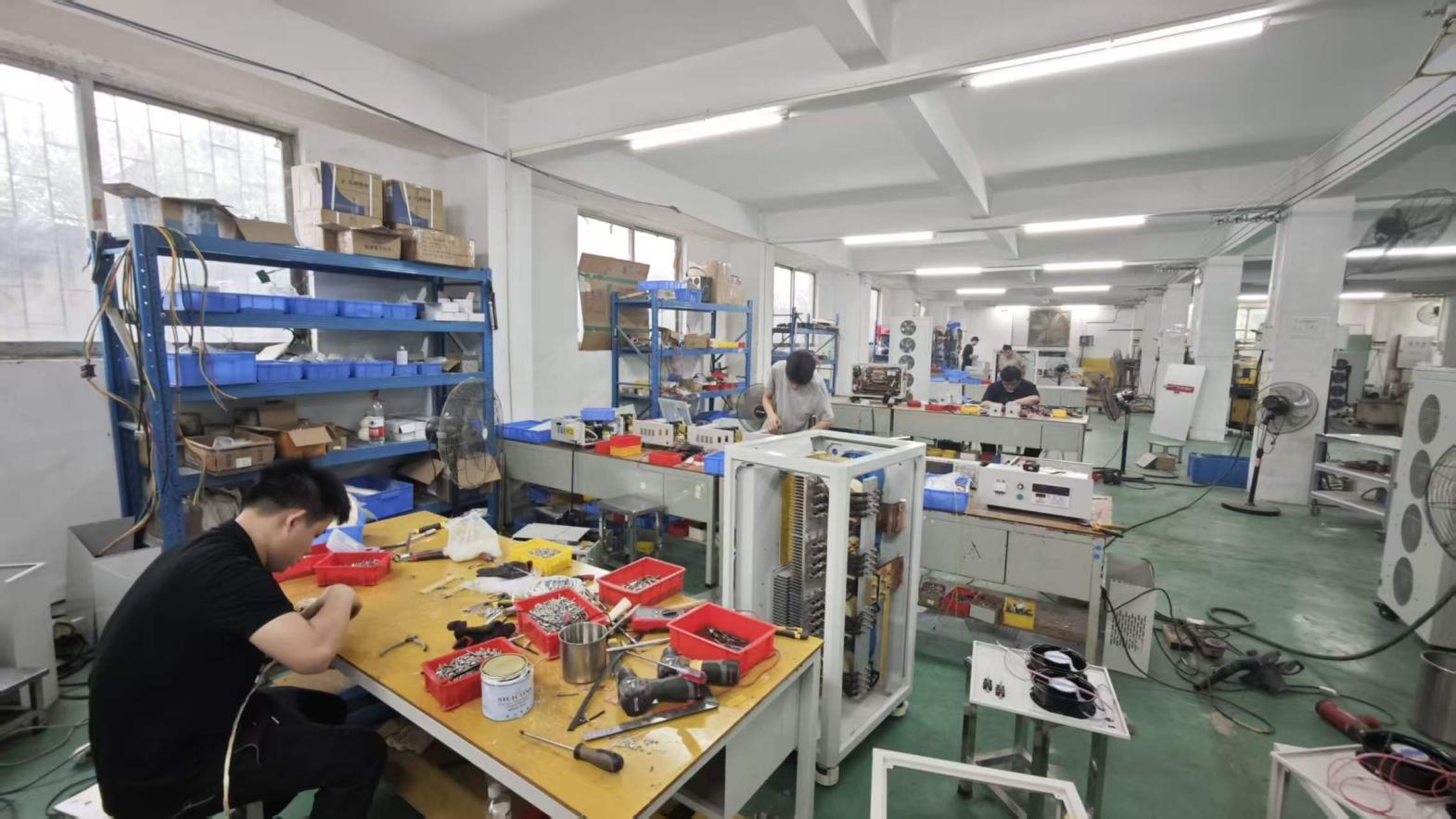 Assembly Workshop
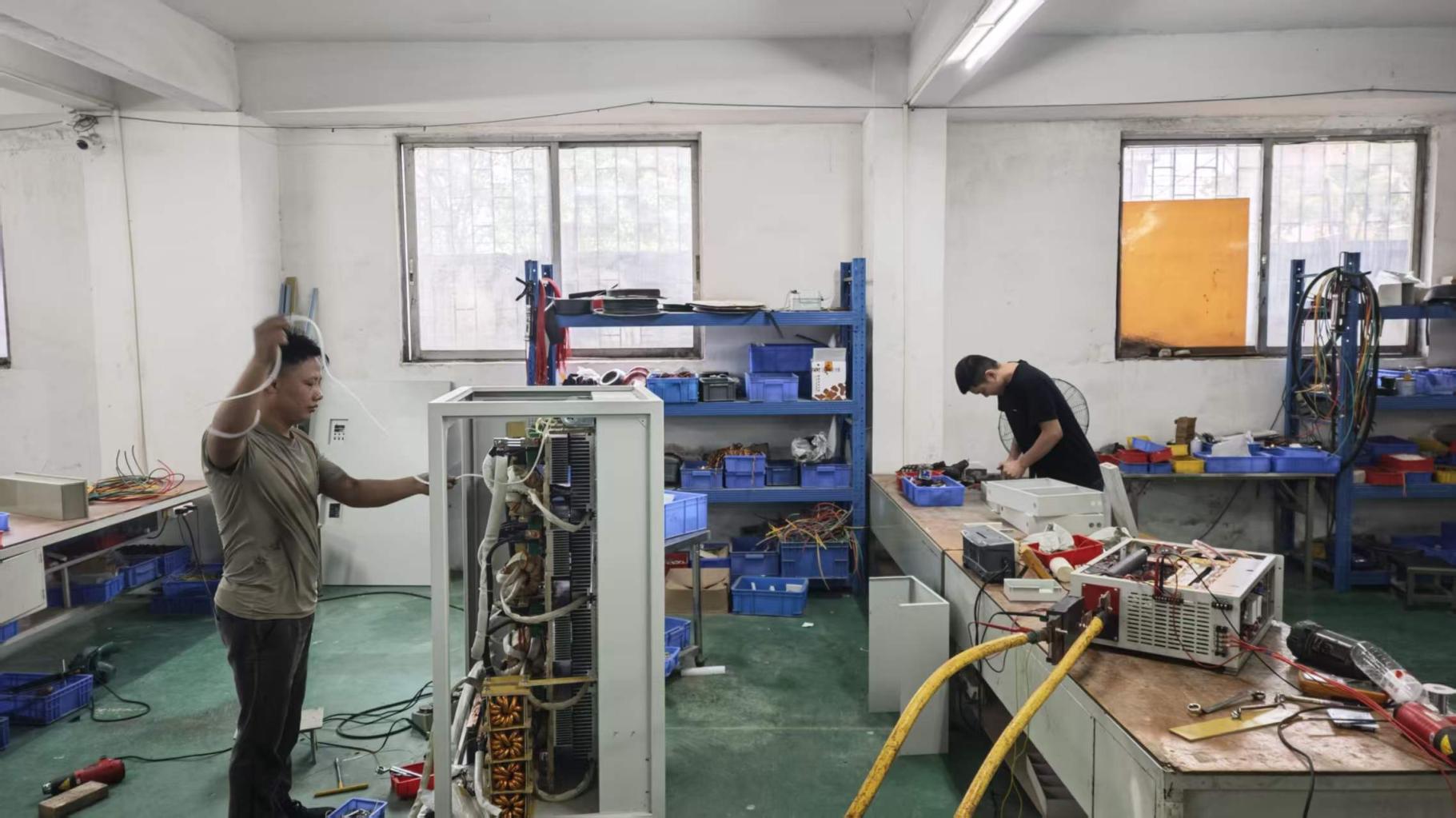 Finished Cabinets
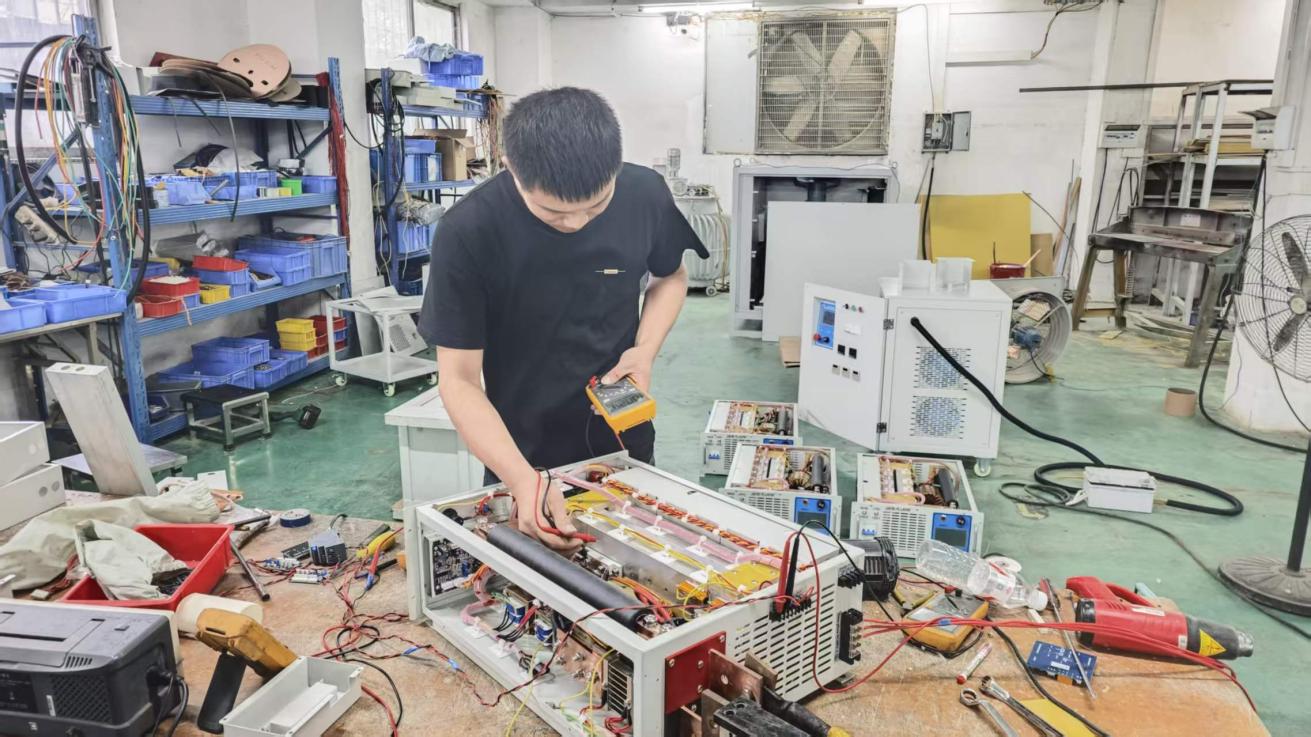 Commissioning & Burn-In
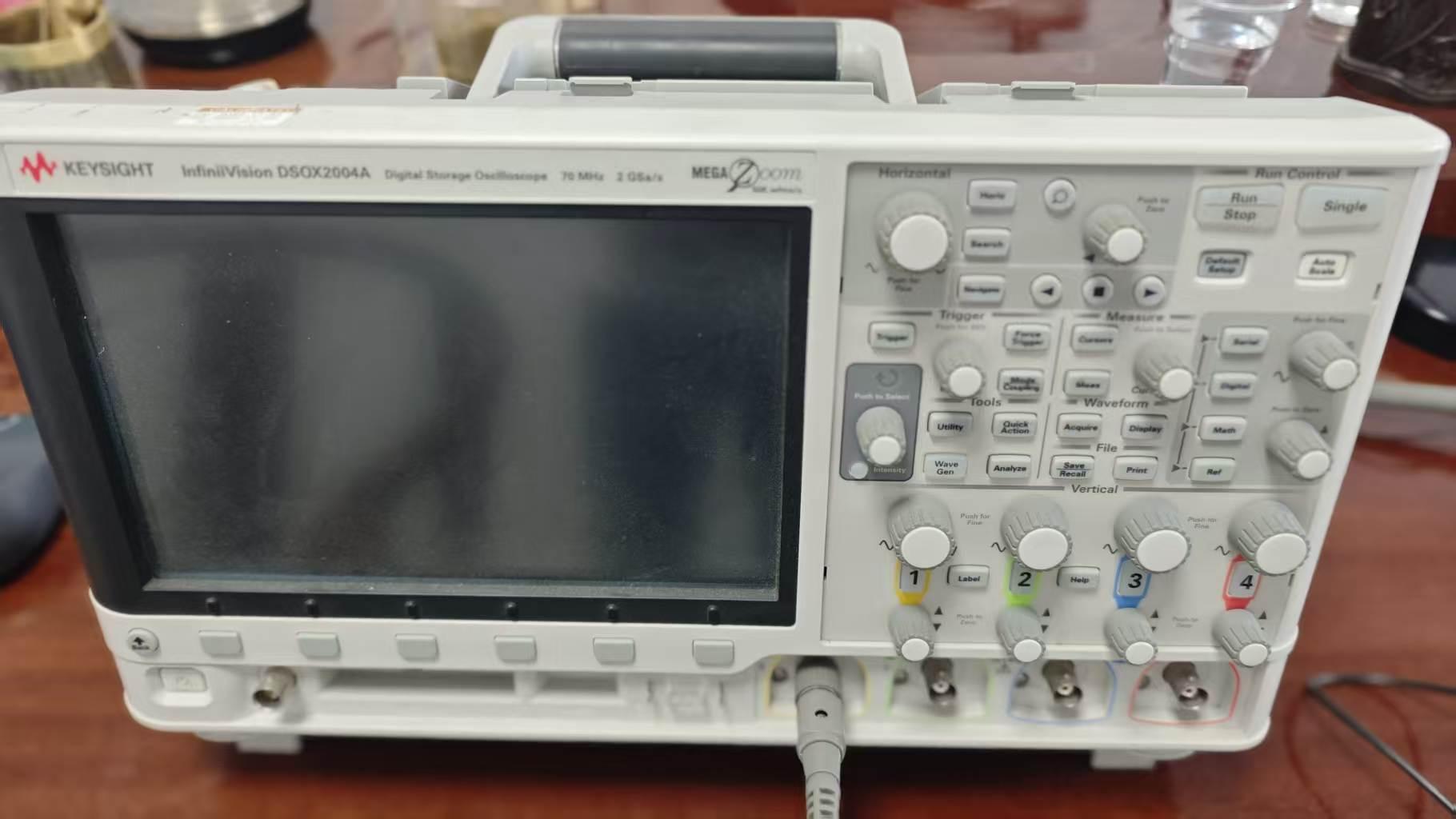 Oscilloscope Analysis
UK Sourcing Guide: Anodizing Rectifier Frequently Asked Questions
Essential technical, electrical, and commercial information for UK facility managers, electrical engineers, and procurement directors looking to source custom rectifiers directly from our manufacturing plant.
Are your power supplies compatible with UK three-phase mains supplies?
Yes. All rectifiers built for export to the United Kingdom are factory-configured for 400V AC (line-to-line) ±10% at 50Hz, 3-phase, three-wire plus earth (or 4-wire with neutral if auxiliary control demands). We also supply single-phase 230V 50Hz units for pilot scale, R&D testing benches, and laboratory tanks.
How does an IGBT rectifier perform in acidic, corrosive anodizing environments?
Industrial anodizing lines release corrosive sulfuric and nitric acid mists. Our cabinets feature conformal-coated PCBs (triple-coated polyurethane or silicone resist), segregated airflow pathways, sealed electronics bays (up to IP54 rating), and optional closed-loop demineralized water cooling. This design shields sensitive semiconductor gates and gate drivers from atmospheric corrosion.
When should we select closed-loop water cooling over forced-air cooling?
For installations exceeding 3000A, or where floor space is directly adjacent to chemical tanks, water cooling is strongly recommended. Water-cooled rectifiers operate in fully sealed enclosures with zero intake of corrosive ambient air, lower acoustic noise levels, and exhaust zero heat into the anodizing plant, which relieves existing ventilation systems.
What trade terms, shipping arrangements, and documentation apply for UK delivery?
We routinely deliver under DDP (Delivered Duty Paid), CIF (Felixstowe, Southampton, London Gateway), or FCA/FOB terms. Units arrive packed in seaworthy, heat-treated ISPM-15 export wooden crates accompanied by CE declarations of conformity, factory test burn-in sheets, terminal schematics, and comprehensive English maintenance manuals.
Can your rectifiers execute complex ramping profiles required for hard anodizing?
Yes. Our onboard digital controllers allow operators to program multi-stage constant current or constant voltage ramps. For Type III hardcoat anodizing, users can establish gentle initial voltage ramps (e.g., 0 to 18V over 3 minutes) followed by stepped voltage increases up to 60V–80V, preventing catastrophic thermal burning of delicate aluminium alloys.
What remote communication protocols are integrated for PLC connection?
Units are equipped with RS485 supporting standard Modbus-RTU as standard. We can also provide Profibus-DP, Profinet, Ethernet/IP, or isolated 0–10V / 4–20mA analog interfaces to interface directly with existing SCADA control architectures, wet bench master PLCs, and operational data archives.