Industrial-Grade DC Rectifiers Configured for Surface Treatment
Custom switch-mode DC power supply solutions ranging from compact 100A pilot benches to 300kW sealed water-cooled production units ready for immediate export to Gyeonggi-do, Incheon, and Ulsan manufacturing clusters.
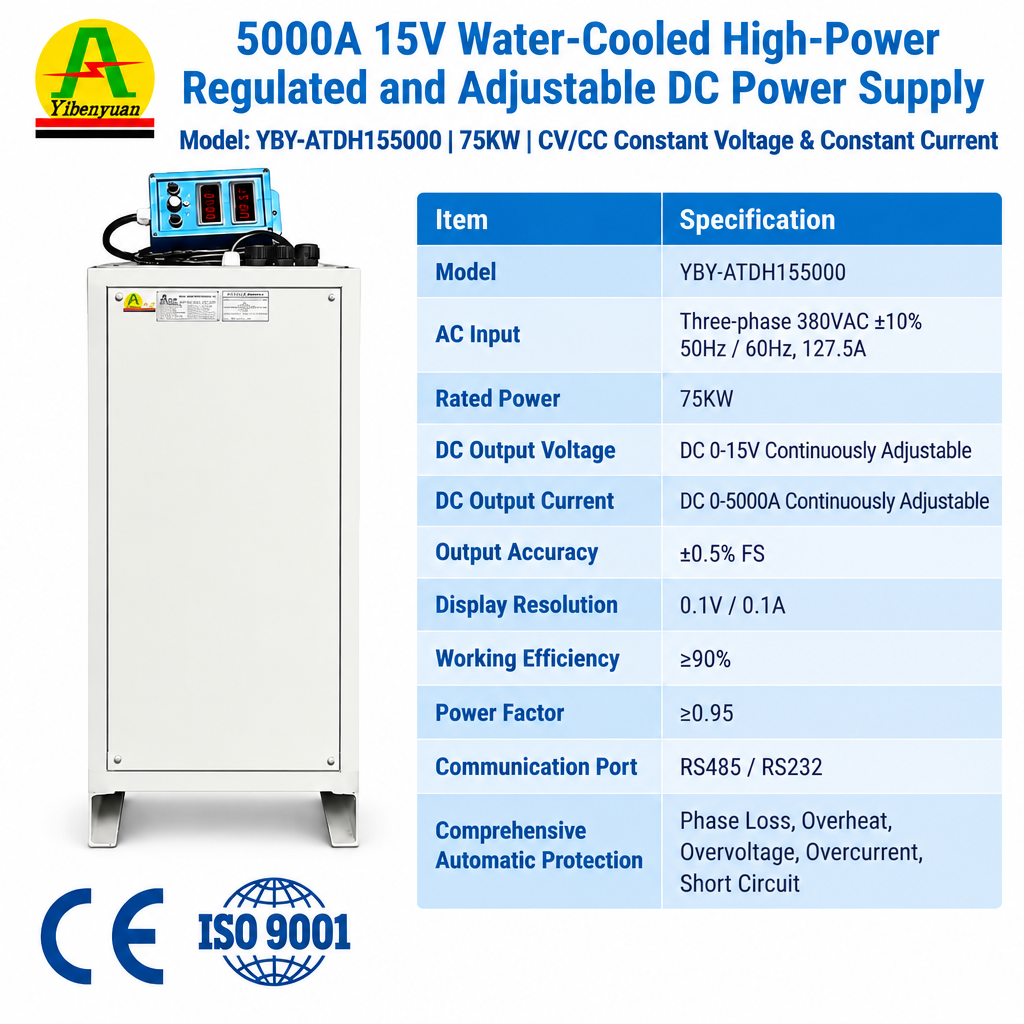
12V/15V 5000A–6000A 75KW Water Cooled Rectifier
- Cooling Type: Deionized / Tap Water
- Control Mode: CV / CC Digital Switching
- Target Process: Hard Anodizing & Plating
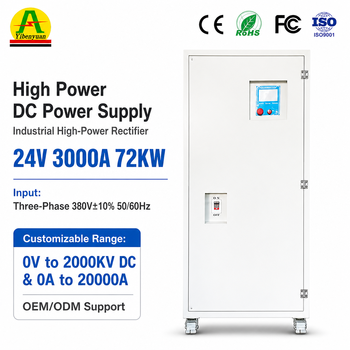
100A–3000A Anodic Oxidation DC Power Supply
- Voltage Output: 0–12V / 0–24V Controllable
- Ramp Control: Multi-Stage Digital Timer
- Application: Al Anodizing & Sealing
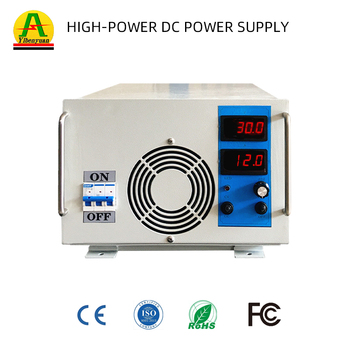
150V 50A Titanium Alloy Anodizing Source
- Input Power: 380VAC 3-Phase (440V Opt)
- Regulation: High Precision Constant Current
- Industry: Medical & Aerospace Parts
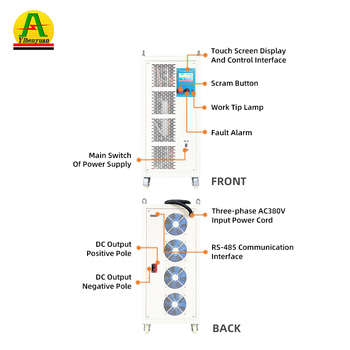
12V 4000A 48kW High-Frequency Plating Rectifier
- Output Current: 0–4000A Continuous
- Switching Device: Infineon IGBT Inverter
- Interfaces: RS485 Modbus-RTU / 0-10V
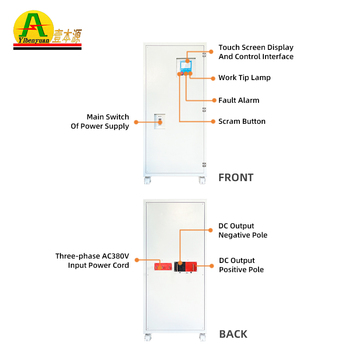
8000A 12V Sealed Water-Cooled DC Rectifier
- Protection: IP54 Enclosure Anti-Corrosion
- Cooling Media: Recirculated Liquid Chillers
- Deployment: Continuous Automated Lines
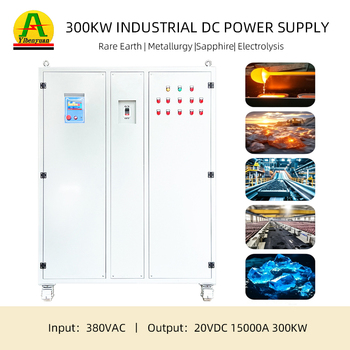
300kW 20V 15,000A Industrial DC Power Supply
- Output Current: Up to 15,000A DC
- Topology: Multi-Module Parallel Master/Slave
- Execution: Electrochemical & Massive Vats
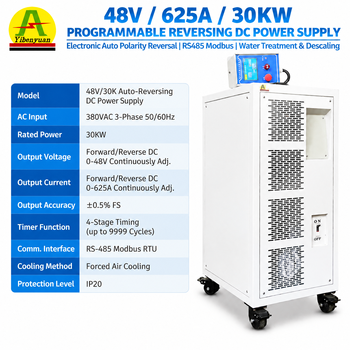
48V 625A 30kW Programmable Reversing Supply
- Commutation: Solid-State Polarity Switching
- Automation: Integrated Cycle Timer
- Usage: Electrolytic Descaling & Etch
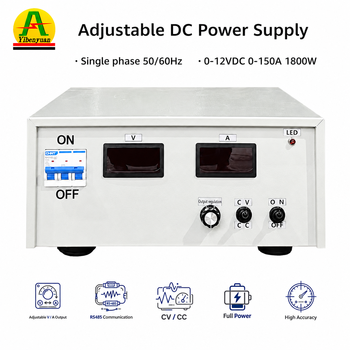
12V 150A Precision Benchtop DC Power Unit
- Output Precision: ≤ 0.5% Setting Repeatability
- Form Factor: Compact Benchtop 19-inch Ready
- Application: Semiconductor & Small R&D
Precision Anodizing Applications Across South Korea's High-Tech Ecosystem
Analyzing operating dynamics and DC power topologies demanded by South Korean chaebols and tier-1 sub-contractors.
South Korea's high-value surface engineering landscape is characterized by exceptional quality baselines, stringent environmental mandates, and relentless automation. Conventional Silicon-Controlled Rectifiers (SCR) that formerly populated older plating complexes in the Banwol-Sihwa Industrial Complex are actively being phased out. Today's manufacturing environments—ranging from the semiconductor cleanroom tooling suppliers across Gyeonggi-do to automotive lightweighting facilities near Ulsan—demand switch-mode High-Frequency IGBT Anodizing Rectifiers. As an experienced exporter of custom DC power supplies, we deliver equipment specifically optimized for the precise electrical grid conditions, communication architectures, and quality paradigms mandatory in South Korea.
Semiconductor Chamber Tooling (Gyeonggi-do)
Etch and deposition processing chambers require dense, crack-free Type III Hard Anodizing on components machined from high-purity aluminum alloys (e.g., Al 6061, 5052). Our rectifiers provide ultra-low current ripple (≤ 1%), preventing thermal micro-fractures in the anodic aluminum oxide (AAO) barrier layer and guaranteeing breakdown voltage ratings exceeding 1,500V DC across hostile fluorinated plasma conditions.
Automotive Lightweighting & EV Powertrains (Ulsan)
With the rapid acceleration of electric mobility led by domestic automotive OEMs, battery enclosures, inverter chassis, and structural structural aluminum castings require high-volume, uniform Type II sulphuric acid anodizing. Our 300kW / 15,000A water-cooled rectifiers guarantee continuous 24/7 current density stability without thermal drift, eliminating thickness variations over massive production racks.
Consumer Electronics Finishing (Gumi Cluster)
Premium IT devices, tablets, and smartphone exterior metal casings demand aesthetic perfection, deep micro-pore dye receptivity, and flawless color match consistency. Programmable multi-stage current slope ramps prevent the burning of acute exterior chamfers during the fragile initial immersion period, directly optimizing downstream optical brilliance.
High-Frequency IGBT vs. Conventional SCR for Anodic Oxidation
A quantifiable comparison demonstrating why Korean manufacturing operators are transitioning away from thyristor topologies.
| Performance Vector | Legacy SCR / Thyristor Units | Fenvix High-Frequency IGBT Solutions | Direct Impact on Korean Operations |
|---|---|---|---|
| Current Ripple Rate | 5% to 15% (Load dependent) | ≤ 1.0% (Across 10%–100% full scale) | Drastically lowers barrier burning, enhances density of nanoporous oxide structures. |
| Operating Efficiency | 70% – 78% (Significant heat dissipation) | 90% – 93% High Efficiency Factor | Major savings on the industrial electricity tariffs of KEPCO (Korea Electric Power Corp). |
| Physical Footprint & Mass | Very heavy, large magnetic cores | 60% smaller volumetric envelope | Maximizes tight real estate in high-density factory clusters in Incheon and Gyeonggi. |
| Cooling System Execution | Bulky open-air airflow or external towers | Hermetically sealed water cooling (IP54) | Complete resistance to acidic aerosol vapours, extend mean time between failures (MTBF). |
| Control & SCADA Protocols | Coarse potentiometer or simple 4-20mA | High-speed Modbus-RTU / Profibus / Analog | Seamless drop-in networking with automated PLCs (Mitsubishi, Siemens, LS Electric). |
Korean Surface Engineering Market Trends & Regulatory Shifts
How stringent ESG initiatives, smart factory transitions, and high KEPCO industrial tariffs dictate procurement.
Procurement engineers and plant executives in the Republic of Korea are navigating three powerful macro forces: carbon neutrality mandates (RE100), aggressive Smart Factory automation programs backed by the Ministry of SMEs and Startups, and escalating KEPCO power rates. Sourcing an anodizing rectifier is no longer merely a capital expenditure replacement—it is a strategic upgrade affecting systemic production yield and utility expense.
Smart Factory MES Integration
Nearly all modernized Korean metal finishing facilities are transitioning to smart manufacturing facilities. Anodizing power units cannot function as isolated black boxes; they must transmit real-time log values of exact voltage, current density, bath operating hours, and alarm diagnostics. Our systems interface directly with factory MES systems via RS485 Modbus or optoisolated analog buses, enabling automated traceability for automotive and aerospace quality audits.
Mitigation of Harmonic Distortion
Heavy industrial loads with poor power factors face substantial utility penalties in Korea. Fenvix switched-mode rectifier designs feature active or passive power factor correction configurations, reaching power factors up to ≥0.95. This minimizes low-frequency harmonics back onto the incoming plant substation, safeguarding sensitive adjacent CNC equipment and robotics from transient line noise.
Acidic Chemical Resistance
The harsh environments of sulphuric, chromic, and oxalic acid baths quickly corrode internal electronic assemblies in conventional forced-air power cabinets. To ensure a 10+ year operating lifecycle, we provide water-cooled systems sealed to IP54 ratings. Internal PCB assemblies receive triple-layer polyurethane conformal coatings, completely isolating delicate gate drivers from aggressive ambient fumes.
Frequently Asked Questions by Korean Industrial Buyers
Direct technical answers addressing electrical grids, freight routing to Busan/Incheon, and local warranty integration.
Why Major Manufacturers Partner with Fenvix Technology
Combining vertically integrated mechanical production with advanced power electronics design since 2013.
ISO 9001 & TÜV Verified
Every step from incoming sheet metal fabrication to copper busbar milling and dynamic burn-in is ISO 9001 certified and independently assessed on-site by TÜV Rheinland.
No Minimum Order (MOQ: 1)
We eliminate sourcing friction by supporting single-unit prototype builds for trial pilot lines, specialized chemical laboratory baths, or full batch production for tier-1 OEMs.
Flexible Global Trade Terms
Supporting comprehensive Incoterms including FOB, CIF, CFR, and door-to-door DDP to Korean manufacturing addresses, payable via T/T or L/C in multiple major currencies.
Full In-House Engineering
Equipped with specialized plate shearing, punching, precision milling, and oscilloscope test bays to rapidly adjust mechanical enclosures and busbar layouts to your tank specs.