Engineering Precision DC Power Equipment
Modular switch-mode rectifiers, anodizing units, pulse plating sources, and continuous electrolytic conversion solutions built to endure high heat and corrosive humid environments.
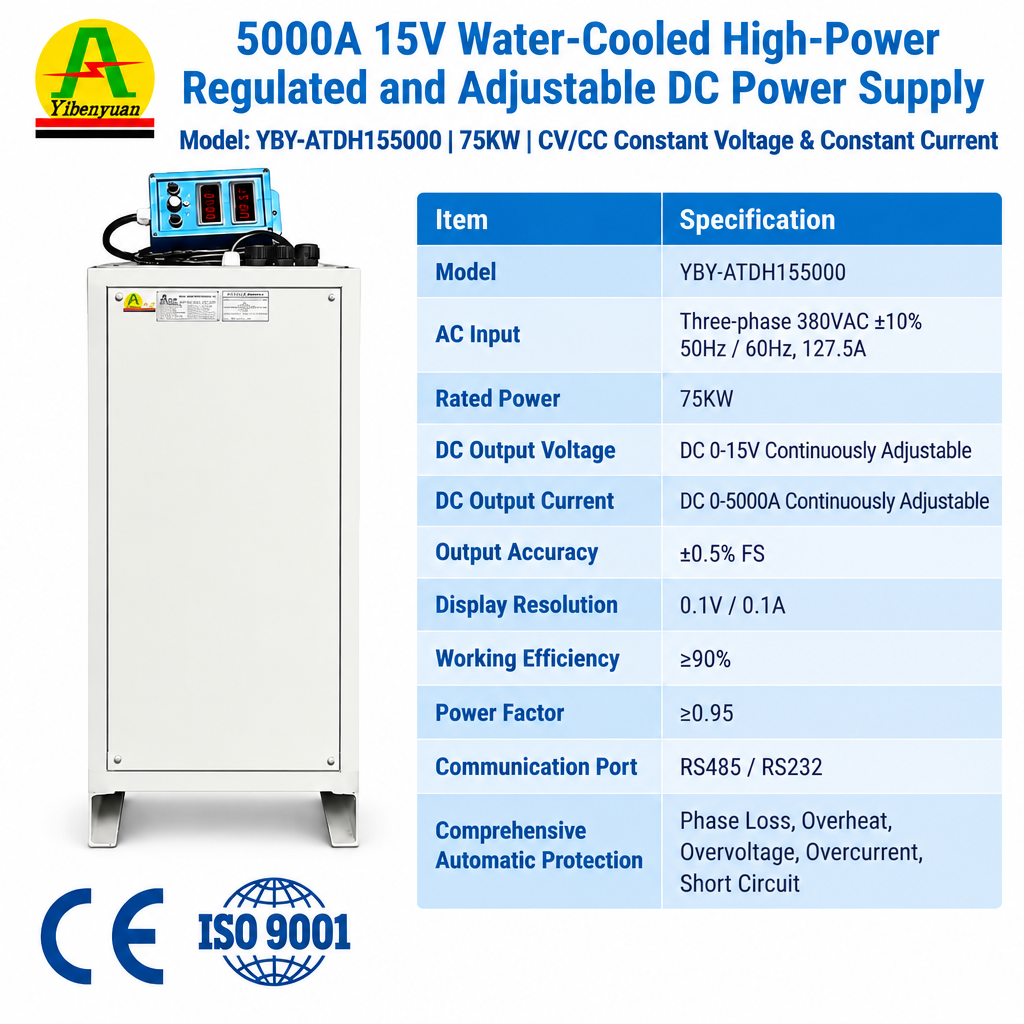
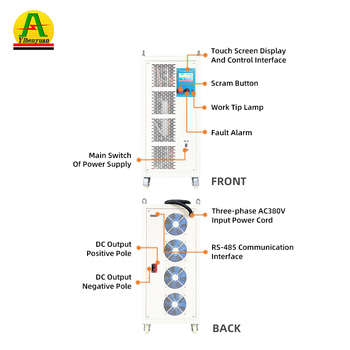
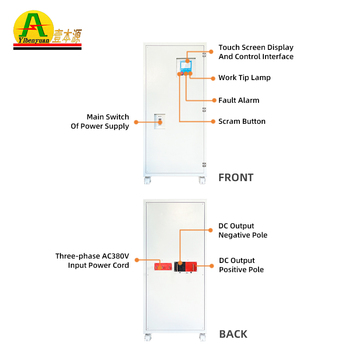
12V-15V 5000A/6000A 75KW Water-Cooled Rectifier
- Output Power: 75kW Continuous
- Cooling Mode: Deionized Water / Closed Loop
- Control Interface: CV / CC / RS485 Modbus
- Efficiency: ≥ 90% (IGBT Modular)
12V 4000A 48kW High-Frequency Rectifier
- Voltage / Amperage: 0-12V / 0-4000A
- Cooling Method: Forced Air Cooling
- Ripple Factor: ≤ 2% Full Load
- Application: Zinc, Copper, Nickel Lines
8000A 12V Water-Cooled Galvanizing Rectifier
- Capacity: 96kW Heavy Duty
- Operating Duty: 100% 24/7 Rating
- Enclosure: Sealed Anti-Corrosion IP54
- Target Sector: Hard Chrome, Galvanizing
100A–3000A Anodic Oxidation DC Supply
- Output Range: 12V / 24V / 60V Adjustable
- Features: Current Ramp Profile Timer
- Cooling: Air or Water Available
- Application: Architectural Aluminum
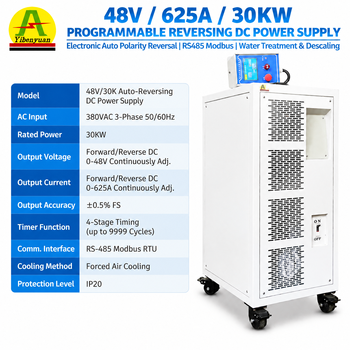
48V 625A Auto Polarity Reversing Rectifier
- Power: 30kW High-Speed Polarity
- Control: Programmable Auto Cycles
- Digital Interface: RS485 Modbus-RTU
- Primary Use: Water Descaling & Effluent
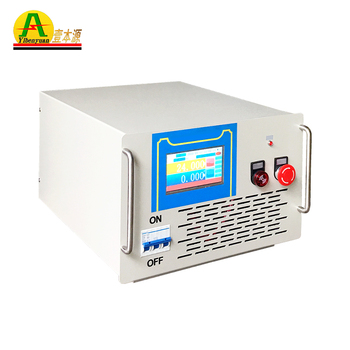
High-Precision Electrophoresis (E-Coat) Supply
- Voltage Level: 0–300V / 0–600V DC
- Regulation: Ultra-Stable Soft Start
- Standard: CE, LVD, EMC Compliant
- Target Line: Automotive & Metal Parts
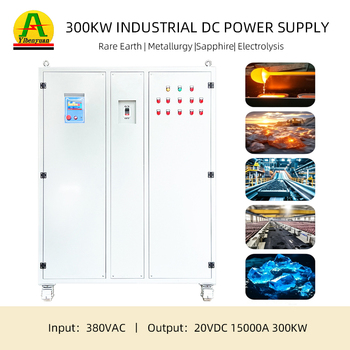
300kW 20V 15,000A Electrolysis Rectifier
- Max Current: 15,000A High Capacity
- Cooling Architecture: Direct Water Cooled
- Input Rating: 380V / 440V / 480V 3-Phase
- Sector: Industrial Hydrogen & Smelting
800V 50A 20kW High-Voltage Programmable DC Source
- DC Voltage Span: Up to 800V Variable
- Precision: ≤ 0.1% Full Range
- Communication: CAN / RS485 / 0-10V Analog
- Target Domain: EV Powertrain & Solar Benches
Technical Whitepaper: Industrial AC DC Rectifier Architecture for Quezon City & NCR Industry
Quezon City stands as the industrial, commercial, and technological nexus of Metro Manila, housing an expansive manufacturing footprint spanning from the bustling light industrial compounds of Novaliches and Fairview to the high-density electroplating, metal-fabrication, and automotive component shops around Balintawak and Tandang Sora. As the Philippines marches forward under comprehensive national infrastructure development programs, factory managers and plant electrical engineers across Quezon City face unprecedented imperatives: drastically cut electrical consumption under high Meralco industrial tariffs while upgrading electro-deposition thickness tolerances, reducing bath reject rates, and modernizing electrochemical conversion setups.
For decades, heavy industrial lines throughout the National Capital Region (NCR) relied almost entirely on legacy Silicon-Controlled Rectifiers (SCR) and multi-tap autotransformers. While mechanically rugged, these legacy transformer systems suffer from severe intrinsic engineering limitations: an operational electrical efficiency hovering at an uneconomical 68% to 76%, bulky floor-space footprint, high baseline harmonic distortion, and slow dynamic transient response times measured in dozens of milliseconds. In contrast, modern manufacturing facilities in Quezon City require high-frequency switch-mode IGBT (Insulated Gate Bipolar Transistor) DC rectifiers running at chopping frequencies between 20kHz and 40kHz. This engineering evolution decreases electrical consumption by 15% to 28%, reduces output current ripple down to less than 2%, and allows rapid constant current (CC) and constant voltage (CV) cross-regulation essential for exacting chemical bath management.
Thermal Dissipation & Tropicalized Engineering for NCR Operating Conditions
Engineering industrial-grade power conversion equipment for the climatic realities of Quezon City demands rigorous mitigation of extreme environmental stressors. The tropical ambient envelope in the region routinely hits 34°C to 38°C in non-air-conditioned factory buildings, coupled with relative humidity exceeding 85% during monsoon periods. In surface finishing, zinc electro-galvanizing, and copper wire production plants, these thermal challenges are amplified by airborne corrosive acid vapors (hydrochloric acid, sulfuric acid, and nitric fumes) alongside alkaline wash mists.
Under these rigorous conditions, standard air-cooled electrical cabinets experience rapid copper track oxidation, premature electrolytic capacitor dry-out, and localized hotspot failures over IGBT heat sinks. To deliver a multi-decade Mean Time Between Failures (MTBF), Fenvix deploys two specific architectural solutions for Filipino industrial clients: completely sealed IP54 to IP56 forced-air units featuring vacuum-impregnated potting and polyurethane-conformal printed circuit boards (PCBs), or alternatively, heavy-duty liquid-cooled and water-cooled heat exchange topologies. Closed-loop, deionized water-cooling systems isolate high-voltage power components from the ambient plant atmosphere completely, conducting heat away through nickel-plated copper chill plates without pulling corrosive plant air across the internal power semiconductors.
Electrochemical Surface Finishing & Plating
Widely implemented across metal manufacturing hubs in Novaliches and Baesa for high-speed continuous strip plating, zinc-nickel anticorrosion barrel plating for automotive fasteners, and architectural hard chrome plating. IGBT high-frequency modulation maintains uniform crystal nucleation, eliminates pinholes, and slashes precious metal bath overheads.
Architectural & Industrial Anodizing
Aluminum profile and architectural extrusions supporting the surging urban skyline of Quezon City rely on specialized anodic oxidation rectifiers. Fully integrated programmable multi-step current ramps prevent burn phenomena on high-silicon alloy extrusions, creating exact, reproducible mil-spec anodized coatings for facade fabrication.
Industrial Effluent Treatment & Descaling
Strict discharge guidelines enforced by the Laguna Lake Development Authority (LLDA) and DENR around Metro Manila demand efficient on-site wastewater handling. High-frequency rectifiers featuring automated high-speed polarity reversal prevent lime and mineral scaling over titanium anode plates in electrolytic descaling and electrocoagulation treatment tanks.
Strategic Localization Trends Across Metro Manila & Quezon City
The manufacturing profile of Quezon City is undergoing structural transformation driven by the modernization of utility grids, rapid proliferation of electric vehicle (EV) charging stations, assembly of electrical switchgear, and the national prioritization of sustainable industrial parks. Five distinct technological developments are reshaping the procurement parameters of AC DC rectifiers in the NCR:
1. Escalating Power Quality Scrutiny: With Meralco's stringent operational standards regarding power factor penalties and total harmonic distortion (THD), plant managers can no longer deploy old 6-pulse or 12-pulse SCR systems without costly external harmonic filters. Next-generation IGBT power factor correction (PFC) rectifiers offer active harmonic mitigation, maintaining a power factor greater than 0.95 and reducing THDi below 5% directly at the mains feeder.
2. SCADA and Smart Factory Interfacing: Modern facilities along the EDSA-Balintawak and Commonwealth manufacturing belts are eliminating manual mechanical dial knobs. Modern DC supplies must communicate natively via RS485 Modbus, Profibus, or industrial Ethernet, streaming instantaneous operational ampere-hour consumption, bath run-times, thermal sensor readouts, and line faults directly to centralized SCADA controls.
3. Rise of EV Battery Testing and Local Assembly: The electrification of Metro Manila's transport ecosystem (such as e-trikes, e-jeepneys, and commercial logistics fleets) has catalyzed localized testing facilities in Quezon City. These operations require bidirectional and programmable variable high-voltage DC power supplies spanning 400V to 800V DC capable of repeatable battery cell cyclic aging and powertrain simulation.
4. Modular N+1 Redundancy Configurations: For continuous production lines such as continuous coil coating or large-scale water purification plants, unexpected equipment stoppages translate into thousands of dollars per hour in scrapped metal or environmental discharge fines. Forward-thinking Quezon City engineers prioritize modular, hot-swappable rectifier architectures where multiple power modules run in parallel, ensuring that if a single modular block requires routine maintenance, the production line runs unhindered at partial capacity.
Enterprise Advantages: Certified Manufacturing Excellence
Why procurement teams and engineering consultants in the Philippines partner directly with Guangdong Fenvix Technology Co., Ltd. for non-standard power conversion solutions.
ISO 9001 & TÜV Rheinland Audited
Stringent factory-level quality governance from incoming sheet metal, raw magnetics, and semiconductor binning to rigorous full-load oscilloscope characterization.
Full OEM/ODM Design Flexibility
No arbitrary catalog constraints. Sizing custom input voltages (220V, 380V, 440V, 480V 60Hz), tailored pulse modulation profiles, and customized copper busbar runs.
End-to-End Vertical Fabrication
Laser shearing, CNC stamping, milling, tapping, and custom heavy copper busbar fabrication executed 100% in-house in our manufacturing workshop.
Quezon City B2B Procurement FAQ
Practical technical answers to common queries raised by industrial purchasers and project consultants in the Philippines.