Low Current Fineline
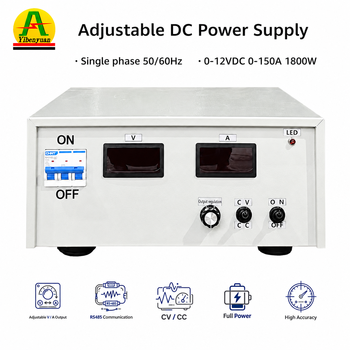
Verified hardware engineered for non-stop full-load duty, high energy efficiency, ultra-low residual ripple, and custom field interfaces.

Designed for severe plating, continuous anodizing, and electrowinning plants. Integrates dual constant-voltage (CV) and constant-current (CC) modes, industrial digital micro-controller regulation, sealed anti-corrosion water-cooled loops, and continuous 24/7 high-density power delivery.
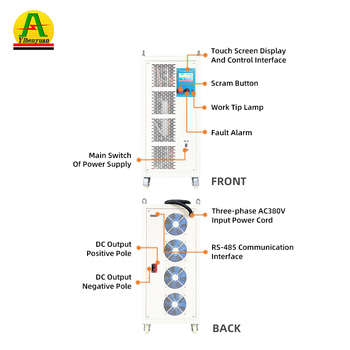

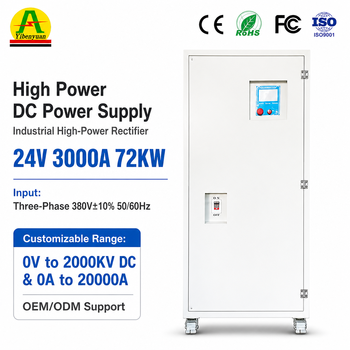


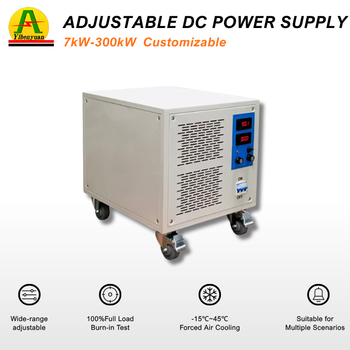
A technical examination of low-voltage high-current conversion architectures, thermal limits, ripple mitigation, and life-cycle efficiency for procurement engineers.
In modern industrial manufacturing—ranging from continuous zinc electroplating, PCB precious metal deposition, hard anodizing, down to green hydrogen electrowinning—the demand for stable, ultra-high DC current is critical. Specifying equipment from high current power supply manufacturers is rarely a matter of choosing a simple off-the-shelf model. Operating at current densities from 1,000A to 15,000A+ alongside output potentials below 24V demands a comprehensive understanding of parasitic impedance, solid-state power semiconductor topology, dynamic regulation bandwidth, and aggressive thermal dissipation.
Historically, the industrial power supply market was dominated by massive thyristor-based (SCR) silicon rectifiers. While rugged, legacy line-commutated SCR systems suffer from poor power factor (frequently <0.75 without massive correction banks), substantial low-frequency current ripple (demanding gigantic line-frequency smoothing chokes), sluggish dynamic recovery times (>50ms), and bulky enclosures. Over the past decade, high-frequency switch-mode power supplies (SMPS) utilizing insulated-gate bipolar transistors (IGBTs) switched at frequencies between 15kHz and 40kHz have transformed heavy industrial DC engineering. This shift allows precision control of duty cycles, fast sub-millisecond fault extinction, 90%+ operating efficiency, and significant reduction in cabinet footprint.
| Evaluation Parameter | Legacy SCR / Thyristor Rectifier | High-Frequency Switch-Mode (IGBT) | Operational Impact on Plating & Electrolysis |
|---|---|---|---|
| Electrical Efficiency | 70% – 82% (Load Dependent) | 88% – 93% (Consistent) | Drastic reduction in plant-wide kWh consumption & carbon overhead. |
| Current Ripple Factor (RMS) | 5% to >12% (Requires large LC filters) | ≤ 1% to 2% (Standard Native Output) | Prevents micro-pitting, ensures uniform grain crystallization in plating. |
| Dynamic Response Time | 40ms – 100ms | < 5ms (Instant Load Recovery) | Maintains tight CV/CC tolerances during rapid rack immersion and removal. |
| Power Factor (PF) | 0.65 – 0.80 (Varies with firing angle) | ≥ 0.92 – 0.95 across load range | Eliminates utility reactive power surcharges; simplifies switchgear sizing. |
| Physical Weight & Volume | Heavy, multi-ton transformers required | 65% to 75% smaller, modular footprint | Enables installation directly beside tanks, slashing costly busbar runs. |
A primary failure mode in high current power supply design is thermal mismanagement in the output stage. When delivering 6,000A, even a micro-ohm of excess contact resistance across internal busbar joints results in catastrophic resistive heating (P = I²R). Trusted manufacturers maintain strict internal machining protocols: utilizing high-purity, oxygen-free T2 copper busbars, computer numerical control (CNC) milling to optimize mating surfaces, nickel- or silver-plated interconnects, and balanced multi-phase high-frequency planar transformer configurations. This approach prevents magnetic core saturation while balancing current paths among paralleled Schottky or ultrafast fast-recovery diodes (FRD).
Industry-wide shifts dictating how leading EPC contractors, plant operators, and system integrators acquire high-power infrastructure.
Procurement teams increasingly calculate 5-year operating expenditure over initial purchase price. In 24/7 electrolysis, a 4% efficiency advantage in a 10,000A, 15V (150kW) system saves tens of thousands in electricity, fully amortizing the equipment cost within the first 18 months of deployment.
Single points of catastrophic plant failure are no longer acceptable on continuous automated finishing lines. Modern specs mandate modular hot-swappable or scalable power shelves. If a single 1,000A module trips, the remaining modules dynamically absorb the output load without halting production.
Industrial applications frequently require non-standard form factors, proprietary PLC communications, or harsh environmental protection. Buyers avoid catalogue distributors in favor of agile, verified manufacturers capable of delivering bespoke busbar designs and control code without excessive lead times.
The emerging technological paradigms defining high-frequency switch-mode power architecture for the next decade.
Transitioning from traditional silicon IGBTs to Silicon Carbide (SiC) MOSFET stages increases switching speeds past 80kHz while slashing switching losses. This allows for smaller magnetic components, higher heat thresholds, and ultra-compact, high-density enclosures.
Plating, etching, and chemical refining facilities contain aggressive, airborne acid and alkaline vapors. Forward-looking designs utilize hermetically sealed IP55/IP65 cabinets cooled entirely via internal deionized water or water-glycol chillers, fully isolating sensitive microelectronics from corrosive air.
Modern power units act as intelligent smart-grid endpoints. Integrated microcontrollers continuously calculate internal thermal aging gradients, junction temperature spikes, electrolytic capacitor ESR decay, and diode leakage currents—alerting plant engineers before downtime happens.
Guangdong Fenvix Technology delivers precision-engineered power hardware built, tested, and certified inside our own facility since 2013.
We do not rely on generic off-the-shelf enclosures or outsourced stamping. Our plant operates internal shearing, punching, milling, drilling, and tapping machines for sheet metal enclosures and copper busbars, providing complete control over mechanical precision, structural heat dissipation, and delivery schedules.
Our complete operation runs under a certified ISO 9001 Quality Management System, reinforced by an independent, on-site supplier verification conducted by TÜV Rheinland. Selected series are certified for CE, Low Voltage Directive (LVD 2014/35/EU), and Electromagnetic Compatibility (EMC 2014/30/EU).
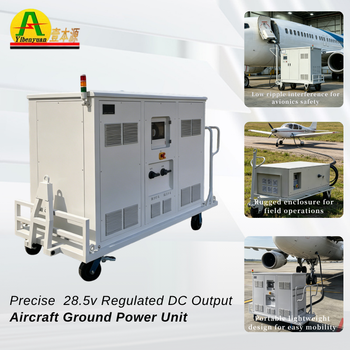
Whether you require a single bespoke prototype for an exploratory hydrogen pilot line, specialized 28.5V GPU ground support hardware for hangar validation, or high-volume standard units, Fenvix maintains an open-door, no-MOQ policy backed by direct communication with our power electronics engineering team.
Direct answers from our senior engineering team to address common high-current rectifier procurement questions.