Industrial Grade Electroplating Power Supplies
From micro-electronics PCB barrel lines to continuous automotive and aerospace reel-to-reel nickel plating baths, examine our heavy-duty switch-mode solutions designed for 24/7 industrial uptime.
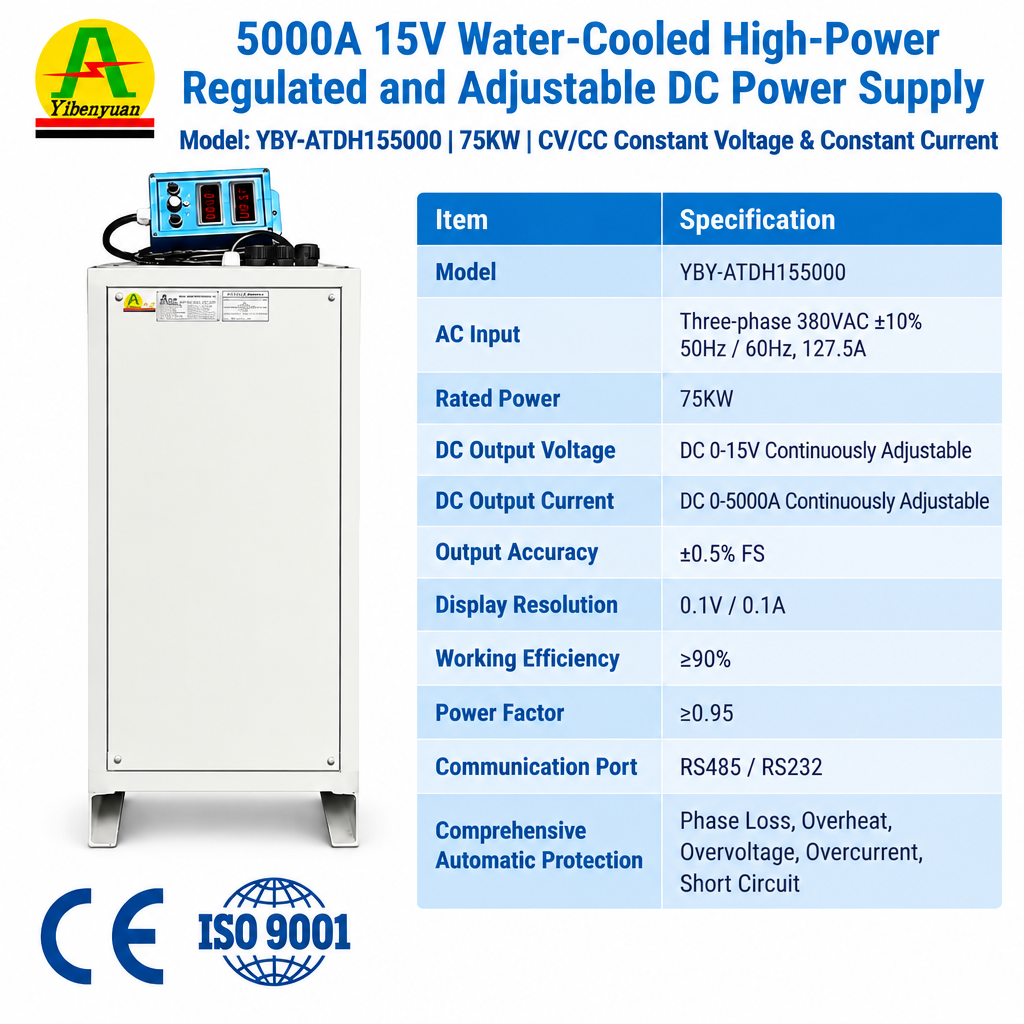
12V/15V 5000A–6000A 75kW Water-Cooled Plating Rectifier
- Output Range: 0–15V DC / 6000A
- Cooling Method: Deionized Closed Water Loop
- Efficiency: ≥92% (High-Frequency IGBT)
- Control Modes: CV / CC Digital Multi-Step
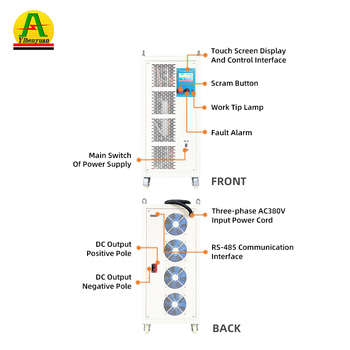
12V 4000A 48kW High Frequency Electroplating Rectifier
- Output Range: 0–12V DC / 0–4000A
- Ripple Factor: ≤2% RMS Full Scale
- Cooling Topology: Isolated Forced Air Duct
- Interface: RS485 Modbus-RTU / 4-20mA
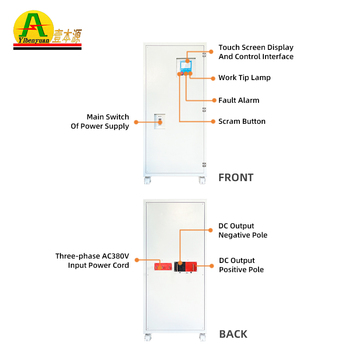
Customized 12V 8000A Water-Cooled Heavy Rectifier
- Output Current: 0–8000A Continuous DC
- Enclosure: IP54 Sealed Anti-Corrosion
- Busbar Setup: T2 Pure Copper Silver-Plated
- Protection: Thermal, Over-V, Phase Loss
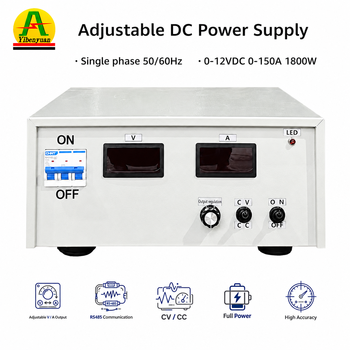
12V 150A Benchtop High Frequency Plating Rectifier
- Regulation: ±0.5% CV/CC Stability
- Ideal For: PCB Via, Au/Ni Flash Lines
- Harmonics: Ultra-low THD Input Filter
- Certifications: CE, EMC, LVD, RoHS
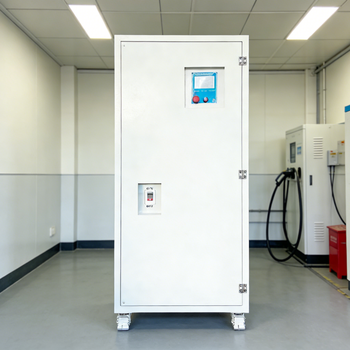
160kW 2500A Heavy-Duty Continuous Electrolysis DC Supply
- Power Capacity: 160kW True Power Output
- Duty Factor: 100% 24/7 Non-Stop Duty
- Semiconductor: Infineon IGBT Dual Modules
- Monitoring: Touchscreen HMI Data Logger
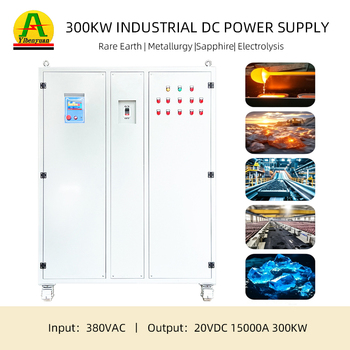
300kW 20V 15000A Mega-Scale Electroplating Rectifier
- Output Current: 0–15,000A Ultra High Current
- Cooling Design: Titanium Plate Heat Exchanger
- Input Rating: 380V / 415V / 480V 3-Phase
- Automation: Profinet / Profibus Ready
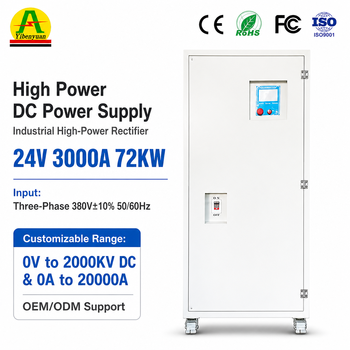
100A–3000A Programmable Current Ramp Plating Source
- Voltage Level: 12V / 18V / 24V / 36V Modular
- Ramping Function: Multi-Step Soft-Start Ramp
- Ripple Coefficient: <1.5% Peak-to-Peak
- Protection Grade: IP32 / IP54 Custom Enclosure
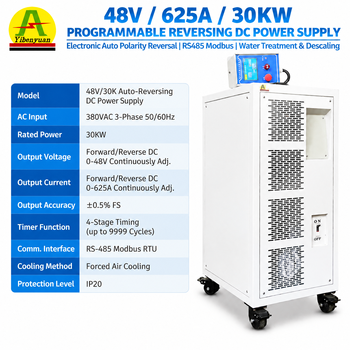
48V 625A Programmable Periodic Pulse-Reversing Unit
- Polarity Shift: H-Bridge Electronic Fast Switch
- Applications: Micro-Crack Ni, Anode Cleaning
- Timer Segments: Forward/Reverse Independent ms
- Efficiency: ≥91% High Energy Savings
Engineering Fundamentals: Selecting the Right Nickel Plating Rectifier
In modern surface engineering, the deposition of functional and decorative nickel coats serves as an indispensable foundation across the automotive, aerospace, electronics, semiconductor, and fluid power industries. Whether formulating a standard Watts nickel bath for corrosion-resistant decorative layers, a nickel sulfamate solution for micro-stress electroforming and printed circuit board (PCB) tab plating, or a high-chloride Woods nickel strike for passive stainless steel activation, electrical rectification precision directly dictates deposit microstructure, hardness, internal mechanical stress, and cathode throwing power.
For decades, industrial surface treatment relied on legacy Silicon Controlled Rectifiers (SCR) and variable autotransformers. While mechanically rugged, 50Hz/60Hz line-frequency SCR power units exhibit poor power factor (≤0.70 at low operational loads), cumbersome footprint, massive copper core thermal dissipation, and unacceptable current ripple unless paired with massive passive choke filters. When manufacturing bright nickel or micro-porous corrosion barriers, unfiltered ripple frequencies induce uneven crystal grain lattice packing, increase internal tensile stress, cause premature hydrogen embrittlement, and elevate chemical additive consumption by accelerating organic brightener degradation.
Chemical Bath Suitability & Rectifier Performance Compatibility
A precision-designed electroplating rectifier must be matched meticulously to the electrochemical characteristics of the plating solution:
- Watts Nickel Formulations: Operating at standard current densities of 2 to 7 A/dm², Watts baths require exceptionally stable constant voltage (CV) and constant current (CC) operation. Fluctuations in busbar voltage translate instantly to burn marks at high-current density rack tips or thin deposit coverage in low-current density recesses. Modern IGBT units provide precision regulation within ±0.5%.
- Nickel Sulfamate Electroforming: Engineering deposits applied to aerospace mandates tensile stress below 35 MPa to avoid warpage or fatigue failure. High ripple components (>5%) disrupt epitaxial crystal growth, inducing significant tensile stress. Switch-mode rectifiers operating at 20 kHz to 50 kHz switching frequencies deliver crystalline structures indistinguishable from pure laboratory DC battery outputs.
- Woods Nickel Strike Baths: Characterized by aggressive hydrochloric acid concentrations (10–12% HCl) and low cathode current efficiency (10–15%), Woods strikes demand high cell operating voltages (up to 12V–15V) to ignite instantaneous nucleation onto passive alloys before chemical pickling compromises substrate integrity. Rectifiers must boast instantaneous ramp-up speeds (<50 milliseconds).
- Duplex & Multi-Layer Systems: Demanding semi-bright sulfur-free nickel followed by bright nickel and particulate microporous finishes, these multi-tank lines rely on synchronized multi-channel rectifiers communicating via deterministic fieldbuses to guarantee precise step-potential differences (STEP test conformity according to ASTM B764).
IGBT High-Frequency Inverters
Advanced German-manufactured IGBT modules operating up to 40kHz provide ultra-fast dynamic response (≤1ms), reducing overall line power consumption by 25–35% compared to conventional SCR thyristor systems.
Ultra-Low Ripple (<1-2% RMS)
Nano-crystalline core transformers and LC multi-stage harmonic filter networks ensure smooth electron flow, maximizing brightener distribution and drastically diminishing cathode pinholing and peel risk.
Corrosion-Proof Thermal Isolation
Direct water-cooled sealed chassis (IP54/IP55) isolate electronics from acidic aerosol droplets (HCl, H2SO4) and caustic tank vapors, prolonging life expectancy past 10–15 years in arduous shop-floor settings.
Future Procurement Trends in Industrial Plating Power Supplies
Global procurement directors and process engineers are actively redesigning electroplating facilities to navigate surging electrical tariff structures, tighter carbon accounting benchmarks (CBAM and Scope 2 compliance), and the stringent requirements of Industry 4.0 dark factories. Sourcing managers evaluating Chinese rectifier manufacturing partners are focusing on four structural procurement paradigms:
1. Transition to Silicon Carbide (SiC) and High-Frequency Topologies
While standard silicon IGBTs have dominated the last decade, next-generation high-power plating rectifiers are rapidly integrating wide-bandgap Silicon Carbide (SiC) MOSFET semiconductors. SiC architectures yield conversion efficiencies exceeding 95.5%, slash switching losses by over 60%, and can tolerate junction temperatures reaching 175°C. For high-amperage lines (10,000A to 30,000A) running 8,000 operational hours annually, an efficiency gain of just 4% saves tens of thousands of kilowatt-hours, amortizing procurement premiums within months.
2. N+1 Modular Redundancy vs. Monolithic Architecture
Unplanned plating tank halts during live immersion incur devastating scrap costs, re-stripping overhead, and environmental chemical recycling penalties. Modern procurement protocols specifically favor modular multi-drawer configurations over single monolithic transformers. In an N+1 modular rack rectifier, if one 1,000A power sub-module undergoes thermal derating or failure, the digital master controller hot-swaps or ramps up adjacent modules seamlessly, maintaining constant bath current density without operator intervention.
3. Full Telemetry & Fieldbus Industrial IoT Integration
Analog 0–10V control potentiometers are obsolete in contemporary aerospace and tier-1 automotive audit environments (such as CQI-9 and NADCAP). Procurement contracts now standardly stipulate native industrial Ethernet protocols, notably Profinet, Ethernet/IP, Modbus-TCP, and EtherCAT. Real-time logging of amphour consumption, ripple percentage, cabinet internal thermal mapping, and anode-to-cathode instantaneous voltage curves provides the exhaustive traceability demanded for medical device and EV powertrain components.
4. Total Cost of Ownership (TCO) & Sealed Closed-Loop Cooling
The total ownership cost of an electroplating rectifier is roughly 8% initial capital purchase, 85% operating electrical electricity consumption, and 7% maintenance over a 10-year span. Air-cooled rectifiers, while inexpensive upfront, draw airborne sulfuric, hydrochloric, and nickel salts across sensitive circuit boards, leading to trace corrosion and catastrophic failure. As a result, 80% of new large-scale continuous plating lines procure deionized closed-loop water-water heat exchanger units, decoupling electrical hardware from aggressive ambient atmospheres.
Switch-Mode IGBT vs. Legacy SCR Silicon Controlled Rectifiers
A quantitative matrix outlining performance differentiators vital for engineering and asset procurement evaluation.
| Performance Dimension | High-Frequency IGBT Switch-Mode (Fenvix) | Conventional SCR / Thyristor Rectifier | Impact on Nickel Electroplating |
|---|---|---|---|
| Power Conversion Efficiency | 90% – 94% across wide operating load | 70% – 78% (plummets under partial loads) | 15–25% reduction in grid electrical expenses. |
| Full-Load DC Current Ripple | ≤1.5% to 2.0% RMS (nano-crystalline cores) | 5% to 15% RMS (requires huge external inductors) | Prevents micro-voids, tensile stress, and burnt tips. |
| Power Factor (Cos Φ) | ≥0.94 across broad operational spectrum | 0.60 – 0.72 (creates heavy grid reactive power) | Eliminates utility reactive power penalty surcharges. |
| Physical Footprint & Weight | Compact modular chassis, 1/3 weight of SCR | Bulky, heavy, requires structural floor reinforcement | Conserves cleanroom and plating aisle square footage. |
| Dynamic Regulation Speed | <1 ms instantaneous electronic response | 10 ms – 30 ms (locked to 50/60Hz half-cycles) | Prevents over-shoot burn during delicate parts immersion. |
| Chassis Sealing Capability | IP54 / IP55 with pure water closed loops | Typically IP20 / IP31 forced draft ventilation | Eliminates corrosive chemical attack on PCBs. |
Technical & Industry Development Trends in Rectification
The engineering landscape of electroplating rectifiers is evolving from static electrical conversion apparatus into intelligent cyber-physical nodes within automated chemical finishing plants. Several technical breakthroughs define current engineering trajectories:
Digital Signal Processing (DSP) & Nanosecond Adaptive Control Loops
Historically, analog control cards relied on operational amplifiers and feedback potentiometers prone to thermal drift over shifts. Contemporary power supplies utilize 32-bit high-speed Digital Signal Processors (DSP) executing advanced proportional-integral-derivative (PID) control algorithms at 100 kHz sample rates. When an automated hoist dips an irregularly shaped rack into a nickel bath, the DSP detects load impedance changes within microseconds, mitigating voltage overshoot and maintaining uniform micro-throwing power across intricate blind holes, connector pins, and recessed geometries.
Pulse & Pulse-Reverse Plating (PRP) Implementation
Traditional DC continuous deposition frequently depletes nickel ions in the cathode diffusion boundary layer, forcing operations to slow down or add excessive organic leveling agents. Programmable pulse reverse plating introduces high-frequency forward pulse bursts interspersed with brief reverse anodic dissolution pulses (measured in milliseconds or microseconds). This mechanism continuously strips passive dendrites, refills ionic depletion zones, and permits current densities 200% higher than direct current limitations. Nickel coatings produced via PRP exhibit grain refinement down to the nanoscale, delivering exceptional hardness (up to 550–600 HV) without brittle chemical additive inclusion.
Predictive Component Health Monitoring
Through embedded multi-point thermistors, high-speed current sensors, and AC ripple diagnostic algorithms, modern rectifiers monitor their own internal health metrics. The controller constantly analyzes switching transistor gate drive delays, DC bus electrolytic capacitor equivalent series resistance (ESR) degradation, and cooling water inlet/outlet differential temperature gradients. In place of sudden catastrophic downtime, maintenance crews receive proactive warning indicators via SCADA systems months before an electrical or hydraulic component reaches end-of-life.
Why Partner with Fenvix: Direct Engineering & Certified Manufacturing
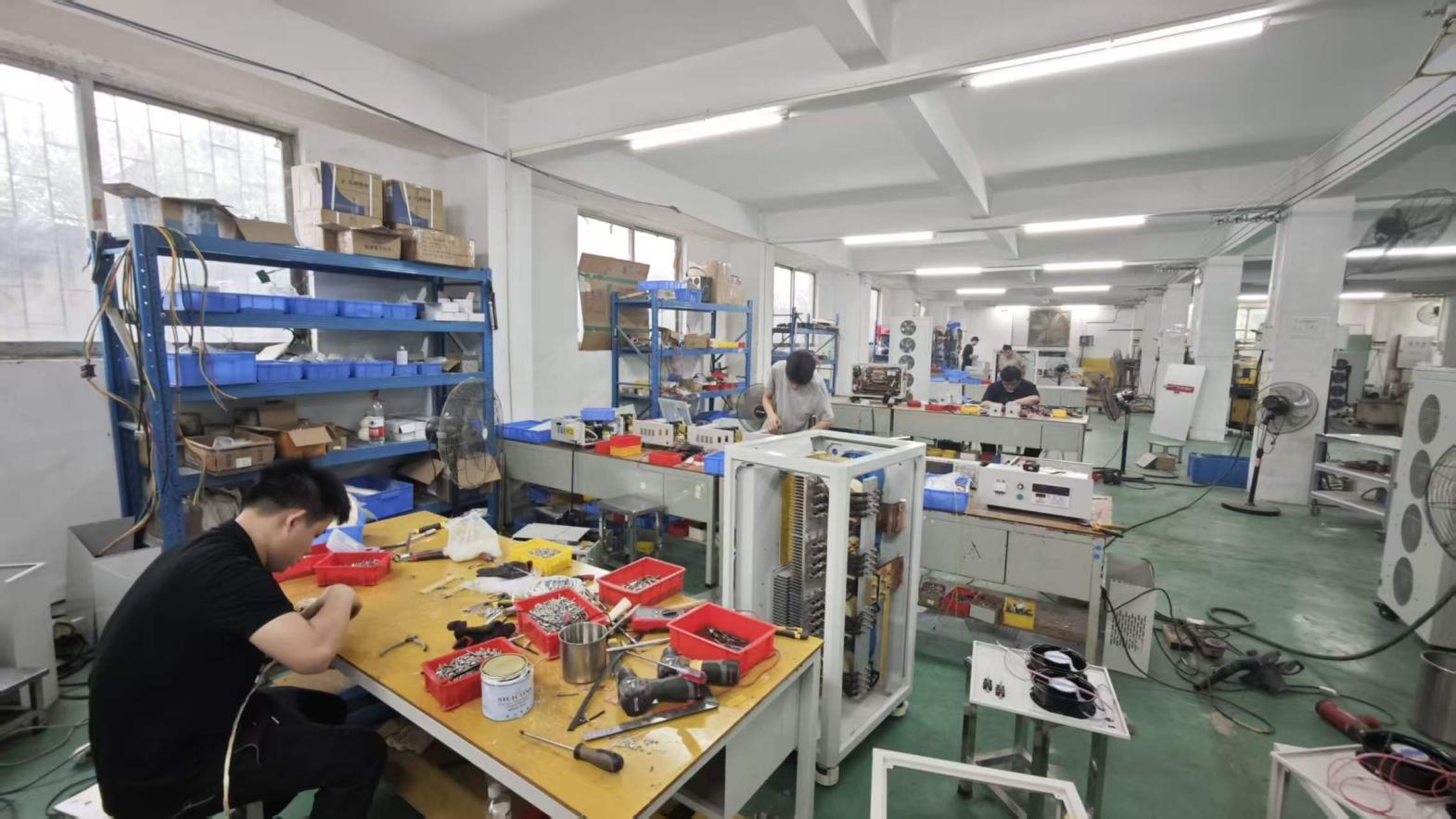
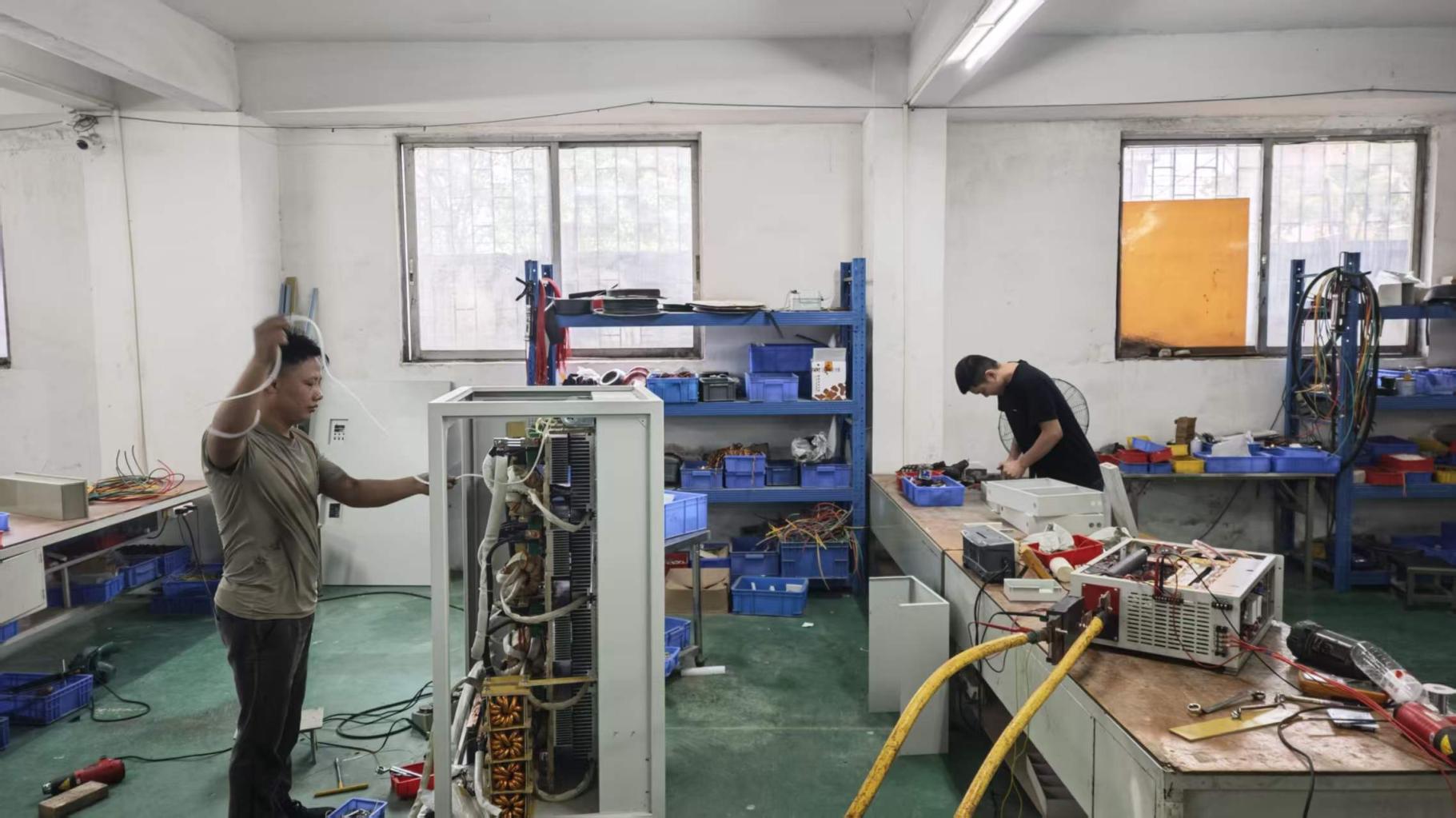
Guangdong Fenvix Technology Co., Ltd. stands as a premier direct manufacturing partner for high-power DC electrical conversion systems in Guangdong, China. Established in 2013, our engineering foundation is rooted in solving the most challenging non-standard electrical topologies across surface finishing, anodizing, electrochemical water remediation, and high-voltage research applications.
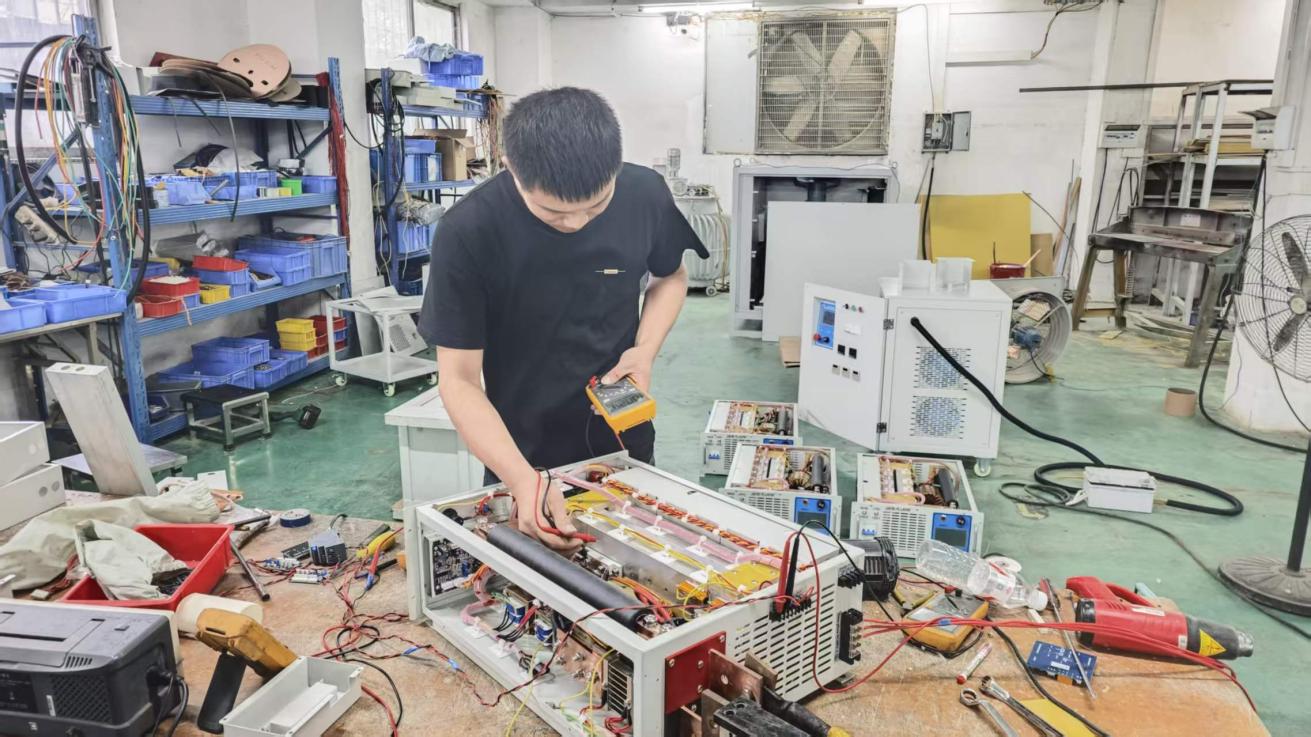
Unlike commercial export trading intermediaries that re-badge generic commodity power packs, Fenvix maintains comprehensive end-to-end control of fabrication and assembly within our dedicated 3,000m² production facilities. Our manufacturing envelope integrates:
- In-House Sheet Metal & Busbar Machining: Precision computer-numerical punching, hydraulic plate shearing, milling, drilling, and robotic tapping of custom heavy-gauge electro-galvanized enclosures and 99.9% T2 electrical grade copper busbars silver-plated for minimal contact resistance.
- Proprietary High-Frequency Transformer Winding: Custom-engineered nanocrystalline toroidal cores and litz-wire primary windings delivering unmatched thermal dissipation and ultra-high magnetic coupling efficiency.
- Independent Third-Party Verification: Our manufacturing plant is audited on-site and verified by TÜV Rheinland, operating strictly under ISO 9001 quality management procedures with full CE, RoHS, EMC, and Low Voltage Directive (LVD) design compliance.
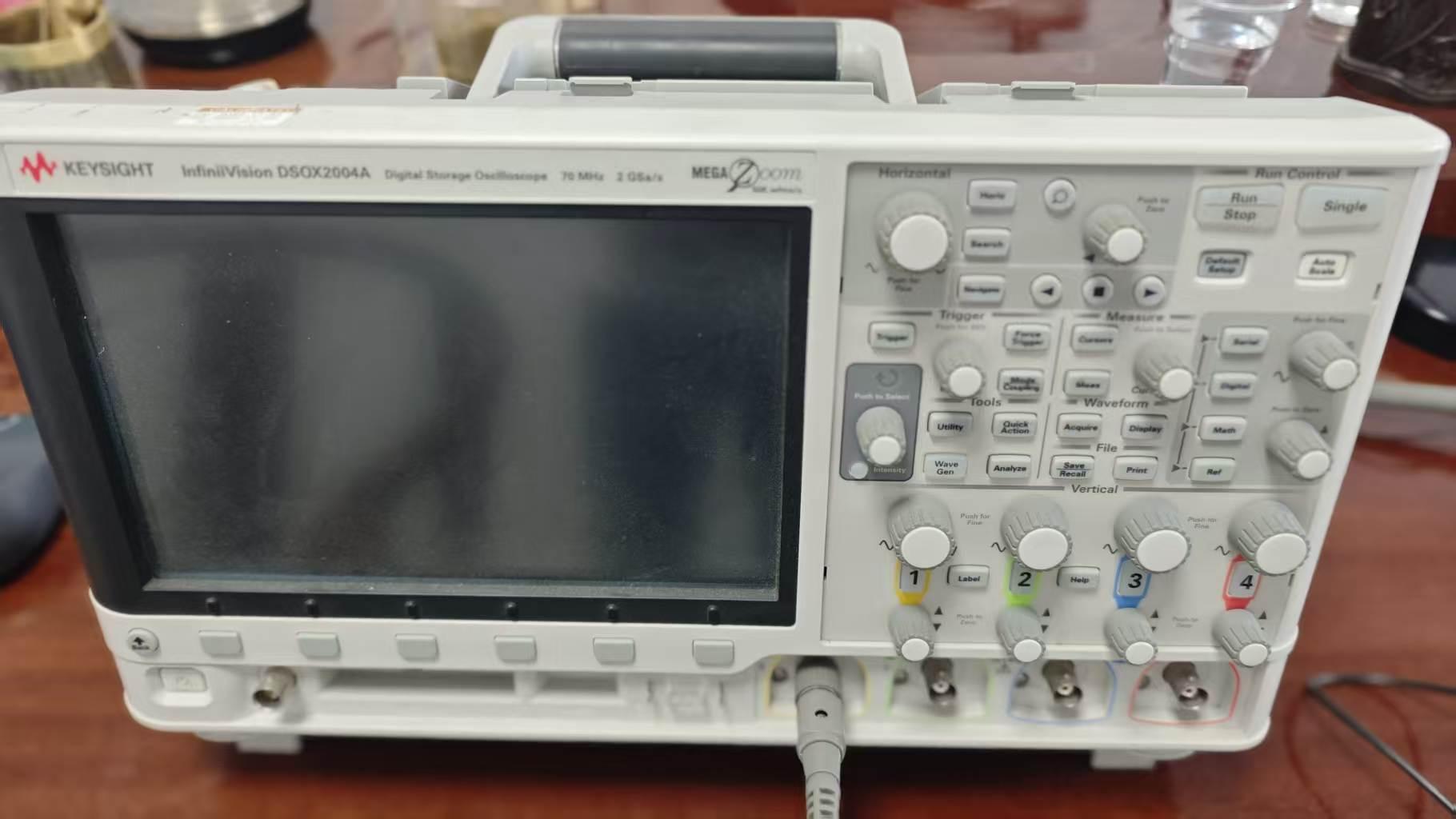
- Exhaustive Load Bank & Burn-In Testing: Prior to palletizing and seaworthy export packing, every single rectifier undergoes uninterrupted full-amperage resistive load testing for 24–48 hours, monitored by calibrated multi-channel oscilloscopes, thermal infrared imaging, and power quality analyzers.
- Zero Minimum Order Quantity (No MOQ): We support international system integrators with single custom-engineered pilot prototypes as enthusiastically as multi-unit container shipments for turnkey surface finishing installations.
Frequently Asked Questions (FAQ)
Everything industrial purchasers, line designers, and procurement managers need to know before issuing a purchase order.
How do I precisely calculate the output voltage and current needed for a nickel electroplating tank?
To size the voltage: Total Voltage (V) = Equilibrium Cell Potential (ΔE) + Anodic & Cathodic Overpotentials (ηa + ηc) + Electrolyte Ohmic Drop (I × Rbath) + External Busbar / Cable Resistance Losses (I × Rbus). For standard rack nickel tanks with busbars under 10 meters, 12V or 15V rectifiers are industry standard. For high-resistance barrel plating with small parts tumbling inside perforated cylinders, 15V to 18V is commonly specified.
Why is current ripple (<2% RMS) critical for nickel plating quality?
When should our plant select water cooling over forced-air cooling?
Can Fenvix rectifiers interface with our existing plant SCADA or PLC automation systems?
What international certifications, safety standards, and factory verifications do you hold?
What are the lead times, shipping terms, and payment terms for overseas delivery?
How does Fenvix handle overseas technical support, spare parts, and warranty?
Require a Custom Sized Nickel Plating Rectifier?
Connect directly with our Guangdong electrical engineering department. Submit your required tank amperage, voltage profile, bath chemistry, and communication protocol for an authoritative technical quotation and system schematics within 24 business hours.
Inquire Now