Top 10 Programmable Rectifier Manufacturer & Exporters
Global Industrial Whitepaper & Procurement Architecture: Engineering High-Frequency IGBT, Solid-State Switching, and Precision DC Power Modules for Worldwide Surface Treatment & Electrochemical Systems.
Certified Industrial Units
Featured Industrial DC Rectifier Systems
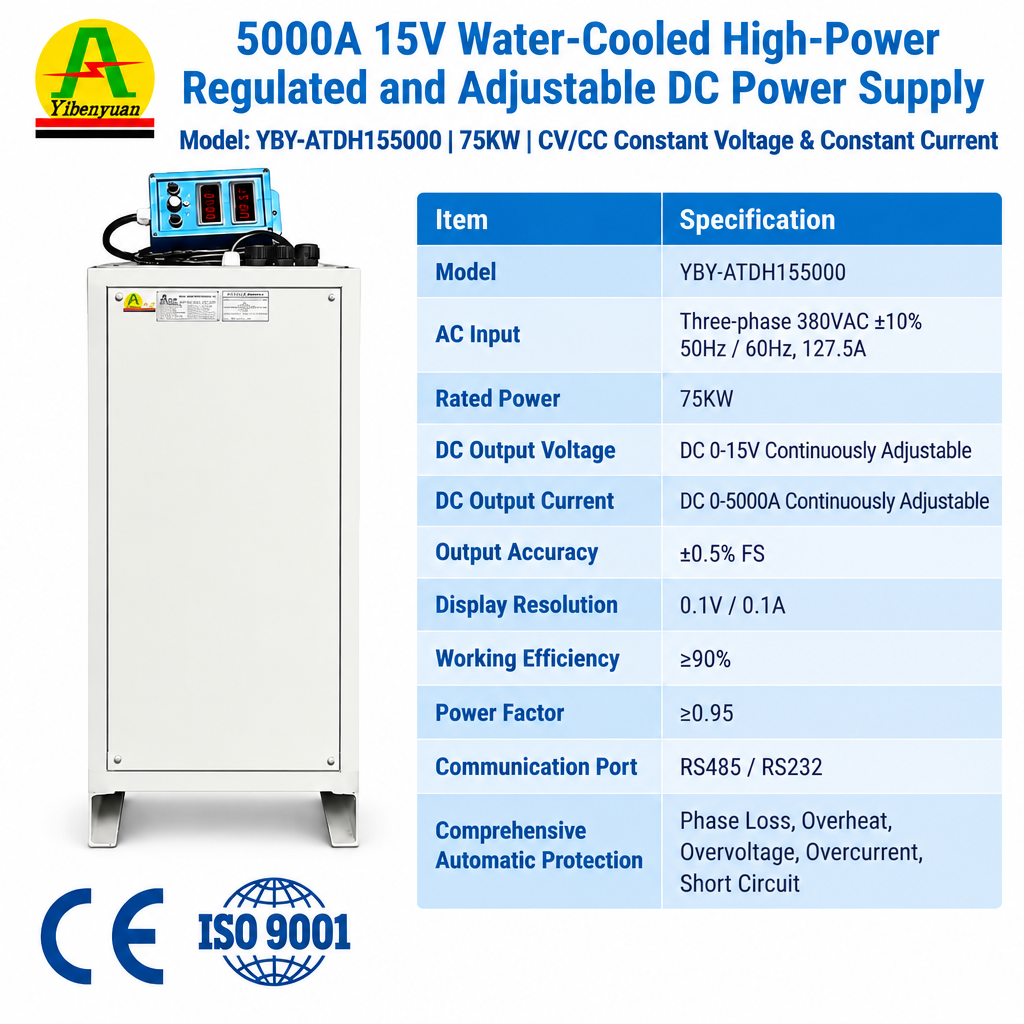
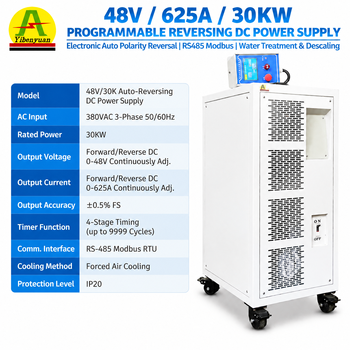
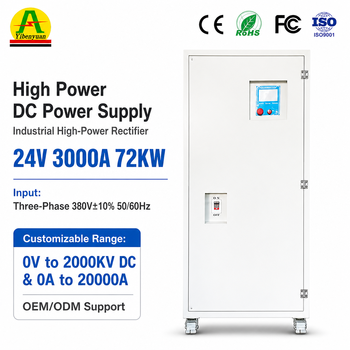
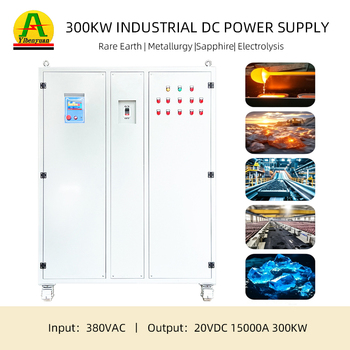
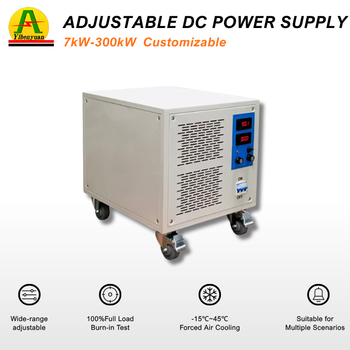
Engineered for extreme continuous-duty duty cycles (100% at 40°C ambient). Each unit undergoes stringent burn-in verification under full load before export.
Engineering Comparative: Switch-Mode IGBT vs. Legacy SCR Rectifiers
An analytical evaluation of industrial power transformation, thermal efficiency factors, and electrochemical deposition mechanics under high current densities.
Switching Frequency & Transformer Sizing
Legacy Silicon Controlled Rectifier (SCR) power supplies operate synchronously at utility line frequencies (50Hz or 60Hz). According to Faraday's law of induction, core volume and copper winding mass are inversely proportional to operational switching frequency. Modern programmable switch-mode rectifiers utilize Insulated Gate Bipolar Transistors (IGBTs) switching in the 20kHz to 40kHz band. This drastic frequency increase contracts transformer core mass by more than 70%, reducing physical footprint, eliminating structural foundation requirements, and cutting resistive heat losses in low-voltage operations.
Current Ripple & Deposition Kinetics
Electrolytic coating density, micro-hardness, and crystal grain boundaries depend directly on the output current waveform. Line-frequency SCR units produce substantial ripple current (≥5% to 8% RMS) unless choked by cumbersome, expensive LC filter networks. High-frequency IGBT programmable rectifiers deliver intrinsic ripple below 2% without external filters. In precious metal plating (gold, silver, palladium) and precision hard-chrome finishing, low-ripple constant current operation suppresses dendrite development, eliminates micro-porosity, and speeds deposition cycles by up to 22%.
Thermal Dissipation & Operating Cost (TCO)
Operating continuous multi-megawatt rectifiers generates considerable thermal overhead. While traditional air-cooled SCR units achieve conversion efficiencies of 75% to 82%, high-frequency switch-mode units routinely operate between 90% and 94% full-load efficiency. In industrial plating facilities running 6,000 hours annually at 10,000A, the resulting reduction in electricity consumption and lower load on facility HVAC or chiller circuits delivers total payback on equipment acquisition capital within 14 to 18 operational months.
Future-Proof Architecture
Global Technology Roadmap for Programmable Rectifiers
Emerging industrial standards require deeper automation integration, modular scalability, and rugged thermal hardening for aggressive electrochemical factory environments.
Wide-Bandgap (SiC) Power Stages
Silicon Carbide (SiC) MOSFET architectures are emerging in high-voltage industrial testing platforms. SiC allows junction temperatures exceeding 175°C, reduced switching losses, and switching speeds past 100kHz, facilitating ultra-compact power densities for EV battery emulation and airborne power electronics.
N+1 Modular Hot-Swapping
Electrochemical plating tanks cannot tolerate unpredicted power stoppages. Modern industrial architectures feature parallel modular drawer systems with active current sharing. If an individual 1,000A power sub-rack requires service, it can be bypassed or swapped live without pausing continuous conveyor production lines.
Industrial IIoT & Cloud Telemetry
Isolated analog control meters are being replaced by fieldbus standards like Modbus TCP, EtherCAT, and PROFINET. Real-time logging of impedance shifts, bath voltage fluctuations, and thermal performance gives predictive maintenance systems early warning of anode exhaustion and busbar connection degradation.
Closed-Loop Liquid Isolation
Acid mists and corrosive fumes degrade electrical enclosures in electroplating shops. Next-generation systems isolate power cabinets into NEMA 4X/IP66 hermetic enclosures with deionized water-cooling circuits, isolating power semiconductors and logic circuits from shop air entirely.
International industrial buyers are reshaping their procurement frameworks, focusing on modular designs, OEM customization flexibility, and verified manufacturing audits.
Direct Factory Partnering Over Middlemen
Procuring heavy-duty rectifiers involves custom voltage-current curves, specialized busbar interfaces, and specific communication protocols. Overseas EPC contractors and plant operators increasingly bypass regional trading brokers to collaborate directly with engineering manufacturers. Direct access ensures precise matching of power configurations, faster turnaround for custom footprints, and lower warranty lifecycle risk.
Mandatory On-Site Third-Party Audits
Procurement teams protect long-term capital investments through physical factory validations. Third-party testing and verification bodies, such as TÜV Rheinland, verify manufacturing capacity, CNC metal fabrication infrastructure, environmental management practices, and QA burn-in procedures before issuing long-term supplier framework contracts.
Zero MOQ for R&D and Tailored Builds
Electrolytic and precision testing systems frequently require unique non-standard ratings, such as 3,200V capacitor charging or 15,000A low-voltage units. Global procurement contracts increasingly favor specialized manufacturers that accept single-unit prototype builds without imposing multi-unit Minimum Order Quantities (Zero MOQ).
Application Category
Nominal Output Span
Critical Control Dynamics
Optimal Cooling Method
Verified Architecture
Precious Metal & PCB Plating
0–15V DC / 100A–3,000A
CC / CV, Low Ripple ≤ 1%, Pulse Options
Forced Air / Closed Air Duct
Switch-Mode IGBT
Hard Chrome & Galvanizing
0–18V DC / 3,000A–15,000A
Continuous CC, Soft Ramp, Reversing Option
Deionized Water-Cooled
Water-Cooled High Current
Electrochemical Water Descaling
0–48V DC / 500A–2,000A
Automated Polarity Reversal (H-Bridge)
Sealed Forced Air / IP54
Polarity Reversing Module
Aluminum & Titanium Anodizing
0–150V DC / 200A–5,000A
Current Density Ramp, Programmable Multi-Step
Air Cooled / Water Assist
Step-Ramp Anodic System
Electrolytic Hydrogen Production
20–80V DC / 2,000A–20,000A+
High Power Factor (>0.95), Modbus TCP Interlock
Isolated Liquid Chilled
Heavy Duty Multi-Pulse / IGBT
High-Voltage Capacitor Charging
1,000V–100kV DC / 10mA–50A
Constant-Current Slew, Arc Protection Circuit
Oil Insulated / Forced Air
High-Frequency Flyback/IGBT
Why Choose Fenvix
Certified Power Engineering Excellence Since 2013
Headquartered in Guangdong, China, Guangdong Fenvix Technology Co., Ltd. provides comprehensive engineering, fabrication, and export testing for mission-critical power conversion systems.
13+
Years Engineering Track Record
3,000m²
Dedicated Production Facility
50+
Audited Raw Component Suppliers
100%
Full Load Burn-In Verification
In-House Sheet Metal & Busbar Fabrication
Unlike system assemblers dependent on outsourced cabinetry, Fenvix controls mechanical fabrication directly. Our production floor operates dedicated plate shearing, CNC punching, milling, drilling, and tapping stations alongside heavy copper busbar cutting and bending equipment. This vertical integration ensures structural enclosure integrity, maintains tight thermal tolerances, and shortens production lead times for custom orders.
TÜV Rheinland Verified Factory
Our manufacturing infrastructure is maintained under an ISO 9001 certified quality management framework and has passed comprehensive on-site factory verification by TÜV Rheinland. Selected power models carry full CE conformity spanning the Low Voltage Directive (LVD) and Electromagnetic Compatibility (EMC), paired with RoHS-compliant component sourcing.
Turnkey Engineering Support & Zero MOQ
Every electrochemical operation presents unique facility constraints, from regional three-phase feeds (208V, 380V, 415V, 480V) to tight mechanical footprints. Fenvix provides dedicated pre-sales electrical consultation, custom CAD enclosure drawings, schematic planning, and commissioning guidance with zero Minimum Order Quantity constraints.
Technical FAQ
Engineering & Procurement FAQ for Industrial Rectifiers
Detailed answers to the key technical, configuration, and logistics questions raised by international engineering teams and plant managers.
What parameters are required to size a custom industrial rectifier?
Specifying an industrial DC rectifier requires your regional three-phase mains supply (e.g., 380V/400V/480V AC ±10%, 50/60Hz), required target DC voltage and continuous current ratings, target operating modes (Constant Current, Constant Voltage, or step-ramp profile), maximum acceptable ripple factor (% RMS), intended duty cycle (100% continuous 24/7 or batch cycling), preferred cooling topology (forced-air or closed-loop deionized liquid cooling), and industrial communication bus needs (RS485 Modbus RTU, 0–10V/4–20mA analog, or Ethernet).
How does water cooling compare with forced-air cooling in corrosive sites?
Forced-air cooling draws ambient factory air over internal heatsinks. In electroplating, hard anodizing, and electrolysis environments, this air frequently carries corrosive acid fumes (such as hydrochloric or sulfuric acid mist) that erode copper busbars and degrade PCB traces. Water-cooled rectifiers use fully sealed (IP54 or IP65) enclosures with heavy-gauge nickel-plated water heat sinks, keeping corrosive ambient atmosphere out of critical electronics and ensuring reliable thermal dissipation for high-amperage units (5,000A to 15,000A+).
Can polarity-reversing rectifiers automate descaling cycles?
Yes. Fenvix automated polarity-reversing rectifiers integrate an internal solid-state H-bridge bridge commutating stage with microsecond response times. Users configure forward and reverse running periods directly via an LCD keypad or over RS485 Modbus. In electrochemical descaling and specialized wastewater treatment cells, periodic polarity reversal dissolves scale deposits on cathode plates without mechanical scraping, significantly reducing operational downtime and maintenance costs.
What is your Minimum Order Quantity (MOQ) and production lead time?
Fenvix operates with a strict Zero-MOQ policy (1 unit minimum). We supply single bespoke prototypes for specialized university laboratories, pilot plants, and defense projects, as well as high-volume batch runs for global OEM and ODM equipment integrators. Standard custom industrial rectifiers are engineered, fabricated, load-tested, and ready for shipment within 15 to 25 business days depending on raw material sourcing and current rating.
What export packaging standards are used to protect heavy equipment?
Exported industrial rectifiers ship in reinforced, IPPC-certified ISPM-15 compliant fumigated solid timber crates. Units are vacuum-sealed within heavy moisture-barrier foils with silica desiccant packets, cushioning materials, and internal shock-dampening bases to protect precision control boards, heavy copper busbars, and internal ferrite cores from vibration and humidity during ocean and air transit.
What international trade terms and payment methods are supported?
Fenvix accommodates all standard Incoterms 2020 including EXW, FOB, CFR, CIF, CIP, and door-to-door delivery with customs clearance handled (DDP). Accepted payment settlement methods include wire transfer (T/T), confirmed Documentary Letters of Credit at sight (L/C), Credit Card, and Western Union, handling major trading currencies including USD, EUR, GBP, JPY, AUD, CAD, HKD, and CNY.
Connect directly with our senior power conversion engineering team in Guangdong. We provide full schematic designs, custom load calculations, and official quotations within 24 business hours.