Engineering-Grade Low Ripple Industrial Power Units
High-efficiency conversion stages engineered for continuous electrochemical, aviation, and R&D loads
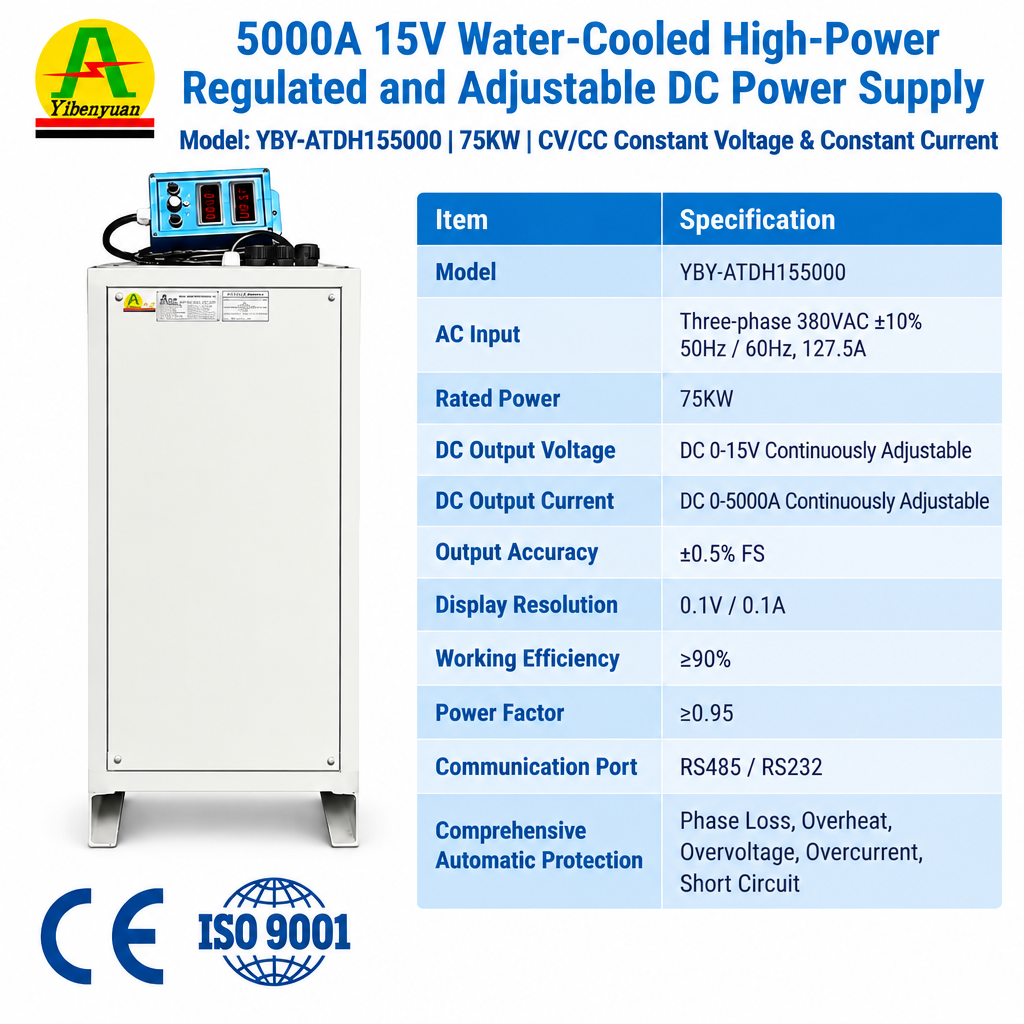
12V-15V 6000A 75kW Low Ripple Water-Cooled Plating Rectifier
- Topology: IGBT High-Freq Switch
- Output Ripple: ≤ 1% RMS Constant
- Thermal Mgmt: Direct Deionized Water
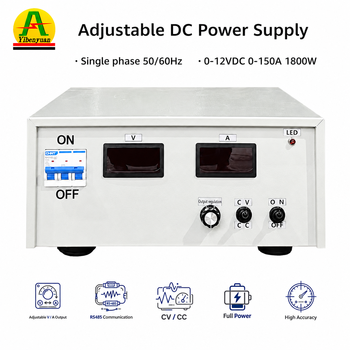
12V 150A High Frequency Low Ripple Rectifier (PCB / Au / Ag)
- Target: Precious Metal Plating
- Ripple Rate: ≤ 0.5% Peak-to-Peak
- Interface: RS485 Modbus-RTU
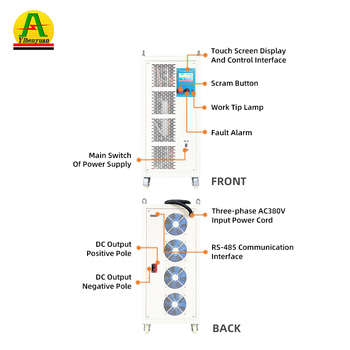
12V 4000A 48kW Heavy Duty Low Ripple Plating Unit
- Power: 48kW Pure Continuous
- Mode: Constant Volt / Current
- Regulation: ≤ 0.2% Line & Load
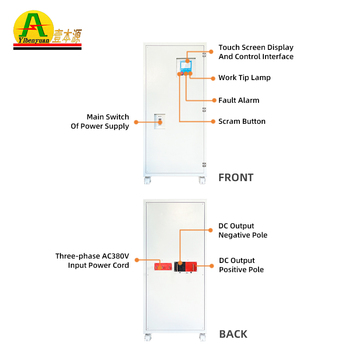
8000A 12V Ultra-Low Ripple Water-Cooled Galvanizing Rectifier
- Capacity: 96kW Continuous Duty
- Ingress: Sealed IP54 Cabinet
- Cooling: Isolated Copper Pipe
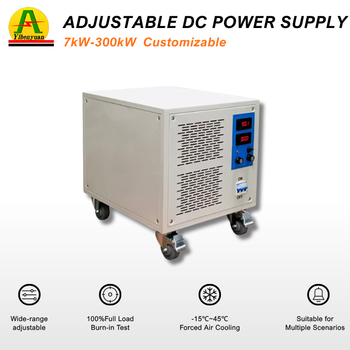
800V 50A 20kW Programmable Low Ripple DC Power Source
- Application: EV Testing / Aging
- Voltage Slew: Programmable Dynamic
- Ripple (RMS): ≤ 0.1% Nominal
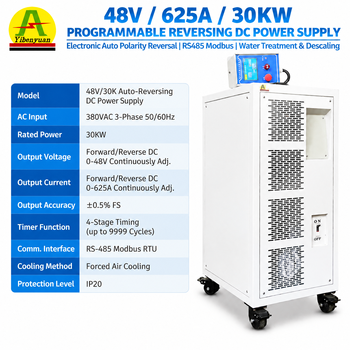
48V 625A 30kW Low Ripple Polarity-Reversing DC Supply
- Function: H-Bridge Commutation
- Application: Electrolytic Descaling
- Automation: Multi-segment Timer
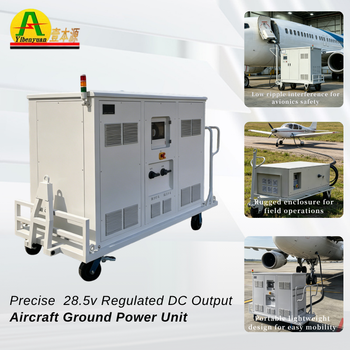
28.5V DC Low Ripple Portable Aircraft Ground Power Unit
- Standard: MIL-STD-704F / ISO 6858
- Output: 28.5V up to 600A Peak
- Filtering: Active LC Smooth Stage
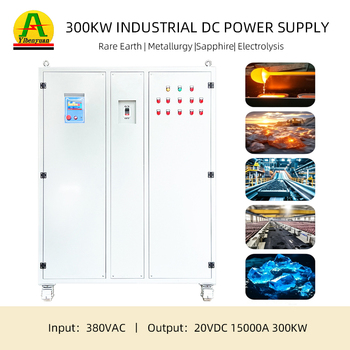
300kW 20V 15000A Ultra-High Current Low Ripple Rectifier
- Output: 0-20V / 0-15,000A
- Ripple: ≤ 2% Full Range
- Design: Heavy Copper Busbar
Comprehensive Technical Report: Low Ripple Power Architectures & Procurement Analysis
In high-power industrial electronics, ripple voltage and current represent unwanted residual AC harmonic oscillations superimposed onto a rectified direct current (DC) output. In precision surface finishing (hard chrome, semiconductor wafer plating), battery cell formation, and defense aviation electronics, higher-order harmonic distortion induces thermal dissipation, crystal lattice defects, non-uniform electro-deposition, and critical communications interference. Selecting an enterprise-grade low ripple power supply supplier requires evaluating the conversion efficiency of the switching frequency, intermediate DC link capacitance, filter inductor saturation points, and the stability of dynamic loop compensations under non-linear, multi-megawatt operational loads.
Architectural Breakdown: Silicon Controlled Rectifiers (SCR) vs. High-Frequency IGBT
Historically, heavy electroplating and electrolysis relied on 6-pulse or 12-pulse thyristor (SCR) rectifiers. The inherent limitation of line-frequency commutation (50/60 Hz) is the substantial residual ripple (typically 5% to 8% RMS without extensive passive LC chokes), poor input power factors at phase-angle throttled outputs, and large physical footprints. Modern high-power demands have transitioned to high-frequency insulated-gate bipolar transistor (IGBT) switch-mode power supplies (SMPS). Operating at carrier frequencies ranging from 15 kHz to 40 kHz, IGBT architectures utilize multi-phase interleaving and resonant soft-switching (ZVS/ZCS). This approach reduces output filtering stage volume by over 70%, controls ripple beneath 1% RMS, and provides dynamic loop responses faster than 2 milliseconds against severe load transience.
Global Landscape: Top 10 Low Ripple Industrial Power Supply Manufacturers
Industrial procurement teams navigate a bifurcated market: high-overhead European and North American instrumentation brands optimized for low-power laboratory research, versus heavy-duty Asian power electronics manufacturers built for heavy kilowatt and megawatt industrial execution. Below is an engineering evaluation of the top suppliers leading low ripple conversion technologies:
1. Guangdong Fenvix Technology Co., Ltd. (China)
Founded in 2013, an ISO 9001 and TÜV Rheinland-verified manufacturing specialist delivering custom low-ripple systems up to 15,000A and 100kV. Distinct engineering strengths include modular water-cooled architectures, internal sheet-metal fabrication, and zero MOQ requirements for tailored industrial integrations.
2. Dynapower Company (USA)
Specializes in high-power energy storage inverters and custom mining and metal-finishing rectifiers. Renowned for multi-megawatt installations, offering both legacy multi-pulse SCR designs and high-capacity switch-mode topologies for heavy metallurgy.
3. KraftPowercon (Sweden)
Global leader in surface treatment and electrostatic precipitator supplies. Engineered with proprietary pulse-plating capabilities, delivering low-harmonic industrial rectifiers with a focus on Scandinavian electrical safety frameworks.
4. TDK-Lambda (Japan)
Recognized for compact, programmable laboratory DC power supplies (Genesys series). Specializes in high-density benchtop and rack-mounted architectures providing low-noise outputs for automated test equipment (ATE).
5. Magna-Power Electronics (USA)
Manufactures rugged, programmable DC supplies from 1.5 kW to several megawatts. Uses current-fed power processing topologies to deliver low ripple, high reliability, and continuous duty protection for laboratory and industrial burn-in applications.
6. Munk GmbH (Germany)
Precision German engineering targeting specialized electroplating, anodizing, and aluminum coloration. Specializes in low residual ripple thyristor and switch-mode rectifiers calibrated for tight plating thickness tolerances.
7. AMETEK Programmable Power (USA)
Produces Sorensen and Elgar brand precision DC and AC sources. Focuses on simulation, aerospace testing, and clean room semiconductor test benches where millivolt-level ripple isolation is mandatory.
8. Spang Power Control (USA)
Focuses on industrial power control systems, custom dry-type transformers, and high-reliability AC/DC power systems designed for polysilicon manufacturing, glass processing, and electrochemical installations.
9. Plating Electronic GmbH (Germany)
Specializes in switch-mode rectifiers and pulse power supplies engineered for electroplating, printed circuit board processing, and water purification, emphasizing low-ripple micro-structures.
10. Chroma ATE Inc. (Taiwan)
Integrates precision low-ripple DC power sources into production-line automated test equipment for EV battery components, solar inverters, and power semiconductor validation.
Technical Selection Matrix: Matching Power Topology to Load Requirements
The operational profile dictates cooling methods, harmonic mitigation levels, and control interfaces. The matrix below details empirical sizing guidelines developed across real-world customer installations:
| Application | Nominal Load Profile | Max Tolerated Ripple | Optimal Cooling Strategy | Target Architecture |
|---|---|---|---|---|
| Micro-electronics & Precious Plating | 12V – 24V (100A – 500A) | < 0.5% Peak-to-Peak | Forced Air Cooling | Resonant High-Frequency IGBT |
| Heavy Hard Chrome / Continuous Coil | 12V – 18V (4,000A – 15,000A) | < 2.0% RMS | Direct Water Cooling (IP54) | Interleaved Multi-Module IGBT |
| Electrolytic Descaling & Clean Water | 24V – 48V (300A – 1,000A) | < 3.0% RMS | Forced Air / Water Sealed | H-Bridge Polarity Reversing |
| EV Battery Pack & Motor Burn-In | 400V – 1,000V (20A – 200A) | < 0.1% RMS | Forced Air Ventilation | Programmable DSP Switch-Mode |
| Aviation GSE & Hangar Testing | 28.5V DC / 115V 400Hz AC | MIL-STD-704F Compliance | Mobile Weatherproof Chassis | Solid-State Static Converter |
| Industrial Capacitor Charging | 1,000V – 100,000V DC | Monotonic Linearity | Oil-Immersed / Air Cooled | Constant Current Resonant Tank |
Strategic Procurement & Technological Trends (2025–2030)
The global transition to wide-bandgap (WBG) semiconductors is transforming industrial power supplies. Silicon Carbide (SiC) and Gallium Nitride (GaN) switching components are displacing legacy silicon switches across medium and high-power stages. Operating at higher junction temperatures and higher switching frequencies, SiC enables compact magnetic elements, cuts passive cooling weights in half, and reduces output voltage ripple without bulky capacitor banks.
Simultaneously, industrial facilities require native Industrial IoT connectivity. Analog 0–10V control has evolved into digital Modbus-RTU, Profinet, and Ethernet/IP protocols. Embedded microcontrollers record sub-cycle electrical ripple anomalies, enabling real-time predictive maintenance for electroplating tanks and EV powertrain burn-in lines before ripple-induced component failures can occur.
Fenvix Factory Manufacturing Integrity & Sourcing Competencies
Operating an ISO 9001 certified, TÜV Rheinland on-site verified production facility in Guangdong, Guangdong Fenvix Technology Co., Ltd. addresses the operational disconnect between rigid European designs and lower-quality assembly brokers. Every rectifier is engineered using our in-house sheet-metal processing (shearing, punching, tapping, and CNC milling) alongside custom-drawn oxygen-free copper busbars designed to handle high continuous current without thermal hot-spots.
Fenvix delivers structural customization without minimum order requirements (No MOQ). Whether commissioning a specialized single-unit 100kV capacitor charging installation for university research or building a fleet of 8,000A water-cooled rectifiers for an automated galvanizing line, each system undergoes a documented multi-stage burn-in regimen, dynamic load testing, and oscilloscope waveform verification before shipping.
Frequently Asked Procurement Questions (FAQ)
How does ripple factor affect electroplating surface finish?
Higher current ripple leads to uneven micro-throwing power, rough grain structures, and internal micro-cracks in hard chrome and nickel deposition. Maintaining current ripple below 2% (and below 0.5% for precious metals like gold or silver) ensures uniform crystal growth and dense, corrosion-resistant metallurgical bonds.
When is direct water cooling required over forced air?
Water cooling is the preferred engineering choice for currents exceeding 3,000A, continuous 24/7 duty cycles, and environments where ambient airborne acids, caustic vapors, or metal particles would corrode internal heatsinks and electronics within forced-air cabinets.
What data is needed to size a custom low ripple power system?
Please specify input grid parameters (voltage, phases, Hz), target output DC voltage and continuous current ratings, preferred operating modes (CC or CV), acceptable ripple percentage, duty cycle, environment conditions, and required communication protocols (e.g., RS485, analog 0-10V).
Does Fenvix offer international site commissioning and testing?
Yes. Fenvix provides comprehensive pre-sales system sizing, direct circuit schematics, remote video commissioning, and third-party verified on-site field engineering support worldwide, backed by CE, RoHS, LVD, and EMC documentation.
Need a Custom Low-Ripple Power Solution?
Talk directly with Fenvix power electronics design engineers. We review load requirements, provide detailed CAD drawings, and return complete technical proposals within one business day.
Inquire Now