Industrial-Grade High Frequency Pulse DC Solutions
Precision-engineered switch-mode rectification and programmable pulse architectures designed for electrochemistry, wafer-level anodizing, advanced electrophoresis, and aviation aerospace test bays.
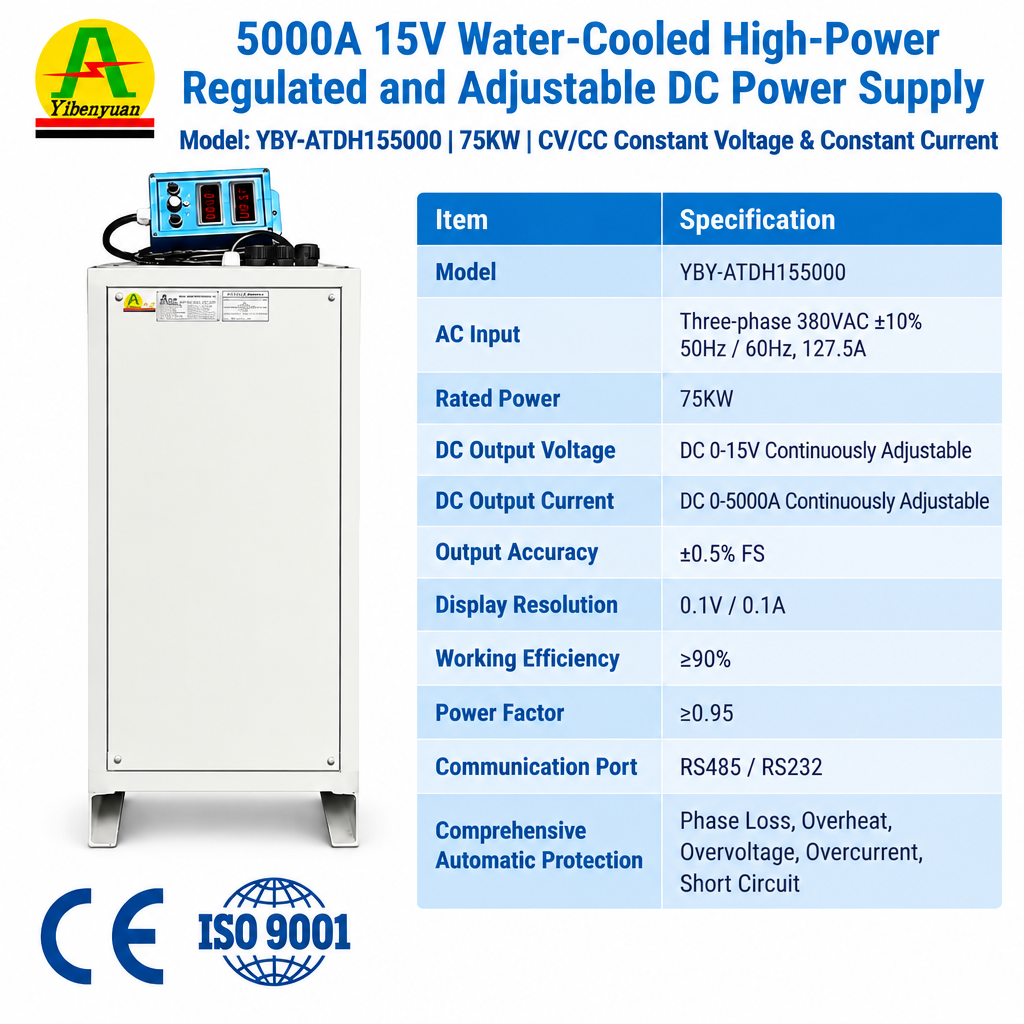
12V 15V 5000A 6000A 75KW Water Cooled Plating Rectifier
- Output Range12V/15V | 6000A (75kW)
- Thermal ControlClosed Deionized Water
- Regulation ModeConstant Volt / Current
- Digital InterfaceRS485 Modbus-RTU
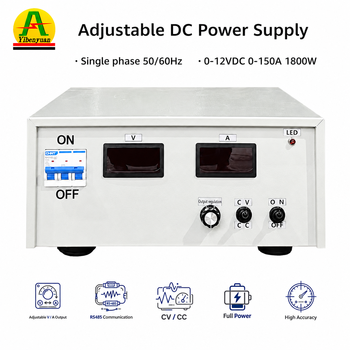
12V 150A High Frequency Precision Plating Unit
- Output Range0-12V | 0-150A Bench
- Core TargetPCB Gold/Silver Deposition
- Ripple Factor≤ 1% Full Load Peak
- CertificationCE, LVD, EMC Compliant
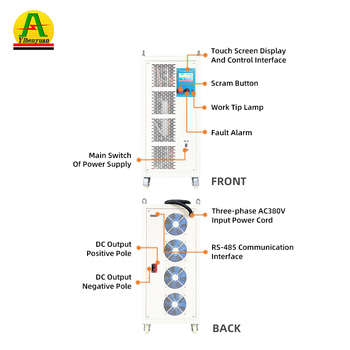
12V 4000A 48kW Heavy Duty Switching Rectifier
- Output Rating0-12V | 4000A Continuous
- Power StageAdvanced Dual-IGBT Bridge
- ProtectionPhase-Loss, Thermal, OVP
- SuitabilityZinc, Chrome, Nickel Baths
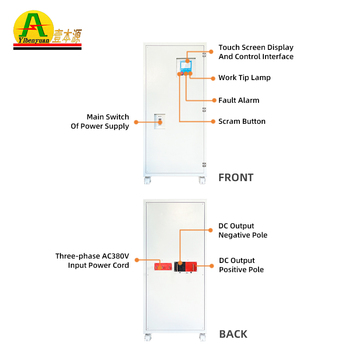
8000A 12V High-Amperage Water-Cooled System
- Max Amperage8000A Continuous Duty
- Cabinet ClassSealed Anti-Corrosion NEMA 4X
- Cooling MethodDirect Copper Water Path
- Control Signal0-10V Analog / Modbus
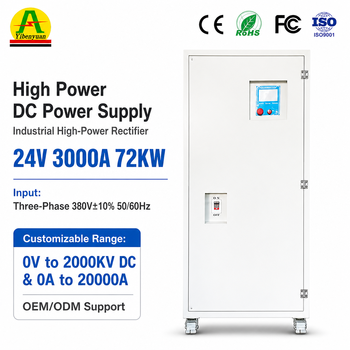
100A–3000A Programmable Anodizing Source
- Voltage Dynamic12V to 150V+ Ramp
- WaveformBi-Polar / Multi-Step Pulse
- Profile Steps8-Segment Programmable
- ApplicationType II / III Hardcoat Anodize
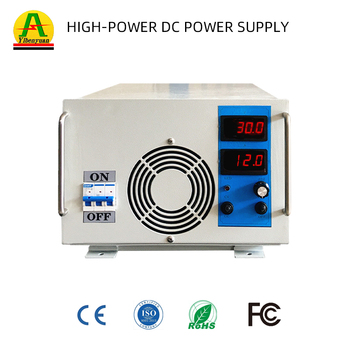
150V 50A Precision Titanium Anodizing Rectifier
- Input Power380VAC 3-Phase 50/60Hz
- Micro-Spark ControlFast Arc Suppression
- Regulation ModeHigh Impedance CC Loop
- Use CasesBiomedical & Aerospace Alloys
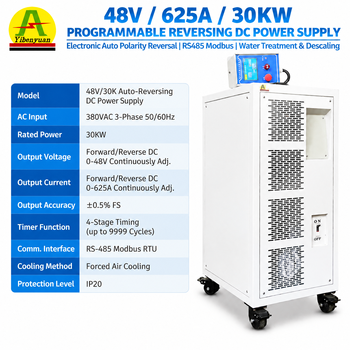
48V 625A Auto-Reversing Pulse Power Supply
- Switching SpeedHardware Polarity Reversal
- Total Output30kW Continuous Load
- Duty SchedulingMicrocontroller Cycle Timer
- Main IndustryElectrolytic Scale Removal
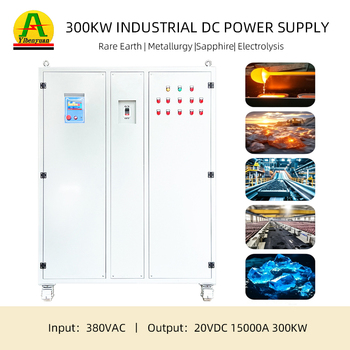
300kW 20V 15000A Mega-Current Electrolyzer Source
- Rated Amperage15,000A Busbar Output
- Efficiency Profile>91% Industrial System Load
- Thermal ModuleRedundant Water Manifolds
- ComplianceISO 9001 Factory Baseline
Engineering Overview: Demystifying High Frequency Pulse Power Delivery
Modern precision electroplating, wafer-level semiconductor metallization, plasma electrosynthesis, and hardcoat anodizing demand an unprecedented level of dynamic control over the electrical double layer (EDL). Traditional 50/60Hz Silicon-Controlled Rectifiers (SCR) and legacy thyristor systems operate via phase-angle control, introducing significant low-frequency sub-harmonic ripple (typically 5% to 15% RMS at lower throttle), sluggish closed-loop settling dynamics, and bulky low-frequency copper-iron transformers. In contrast, High Frequency Pulse Power Supplies shift commutation frequencies above 20 kHz—often deploying Silicon Carbide (SiC) MOSFETs or high-speed Insulated Gate Bipolar Transistors (IGBTs) within zero-voltage switching (ZVS) or zero-current switching (ZCS) resonant tank topologies.
By modulating pulse frequency ($f = 1 / [t_{\text{on}} + t_{\text{off}}]$), instantaneous peak current density ($J_{\text{peak}}$), and duty ratio ($\theta = t_{\text{on}} / [t_{\text{on}} + t_{\text{off}}]$), production engineers can manipulate ion transport and cathodic mass-transfer boundary layers ($\delta_{\text{Nernst}}$). During the off-time ($t_{\text{off}}$), active ionic species depleted during the pulse on-time are replenished through convective and diffusive flux, suppressing metallic dendritic crystallization, reducing hydrogen embrittlement, and eliminating thermal stress in challenging micro-via plating.
Global Benchmark: Top 10 High Frequency Pulse Power Supply Manufacturers
Selecting an industrial pulse power provider requires evaluating topology patents, high-speed microcontroller clocking, thermal management robustness, and production scalability. Below is a critical engineering breakdown of the world's leading manufacturers driving innovation in pulse power technology:
| Manufacturer | Headquarters | Dominant Core Topologies | Primary Industrial Sectors | Key Strategic Differentiator |
|---|---|---|---|---|
| #1Fenvix (Guangdong Fenvix Technology) | Guangdong, China | Dual-IGBT Full-Bridge, Soft-Switching ZVS, High-Amperage Water Cooled Modules | Surface Finishing, Hard Anodizing, Water Descaling, High-Power Electrolysis, Aerospace GPUs | Direct OEM/ODM customization with zero MOQ, fully vertically integrated sheet metal & copper busbar fabrication, load-verified 15,000A systems. |
| #2Dynatronix (Dynapower Company) | Vermont, USA | High-Precision Programmable Pulse Plating, Periodic Reverse Power Supplies | Semiconductor, Medical Device Stents, Aerospace Precious Metal Electrodeposition | Pioneering micro-pulse sub-millisecond current shaping algorithms for precious metals. |
| #3Munk GmbH | Hamm, Germany | Thyristor and Switch-Mode Rectifiers, High-Current Pulse Reverse Modulators | Continuous Coil Strip Plating, Aluminum Anodizing, Printed Circuit Board Manufacturing | High German engineering standards, robust busbar construction, robust modularity. |
| #4KraftPowercon | Surte, Sweden | Modular Switch-Mode Rectifiers, Synchronized Multi-Channel Pulse Systems | Electrostatic Precipitators, Ballast Water Treatment, PCB Through-Hole Copper Plating | N+1 redundant hot-swappable module designs offering unmatched plant uptime. |
| #5Plating Electronic GmbH | Sexau, Germany | Compact DC and Pulse-Reverse Power Supplies, High-Frequency IGBT Converters | Semiconductor Plating, Reel-to-Reel Lines, Micro-Etching, Electroforming | Extreme waveform fidelity with microsecond pulse-width rise and fall transitions. |
| #6American Rectifier Corporation | North Carolina, USA | Heavy SCR Rectifiers, Solid-State Pulse DC Converters | Mining Electrolysis, Marine Hull Impressed Current, Heavy Metal Refining | Heavy-duty industrial transformer construction resilient to unconditioned line surges. |
| #7Spang Power Control | Pennsylvania, USA | High-Reliability SCR Controllers, Custom AC/DC Pulse Systems | Polysilicon CVD Reactors, Glass Melting, Specialty Thermal Processing | Advanced closed-loop digital algorithms for harsh non-linear load applications. |
| #8Sorensen / AMETEK Programmable Power | California, USA | Programmable DC Power Supplies, Modular Regenerative Electronic Loads | Aerospace Avionics Burn-in, EV Powertrain Stress Test, Defense Radar Calibration | Unrivaled high-level software API integration, ATE rack integration, precise command sets. |
| #9Magna-Power Electronics | New Jersey, USA | Current-Fed Inverter Switch-Mode Supplies, Programmable DC Modules | Photovoltaic Emulation, Battery Cell Formation, Particle Accelerator Magnets | Patented current-fed topologies that naturally protect against short-circuit arcing. |
| #10Chroma ATE Inc. | Taoyuan, Taiwan | Precision Programmable DC Power Supplies, High-Frequency Grid Simulators | Electric Vehicle On-Board Charger (OBC) Testing, Battery Pack Aging, Power Electronics R&D | Turnkey automated test systems (ATE) deeply embedded in global consumer tech QA. |
Future Procurement Trends in Industrial Power Conversion
Procurement teams navigating 2026-2030 equipment investment cycles face evolving technical requirements. Sourcing executives are moving away from simple catalogue specification matching toward complete lifecycle integration assessments. The following three macroeconomic and architectural shifts dominate current requests for quotation (RFQs):
Edge Telemetry & IIoT Control
Modern plating plants mandate real-time Modbus-TCP, Profinet, and OPC-UA connectivity. Equipment buyers demand internal data logging of real-time impedance changes across the anode-cathode path to detect passive film collapse or bath contamination before yield collapses.
Wide Bandgap (SiC/GaN) Integration
Silicon Carbide (SiC) MOSFETs are actively replacing classic silicon modules in sub-100kW units. The result: switching frequencies escalating from 20 kHz to >100 kHz, shrinking the magnetic footprint of isolation transformers by 60% while maintaining operational efficiency above 94%.
Modular N+1 Redundancy
Down-time in an automated 24/7 chrome plating line can destroy hundreds of thousands of dollars in aerospace components. Modern procurement protocols require multi-drawer power architectures where a faulted module drops out automatically without interrupting process current.
Emerging Technology Trends: The Shift to Bi-Polar High Frequency Waves
In high-aspect-ratio blind micro-via (BMV) filling and deep sub-micron semiconductor packaging, unipolar pulse reverse plating is yielding ground to asymmetric periodic pulse reverse (PPR) power supplies. In these setups, high cathodic pulses are interspersed with ultra-short anodic dissolution pulses. The anodic phase rapidly strips deposit peaks from high-current-density protrusion zones, planarizing surfaces at the atomic level.
Crucial to this progress is the switching circuit's dynamic inductance. High-current lines (e.g., 6,000A to 15,000A) suffer severe voltage drop ($V = L \cdot di/dt$) under nanosecond rise times. Power supply architectures are now co-engineered with low-inductance coplanar laminated busbars, ensuring that the square-wave fidelity generated by internal H-bridge stages arrives at the chemical bath without distortion.
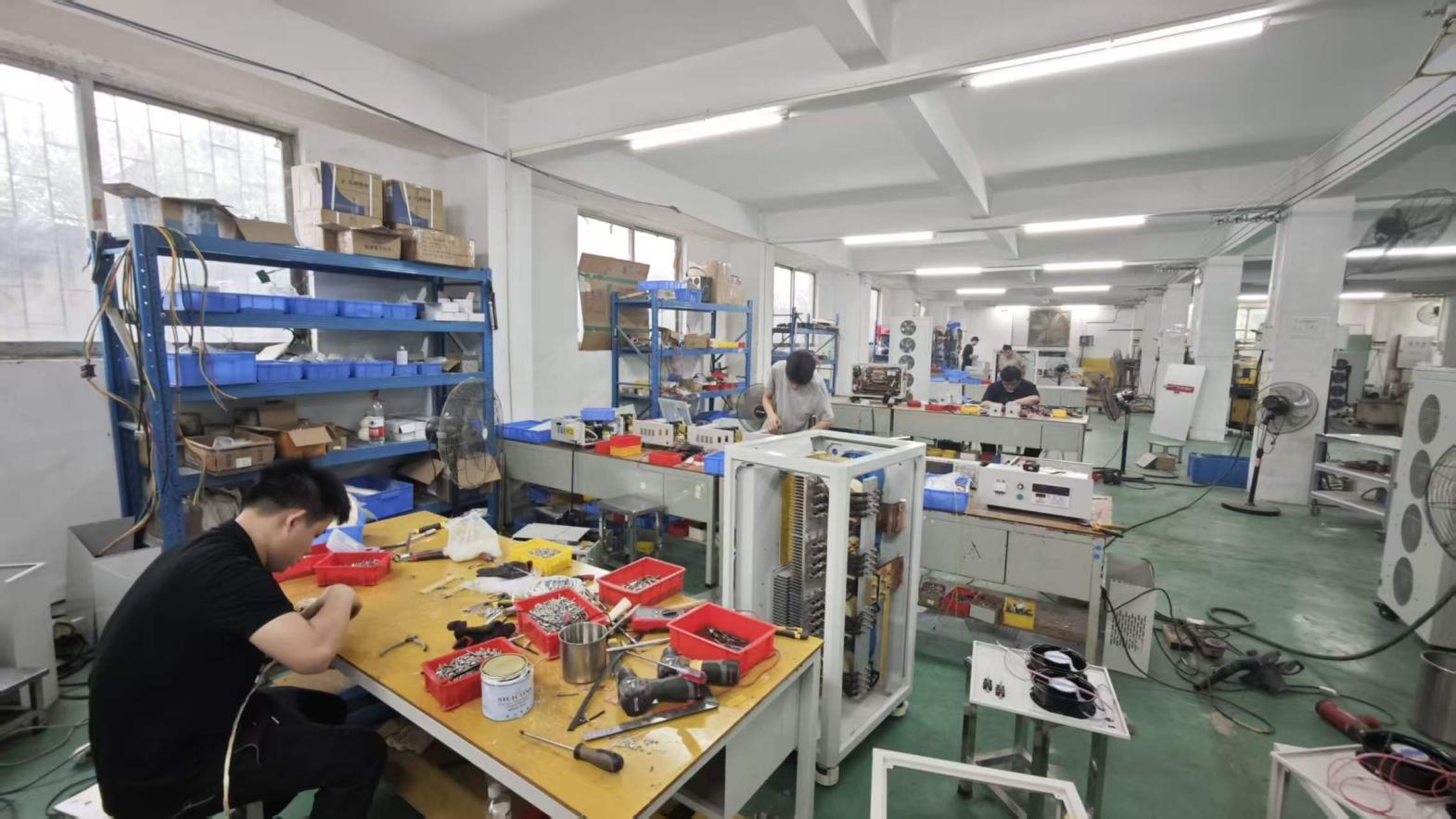
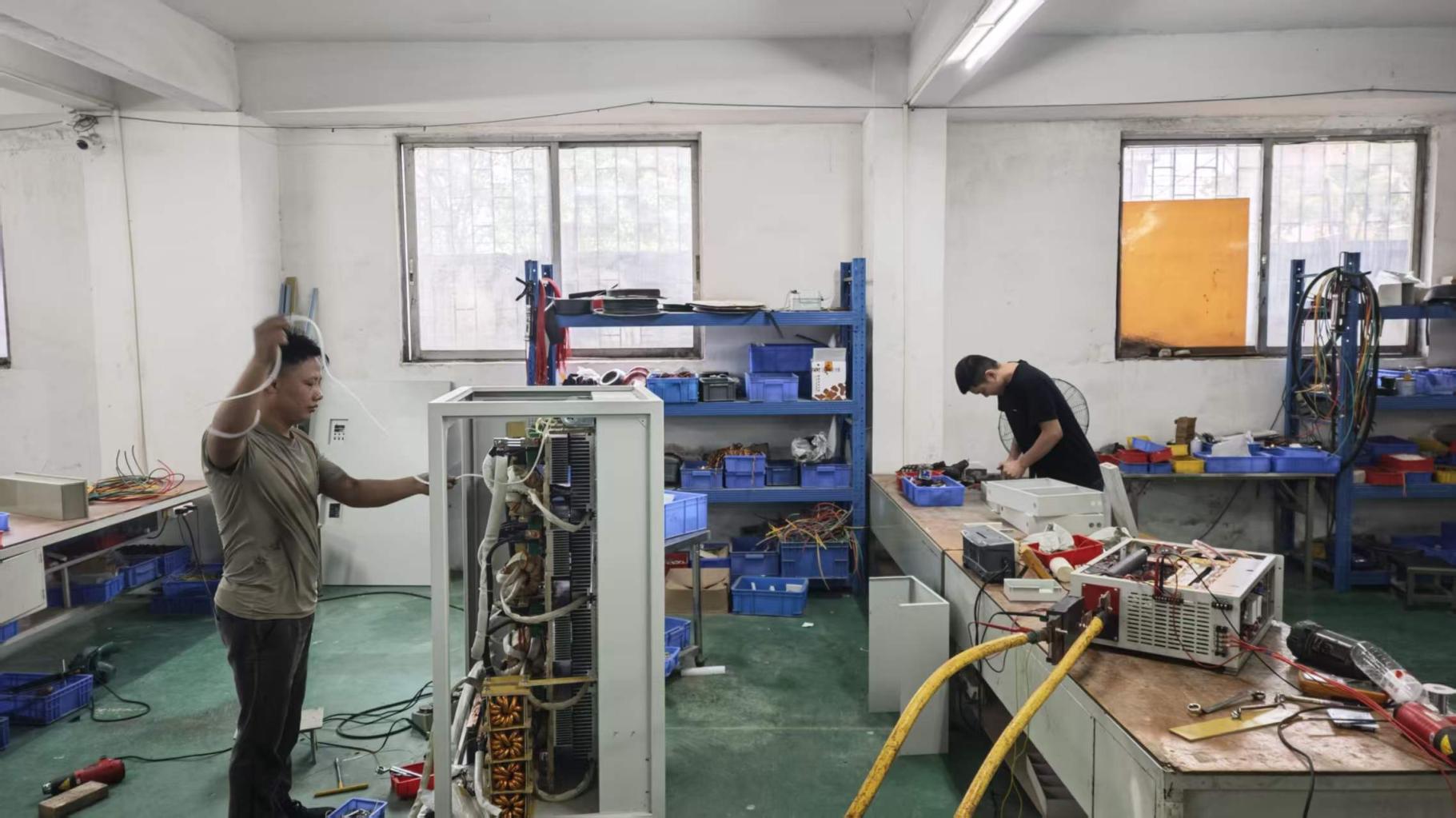
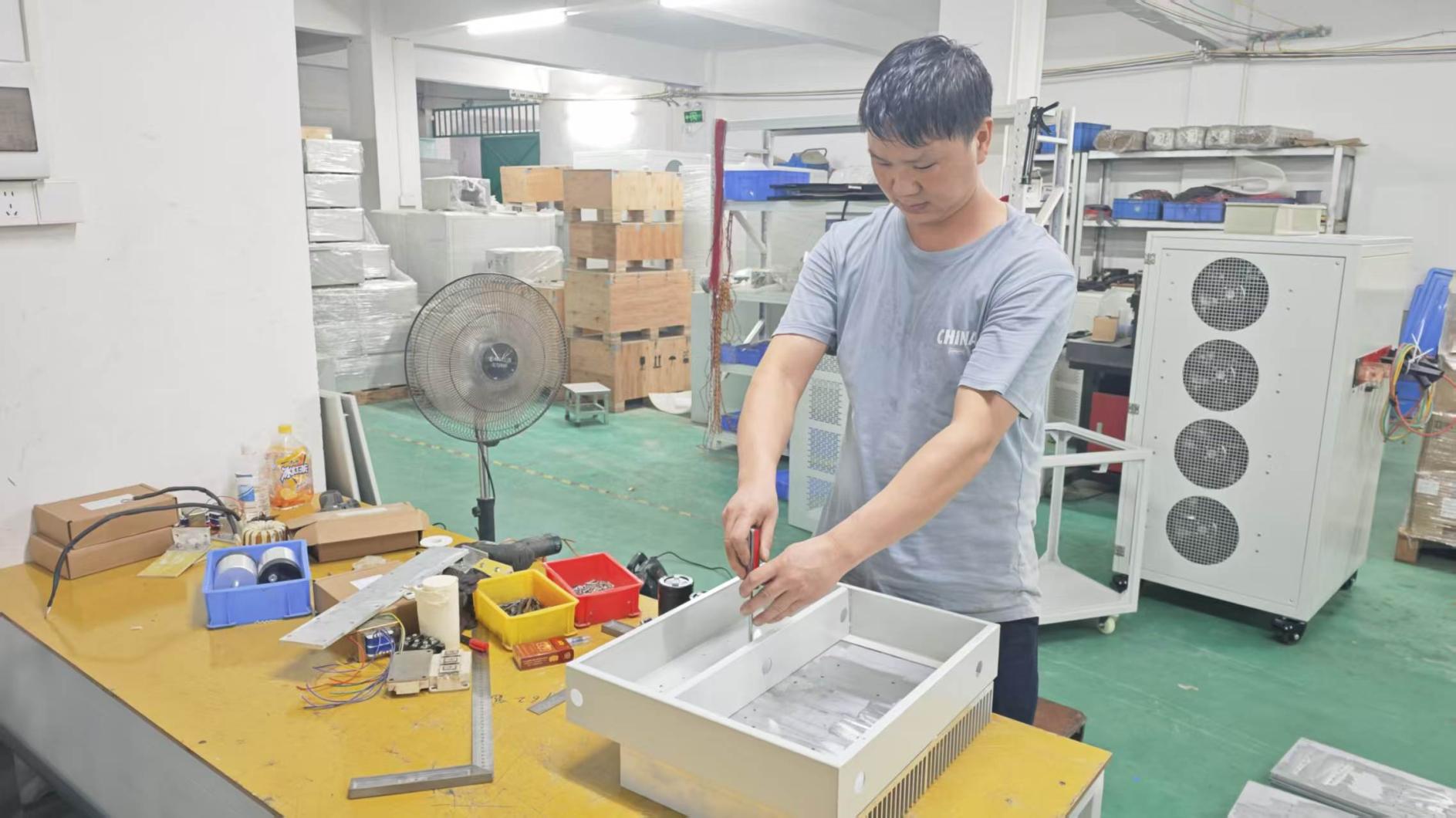
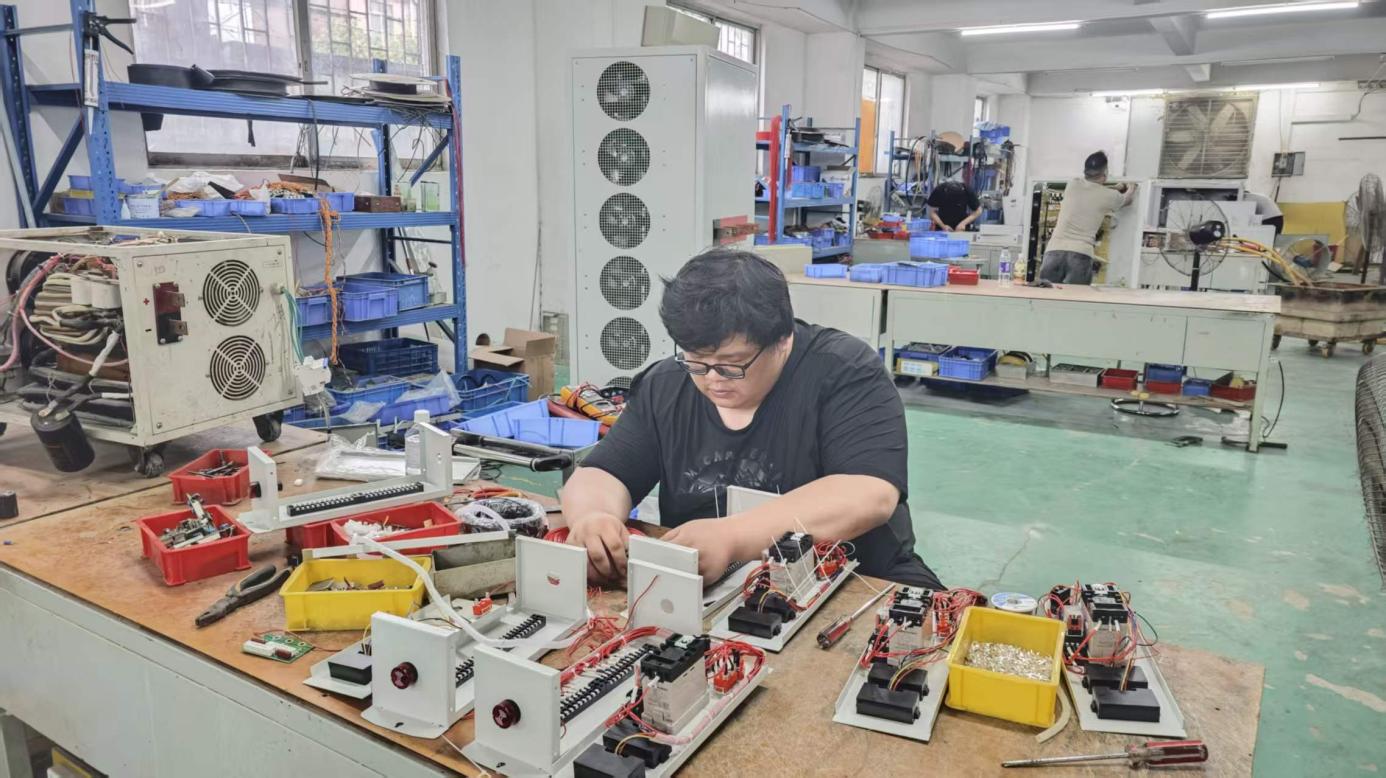
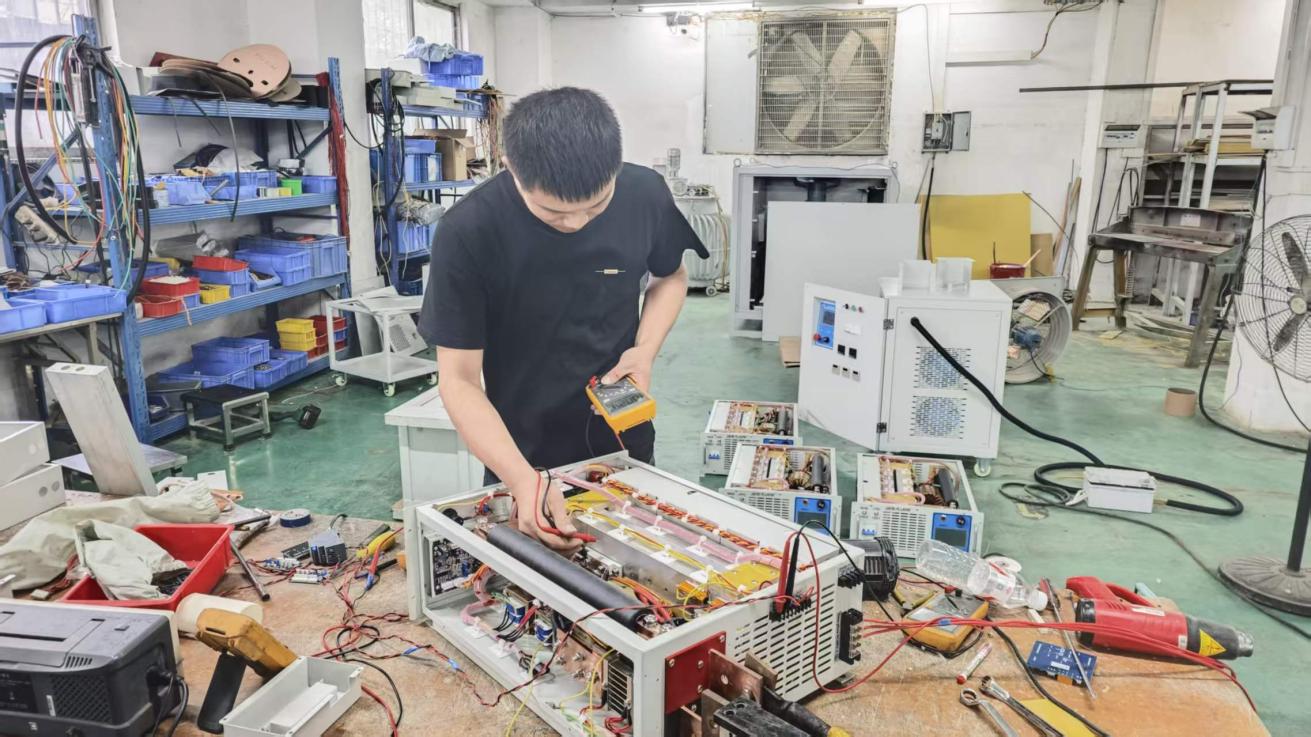
Inside the Guangdong Fenvix Manufacturing Facility
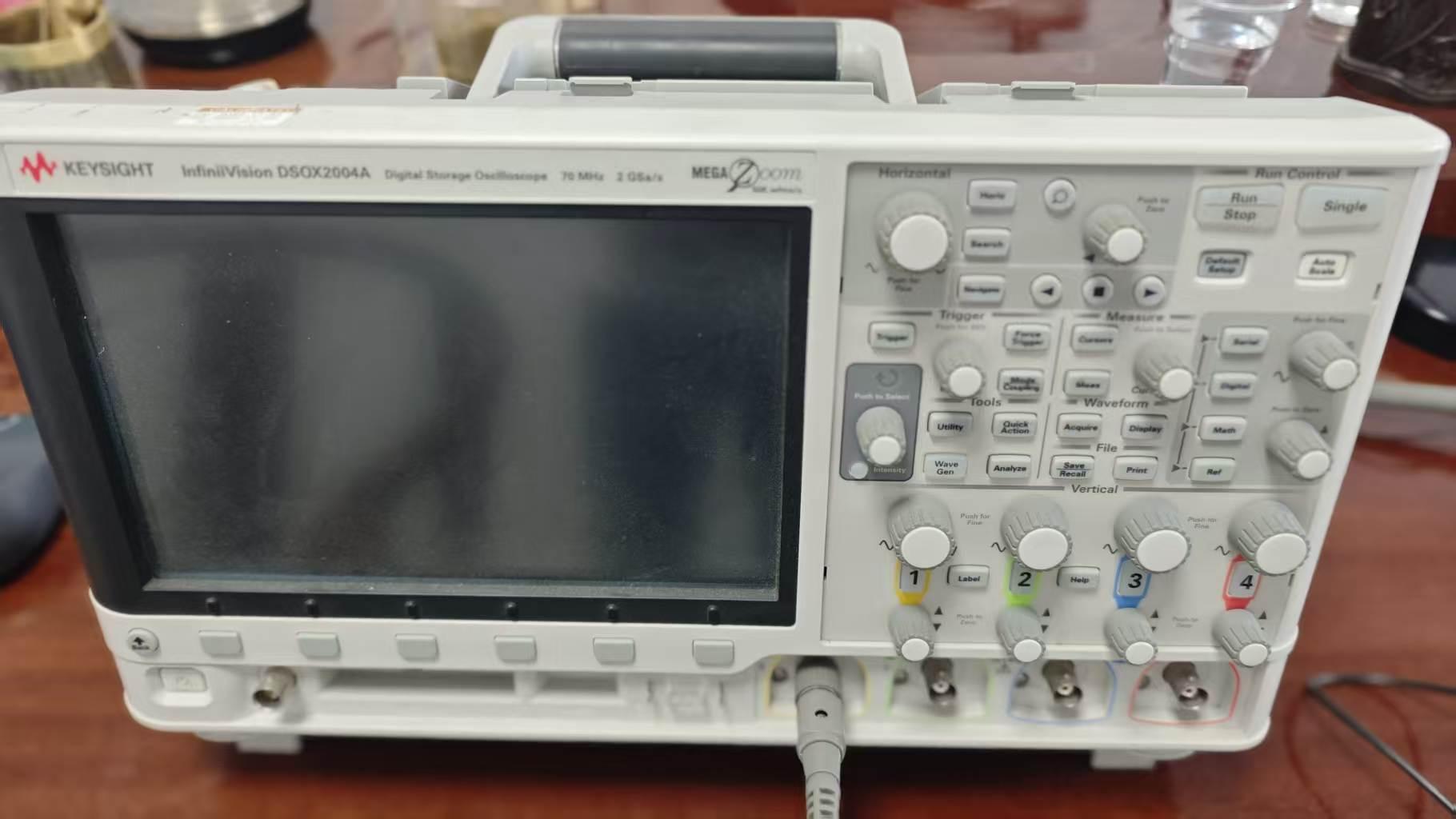
Vertical engineering integration: from raw copper cutting, plate shearing, and automated CNC punching to full-load burn-in testing and oscilloscope harmonic verification.
Certified Production & Export Verification
Engineered to international safety standards, backed by third-party verification, and deployed across demanding industrial production environments worldwide.
ISO 9001:2015
Audited Quality Management from incoming raw materials to final burn-in.
TÜV Rheinland
On-site audited production facilities, engineering floor & fabrication plant.
CE, LVD & EMC
Full European compliance for low-voltage safety and low harmonic emissions.
Zero MOQ Policy
Direct support for single prototyping units, pilot lines, and full production runs.
Global Incoterms
Flexible logistics coverage: FOB, CIF, EXW, and door-to-door DDP to 50+ countries.
Frequently Asked Questions by Industrial Sourcing Teams
Direct technical answers to common queries raised by electrical engineers, plant managers, and global procurement departments.