Heavy Current
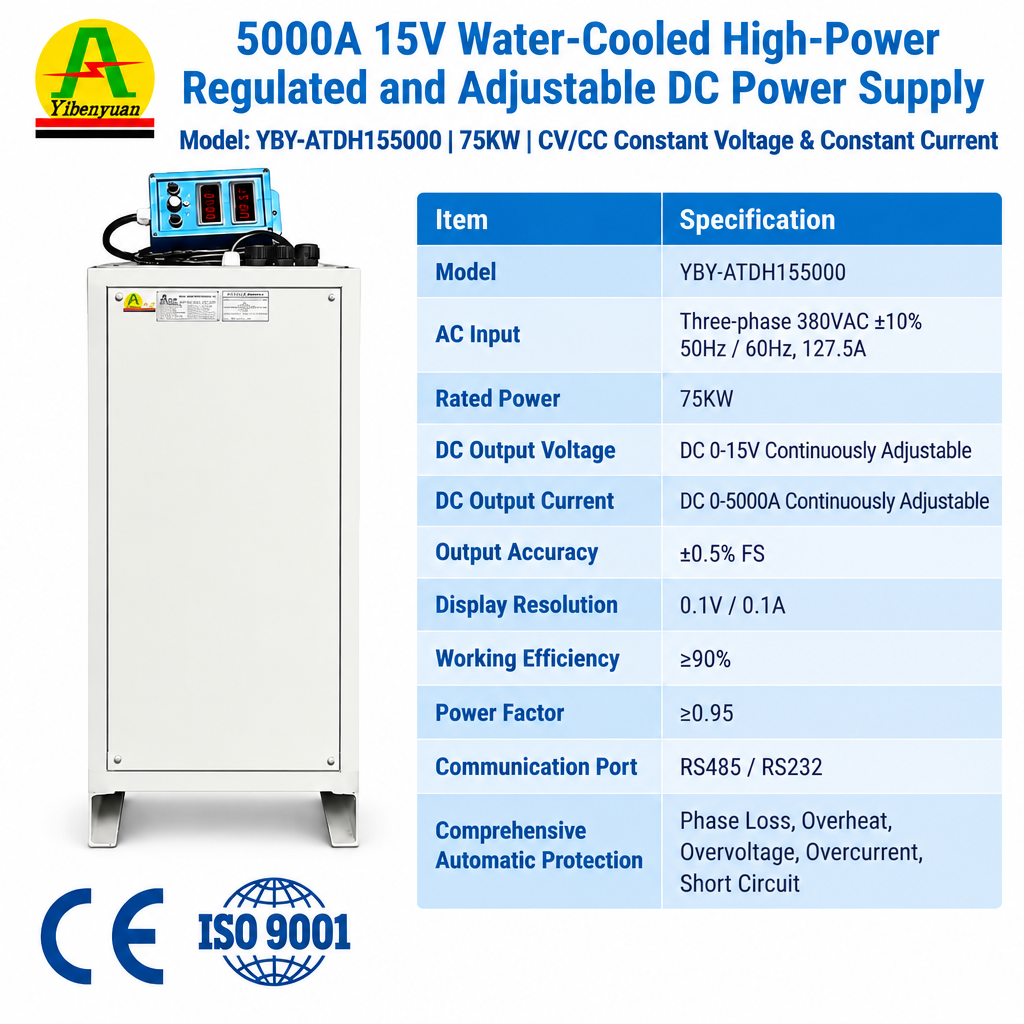
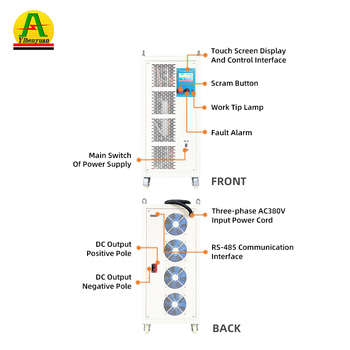
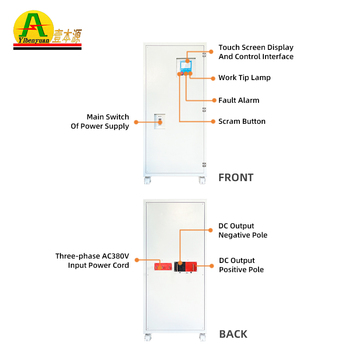
12V/15V 5000A-6000A 75KW Water-Cooled High-Frequency Rectifier
- Voltage / Current0-15V / 6000A
- Power Rating75 kW Cont.
- Thermal ControlDeionized/Chilled Water
- Regulation ModeCC/CV Dual Stage
Direct manufacturer deployment of customized switch-mode power systems, water-cooled rectifiers, high-voltage test racks, and aviation ground power units backed by full structural burn-in qualification.
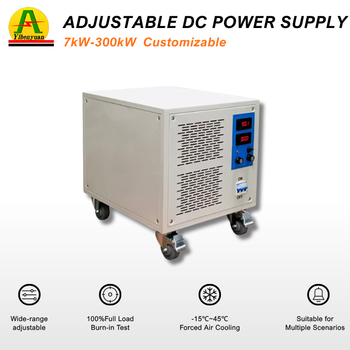
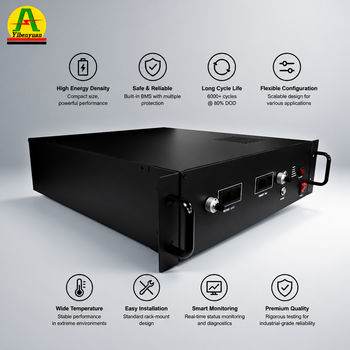
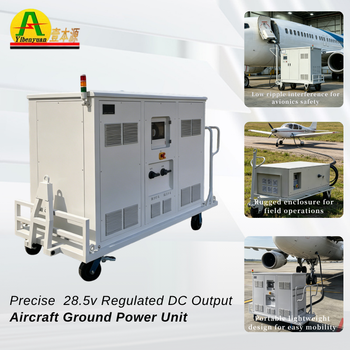
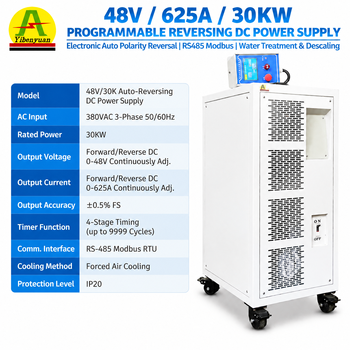
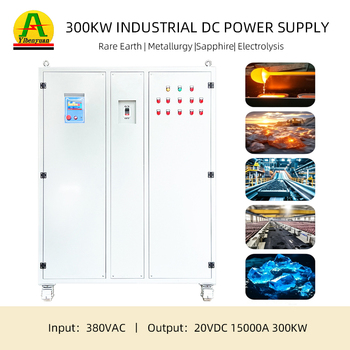
Modern industrial processing, electrochemical syntheses, and electrified automotive subsystems have outpaced traditional Silicon-Controlled Rectifier (SCR) equipment. In complex industrial landscapes, power conversion is no longer merely a conduit of raw kilowatt transfer; it is a critical variable governing metallurgical grain structure, thin-film uniformity, and cycle safety in automated testing apparatuses. As a specialized OEM/ODM programmable DC power supply factory and global exporter, Guangdong Fenvix Technology Co., Ltd. builds engineered power conversion architectures optimized for deterministic control, ultra-low ripple voltage, dynamic thermal equilibrium, and rigorous lifecycle durability.
Standard legacy power distribution systems relied heavily on 50/60Hz phase-controlled SCR rectifiers. While structurally straightforward, SCR systems inherently manifest notable technical inefficiencies: excessive total harmonic distortion (THD), low natural power factors across depressed output voltage bands, broad form-factor footprints, and high ripple current components (>5% RMS) that deteriorate plating thickness uniformity and accelerate electrode passivation. Fenvix resolves these systemic bottlenecks through solid-state Insulated Gate Bipolar Transistor (IGBT) switch-mode conversion running at carrier frequencies from 20 kHz up to 100 kHz.
High-frequency energy chopping enables our engineering teams to shrink magnetic transformer footprints by upwards of 65% while driving typical end-to-end electrical conversion efficiency beyond 90%. High-speed Closed-Loop Pulse Width Modulation (PWM) dynamically mitigates line and load transients within sub-millisecond windows (<1 ms recovery under 10% to 90% step perturbation). The resulting DC output exhibits exceptionally smooth ripple characteristics (≤1% RMS), providing stable, repeatable current densities indispensable for precision micro-electronics, electrolytic descaling, titanium hard-coat anodization, and EV powertrain thermal testing.
Sub-millisecond settling rates ensure delicate substrates remain completely protected from over-voltage voltage spikes, in-rush surges, and destructive arcing across dynamic load fluctuations.
Sustained ≥90% operating efficiency lowers total system thermal loading, cuts baseline auxiliary facility HVAC operational expenditures, and significantly decreases overall carbon footprint.
Engineered n+1 parallel redundancy structures facilitate seamless megawatt scale expansions and rapid hot-swappable module service without costly facility production halts.
Selecting an industrial programmable DC power supply requires a precise synthesis of electrical dynamics, process environment conditions, and remote control requirements. Below is the operational matrix utilized by Fenvix application engineers during custom OEM/ODM specification scoping:
| Application Segment | Typical DC Window | Critical Control Dynamics | Cooling Architecture | Preferred Fenvix Topology |
|---|---|---|---|---|
| Precious Metals & PCB Plating | 0–12V / 150A–1,000A | Ultra-low ripple (<1%), CC/CV precision ≤0.5%, digital current integration | Forced Air Cooling | IGBT Switched Rack |
| Continuous Strip Galvanizing | 0–15V / 5,000A–15,000A | High duty cycle (100% 24/7), corrosion resistance, busbar balancing | Deionized Water Closed-Loop | High-Power Water Cooled |
| Hard Coat Anodic Oxidation | 0–150V / 100A–3,000A | Multi-stage programmable voltage ramp-up, soft-start, timer sequencing | Air / Water Hybrid | Anodic Oxidation System |
| Descaling & Water Treatment | 0–48V / 500A–2,000A | Instantaneous automatic polarity reversal, cyclic periodic timers, RS485 | Forced Air Sealed Compartment | Auto-Reversing DC Source |
| EV Traction & Battery Simulation | 0–800V–1,500V / 20–100A | High-voltage slew rates, bidirectional options, SCPI/LabVIEW interface | Precision Forced Air | Programmable HV Switcher |
| Aviation Line GSE & Hangar MRO | 28.5V DC / 400Hz 115V AC | Zero harmonic distortion, engine-start surge capability, MIL-STD compliance | Mobile Weatherproof Forced Air | Solid-State GPU System |
Procurement directors and systems integrators face strict shifts in power supply requirements across North America, the European Union, and the Asia-Pacific territory. Modern RFQs require compliance beyond nominal amp-volt configurations, focusing heavily on four macro procurement vectors:
Isolated analog control (0-10V/4-20mA) is rapidly being superseded by deterministic industrial Ethernet buses (EtherCAT, Profinet, and Modbus-TCP). Procurement teams require sub-millisecond telemetry to track real-time current density and detect process faults.
Silicon Carbide (SiC) MOSFET architectures operating at ultra-high switching frequencies allow power units to operate reliably at elevated junction temperatures, shrinking rack cabinet footprints by 40% while enhancing grid power efficiency.
For chemical electroplating, pickling, and coastal hangar operations, air cooling drawing corrosive airborne salts and acid vapors directly into electronics is unacceptable. Total isolation designs with pure water heat exchange have become the dominant global standard.
The industrial power conversion market is converging toward total software control and bidirectional flexibility. Emerging developments defining future installations include:
Regenerative Energy Recovery: Future testing topologies for EV battery cyclers and dynamic motor burn-in benches demand bidirectional conversion stages capable of sinking power back into the three-phase AC facility grid at >92% regeneration efficiency, substantially slashing ongoing test facility utility overhead.
Predictive Machine Diagnostics: Leveraging onboard high-speed DSP processing, future programmable power frameworks analyze subtle high-frequency impedance shifts, ripple phase perturbations, and heat-sink thermal curves to accurately flag impending module wear, pump cavitation, or fan bearing fatigue well before unexpected system line shutdowns happen.
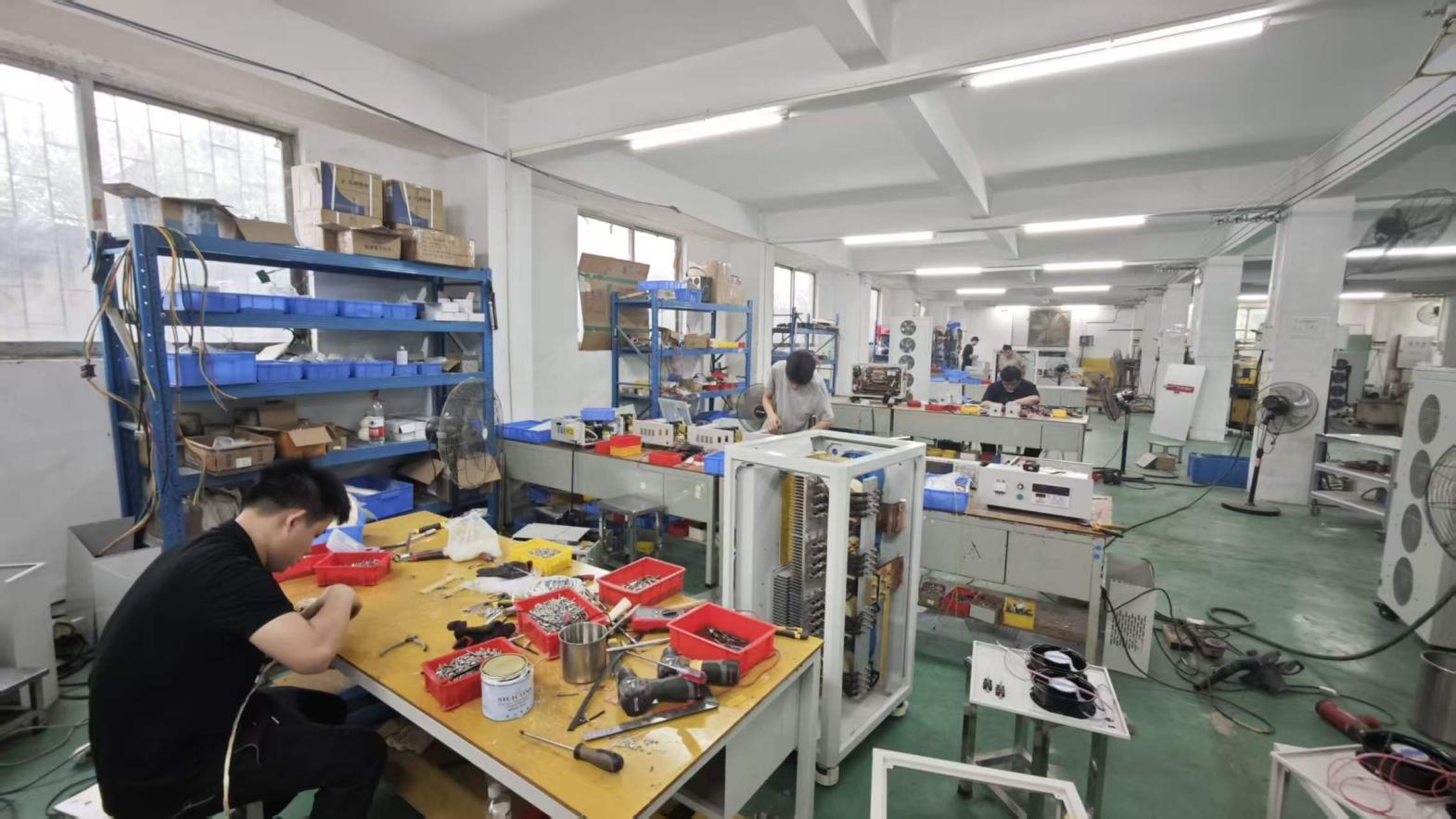
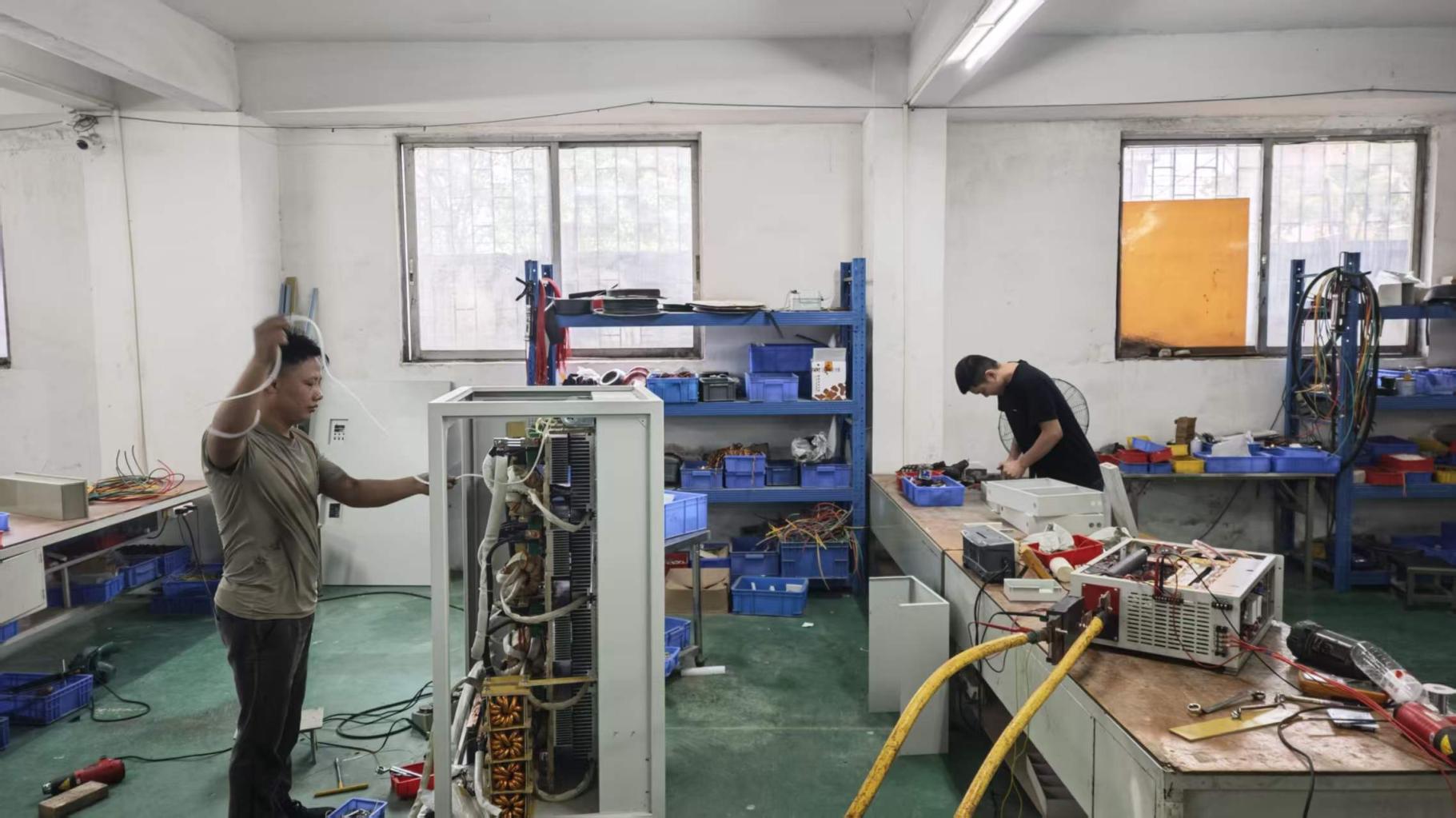
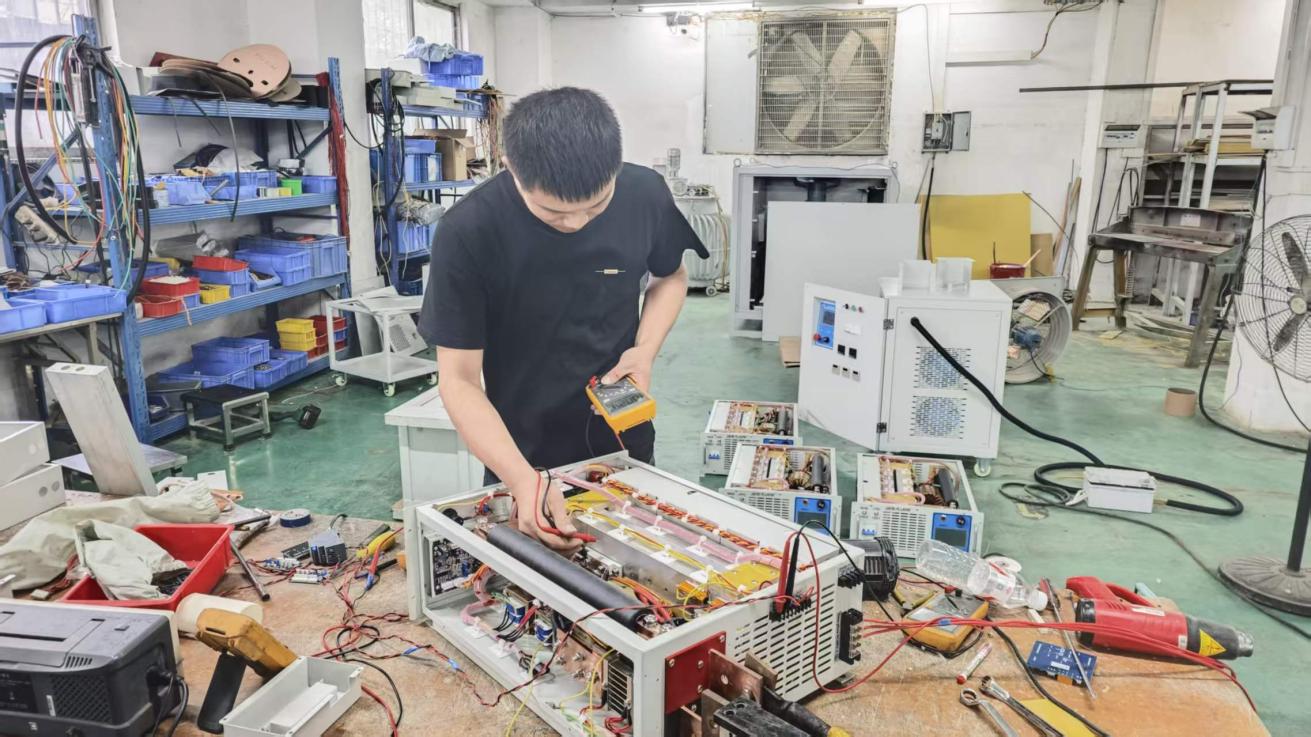
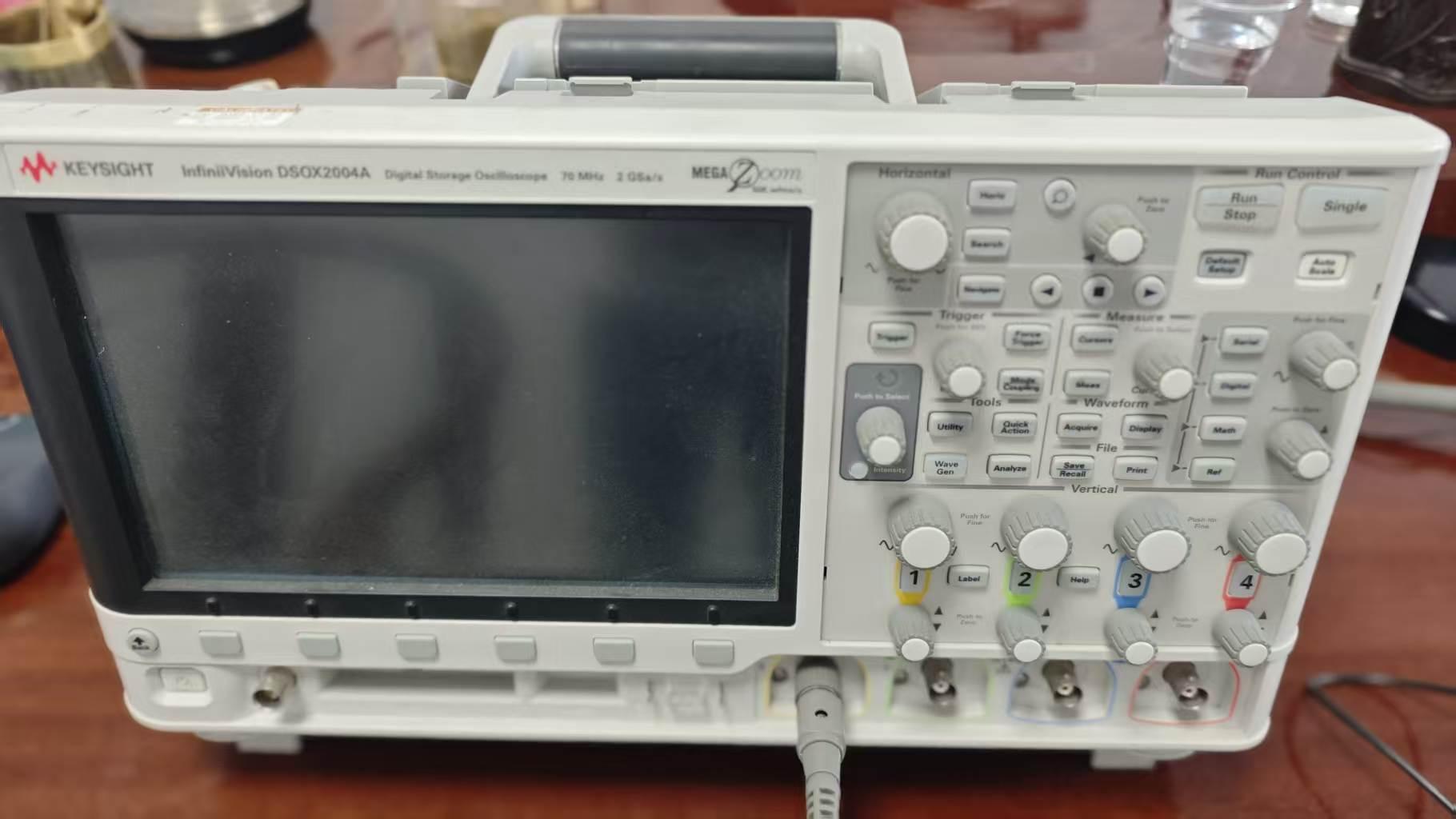
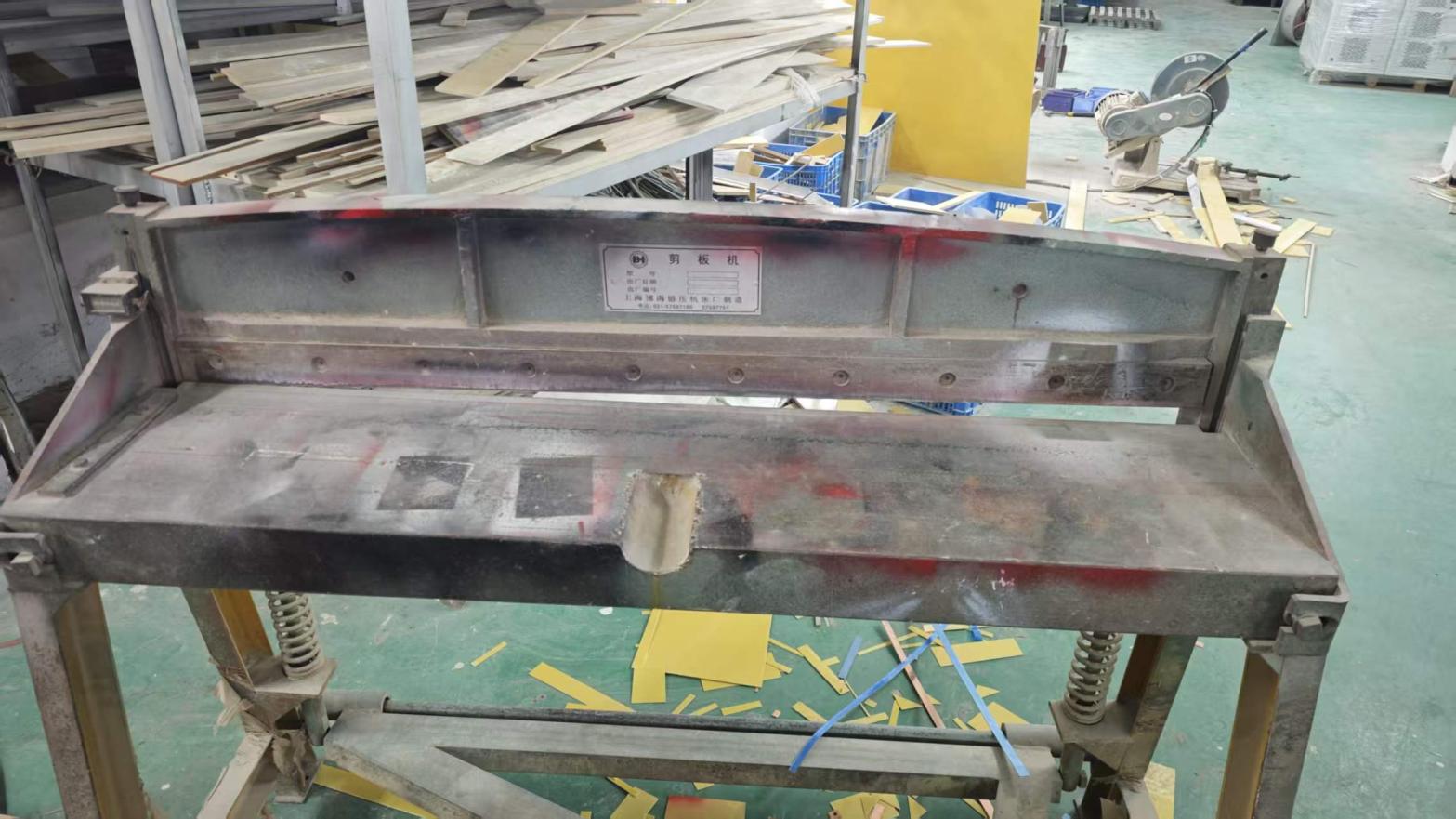
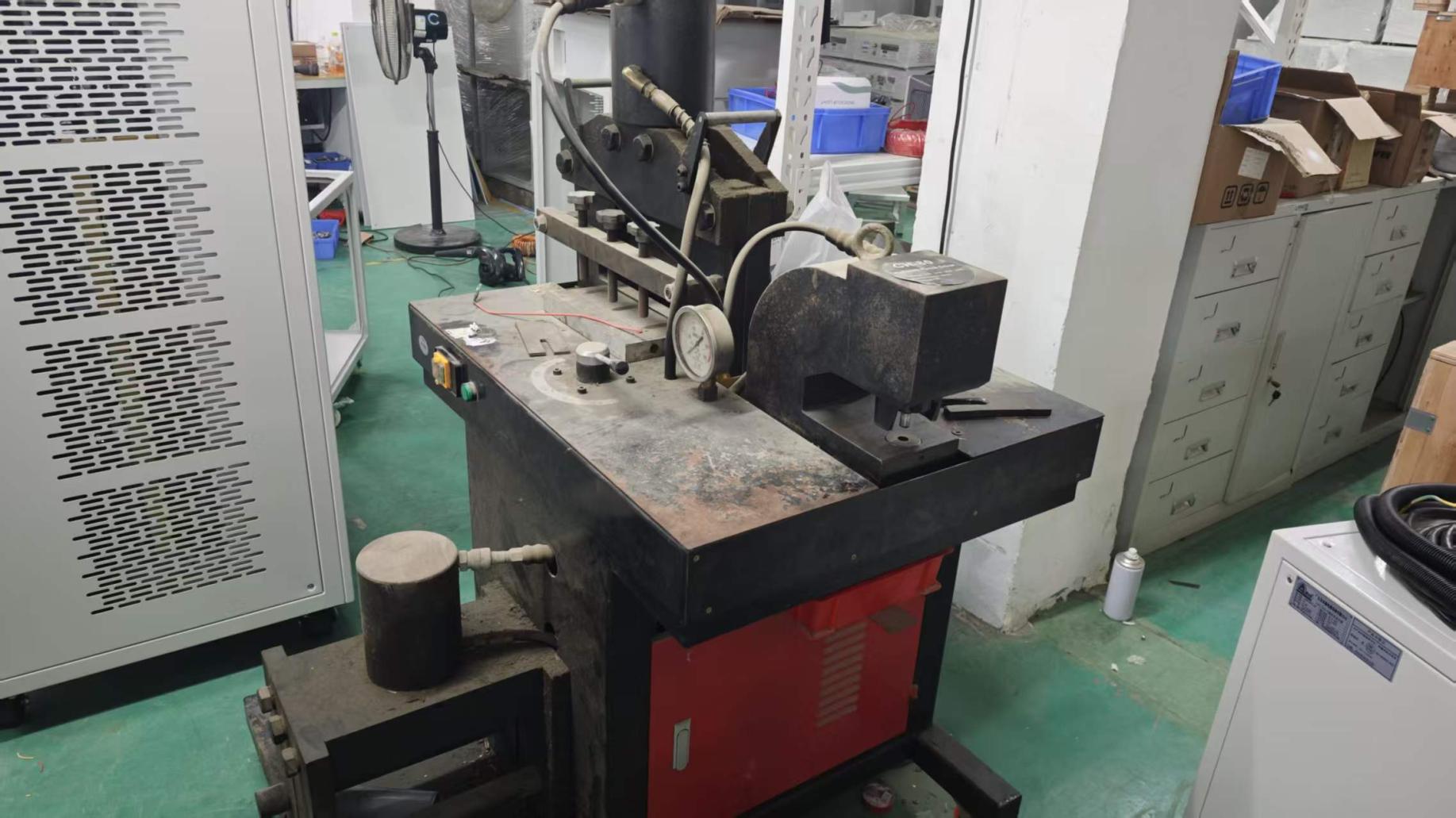
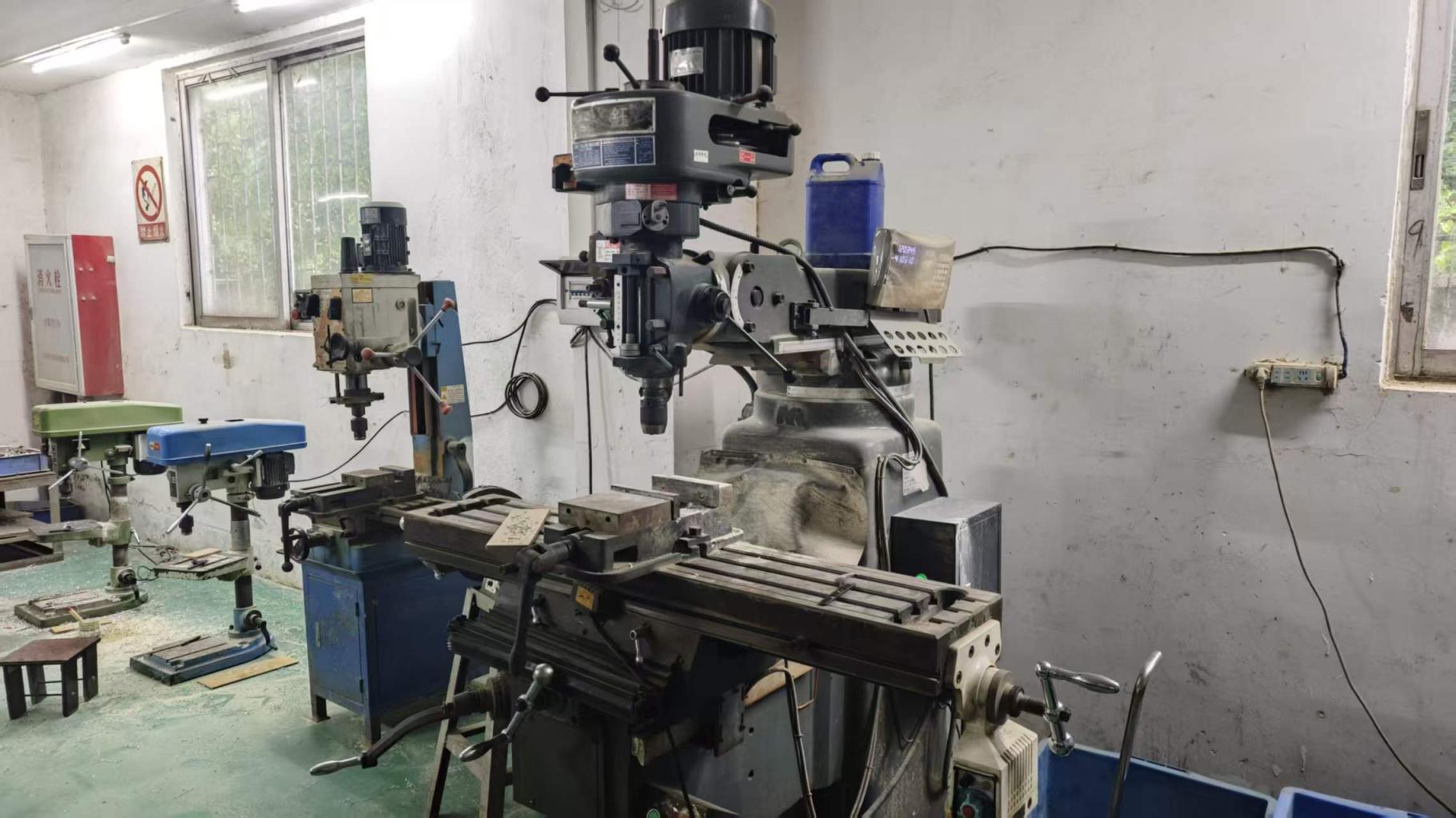
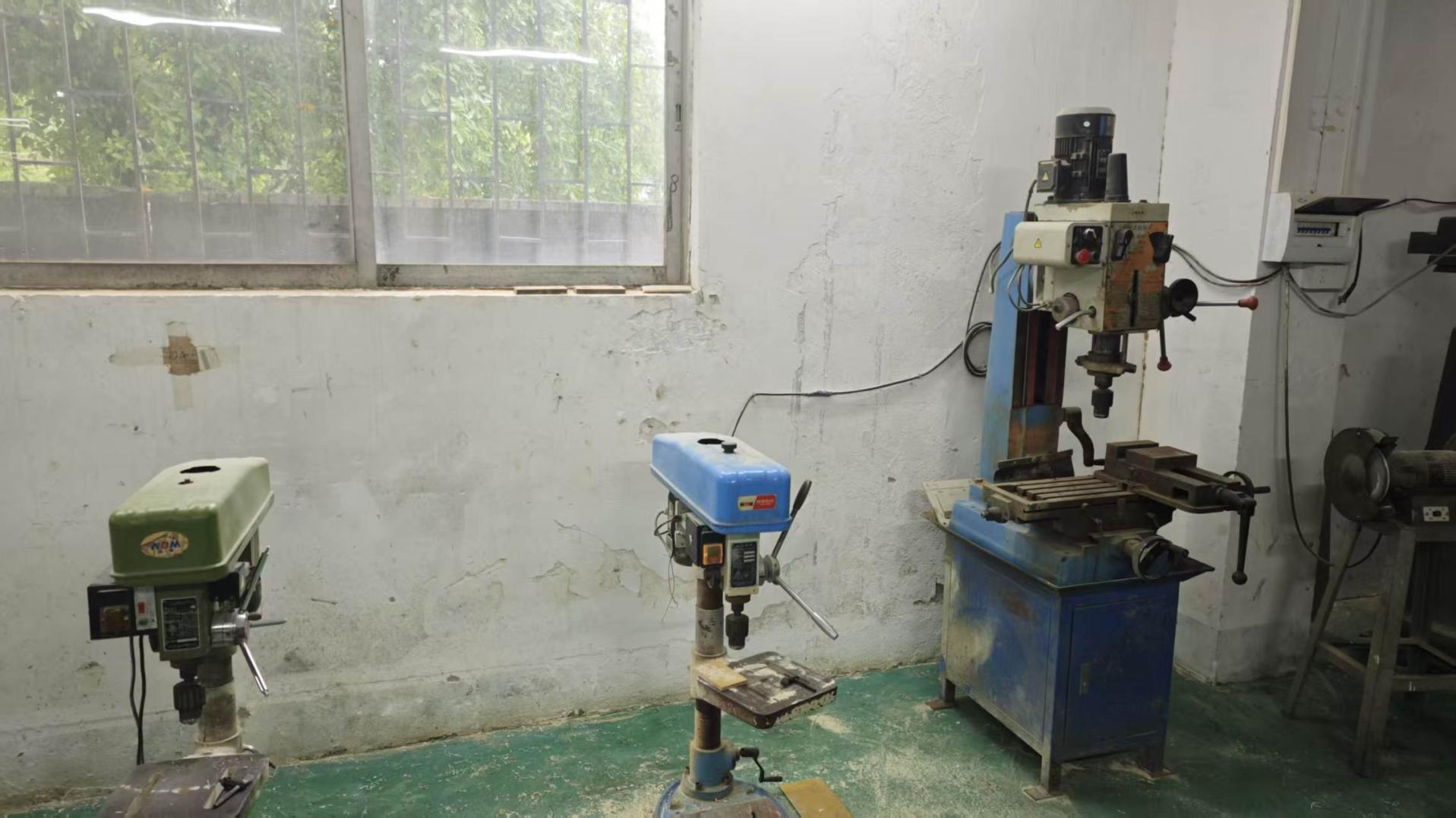
Guangdong Fenvix maintains full internal ownership of metal fabrication, copper busbar engineering, precision electronic assembly, and complete pre-shipment burn-in calibration.
Direct responses formulated by our chief power electronics engineering leads to address core technical and supply chain considerations for international project directors: