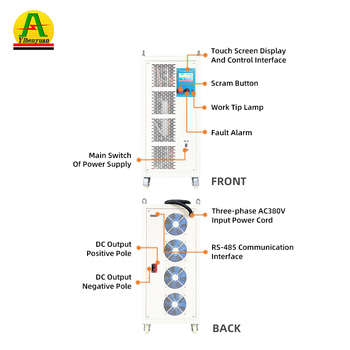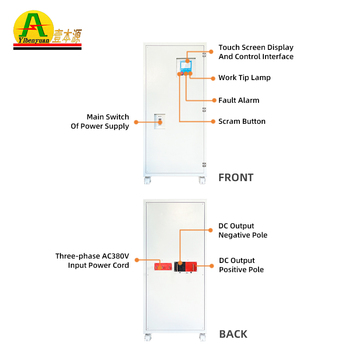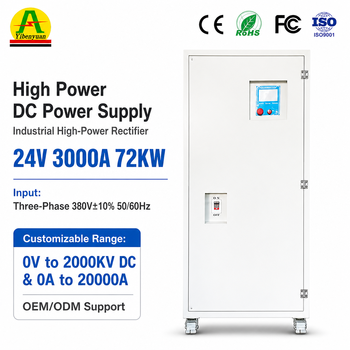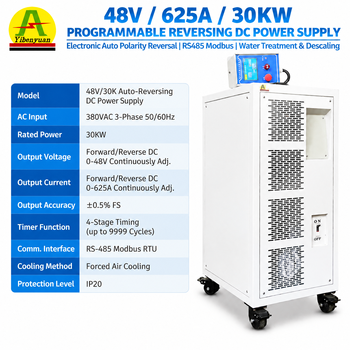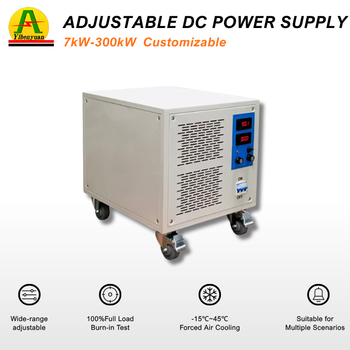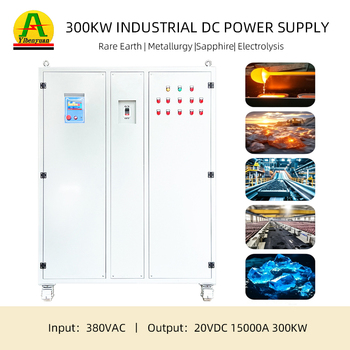
12V–15V 5000A/6000A 75kW Water-Cooled Rectifier
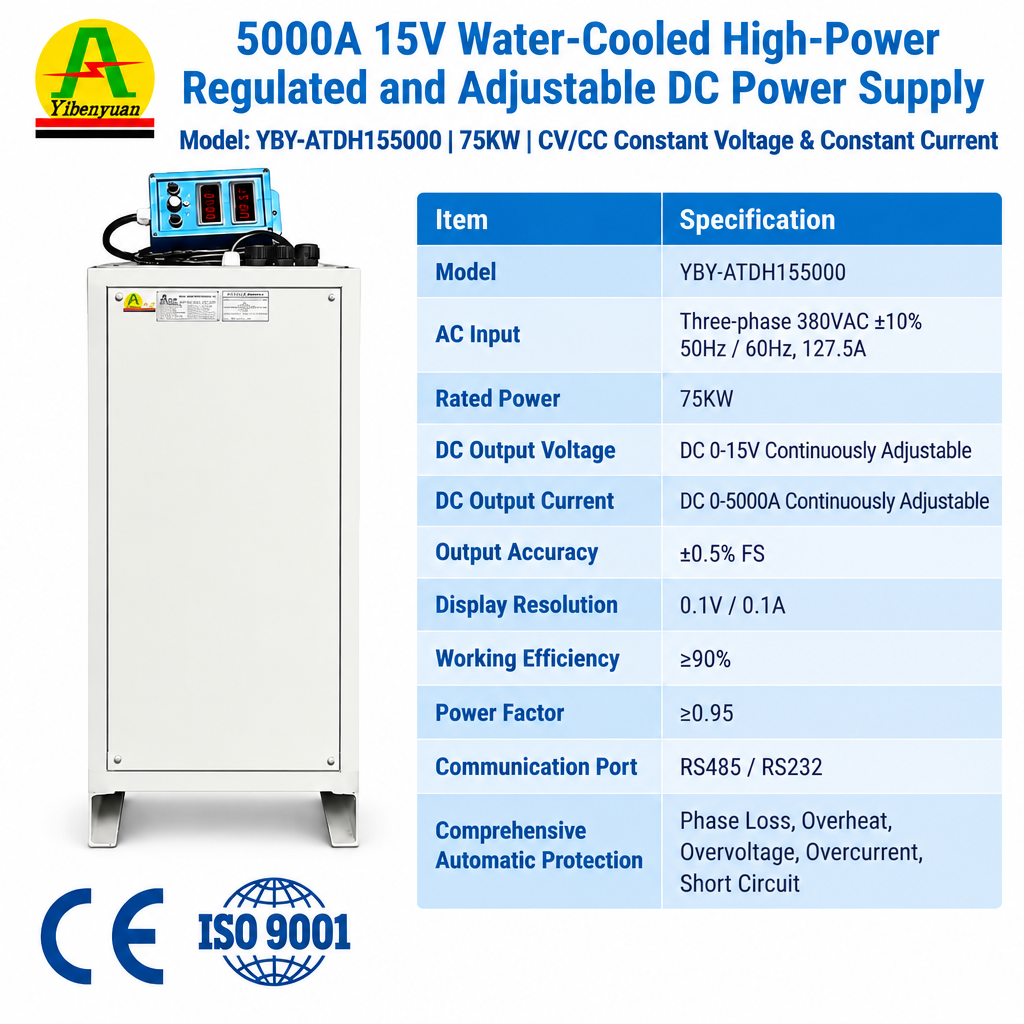
- Output Power: 75 kW High Efficiency
- Voltage / Current: 0–15V / 0–6000A CC/CV
- Cooling System: Deionized Water Cooling
- Control Interface: RS485 Modbus-RTU / 4-20mA
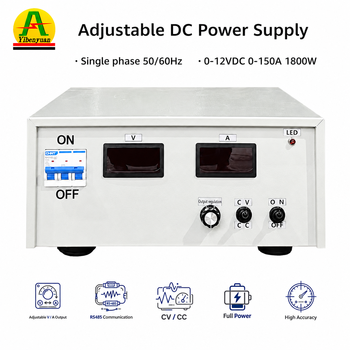
Factory-direct OEM/ODM solutions tailored for galvanic plating, continuous hard anodizing, precision electrophoresis, water treatment, EV motor validation, and 400Hz aviation ground support.
An engineering evaluation on why IGBT soft-switching SMPS has replaced legacy Silicon Controlled Rectifiers (SCR) and magnetic amplifiers across mission-critical processing lines.
Modern industrial SMPS units deploy Zero-Voltage Switching (ZVS) combined with isolated dual active bridge networks. By resonating parasitic device capacitances prior to gate turn-on, switching transitions virtually eliminate turn-on losses. Switching at 20kHz to 50kHz minimizes the physical volume of planar magnetic cores while lowering ripple voltage to <1%, preventing micro-porosity and burning in electrolytic plating baths.
Legacy 6-pulse or 12-pulse SCR rectifiers inject destructive 5th, 7th, and 11th harmonic orders into factory grids, dropping power factor down to 0.65–0.75. Fenvix integrates active line-conditioning front-ends and balanced resonant filters that maintain a Power Factor ≥ 0.95 and Total Harmonic Distortion (THD) under 5%, significantly mitigating transformer overheating and avoiding regional utility penalty tariffs.
Operating inside acidic, alkaline, or high-humidity environments presents rapid galvanic corrosion risks. For currents above 3,000A, Fenvix deploys 304/316L Stainless Steel or OFHC Copper Water-Cooled Cold Plates. Sealed IP54/IP55 electronics cabinets ensure internal electronics remain completely isolated from ambient corrosive acid vapors, ensuring MTBF exceeding 100,000 operating hours.
| Engineering Metric | Conventional SCR / Thyristor Rectifier | Fenvix High-Frequency Switching SMPS | Procurement & Operational Benefit |
|---|---|---|---|
| Conversion Efficiency | 65% – 78% (load dependent) | 90% – 94% constant | 18–25% reduction in annual utility power consumption |
| Output Current Ripple (RMS) | 5% – 12% (rough DC) | ≤ 1% to 2% precision DC | Eliminates grain roughness, pinholes, and uneven electroplating |
| Input Power Factor (PF) | 0.65 – 0.80 (varies with phase angle) | ≥ 0.95 (Active Correction) | Eliminates power factor utility fines; reduces transformer kVA |
| Footprint & Weight | Extremely bulky (oil/iron ballast) | 60% – 70% physical reduction | Fits close to plating tanks; cuts copper busbar I²R line loss |
| Dynamic Dynamic Response | Slow (100ms – 300ms response time) | Ultra-fast (≤ 50 microseconds) | Immediate suppression of line surges; prevents part scrap |
| Automation Interface | Coarse 0-10V analog; drift-prone | Isolated RS485 / Modbus / Profinet | Direct integration into smart Industry 4.0 SCADA automation |
How global environmental compliance, wide-bandgap semiconductors, and automated modular manufacturing are transforming industrial DC procurement strategies.
Silicon Carbide (SiC) MOSFETs are actively displacing traditional silicon IGBT modules in high-voltage programmable switching systems. SiC operates reliably at elevated junction temperatures (up to 175°C) and enables switching frequencies above 100kHz. For industrial procurement teams, this delivers dramatic power density improvements, smaller thermal footprints, and lower lifecycle cooling costs.
Unplanned downtime in automotive electrophoretic coating (E-coat) lines or continuous copper electro-refining costs thousands of dollars per minute. Global EPC contractors and factory managers now demand decentralized modular power racks. If one power cassette experiences thermal or dielectric breakdown, redundant cassettes auto-balance load share without interrupting active tank cycles.
International corporate sustainability mandates and high commercial kWh tariffs have shifted evaluation models. Leading buyers compute the 5-year TCO factoring in electrical efficiency, thermal load on building HVAC, maintenance downtime, and spare part standardization. A high-efficiency SMPS typically offsets its capital purchase price differential within 9 to 14 months of 24/7 duty.
Modern high frequency power supplies must function as intelligent IoT edge nodes. Direct reporting of real-time anode bath resistance, instantaneous ripple peaks, IGBT thermal dissipation, and output capacitor ESR health through Modbus-TCP, Ethernet/IP, and OPC-UA protocols enables predictive maintenance prior to catastrophic line failure.
With cross-border carbon border adjustment mechanisms (CBAM) emerging in Europe and North America, Tier-1 manufacturing suppliers are mandated to audit the embedded carbon and electrical consumption of their plant hardware. Choosing verified high-efficiency SMPS systems supports ISO 50001 energy management certification and global green supply chain compliance.
Advanced electrochemistry (such as pulse reverse electroplating for high-aspect-ratio blind microvias in 5G HDI printed circuit boards) requires programmable complex waveforms. Sourcing trends prioritize suppliers providing integrated microcontrollers capable of asymmetric forward/reverse pulse profiles down to microsecond resolution.
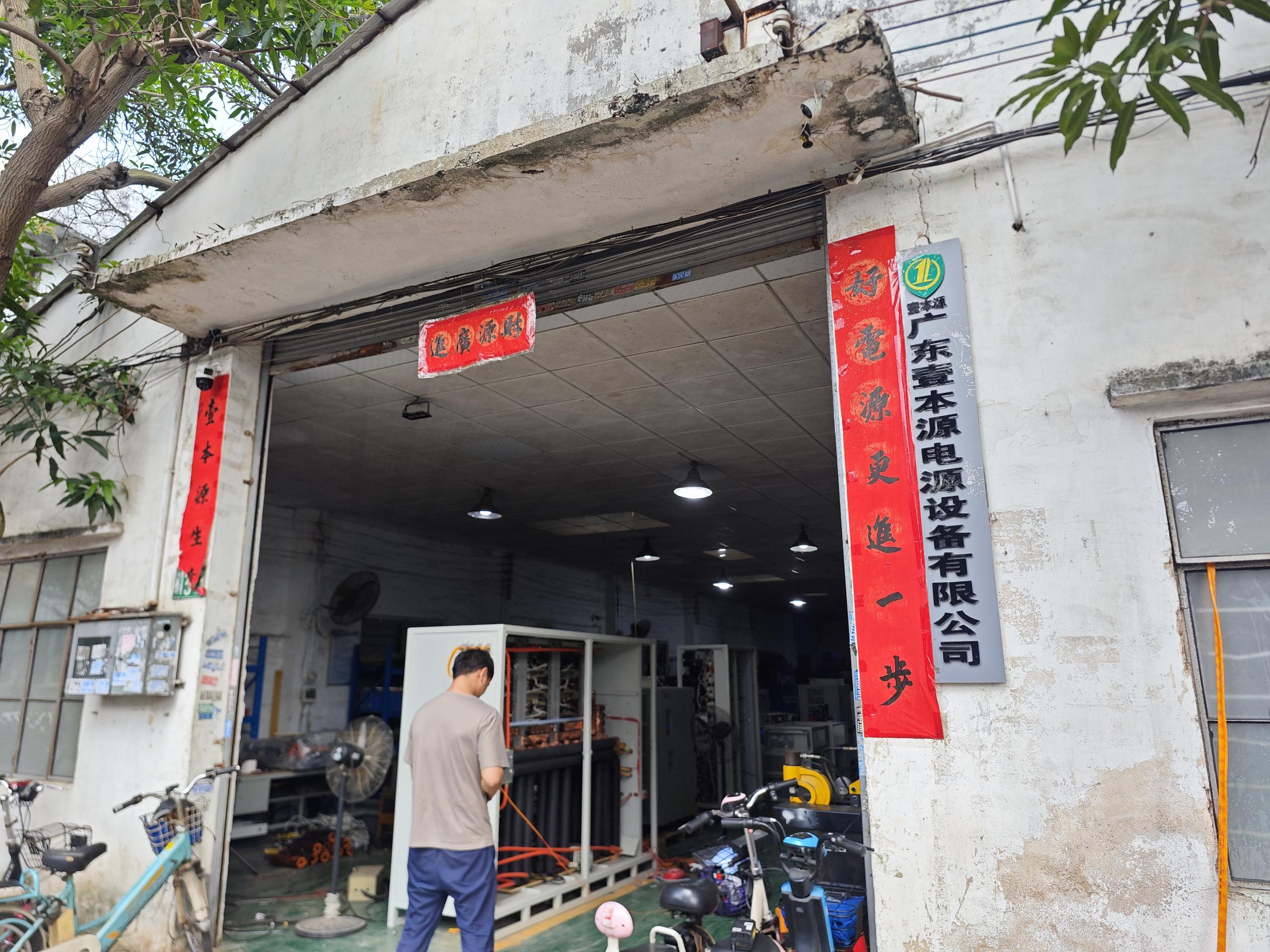
Guangdong Fenvix Technology Co., Ltd. eliminates trading markup and manufacturing delays through comprehensive vertical integration, complete workshop fabrication, and rigorous quality management since 2013.
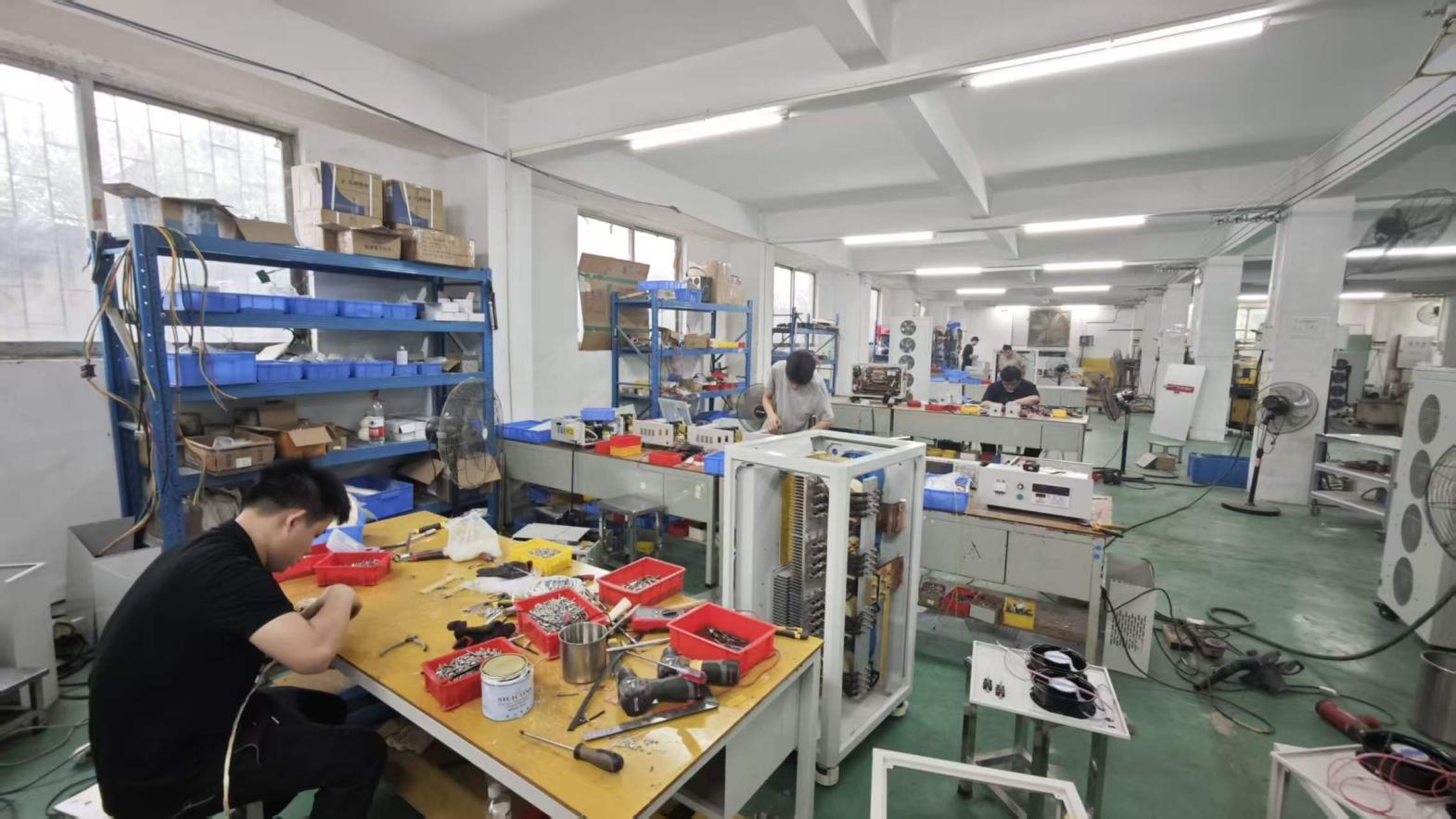
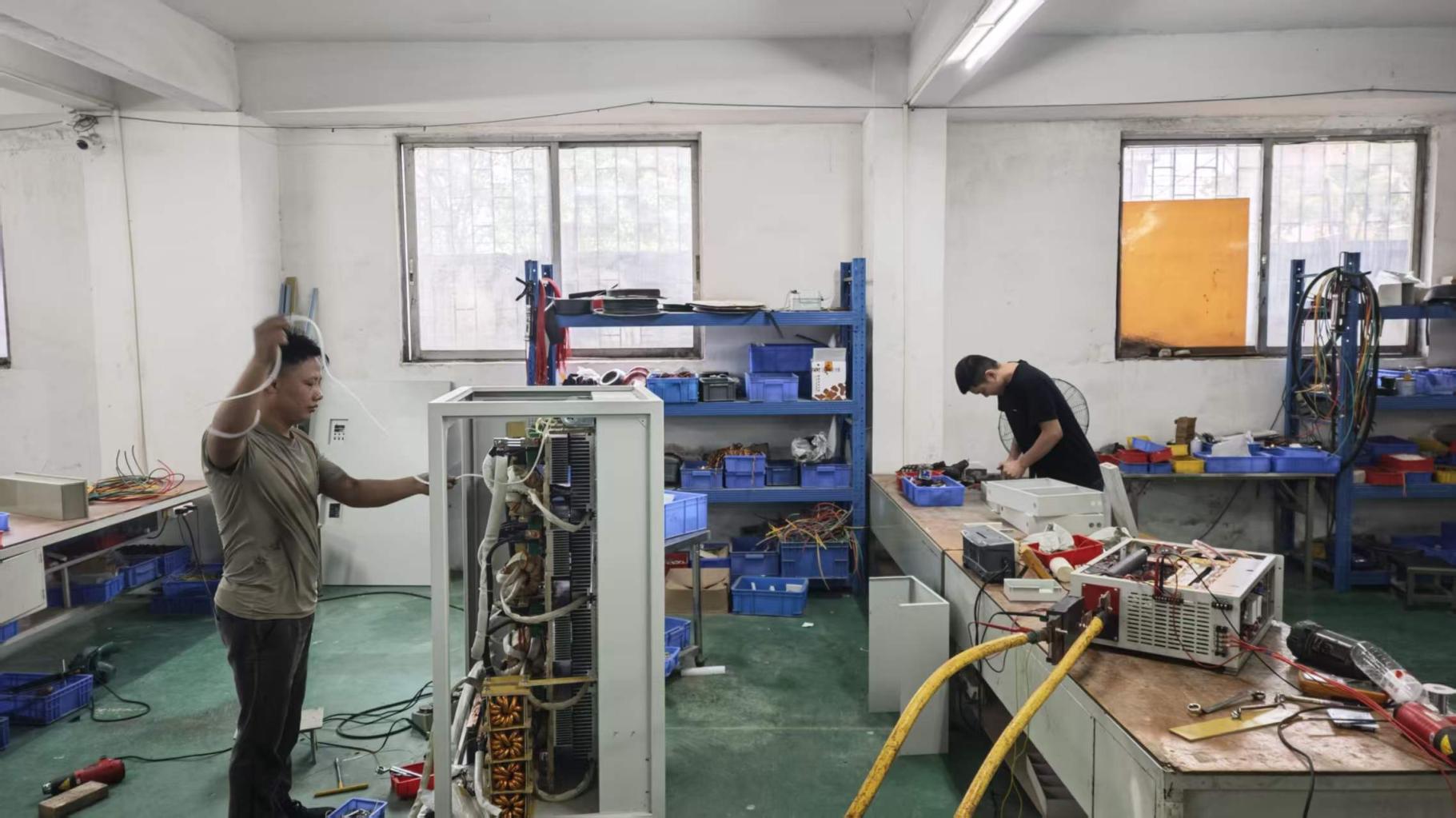
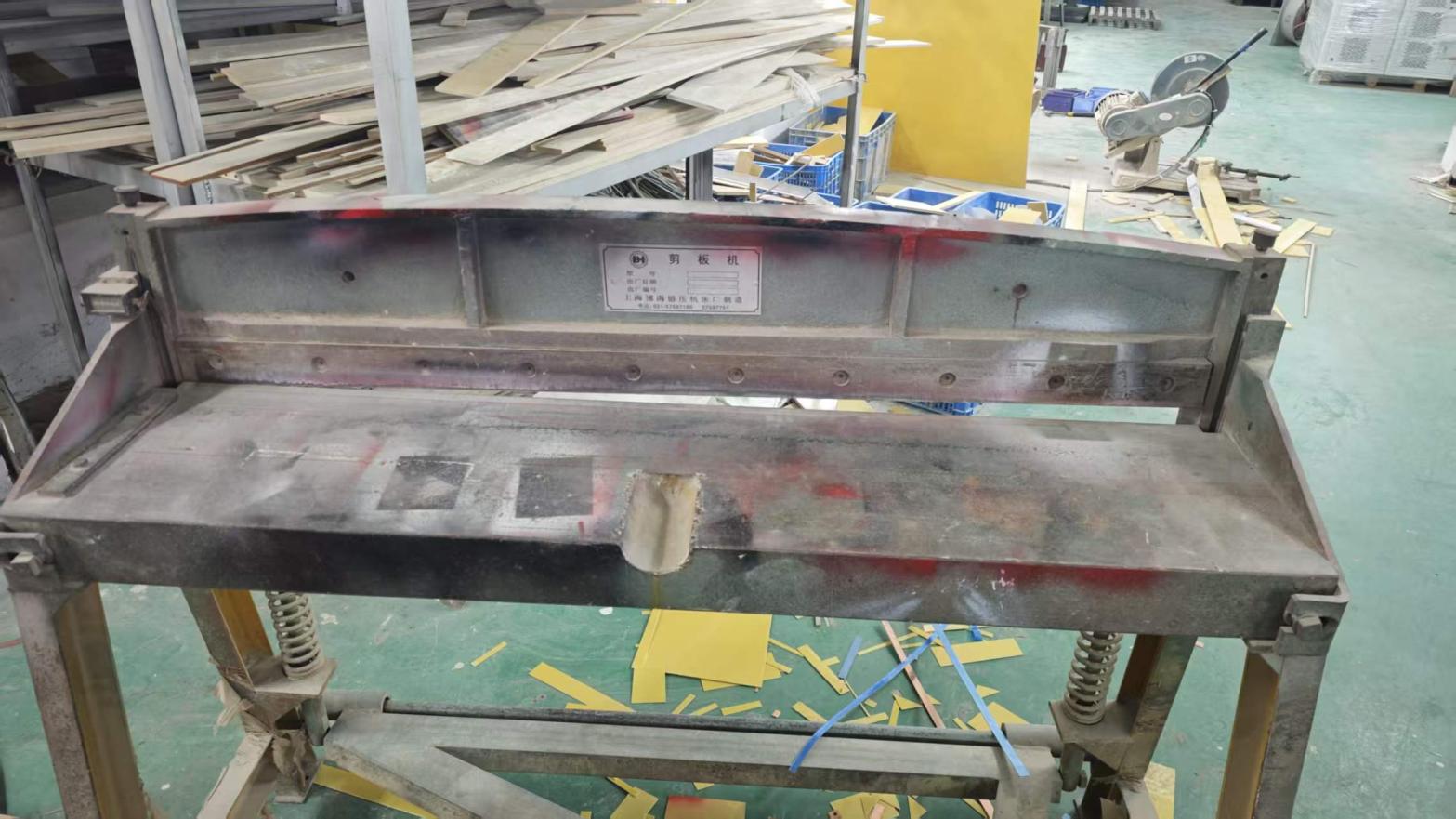
Unlike trading vendors who outsource assembly to splintered third-party contractors, Fenvix controls every mechanical and electronic assembly step on our 3,000m² manufacturing floor in Guangzhou. Our specialized teams manage heavy CNC turret punching, precision copper busbar stamping, winding of high-frequency nano-crystalline transformers, and multi-layer conformal coating.
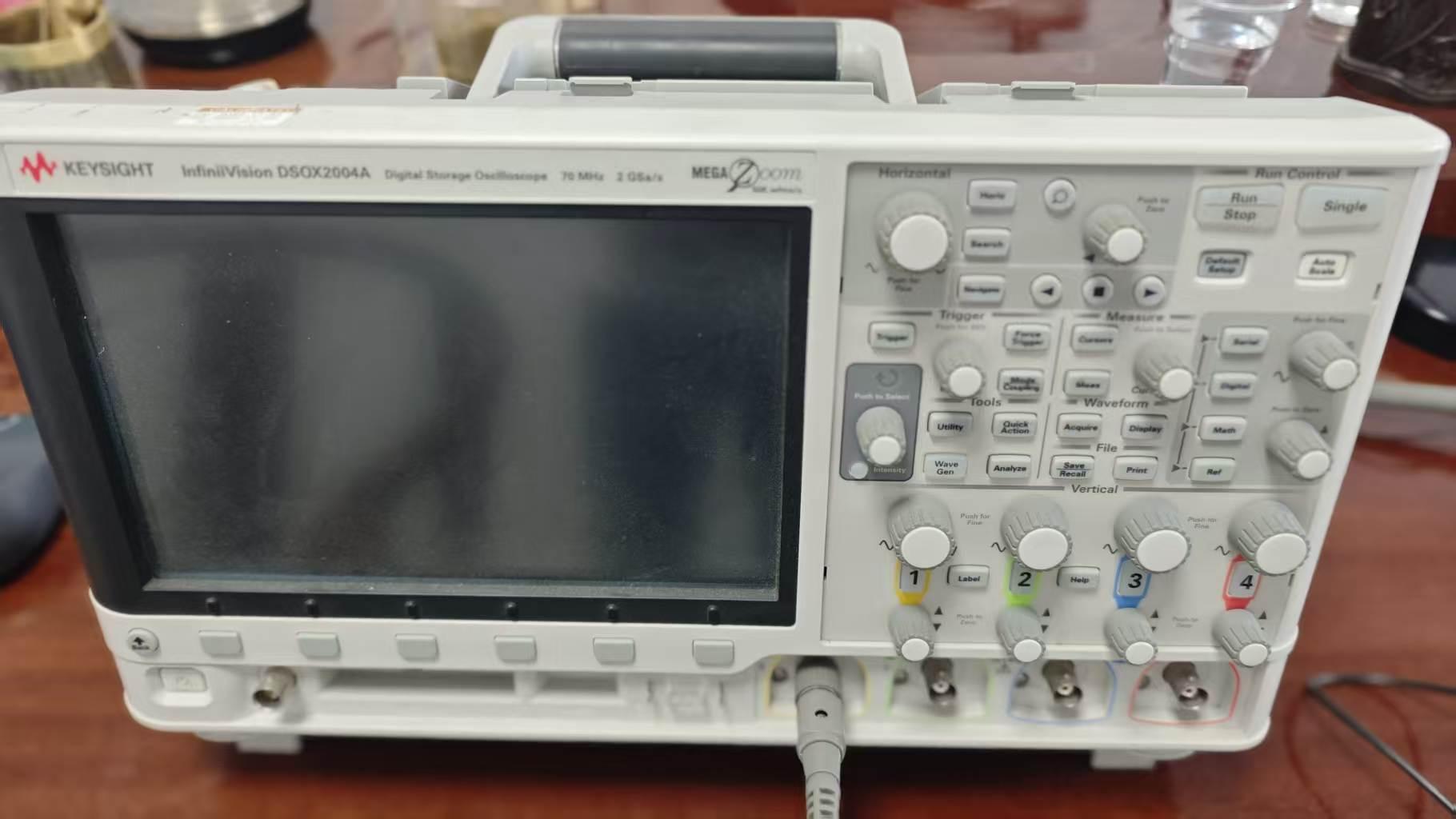
Prior to seaworthy crating, every completed high-frequency power supply undergoes rigorous electrical tests: dielectric high-potential (Hi-Pot) insulation verification, thermal infrared imaging under full resistive load bank testing, and continuous full-amperage burn-in to guarantee out-of-the-box reliability.
Main Assembly Hall
Final Cabinet Inspection
In-House Sheet Metal CNC
Oscilloscope & Waveform QC
To avoid undersizing power semiconductors or facing excessive ripple derating, technical procurement teams should prepare the following parameters when issuing RFQs.
Specify nominal input supply (e.g. 380V/415V/480V ±10%, 3-phase, 50/60Hz), desired maximum output voltage (Vdc), and maximum current (Adc). Indicate whether your process operates in Constant Current (CC) mode, Constant Voltage (CV) mode, or requires automatic dynamic cross-over. If pulse plating or periodic reversal is required, state the target frequency (Hz) and duty ratio window.
Detail ambient operating conditions: expected ambient temperature peaks, relative humidity, presence of airborne acid mist (such as hydrochloric or chromic acid), conductive airborne particulates, or sea-spray salinity. Fenvix uses these variables to specify chassis coatings (anti-corrosion epoxy, SS304 enclosure) and cooling methods (forced filtered air vs. closed-loop water cooling).
Define host supervisory architecture. Standard models include clear 7-inch color HMI touchscreens and analog 0-10V/4-20mA control loops. For smart automated plants, Fenvix equips power modules with isolated RS485 Modbus-RTU, Profibus-DP, Ethernet/IP, or CANopen interfaces, enabling remote start/stop, setpoint ramping, and automated fault data streaming.
Direct answers addressing compliance, water-cooling specifications, lead times, warranties, and international logistics.
Send our senior engineering team your target input voltage, DC output range, cooling preference, and operational duty profile. We deliver detailed engineering schematics, dimensioned 3D CAD step drawings, and factory direct quotations within 24 business hours.