
13+
Years Industrial R&D
15,000A
Max High Current Capacity
100kV
Ultra-High Voltage Output
ISO 9001
TÜV Verified Quality System
Precision Topologies
Engineered High Voltage & Heavy-Duty DC Rectifier Systems
Explore our verified high-frequency IGBT conversion systems. Every platform is designed for zero harmonic contamination, strict process repeatability, and continuous 24/7 industrial thermal endurance.
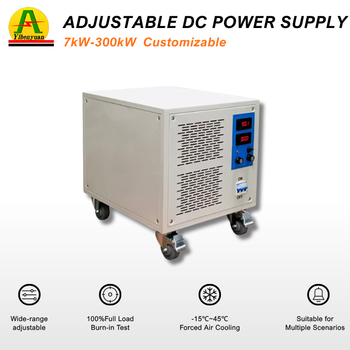
800V 50A 20kW High Voltage Test Source
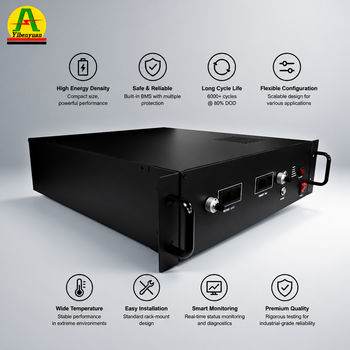
0–100kV Ultra High-Voltage Capacitor Charger
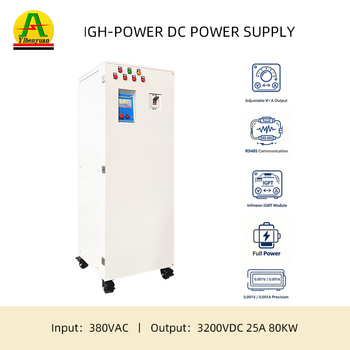
80kW 1000V–3200V High Voltage Rectifier

300kW 20V 15,000A Heavy Electrolysis Rectifier

48V 625A Auto-Reversing Descaling Supply
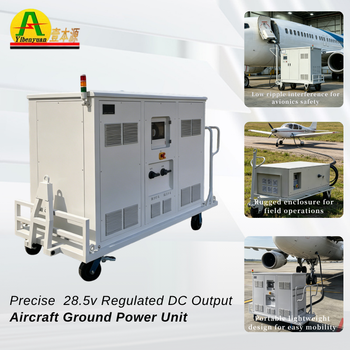
Portable 28.5V Aviation Ground Power Unit
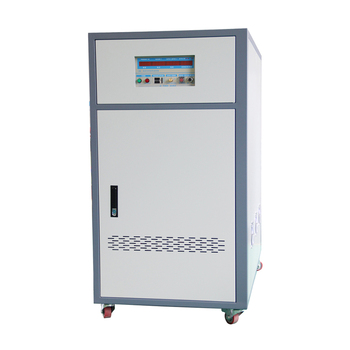
40–500kVA Solid-State Frequency Converter
Technical Authority & System Architecture
State-of-the-Art Industrial Rectification: Thermal Management & Topologies
An authoritative engineering breakdown of modern high-voltage and high-current conversion architectures designed to surpass legacy line-frequency SCR limitations.
Industrial power conversion within the megawatt and multi-kilovolt categories has moved permanently past legacy line-frequency silicon-controlled rectifiers (SCRs). Modern production architectures demand exceptionally precise electrolytic deposition, zero defect rates in semiconductor diffusion, and minimum footprint-to-power density ratios. As an established original equipment manufacturer based in Guangdong, China, Guangdong Fenvix Technology Co., Ltd. has spearheaded this shift by engineering resonant high-frequency IGBT topologies that consistently yield electrical conversion efficiencies superior to 92% across a full dynamic dynamic range.
1. Resonant Switchmode Topologies vs. Line-Frequency Phase Control
Traditional multi-pulse SCR architectures rely directly on bulky 50/60Hz line transformers. These platforms suffer from severe reactive power penalties, low power factor (rarely exceeding 0.75 without massive capacitor banks), and a pervasive output current ripple approaching 5% to 8% RMS without active filtering. In critical applications such as hard anodizing, precision electrophoretic paint (E-coat) deposition, or titanium oxide film production, such coarse ripple profiles induce lattice dislocations, micro-voiding, and non-uniform boundary layer thicknesses.
Fenvix high-voltage programmable platforms utilize zero-voltage switching (ZVS) and zero-current switching (ZCS) full-bridge inverter topologies operating in switching frequencies between 20kHz and 50kHz. By slicing the incoming rectified AC rail at these elevated switching frequencies, the magnetic core volume of intermediate isolation transformers decreases by nearly 75%. Simultaneously, primary conversion output ripple decreases to < 0.5% RMS out-of-the-box. This level of control enables sub-millisecond dynamic recovery across extreme step-load transitions, ensuring continuous voltage stabilization during spontaneous electrode passivation or arc suppression phases.
| Engineering Attribute | Legacy SCR / Thyristor Rectifier | Fenvix High-Frequency IGBT System | Process Operational Advantage |
|---|---|---|---|
| Electrical Conversion Efficiency | 68% – 78% (load dependent) | 90% – 94% (optimized line) | Direct 15–20% operational power expenditure savings |
| Output Current Ripple (RMS) | 5.0% – 8.0% without choke stacks | ≤ 0.5% standard (≤ 0.1% option) | Superior crystal matrix density and coating hardness |
| Power Factor (PF) | 0.70 – 0.82 (degrades with phase angle) | ≥ 0.95 across load curve | Zero penalty charges from local grid utilities |
| Footprint & Specific Weight | Heavy footprint (1.0x baseline weight) | Compact footprint (∼0.3x baseline weight) | Overhead gantry and mezzanine mounting capability |
| Dynamic Step-Response Time | 100ms – 300ms | ≤ 5ms (sub-cycle restoration) | Instant protection against bath shorting and arcing |
2. Advanced Thermal Engineering: Deionized Water vs. Isolated Air Loops
Thermal stability governs longevity in any high-voltage or high-amperage switching rectifier. Power semiconductor losses from IGBT switching conduction, high-frequency core hysteretic dissipation, and secondary ultrafast diode recovery generate localized heat fluxes exceeding 150 W/cm² at nominal capacities. Fenvix integrates proprietary split-loop thermal structures tailored precisely to plant operating environments:
In extremely harsh, acidic chemical plating corridors and chlorine-saturated electrolysis facilities, ambient air cooling draws airborne halides directly over internal circuit boards, triggering rapid electrolytic corrosion and creepage track breakdown. For these environments, Fenvix manufactures completely sealed IP54 to IP65 enclosures incorporating liquid-cooled vacuum-brazed copper cold plates. Deionized or closed-circuit process water cycles directly beneath IGBT thermal baseplates, removing over 95% of cabinet heat dissipation directly out of the facility, drastically decreasing facility HVAC loads and eliminating external air ingestion.
Ultra-Fast Arc Quench
Integrated solid-state fault-detection stops firing pulses within <10 microseconds when discharge arcs occur in high-voltage plasma or capacitor charging environments.
DSP-Driven Digital Control
Every platform features 32-bit floating-point digital signal processing offering native industrial Modbus-RTU, Profibus-DP, Ethernet/IP, and isolated 0-10V/4-20mA analog interfaces.
N+1 Redundant Modules
High-current configurations deploy hot-swappable sub-rack modules. If an individual power channel experiences an anomaly, unaffected modules instantly absorb load without process halt.
Market Intelligence
Future Procurement & Technology Trends in High-Voltage Rectification
Strategic foresight for EPC engineering directors, plant operations heads, and industrial equipment sourcing procurement teams preparing for 2025–2030 transformations.
Silicon Carbide (SiC) Migration
Procurement is actively shifting toward Wide Bandgap (WBG) SiC MOSFET architectures. These devices decrease conduction switching losses by another 40%, allowing switching thresholds up to 100kHz and tolerating higher ambient boundary junction temperatures without catastrophic breakdown.
Industrial Green Hydrogen Scaling
Proton Exchange Membrane (PEM) and Alkaline water electrolysis plants demand massive low-voltage, ultra-high DC current sources (up to 30,000A) operating continuously with grid harmonic feedback compliant with IEEE 519 compliance standards to safeguard upstream infrastructure.
Digital Twin Predictive Telemetry
Modern global procurement scopes specify continuous on-board condition monitoring. Microcontrollers continuously sample thermal drift across busbar joints, ripple changes on DC capacitor banks, and water cooling flow rates to schedule predictive maintenance prior to hardware faulting.
Total Cost of Ownership (TCO) Metrics
Tier-1 procurement evaluations have shifted from initial cabinet capital expenditure (CAPEX) to 10-year operating expense (OPEX) calculations. The continuous efficiency gains of high-frequency rectifiers consistently recover initial equipment capital outlays within the first 14 months of operation.
Direct Factory Advantage
Guangdong Fenvix Technology: OEM / ODM Manufacturing Precision
Operating from our modern 3,000 m² facility in Guangdong, China, Fenvix eliminates trading agent markups by retaining complete in-house fabrication, engineering, and test validation control.
End-to-End Metal & Busbar Fabrication
We do not outsource chassis construction. Our workshop houses internal plate shearing machines, multi-axis punching machinery, milling, drilling, and tapping units. We engineer custom solid electrolytic copper busbars precisely dimensioned to eliminate high-current I²R transmission losses.
TÜV Rheinland Verified & ISO 9001
Our operational management adheres strictly to ISO 9001 quality management protocols. Our production workflows and technical testing setups have passed rigorous on-site facility verification by TÜV Rheinland, backed by complete model CE, LVD, and EMC conformity.
Zero MOQ & Turnkey Custom Design
Whether you require a single bespoke 100kV laboratory charger prototype or fleet volumes of 15,000A plating systems, Fenvix enforces no minimum order quantities (MOQ). Every custom unit undergoes 100% full-load burn-in testing prior to wooden-crate export shipment.
Procurement Guidance
Frequently Asked Questions: High Voltage & DC Rectifiers
Direct answers to core technical, contractual, and customization queries submitted by overseas EPC buyers and system integrators.
What essential technical parameters must be specified when requesting a custom high-voltage or high-current rectifier quote? +
To ensure precise sizing of the IGBT power stages, thermal heat sinks, and magnetics, please provide:
- AC Input Supply: Voltage (e.g., 208V, 380V, 415V, 480V AC), phases (single or three-phase), and line frequency (50Hz or 60Hz).
- Rated DC Output: Maximum regulated voltage range (0 to Vmax) and continuous current rating (0 to Imax).
- Operating Control Mode: Constant Current (CC), Constant Voltage (CV), or dynamic software crossover.
- Permissible Output Ripple: Process-specific requirements (e.g., RMS ripple < 0.5% or peak-to-peak specifications).
- Cooling Infrastructure: Plant availability of industrial chilled water or requirement for internal forced air loops.
- Control & Automation Interface: Modbus-RTU over RS485, Profinet, analog 0-10V/4-20mA, or standalone touchscreen panel.
- Environmental Duty Cycle: 100% continuous duty rating requirements and ambient operational temperatures.
When should an engineer specify a liquid-cooled rectifier over a forced-air cooled cabinet? +
Liquid cooling (closed-loop water-cooling) is explicitly indicated when:
- The operating atmosphere contains acidic fumes, chemical vapors, metal particulate, or high ambient humidity (common in zinc, chrome, and copper plating or electro-chlorination) that would corrode open-air cooled circuit assemblies.
- Individual cabinet output powers exceed 50kW to 100kW, where forced-air blowers generate significant acoustic noise and require enormous ventilation volumes.
- Clean-room, laboratory, or temperature-controlled factory settings prohibit thermal air discharge into the operational space. Closed-circuit water cooling carries over 95% of thermal energy directly out of the building.
How does Fenvix mitigate harmonic distortion and protect plant electrical networks? +
High-power rectification can introduce harmonic distortion back into the facility substation if unaddressed. Fenvix units incorporate active power factor correction (APFC) circuits or 12-pulse/24-pulse phase-shifting bridge topologies on heavy multi-megawatt systems. This ensures an operating input Power Factor ≥ 0.95 and limits Total Harmonic Distortion (THDi) to well within IEEE 519 compliance standards, eliminating capacitor bank resonance and nuisance tripping of upstream protection breakers.
What third-party certifications and factory verification credentials does Fenvix hold? +
Guangdong Fenvix Technology operates under an audited ISO 9001 quality management framework governing all assembly, testing, and documentation stages. Our manufacturing facility has been verified on-site by TÜV Rheinland. Specific equipment series carry full European Conformity (CE) marking, including compliance with Low Voltage Directive (LVD 2014/35/EU) and Electromagnetic Compatibility Directive (EMC 2014/30/EU), as well as RoHS hazardous substance compliance. Factory test certificates (FTC) and load-bank validation data sheets accompany every international delivery.
What international trade terms and payment options are supported for overseas shipments? +
We support standard Incoterms 2020 including EXW, FOB (Guangzhou / Shenzhen / Hong Kong), CFR, CIF, CIP, and turnkey DDP (Delivered Duty Paid directly to customer plant sites in North America and Western Europe). Accepted commercial payment methods include Telegraphic Transfer (T/T), Irrevocable Documentary Letters of Credit (L/C at sight), and credit card arrangements. Transactions are accommodated in major currencies including USD, EUR, GBP, JPY, AUD, CAD, and CNY.
How does Fenvix deliver post-sales technical support and commissioning for overseas plants? +
All systems include comprehensive English engineering manuals, dimensional CAD drawings, and interconnect terminal wiring schematics. Our factory-based power electronics engineering teams provide remote commissioning support via real-time video streaming, Modbus diagnostic logging reviews, and direct technical consultations. Third-party verified on-site field engineering dispatch is available for large-scale multi-unit installations requiring certified supervisory commissioning.